
Connect with us

Business

FG generates N5.21tn from oil sales in H1

Published

on

The Federal Government, through the Nigerian Upstream Petroleum Regulatory Commission, raked in N5.21tn from the sale of crude oil, gas and other economic activities in the first six months of 2025. It said the revenue inflow represents 42.7 per cent of the record N12.2tn it generated in the entire 2024 fiscal year.

The figure, however, represents only 34.7 per cent of the N15tn revenue target set by the Federal Government for the commission to meet to implement the 2025 budget. The revenue was derived from royalties, gas sales, flared gas penalties, and joint venture proceeds.

Revenue inflow obtained from the commission’s latest report submitted at the Federation Accounts Allocation Committee meeting document revealed that the January to June 2025 earnings include payments from Nigerian National Petroleum Company Limited joint venture and production sharing contract royalty receivables totalling N1.04tn for the period.

Also included is N315.93bn from the controversial Project Gazelle receipts for January and March 2025, with no inflows recorded in December 2024, February, April, May, and June 2025.

The report read, “Revenue Performance: The commission’s performance from January to June 2025 is N5.21tn which is inclusive of NNPC Ltd JV & PSC Royalty Receivables of N1.04tn for the period of January to June 2025 and Project Gazelle receipt of N315.93bn for November 2024 (received in January 2025).”

In addition, NNPC’s JV royalty receivables from October 2022 to June 2025 amounted to N6.60tn, reflecting the cumulative impact of delayed remittances from oil companies.

To ensure the smooth operations of the 2025 budget, the commission said it is targeting N15tn revenue this year.

See also  Read Tinubu's unveiled plan to turn flood Threat into economic goldmine

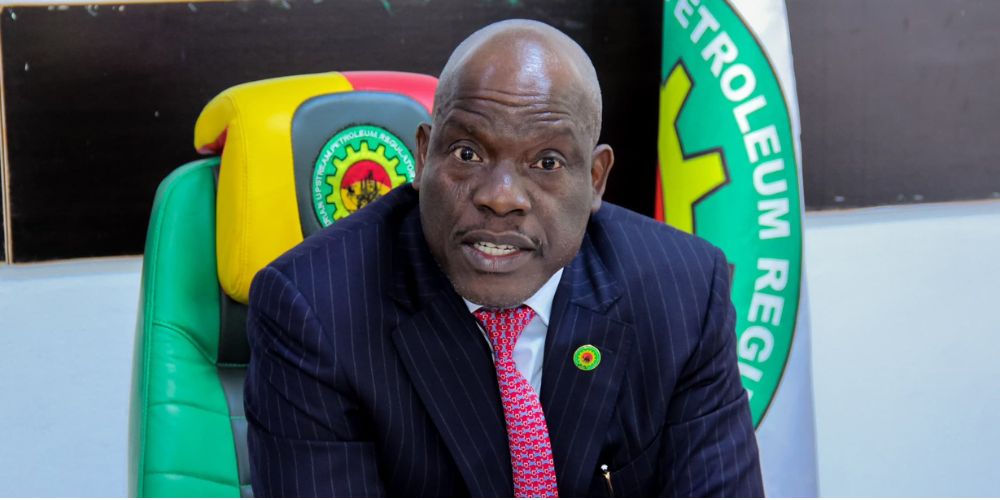
The NUPRC Chief Executive, Gbenga Komolafe, confirming the target, said, “And we all know the importance of that; we’re ramping up federal revenue. Last year, that is for 2024, you remember that the commission achieved and surpassed its revenue generation by about 163 per cent. This year, our target has been increased to about N15tn.

“So, the commission, recognising that, we have equally devised a strategy. Of course, N15tn is so large, but then we are not daunted; we are not intimidated. Rather, we are defining a strategic approach to achieve that target.”

The report also confirmed the recovery of $459,226 from outstanding obligations, part of a cumulative debt of $1.436bn from various crude oil lifting contracts, leaving a balance of

$1.435bn.

The NUPRC noted that the recovered sum was part of the revenue-sharing reconciliation between NNPCL and the Federation, overseen by the Technical Sub-Committee of the Alignment Committee on the Reconciliation of Indebtedness.

The commission’s mid-year revenue trails the proportional benchmark compared to its N12.25tn actual earnings for the whole of 2024. At the current pace, revenues could end the year below target unless oil output increases significantly and arrears payments accelerate.

Experts speak

Industry experts cautioned the Federal Government against turning the NUPRC into a primarily revenue-generating agency, warning that excessive taxation and an unfriendly business climate could further drive away investment from the nation’s oil and gas sector.

Speaking in separate interviews with The PUNCH, an energy analyst, Dayo Ayoade, and a petroleum engineer, Bala Zaka, said the government risked “killing the goose that lays the golden eggs” if it prioritised revenue collection over creating a stable, investor-friendly regulatory environment.

See also  FG orders banks, fintechs to remit VAT on service fees

Ayoade, a lecturer and energy policy analyst, explained that while revenue generation was critical to national development, conflating regulatory oversight with aggressive revenue mobilisation could distort the NUPRC’s mandate.

“Revenue generation is always going to be a taxation issue; people have to pay their dues and taxes. But when you make a regulator a revenue-generating agency, that becomes problematic,” he said.

“The job of the NUPRC is essentially to be the technical and commercial regulator of the upstream oil and gas sector. They are not the FIRS and are not a revenue-generating company. Under the Petroleum Industry Act, the commission collects fees and payments from oil and gas companies for government revenue, but it must balance this with its regulatory responsibilities.”

He warned that excessive fiscal pressure on oil companies could lead to disinvestment, as firms relocate to friendlier jurisdictions.

“If the regulator focuses too much on extracting money from companies, it could injure or even kill the goose that lays the eggs. International oil companies might decide Nigeria is no longer worth the trouble and move to other countries with safer regulatory climates,” he said. “If regulation suffers because of the obsession with revenue, the whole country will suffer in the long run.”

On his part, Zaka blamed the current revenue challenges in the oil sector on years of “business climate hostilities”, which, he said, had driven many international players out of the country.

“When we talk about revenue generation, you look at different sectors, but in Nigeria, the oil sector is the principal source. Unfortunately, the industry has been experiencing hostilities for years, and now the chickens have come home to roost,” he said.

See also  Minority caucus, House clash over tax law probe

According to him, divestments by multinationals were not simply portfolio adjustments as claimed by the government at the time, but a direct reaction to harassment, sabotage, community extortion, and rising security costs.

“These companies moved to East Africa, where they are now drilling and exploring in new areas. Meanwhile, the indigenous firms that took over onshore and shallow-water facilities are not aggressively exploring or building reserves. They are content with the money they are making without increasing production,” he said.

Zaka noted that production shortfalls had inevitable consequences for government revenue. “If production is high, you make more revenue. But because hostilities persisted in places like Warri, companies relocated to Port Harcourt, and now some are even moving to Lagos. The truth about our revenue generation ability was always going to come out, and now we are seeing it physically,” he added.

Both experts urged the government to focus on improving security, reducing regulatory bottlenecks, and incentivising exploration if it wants to sustainably grow oil revenue without crippling the sector’s future.

FOLLOW US ON:

FACEBOOK

TWITTER

PINTEREST

TIKTOK

YOUTUBE

LINKEDIN

TUMBLR

INSTAGRAM

Continue Reading
Click to comment

Leave a Reply

Your email address will not be published. Required fields are marked *

Business

Kwara strengthens partnership to boost mechanised farming

Published

on

The Kwara State Government has strengthened its partnership with the All Farmers Association of Nigeria and other agricultural stakeholders to advance mechanised farming, environmental sustainability and women inclusion across the state.

The renewed commitment was reaffirmed during a courtesy visit by the leadership of the Kwara State chapter of AFAN to the Kwara State Agro-Climatic Resilience in Semi-Arid Landscapes in Ilorin.

This was contained in a statement issued on Tuesday by the Communication Officer of KWACReSAL, Okanlawon Taiwo, a copy of which was made available to The PUNCH in Ilorin.

Speaking during the meeting, the State Project Coordinator of KWACReSAL, Shamsideen Aregbe, assured farmers of the state government’s continued support toward improving food production, mechanised agriculture and climate resilience.

He said, “Tractorisation remains a critical component of modern agriculture. Access to farming equipment is essential for increasing productivity and addressing food security challenges across the state.”

He explained that the tractor support initiative introduced last year followed a World Bank-backed intervention and presidential directive aimed at supporting farmers with mechanised farming equipment.

Aregbe acknowledged concerns raised about operational challenges affecting some tractors, assuring stakeholders that efforts were ongoing to determine the condition and operational status of the equipment to enable effective utilisation by farmers.

“We must sustain engagement with farming communities, particularly in addressing challenges relating to flooding, agricultural logistics and food security,” he added.

The project coordinator also stressed the need for gender equality and inclusion in agricultural interventions across the state.

“The inclusion of women is not negotiable. We must continue to encourage and support women to actively participate in agricultural programmes and leadership processes,” he stated.

See also  Togo, Niger, Benin owe Nigeria N25bn for electricity – NERC

Earlier, the Chairman of AFAN in Kwara State, Shuaib Ajibola, commended KWACReSAL for its interventions in the agricultural sector, reaffirming the association’s readiness to collaborate on programmes aimed at improving farmers’ welfare and environmental sustainability.

Ajibola disclosed that the association planned to commence an agricultural expo and stakeholder engagement programme across the state following its recent inauguration activities to reconnect with farmers and strengthen agricultural outreach.

“Previous editions of the interventions covered the 16 local government areas of the state and involved stakeholders from different agricultural sectors,” he said.

The AFAN chairman also raised concerns over land use disputes and other agrarian issues affecting farmlands, noting that the development had created anxiety among some farming communities regarding land ownership and rights.

“There is a need for sustained stakeholder dialogue and engagement to resolve disputes and ensure peaceful farming activities across communities,” Ajibola added.

Also speaking, the Project Coordinator of AFAM, AbdulRahman Babatunde, applauded KWACReSAL for its support to farmers, especially in the area of agricultural inputs and mechanised farming.

“ACReSAL provided 100 per cent agricultural inputs to participating farmers last year, and beneficiaries across communities can testify to the positive impact of the intervention,” Babatunde said.

He disclosed that farming activities for the current planting season had already commenced, with farmers actively registering, hiring tractors and preparing their farmlands.

In her remarks, the AFAM Women Leader, Sherifat Ibrahim, advocated increased empowerment and technical training for women in rural communities to enable them to actively participate in mechanised farming.

“There is a need for gender-friendly operational systems and practical training that will make tractor handling easier and more accessible for women and young learners involved in agricultural programmes,” she said.

See also  Technology key to implementing new tax laws – Adedeji

Meanwhile, the Environmental Safeguards Officer of KWACReSAL, Mr Abubakar Mohammed, reaffirmed the project’s commitment to gender equality, women’s inclusion and effective grievance management across all project activities.

The renewed collaboration comes amid growing efforts by the Kwara state government to improve food production and strengthen climate-smart agriculture through partnerships with farmer associations, development agencies and international organisations.

punch.ng

FOLLOW US ON:

FACEBOOK

TWITTER

PINTEREST

TIKTOK

YOUTUBE

LINKEDIN

INSTAGRAM

Continue Reading

Business

See Full List of Top 10 World’s Largest Economies in 2026

Published

on

The United States is projected to remain the world’s largest economy in 2026 with a gross domestic product estimated at $32.1 trillion, according to new global economic forecasts obtained from Focus Economics on Wednesday.

The U.S. continues to lead global output through dominance in technology, finance, healthcare, and advanced manufacturing. Growth in artificial intelligence, healthcare innovation, and high-value industries has further widened its lead over other major economies in recent years.

The top 10 world economies ranked in numbers

1. United States — $32.1 trillion
The United States remains the world’s largest economy, accounting for over a quarter of global output in nominal terms. Its economy is highly diversified, with Silicon Valley driving global leadership in AI, biotech, and software, while Wall Street anchors the financial sector.

2. China — $20.2 trillion
China is the world’s second-largest economy, driven by manufacturing, exports, and large-scale industrial production. It remains the leading global producer of electronics, machinery, and textiles, though it faces structural challenges, including a shrinking population and high debt levels.

3. Germany — $5.4 trillion
Germany remains Europe’s largest economy, supported by a strong industrial base and the Mittelstand network of medium-sized manufacturing firms that form the backbone of its export strength.

4. India — $4.5 trillion
India continues its rapid economic rise, driven largely by services and information technology. Its economy has more than doubled over the past decade, supported by a young population and expanding domestic demand.

5. Japan — $4.4 trillion
Japan remains a global manufacturing powerhouse in robotics, automobiles, and electronics, although long-term growth is constrained by an aging population and structural economic stagnation.

See also  Stop exporting crude, OPEC tells Nigerian producers

6. United Kingdom — $4.2 trillion
The United Kingdom is a major service-based economy, with strengths in finance, insurance, and real estate, anchored by the City of London.

7. France — $3.6 trillion
France has a diversified economy led by luxury goods, aerospace, agriculture, and manufacturing, with global brands such as Airbus and LVMH playing major roles.

8. Italy — $2.7 trillion
Italy combines a strong services sector with manufacturing strengths in fashion, machinery, and automobiles, driven largely by its industrial northern regions.

9. Russia — $2.5 trillion
Russia remains heavily dependent on oil and gas exports, with energy revenues playing a central role in its economy despite ongoing sanctions and geopolitical pressures.

10. Canada — $2.4 trillion
Canada rounds out the top 10, supported by natural resources such as oil, forestry, and mining, alongside a strong services and financial sector.

Economists say the global economy is increasingly being shaped by technology, demographics, energy transitions, and geopolitical tensions, all of which will influence how these rankings evolve in the coming years.

punch.ng

FOLLOW US ON:

FACEBOOK

TWITTER

PINTEREST

TIKTOK

YOUTUBE

LINKEDIN

INSTAGRAM

Continue Reading

Business

Nigeria misses OPEC oil production quota again

Published

on

Again, Nigeria has missed its crude oil production quota set by the Organisation of the Petroleum Exporting Countries after averaging 1.49 million barrels per day in April, below the 1.5 mbpd benchmark.

Figures from the Nigerian Upstream Petroleum Regulatory Commission showed that the country produced an average of 1,488,540 barrels of crude daily in April, representing about 99 per cent of the OPEC quota. When condensates were added, total daily production rose to 1.66mbpd

Last month, the NUPRC said oil production now averaged 1.8mbpd. However, data released on Tuesday was at variance with the report. The latest data mean Nigeria remained below its OPEC allocation for the ninth straight month since July 2025.

The NUPRC document showed that combined crude oil and condensate production peaked at 1.85 mbpd during the month, while the lowest output stood at 1.46 mbpd. The PUNCH reports that the April figures are an appreciable improvement compared to March, when oil output was 1.55mbpd.

Nigeria’s oil production has struggled for years due to crude theft, pipeline vandalism, ageing infrastructure, and underinvestment in the upstream sector. Although output improved marginally in April compared to March, it was still insufficient to meet the country’s OPEC target, underscoring persistent challenges in ramping up production despite government efforts to boost volumes.

The PUNCH reports that Nigeria’s crude production in March was 1.38 mbpd. While there was a 69,000 bpd increase from the 1.31 mbpd recorded in February, the figure is still 117,000 bpd below the OPEC quota.

The figures for February indicated a month-on-month decline of 146,000 barrels per day, widening the country’s shortfall from its OPEC production allocation. This is the eighth consecutive month the country has failed to meet the OPEC quota since July 2025.

See also  Dangote exports 1.66bn litres fuel amid US-Iran tensions

Recall that although Nigeria recorded a marginal improvement in January, when production rose from 1.422 mbpd in December 2025 to 1.46 mbpd, the rebound was short-lived as output fell significantly in February 2026.

Earlier data from NUPRC had also shown that crude oil production weakened at the end of 2025. Production declined from 1.436 mbpd in November 2025 to 1.422 mbpd in December, before recovering slightly in January.

In 2025, Nigeria’s crude oil production fell below its OPEC quota in nine months of the year, meeting or slightly exceeding the target only in January, June, and July.

Nigeria opened 2025 strongly, producing 1.54 mbpd in January, about 38,700 barrels per day above its OPEC allocation. However, production slipped below the quota in February at 1.47 mbpd and weakened further in March to 1.40 mbpd, marking one of the widest shortfalls during the year.

punch.ng

FOLLOW US ON:

FACEBOOK

TWITTER

PINTEREST

TIKTOK

YOUTUBE

LINKEDIN

INSTAGRAM

Continue Reading

Trending