
Connect with us

Business

FG generates N5.21tn from oil sales in H1

Published

on

The Federal Government, through the Nigerian Upstream Petroleum Regulatory Commission, raked in N5.21tn from the sale of crude oil, gas and other economic activities in the first six months of 2025. It said the revenue inflow represents 42.7 per cent of the record N12.2tn it generated in the entire 2024 fiscal year.

The figure, however, represents only 34.7 per cent of the N15tn revenue target set by the Federal Government for the commission to meet to implement the 2025 budget. The revenue was derived from royalties, gas sales, flared gas penalties, and joint venture proceeds.

Revenue inflow obtained from the commission’s latest report submitted at the Federation Accounts Allocation Committee meeting document revealed that the January to June 2025 earnings include payments from Nigerian National Petroleum Company Limited joint venture and production sharing contract royalty receivables totalling N1.04tn for the period.

Also included is N315.93bn from the controversial Project Gazelle receipts for January and March 2025, with no inflows recorded in December 2024, February, April, May, and June 2025.

The report read, “Revenue Performance: The commission’s performance from January to June 2025 is N5.21tn which is inclusive of NNPC Ltd JV & PSC Royalty Receivables of N1.04tn for the period of January to June 2025 and Project Gazelle receipt of N315.93bn for November 2024 (received in January 2025).”

In addition, NNPC’s JV royalty receivables from October 2022 to June 2025 amounted to N6.60tn, reflecting the cumulative impact of delayed remittances from oil companies.

To ensure the smooth operations of the 2025 budget, the commission said it is targeting N15tn revenue this year.

See also  Aviation professionals outline paths to sector recovery

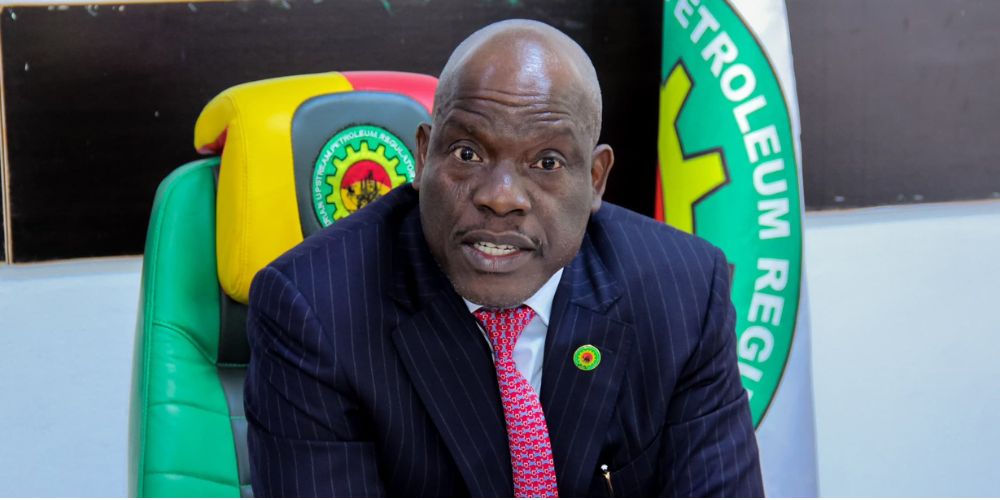
The NUPRC Chief Executive, Gbenga Komolafe, confirming the target, said, “And we all know the importance of that; we’re ramping up federal revenue. Last year, that is for 2024, you remember that the commission achieved and surpassed its revenue generation by about 163 per cent. This year, our target has been increased to about N15tn.

“So, the commission, recognising that, we have equally devised a strategy. Of course, N15tn is so large, but then we are not daunted; we are not intimidated. Rather, we are defining a strategic approach to achieve that target.”

The report also confirmed the recovery of $459,226 from outstanding obligations, part of a cumulative debt of $1.436bn from various crude oil lifting contracts, leaving a balance of

$1.435bn.

The NUPRC noted that the recovered sum was part of the revenue-sharing reconciliation between NNPCL and the Federation, overseen by the Technical Sub-Committee of the Alignment Committee on the Reconciliation of Indebtedness.

The commission’s mid-year revenue trails the proportional benchmark compared to its N12.25tn actual earnings for the whole of 2024. At the current pace, revenues could end the year below target unless oil output increases significantly and arrears payments accelerate.

Experts speak

Industry experts cautioned the Federal Government against turning the NUPRC into a primarily revenue-generating agency, warning that excessive taxation and an unfriendly business climate could further drive away investment from the nation’s oil and gas sector.

Speaking in separate interviews with The PUNCH, an energy analyst, Dayo Ayoade, and a petroleum engineer, Bala Zaka, said the government risked “killing the goose that lays the golden eggs” if it prioritised revenue collection over creating a stable, investor-friendly regulatory environment.

See also  N804bn arms imports spark calls for local production

Ayoade, a lecturer and energy policy analyst, explained that while revenue generation was critical to national development, conflating regulatory oversight with aggressive revenue mobilisation could distort the NUPRC’s mandate.

“Revenue generation is always going to be a taxation issue; people have to pay their dues and taxes. But when you make a regulator a revenue-generating agency, that becomes problematic,” he said.

“The job of the NUPRC is essentially to be the technical and commercial regulator of the upstream oil and gas sector. They are not the FIRS and are not a revenue-generating company. Under the Petroleum Industry Act, the commission collects fees and payments from oil and gas companies for government revenue, but it must balance this with its regulatory responsibilities.”

He warned that excessive fiscal pressure on oil companies could lead to disinvestment, as firms relocate to friendlier jurisdictions.

“If the regulator focuses too much on extracting money from companies, it could injure or even kill the goose that lays the eggs. International oil companies might decide Nigeria is no longer worth the trouble and move to other countries with safer regulatory climates,” he said. “If regulation suffers because of the obsession with revenue, the whole country will suffer in the long run.”

On his part, Zaka blamed the current revenue challenges in the oil sector on years of “business climate hostilities”, which, he said, had driven many international players out of the country.

“When we talk about revenue generation, you look at different sectors, but in Nigeria, the oil sector is the principal source. Unfortunately, the industry has been experiencing hostilities for years, and now the chickens have come home to roost,” he said.

See also  Nigeria’s foreign reserves highest since 2019 — Tinubu

According to him, divestments by multinationals were not simply portfolio adjustments as claimed by the government at the time, but a direct reaction to harassment, sabotage, community extortion, and rising security costs.

“These companies moved to East Africa, where they are now drilling and exploring in new areas. Meanwhile, the indigenous firms that took over onshore and shallow-water facilities are not aggressively exploring or building reserves. They are content with the money they are making without increasing production,” he said.

Zaka noted that production shortfalls had inevitable consequences for government revenue. “If production is high, you make more revenue. But because hostilities persisted in places like Warri, companies relocated to Port Harcourt, and now some are even moving to Lagos. The truth about our revenue generation ability was always going to come out, and now we are seeing it physically,” he added.

Both experts urged the government to focus on improving security, reducing regulatory bottlenecks, and incentivising exploration if it wants to sustainably grow oil revenue without crippling the sector’s future.

FOLLOW US ON:

FACEBOOK

TWITTER

PINTEREST

TIKTOK

YOUTUBE

LINKEDIN

TUMBLR

INSTAGRAM

Continue Reading
Click to comment

Leave a Reply

Your email address will not be published. Required fields are marked *

Business

Forum dismisses claims of N210tn missing in NNPC accounts

Published

on

A coalition of professionals under the Ajiyya Solidarity Forum has dismissed allegations that about N210tn is missing from the accounts of the Nigerian National Petroleum Company Limited (NNPC).

Addressing journalists on Thursday, ASF National Coordinator, Usman Hamza, described the claim as “mathematically impossible” and politically motivated.

The group’s position is in response to a recent claim by the Chairman of the Senate Public Accounts Committee, Ahmed Wadada, that the NNPC Limited could not account for about N210tn.
Hamza said such a figure was misleading.

“Senator Wadada’s claim of N210tn ‘unaccounted for’ funds is a mathematical impossibility designed to shock the public,” Hamza said.

He argued that the claim did not align with Nigeria’s fiscal reality, noting that the country’s entire 2024 national budget stood at about N28.7tn.

“To suggest that a single entity ‘lost’ nearly eight times the national budget is an insult to the intelligence of Nigerians,” he added.

The forum also condemned threats of arrest warrants against former officials of NNPCL, including former Chief Financial Officer, Umar Ajiya, describing the move as part of a coordinated campaign of political blackmail.

According to the group, the Senate committee may have misinterpreted financial figures by combining accrued expenses and receivables in a way that falsely suggests missing funds.

“We consider that the committee has erroneously ‘netted’ N103tn in accrued expenses, largely joint venture liabilities, with N107tn in receivables owed to NNPCL. Labelling money owed to a company as ‘missing funds’ is a professional travesty,” Hamza stated.

During the ongoing review of the financial records of Nigerian National Petroleum Company Limited, the Senate Public Accounts Committee, chaired by Wadada, had raised concerns over alleged discrepancies running into trillions of naira.

The ASF maintained that the allegations ignored the broader financial and structural reforms undertaken by the national oil company in recent years.

See also  Nigeria’s foreign reserves highest since 2019 — Tinubu

Furthermore, Hamza mentioned that the tenure of former CFO Ajiya coincided with the transition of the national oil firm into a commercial entity under the Petroleum Industry Act, a reform that ended decades of opaque financial reporting.

“Mr Ajiya’s tenure saw the transition of NNPC into a commercially driven entity and the publication of the first audited financial statements in 43 years,” the forum stated.

ASF defended the N5.9bn cost incurred during the transition process of NNPC to NNPC Limited, saying it covered complex legal and structural reforms required to transform the former state corporation into a limited liability company.

The forum warned that politicising the Senate’s oversight role could damage Nigeria’s credibility in the eyes of international investors.

“Using the Senate’s hallowed chambers to pursue personal vendettas damages Nigeria’s reputation with international investors,” Hamza said.

The forum further called on the leadership of the Senate to institute an independent ethics investigation into what it described as an alleged demand for bribes linked to the ongoing oversight process.

“We call on the Senate leadership and its Ethics Committee to investigate the alleged bribe demand connected to this oversight exercise,” he said.

He urged lawmakers to stop what he described as the harassment of officials who have already submitted several technical responses to the committee.

“Public accountability should be pursued through a sober forensic review of facts, not through sensational claims and phantom numbers,” he added.

punch.ng

FOLLOW US ON:

FACEBOOK

TWITTER

PINTEREST

TIKTOK

YOUTUBE

LINKEDIN

Continue Reading

Business

Poverty rate jumps to 63% after subsidy removal – Report

Published

on

About 63 per cent of Nigerians fell below the poverty line after the removal of petrol subsidy, according to a new study that examined the welfare impact of the country’s recent economic reforms.

The research, presented at a stakeholders’ dialogue organised by Agora Policy in Abuja on Thursday, showed that the national poverty headcount rose sharply from a baseline of about 49.8 per cent to roughly 63 per cent following the subsidy removal before moderating slightly after the introduction of social protection measures.

The dialogue, themed “Sustaining and Deepening Economic Reforms in Nigeria,” brought together policymakers, economists, civil society leaders, and private sector representatives to examine the effects of the Federal Government’s reform agenda.

Among those present were the Deputy Governor for Economic Policy at the Central Bank of Nigeria, Dr Muhammad Abdullahi; the Special Adviser to the President on Finance and Economy, Ms Sanyade Okoli; the World Bank Senior Economist for Nigeria, Dr Samer Matta; the Country Director of CARE International, Dr Hussaini Abdu; and the Executive Director of Agora Policy, Waziri Adio, among others.

The study, presented by a Senior Lecturer at the  Department of Economics, University of Abuja, Dr Mohammed Shuaibu, analysed the economic and social consequences of key reforms introduced by the Federal Government, including the removal of petrol subsidy and adjustments in electricity tariffs.

President Bola Tinubu had announced the end of petrol subsidy during his inaugural address on May 29, 2023. According to the study, the policy triggered broad price increases across the economy and significantly affected household welfare. “After the subsidy removal, poverty increased from a baseline of about 50 per cent to 63 per cent,” Shuaibu said.

He added that the introduction of social protection measures helped moderate the impact but did not fully reverse the deterioration in welfare conditions. “However, when social protection measures such as cash transfers were introduced, the poverty rate moderated to around 56.2 per cent,” he said.

The findings indicated that the immediate effects of the reform were unevenly distributed across different income groups. While high-income households remained largely insulated from the shocks, low-income households experienced the most severe erosion of purchasing power.

Data from the study showed that poverty among low-income households rose sharply from about 50 per cent before subsidy removal to roughly 63 per cent afterwards, while the national poverty gap widened significantly.

The poverty gap at the national level increased from 31.6 per cent to more than 45 per cent following the policy change, indicating a deeper level of deprivation among poor households.

See also  US crude shipments to Nigeria surge 101% – Report

Although social transfers slightly reduced the gap, the improvement remained limited due to delays in the rollout of intervention programmes and the relatively small scale of support provided.

The study also assessed how the reforms affected household consumption patterns. According to the findings, consumption levels declined across income groups following the removal of the subsidy and the adjustment of electricity tariffs.

“Across the board, household consumption declined following both the subsidy removal and electricity tariff adjustments. However, social transfers helped cushion the impact, especially for low-income households,” Shuaibu said.

The analysis showed that the effect on consumption was particularly pronounced among rural and low-income households, where rising energy and transport costs significantly reduced spending capacity.

Households in urban low-income groups also experienced declines in consumption, although the impact was somewhat moderated where social transfers were introduced.

Beyond household welfare, the research also examined the broader macroeconomic consequences of electricity tariff reforms.

The study found that electricity tariff adjustments resulted in a modest increase in consumer prices, initially raising prices by about 0.26 per cent, which later rose to roughly 0.52 per cent after the inclusion of social protection measures.

However, the electricity reform produced a small positive impact on economic output. According to the analysis, real Gross Domestic Product increased by about 0.42 per cent under the reform scenario before moderating to around 0.21 per cent when social protection programmes were factored into the model.

Firm-level investment also recorded slight gains following electricity tariff adjustments, although these improvements were partly offset by the cost of implementing social protection measures.

In contrast, the removal of the petrol subsidy had a contractionary effect on economic activity. The study showed that rising fuel prices and transport costs triggered inflationary pressures that weighed on business activity and investment.

Beyond the quantitative modelling, the research incorporated insights from focus group discussions conducted across Nigeria’s six geopolitical zones. These discussions involved households and businesses and provided qualitative evidence on how Nigerians were coping with the economic changes.

Participants generally acknowledged the need for reforms given the country’s fiscal and macroeconomic challenges, but many criticised the speed at which the policies were introduced.

Households reported that the reforms rapidly eroded purchasing power and forced many families to adopt survival strategies. “Households adjusted to the shocks not through recovery but through sacrifice,” Shuaibu said.

According to the study, many households responded by cutting consumption, reducing transport use, rationing electricity, and borrowing money to meet basic needs. Several respondents also said they had received little or no assistance from government support programmes designed to mitigate the effects of the reforms.

Businesses reported similar difficulties, noting that rising fuel and electricity costs significantly increased operating expenses. Some firms said they had been forced to raise prices, reduce staff strength, or shut down operations entirely.

See also  Large-scale agriculture driving Edo’s economic growth, says Okpebholo

Others reported switching to alternative energy sources to cope with rising electricity tariffs and fuel costs. However, many business owners said that promised government support programmes had either not reached them or were insufficient to offset rising costs.

The study concluded that while the reforms were necessary to correct structural distortions in the Nigerian economy, their implementation created severe short-term shocks.

Providing a monetary policy perspective at the dialogue, the Deputy Governor of the CBN for Economic Policy, Muhammad Abdullahi, said the reforms became unavoidable because the Nigerian economy had been weakened by deep structural distortions.

“Nigeria faced severe macroeconomic imbalances, economic distortions, and collapsing revenues before major reforms began,” he said.

According to Abdullahi, the country had suffered a dramatic decline in oil revenue over the past decade.

He disclosed that earnings from crude oil fell from about $92bn in 2012 to less than $2bn in 2023, representing a decline of nearly 98 per cent in expected revenue during the period.

The situation, he said, contributed to severe fiscal pressure and made policy reforms unavoidable. The CBN official also noted that Nigeria inherited major distortions in the foreign exchange market, including multiple exchange rate windows that encouraged arbitrage.

According to him, the subsidy regime and exchange rate distortions together were estimated to have cost the Nigerian economy about six per cent of its Gross Domestic Product.

Abdullahi also disclosed that the CBN inherited a backlog of about $7bn in foreign exchange obligations owed to businesses and investors. He said the apex bank had already cleared about $4.5bn of the backlog in an effort to restore confidence in the financial system.

He added that restoring confidence in the foreign exchange market and improving oil sector performance were critical to stabilising the economy. Abdullahi also said Nigeria’s foreign reserve position was weaker than it appeared before the reforms.

Although official reserves were reported to be about $32bn, he explained that much of the funds consisted of borrowed resources and swaps, leaving the country with net reserves of only about $800m.

See also  DisCos blame low generation as grid collapses third time

Despite the difficult transition, he said the reforms were beginning to produce early results. According to him, inflation has been declining steadily for about 19 months, while food inflation is currently at its lowest level in about 13 years.

He added that Nigeria was gradually moving towards single-digit inflation, something the country has not achieved in more than a decade. Abdullahi further stated that net foreign reserves had improved significantly, rising from about $800m to roughly $32bn, a development he said had strengthened international investor confidence.

He also pointed to rising non-oil exports, which reached about $6bn last year, with the government targeting $12bn in the near future.

Also speaking at the dialogue, the Director-General of the Lagos Chamber of Commerce and Industry, Dr Chinyere Almona, said the reforms had corrected several long-standing distortions but had also placed heavy pressure on businesses.

Almona noted that the removal of petrol subsidy alone could save the government about $7.5bn annually, which should be invested in infrastructure and human capital development. “For the private sector, what we want to see is that the savings from the fuel subsidy removal are actually being used to fund infrastructure,” she said.

She explained that rising fuel prices had significantly increased electricity generation costs for businesses. Almona added that while macroeconomic indicators such as reserves and the balance of payments had improved, many Nigerians had yet to experience the benefits.

“The economy is improving at the macro level, but that improvement has not trickled down to the common man and many small businesses,” she said.

She therefore urged the government to introduce complementary policies that would support businesses, including improved access to credit and targeted assistance for small and medium-sized enterprises.

The Chair of Agora Policy, Ojobo Ode Atuluku, said the dialogue was organised to promote evidence-based discussion on Nigeria’s reform agenda. He explained that the initiative was supported by the Nigeria Economic Stability and Transformation programme and the United Kingdom’s Foreign, Commonwealth and Development Office.

World Bank economist Samer Matta urged the government to expand social protection programmes and strengthen the National Social Register to ensure that assistance reaches vulnerable populations quickly.

He added that sustained dialogue and stronger safety nets would be critical to maintaining public support for Nigeria’s economic reforms and ensuring that growth becomes more inclusive.

punch.ng

FOLLOW US ON:

FACEBOOK

TWITTER

PINTEREST

TIKTOK

YOUTUBE

LINKEDIN

Continue Reading

Business

Nigerians most exploited by telecom, energy firms – FCCPC

Published

on

Energy, fintech, and telecommunications companies generate the highest number of consumer complaints in Nigeria, the Federal Competition and Consumer Protection Commission (FCCPC) has declared.

The agency’s Executive Vice Chairman, Tunji Bello, made this known on Thursday while briefing State House correspondents at the Aso Rock Presidential Villa, Abuja. Bello said the commission had received thousands of complaints from Nigerians across these sectors and had recovered over N20bn for consumers as of March 2026.

According to him, the commission resolved more than 9,000 complaints and recovered over N10bn for consumers between March and August 2025 alone.

“Let me tell you where most complaints come from. Mostly on energy, fintech. For energy, people complain about the electricity supply, and so on. That’s where we get most complaints. And that led to recent action in Lagos against a disco. Also fintech. You know, people do a lot of transactions online, and most of them are either given unfair terms.

“Somebody has borrowed money, and then you discover that when they ask to pay back, the interest rate is outrageous. Most of them we have interrogated, and we’ve been able to resolve as many as possible,” Bello stated.

He added that the telecommunications sector and banks also account for significant complaints, noting that the commission receives about 25,000 complaints annually through various platforms. Bello said cumulative recoveries for consumers had exceeded N20bn as of March 2026, up from N10bn recorded in October 2025.

The FCCPC boss also revealed that the commission had begun monitoring petrol prices and other commodities across the country following the escalating United States-Israeli-Iran conflict in the Middle East. He said the agency deployed monitors nationwide to track price movements and prevent fuel suppliers and petrol stations from exploiting Nigerians.

“We are presently monitoring the situation as it affects prices in Nigeria and various prices. Because it’s not just petrol. Petrol has supply effects on some of the things we eat or we take on a daily basis.

“So we are monitoring. I will still want to see it as a temporary measure. But you know, the federal government under the leadership of our president has recorded massive gains in the last two years, and we don’t want to see this as something that will now begin to offset that progress,” Bello said.

See also  Aviation professionals outline paths to sector recovery

He explained that the commission was working with regulators in the petroleum sector to ensure compliance with pricing regulations.

“Whatever the fuel suppliers dictate, if the petrol stations are not complying, those are the things we are trying to monitor. If somebody has reduced N100 or N200 from it and you are still selling your own for N1,500 per litre, we should be able to ask you, ‘ Why are you doing that? So those are the things that our monitors are outside already monitoring developments,” he stated.

Bello also disclosed that the commission was collaborating with the Nigerian Upstream Petroleum Regulatory Commission to strengthen compliance oversight.

In the aviation sector, Bello said the commission would compel airlines that hiked ticket prices during the December 2025 Yuletide period to refund excess charges to passengers who were exploited.

He disclosed that investigations into price-fixing allegations involving about five or six airlines had been concluded and that the commission would soon release its final report with penalties.

“We investigated following the complaints that they fixed prices during the Christmas period. Prices of airline tickets were around N45,000 to N50,000, and suddenly became N400,000 to N500,000, from N400,000 to N670,000 during the Christmas period. So we followed up through our investigation, and we were able to conclude that it was a kind of price-fixing mechanism,” Bello said.

He added that the preliminary report had already found the airlines culpable of price exploitation. “The preliminary report already found them wanting in that regard, so the final report is going to be issued very soon.

“And what we are also considering is to look at a situation where we have to ask them to refund the excess to the passengers, which they exploited. So those are some things we are considering. By the time we come up with the final report, you will see that,” he stated.

When pressed to name the airlines involved, Bello declined but confirmed that about five or six carriers were under investigation. “I know about five or six, but I don’t want to mention names,” he said.

The commission’s action followed complaints from Nigerians who travelled during the Christmas and New Year period and were forced to pay exorbitant fares for domestic flights due to high demand and limited seat availability.

See also  Davos: Nigeria can capture global supply chains, says Okonjo-Iweala

Many travellers had taken to social media to protest the sudden spike in ticket prices, describing them as exploitative given the prevailing economic hardship. Bello said preliminary findings suggested that the airlines might have engaged in collective price-fixing, a practice prohibited under the Federal Competition and Consumer Protection Act.

Price-fixing occurs when competing businesses agree to set prices at a certain level rather than allowing market forces to determine pricing, and it is considered anti-competitive behaviour punishable under Nigerian law. Previous enforcement actions by the FCCPC have typically focused on fines and penalties payable to the government.

During the briefing, the FCCPC also addressed concerns about electricity tariff bands, with officials defending the Band A classification while acknowledging that consumers are not always receiving the promised 20 hours of daily power supply.

The Commission’s Executive Commissioner of Operations, Louis Odion, explained that the commission’s role was not price control but ensuring that consumers were not exploited through the pricing of products or services.

“We are not a price control agency, but what we try to do is to ensure that consumers are not exploited, either by way of the pricing of products or services. In the electricity sector, that is where we have most of the challenges that consumers contend with in this country,” he said.

Odion disclosed that Band A consumers, who pay higher tariffs, are entitled to at least 20 hours of electricity supply daily, while Band B consumers should receive 16 hours. He urged consumers to formally complain when they do not receive the promised hours of supply, noting that the commission operates an evidence-based system.

“A lot of times, if you go ask them, they will tell you this estate is actually on Band A, but we haven’t received any formal complaint from the estate as to the fact that this is the number of hours of electricity we are receiving. Our operational work is evidence-based. If we do not have evidence of a particular issue, we are not able to actually act on it,” he explained.

On prosecution powers, the commission’s Head of Legal Services, Chizenum Nsitem, revealed that the FCCPC had prosecuted over 25 cases since the operationalisation of the Federal Competition and Consumer Protection Act in 2019.

See also  DisCos blame low generation as grid collapses third time

“At the last count, we have over 25 cases that we have been able to prosecute, given the infractions of the provisions of the FCCPA. For the fear of being prosecuted, undertakings have complied relatively with provisions of the FCCPA,” Nsitem said.

He disclosed that the commission currently has over 30 cases pending at the Federal High Court and the FCCPC Tribunal, including five cases at the Court of Appeal where undertakings have appealed tribunal decisions.

The legal chief cited Section 20(2) of the FCCPA, which empowers legal officers to prosecute on behalf of the commission, and Section 113, which allows referral of cases to the Attorney-General of the Federation.

The FCCPC was established to protect and promote the interests and welfare of consumers, ensure that consumers’ rights are respected, and provide them with access to information to make informed choices.

Nigeria’s aviation sector has faced criticism over fluctuating ticket prices, with airlines attributing high fares to rising aviation fuel costs, foreign exchange challenges, and operational expenses.

On cement prices, Bello said the commission had set up an investigative team to probe pricing across the federation following complaints from Nigerians.

“We are already investigating the cement prices across the Federation. I don’t want to preempt that investigation. We have set up an investigative team already. They are going around at the moment. And I’m sure by the time we come out with our full report, it will be published, and everybody will see,” Bello said.

On telecommunications tariffs, Bello revealed that the FCCPC worked with the Nigerian Communications Commission last year to reduce a proposed 100 per cent tariff increase by telecom companies to 50 per cent.

“Last year, when they were going to increase the rates telecoms were charging, through our MOU with them, they consulted us. The telecom companies were going to increase by 100 per cent. We persuaded through that negotiation that no, you cannot, because of the inflation rate at that time. We were able to manage them to come down to 50 per cent,” Bello said.

punch.ng

FOLLOW US ON:

FACEBOOK

TWITTER

PINTEREST

TIKTOK

YOUTUBE

LINKEDIN

Continue Reading

Trending