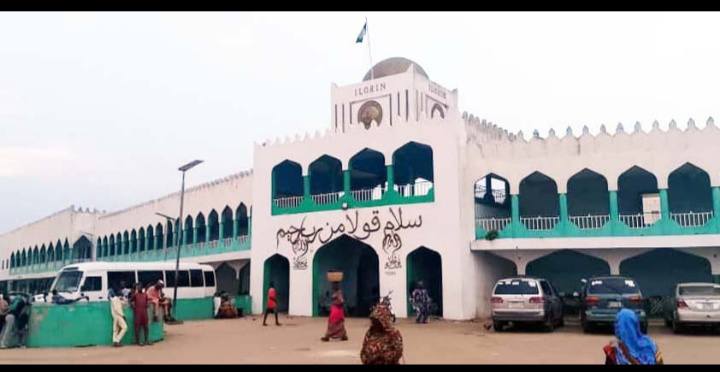
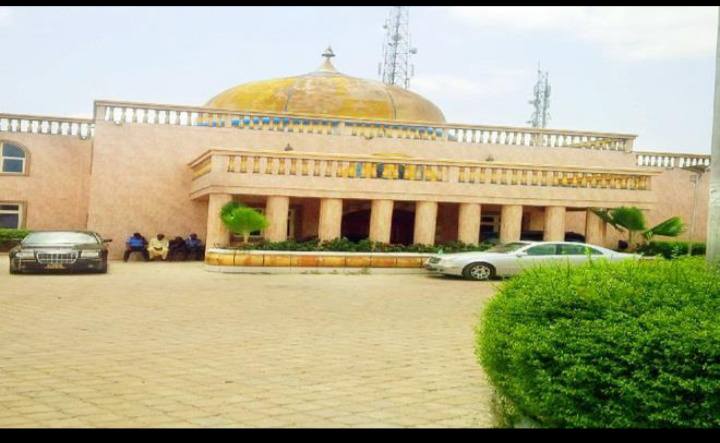
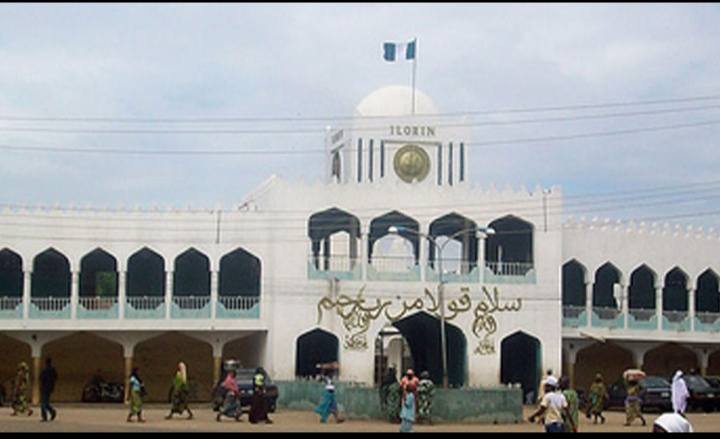
Ilorin… a city of mystery, history, and endless debate.
When you walk through its streets today, you hear Yoruba language, see Yoruba dressing, and feel Yoruba culture everywhere. But when you look at the palace, you bow to a Fulani Emir, not a Yoruba king.
So the question that has divided historians, politicians, and ordinary people for two centuries remains:
Who is the true owner of Ilorin – the Yorubas or the Fulanis?
Let’s break it down:
The Ancient Yoruba Roots
Before the names Afonja and Shehu Alimi ever entered the story, Ilorin was already a Yoruba settlement.
It was originally part of the powerful Oyo Empire. Hunters, farmers, and blacksmiths settled there, using a grinding stone to sharpen their tools. That stone gave the town its name: “Ìlórin” – literally meaning the place of sharpening.
Ilorin was not an isolated village. It was a frontier outpost of the Oyo Empire, positioned to guard against northern invaders. The early inhabitants were Yorubas—people tied to Oyo’s traditions, religion, and political system.
So from the very beginning, the roots of Ilorin were Yoruba. Its name, its land, its people.
The Rise of Afonja and the Turning Point
The real drama began in the early 1800s with Afonja, the legendary Are-Ona-Kakanfo (the generalissimo of Oyo).
Afonja was stationed in Ilorin, but conflict broke out between him and the Alaafin of Oyo. Hungry for independence, he rebelled against the king. To strengthen himself, Afonja invited Shehu Alimi, a Fulani Islamic scholar, to Ilorin.
At first, this alliance looked clever. Alimi’s followers were brave, united, and inspired by the great Sokoto Jihad of Usman dan Fodio. They provided Afonja with spiritual legitimacy and military strength.
But what Afonja didn’t realize was that he had opened the gates of Ilorin to a new power.
The partnership broke down. Afonja was eventually betrayed and killed—many say through Alimi’s influence. With Afonja gone, the Yoruba grip on Ilorin collapsed.
This was the turning point.
The Fulani Takeover and the Birth of the Emirate
After Afonja’s fall, Shehu Alimi’s followers took charge. By the 1820s, Ilorin had transformed from a Yoruba outpost into an Emirate under the Sokoto Caliphate. The throne of Ilorin became the seat of a Fulani emir, tied directly to Sokoto.
But here is the irony—while the rulers were Fulani, the city itself remained Yoruba in culture. The people spoke Yoruba, dressed Yoruba, sang Yoruba, and still held on to their traditions—though now under
Islamic influence.
This created a dual identity that still exists today:
Yoruba by culture and population.
Fulani by rulership and political history.
That’s why Ilorin is unlike any other city in Nigeria. It is not fully Hausa-Fulani like Kano or Sokoto. It is not fully Yoruba like Ibadan or Oyo. It is something in-between, a hybrid identity born out of history, betrayal, and politics.
So, Who Truly Owns Ilorin?
Here’s where the debate never ends.
If you ask a historian, they will tell you:
Ilorin is originally Yoruba land. Its name, its founders, its early culture—all Yoruba.
But if you ask about rulership, they’ll say:
Ilorin has been a Fulani Emirate for 200 years. Its kingship belongs to the descendants of Shehu Alimi, tied to the Sokoto Caliphate.
And that is why Ilorin remains one of the most contested cities in Nigeria’s history. A place where Yoruba men bow to a Fulani Emir, where the call to prayer has replaced the talking drums of the Oyo priests, and where history itself refuses to be silent.
Now I throw the question back to you:
Do you see Ilorin as a Yoruba city under Fulani rulers?
Or has it become a Fulani city with Yoruba population?
Drop your thoughts below. Let’s settle this once and for all in the comments!
In Nigeria, you sometimes hear people say, “If not for me, where would you be today?”
It could be a politician reminding constituents of the favours he claims to have done for them. It could be a wealthy businessman telling a former employee that they would still be struggling without him. It could be a family member reminding a younger relative of the school fees they paid, the business they financed, or the connections they provided.
Sometimes, even after the person has become successful, the reminder never stops.
But does helping someone succeed give you permanent ownership of their achievements?
Let’s look at the Nigerian reality.
A young Nigerian gets a job through someone’s connection. Years later, that young person builds a successful career through hard work, experience, sacrifice, and personal determination. Yet the person who introduced them to the employer continues to claim all the credit.
A young entrepreneur receives financial support from a relative and turns a small business into a thriving company. Instead of celebrating the entrepreneur’s growth, the relative repeatedly reminds everyone, “I was the one who made him rich.”
In politics, some Nigerian leaders speak as though providing roads, scholarships, appointments, or other public benefits means citizens must remain personally loyal to them. But public service is not a personal favour when it is funded by public resources.
Here is the uncomfortable question: When does gratitude become control?
Let us be fair. Many Nigerians have succeeded because someone believed in them when nobody else did. Parents sacrificed their comfort, relatives paid school fees, mentors opened doors, and friends provided support during difficult times. Those contributions should never be dismissed.
But opening a door is not the same as walking the entire journey.
The person who helped you deserves appreciation. The person who worked hard to build a future also deserves recognition.
Nigerians must learn to distinguish between being grateful to someone and becoming permanently indebted to their ego.
If you helped someone become successful, celebrate your contribution without trying to control their decisions forever. And if someone helped you, never allow success to erase your memory or turn you into an ungrateful person.
NEWSBREAK365 ASKS:
In Nigerian society, have you noticed how some people use past favours to demand lifelong loyalty?
1️⃣ Is it right to keep reminding someone of what you did for them?
2️⃣ If you helped someone get a job or start a business, do you deserve credit for their entire success?
3️⃣ Should Nigerians remain loyal to politicians simply because those politicians once helped them?
4️⃣ Have you ever seen a relationship damaged because someone kept saying, “I made you who you are today”?
💬 Drop your opinion in the comments. Let’s have an honest discussion.
Share this post with someone who believes in gratitude—but also understands the importance of personal independence.
Follow Newsbreak365 for bold conversations about Nigerian society, politics, relationships, culture, and everyday life.
In Nigeria today, one question deserves serious attention: Have we reached a point where the amount of money you have matters more than how you made it?
Look around. Someone builds a mansion, buys an expensive SUV, wears designer clothes, or sprays bundles of ₦1,000 notes at parties, and suddenly, everybody wants to associate with them. They are celebrated, respected, and treated like champions—even when nobody knows the true story behind their wealth.
But why are we so quick to celebrate money without asking questions?
Millions of Nigerians wake up every morning to work honestly. Traders struggle to keep their businesses alive. Teachers work hard for their salaries. Young graduates search endlessly for jobs. Parents make sacrifices to feed their children and pay school fees. Yet, some people feel that honest work is too slow and that becoming rich by any means necessary is the only way to survive.
That is where the real danger begins.
When society celebrates wealth without integrity, some people may become tempted by internet fraud, scams, corruption, exploitation, and other harmful practices. Others may even turn to alleged ritual practices because they believe wealth must come at any cost.
The problem is not that Nigerians want to become rich. The problem is when the desperation to become rich destroys people’s conscience.
Think about the message we are sending to the younger generation. When a young person sees someone flaunting millions online and receives more admiration than a hardworking professional, what lesson are we teaching?
Are we teaching our children to value education, creativity, patience, and honest business? Or are we teaching them that the only thing that matters is having money, regardless of its source?
At parties, we celebrate the person spraying cash. On social media, we admire the person showing off a fleet of cars. In some communities, people who suddenly become wealthy receive praise before anyone considers how that wealth was acquired.
Meanwhile, honest people who are struggling financially can be mocked, ignored, or treated as failures.
WHEN DID POVERTY BECOME A SHAME, AND WHEN DID QUESTIONABLE WEALTH BECOME A BADGE OF HONOUR?
Nigeria needs a change in values. We need to celebrate honest entrepreneurs, hardworking workers, innovative young people, and those who build successful businesses without destroying other people’s lives.
We must also stop confusing expensive possessions with genuine success. A luxury car does not prove good character. A mansion does not guarantee peace of mind. And a fat bank account does not automatically make someone a role model.
There is nothing wrong with dreaming of wealth. Nigerians deserve good jobs, profitable businesses, financial freedom, and a better quality of life. But no amount of money should be worth sacrificing your humanity, integrity, or another person’s future.
LET’S HAVE AN HONEST NIGERIAN CONVERSATION!
👇 QUESTION 1: Do you think Nigerian society celebrates wealthy people too much without asking how they made their money?
👇 QUESTION 2: Has the pressure to become rich made some young Nigerians lose sight of the value of honest work?
👇 QUESTION 3: If someone is rich but acquired their wealth through dishonest or harmful means, do they deserve to be celebrated?
In Nigeria today, if you drive an expensive car, build a mansion, wear designer clothes, and spray money at parties, many people will automatically call you a successful person.
Nobody asks questions. Nobody looks deeper. Everybody wants to associate with you!
But if you live in a modest house, drive an ordinary car, and live within your means, some people will look down on you as if you have failed in life.
What a dangerous way to measure human worth!
We live in a society where appearances can earn you more respect than character, where people are celebrated for displaying wealth but rarely questioned about the values behind it.
A man may build a magnificent mansion while his family is falling apart. A woman may post beautiful pictures every day while struggling emotionally. Someone may spray millions of naira at parties but owe people money. Another person may be living quietly, paying their bills, raising their children, and building a secure future without making noise on social media.
Who is truly successful?
The problem is not wealth. There is absolutely nothing wrong with being rich, driving a luxury car, or living in a beautiful house. The problem begins when we judge people entirely by what they possess instead of who they are.
In Nigeria, we must stop teaching our children that success means becoming rich at all costs. We must stop worshipping politicians and celebrities simply because they display wealth. We must stop assuming that everybody who travels abroad is doing better than those who remain at home.
A person’s lifestyle is not proof of their character, the source of their wealth, or the happiness they experience behind closed doors.
Dear Nigerians, learn to think beyond what your eyes can see. Ask questions. Examine facts. Value integrity over intimidation, wisdom over showmanship, and peace of mind over public applause.
Because at the end of the day, the size of your house cannot measure the quality of your life, and the price of your car cannot determine your worth as a human being.
LET ME ASK YOU A QUESTION:
If a Nigerian man drives a ₦150 million car but has no peace of mind, while another man drives an ordinary car, pays his bills, has a loving family, and sleeps peacefully every night, WHO IS TRULY RICH?
Are we celebrating genuine success in Nigeria, or have we become prisoners of appearances?
Drop your honest opinion in the comments. Let’s have a serious discussion!
Share this message if you believe Nigerians need to change the way they define success.