

The Federal Government has faulted the World Bank’s assessment of Nigeria’s debt position, dismissing concerns that interest payments of N7.7tn in the first half of 2026 threaten the country’s debt sustainability.
The Federal Ministry of Finance described reports that interest payments amounted to 124 per cent of Federal Government revenue during the period as misleading, arguing that the calculation relied on incomplete revenue figures and included debt obligations serviced on behalf of state governments.
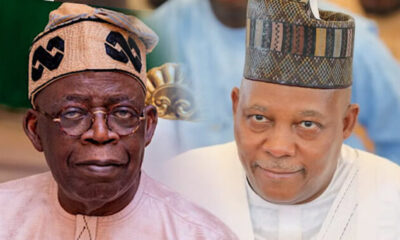
The ministry stated its position in a statement issued on Sunday and shared on X by the Minister of Finance and Coordinating Minister of the Economy, Taiwo Oyedele.
According to the ministry, Nigeria’s fiscal position had improved, with revenue growing faster than interest payments.
It said, “The Federal Ministry of Finance has noted recent analysis and public commentary which, citing the World Bank’s October 2026 Nigeria Development Update, claims that Federal Government interest payments reached 124 per cent of revenue in the first half of 2026. This conclusion is misleading, for three reasons.”
The response followed reports based on the World Bank’s October 2026 Nigeria Development Update, which put Federal Government revenue at N6.2tn and interest payments at N7.7tn in the first half of the year.
An analysis of the published figures by The PUNCH showed that interest payments represented approximately 124.2 per cent of revenue, exceeding revenue by N1.5tn. The ratio was calculated from the figures published by the World Bank and was not expressly stated in the report.
However, the ministry argued that the calculation compared obligations covering multiple tiers of government with revenue attributed solely to the Federal Government.
“The interest figure includes debt the Federal Government services on behalf of other tiers of government, including external loans to states. Measuring this against federal revenue alone overstates the ratio, which is only meaningful when debt and revenue cover the same level of government,” it said.
The ministry also argued that the revenue figure excluded income earned by government agencies and enterprises but not yet remitted to the Treasury.
It added that statutory payment schedules meant some taxes were collected predominantly in the second half of the year, making first-half revenue an incomplete basis for assessing annual debt obligations.
According to the ministry, the interest-to-revenue ratio stood at 156 per cent in the first half of 2025, compared with approximately 124 per cent in the corresponding period of 2026.
It said the full-year debt-service-to-revenue ratio had fallen below 60 per cent, compared with 97 per cent before the current administration’s reforms, describing the reduction as evidence of improved fiscal management.
The ministry further stated that Federal Government revenue rose by 72 per cent, from N3.6tn in the first half of 2025 to N6.2tn in the corresponding period of 2026, while interest payments increased by 38 per cent, from N5.6tn to N7.7tn.
Consequently, it said, the interest-to-revenue ratio declined by about 32 percentage points, while the gap between interest payments and revenue narrowed from N2tn to N1.5tn.
“This is the result of reforms working, not a sign of fiscal distress,” the ministry declared.
It also rejected the use of a six-month fiscal snapshot as a definitive measure of debt sustainability, arguing that full-year projections provided a more appropriate assessment.
“The same World Bank report projects Nigeria’s full-year 2026 debt service, covering both interest and principal, at 46 per cent of revenue. This is the appropriate benchmark, and a guide to avoid the invalid conclusions being drawn,” the statement read.
The ministry also defended the Federal Government’s borrowing programme, insisting that all loans obtained by the current administration were lawful and duly approved.
It maintained that every naira borrowed fell within the limits authorised by the National Assembly under the 2026 Appropriation Act and the approved borrowing plan.
According to the statement, government borrowing complied with the Fiscal Responsibility Act 2007 and the Debt Management Office (Establishment) Act 2003, while details of the country’s debt obligations were regularly published by the Debt Management Office.
However, despite challenging the World Bank’s assessment and questioning the basis of the interest-to-revenue calculation, the ministry did not provide revised revenue and interest-payment figures or an alternative ratio to substantiate its position.
W’Bank’s $1.25bn loan
Meanwhile, the Federal Government will begin repaying the principal on a $1.25bn World Bank loan in December 2031, with the final instalment on one of the facilities due in June 2060, according to financing agreements reviewed by The PUNCH.
The facility, secured under the Nigeria Actions for Investment and Jobs Acceleration Development Policy Financing programme, is intended to support reforms aimed at expanding access to credit, improving electricity supply, strengthening trade competitiveness and increasing government revenue.
The PUNCH reported in July 2026 that the World Bank had approved the $1.25bn facility amid public concerns over Nigeria’s rising debt burden and calls for the Federal Government to reduce external borrowing.
In an earlier statement, the Washington-based bank said it had approved the Nigeria Actions for Investment and Jobs Acceleration Development Policy Financing operation to support Nigeria’s transition towards a more inclusive growth model that would stimulate growth and create jobs.
The bank said the operation would support reforms to strengthen the foundations for growth and competitiveness.
“These include deepening capital markets, modernising the regulatory framework for the digital economy and e-governance, advancing power sector reforms to accelerate electrification, lowering trade barriers in line with Nigeria’s ECOWAS and AfCFTA commitments to help ease price pressures, improving access to quality agricultural seeds, and strengthening domestic revenue mobilisation,” the statement added.
The loan was the second-largest single World Bank facility secured by Nigeria under President Bola Tinubu, after the $1.5bn Reforms for Economic Stabilisation to Enable Transformation Development Policy Financing approved in June 2024.
Documents reviewed by The PUNCH showed that the $1.25bn financing comprises a $750m concessional credit from the International Development Association and a $500m loan from the International Bank for Reconstruction and Development, both institutions of the World Bank Group.
Differing repayment periods
Principal repayments on both facilities will begin on December 15, 2031, but their maturity dates differ. The IDA credit is scheduled to be fully repaid by June 2051, while the IBRD loan runs until June 2060.
The IDA provides concessional financing to low-income countries on more favourable terms, while the IBRD lends primarily to middle-income and creditworthy lower-income countries on market-linked terms.
The agreements were signed on behalf of Nigeria by the Minister of Finance, Taiwo Oyedele, on October 6, 2026, while the World Bank’s Country Director, Mathew Verghis, signed on June 30, 2026.
According to Schedule 2 of the IDA financing agreement, Nigeria will repay 2.5 per cent of the $750m credit every six months, beginning on December 15, 2031, and ending on June 15, 2051.
This amounts to $18.75m in principal repayments every six months, or $37.5m annually during full repayment years, excluding interest and other applicable charges.
For the $500m IBRD facility, the repayment schedule provides for semi-annual principal instalments of 1.72 per cent from December 15, 2031, through December 15, 2059, followed by a final instalment of 1.96 per cent on June 15, 2060.
The regular instalments amount to approximately $8.6m every six months, while the final principal payment is about $9.8m.
Combined, the facilities will require principal repayments of approximately $27.35m every six months between December 2031 and June 2051, equivalent to $54.7m annually during full repayment years.
The repayment obligations will extend across several administrations, with the final principal payment on the IBRD facility falling due nearly 34 years after the agreements were signed.
The schedules cover principal repayments only and do not represent the total cost of borrowing, which will also include interest and applicable charges.
Under the IBRD agreement, the interest rate is determined by the reference rate plus a variable spread. The IDA credit carries an interest charge calculated using the reference rate plus a variable spread, less 250 basis points.
The IDA agreement states, “The Interest Charge is the Reference Rate plus the Variable Spread minus 250 basis points,” subject to applicable rate limits and possible conversions.
The IBRD loan also attracts a front-end fee of 0.25 per cent, equivalent to $1.25m, as well as an annual commitment charge of 0.25 per cent on the undisbursed balance.
For the IDA credit, the agreement provides for a maximum annual commitment charge of 0.5 per cent on the undisbursed financing balance.
The documents do not specify a fixed dollar amount for total interest payments over the repayment period. The eventual borrowing cost will therefore depend on the applicable rates and other contractual provisions.
The $750m IDA credit is structured for disbursement in a single tranche, subject to the World Bank’s assessment of Nigeria’s economic policies and implementation of the agreed reforms.
The $500m IBRD facility is divided into two withdrawal tranches of $249.375m each, with the remaining $1.25m allocated to the front-end fee.
Release of the second tranche depends on satisfactory progress in implementing the programme, maintaining an adequate macroeconomic framework and completing agreed policy actions.
Under the IBRD agreement, if the government fails to take satisfactory corrective measures within 90 days of receiving notice from the bank, the lender may cancel part or all of the undisbursed balance.
Both agreements have a closing date of December 31, 2027.
Areas of reforms
The agreements identify two broad areas of reform: improving access to financial credit, digital services and electricity, and strengthening competitiveness through trade, taxation and agricultural reforms.
Among the measures recognised are the Investment and Securities Act 2025, the National Integrated Electricity Policy, electricity metering reforms and regulations facilitating private investment in interconnected mini-grids.
The government also committed to implementing trade reforms under the African Continental Free Trade Area, including the gradual liberalisation of 90 per cent of tariffs on goods from African countries over 10 years.
Other measures include removing import bans on specified essential food products and inputs, reducing import adjustment taxes on selected commodities by at least 25 per cent in 2026, and progressively eliminating applicable adjustment taxes between 2027 and 2036.
On taxation, the agreements recognise the introduction of mandatory electronic invoicing for Value Added Tax, a 15 per cent minimum effective tax rate for large companies and multinational enterprises, and an increase in the maximum personal income tax rate from 24 to 25 per cent.
The financing arrangements also impose reporting and accountability requirements on the government.
Nigeria is required to maintain dedicated dollar accounts for receiving the proceeds and ensure that equivalent amounts are reflected in its budget management system.
The Federal Ministry of Finance must report the amounts received, relevant account details and records of transactions to the World Bank within 30 days of each withdrawal
The agreements also require the accounts to be audited by auditors of the Central Bank of Nigeria acceptable to the World Bank. Certified audit reports must be submitted within four months of withdrawal and made publicly available.
The financing is intended to support Nigeria’s economic reform programme, with disbursement conditional on satisfactory implementation of the agreed measures and maintenance of an adequate macroeconomic policy framework.
Source: punchng.com
FOLLOW US ON: