Connect with us

Business

Marketers blame depots as petrol nears N1,000/litre

Published

on

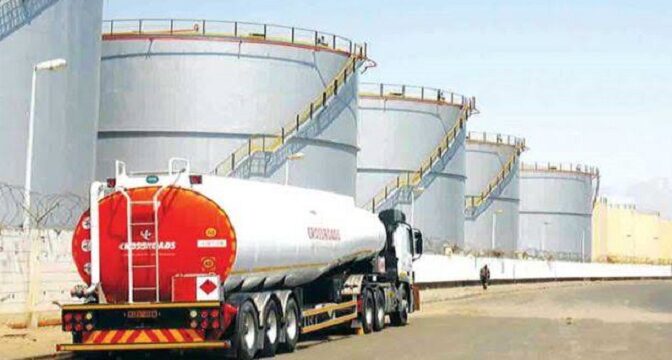
Amid worsening supply challenges and rising pump prices, petroleum marketers have begun moves to import petrol independently as the commodity moved close to the N1,000 per litre mark across major cities in the country.

Marketers said supply constraints and production glitches at the Dangote Petroleum Refinery sparked fresh pressure in the downstream oil market.

The National Publicity Secretary of the Independent Petroleum Marketers Association of Nigeria, Chinedu Ukadike, confirmed the development in a telephone interview with The PUNCH on Tuesday.

According to him, members of the Depot and Petroleum Products Marketers Association of Nigeria are concluding arrangements to begin petrol importation as part of efforts to stabilise retail prices.

He stated that petrol prices would soon drop as competition returns to the market, if additional competition is brought into the sector.

“Yes, petrol price is still going to come down because I also know that some marketers, especially DAPPMAN members, have applied and they are going to import petrol products.

“Peradventure, their prices are cheaper than Dangote’s, we would have no choice but to patronise them. The essence of this market is that where it is cheaper, we will buy. But prices will come down once there is a struggle for the market,” Ukadike said.

The PUNCH reports that petrol prices rose from about N865 to around N950 per litre on Monday.

Checks by The PUNCH on Tuesday showed that the pump price of Premium Motor Spirit, popularly called petrol, now sells between N920 and N955 per litre in many retail outlets, while some stations in Abuja, Sokoto and Lagos charge as high as N1,000 per litre, depending on location and brand.

This comes at a time when Nigerians were expecting petrol prices to drop to N841/litre as recommended by the Dangote refinery.

Our correspondent recalls that when the Dangote refinery launched its logistics-free fuel distribution scheme on September 15, it stated that its partners and filling stations benefitting from the scheme would drop petrol prices to N841 in the South West and N851 in Abuja, Edo, Kwara, Rivers and Delta.

But when this had yet to take effect in filling stations, prices surged above N900 in Lagos, Ogun Abuja and others.

In the Federal Capital Territory, a market survey by one of our correspondents revealed that petrol sold for N955 per litre at NNPC outlets in Gwarinpa and Lugbe, while prices climbed to N928 per litre at NNPC stations in Lagos.

In parts of Edo, Rivers, Oyo and Gombe states, motorists purchased the product at prices ranging from N900 to N1,000 per litre, amid reports of long queues and panic buying.

The latest spike has raised concerns among motorists and consumers already grappling with high transportation and food costs, threatening to further fuel inflationary pressures across the country.

See also  Terrorism: Police tighten S’East security as Kanu knows fate today

Reacting, the Independent Petroleum Marketers Association of Nigeria has blamed depot owners for the sudden surge in petrol prices.

IPMAN President, Abubakar Shettima, told The PUNCH that depot owners increased their prices when they discovered that the Dangote refinery had stopped fuel loading for some days.

Our correspondent reports that depots hiked their prices on Monday from an average of N830 to about N890.

According to Petroleumprice.com, depots like Matrix, Fynefield and Liquid Bulk sold petrol at N900 as of Tuesday. Northwest offered N895; Pinnacle, N885; RainOil, N890; NIPCO, N850; Aiteo, N878; and Sigmund, N890.

Following this, filling stations adjusted their pump prices to reflect the new pricing regime.

The Nigerian National Petroleum Company Limited retail outlets sold premium motor spirit at N928 in Ogun and Lagos, an increase of about N50 from the previous N870.

The adjustment also marks a reversal of the price reduction introduced in August, when NNPC lowered petrol prices to N865 per litre in Lagos and N890 per litre in Abuja.

Speaking with our correspondent, the NNPC spokesperson, Andy Odeh, said the NNPC adjusted its pump prices like every other retail outlet because the depots increased their gantry rates.

“The ex-depot prices have gone up. You know all the filling stations are retailers. So, when the price goes up ex-depot, there will be an adjustment by the retailers. That’s what has happened and it’s across all the retailers,” the NNPC spokesperson said.

In Ogun and Lagos, filling stations sold petrol at prices ranging from N900 and N950 on Tuesday. Dangote’s partner, MRS, also sold the product at N925 in Ogun.

Our correspondent gathered that the Dangote refinery stopped selling petrol to marketers recently, causing a tightness in supply.

The Dangote refinery has yet to respond to questions seeking further clarification about the development.

However, sources said this might be due to ongoing maintenance or the challenges posed by the mass sacking of engineers at the facility.

In an interview with our correspondent, the President of IPMAN, Shettima said members of the Depot and Petroleum Products Marketers Association of Nigeria hiked fuel prices following the no-loading situation at the 650,000-capacity refinery.

“These DAPPMAN people are the only ones who are selling the product now. But, probably, Dangote will start tomorrow (today). So, if Dangote starts selling tomorrow, the price will come down. Dangote has not been selling to marketers since all these days.

“You may see their trucks on the road, but the trucks are not enough; marketers still have to support by going there to load. And immediately these DAPPMAN people saw that Dangote was not loading, they increased their ex-depot prices. That’s just what is happening. But I know these things are temporary, very soon they will wipe away,” Shettima said.

Speaking on the development, the IPMAN National Publicity Secretary, Chinedu Ukadike, attributed the price increase to temporary supply glitches at the Dangote Refinery and sharp practices by some private depot owners.

See also  Ending fuel subsidy was tough but necessary — Tinubu

Ukadike explained that the refinery had recently slowed loading operations due to internal reorganisation and labour-related disruptions, causing limited distribution to private marketers.

“There is a reorganisation going on, and the issue of the NUPENG strike caused a little glitch in terms of supply and refining of petroleum products, because of the workers’ strike.

“And what we are trying to do now is to manage the situation. Now Dangote has also increased its pump price, while NNPCL has increased its price. This just shows that it is a reflective market whereby when the suppliers increase prices, the retailers have no choice but to increase them, just to make a little profit. So that is the current situation. It is only when we tie our importation of crude products or refined products to the price of the dollar that we can have issues, but that is no longer the case. The issue of exchange doesn’t arise. The factors of production are the issues now,” Ukadike said.

He added that depot owners were taking advantage of the limited supply situation to hike ex-depot prices, further worsening the pump price burden on consumers.

Major Energies Marketers Association of Nigeria further confirmed in its daily bulletin, posted on its official X handle, that the refinery had suspended gantry loading for most private marketers since last Thursday, restricting sales to its own and MRS trucks, thereby creating a shortage at independent outlets.

The Chief Executive Officer of PetroleumPrice.ng, Jeremiah Olatide, has blamed the fresh wave of petrol scarcity and price hikes on operational disruptions at the Dangote Refinery, which he said has suspended gantry sales to private depot owners since last week.

Olatide said the refinery is currently prioritising loading for its own last-mile delivery trucks and those of its affiliate, MRS, while marketers who obtained Product Finance Instruments have been unable to lift fuel for several days.

“No, things haven’t improved. The current situation, as I speak to you, is that the refinery is only loading their own trucks, last-mile delivery trucks, and they have suspended gantry sales since last Thursday,” he said. Those who have PFI are yet to load. I think they have low stock, so they are trying to manage it.”

According to him, the production hiccup was compounded by crude supply shortages and the recent layoff of about 800 refinery workers, which has further strained the facility’s operations.

“Basically, they are having issues with crude, and the 800 staff that were laid off is also a challenge to them. All these have contributed to the supply glitch we’ve experienced in the last week,” Olatide explained.

He likened the unfolding situation to the earlier gas supply crisis, warning that the refinery’s reduced output was already distorting the downstream market. “Clearly, there is a supply problem with PMS distribution, just like the gas problem started,” he added.

See also  CBN ends cash deposit limit for bank customers

Olatide revealed that petrol prices at private depots had surged in response to the supply shortfall, as marketers scramble for limited volumes. “Depot marketers were not allowed to load products today at the refinery. It was only for MRS trucks and their personal trucks. Anyone applying through its trucks will get products now, but not private marketers’ trucks,” he said.

He further disclosed that private depots, previously buying at N820 per litre from the refinery, have halted sales and are considering fresh price increases.

“No doubt, there is a supply glitch. It’s not affecting MRS, but private depot operators have stopped sales and want to raise prices again,” Olatide said.

Meanwhile, residents living in Sokoto State have lamented the recent increase in pump price by petroleum marketers in the state, which has increased the cost of fuel to between 960 naira and arefinery0 naira within the metropolis.

Our correspondent, who monitored the development in the state, gathered that the increase in price covered both independent and major marketers in the state.

Findings by our correspondent in the state gathered that all the NNPC filling stations in the state metropolis have not been open for business for the last week.

A visit to AA Rano on Tuesday discovered that a litre of fuel had been adjusted from the previous 930 naira to 960 naira.

Also, at some of the independent marketers in the state, the fuel, which was sold for between 950 and 960 naira, is now being sold for between 1,000 and 1,050 naira.

A motorist who spoke with our correspondent at AA Rano said he decided to join the queue due to the recent scarcity and increase in the price.

“I have to be here to queue for the fuel, I learnt a litre is now 992 from NNPC in Lagos, only God knows how much NNPC will sell in Sokoto.

“Even though I don’t have money, I have to borrow money from my wife, I have been here for about 40 minutes trying to get this product, anyway it’s unfortunate”

With the cost of fuel nearing N1,000 per litre, analysts warn of another round of price shocks across transportation, food, and manufacturing sectors, even as Nigerians continue to await the promise of stable supply from the country’s 650,000 barrels-per-day Dangote Refinery.

Multiple efforts to reach the Dangote refinery spokesperson, Anthony Cheijina, were not successful as the official didn’t pick up his calls and didn’t reply to messages sent to his phone line.

punch.ng

FOLLOW US ON:

FACEBOOK

TWITTER

PINTEREST

TIKTOK

YOUTUBE

LINKEDIN

TUMBLR

INSTAGRAM

Continue Reading
Click to comment

Leave a Reply

Your email address will not be published. Required fields are marked *

Business

PENGASSAN-Dangote rift widens over salary suspension

Published

on

The Dangote Petroleum Refinery has stopped the monthly salaries of the engineers sacked in September during its face-off with the Petroleum and Natural Gas Senior Staff Association of Nigeria.

In a bid to address this, PENGASSAN said it is engaging the Dangote Group to resolve the matter amicably instead of resorting to another industrial action.

Findings by The PUNCH revealed that the salaries were halted following the refusal of many of the engineers to accept their redeployment to Zamfara, Borno, Benue, and Sokoto states, among others.

Some of the workers, who spoke on condition of anonymity because of the sensitivity of the issue, had earlier said individuals were sent to a coal mine in Benue, concrete road construction sites in Borno and Ebonyi states, as well as rice plants in Kebbi, Niger, Sokoto, and Zamfara.

While a few workers were said to have accepted the redeployment, many rejected it, relying on assurances from PENGASSAN that the crisis would be resolved through dialogue.

It was learnt that the Dangote Group issued a warning signal in October by slashing the wages of the affected workers before withholding their November salaries completely.

A senior official of the Dangote Group confirmed to our correspondent that the company would no longer continue paying those who rejected the redeployment offers.

While the affected workers described the non-payment of their salaries as “victimisation”, the official, who did not want his name in print due to the lack of authorisation to speak on the matter, wondered why the company should keep paying individuals who had refused the alternative placements offered.

“Those whose services were terminated were given an opportunity to work in our other projects, such as rice mills, concrete road construction, and coal mines.

See also  Ending fuel subsidy was tough but necessary — Tinubu

All those who accepted have started working.

“If a newspaper terminates the services of an employee, and if it even goes out of its way to provide alternative employment, but the employee is not interested in availing the alternative employment, will it keep paying his/her salary?” the official said.

Recall that PENGASSAN had shut down oil and gas facilities in September over allegations that 800 refinery workers were fired for volunteering to be members of the union. However, the Dangote refinery said it only sacked a few workers who were sabotaging the facility, describing the exercise as a reorganisation.

The shutdown caused nationwide losses in oil and gas production and contributed to a drop in power generation until the Federal Government intervened and directed the redeployment of the affected workers.

In October, the sacked engineers were invited to pick up their letters at the Ikeja office of the Dangote Group. One of the letters sighted by our correspondent was titled ’Offer of Trainee Engagement’ and carried the letterhead of Dangote Projects Limited.

It reads partly: “Based on your performance at the assessment and subsequent interviews held with you, we are pleased to engage you as Engineer Trainee (Mechanical Engineering) for the coal project we are executing at Okpokwu, Benue State. This engagement shall be subject to the following conditions: You will report to your work location within 14 days upon receipt of this letter.

“You will undergo classroom training and hands-on training in the construction, commissioning, and operation of our Coal Project at Okpokwu, Benue State. Your training will be for a period of two years, and it will be reviewed periodically. You will be required to submit reports on your learning and progress. The objective of the training is to impart to you skills and to enable you to take up a position of responsibility in the organisation.”

See also  Lagos govt cracks down on illegal trading under bridges

Many of the engineers expressed concerns about the posting, especially to places perceived to be security hot spots. “The issue with the re-employment is that, firstly, there’s no address to report to on that letter. No office to report to in the states we were posted to. Secondly, those are security hot zones.

“Thirdly, in the letter, it is stated that if you don’t report within 14 days, your employment will be terminated, but no office location was given, and they don’t exist when we checked on Google Maps. So, if we accept the letters, we are basically terminating our employment by ourselves because there’s no office in those states to report to. PENGASSAN has basically told us not to accept the letters. We should let them continue with their talks,” they told The PUNCH.

Speaking during a briefing last week, the PENGASSAN President, Festus Osifo, said the union was still engaging the Dangote refinery to have the issues resolved.

Osifo said, “Since our last national industrial action, we have been engaging them in a lot of conversations, but the issues are not fully resolved. There are still a lot of pending issues. The NEC decided that, yes, let us still continue that process by pushing those issues by engaging in a dialogue to resolve the issues, and by also engaging all our social partners and stakeholders to get the issues resolved. And we hope and pray that these issues will be resolved at the table.

“These issues should be resolved in mere jaw-jaw so that we will not go back to Egypt. But as PENGASSAN, you know, we don’t shy away from doing what is right. But our preference is to get the subject resolved over the negotiation table.”

See also  PENGASSAN and NUPENG reject govt’s plan to sell assets

A senior management officer told our correspondent on Sunday that PENGASSAN had the right to make its requests, but the company also had the liberty to make decisions that suited its business.

“They (PENGASSAN) have their privilege to ask. We can’t deny the opportunity to anyone to ask anything they wish. But we, too, have the privilege to state what we want,” the official said.

Some of the engineers lamented the turn of events. They disclosed that there was “an agreement that they would send us to oil and gas companies owned by Dangote.”

According to them, it was initially agreed that their salaries would be paid until the issue was resolved.

“But we noticed a reduction in our October salaries. We were not paid for November when others have been paid. That’s clear victimisation. It was agreed that Dangote would keep paying us until the matter is resolved, but it seems they have breached the agreement already,” they said.

As the stalemate lingers, the affected engineers said they are now caught between losing their livelihoods and accepting deployments they consider unsafe and irregular, while PENGASSAN continues to push for a negotiated settlement to prevent another nationwide shutdown.

With both sides holding firmly to their positions, the resolution of the dispute now hangs on the outcome of ongoing engagements between the union and the Dangote Group.

Continue Reading

Business

VIDEO: Stop Buying Rolls-Royce, Use The Money To Build Industries Instead – Dangote Tells Wealthy Nigerians

Published

on

Olarenwaju disclosed that Jonathan betrayed a gentleman’s agreement with Atiku, hence the former Vice President moved against him in 2015.

Aliko Dangote, Chairman of Dangote Group, has urged Nigeria’s elite to channel the money spent on luxury items like Rolls-Royce cars and private jets into building industries that boost economic growth and generate jobs.

Speaking with The PUNCH after a meeting with President Bola Tinubu at Aso Rock Villa on Saturday, Dangote lamented the culture of extravagant consumption, stressing that the nation’s development depends heavily on the responsibility of local investors.

“If you look at the Nigerian policy before, during the military, everybody from the president downwards used Peugeot 504. That was the highest. So, when a president is using 504, you cannot come as a commoner, as a businessman, or whoever you are, to be using Rolls-Royce,” he said.

Dangote criticised the proliferation of private jets at Nigerian airports, arguing that such wealth would be better invested in productive ventures.

“If you have money for a Rolls-Royce, you should go and put up an industry in your locality or anywhere in Nigeria where there is a need.

“It pains me when I go to the local airport, whether here or in Lagos, and even finding a parking space for your plane is impossible because everybody has a private jet. Those private jets could be in industries creating jobs,” he added.

Dangote emphasised that national development requires a strong focus on manufacturing and agriculture, supported by robust banking systems.

He also highlighted the urgent need for job creation, noting Nigeria’s population grows by 8.7 million babies every year, which demands significant investments in infrastructure and power.

See also  Airlines groaning under multiple taxation – Okonkwo

“Some people may not know the position of the country as we speak. Population growth is 8.7 million babies every year. So we need to deliver power, infrastructure, and other essentials,” he said.

The billionaire also framed tax compliance as both a civic duty and a partnership with the government.

“When you have a company, the number one shareholder is the government. We need an enabling environment from the government, and as corporate citizens, we must pay our taxes. I cannot cheat my partner. If I pay tax, children can go to school and hospitals can function. The government has huge demands, and we must do our part,” he added.

The businessman dismissed what he described as over-reliance on foreign investors, insisting that no external investor would commit to Nigeria without strong domestic participation.

He said, “We should stop calling for foreign investors. No foreign investor will come here unless domestic investors are active. Good policies, governance, and rule of law attract local investors, and foreign investors follow to partner or establish their own operations.

Dangote reiterated that industrialisation must be led by Nigerians, saying “We must industrialise our country. Nobody will do it but us. Once we industrialise, foreigners will partner with us or invest in Nigeria. We must remove both real and perceived risks to investment.”

The businessman also revealed that the Dangote Refinery would soon produce surplus volumes, with projections indicating that by February, it will supply 15–20 million litres more than Nigeria needs.

This will allow exports to neighbouring countries, reducing fuel scarcity across West Africa.

See also  FG scraps revenue collection deductions, pledges fiscal transparency

“We are working to make Nigeria the refining hub of Africa. African countries import products, and we want to ensure that whatever we consume is produced locally,” he said.

Earlier in October, Dangote had also encouraged Nigerians to embrace homegrown products as a way to strengthen the economy and create jobs.

FOLLOW US ON:

FACEBOOK

TWITTER

PINTEREST

TIKTOK

YOUTUBE

LINKEDIN

TUMBLR

INSTAGRAM

Continue Reading

Business

NNPC serviced $3bn loan with N991bn crude – Report

Published

on

The Nigerian National Petroleum Company Limited has serviced part of its $3bn forward-sale loan from the African Export-Import Bank with crude oil worth N991bn in 2024, according to its 2024 financial statement report. The repayment was tied to Project Gazelle, a forward crude oil supply agreement signed in 2023.

On August 17, 2023, The PUNCH reported that the NNPC announced it had secured a $3.3bn emergency loan to repay crude oil obligations from Afreximbank. It explained that the loan would be used by the oil company to support the Federal Government in stabilising Nigeria’s exchange rate.

“The NNPC Ltd. and AFREXIM bank have jointly signed a commitment letter and Termsheet for an emergency $3bn crude oil repayment loan,” NNPC said in a statement.

“The signing, which took place today at the bank’s headquarters in Cairo, Egypt, will provide some immediate disbursement that will enable the NNPC Ltd. to support the Federal Government in its ongoing fiscal and monetary policy reforms aimed at stabilising the exchange rate market,” it added.

Under the deal, NNPC committed to deliver 90,000 barrels of crude oil per day from Production Sharing Contract assets to back a funding facility. According to the 2023 financial statement, a drawdown of $2.25bn had already been achieved by 31st December 2023, with principal repayment scheduled to begin in June 2024.

The funding carried an interest rate of 3-month LIBOR plus 6.5 per cent, with a 6 per cent margin and 0.5 per cent liquidity premium.

According to the 2024 financial statement, the drawdown on the facility had reached N4.9tn out of a total available N5.1tn, while N991bn worth of crude oil had been lifted in repayment, leaving an outstanding balance of N3.8tn at the end of 2024.

See also  Ending fuel subsidy was tough but necessary — Tinubu

The report read, “In December 2023, NNPC Limited entered into a forward sale agreement with Project Gazelle Funding Limited to supply 90,000 bbl. of crude oil per day from Production Sharing Contract Assets for the settlement of a 5-year N2.7tn funding.

“The funding was utilised by the company to finance an advance payment of future taxes and royalty obligations due to the federation on PSC assets managed by the Company on behalf of the Federation.

“As at 31st December 2024, a drawdown of N4.9tn has been achieved from the initial facility of N5.1tn. The interest rate for the facility is 3-month SOFA plus 6.5 per cent while the margin and Liquidity Premium of 0.5 per cent respectively. A total value of Crude Oil worth N991bn has been lifted with a balance of N3.8tn as at 31st December 2024.”

The repayment was made between June and December 2024. However, NNPC did not disclose the identity of the offtakers or exact delivery volumes fulfilled in 2024.

The Project Gazelle arrangement has become one of NNPC’s most significant forward-sale financing vehicles, following a trend of oil-backed loans designed to shore up government revenues, refinance legacy debts, and meet budgetary obligations amid limited fiscal buffers.

The PUNCH earlier reported that the NNPC Ltd is burdened with crude-backed loan obligations estimated at N8.07tn.

The liabilities stretch across multiple forward-sale and project-financing arrangements that are expected to be serviced through substantial crude oil and gas deliveries. The commitments have become a major pillar of NNPCL’s funding structure following years of fiscal pressure, volatile crude production, and declining upstream investment.

See also  Minister-turned-party boss: Meet APC’s new national chairman, Yilwatda Nentawe

Several of the facilities were used to refinance older debts, fund refinery rehabilitation, support cash flow, and meet government revenue obligations.

When assessed together, the company’s major crude-for-loan facilities—Eagle Export Funding (21,000 bpd), Project Yield (67,000 bpd), Project Leopard (35,000 bpd), and Project Gazelle (90,000 bpd)—represent a combined commitment of 213,000 barrels per day, in addition to separate gas-delivery obligations under the NLNG arrangement.

The volume equates to a sizeable share of Nigeria’s daily crude output, underscoring the long-term implications of these arrangements for government revenue, export allocation, and operational flexibility.

The PUNCH also reported that Nigeria’s gross profit from crude oil and gas sales plunged by N824.66bn in 2024 despite a rebound in oil production, according to figures from the Budget Implementation Report for the fourth quarter of 2024 released by the Budget Office of the Federation.

Data from the report revealed that gross profit from crude and gas sales fell to N1.08tn during the year, from N1.90tn in 2023, representing a 43.32 per cent decline.

The Chief Executive Officer of AHA Strategies and oil and gas expert, Mr Ademola Adigun, earlier linked Nigeria’s declining oil earnings to opaque crude-for-cash agreements and undisclosed loan repayments that have tied up part of the country’s crude output.

He said some of the government’s oil barrels were already committed to debt settlements and forward-sale contracts, reducing the actual volume that brought fresh revenue into the Federation Account.

Adigun said, “Some of our crude is already tied up in loan agreements. The problem is that Nigeria doesn’t know the full details of these transactions because there’s little transparency around them.”

See also  FCT: Water supply project will create 1,600 jobs – Wike

He explained that several crude-backed projects, such as Project Gazelle, were carried out without proper public disclosure or parliamentary scrutiny.

He added that the Nigeria Extractive Industries Transparency Initiative should strengthen its audits to determine how much of the country’s crude is being used for debt repayment or swap transactions.

punch.ng

FOLLOW US ON:
FACEBOOK

TWITTER

PINTEREST

TIKTOK

YOUTUBE

LINKEDIN

TUMBLR

INSTAGRAM

Continue Reading

Trending