Connect with us

Business

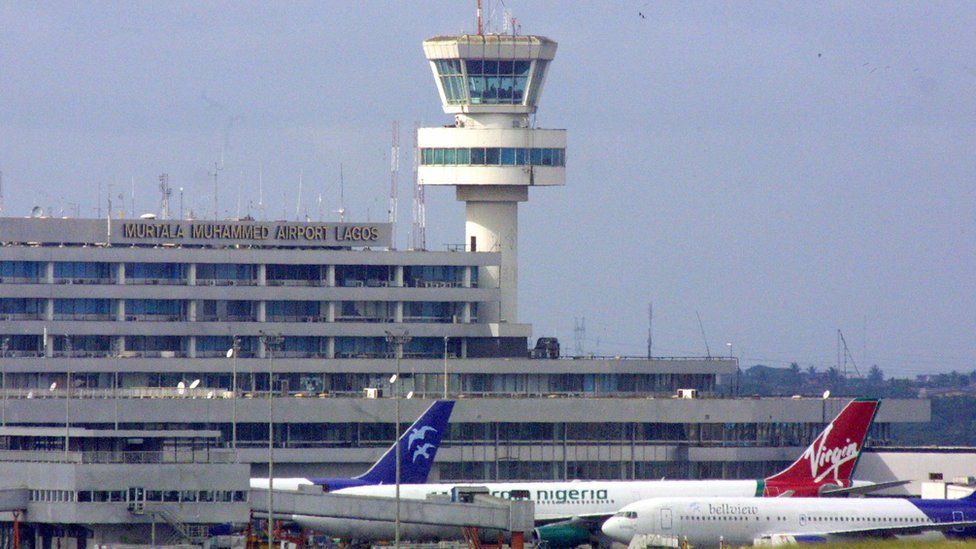
Aviation professionals outline paths to sector recovery

Published

on

Professionals from different disciplines in the aviation industry have suggested various ways to ease the pains and ensure progress in the sector over the next 12 months.

They spoke during different interviews with our correspondents. A retired airline captain, Muhammed Badamosi, raised concerns over the state of Nigeria’s aviation sector, warning that years of neglect, weak regulation, and poor infrastructure could push the industry to the brink of collapse if urgent reforms are not undertaken.

Badamosi likened the sector’s development to “a journey where you take one step forward and two steps backwards,” arguing that little has changed over the past decade.

“In terms of infrastructure, financing, and regulatory oversight, the aviation sector today is no better than it was 10 years ago. Which of these areas has truly improved? We need to ask ourselves honest questions if we want progress.”

According to the retired pilot, Nigeria’s major airports are still operating with obsolete navigation systems that the rest of the world has long abandoned.

Badamosi explained, “Since the 1980s, most of our major airports have relied on Category 2 Instrument Landing Systems and VOR for navigation. Globally, aviation has moved on to Category 3-1, 3-2, and even 3-3 systems. What are we still doing here, more than 20 years after joining the world on Category 2 ILS?”

He noted that while Nigeria is spared the extreme winter conditions of the northern hemisphere, the limitations of Category 2 ILS still pose risks. He said, “In severe weather, Category 2 ILS is practically useless. We are only lucky that what we deal with here is mostly harmattan haze and short-lived fog.”

Badamosi also pointed to deteriorating airport infrastructure, including runways and taxiways that require urgent rehabilitation or outright reconstruction.

See also  Uber reports N6.1bn annual driver earnings amid Lagos strike

“Have we achieved total radar coverage under TRACON? I don’t think so. These are the things that make airports safe. Without them, safety is compromised.”

Another major concern raised was the prevalence of ageing aircraft in the country’s fleet, many of which are second-hand. He cited recent incidents involving nose-wheel collapses during landing or taxiing as troubling signs.

“Some of these incidents should never have happened,” Badamosi said. “In some cases, the Nigerian Civil Aviation Authority is complicit because of corruption in the system.”

Badamosi criticised the current structure of aircraft inspection within the NCAA, noting that inspectors often stay far longer than regulations allow. “Inspectors are meant to be engaged on three-year contracts, renewable for just one year. Today, some have been in the system for over eight years.”

He explained that the original policy was designed to reduce the risk of inspectors becoming compromised by operators. “If you ask the Director-General, he may say it’s cost-effective,” Badamosi said. “But it’s time we weigh the cost of training against the cost of flight safety.”

He also described federal funding for aviation as inadequate, noting that about N714bn has reportedly been budgeted for aviation services. “That amount is highly inadequate for a sector as capital-intensive as aviation,” he said.

As a solution, Badamosi suggested concessioning some airports to reduce the financial burden on the government and improve efficiency. “The government can help itself by concessioning airports if Nigeria wants to be highly rated in global aviation,” he said.

Looking ahead, he stressed the need for sustainable financing and strategic partnerships. “Aviation is capital-intensive. Both airlines and service providers need sustainable financing to meet the challenges ahead. Members of the Airline Operators of Nigeria should seek partnerships with foreign airlines willing to operate here.

See also  Crude earnings fall by N3.18tn amid output surge

“One of the reasons foreign airlines are reluctant to lease aircraft for operations in Nigeria is the state of our infrastructure. If these issues are not addressed urgently, the sector risks collapse and possible blacklisting.”

Also speaking, the President of the National Association of Nigerian Travel Agencies, Dr Yinka Folami, insisted that the controversial claim about 18 taxes on airline operators was unfamiliar to industry professionals with decades of experience in airfare construction and ticketing.

He called for a government probe of the claim for the benefit of all. He explained that in over 50 years of NANTA’s existence, the assertion of 18 government taxes on a single ticket was new to the association, which has over 4,000 registered members.

He, however, said the claim of 18 taxes on each ticket may not be impossible but insisted it required proper enquiry and deconstruction. “Unfortunately, everyone has become an expert on aviation taxes. But leadership demands focus. Let us stop speculation and interrogate the construction of these alleged 18 taxes.”

“In June, a Lagos–Abuja one-way ticket sold for about N100,000 or less. By December, it jumped to between N200,000 and N250,000. Government taxes did not change within that period. So, the increase cannot be attributed to taxes.”

He insisted that such fare increases were a result of airline business decisions influenced by seasonal demand, not government policy.

Also commenting, travel analyst Lucky George attributed the persistent fare challenge to capacity constraints by Nigerian airlines, rather than taxation. George said the Nigerian aviation market serves over 200 million people, yet capacity is limited, stressing that high fares are largely a result of supply failing to meet demand.

See also  Non-oil revenue jumps 40% to N20.6tn – Presidency

He argued that high prices have made air travel inaccessible to a large segment of the population, despite strong demand. George also canvassed the re-establishment of a new national carrier, declaring that the current indigenous airlines lack capacity.

Industry expert Olumide Ohunayo emphasised the need for stronger collaboration among airport authorities and for unruly passenger cases to be taken beyond media attention to actual prosecution.

He also argued that rising airfares should not be dismissed as a seasonal issue. According to him, government support in helping airlines acquire more aircraft and establish local maintenance, repair, and overhaul facilities would ease capacity constraints and ultimately reduce ticket prices.

“First, I really want to see real synergy among airports and take unruly cases beyond the airport and media to the prosecution stage. We have seen in other climes where offenders are punished by the law because of rules that automatically take effect when airport laws are violated.

“The system follows through to ensure that airport offenders are punished, but here, what we see is that after media reports, everybody goes to sleep. That is why we continue to have a recurrence of bad behaviour at our airports. Nobody should be above the law.

“Rather, the government should continue to help airlines get more aircraft and also establish MROs within our domain. These measures will help drive airfares downward. What we have noticed is that there is a capacity constraint, and this aspect needs serious attention at this time.”

Continue Reading
Click to comment

Leave a Reply

Your email address will not be published. Required fields are marked *

Business

Kwara strengthens partnership to boost mechanised farming

Published

on

The Kwara State Government has strengthened its partnership with the All Farmers Association of Nigeria and other agricultural stakeholders to advance mechanised farming, environmental sustainability and women inclusion across the state.

The renewed commitment was reaffirmed during a courtesy visit by the leadership of the Kwara State chapter of AFAN to the Kwara State Agro-Climatic Resilience in Semi-Arid Landscapes in Ilorin.

This was contained in a statement issued on Tuesday by the Communication Officer of KWACReSAL, Okanlawon Taiwo, a copy of which was made available to The PUNCH in Ilorin.

Speaking during the meeting, the State Project Coordinator of KWACReSAL, Shamsideen Aregbe, assured farmers of the state government’s continued support toward improving food production, mechanised agriculture and climate resilience.

He said, “Tractorisation remains a critical component of modern agriculture. Access to farming equipment is essential for increasing productivity and addressing food security challenges across the state.”

He explained that the tractor support initiative introduced last year followed a World Bank-backed intervention and presidential directive aimed at supporting farmers with mechanised farming equipment.

Aregbe acknowledged concerns raised about operational challenges affecting some tractors, assuring stakeholders that efforts were ongoing to determine the condition and operational status of the equipment to enable effective utilisation by farmers.

“We must sustain engagement with farming communities, particularly in addressing challenges relating to flooding, agricultural logistics and food security,” he added.

The project coordinator also stressed the need for gender equality and inclusion in agricultural interventions across the state.

“The inclusion of women is not negotiable. We must continue to encourage and support women to actively participate in agricultural programmes and leadership processes,” he stated.

See also  Soludo Reopens Onitsha Main Market, Warns Traders Against Monday Sit-At-Home

Earlier, the Chairman of AFAN in Kwara State, Shuaib Ajibola, commended KWACReSAL for its interventions in the agricultural sector, reaffirming the association’s readiness to collaborate on programmes aimed at improving farmers’ welfare and environmental sustainability.

Ajibola disclosed that the association planned to commence an agricultural expo and stakeholder engagement programme across the state following its recent inauguration activities to reconnect with farmers and strengthen agricultural outreach.

“Previous editions of the interventions covered the 16 local government areas of the state and involved stakeholders from different agricultural sectors,” he said.

The AFAN chairman also raised concerns over land use disputes and other agrarian issues affecting farmlands, noting that the development had created anxiety among some farming communities regarding land ownership and rights.

“There is a need for sustained stakeholder dialogue and engagement to resolve disputes and ensure peaceful farming activities across communities,” Ajibola added.

Also speaking, the Project Coordinator of AFAM, AbdulRahman Babatunde, applauded KWACReSAL for its support to farmers, especially in the area of agricultural inputs and mechanised farming.

“ACReSAL provided 100 per cent agricultural inputs to participating farmers last year, and beneficiaries across communities can testify to the positive impact of the intervention,” Babatunde said.

He disclosed that farming activities for the current planting season had already commenced, with farmers actively registering, hiring tractors and preparing their farmlands.

In her remarks, the AFAM Women Leader, Sherifat Ibrahim, advocated increased empowerment and technical training for women in rural communities to enable them to actively participate in mechanised farming.

“There is a need for gender-friendly operational systems and practical training that will make tractor handling easier and more accessible for women and young learners involved in agricultural programmes,” she said.

See also  Dangote official revealed that Nigeria’s petrol, diesel are subsidised

Meanwhile, the Environmental Safeguards Officer of KWACReSAL, Mr Abubakar Mohammed, reaffirmed the project’s commitment to gender equality, women’s inclusion and effective grievance management across all project activities.

The renewed collaboration comes amid growing efforts by the Kwara state government to improve food production and strengthen climate-smart agriculture through partnerships with farmer associations, development agencies and international organisations.

punch.ng

FOLLOW US ON:

FACEBOOK

TWITTER

PINTEREST

TIKTOK

YOUTUBE

LINKEDIN

INSTAGRAM

Continue Reading

Business

See Full List of Top 10 World’s Largest Economies in 2026

Published

on

The United States is projected to remain the world’s largest economy in 2026 with a gross domestic product estimated at $32.1 trillion, according to new global economic forecasts obtained from Focus Economics on Wednesday.

The U.S. continues to lead global output through dominance in technology, finance, healthcare, and advanced manufacturing. Growth in artificial intelligence, healthcare innovation, and high-value industries has further widened its lead over other major economies in recent years.

The top 10 world economies ranked in numbers

1. United States — $32.1 trillion
The United States remains the world’s largest economy, accounting for over a quarter of global output in nominal terms. Its economy is highly diversified, with Silicon Valley driving global leadership in AI, biotech, and software, while Wall Street anchors the financial sector.

2. China — $20.2 trillion
China is the world’s second-largest economy, driven by manufacturing, exports, and large-scale industrial production. It remains the leading global producer of electronics, machinery, and textiles, though it faces structural challenges, including a shrinking population and high debt levels.

3. Germany — $5.4 trillion
Germany remains Europe’s largest economy, supported by a strong industrial base and the Mittelstand network of medium-sized manufacturing firms that form the backbone of its export strength.

4. India — $4.5 trillion
India continues its rapid economic rise, driven largely by services and information technology. Its economy has more than doubled over the past decade, supported by a young population and expanding domestic demand.

5. Japan — $4.4 trillion
Japan remains a global manufacturing powerhouse in robotics, automobiles, and electronics, although long-term growth is constrained by an aging population and structural economic stagnation.

See also  Dangote official revealed that Nigeria’s petrol, diesel are subsidised

6. United Kingdom — $4.2 trillion
The United Kingdom is a major service-based economy, with strengths in finance, insurance, and real estate, anchored by the City of London.

7. France — $3.6 trillion
France has a diversified economy led by luxury goods, aerospace, agriculture, and manufacturing, with global brands such as Airbus and LVMH playing major roles.

8. Italy — $2.7 trillion
Italy combines a strong services sector with manufacturing strengths in fashion, machinery, and automobiles, driven largely by its industrial northern regions.

9. Russia — $2.5 trillion
Russia remains heavily dependent on oil and gas exports, with energy revenues playing a central role in its economy despite ongoing sanctions and geopolitical pressures.

10. Canada — $2.4 trillion
Canada rounds out the top 10, supported by natural resources such as oil, forestry, and mining, alongside a strong services and financial sector.

Economists say the global economy is increasingly being shaped by technology, demographics, energy transitions, and geopolitical tensions, all of which will influence how these rankings evolve in the coming years.

punch.ng

FOLLOW US ON:

FACEBOOK

TWITTER

PINTEREST

TIKTOK

YOUTUBE

LINKEDIN

INSTAGRAM

Continue Reading

Business

Nigeria misses OPEC oil production quota again

Published

on

Again, Nigeria has missed its crude oil production quota set by the Organisation of the Petroleum Exporting Countries after averaging 1.49 million barrels per day in April, below the 1.5 mbpd benchmark.

Figures from the Nigerian Upstream Petroleum Regulatory Commission showed that the country produced an average of 1,488,540 barrels of crude daily in April, representing about 99 per cent of the OPEC quota. When condensates were added, total daily production rose to 1.66mbpd

Last month, the NUPRC said oil production now averaged 1.8mbpd. However, data released on Tuesday was at variance with the report. The latest data mean Nigeria remained below its OPEC allocation for the ninth straight month since July 2025.

The NUPRC document showed that combined crude oil and condensate production peaked at 1.85 mbpd during the month, while the lowest output stood at 1.46 mbpd. The PUNCH reports that the April figures are an appreciable improvement compared to March, when oil output was 1.55mbpd.

Nigeria’s oil production has struggled for years due to crude theft, pipeline vandalism, ageing infrastructure, and underinvestment in the upstream sector. Although output improved marginally in April compared to March, it was still insufficient to meet the country’s OPEC target, underscoring persistent challenges in ramping up production despite government efforts to boost volumes.

The PUNCH reports that Nigeria’s crude production in March was 1.38 mbpd. While there was a 69,000 bpd increase from the 1.31 mbpd recorded in February, the figure is still 117,000 bpd below the OPEC quota.

The figures for February indicated a month-on-month decline of 146,000 barrels per day, widening the country’s shortfall from its OPEC production allocation. This is the eighth consecutive month the country has failed to meet the OPEC quota since July 2025.

See also  Dangote official revealed that Nigeria’s petrol, diesel are subsidised

Recall that although Nigeria recorded a marginal improvement in January, when production rose from 1.422 mbpd in December 2025 to 1.46 mbpd, the rebound was short-lived as output fell significantly in February 2026.

Earlier data from NUPRC had also shown that crude oil production weakened at the end of 2025. Production declined from 1.436 mbpd in November 2025 to 1.422 mbpd in December, before recovering slightly in January.

In 2025, Nigeria’s crude oil production fell below its OPEC quota in nine months of the year, meeting or slightly exceeding the target only in January, June, and July.

Nigeria opened 2025 strongly, producing 1.54 mbpd in January, about 38,700 barrels per day above its OPEC allocation. However, production slipped below the quota in February at 1.47 mbpd and weakened further in March to 1.40 mbpd, marking one of the widest shortfalls during the year.

punch.ng

FOLLOW US ON:

FACEBOOK

TWITTER

PINTEREST

TIKTOK

YOUTUBE

LINKEDIN

INSTAGRAM

Continue Reading

Trending