Connect with us

Lifestyle

Godwin Alabi-Isama (born 24 December 1940) is a Nigerian retired military officer

Published

on

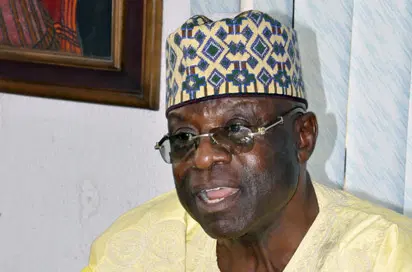
Godwin Alabi-Isama (born 24 December 1940) is a Nigerian retired military officer, author and statesman who served as chief of staff to Brigadier Benjamin Adekunle of the 3 Marine Commando during the Nigerian Civil War.

Alabi-Isama was born on 24 December 1940, in Ilorin, Kwara State, to a Ukwani (Delta State) father and a Yoruba (Ilorin) mother. He attended Ibadan Boys High School. In 1960, he joined the Army and attended the Mons Officer Cadet School in the United Kingdom and the Senior Tactics School and Staff College in Quella, Pakistan. Alabi-Isama was a tactics instructor at the Nigerian Military School in Zaria, Nigeria and the Nigerian Military Training College (now Nigerian Defence Academy) in Kaduna prior to the civil war.

Brigadier-General Alabi-Isama served as the commander of the troops stationed at the Niger Bridge in Asaba, He was subsequently transferred by the Army Headquarters to the 3 Marina Commando, 3MCDO, operating on the Calabar front during the war. Alabi-Isama led forces against the Biafran Republic, successfully liberating various locations including Odukpani, Ikot-Okpora, Iwuru, Akunakuna, Itigidi, Ediba, Ugep, Obubra, Afikpo, Oban, and Ekang. He also “closed” the international border with Biafra at Nssakpa, as detailed in his book, The Tragedy of Victory.

In April 1968, Alabi-Isama and his 3MCDO men embarked on a mission to recapture Creek Town, Itu, Uyo, Ikot-Ekpene, Oron, Eket, Opobo, Abak, Etinan, Bori-Ogoni, Akwete, Afam, Aletu Ekene, Elelenwo, Okrika, and Port-Harcourt, successfully completing the operation the following month.” After the war, Alabi-Isama assumed the role of the Nigerian Army’s Principal General Staff Officer. In 1973, he served as the Acting Governor of the Mid-Western Region, where he notably received the first group of National Youth Service Corps members, as recounted in his autobiography. Following his retirement as a Brigadier-General from the Army in 1977, Alabi-Isama relocated to the United States.

See also  VIDEO: South African pastor claims the rapture is happening today and Internet users are sharing tips on how one can be ‘saved’

Alabi-Isama played a pivotal role in leading the troops that successfully liberated the remaining parts of Cross River State following Colonel Adekunle’s amphibious sea landing at Calabar. Furthermore, he commanded the 3 Marine Commando troops that effectively captured the present-day states of Akwa Ibom, Rivers, and Bayelsa. His strategic planning, specifically the implementation of the Pincer 2 strategy, played a crucial role in bringing an end to the Nigerian Civil War.

The Tragedy of Victory: On-the-Spot Account of the Nigeria-Biafra War in the Atlantic Theatre is a sequential narrative of the war that lasted from 6 July 1967 to 15 January 1970 which was published in 2013. By Godwin Alabi.

FOLLOW US ON:

FACEBOOK

TWITTER

PINTEREST

TIKTOK

YOUTUBE

LINKEDIN

TUMBLR

INSTAGRAM

Continue Reading
Click to comment

Leave a Reply

Your email address will not be published. Required fields are marked *

Lifestyle

Easter: No love in Christianity, pastors extorting church members – Primate Ayodele

Published

on

The Leader of INRI Evangelical Spiritual Church, Primate Elijah Ayodele, has said that Christianity has been reduced to a means of extorting church members by some pastors.

In an Easter message signed by his media aide, Osho Oluwatosin, Primate Ayodele made it known that there is too much hate among churches and that leaders are more concerned about beautiful edifices instead of instilling the teachings of Jesus Christ.

“There is no love in Christianity, there is no religious tolerance, it’s time we put religion aside, it’s killing us in Nigeria and bringing woes to our worship.

“There is too much hate among churches, and there is no leadership capacity in Christianity again,” he said.

The prophet stated that men of God were looking for ways to acquire wealth and going from country to country.

He noted that the world would be a better place if Christian leaders could live as Jesus did, a life of selflessness, love, tolerance, and peace.

“We don’t develop human capacity but edifice. We are looking to acquire wealth and going from country to country for revival.

“The world would be better if we could emulate the life of Christ,” he said.

Furthermore, Primate Ayodele made it known that the leadership aura in Christianity had drastically reduced, and instead of celebrating a Happy Easter, a lot of Christians are crying.

He said: “There is no sincerity in relationships in Christianity; the leadership aura in Christianity has derailed.

“There is nothing like Happy Easter because people, Christians, are shedding tears internally.

See also  Queen Amina of Zazzau: The Warrior Queen Who Ruled the Sahel

“Christians are crying because pastors continue to extort members. This isn’t the kind of life Jesus Christ died for.

“Love has finished, good relationship has finished, the spiritual prowess in Christianity is no longer there, there isn’t good leadership in Christendom, there isn’t love anywhere, and genuine God’s presence is rare.”

FOLLOW US ON:

FACEBOOK

TWITTER

PINTEREST

TIKTOK

YOUTUBE

LINKEDIN

Continue Reading

Lifestyle

12 POWERFUL BALOGUN IN YORÙBÁ HISTÒRY.

Published

on

In the annals of Yoruba history, few titles carry as much weight and reverence as that of the Balogun.
Below is a list of some of the most formidable Baloguns who shaped Yoruba history.

1. Balogun Oderinlo (Ibadan) Active: c. 1840s

A tactical genius and fearless leader, Oderinlo is best remembered for his role in the Osogbo War, where he led Ibadan forces to a decisive victory over the Fulani warriors of Ilorin, halting their southern advance into Yorubaland.

2. Balogun Ajikobi (Ilorin) Active: 1830s–1840

A controversial but powerful figure, Ajikobi conquered Alaafin Oluewu and the Oba of Ibaruba. However, his reign of conquest ended during the Osogbo War, where he was captured and publicly executed in Oyo.

3. Balogun Ibikunle (Ibadan) Active: 1850s–1860s

Known for his confrontation with the formidable Aare Ona Kakanfo Kurunmi of Ijaiye, Ibikunle emerged victorious, cementing his reputation as a warrior without equal.

4. Balogun Akere (Ibadan) Active: c. 1860s

Fought valiantly in the Ijesha War, but tragically lost his life in battle.

5. Balogun Orowusi (Ibadan) Active: Mid-1800s

The first commander to lead Ibadan to a historic victory over the Ijesha, Orowusi’s victory marked a turning point in regional dominance.

6. Balogun Ogunbona (Abeokuta, Egba) Active: 1851–1864

An exceptional strategist, Ogunbona played a crucial role in repelling the powerful Dahomey army during the Dahomey Wars, securing Egba independence and stability.

7. Balogun Ayikodu (Abeokuta) Active: Mid-1800s

A tenacious warrior who fought in numerous campaigns to protect and strengthen the Egba kingdom, often placing himself in the front lines.

See also  Professor Babatunde Kwaku Adadevoh (1933–1997): A Pioneer of Modern Nigerian Medicine and Academia

8. Balogun Osungboekun (Ibadan) Active: 1880s–1893

After the betrayal and death of Aare Latoosa, Osungboekun took control during the Ekiti Parapo (Kiriji) War.

9. Balogun Olasile (Ijaye) Active: c. 1860–1862

A loyal general under Kurunmi, Olasile fought in multiple campaigns and served as one of the backbones of Ijaiye’s military structure.

10. Balogun Singusee (Ile-Ife) Active: c. 1821–1825

Led the ancient city of Ile-Ife during the Old Owu War, eventually leading to the downfall of the Owu kingdom. His campaign reshaped the political landscape of the time.

11. Balogun Ogundipe (Abeokuta) Active: c. 1860s–1870s

A relentless defender of Egba sovereignty, Ogundipe’s name is associated with countless victories and an unshakable will.

12. Balogun Kuku (Ijebu) Active: 1890s–early 1900s

Perhaps one of the most legendary Baloguns, Kuku fought multiple wars and was the first Yoruba commander to resist British colonial forces, making him a symbol of both traditional military valor and anti-colonial defiance.

These Baloguns were not mere warriors; they were protectors, visionaries, and architects of Yoruba survival and identity.

Their legacies continue to echo across Yorubaland—from the city-states of Ibadan and Abeokuta to the sacred grounds of Ile-Ife and Ijebu.
Yoruba saying:

“A kii jẹ ọmọ Balogun ki a má níkarahun”
(One does not descend from a Balogun and lack courage.)

FOLLOW US ON:

FACEBOOK

TWITTER

PINTEREST

TIKTOK

YOUTUBE

LINKEDIN

Continue Reading

Lifestyle

Shigidi: A Yoruba Ritual Figure of Power and Mystery

Published

on

Among the Yoruba people of southwestern Nigeria, the Shigidi (also spelled Ṣigidi) occupies a fascinating space where art, religion, and spiritual power meet. More than an artifact, it is regarded as a living spiritual presence—one that commands respect and continues to intrigue scholars, traditionalists, and cultural historians.

Spiritual Role in Yoruba Religion

In the cosmology of the Yoruba, the Shigidi is both protector and avenger. Traditional worshippers believe it can be invoked to guard individuals or communities, to mete out justice, or to combat malevolent spiritual forces. Scholars such as Wande Abimbola describe Shigidi as a “night warrior”—a spiritual entity that moves in the unseen realm to defend its custodian or punish wrongdoers. This dual role highlights the Yoruba belief in the interconnectedness of the visible and invisible worlds, where ancestral and spiritual beings actively shape human affairs.

Materials and Craftsmanship

While clay is common, authentic Shigidi figures are not limited to a single medium. They may be molded from clay, carved from wood, or even cast in metal, depending on local tradition and the shrine’s requirements (Abimbola 1976; Olupona 2011). Each material carries layered meaning:

Clay signifies earth, fertility, and the cyclical nature of life and death.

Wood embodies vitality and the living essence of nature.

Metal reflects permanence and spiritual resilience.

Adornment with beads, cowries, or iron chains deepens the symbolism. Beads convey spiritual energy and status; chains represent restraint and the binding of spiritual forces.

Ritual Practice and Activation

Shigidi figures are housed in sacred shrines and activated through chants (oríkì), libations, and offerings of palm oil or sacrificial animals. When ritually consecrated by a priest (babaláwo), the figure is believed to embody a spiritual force capable of acting in the physical world. Far from being a mere object, it is considered a living agent that responds to invocations and spiritual contracts.

See also  My life in grave danger over viral video on killing of Christians – Plateau cleric, Evangelist Dachomo

Linguistic Insight

In the Yoruba language, “ṣigidi” can also describe something round, solid, and lightweight. This everyday meaning echoes the physical qualities of many Shigidi figures and reveals how Yoruba thought naturally fuses the material and the spiritual.

Historical and Cultural Context

Shigidi has deep precolonial roots, predating the spread of Christianity and Islam in Yorubaland. Despite religious change, it remains a potent emblem of cultural identity and ancestral heritage. Samuel Johnson’s classic History of the Yorubas (1921) and modern ethnographies by Jacob Olupona document how Shigidi persists as a reminder of the Yoruba people’s enduring spiritual imagination.

Today, authentic Shigidi figures are rarely displayed publicly; many remain hidden in family or community shrines. Yet their legacy continues in scholarship, art, and the living traditions of Yoruba religion.

Sources:

Abimbola, Wande. Ifa: An Exposition of Ifa Literary Corpus. Oxford University Press, 1976.

Johnson, Samuel. The History of the Yorubas. CMS Bookshops, 1921.

Olupona, Jacob K. City of 201 Gods: Ilé-Ifè in Time, Space, and the Imagination. University of California Press, 2011.

Cultural Origin: Yorubad people of southwestern Nigeria

The Shigidi endures as both a spiritual force and a cultural artifact—an emblem of Yoruba cosmology where art is alive and the sacred speaks through matter.

FOLLOW US ON:

FACEBOOK

TWITTER

PINTEREST

TIKTOK

YOUTUBE

LINKEDIN

Continue Reading

Trending