
Connect with us

Education

FG targets 20m pupils in school feeding programme by 2026

Published

on

The Federal Government has set a target of reaching 20 million children through the Homegrown School Feeding Programme by 2026, describing it as both an educational investment and a national security strategy.

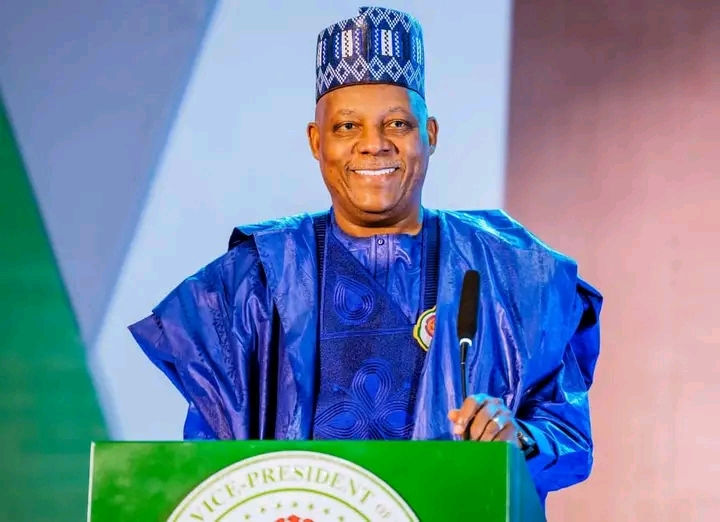
Vice President Kashim Shettima, announced this on Friday at the National Policy Forum on the Institutionalisation and Implementation of the Renewed Hope National Home Grown School Feeding Programme, held in Abuja.

The forum was hosted by the Presidential Committee on Economic and Financial Inclusion, in collaboration with ActionAid Nigeria and other stakeholders.

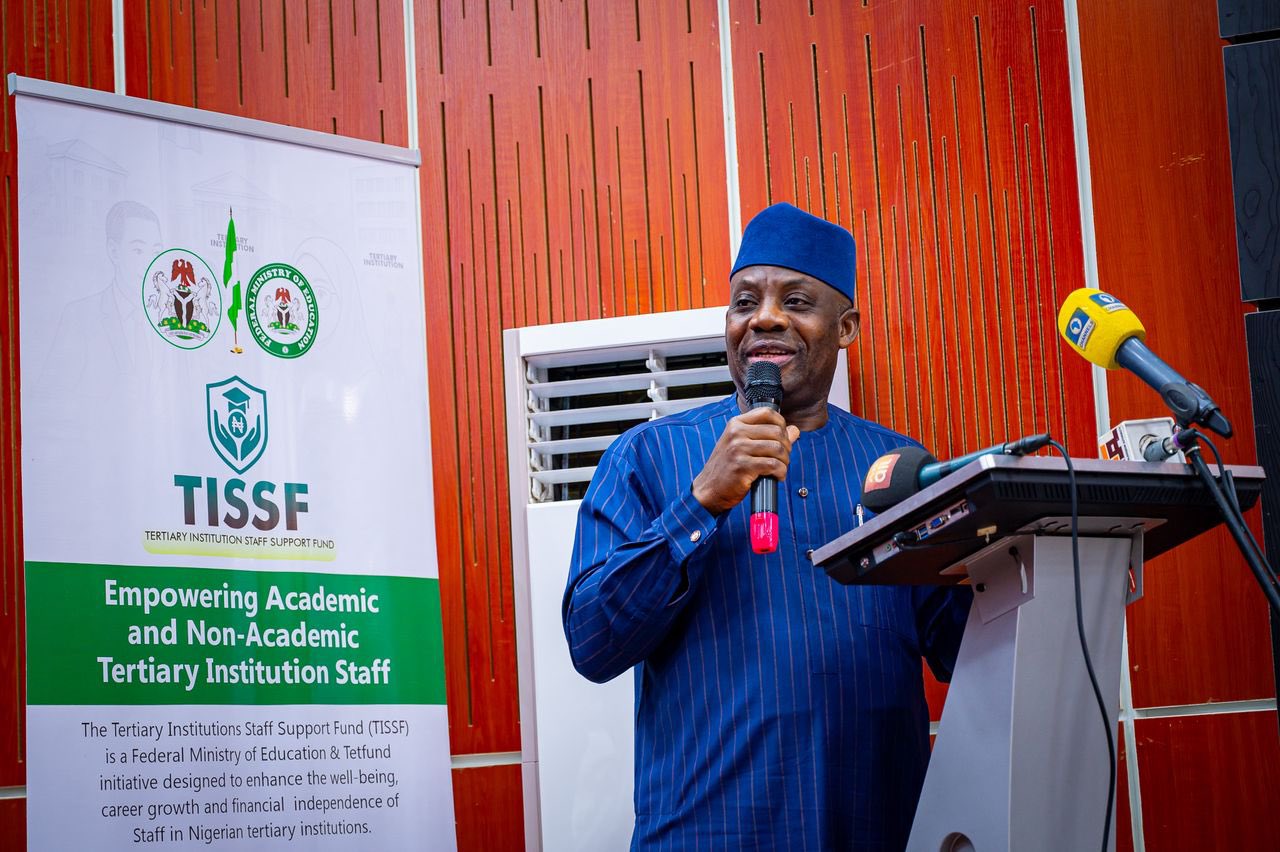
Represented by the Special Adviser to the President on Economic Affairs, Office of the Vice President, Dr. Kolade Fasua, Shettima said the expansion under President Bola Tinubu’s Renewed Hope Agenda, was the boldest yet in the history of the intervention.

He explained that the programme, relaunched earlier this year, is designed to improve school enrollment and learning outcomes while creating a guaranteed daily market for smallholder farmers, women entrepreneurs, and local processors.

“This year, the federal government relaunched the Renewed Hope National Homegrown School Feeding Programme, signalling a decisive return to scale and systemisation. The programme is designed to boost enrollment and attendance, improve academic performance, and raise smallholder incomes through stable local procurement.

“Alongside the core programme, the government has inaugurated the Alternate Education and Renewed Hope School Feeding Project, an expansion that targets out-of-school and highly vulnerable children, with the ambition of reaching up to 20 million by 2026”, he said.

With the integration of the National Identity Management Commission system, Shettima added, transparency would be assured so that “real pupils receive real meals, and every naira spent works twice—once for the child, and once for the local economy.”

See also  Kano sends 588 students to 15 northern states for exchange programme

While acknowledging that sustaining nationwide coverage could cost as much as one trillion naira, the Vice President argued that the initiative should not be seen as a drain on public finances but as a nation-building investment.

“Ambition requires investment, and the federal government has acknowledged that sustaining national coverage may require around one trillion naira.

“But this is not a cost. It is a nation-building investment with high social, economic, and security return. This is why the school feeding must be understood not just as a social intervention but as a national security investment”, he stressed.

According to him, every hot meal served in a classroom also acts as a barrier against recruitment into violent groups, a reinforcement of the state’s presence, and a source of hope in conflict-prone communities.

“A child with knowledge is less vulnerable to exploitation. A farmer linked to a market is less vulnerable to despair. Communities where youth are engaged are less vulnerable to insecurity

“By bringing MSMEs, women, and vulnerable households into the financial system, we shrink the shadows in which insecurity grows. When local markets thrive, when farmers see guarantees in demand, when cooks receive fair and timely pay, and when women micro-entrepreneurs build assets, the drivers of conflict weaken,” Shettima said.

He urged development partners, private investors, and state governments to align with the federal government’s vision, saying the success of the scheme would be measured not just in hunger-free classrooms but also in safer, more resilient communities.

In his keynote address, the Minister of State for Humanitarian Affairs and Poverty Reduction, Dr Tanko Sununu, represented by Director, Social Development, Mr. Valebtine Ezulu, called for a National Home Grown School Feeding Act that will provide legal backing for the programme.

See also  Inside illegal Lagos nursing college run by poultry farmer

He further recommended the development of a nutrition guideline, in line with global best practices, to ensure safe and healthy feeding for the children.

“We must work towards enacting a National Home Grown School Feeding Act that guarantees continuity across political cycles, while clearly defining federal, state, and local roles within a cost-sharing framework.

“A National Nutrition Guideline for Home Grown School Meals, aligned with international best practices, must be developed and enforced to guarantee safe, balanced, and quality meals for every child”, Ezulu said.

FOLLOW US ON:

FACEBOOK

TWITTER

PINTEREST

TIKTOK

YOUTUBE

LINKEDIN

TUMBLR

INSTAGRAM

Continue Reading
Click to comment

Leave a Reply

Your email address will not be published. Required fields are marked *

Education

Honorary awards: TASUED dismisses claims of snubbing Gbenga Daniel

Published

on

The management of the Tai Solarin Federal University of Education (TASUED), Ijagun, Ogun State, has dismissed claims circulating on social media that its governing council ignored former Ogun State governor and university founder, Otunba Gbenga Daniel, in the award of honorary doctorate degrees.

Gbenga Daniel
Senator representing Ogun East, Otunba Gbenga Daniel.

The university, in a statement issued on Friday by its Registrar and Secretary to Council, Dapo Oke, described the reports as “malicious, misleading and deliberately crafted to sow discord”.

“For the avoidance of doubt, and to set the record unequivocally straight, the university affirms that its longstanding tradition has been to confer an Honorary Doctorate Degree on civilian Governors of Ogun State, in recognition of their executive stewardship and support for public education,” the statement said.

Ogun State Governor, Dapo Abiodun, handing over the Memorandum of Understanding (MoU) for the transfer of ownership of Tai Solarin University of Education (TASUED), Ijagun, to the Federal Government, represented by the Minister of State for Education, Prof. Suwaiba Said Ahmad, during the 17th Convocation of the formerly state-owned institution. | Credit: Taiwo Bankole.

According to the institution, the tradition is a matter of public record, noting that Daniel, the founder of the university, was honoured as the first serving governor to receive the award in 2010.

“His successor, His Excellency, Senator Ibikunle Amosun, was similarly honoured,” the statement added.

The university explained that the scope of its honorary awards also extends beyond state governance to recognise individuals with outstanding national and global contributions.

It recalled that during its 10th anniversary in 2015, former President Olusegun Obasanjo, Africa’s richest man, Aliko Dangote, and other notable Nigerians, including Sir Kensington Adebutu, Asiwaju Adebola Adegunwa and Dr Tunde Lemo, were honoured.

“In this established context, the recent conferment upon His Excellency, Prince (Dr) Dapo Abiodun, CON, the Executive Governor of Ogun State, is neither anomalous nor extraordinary. It is a continuation of a consistent institutional practice applied to all civilian Governors of the State,” the statement said.

On former governor Olusegun Osoba, the management stressed that his contributions remained highly valued.

See also  Kano sends 588 students to 15 northern states for exchange programme

“His signature, as Governor during the Third Republic, enacted the legislative bill that transformed the former Tai Solarin College of Education into a degree-awarding institution — a pivotal act in our institutional metamorphosis,” it stated.

The university further clarified that the conferment of honorary degrees was not limited to governors alone, noting that all paramount rulers in Ogun State and other distinguished Nigerians had also been honoured over time.

The management condemned what it described as attempts to distort facts and urged the public to disregard the misinformation.

“We affirm our unwavering commitment to recognising excellence and distinguished service in accordance with our established traditions and institutional prerogative,” the statement said.

The clarification comes amid social media debates suggesting that Daniel was sidelined in the university’s honorary awards, a development linked by observers to ongoing political disagreements between the Ogun State Government and the former governor, despite both belonging to the All Progressives Congress.

PUNCH Online had earlier reported that TASUED announced plans to confer honorary doctorate degrees on First Lady Oluremi Tinubu, Ogun State Governor Dapo Abiodun and former governor Olusegun Osoba at its 17th convocation ceremony, scheduled to hold between January 23 and 29, 2026.

According to the university, Senator Tinubu will receive a Doctor of Science (D.Sc. Ed.) Honoris Causa in Childhood Education, Governor Abiodun a D.Sc. Ed. in Education Management, while Osoba will be awarded a D.Sc. Ed. in Political Science.

punch.ng

FOLLOW US ON:

FACEBOOK

TWITTER

PINTEREST

TIKTOK

YOUTUBE

LINKEDIN

TUMBLR

INSTAGRAM

Continue Reading

Education

Buni unveils biomedical centre, awards N30m to TeenEagle champions in Yobe

Published

on

Yobe State Governor, Mai Mala Buni, on Thursday inaugurated the permanent site of the Biomedical Science Research and Training Centre at Yobe State University, Damaturu, saying the facility would strengthen medical research and innovation in the state.

Buni said the state government invested over N800m in the construction of the centre, also known as BioRTC, describing it as a major step towards positioning the university as a hub for biomedical research and international collaboration.

Speaking at the commissioning, the governor said the centre was designed to build capacity in biomedical sciences, support advanced research and close gaps in Africa’s medical research ecosystem.

According to him, much of Africa’s medical research has relied on findings from foreign environments that do not always reflect local realities.

‎“Africa has relied for too long on medical research conducted in different climates, environments, cultures, and lifestyles, often without adequate consideration for our peculiarities and genetic diversity,” the governor said.

He added that the facility would promote research that is accurate, inclusive and tailored to African health challenges.

The governor also disclosed plans by his administration to establish an additional dialysis centre in Gashua before the end of the year, noting that it would ease the burden of travel for kidney patients in the area.

‎“We have continued to support dialysis services, and the new centre in Gashua will reduce the hardship of long-distance travel for patients,” he said.

Buni further revealed that more than 1,000 participants from Yobe State, other parts of Nigeria and across Africa had benefited from BioRTC’s training programmes, including summer schools and workshops, fully funded by the state government.

At the event, the governor announced a N30m cash award and full government scholarships for three Yobe indigenes who emerged winners at the TeenEagle 2025 competition held in London, United Kingdom.

See also  Inside illegal Lagos nursing college run by poultry farmer

The beneficiaries — Nafisa Abdullahi, Hadiza Kashim Kalli and Rukayya Mohammed Fema — are students of Nigerian Tulip International College who reportedly outperformed over 20,000 contestants from 69 countries.

Each of the students received N10m and was awarded a scholarship up to tertiary level.

‎“Their success reflects our sustained investment in education and human capital development,” he said.

He added that the state currently spends over N2.6bn annually on scholarships for 890 students at Nigerian Tulip International College, including the three TeenEagle champions.

Earlier, the Founder and Director of BioRTC, Prof. Mahmoud Bukar Maina, said the centre had attracted equipment donations worth over N10bn, providing a strong foundation for advanced research.


Also speaking, Prof. Amadi O. Ihunwo of the Society of Neuroscientists of Africa said the centre was equipped with facilities for advanced cellular, molecular and neuroscience research that are rarely found in many African universities.‎‎

Continue Reading

Education

NELFUND extends loan application deadline

Published

on

The Nigerian Education Loan Fund has extended the application deadline for the 2025/2026 academic session to February 27, 2026.

The fund announced the extension in a statement issued in Abuja on Thursday, saying the earlier deadline of January 31, 2026, was shifted to give prospective applicants additional time to complete and submit their applications.

According to the Director of Strategic Communications, Oseyemi Oluwatuyi, the decision was taken to ensure that no eligible student is excluded from the process due to timing constraints.

“The Nigerian Education Loan Fund has announced an extension of the application deadline for the 2025/2026 academic session from January 31, 2026, to February 27, 2026,” the statement read.

Commenting on the extension, the Managing Director and Chief Executive Officer of NELFUND, Akintunde Sawyerr, said the move underscored the Fund’s commitment to inclusivity and access.

“This extension reflects our commitment to inclusivity and access. We understand that some applicants may require additional time to complete their submissions, and this decision ensures that every eligible Nigerian student has a fair opportunity to benefit from the Fund,” he said.

NELFUND urged students who are yet to apply or who have not completed their applications to take advantage of the extended deadline and ensure that all required information is submitted on or before February 27, 2026.

The fund added that further information and updates would be communicated through its official channels.

NELFUND was established to administer the Nigeria Student Loan Scheme, which was signed into law by President Bola Tinubu in April 2024.

See also  FG releases approved subjects for basic, senior secondary education

Under the scheme, the Federal Government provides interest-free loans to students in public tertiary institutions to cover tuition fees and living expenses.

Applications for the programme opened in May 2024 to ease financial barriers to education, particularly for students from low-income backgrounds.

As of January 29, 2026, a total of N174,561,719,810 had been disbursed under the student loan scheme.

punch.ng

FOLLOW US ON:

FACEBOOK

TWITTER

PINTEREST

TIKTOK

YOUTUBE

LINKEDIN

TUMBLR

INSTAGRAM

Continue Reading

Trending