Connect with us

News

Japan designates city as hometown for Nigerians

Published

on

The government of Japan on Thursday named the city of Kisarazu as the hometown for Nigerians willing to live and work in the country as part of its strategic efforts to deepen cultural diplomacy, promote economic growth and enhance workforce productivity.

This was disclosed in a statement on Friday by the Director of Information at the State House, Abiodun Oladunjoye.

The statement noted that under the new partnership, announced on the sidelines of the ninth Tokyo International Conference for African Development, the Japanese government will create a special visa category for highly skilled, innovative, and talented young Nigerians who want to move to Kisarazu to live and work.

“Artisans and other blue-collar workers from Nigeria who are ready to upskill will also benefit from the special dispensation visa to work in Japan.

“Japan International Cooperation Agency, in a ceremony, also named the cities of Nagai in Yamagata Prefecture the hometown of Tanzania, Sanjo in Niigata Prefecture the hometown of Ghana, and Imabari in Ehime Prefecture the hometown of Mozambique.

“Through the arrangement, Japan looks to strengthen exchanges with the four African countries by officially connecting municipalities with existing relations with those nations,” the statement stated.

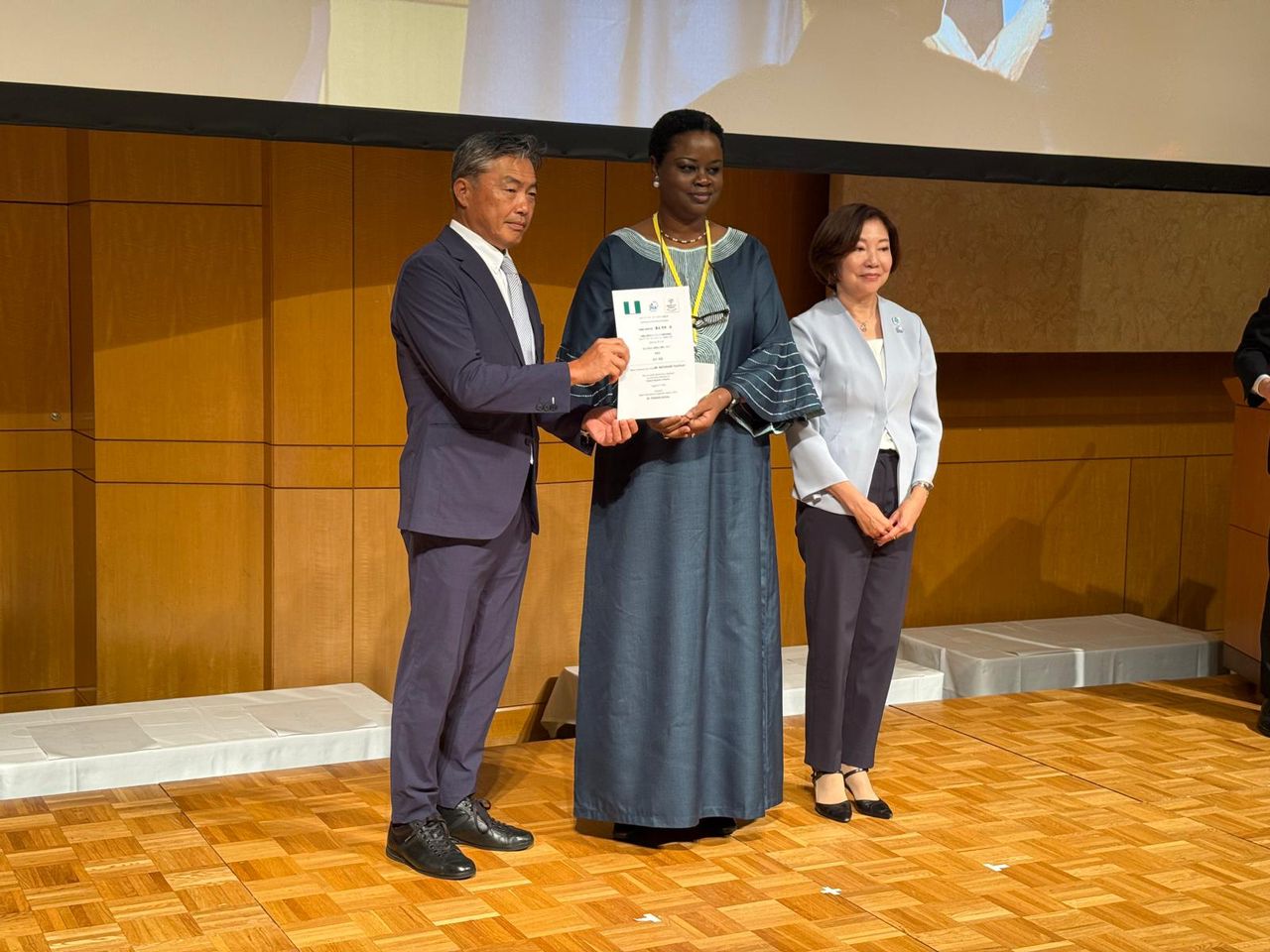
On her part, Nigeria’s Charge d’Affaires, Mrs. Florence Adeseke, also the Acting Ambassador to Japan, and Yoshikuni Watanabe, the Mayor of Kisarazu, received the certificate from the Japanese government naming Kisarazu the hometown of Nigerians.

The four cities will foster a foundation for two-way exchanges for manpower development that will add value to the economic growth of Japan, Nigeria, and the other three African nations.

See also  Reps approve $347m loan for Lagos-Calabar highway, others

“Local authorities hope that the designations will increase the population of their cities, contributing to their regional revitalisation efforts.

“Kisarazu was the official host town of the Nigerian contingent for the 2020 Tokyo Olympics. The team conducted their pre-games training camps and acclimatisation in the city before moving to the Olympic village, in the COVID-19 delayed Olympic Games,” it added.

In his opening address at the TICAD9, where he announced $5.5 billion in New investment in Africa, Japanese Prime Minister Shigeru Ishiba emphasised the importance of mutual understanding, local solutions, and collaborative efforts for Africa’s development. The Prime Minister outlined Japan’s focus on private sector-led sustainable growth, youth and women empowerment, and regional integration.

Prime Minister Ishiba acknowledged the challenges of Japan’s ageing population but emphasised that locally rooted solutions are essential for Africa’s development.

“Japan is providing various cooperation and support for Africa. But first of all, Japan needs to know more about Africa. So, in creating solutions together, this co-creation at the TICAD 9, we focus on three important areas: private sector-led sustainable growth, Youth and Women, and Regional integration and connectivity within and beyond Africa”.

He appealed to African countries to assist Japan as it grapples with the challenges of a declining population and shrinking agricultural land.

FOLLOW US ON:

FACEBOOK

TWITTER

PINTEREST

TIKTOK

YOUTUBE

LINKEDIN

TUMBLR

INSTAGRAM

Continue Reading
Click to comment

Leave a Reply

Your email address will not be published. Required fields are marked *

News

Kidnapping children lesser evil than killing soldiers — Sheikh Gumi 

Published

on

Islamic cleric Sheikh Gumi has described the kidnapping of schoolchildren as a “lesser evil” compared to killing soldiers, insisting that Nigeria must negotiate with bandits to prevent greater bloodshed.

Speaking in an interview with the BBC shared on Tuesday, Gumi said that while the abduction of minors is “evil,” it remains less grievous than murder — particularly in situations where kidnapped children are eventually released unharmed.

“Saying that kidnapping children is a lesser evil than killing your soldiers, definitely is lesser. Killing is worse than, but they are all evil. It’s just a lesser evil. Not all evils are of the same power.

He cited previous incidents, including the mass abduction in Kebbi State, arguing that the victims were freed without fatalities.

“So it’s a lesser evil than, like, what happened in Kebbi. They abducted children, and they were released. They didn’t kill them.”

The remarks come as more than 315 people — including 303 students and 12 teachers — were abducted in Niger State.

On 7 December, the Federal Government announced the release of 100 students, while an earlier report confirmed the escape of 50 others just days after the kidnapping.

“It’s an evil, and we pray that they escape”, Gumi responded briefly when asked what he would say to their parents.

Gumi also defended his long-held stance that negotiating with bandits is unavoidable, describing engagement with bandits and other non-state actors as a practical strategy to secure peace and save lives, and noting that “everybody negotiates with bandits.”

See also  Terrorism: Judge begs Nnamdi Kanu in ‘God’s name’ to consult lawyers

“That word [‘we don’t negotiate’], I don’t know where they got it from. It’s not in the Bible. It’s not in the Quran.

“In fact, it’s not even in practice. Everybody’s negotiating with outlaws, non-state actors, everybody. So who got it, and where did they get that knowledge from? We negotiate for peace and our strategic interests. If negotiation will bring stoppage to bloodshed, we will do it.”

The cleric stressed that his past engagements with bandits were not carried out secretly or independently.

“I go there with the authorities. I don’t go there alone. And I go there with the press,” he said.

Gumi revealed that his last direct meetings with bandit groups were in 2021, saying he made marathon efforts to bring various factions together, but the federal government at the time “was not keen” on the initiative.

He said once the groups were officially designated as terrorists, he completely withdrew from any contact.

Turning to the wider security situation, the former army captain argued that Nigeria’s military cannot shoulder the burden alone.

“We need a robust army… but even the military is saying our role in this civil unrest, in this criminality, is 95% kinetic. The rest is the government, the politics, and the locals. The military cannot do everything.”

Gumi also maintained that most bandits are Fulani herdsmen, not urban Fulani, urging a clear distinction between the two. He described their struggle as rooted in survival and cattle rearing:

“They are fighting an existential war… Their life revolves around cattle. In fact, they inherit them. They’ll tell you, ‘This cow I inherited from my grandfather.’ They are mostly Fulani herdsmen, not the Fulani town, because you have to differentiate between the two.”

See also  Rivers LG poll: Police vow to crush cultists, announce movement restrictions

Gumi’s remarks underscore the delicate balance between dialogue and enforcement in addressing Nigeria’s persistent insecurity, particularly in the northwest, where kidnappings, bandit raids, and violence continue to disrupt communities.

Continue Reading

News

Remi Tinubu sparks debate after asking Adeleke to stop singing at Ooni’s event

Published

on

Nigeria’s First Lady, Senator Oluremi Tinubu, has come under fire after she intervened while Osun State Governor, Ademola Adeleke, broke into a song during his speech at the 10th coronation anniversary of the Ooni of Ife, Oba Adeyeye Ogunwusi.

In a video that went viral on Monday, Adeleke was seen stepping up to the podium on Sunday to honour the monarch and congratulate the First Lady on her new chieftaincy title, Yeye Asiwaju Gbogbo Ile Oodua.

Instead of delivering his address immediately, the governor, well-known for his lively and musical public style, launched into a brief chant, prompting amusement from sections of the crowd.

The First Lady, who had moments earlier received her traditional title from the Ooni, walked towards the podium, gestured lightly to the governor and whispered to him to proceed with his statement.

This has, however, since drawn mixed reactions from Nigerians online.

Reacting, the Senior Special Assistant to the Governor on the Bureau of Social Services, Akintunde Bello, said Mrs Tinubu should be cautioned.

Also, a chieftain of the African Democratic Congress, Dele Momodu, in a post on his Instagram handle on Monday, condemned the First Lady’s action, describing it as bullying.

Momodu said the president’s wife openly disgraced and embarrassed Adeleke before a global audience.

He said, “Remi Tinubu is not an elected officer of the government and has no role assigned to her in the constitution of the Federal Republic.

“It is totally repugnant to openly disgrace, insult and bully the Chief Executive of Osun State before a global audience, including his wife. She went too far.”

See also  PHOTOS: Colombian Vice President Arrives Nigeria For 3-Day Official Visit

An X user, Hon. Rilwan, tweeting as #rilwan_ola01 wrote, “Remi Tinubu came to Osun to undermine the power of legitimate government in front of various dignitaries. I am really angry right now.”

However, despite the backlashes, some netizens believe that Tinubu’s action is justified.

Dayo Fashola, an aide to the ex-Osun State Governor, Adegboyega Oyetola, on her verified Facebook handle, said the conversation between the duo was lighthearted.

Fashola had explained that what transpired between Oluremi Tinubu and Adeleke was “light‑hearted and isn’t as serious as people are making it seem.”

She wrote, “Even Her Excellency craved the indulgence of all her distinguished guests to skip protocol while delivering her own speech, as many needed to return to their respective destinations in good time. Keeping in mind that helicopter visibility at night is near zero.”

A Facebook user, Oyetunji Ayoade, while defending Tinubu’s action, wrote, “The highest respect the first lady can give to Osun people is to stand up and inform him by herself and she did.”

punch.ng

FOLLOW US ON:

FACEBOOK

TWITTER

PINTEREST

TIKTOK

YOUTUBE

LINKEDIN

TUMBLR

INSTAGRAM

Continue Reading

News

UPDATED: ECOWAS declares state of emergency in West Africa

Published

on

The Economic Community of West African States has declared a state of emergency across the region.

The President of the ECOWAS Commission, Omar Touray, made the announcement on Tuesday during the 55th Session of the Mediation and Security Council at the ministerial level in Abuja.

Touray said recent developments underline the “imperative of serious introspection on the future of our democracy and the urgent need to invest in the security of our community.”

Addressing ministers, diplomats and senior officials, Touray gave a sobering assessment of West Africa’s political climate, citing multiple incidents as evidence of a rapidly deteriorating security environment.

He noted that ECOWAS member states currently face an average rating of “high risk,” based on country-by-country analyses contained in documents before the ministers.

“Events of the last few weeks have shown the imperative of serious introspection on the future of our democracy and the urgent need to invest in the security of our community.

“As you would have seen in the memoranda before you, the country-by-country analyses of our member states show different risk levels across our community, from high to medium, with an average of high risk, thereby demanding immediate and concerted action.

“The risk factors are the persistence of military interventions (Guinea-Bissau and the Republic of Benin just days ago); non-compliance with transition norms in Guinea, where we face a military leader turning civilian; growing erosion of electoral inclusivity across multiple states; expanding influence of terrorists, armed groups and criminal networks; and increasing geopolitical pressures affecting member states’ diplomacy and cohesion,” he explained.

See also  Terrorism: Judge begs Nnamdi Kanu in ‘God’s name’ to consult lawyers

Among the most troubling trends, Touray emphasised that “elections have become a major trigger of instability in our community.”

He also cited recent attempted coups and ongoing discussions with the Alliance of Sahel States, stressing the urgent need for a coordinated regional response to terrorism and cross-border criminal activity.

Declaring the situation unprecedented, he warned, “Faced with this situation, Excellencies, it is safe to declare that our community is in a state of emergency.”

Touray called for more frequent meetings of the Mediation and Security Council over the next year, insisting ECOWAS must “pool our resources to confront the threats of terrorism and banditry, which operate without respect for territorial boundaries.”

He outlined priority areas requiring continuous ministerial oversight, including the crisis in Guinea-Bissau, managing political transitions, addressing rising political exclusion, and safeguarding regional unity amid external pressures.

The ECOWAS Commission President also drew attention to worsening humanitarian conditions in West Africa, referencing recent UNHCR data. He said that “as of October 2025, approximately 7.6 million individuals are forcibly displaced across the region,” including more than 6.5 million internally displaced persons.

According to the data, the largest displaced populations are in Nigeria, Burkina Faso, Niger and Mali, while Niger, Mali, Nigeria, Côte d’Ivoire and Togo host the highest numbers of asylum seekers.

Touray stressed, “We must therefore take decisions and actions that will reverse this trend.”

Despite the challenges, he reaffirmed ECOWAS’s commitment to its citizens.

“Let me assure our community citizens that we will not rest on our oars. We will continue to work harder to promote a peaceful, stable and stronger region for the overall benefit of Community citizens,” he said.

See also  Rivers LG poll: Police vow to crush cultists, announce movement restrictions

He urged member states to uphold constitutional norms and maintain unity: “Let us all remain committed to preserving regional unity, advancing peace and upholding the Community’s Constitutional Convergence Principles.”

Touray also welcomed new ministerial representatives attending the session for the first time.

“May I extend a warm welcome to the new Ministers of Defence of Nigeria, Rtd. General Christopher Musa, and Foreign Affairs of Cabo Verde, José Luis Livramento, who are joining today for the first time,” he said.

In his remarks, Sierra Leone’s Minister of Foreign Affairs and Chair of the Council of Ministers, Timothy Kabba, called for decisive action to protect democratic governance amid worsening political instability.

Kabba highlighted the fragile state of democracy in West Africa, pointing to the recent political crises in Guinea-Bissau and Benin.

“The recent coup in Guinea-Bissau and the attempted coup in the Benin Republic are sobering reminders of the fragility of our democratic gains,” Kabba said.

He detailed Sierra Leone’s diplomatic efforts, noting that he led a high-level delegation to Guinea-Bissau on December 1, 2025, to engage with military leaders and political stakeholders.

“His Excellency’s engagement helped ease tensions and opened the door for continued dialogue under ECOWAS’s guidance.

“These actions reflect our collective position. ECOWAS cannot and will not accept this development. They undermine everything our community stands for and threaten the peace and security of our citizens,” he said.

Kabba stressed the need for concrete outcomes from the summit.

“The discussions we have today must move beyond just reaffirming principles. They must generate decisions that offer real hope and strengthen the credibility of our institutions.

See also  Cows trample hiker to death in Austrian Alps

“Our people no longer have patience for commitments that remain unfulfilled. They expect us to confront these challenges with seriousness, unity and purpose,” he added.

The meeting of the Mediation and Security Council precedes the gathering of ECOWAS Heads of State and Government, who are expected to deliberate on the Council’s recommendations amid mounting pressure to restore stability in the troubled region.

PUNCH Online reports that West Africa is facing escalating political instability and security challenges, with several ECOWAS member states experiencing coups, attempted coups, and fragile political transitions.

Mali, Niger, and Burkina Faso remain under military-led administrations, while Guinea-Bissau recently joined this group following a military intervention. On Sunday, an attempted coup in the Benin Republic was foiled, further highlighting the fragility of democratic governance across the region.

These events underscore the erosion of constitutional norms, growing electoral tensions, and the rising influence of armed groups and criminal networks that threaten regional stability.

punch.ng

FOLLOW US ON:

FACEBOOK

TWITTER

PINTEREST

TIKTOK

YOUTUBE

LINKEDIN
TUMBLR

INSTAGRAM

Continue Reading

Trending