Connect with us

News

Court orders two DNA tests on Mohbad’s son

Published

on

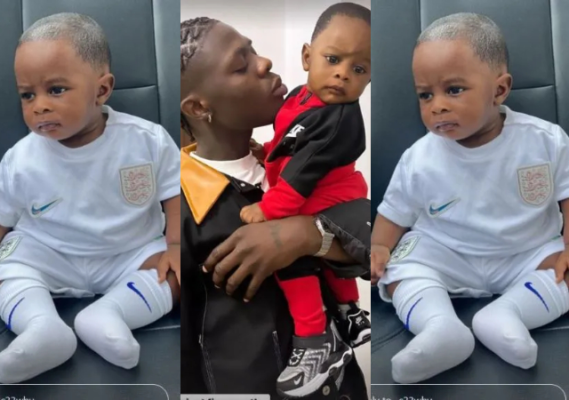
The Magistrate Court in Ikorodu has directed that two Deoxyribonucleic Acid (DNA) tests be carried out on Liam Aloba, the son of late Nigerian singer, Ilerioluwa Aloba, popularly known as Mohbad.

Magistrate Adefisoye Sonuga issued the order on Tuesday, September 2, 2025 while ruling on an application filed by the singer’s father, Joseph Aloba, who sought a paternity test.

The late Mohbad’s wife, Omowunmi Cynthia Aloba, was listed as the respondent in the application brought under the Family Court of Lagos State (Civil Procedure) 2012 and the Magistrate Courts (Civil Procedure) Rules 2009.

The application requested that samples be taken from the remains of the deceased at the Military Hospital in Yaba for use in conducting the tests, either within Lagos or in another recognised facility outside the state.

It further sought approval for a separate test to be conducted abroad at the applicant’s expense.

In court filings, Aloba argued that uncertainty about Liam’s paternity made it necessary to conclusively settle the matter, stressing its importance for maintenance obligations and the child’s welfare.

At the hearing, Aloba was represented by Augustine Adegbemi from the chambers of Dr Wahab Shittu (SAN) & Co., while Kabir Akingbolu appeared for the respondent. The application was moved without opposition, leading the magistrate to grant the request.

The court directed that the tests be conducted in accredited hospitals in Nigeria and abroad, with both parties or their representatives present during sample collection.

The matter was adjourned to November 11, 2025, for further proceedings.

See also  Presidential pardon: AGF orders multi-agency probe

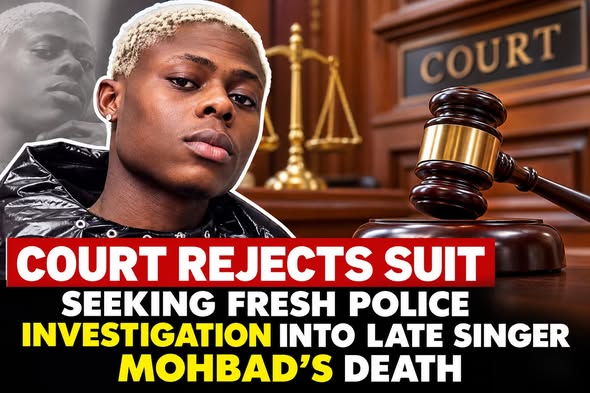
The 26-year-old singer died on September 12, 2023, after sustaining an injury on the back of his right arm.

He was treated and given an injection at his Lekki home by a nurse, and d!ed shortly after he developed a sudden convulsion. He was buried the following day.

Following a massive public outcry, the body was exhumed on September 21, 2023, for an autopsy on the orders of the Lagos State Government.

The findings in that autopsy concluded on April 29, 2024, showed that the cause of death couldn’t be ascertained as the internal organs were already “in a state of moderate to severe decomposition”.

The second autopsy was ordered by the Coroner in June 2024, after the deceased’s family made an application for an independent review.

FOLLOW US ON:

FACEBOOK

TWITTER

PINTEREST

TIKTOK

YOUTUBE

LINKEDIN

TUMBLR

INSTAGRAM

Continue Reading
Click to comment

Leave a Reply

Your email address will not be published. Required fields are marked *

News

Lawmakers claim tax laws altered, warn of constitutional breach

Published

on

A group of concerned lawmakers in the House of Representatives on Wednesday alleged that the tax reform laws passed by the National Assembly and subsequently signed by President Bola Tinubu were altered after passage, raising questions over the legality of the versions currently being circulated by the Federal Ministry of Information.

The lawmakers said the amendments contained in the gazetted copies did not receive legislative approval and are therefore constitutionally defective and legally vulnerable.

At the resumed plenary on Wednesday, a Sokoto lawmaker, Abdussamad Dasuki, raised the issue under a matter of privilege, drawing the attention of the House to what he described as discrepancies between the harmonised versions of the tax bills passed by both chambers of the National Assembly and the copies gazetted by the Federal Government.

A report compiled by the concerned lawmakers detailed what it described as alterations that could not be dismissed as “clerical or editorial corrections.”

The document, which was made available to our correspondent by a lawmaker who requested anonymity on the grounds that he was not authorised to release it, read in part, “Following concerns that certain tax bills passed by the National Assembly in 2025 were altered after passage, the House constituted a Select Committee on Post-Passage Alterations to investigate discrepancies between votes and proceedings of the National Assembly, Clerk-certified (as-passed) bills and gazetted/ final versions of the Acts.

“The committee’s review, supported by forensic comparisons and independent legal opinions establishes that substantive provisions were inserted, deleted, or modified after passage by both chambers.

See also  Supreme Court strikes out Osun’s suit on withheld LG funds

“Several oversight, accountability, and reporting mechanisms approved by parliament were removed in the final Acts.

“New coercive and fiscal powers (e.g., arrest powers, garnish without court order, compulsory USD computation, appeal security deposits) appeared without legislative approval.

“These changes cannot be classified as clerical or editorial corrections.”

The lawmakers further argued that Sections 4 and 58 of the 1999 Constitution vest law-making powers exclusively in the National Assembly.

“The executive has no constitutional authority to alter a bill after passage. Any post-passage alteration is ultra vires, unconstitutional, and void to the extent of the alteration,” the report stated, adding that “Affected provisions are vulnerable to judicial invalidation, creating legal and fiscal uncertainty.”

On the methodology adopted, the report said the committee relied on six key annexures, including “a forensic comparison of votes and proceedings, certified bills, and final Acts.

“A formal legal opinion on constitutionality, section-by-section analyses of the Nigeria Tax Administration Act, Nigeria Revenue Service Act, and Joint Revenue Board framework and a comparative table (House version vs Gazetted Act) highlighting material deviations.”

The lawmakers warned that the alleged alterations undermine legislative supremacy and parliamentary integrity, and “weaken oversight and accountability mechanisms.”

They also noted that if left unaddressed, “the alterations would expose Nigeria to litigation risk, regulatory uncertainty, and loss of investor confidence.”

Among their recommendations were an “immediate legislative review of all identified altered provisions, rectification or re-enactment through proper parliamentary process where necessary.”

The report also urged the House to summon officials responsible for the alleged alterations in line with Sections 88 and 89 of the 1999 Constitution (as amended).

See also  4 sisters, ages 2 to 7, die in house fire after being left home alone overnight

Speaking under a matter of privilege during plenary, Dasuki alleged that the gazetted copies of the new tax laws currently in circulation differ in key clauses from the harmonised versions passed by the Senate and the House of Representatives.

He said, “I’m here today because my privilege has been breached as a member of this all-important House. Mr Speaker, Honourable colleagues, we passed the tax laws (bills) on this floor. I took my time in the last three days to look at the gazetted copy.

“I also looked at the votes and proceedings of the House of Representatives, and also went an extra mile to look at the votes and proceedings of the Senate of what was harmonised.

“Mister Speaker, Honourable colleagues, what was passed on this floor is not what is gazetted. I’m coming under privilege, because I was here. I gave my vote, and it was counted, and I’m seeing something completely different.

“On that note and on this privilege, I call on Mr Speaker to graciously look at what was harmonised and what is in the gazetted copy- what was passed in the House and the Senate.

“You will find out that what is before Nigerians, which is being sold to Nigerians at the Ministry of Information, is not what was passed.”

He called on the House to revisit the version originally passed by the National Assembly, saying, “I plead that all the documents should be brought before the committee of the Whole so that we can make the relevant amendments,” he said.

See also  Did Goodluck Jonathan Arrest You? – Isaac Fayose Blasts Tinubu Over Sowore’s Arrest

Dasuki described the development as unconstitutional, adding, “This is a breach of the Constitution and our laws, and this should not be taken by this Honourable House.”

In his response, the Speaker of the House, Tajudeen Abbas, assured members that the leadership would look into the allegations and take appropriate steps in the national interest.

The disputed laws form part of a wide-ranging tax reform package signed by President Bola Tinubu as part of his administration’s economic reform agenda aimed at boosting revenue, widening the tax base and reducing Nigeria’s dependence on borrowing.

The reforms, which include the Nigeria Tax Administration Act, the Nigeria Revenue Service Act and amendments to the Joint Revenue Board framework, were designed to modernise tax administration, strengthen enforcement and improve compliance.

The laws were passed by the National Assembly in 2025 against the backdrop of persistently low government revenue, high debt servicing costs and pressure on public finances following the removal of fuel subsidies and foreign exchange reforms.

The current controversy, however, has raised fresh concerns about legislative oversight, the integrity of the law-making process and the potential legal consequences for the implementation of the new tax regime, billed to commence in January 2026.

punch.ng

FOLLOW US ON:

FACEBOOK

TWITTER

PINTEREST

TIKTOK

YOUTUBE

LINKEDIN

TUMBLR

INSTAGRAM

Continue Reading

News

US visa restrictions: Shehu Sani urges Nigerians to focus on rebuilding Nigeria

Published

on

Former Kaduna Central lawmaker, Senator Shehu Sani, has reacted to the recent U.S. visa restrictions on Nigerians and citizens of 23 other countries, describing the policy as exclusionary toward “third world migrants,” and urging affected countries to stay back and “build your country.”

President Donald Trump on Tuesday announced expanded entry restrictions on foreign nationals from 24 countries, citing “demonstrated, persistent, and severe deficiencies in screening, vetting, and information-sharing” that threaten U.S. national security and public safety. The affected countries include:

Africa: Burkina Faso, Mali, Niger, Sierra Leone, South Sudan, Angola, Benin, Côte d’Ivoire, Gabon, The Gambia, Malawi, Mauritania, Nigeria, Senegal, Tanzania, Zambia, Zimbabwe.

Asia: Laos, Syria, Turkmenistan.

Caribbean / Oceania: Antigua and Barbuda, Dominica, Tonga.

Middle East / Palestinian Territories: Palestinian Authority-issued travel documents.

Reacting, Senator Sani via his official X handle on Wednesday, criticised the scope and implications of the restrictions, “The first visa ban focused on those who engage in acts of religious persecution, and many jubilated on social media, thinking it’s only for government officials.

“The second visa restriction is for everyone, now that Nigeria is listed among 23 others.

He further questioned the composition of the affected countries, suggesting that the policy raised concerns about selective application.

“The recent list has no Arab countries but mostly Black Africans and Caribbeans, even though safety and security was used as the basis.

“The message is very clear: third world migrants are not welcomed. Stay back and build your country or deal with your problems.”

See also  INEC, stakeholders strategise for Jigawa by-election

PUNCH Online reports that the White House fact sheet states that the proclamation imposes a full suspension on eight countries and a partial suspension on 16 others, affecting immigrants and nonimmigrants on B-1, B-2, B-1/B-2, F, M, and J visas. According to the administration, the measures are “necessary to prevent the entry of foreign nationals about whom the United States lacks sufficient information to assess the risks they pose.”

punch.ng

FOLLOW US ON:

FACEBOOK

TWITTER

PINTEREST

TIKTOK

YOUTUBE

LINKEDIN

TUMBLR

INSTAGRAM

Continue Reading

News

Anioma, Igbanke people in Delta back bill for creation of Anioma State

Published

on

A Coalition of Anioma People in Delta State, on Monday, threw their weight behind the Bill, sreking the creation of Anioma State, wanting to be zoned to the South-East Geopolitical zone of the Country.

Also supporting are Igbanke people, whom they said are Igbo and want to join their people in the South East.

In a solidarity rally held in Asaba, the Coalition, comprising people from the nine Local Government Areas that make up Anioma marched from Interbua- Roundabout to Government House, chanting slogans and displaying placards.

They passed a vote of confidence for Anioma State Creation and submitted two letters signed by their spokesmen representing the nine LGAs including Aniocha North, Ika South, Aniocha South, Ika North East, Ndokwa West, Ndokwa East, Oshimili North Oshimili South, and Ukwuani, as well as those from Igbanke.

The letters submitted by Ofochi Benjamin Atagana, a lawyer, (Ukwuani), to Sheriff Oborevwori, Delta State Governor through Johnson Erijo, the Chief of Staff, appealed to the governor to use his good office to support the creation of Anioma State. Kingsley Kainebi, Jude Ogbekile, and Ayo Ashiedu also called on all stakeholders to support the creation of Anioma State in the South East, affirming the Igbo identity of the Anioma people.

The coalition stated, “We are legitimate indigenes of Anioma known as Aniocha, Ndokwa, Ika, and Oshimili, the area called Delta North, and we are ancestrally, culturally and linguistically Igbo.

“That in the exercise of our rights as guaranteed by Article 20 (1) of the African Charter on Human and Peoples Rights, we have decided to support the Bill for the creation of Anioma State in the Southeast, thereby, excising our people and land from the existing Delta State and the South South Geopolitical Zone.

See also  NLC lauds Imo’s wage hike, challenges govs

“We believe that our political, economic and sociocultural interests will be more advanced and protected in the Southeast to which we have affinity.

“We believe that having coexisted with our good neighbours, the Urhobo, the Isoko, the Ijaw, and the Itsekiri from our days in Western Region, Mid-West Region, Bendel State, and Delta State, the time has now come for us to have a State of our own and reunite with our kith and kin in the Southeast, where we ancestrally, culturally and linguistically belong.

“We are confident that having Anioma State and Delta State as neighbours will not hinder the advancement of the peoples of both States, rather it will enable both states to exist independently but cooperatively, especially in the areas of their comparative advantages.

Responding, Governor Oborevwori represented by Johnson Erijo, reassured the people on the Bill, saying, the present administration remains open, attentive, and supportive of their aspirations, particularly on the ongoing agitation for the creation of Anioma State.

He explained that the matter is already well defined within the provisions of the Nigerian Constitution, adding that the process requires due diligence and adherence to laid-down procedures, including the submission of petitions and memoranda to the National Assembly, followed by further constitutional steps.

FOLLOW US ON:

FACEBOOK

TWITTER

PINTEREST

TIKTOK

YOUTUBE

LINKEDIN

TUMBLR

INSTAGRAM

Continue Reading

Trending