

Connect with us

Business

Petrol exports hit N371bn amid heavy import reliance

Published

on

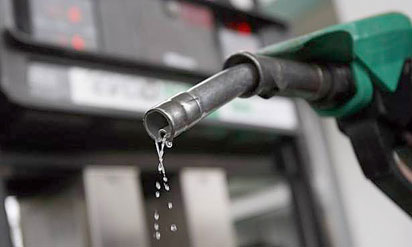
Nigeria exported Premium Motor Spirit, popularly known as petrol, worth N371.54bn in the second quarter of 2025, marking the first recorded shipment of the product after the Dangote Petroleum Refinery came online. The breakthrough follows the commencement of operations at the refinery, Africa’s largest single-train refining complex.

Data from the National Bureau of Statistics shows that petrol accounted for 1.63 per cent of Nigeria’s total exports in the quarter. This was a remarkable shift for a country long dependent on imports due to the chronic dormancy of state-owned refineries. No petrol exports were recorded in either the previous quarter or the same period in 2024.

Analysis of the trade figures revealed that only N85.83bn, representing 23.1 per cent of petrol exports, went to Africa. All of it was concentrated in West Africa, specifically within the Economic Community of West African States. The remaining 76.9 per cent was shipped to destinations outside the continent, suggesting that markets in Asia and the Middle East drove the refinery’s early sales.

Within Nigeria’s regional export mix, petrol represented 2.89 per cent of shipments to Africa, 4.36 per cent to West Africa, and 4.45 per cent to ECOWAS. Globally, it ranked as Nigeria’s ninth-largest export in Q2 2025, but within West Africa, it rose to fifth place and fourth within ECOWAS.

Petrol imports persist

Despite the milestone, Nigeria remained a net importer of petrol. Imports stood at N2.38tn in Q2 2025—down 45.56 per cent from N4.36tn in Q2 2024, but still nearly 6.4 times the value of exports. Compared to N1.76tn in Q1 2025, imports rose by 34.89 per cent quarter-on-quarter.

See also  PHOTOS: Sachet Alcohol Ban Threatens Five Million Jobs, Distillers Warn NAFDAC

Cumulatively, Nigeria imported N4.14tn worth of petrol in the first half of 2025, compared to N8.18tn in the same period of 2024, representing a 49.41 per cent decline. Analysts believe the increasing local refining output will gradually reduce the country’s dependence on foreign suppliers.

Alhaji Aliko Dangote, President of the Dangote Group, confirmed that the refinery exported about 1.35 billion litres of petrol between June and July 2025, equivalent to one million tonnes. Speaking at the recent Global Commodity Insights Conference on West African Refined Fuel Markets, organised by the Nigerian Midstream and Downstream Petroleum Regulatory Authority in partnership with S&P Global, Dangote declared that Nigeria had become a net exporter of refined products.

“From June to date, we have exported about one million tonnes of PMS within just 50 days,” Dangote said, noting that the refinery also began shipping aviation fuel to Europe and Saudi Arabia.

S&P Global reported that gasoline exports from the refinery spiked to roughly 90,000 barrels per day in June 2025, reaching markets as far as Oman, Singapore, and Malaysia. However, production outages and maintenance on its catalytic cracking unit limited volumes in the early months.

Under a naira-for-crude deal with the government, the refinery is obliged to supply fixed volumes of refined products domestically. This is critical amid concerns that the refinery’s export drive could undermine local supply.

Dangote dismissed allegations of monopolising the downstream sector, arguing that his company was investing heavily to reduce Nigeria’s dependence on imports. “Too many people with the means to contribute prefer to criticise from the sidelines while investing abroad. Our focus is to build energy independence for Nigeria and Africa,” he said.

See also  NNPCL secures N318bn to fund new oil exploration

The NMDPRA noted that Nigeria and other West African countries still import around 69 per cent of their petrol needs. According to the agency’s Chief Executive, Farouk Ahmed, an average of 2.05 million metric tonnes of petrol is traded monthly in the region, with the bulk sourced from overseas.

This underscores the challenge Nigeria faces: while Dangote’s refinery has changed the narrative by creating export flows, demand still outstrips supply locally.

Nigeria’s refined products are already finding traction in the United States, which imported about 630,000 barrels per day of petroleum in Q2 2025. Industry sources say the US is a promising destination given that Dangote’s fuel meets its quality specifications. Other major buyers of US imports in the quarter included the Netherlands, Canada, and India.

President Bola Tinubu has framed the refinery’s output as part of a wider African push to reshape global energy markets. Writing on his official X handle recently, Tinubu said, “Africa can no longer remain a price taker for its resources. It is time to establish credible, transparent benchmarks that reflect our realities and protect our economies.”

He added that Nigeria is working with regional partners to establish an integrated market that secures domestic energy access, rewards African production, and deepens cross-border prosperity.

The emergence of petrol exports represents a structural shift in Nigeria’s energy trade. For decades, petrol dominated import bills without appearing in the export ledger. With Dangote now shipping products globally, Nigeria is evolving into both a supplier to regional markets and a participant in the global refined products trade.

See also  CBN cuts interest rate to 26.5%

Analysts say that as the refinery ramps up output, Nigeria’s foreign exchange earnings will improve, import dependence will ease, and the country’s position as West Africa’s energy hub will be strengthened.

punch.ng

FOLLOW US ON:

FACEBOOK

TWITTER

PINTEREST

TIKTOK

YOUTUBE

LINKEDIN

TUMBLR

INSTAGRAM

Continue Reading
Click to comment

Leave a Reply

Your email address will not be published. Required fields are marked *

Business

Kwara strengthens partnership to boost mechanised farming

Published

on

The Kwara State Government has strengthened its partnership with the All Farmers Association of Nigeria and other agricultural stakeholders to advance mechanised farming, environmental sustainability and women inclusion across the state.

The renewed commitment was reaffirmed during a courtesy visit by the leadership of the Kwara State chapter of AFAN to the Kwara State Agro-Climatic Resilience in Semi-Arid Landscapes in Ilorin.

This was contained in a statement issued on Tuesday by the Communication Officer of KWACReSAL, Okanlawon Taiwo, a copy of which was made available to The PUNCH in Ilorin.

Speaking during the meeting, the State Project Coordinator of KWACReSAL, Shamsideen Aregbe, assured farmers of the state government’s continued support toward improving food production, mechanised agriculture and climate resilience.

He said, “Tractorisation remains a critical component of modern agriculture. Access to farming equipment is essential for increasing productivity and addressing food security challenges across the state.”

He explained that the tractor support initiative introduced last year followed a World Bank-backed intervention and presidential directive aimed at supporting farmers with mechanised farming equipment.

Aregbe acknowledged concerns raised about operational challenges affecting some tractors, assuring stakeholders that efforts were ongoing to determine the condition and operational status of the equipment to enable effective utilisation by farmers.

“We must sustain engagement with farming communities, particularly in addressing challenges relating to flooding, agricultural logistics and food security,” he added.

The project coordinator also stressed the need for gender equality and inclusion in agricultural interventions across the state.

“The inclusion of women is not negotiable. We must continue to encourage and support women to actively participate in agricultural programmes and leadership processes,” he stated.

See also  PHOTOS: Sachet Alcohol Ban Threatens Five Million Jobs, Distillers Warn NAFDAC

Earlier, the Chairman of AFAN in Kwara State, Shuaib Ajibola, commended KWACReSAL for its interventions in the agricultural sector, reaffirming the association’s readiness to collaborate on programmes aimed at improving farmers’ welfare and environmental sustainability.

Ajibola disclosed that the association planned to commence an agricultural expo and stakeholder engagement programme across the state following its recent inauguration activities to reconnect with farmers and strengthen agricultural outreach.

“Previous editions of the interventions covered the 16 local government areas of the state and involved stakeholders from different agricultural sectors,” he said.

The AFAN chairman also raised concerns over land use disputes and other agrarian issues affecting farmlands, noting that the development had created anxiety among some farming communities regarding land ownership and rights.

“There is a need for sustained stakeholder dialogue and engagement to resolve disputes and ensure peaceful farming activities across communities,” Ajibola added.

Also speaking, the Project Coordinator of AFAM, AbdulRahman Babatunde, applauded KWACReSAL for its support to farmers, especially in the area of agricultural inputs and mechanised farming.

“ACReSAL provided 100 per cent agricultural inputs to participating farmers last year, and beneficiaries across communities can testify to the positive impact of the intervention,” Babatunde said.

He disclosed that farming activities for the current planting season had already commenced, with farmers actively registering, hiring tractors and preparing their farmlands.

In her remarks, the AFAM Women Leader, Sherifat Ibrahim, advocated increased empowerment and technical training for women in rural communities to enable them to actively participate in mechanised farming.

“There is a need for gender-friendly operational systems and practical training that will make tractor handling easier and more accessible for women and young learners involved in agricultural programmes,” she said.

See also  Petrol nears N1,400/litre as Dangote hikes price

Meanwhile, the Environmental Safeguards Officer of KWACReSAL, Mr Abubakar Mohammed, reaffirmed the project’s commitment to gender equality, women’s inclusion and effective grievance management across all project activities.

The renewed collaboration comes amid growing efforts by the Kwara state government to improve food production and strengthen climate-smart agriculture through partnerships with farmer associations, development agencies and international organisations.

punch.ng

FOLLOW US ON:

FACEBOOK

TWITTER

PINTEREST

TIKTOK

YOUTUBE

LINKEDIN

INSTAGRAM

Continue Reading

Business

See Full List of Top 10 World’s Largest Economies in 2026

Published

on

The United States is projected to remain the world’s largest economy in 2026 with a gross domestic product estimated at $32.1 trillion, according to new global economic forecasts obtained from Focus Economics on Wednesday.

The U.S. continues to lead global output through dominance in technology, finance, healthcare, and advanced manufacturing. Growth in artificial intelligence, healthcare innovation, and high-value industries has further widened its lead over other major economies in recent years.

The top 10 world economies ranked in numbers

1. United States — $32.1 trillion
The United States remains the world’s largest economy, accounting for over a quarter of global output in nominal terms. Its economy is highly diversified, with Silicon Valley driving global leadership in AI, biotech, and software, while Wall Street anchors the financial sector.

2. China — $20.2 trillion
China is the world’s second-largest economy, driven by manufacturing, exports, and large-scale industrial production. It remains the leading global producer of electronics, machinery, and textiles, though it faces structural challenges, including a shrinking population and high debt levels.

3. Germany — $5.4 trillion
Germany remains Europe’s largest economy, supported by a strong industrial base and the Mittelstand network of medium-sized manufacturing firms that form the backbone of its export strength.

4. India — $4.5 trillion
India continues its rapid economic rise, driven largely by services and information technology. Its economy has more than doubled over the past decade, supported by a young population and expanding domestic demand.

5. Japan — $4.4 trillion
Japan remains a global manufacturing powerhouse in robotics, automobiles, and electronics, although long-term growth is constrained by an aging population and structural economic stagnation.

See also  Nigeria’s foreign reserves highest since 2019 — Tinubu

6. United Kingdom — $4.2 trillion
The United Kingdom is a major service-based economy, with strengths in finance, insurance, and real estate, anchored by the City of London.

7. France — $3.6 trillion
France has a diversified economy led by luxury goods, aerospace, agriculture, and manufacturing, with global brands such as Airbus and LVMH playing major roles.

8. Italy — $2.7 trillion
Italy combines a strong services sector with manufacturing strengths in fashion, machinery, and automobiles, driven largely by its industrial northern regions.

9. Russia — $2.5 trillion
Russia remains heavily dependent on oil and gas exports, with energy revenues playing a central role in its economy despite ongoing sanctions and geopolitical pressures.

10. Canada — $2.4 trillion
Canada rounds out the top 10, supported by natural resources such as oil, forestry, and mining, alongside a strong services and financial sector.

Economists say the global economy is increasingly being shaped by technology, demographics, energy transitions, and geopolitical tensions, all of which will influence how these rankings evolve in the coming years.

punch.ng

FOLLOW US ON:

FACEBOOK

TWITTER

PINTEREST

TIKTOK

YOUTUBE

LINKEDIN

INSTAGRAM

Continue Reading

Business

Nigeria misses OPEC oil production quota again

Published

on

Again, Nigeria has missed its crude oil production quota set by the Organisation of the Petroleum Exporting Countries after averaging 1.49 million barrels per day in April, below the 1.5 mbpd benchmark.

Figures from the Nigerian Upstream Petroleum Regulatory Commission showed that the country produced an average of 1,488,540 barrels of crude daily in April, representing about 99 per cent of the OPEC quota. When condensates were added, total daily production rose to 1.66mbpd

Last month, the NUPRC said oil production now averaged 1.8mbpd. However, data released on Tuesday was at variance with the report. The latest data mean Nigeria remained below its OPEC allocation for the ninth straight month since July 2025.

The NUPRC document showed that combined crude oil and condensate production peaked at 1.85 mbpd during the month, while the lowest output stood at 1.46 mbpd. The PUNCH reports that the April figures are an appreciable improvement compared to March, when oil output was 1.55mbpd.

Nigeria’s oil production has struggled for years due to crude theft, pipeline vandalism, ageing infrastructure, and underinvestment in the upstream sector. Although output improved marginally in April compared to March, it was still insufficient to meet the country’s OPEC target, underscoring persistent challenges in ramping up production despite government efforts to boost volumes.

The PUNCH reports that Nigeria’s crude production in March was 1.38 mbpd. While there was a 69,000 bpd increase from the 1.31 mbpd recorded in February, the figure is still 117,000 bpd below the OPEC quota.

The figures for February indicated a month-on-month decline of 146,000 barrels per day, widening the country’s shortfall from its OPEC production allocation. This is the eighth consecutive month the country has failed to meet the OPEC quota since July 2025.

See also  NNPC laments losses as PENGASSAN halts strike

Recall that although Nigeria recorded a marginal improvement in January, when production rose from 1.422 mbpd in December 2025 to 1.46 mbpd, the rebound was short-lived as output fell significantly in February 2026.

Earlier data from NUPRC had also shown that crude oil production weakened at the end of 2025. Production declined from 1.436 mbpd in November 2025 to 1.422 mbpd in December, before recovering slightly in January.

In 2025, Nigeria’s crude oil production fell below its OPEC quota in nine months of the year, meeting or slightly exceeding the target only in January, June, and July.

Nigeria opened 2025 strongly, producing 1.54 mbpd in January, about 38,700 barrels per day above its OPEC allocation. However, production slipped below the quota in February at 1.47 mbpd and weakened further in March to 1.40 mbpd, marking one of the widest shortfalls during the year.

punch.ng

FOLLOW US ON:

FACEBOOK

TWITTER

PINTEREST

TIKTOK

YOUTUBE

LINKEDIN

INSTAGRAM

Continue Reading

Trending