
Connect with us

Business

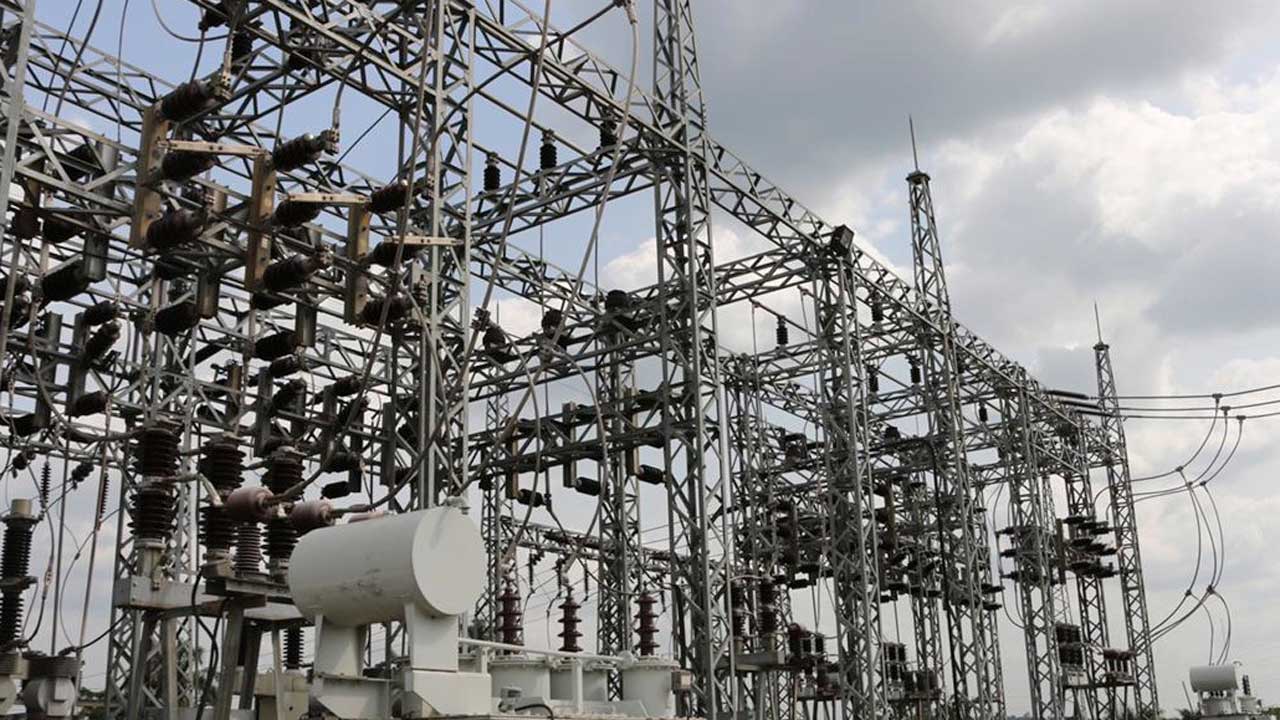
Poor Nigerians, others to get tariff relief with the Electricity Act

Published

on

The new Chairman of the Nigerian Electricity Regulatory Commission, Abdullahi Ramat, has revealed that schools, hospitals and low-income Nigerians will benefit from a tariff relief package under the Electricity Act 2023.

This was as he made known his determination to implement the Power Consumer Assistance Fund as enshrined in the Electricity Act.

Ramat disclosed this in Kano when he received the Chief Medical Director of the Aminu Kano Teaching Hospital, Prof. Abdurrahman Sheshe, and the hospital’s management team on a congratulatory visit to his residence.

He explained that the Commission is set to roll out the Power Consumer Assistance Fund, which is designed to cushion the impact of rising electricity tariffs on vulnerable consumers and critical institutions.

PCAF is a special support fund created by law to help poor and vulnerable Nigerians pay for electricity.

The fund will also help critical institutions like schools and hospitals by cushioning the impact of high tariffs.

The fund, which will be managed by NERC, will come from the Federal Government through the National Assembly budget, while some categories of electricity users, especially bigger or richer customers, will also contribute a small amount.

NERC will be in charge of managing, keeping records, and deciding how the money is shared.

Section 122(1) of the Act states that “There is established the Power Consumer Assistance Fund (in this Act referred to as ‘PCAF’) to be used for the purposes specified.” Subsection (4) further clarifies that “The PCAF shall be used to subsidise underprivileged power consumers as specified by the Minister in consultation with the Commission.”

The law empowers NERC to determine who contributes to the fund and how much. Section 123(1) provides that “The Commission shall determine the contribution rates to be sent by designated consumers and classes of consumers and eligible customers to the PCAF and the subsidies to be disbursed from the PCAF, in accordance with policy directions issued by the Minister.”

Under Section 124, all consumers, including large “eligible customers”, will make contributions at rates fixed by NERC. While regular consumers will pay through their distribution companies, industries and other eligible customers will remit directly to the commission.

See also  Petrol battlefield: Dangote, importers locked in brutal price war

The Act comes with teeth. Section 126 warns that “Any person who fails to pay to the Commission or a distribution licensee, within the prescribed time, any amount owed under this Part, commits an offence and is liable to a fine not exceeding three times the amount owed.”

The new NERC boss, who is still awaiting National Assembly’s approval as of the time of filing this report, posted on his X handle that the PCAF would be rolled out.

“I received Prof. Abdurrahman Sheshe, the CMD, and the entire management of Aminu Kano Teaching Hospital on a congratulatory visit in my house here in Kano. We discussed how to ensure steady and affordable power for the hospital.

“I explained NERC’s plan to roll out the PCAF (Power Consumer Assistance Fund) under the Electricity Act 2023, which will cushion tariff impacts for schools, hospitals, and low-income consumers,” he stated.

The PUNCH reports that the previous plan to roll out the PCAF did not succeed.

While urging the hospital management to embrace cost-saving measures through energy audits, phasing out inefficient equipment and metering staff quarters and shops, Ramat said the commission would continue to engage the Kano Electricity Distribution Company to resolve disputes swiftly and ensure reliable supply.

“Our duty remains clear: to protect the rights of consumers while maintaining investor confidence by fostering an efficient, transparent market structure and investor-friendly ecosystem,” Ramat said.

He noted that the initiative aligns with government efforts to balance affordability with sustainability in the nation’s electricity market.

The Minister of Power, Adebayo Adelabu, promised in 2024 that the Federal Government would subsidise electricity in hospitals and universities by 50 per cent, but that has yet to materialise. Though Adelabu did not specify if this would be under the PCAF.

In his analysis, an expert in the sector, Adetayo Adegbemle, said he had been the lone voice promoting PCAR, stating that Ramat has chosen to do the right thing.

The convener of PowerUpNigeria, Adegbemle, maintained that as the sector teeters on the brink of liquidity crises, the Power Consumer Assistance Fund emerges as a critical solution, offering a structured alternative to subsidies while addressing the needs of diverse customer segments.

See also  NNPC, NUPRC fear financial squeeze after Tinubu’s order

According to him, the government’s subsidies that freeze end-user tariffs below cost created a wide gap between cost-reflective tariffs and the rates charged to consumers, resulting in a massive monthly subsidy burden of approximately N262bn, as only 9.5 per cent of GenCos’ invoices were settled from the market, leading to cash flow shortages that caused gas suppliers to curtail supplies.

He added that NERC’s intervention in April 2024 brought temporary relief by unfreezing tariffs for Band A customers. However, resistance to further tariff adjustments and the government’s reluctance to revise rates for lower bands have stalled progress.

Adegbemle stressed that the PCAF offers a transformative approach to resolving NESI’s liquidity challenges.

“Unlike traditional subsidies, which blanket the entire sector, PCAF is designed to provide targeted financial support to electricity consumers while allowing the DisCos to charge cost-reflective tariffs.

“The fund will be financed through contributions from the government and eligible customers, with rates and durations determined by the Nigerian Electricity Regulatory Commission. NERC will oversee PCAF, ensuring transparent management and equitable distribution of benefits.

“Initially, all customers will receive support through PCAF, reducing the financial burden during macroeconomic volatility. As economic conditions stabilise, the fund will prioritise underprivileged customers, aligning with Section 122(4) of the Electricity Act,” he stated.

He suggested that PCAF should provide a minimum monthly subsidy of N5,000 per customer, equivalent to 25 kWh of electricity, saying low-income consumers using less than 25 kWh monthly will effectively enjoy a full subsidy, ensure affordability while promote efficient energy use.

“By enabling DisCos to charge cost-reflective tariffs, PCAF ensures they can cover operational costs and meet their financial obligations to GenCos. This eliminates the persistent cash flow issues that have plagued NESI, fostering a more resilient supply chain.

“Unlike blanket subsidies, PCAF focuses on delivering support where it is needed most. Low-income households, which typically consume minimal electricity, will benefit from full subsidies, ensuring they are not excluded from access to power,” he stated.

Adegbemle added that the scheme ought to have been implemented since the first quarter of 2025.

Other experts who spoke with The PUNCH expressed optimism over the scheme, stating, however, that accountability and identifying the poor consumers are important factors.

See also  Malabu Oil & Gas Sues CAC Over Deregistration Of Firm

Earlier, Ramat, whose plan is to digitise the power sector, alluded to the fact that the challenges in the sector are enormous, as nearly 50 per cent of generated power is lost, leaving efficiency at barely half capacity.

This, he said, has discouraged investors and fuelled today’s liquidity crisis, despite 20 years of the reform and 12 years of the privatisation, while other privatised sectors like telecom thrive with liquidity and competition.

“The sector’s mixed ownership (private and government) makes digitisation fragmented; no single entity can compel another. But NERC, as the apex regulator, has the mandate to drive full digitisation across the value chain. By deploying IT, we can optimise operations, streamline processes, integrate payment and monitoring systems, stabilise the grid, enforce transparency, reduce losses such as TLF and ATC&C, and boost efficiency.

“Part of my plan includes developing an app available in both Android and iOS which will integrate the APIs of DISCOs and NISO to provide NERC with real-time visibility of payment channels and system operations,” he said in a post.

He promised to deploy a whistleblowing tool so that consumers can anonymously report electricity theft, meter bypass, and illegal connections.

“We will partner with the EFCC, borrowing a leaf from the successful naira mutilation campaign, to enforce arrests, apply name-and-shame measures, and carry out prosecutions, with penalties of up to three years’ imprisonment, as provided by section 208 of the Electricity Act 2023. This approach will not only curb electricity theft but also help reduce tariffs, since part of these losses are factored into consumer bills through MYTO.

“Honest customers should not continue paying for the crimes of electricity thieves. Ending electricity theft and vandalism is a journey we must all travel together.

“I firmly believe that with digitisation, we can tackle the sector’s challenges head-on: reducing losses, boosting efficiency, restoring investor confidence, protecting consumers, attracting competition, increasing liquidity, and ultimately lowering tariffs. This is not theory, it is achievable. And as Chairman/CEO of NERC, it is a promise,” Ramat said.

Continue Reading
Click to comment

Leave a Reply

Your email address will not be published. Required fields are marked *

Business

Tax reform to create opportunities, promote fairness – Minister

Published

on

The Federal Government has maintained that Nigeria’s tax reform will ultimately be judged not by how much revenue it generates, but by how fairly it distributes opportunities across society.

The Minister of State for Finance and Chairman of the Presidential Fiscal Policy and Tax Reform Committee, Taiwo Oyedele, said this at the unveiling of a book on policy guide aimed at advancing gender equity and social inclusion in Abuja recently.

The presentation organised by the Policy Innovation Centre brought together policymakers, development partners, private sector leaders, and civil society representatives.

Attendees engaged in high-level discussions on the 2026 tax reforms, addressing how the ongoing tax reforms can expand economic opportunities for women, youth, and persons with disabilities.

punch.ng

FOLLOW US ON:

FACEBOOK

TWITTER

PINTEREST

TIKTOK

YOUTUBE

LINKEDIN

See also  Union Bank completes merger with Titan Trust Bank
Continue Reading

Business

Lagos-Calabar coastal road will raise GDP to $14tn — Expert

Published

on

The Development Agenda for Western Nigeria and the BRACED Commission, comprising Bayelsa, Rivers, Akwa Ibom, Cross River and Edo states, alongside other stakeholders, have agreed to explore investment opportunities along the 750-kilometre Lagos-Calabar Coastal Road.

The programme, held at the corporate head office of the DAWN Commission at Cocoa House, Dugbe, Ibadan, on Tuesday, was attended by representatives of governments from the South-West states and other relevant stakeholders.

Participants noted that if the opportunities presented by the road are properly harnessed, the project could serve as a game changer capable of increasing Nigeria’s Gross Domestic Product to between $1.4tn and $14tn over the next 50 years.

In his welcome address, the Director-General of the DAWN Commission, Seye Oyeleye, said the commission convened stakeholders from the South-West and South-South regions to plan how to maximise the economic benefits of the road.

He said, “The biggest infrastructure programme in the last 65 years in Nigeria, which is the 750-kilometre Lagos-Calabar Coastal Road, requires structured development to avoid the mistakes of the past.”

Oyeleye stressed the need for collaboration among states to create industrial, green and tourism zones to maximise the economic potential of the project.

“We at the DAWN Commission, which is the think tank for the South-West states, decided to bring in the critical states along what we have described as a game changer for southern Nigeria. The biggest infrastructure programme in the last 65 years in Nigeria is the 750-kilometre Lagos-Calabar Coastal Road.

“What we planned to do was bring in the three South-West states—Lagos, Ogun and Ondo. We also invited the BRACED Commission, which covers the South-South states, because the road runs parallel to those states. The idea is that for the South-West region to harness the benefits of that road, there has to be structured development,” he said.

See also  Wema Bank is the longest surviving indigenous bank in Nigeria.

The DG warned against repeating past mistakes associated with uncoordinated development.

“We must ensure that the mistakes of the past, where states worked in silos and pursued individual interests, are not repeated on this infrastructure. We have seen examples in different parts of the world where a coastal road becomes a major catalyst for development.

“It is important not to wait until the completion of the road before planning begins. From the discussions so far, we are already considering collaborative efforts on how Lagos, Ogun and Ondo can work together. We are looking at creating industrial zones, green zones and tourism zones.

“One of the outcomes we expect from this meeting is an agreement to establish a joint body that will supervise development along this corridor. There has to be a team dedicated solely to development along the coastal corridor, and this must happen as soon as possible,” Oyeleye added.

In a lecture titled Unlocking Economic Potentials of the Lagos-Calabar Coastal Highway: Land Governance and Regional Alignment for the South-West Corridor, the Managing Director and Chief Executive Officer of Makaya Consult, Eko Atlantic City, Olawale Opayinka, projected that the coastal road could significantly increase Nigeria’s GDP over the next five decades.

He emphasised the importance of preserving the integrity of the corridor and ensuring coordinated development to prevent haphazard growth.

“There is a major opportunity in this coastal highway of over 700 kilometres, with the possibility of maintaining the integrity of that corridor. We have about 700 square kilometres of potential development.

“With our population expected to grow significantly over the next 50 years and our GDP currently at about $400bn, developments along that corridor could create enterprise value ranging from $1.4tn at the lower end to about $14tn at the upper end.

See also  Tinubu’s executive order blocks N2tn NNPC fees

“The values we have projected can only be realised if the states work together. If they fail to collaborate, the projected value may not be achieved. It does not stop with Lagos, Ogun and Ondo; it also involves Edo, Delta, Bayelsa, Rivers, Akwa Ibom and Cross River. If they fail to do the right thing on their side, it could undermine the entire project,” he said.

He added that the project could significantly transform Nigeria’s economic outlook.

“We are talking about moving the Nigerian economy from under $400bn today to between $1.4tn and $14tn over the next 50 years. This provides an opportunity to build a multi-trillion-dollar economy and position Nigeria among the leading economies in the world,” Opayinka stated.

In his remarks, the Director-General of the BRACED Commission, Joe Keshi, also stressed the need for coordinated planning, citing examples of well-planned coastal roads in other parts of the world.

“This is the beginning of a conversation to ensure that we plan adequately and avoid the haphazard developments that have affected many roads in Nigeria.

“It would be unfortunate if a major infrastructure project like the coastal road eventually reflects the same pattern of unplanned development seen in some parts of the country,” he said.

Keshi emphasised the importance of political will among state governments.

“We are encouraging governors to develop the political will to understand that this road could be a game-changer for the southern states if the right steps are taken. The road itself is only the beginning; what comes after the road is what we are discussing here—how to ensure that it strengthens the Nigerian economy and does not become another example of unplanned development,” he added.

See also  Sahara Group eyes 7,000MW in major power sector push

Other speakers, including Commissioners for Physical Planning and Urban Development in Ogun, Ondo and Lagos states—Tunji Odunlami, Sunday Olajide and Olayinka Abiodun—as well as the Ogun State Commissioner for Culture and Tourism, Oluwasesan Fagbayi, emphasised the need for collaboration to ensure effective economic planning.

Similarly, stakeholders, including Muyiwa Ige; the Nigerian Investment Promotion Commission South-West Zonal Head, Ololade Okeowo; Executive Director of Odu’a Investment Company Limited, Yemi Ajao; retired Director of Federal Highways, Folorunso Esan; and Permanent Secretary, Lagos State Ministry of Environment, Tajudeen Gaji, stressed the importance of proper zoning, security and governance structures.

They noted that synergy among states, the Federal Government and relevant agencies would be critical to unlocking the full economic potential of the Lagos-Calabar Coastal Highway.

punch.ng

FOLLOW US ON:

FACEBOOK

TWITTER

PINTEREST

TIKTOK

YOUTUBE

LINKEDIN

Continue Reading

Business

Dangote-NNPC deal hits great turbulence, see details

Published

on

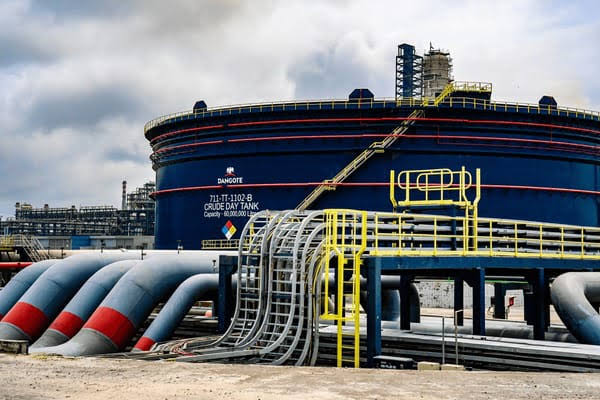
The ambitious deal between the Dangote Petroleum Refinery and Nigerian National Petroleum Company Limited is facing challenges, as the refinery experienced a crude oil supply shortfall of approximately 79.53 million barrels between October 2025 and mid-March 2026, according to findings by The PUNCH.

Data obtained from an impeccable senior management source within the refinery indicated that the facility, which requires approximately 19.77 million barrels of crude monthly to operate at full capacity, received significantly lower volumes during the review month.

The official argued that, under the Petroleum Industries Act, the export of crude before meeting local demand was clearly prohibited, stressing that the $20bn Lekki-based plant had been grappling with inadequate crude volumes, while the country, through NNPC, continued to export some of its oil.

A breakdown of the figures shows that the refinery is supposed to get about 19.77 million barrels of crude monthly, but it got 4.55 million barrels in October, 6.45 million barrels in November, 4.30 million barrels in December, 5.65 million barrels in January, and 4.66 million barrels in February. For March, only 3.6 million barrels were delivered between the 1st and 15th.

In total, crude supplied within the five-and-a-half-month period stood at 29.21 million barrels, compared to an estimated 108.74 million barrels required for the same duration. This translates to a supply performance of about 26.9 per cent, indicating that more than three-quarters of the refinery’s crude needs were not met.

At best, supply hovered below one-third of required volumes, leaving a shortfall of approximately 79.53 million barrels. Using the average market price of Bonny Light crude, supplied by the Central Bank of Nigeria, the financial impact of this shortfall is significant. Bonny Light sold for $66.15 per barrel in October 2025, $65.22 in November, $68.05 in January 2026, and $72.33 in February. Taking the average of these four months, the crude price stood at approximately $67.94 per barrel.

At this price, the 29.21 million barrels supplied to the refinery were worth about $1.98bn. Meanwhile, the 79.53 million barrels not supplied represented an estimated $5.40bn in crude value that Dangote refinery could not access. In total, the refinery’s crude requirement for the five-and-a-half-month period would have amounted to roughly $7.39bn at average market prices.

Further analysis showed that monthly deliveries consistently lagged behind demand. Even in November, the highest supply month, what was delivered was 6.45 million barrels, representing about 32.6 per cent of the refinery’s monthly requirement.

In October, the supply of 4.55 million barrels accounted for roughly 23 per cent of demand, while December’s 4.30 million barrels represented about 21.7 per cent. January’s 5.65 million barrels translated to approximately 28.6 per cent, and February’s 4.66 million barrels stood at about 23.6 per cent of required volumes.

See also  Asian stocks hit by fresh tech fears as gold retreats from peak

The March 1 to 15 supply of 3.60 million barrels, when compared with half-month requirements, also showed that deliveries remained below expected levels. In all, the data indicated that monthly supply ranged between about one-fifth and one-third of the refinery’s needs, underscoring a persistent gap in feedstock availability.

The development highlights ongoing challenges surrounding crude supply to domestic refiners, particularly as Nigeria seeks to scale up local refining capacity and reduce dependence on imported petroleum products.

In October 2024, the naira-for-crude deal between the Dangote refinery and NNPC was introduced as a policy initiative that allows the refinery to purchase crude oil in naira rather than in US dollars. The arrangement was designed to ease pressure on Nigeria’s foreign exchange reserves, stabilise the local currency, and support domestic refining by ensuring a steady supply of crude to local processors.

Under the agreement, NNPC supplies crude oil to the Dangote refinery, which in turn sells refined petroleum products in naira within the domestic market, helping to retain value within the local economy and potentially reducing fuel prices. The deal initially covered a six-month period and has since been extended through new supply agreements, although challenges such as crude supply shortfalls and pricing dynamics have continued to test its effectiveness.

Earlier, the Dangote refinery had repeatedly lamented that it was not getting enough crude locally for its operations. As the Iran-US war continues to disrupt global oil supply, the Dangote refinery has effected multiple fuel price increases, raising petrol pump prices above N1,300 per litre at the moment.

Defending these price hikes, the Dangote refinery said in a statement that local crude producers were refusing to supply feedstock to its facility, forcing it to rely more on imported crude.

According to the company, the refinery also received just five cargoes every month from the national oil company instead of 13 cargoes, adding that the cargoes were paid for at international market prices.

“While we receive about five cargoes a month from NNPC, which we pay for in naira, these cargoes are priced at international market prices plus premium and fall short of the 13 cargoes which we require to support sales into Nigeria.

“The high crude cost is compounded by the fact that Nigeria’s upstream producers have failed to supply crude oil to the refinery as required under the Petroleum Industry Act, forcing us to source a substantial portion through international traders who charge an additional premium,” it stated.

But the NNPC said it had intensified efforts to ensure a steady crude oil supply to the Dangote refinery as part of moves to stabilise fuel availability across the country. This came amid heightened global oil market volatility occasioned by the tension in the Middle East and growing reliance on local refining to meet Nigeria’s petroleum product demand.

See also  Union Bank completes merger with Titan Trust Bank

Speaking during a recent webinar, the Managing Director of NNPC Retail Limited, Hubb Stokman, said the national oil company remains central to ensuring supply security through its statutory role.

“NNPC remains committed to its statutory role, of course, as a supplier of last resort, making sure of the stability and continuity of supply of petroleum products across the country,” he said.

Stokman explained that the company is working closely with the Nigerian Midstream and Downstream Petroleum Regulatory Authority and other stakeholders to guarantee an uninterrupted supply of crude and refined products nationwide.

He noted that with established supply channels, including domestic production and imports where necessary, the NNPC is positioned to maintain stable product availability.

“We’re confident that with established supply channels, both with the production and imports functioning effectively in line with the Petroleum Industry Act, we can take all the necessary measures to guarantee adequate crude supply and uninterrupted availability of products nationwide,” he stated.

The PUNCH reports that amid the surge in fuel prices occasioned by the tension in the Middle East, the NNPC planned to source third-party crude for the Dangote refinery.

Reliable sources at the NNPC, who pleaded anonymity due to the sensitivity of the matter, had confirmed to our correspondent that the company is leveraging its global crude trading network to source third-party crude for the 650,000-barrel Lekki refinery.

According to the source, the NNPC would sell the crude to the refinery at prices that are competitive with prevailing international market rates, ruling out calls by some stakeholders that the Federal Government should sell feedstock to local refineries at rates designed locally to shield Nigeria from the global price rise.

“Leveraging our global crude trading network, we are sourcing third-party crude for the refinery at prices that are competitive with prevailing international market rates,” an official said.

Another source told The PUNCH that the NNPC is fully committed to supporting domestic refining, especially the Dangote refinery. He added that, going by the existing agreements between the NNPC and Dangote, the NNPC will continue to facilitate crude supply to the facility, even in the face of temporary constraints.

“As the national oil company entrusted with safeguarding Nigeria’s energy security, NNPC Limited remains fully committed to supporting domestic refining, including the Dangote Petroleum Refinery. Within the framework of our existing agreements, we continue to facilitate crude supply to the refinery in the face of temporary availability constraints,” he explained.

See also  Nigeria spends N9tn importing petrol

Our correspondent gathered from other sources within the national oil company that there was truly a shortfall because some volume of NNPC’s daily crude output had been front-sold in the past.

“Indeed, there’s a shortfall, but it wasn’t deliberate. You know that some volumes have been front-sold in the past. That is causing some form of distortion, but that doesn’t mean the NNPC will not meet up. The company is looking at other alternative sources,” it was said.

The push to strengthen crude supply to local refineries comes as Nigeria increasingly depends on domestic refining capacity, particularly from the Dangote refinery, to reduce reliance on imports and improve energy security.

As local oil refiners in Nigeria complain of persistent crude shortages, the country exported an estimated 306 million barrels of crude oil between January and October 2025, according to figures from the Central Bank of Nigeria.

The data reveal that while Nigeria produces substantial volumes of crude, the bulk of it is earmarked for export, leaving domestic refineries struggling to obtain adequate feedstock.

Between January and October, the CBN data shows that Nigeria’s crude production amounted to roughly 443.5 million barrels, averaging about 1.45 million barrels per day over the period.

Cumulatively, total exports over the 10 months reached approximately 306.7 million barrels, accounting for nearly 69 per cent of total production. This left roughly 137 million barrels available for the domestic market.

Speaking in an interview with The PUNCH, the National Publicity Secretary of the Crude Oil Refiners Association of Nigeria, Eche Idoko, decried the inability of local refineries to secure crude for production. Idoko said a modular refinery like Opac couldn’t get crude, and it stopped production for months.

According to Idoko, local refineries have the capacity to produce more than their current output, blaming the lack of enough feedstock for the current output. “We have the capacity to produce far more than what we are producing now. The challenge has always been inadequate feedstock,” he stated.

Idoko stated that some modular refineries like OPAC produce about 10 per cent of their capacities, while some shut down due to a lack of crude oil.

Meanwhile, fuel marketers like the Petroleum Products Retail Outlet Owners Association of Nigeria and the Independent Petroleum Marketers Association of Nigeria have called on the Federal Government to supply enough crude to Dangote and other local refineries to boost domestic refining.

The marketers said petrol would have jumped to N2,000 per litre if not for the Dangote refinery.

punch.ng

FOLLOW US ON:

FACEBOOK

TWITTER

PINTEREST

TIKTOK

YOUTUBE

LINKEDIN

Continue Reading

Trending