Connect with us

Lifestyle

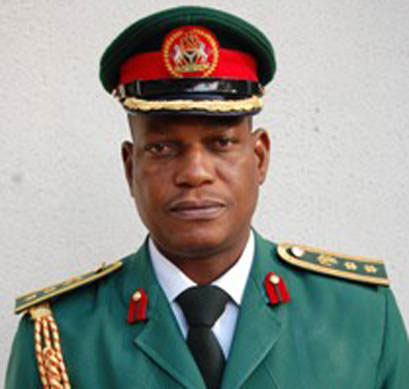
Brigadier General Enitan Ransome-Kuti: The Nigerian Officer Who Faced Court-Martial and Redemption

Published

on

The story of Brigadier General Enitan Ransome-Kuti — his trial, demotion, reinstatement, and retirement after a turbulent episode in Nigeria’s war against Boko Haram.

The Officer and His Lineage

Brigadier General Enitan Ransome-Kuti is a retired Nigerian Army one-star general, best known for his controversial 2015 court-martial. He comes from one of Nigeria’s most distinguished families — the Ransome-Kutis — whose legacy blends military service, activism, and cultural influence.

He is the son of Dr. Beko Ransome-Kuti, the renowned human rights activist, and a nephew to Fela Anikulapo-Kuti, the legendary Afrobeat musician. His family has long been associated with advocacy, defiance of oppression, and a firm sense of national duty — traits that shaped Enitan’s own military journey.

The Baga Incident and Court-Martial

The turning point in Ransome-Kuti’s career came in 2015, during Nigeria’s ongoing battle against the Boko Haram insurgency in the North-East. At the time, he served as the Commander of the Multinational Joint Task Force (MNJTF), stationed in Baga, Borno State.

In January 2015, Boko Haram launched a massive offensive on Baga, overrunning the MNJTF base and seizing military equipment, including tanks and weapons. The attack — one of the deadliest in the insurgency’s history — resulted in the deaths of many civilians and soldiers, forcing the Nigerian Army to retreat.

Following the incident, Brigadier General Ransome-Kuti and several officers were arrested and court-martialed for alleged “cowardice, failure to perform military duties, and loss of equipment to the enemy.”

The Trial and Conviction

The General Court-Martial convened in Abuja in October 2015. After several months of proceedings, Ransome-Kuti was found guilty of negligence and loss of equipment, though cleared of cowardice — a charge that carries severe moral stigma within the military.

See also  Ibadan indigenes warn politicians against disrespecting Olubadan

He was dismissed from service and sentenced to six months’ imprisonment.

The decision sparked widespread public debate. Critics, including notable figures like Prof. Wole Soyinka, argued that the general had been unfairly punished for systemic military failures rather than personal misconduct. Many saw the trial as a scapegoating attempt amid public outrage over Boko Haram’s territorial gains at the time.

Reversal and Reinstatement

In March 2016, the Army Council reviewed Ransome-Kuti’s case and overturned the dismissal, describing it as “unwarranted humiliation.” His sentence was reduced to a demotion from Brigadier General to Colonel, and he was reinstated into the Nigerian Army.

Media outlets such as PM News, The Punch, and Vanguard reported that his reinstatement followed appeals from senior officers and a reconsideration of evidence showing that Ransome-Kuti had repeatedly requested reinforcements and logistical support before the Baga attack — requests that went unanswered.

This development was seen as a rare moment of military accountability and institutional correction, as it acknowledged the complexities of Nigeria’s counter-insurgency challenges.

Retirement and Legacy

Brigadier General Enitan Ransome-Kuti retired in 2017, concluding an eventful and controversial military career. Despite the ordeal, he retained significant respect among peers and human rights advocates who viewed his case as symbolic of the Nigerian military’s internal struggles — between integrity, politics, and accountability.

His story remains a compelling chapter in Nigeria’s fight against terrorism, reflecting the sacrifices and systemic flaws within the armed forces during one of the nation’s most difficult security crises.

A Family of Resilience

The Ransome-Kuti family’s history is steeped in national service and courage. From Reverend Israel Oludotun Ransome-Kuti, a pioneer educator, to Funmilayo Ransome-Kuti, one of Nigeria’s most influential women’s rights activists, and Fela, the outspoken musician who used his art for political resistance — the family has continually embodied the spirit of defiance against injustice.

See also  My account of Mohbad’s story, Naira Marley speaks out on Mohbad's Death

Enitan’s military trial, though tragic, adds another dimension to this legacy — one of resilience amid adversity and duty under pressure.

Brigadier General Enitan Ransome-Kuti’s case highlights both the heroism and hardships of Nigerian soldiers on the frontlines. His story underscores the importance of institutional support, fair justice, and recognising the human realities behind national security. In the broader context of Nigeria’s military history, it serves as a reminder that leadership and loyalty are often tested not in triumph, but in trial.

References

1. Premium Times Nigeria (2015) – “Nigerian Army Dismisses, Jails Army General for Losing Equipment to Boko Haram.”

2. Vanguard News (2015) – “Why We Jailed Gen. Ransome-Kuti – Army.”

3. PM News Nigeria (2016) – “Demoting Gen. Ransome-Kuti an Unwarranted Humiliation, Says Soyinka.”

4. Punch Newspapers (2016) – “Army Panel Reinstates Brig. Gen. Ransome-Kuti.”

5. CGTN Africa (2015) – “Nigerian Army General Jailed for Cowardice.”

FOLLOW US ON:

FACEBOOK

TWITTER

PINTEREST

TIKTOK

YOUTUBE

LINKEDIN

TUMBLR

INSTAGRAM

Continue Reading
Click to comment

Leave a Reply

Your email address will not be published. Required fields are marked *

Lifestyle

Emir of Ilorin greets Muslims on Islamic New Year

Published

on

The Emir of Ilorin and Chairman of the Kwara State Traditional Rulers Council, Alhaji Ibrahim Sulu-Gambari, CFR, has congratulated the Muslim Ummah on the occasion of the Islamic New Year, 1st Muharram, 1448 A.H.

He noted that the migration of Prophet Muhammad (SAW) from Makkah to Madinah established the foundation for justice, brotherhood, and community building, as well as values that are urgently needed for global peace.

Sulu-Gambari stated this in a goodwill message issued on Tuesday by his spokesman, Abdulazeez Arowona, describing the Hijrah as a timeless reminder of sacrifice, perseverance, and faith in Allah’s divine plan.

The monarch noted, “Hijrah teaches us that hard times do not last forever. As we enter 1448 A.H., I urge Muslims to renew their commitment to piety, peaceful coexistence, and service to humanity.”

He appealed to Nigerians to use the new year to pray for peace, unity, and economic prosperity at all levels, while urging religious and political leaders to avoid divisive utterances capable of causing rancour in society and to promote messages that strengthen national cohesion.

The Emir further commended Governor AbdulRahman AbdulRazaq for his administration’s support for religious harmony and urged youths to emulate the discipline and courage of the early Muslims by shunning violence, drug abuse, and other social vices.

Sulu-Gambari also offered special prayers for the repose of the soul of the late Prof. Yusuf Lanre Badmos, whose relentless efforts, scholarship, and devotion to the National Hijrah Organisation, Kwara State Chapter, significantly advanced the commemoration of Hijrah and the propagation of Islamic values during his lifetime.

See also  Ibadan indigenes warn politicians against disrespecting Olubadan

He prayed that Almighty Allah (SWT) forgive his shortcomings, accept his good deeds, and grant him Al-Jannatul Firdaus.

“May the New Year inspire us to be our brother’s keeper. I pray Almighty Allah (SWT) grants us good health, abundant blessings, and accepts our acts of worship,” the Emir added.

punch.ng

FOLLOW US ON:

FACEBOOK

TWITTER

PINTEREST

TIKTOK

YOUTUBE

LINKEDIN

INSTAGRAM

Continue Reading

Lifestyle

One year after 272 massacred, fear still rules Yelewata

Published

on

How much has changed since that tragic night of June 13, 2025? Have the survivors of the massacre found healing and security, or are they still trapped by fear, poverty and painful memories? JOHN CHARLES visited Yelewata on Saturday and reports on a community still searching for answers

In Yelewata, memories do not live in photographs alone; they stand in burnt walls, empty compounds and the tears of survivors who still struggle to understand why hundreds of their neighbours never lived to see another sunrise.

The tears came without warning.

Standing before the charred remains of a house in Yelewata, Saaondo, a middle aged man, could no longer hold back the memories. Around him, prayers echoed from a memorial Mass organised to honour victims of the June 13, 2025 massacre. But for him, the tragedy was not history; it was a wound that reopened with every glance at the ruins.

A year ago, fate spared him. He had travelled out of the community just hours before armed attackers stormed Yelewata, killing hundreds and setting homes ablaze. Those he left behind never escaped.

Last Saturday, as the community marked the first anniversary of the attack, the sorrow was unmistakable. Behind the speeches, prayers and unveiling of a monument bearing 272 names was a painful reality: while the dead are being remembered, many survivors say they are yet to rebuild their lives.

One of the leaders of Yelewata community, Matthew Mnyan, noticed Saaondo standing alone and quietly approached him. Concerned, he asked why he had stepped away from the memorial Mass and appeared deeply troubled.

The man’s response was enough to melt even the hardest heart.

‘I would have died too’

Pointing to the burnt remains of a house nearby, Saaondo said, “I left this particular house for Makurdi on the eve of June 13. But all the occupants of the house were killed and burnt when the marauders invaded Yelewata. If I had been around that night, I would have been among those being remembered at this memorial today.”

His grief reflected the mood in Yelewata last Saturday as the once-sleepy community again played host to visitors from different walks of life. They had not come to celebrate a festival or honour a prominent figure. Rather, they had gathered to mark the first anniversary of the deadly attack that left the community devastated.

Yelewata, located along the Lafia-Makurdi Federal Highway in Guma Local Government Area of Benue State, came under a brutal attack on June 13, 2025. The assault, which reportedly lasted about four hours, drew national and international attention. Initial reports put the death toll at about 200.

See also  Buhari vs Fela: How Buhari Administration illegally Jailed Fela in 1984

However, with the unveiling of a memorial monument in honour of the victims during the first anniversary commemoration, the number of those killed was officially put at 272, including 67 children.

According to Franc Utoo, a native of the community and Director of Advocacy for the US-based non-profit organisation, Equipping The Persecuted, which funded the Yelewata Genocide Memorial Monument, the project was conceived to ensure that the victims are never forgotten.

“By choosing to erect this monument, the organisation affirms that those slain in Yelewata must never be reduced to a passing headline or anonymous casualty figures. They must be remembered with dignity, permanence and honour,” he said.

He added, “As the first monument of its kind in Benue State, it occupies a historic place in the moral landscape of remembrance. It preserves the names of the 272 members of the Yelewata community who were killed — 67 children, 83 women and 122 men — and places before the world a solemn record of lives violently taken.”

As residents and visitors marked the anniversary, it became evident that Yelewata is still struggling to recover from the tragedy. Twelve months after the attack, the scars remain visible and the pain is far from over.

Memorial service

Delivering his homily at the memorial Mass, the Catholic Bishop of Makurdi Diocese, Most Rev. Wilfred Anagbe, called on government at all levels to adopt a deliberate policy of resettling displaced persons in their ancestral communities rather than keeping them indefinitely in makeshift Internally Displaced Persons camps.

According to the bishop, the continued confinement of displaced persons in camps for fear of further attacks amounts to a defeatist approach and projects the government as powerless in the face of insecurity.

He argued that keeping otherwise productive members of communities in camps where they depend largely on charity is counterproductive to their physical and psychological well-being and ultimately undermines their dignity.

Anagbe also faulted the Benue and Nasarawa State governments for what he described as negligence, accusing them of failing to act on intelligence reports that allegedly warned of the impending attack on Yelewata.

Despite the tragedy, the bishop commended the resilience of the people of Yelewata, noting that they have remained steadfast in the face of immense physical and psychological trauma.

See also  PHOTOS: HOW NIGERIA WAS SOLD TO THE BRITISH FOR £865,000 IN 1899

He assured them that the Christian community across the world continues to stand with them in prayer and solidarity.

Moro blasts FG

In his remarks, Senate Minority Leader Abba Moro criticised the Federal Government and Nigeria’s political class for what he described as their failure to fully appreciate the magnitude of the insecurity confronting the nation.

Moro accused the government of avoiding uncomfortable truths and warned that refusing to confront the problem head-on would not make it disappear.

Taking a swipe at the country’s political elite, he asked: “Can we, in all honesty, go around during campaigns and ask the people to vote for us again when the mandate already entrusted to us has not been effectively deployed for their well-being? We need to wake up.”

How are survivors faring?

For many residents, the first anniversary of the attack was not only a time to remember the dead but also an opportunity to draw attention to the plight of the living.

A community leader, Matthew Mnyan, painted a grim picture of life in Yelewata one year after the tragedy, lamenting that many survivors are still struggling to rebuild their lives.

According to him, poverty has deepened in the community, while insecurity remains a major concern.

He said residents still live in fear and cannot venture far from the community or freely access their farms because of persistent security threats.

Mnyan cited the case of a young girl who was allegedly sexually assaulted while fetching firewood in a nearby bush.

“People of Yelewata and neighbouring communities, especially Udei, are still living in fear. They cannot access their farms because of recurring attacks in the area,” he said.

“There is a case involving a young girl that I am still pursuing. She was sent to fetch firewood from a nearby bush and was allegedly molested by four suspected herders. Incidents like this show that our people are still vulnerable.

“The level of poverty has also increased because many people who relied on small-scale businesses and other means of livelihood have not been able to recover from the attack.”

Mnyan also criticised the Technical Committee on Donations for Internally Displaced Persons, headed by the Secretary to the Benue State Government, Deborah Aber, accusing it of not doing enough to alleviate the suffering of survivors.

“While the government may believe it has done a lot, many people in the community feel otherwise,” he said.

The community leader said residents had advised the state government on how best to utilise donations received from individuals and organisations, including the contribution made by the First Lady Oluremi Tinubu, but alleged that the funds had not been effectively deployed for the benefit of victims.

See also  My account of Mohbad’s story, Naira Marley speaks out on Mohbad's Death

In March this year, the Secretary to the State Government announced that the committee had received about N1.25bn in donations from various sources, including N1bn donated by the First Lady following the attack.

Mnyan said the community had proposed that a substantial part of the funds be used to resettle displaced residents and support their economic recovery.

“We suggested that some of the money should be given to affected persons as start-up capital for small businesses, while markets and other facilities that would help restore livelihoods should also be provided,” he said.

He further alleged that some of the beneficiaries selected by the committee were not among the names submitted by the community.

According to him, residents raised concerns that the list used for the distribution of assistance did not accurately reflect those affected by the attack.

Mnyan also questioned the quality of some of the housing projects being executed for displaced persons, alleging that some of the buildings had already begun to develop cracks.

He called on Governor Hyacinth Alia to personally visit the community and assess the situation on the ground.

“I am not sure the governor is fully aware of what is happening. I urge him to come and see things for himself, inspect the projects and hear directly from the people of Yelewata,” he said.

Mnyan further expressed concern that several directives issued by President Bola Tinubu during his condolence visit to Benue State had yet to be implemented.

However, the Benue State Emergency Management Agency presented a different account of the situation.

The agency’s Information Officer, Tena Ager, said some displaced persons from Yelewata had already been resettled, while others remained at the International Market IDP camp.

According to him, more than 1,000 completed housing units have been allocated to displaced persons, while the government has acquired additional land in the community for the development of social infrastructure, including a mosque, church, hospital and market.

“Government has also provided cash assistance and other relief materials to the people of Yelewata,” Ager said.

punch.ng

FOLLOW US ON:

FACEBOOK

TWITTER

PINTEREST

TIKTOK

YOUTUBE

LINKEDIN

INSTAGRAM

Continue Reading

Lifestyle

Actor Baba Ijesha welcomes baby boy

Published

on

Actor Olanrewaju Omiyinka, popularly known as Baba Ijesha, has announced the birth of his son.

The actor disclosed this in an Instagram post on Monday, sharing a maternity photoshoot featuring himself and his wife.

Expressing gratitude to God, Baba Ijesha revealed that the couple welcomed a baby boy named King Kagar Omiyinka.

He wrote, “In quiet ways, in unseen ways, God has been writing a story only He could tell. We thank the Almighty for blessing us with a healthy baby boy.

“God gave me more than I prayed for. My ever beautiful wife, strong Jagaban, Abikese de mi owo, @ceolumineeofficial, who became the mother of my son, King Kagar Omiyinka.”

The announcement attracted congratulatory messages from fans and colleagues in the entertainment industry.

Baba Ijesha was released from prison in November 2025 after serving a jail term following his conviction in a child sexual assault case.

See also  Ibadan indigenes warn politicians against disrespecting Olubadan
Continue Reading

Trending