Connect with us

Lifestyle

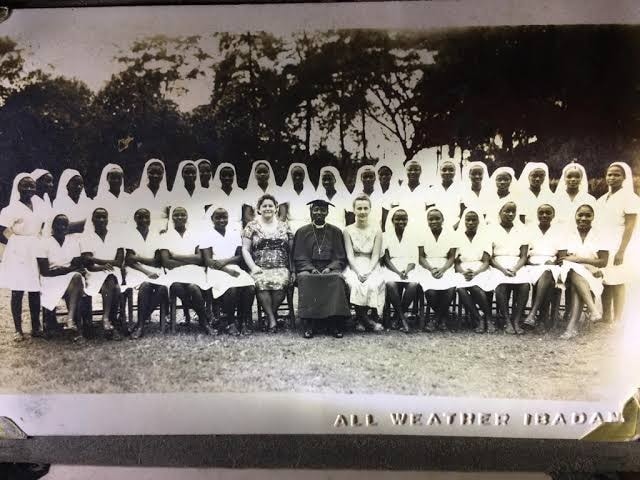
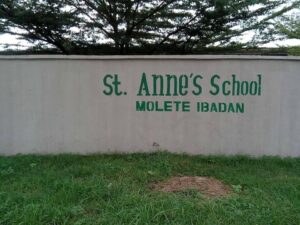
St. Anne’s School, Ibadan: The First Girls’ Secondary School in Nigeria

Published

on

A legacy of education, empowerment, and excellence in shaping Nigeria’s first generation of female leaders.

Historical Background

St. Anne’s School, Ibadan, stands as one of Nigeria’s most enduring symbols of female education and empowerment. Its foundation is deeply rooted in the Christian missionary movement of the 19th century, particularly the efforts of the Church Missionary Society (CMS).

The school as it exists today was born in 1950, following the merger of two pioneering institutions — CMS Girls’ Seminary, Lagos (1869) and Kudeti Girls’ School, Ibadan (1899). This unification created the first secondary school in Nigeria established exclusively for the education of girls, marking a transformative chapter in Nigeria’s educational history.

Origins: CMS Girls’ Seminary, Lagos (Founded 1869)

The CMS Girls’ Seminary was established in 1869 by the Anglican Church Missionary Society in Lagos. It was Nigeria’s first school to provide formal secondary education for girls, a revolutionary concept at the time when Western education was largely reserved for boys.

The seminary’s mission was clear — to train Christian girls as teachers, mothers, and community leaders. The curriculum balanced religious instruction with academic and domestic education, preparing young women to contribute meaningfully to society.

Many of its early students were daughters of freed slaves and early Christian converts, reflecting the CMS’s commitment to social reform and moral education.

Expansion: Kudeti Girls’ School, Ibadan (Founded 1899)

By the late 19th century, the need for similar institutions outside Lagos led to the establishment of Kudeti Girls’ School in Ibadan in 1899. The school was founded by Anglican missionaries who recognised Ibadan’s growing importance as a major Yoruba city and an educational hub.

See also  My account of Mohbad’s story, Naira Marley speaks out on Mohbad's Death

Kudeti Girls’ School continued the CMS tradition of offering sound academic and moral training, nurturing young women who would later become teachers, nurses, and administrators during the colonial period.

The 1950 Merger: Birth of St. Anne’s School, Ibadan

In 1950, the Anglican Church decided to merge the two schools — CMS Girls’ Seminary, Lagos, and Kudeti Girls’ School, Ibadan — into one unified institution. The new school was named St. Anne’s School, Ibadan, and it was located on the Kudeti site.

The merger symbolised the Anglican mission’s dedication to consolidating female education under a single, well-equipped institution. St. Anne’s quickly gained a reputation for academic excellence, discipline, and moral integrity, producing graduates who went on to break barriers in various fields.

Academic Excellence and Alumni Achievements

St. Anne’s School became a leading light in West African education. Its alumnae include some of Nigeria’s first female pioneers in various professions:

Nigeria’s first female science graduate

Nigeria’s first female Chief Judge of Lagos State

Nigeria’s first female novelist

These remarkable achievements underscore the school’s vision — to raise women who are both intellectually and morally upright. The institution’s rigorous academic curriculum, combined with a focus on leadership and social responsibility, continues to distinguish its students.

Cultural and Religious Influence

Beyond academics, St. Anne’s School has played a central role in promoting moral and spiritual education. Rooted in the Anglican ethos, the school emphasises Christian values, discipline, and community service. Over the decades, it has hosted generations of students who have upheld these principles, contributing to Nigeria’s socio-cultural and religious landscape.

See also  PHOTOS: The Shocking and Unbelievable Story of Jesu Oyingbo – Lagos’ Self-Proclaimed Messiah

Present Day and Legacy

Today, St. Anne’s School, Ibadan, remains one of Nigeria’s most prestigious girls’ schools. It continues to operate under the Anglican Church’s supervision and maintains strong alumni associations both locally and internationally.

The school’s historic architecture, serene environment, and consistent academic record serve as living testaments to its enduring mission — educating women for service, leadership, and faith.

As Nigeria advances in education and gender equality, St. Anne’s School stands as a proud reminder of the country’s earliest efforts to empower women through learning.

References

1. St. Anne’s School, Ibadan – Official School Records and Alumni Association Archives

2. Oduyoye, Modupe. The Church Missionary Society and the Development of Female Education in Nigeria (1869–1950), Ibadan University Press, 1988.

3. Ajayi, J. F. Ade. Christian Missions in Nigeria 1841–1891: The Making of a New Elite, Longman, 1965.

FOLLOW US ON:

FACEBOOK

TWITTER

PINTEREST

TIKTOK

YOUTUBE

LINKEDIN

TUMBLR

INSTAGRAM

Continue Reading
Click to comment

Leave a Reply

Your email address will not be published. Required fields are marked *

Lifestyle

PHOTOS: A Biafran Armoured Vehicle at the National War Museum, Umuahia: Ingenuity in a Time of Siege

Published

on

Displayed at the National War Museum in Umuahia, Abia State, this armoured vehicle stands as a striking material reminder of the technological improvisation that characterised the Biafran side during the Nigerian Civil War (1967–1970). The vehicle is commonly identified as an up-armoured T16 Universal Carrier, adapted and deployed by Biafran forces in the face of severe resource constraints.

The Nigerian Civil War in Context

The Nigerian Civil War, often called the Biafran War, erupted in July 1967 following the secession of the Eastern Region of Nigeria as the Republic of Biafra under the leadership of Lt. Col. Chukwuemeka Odumegwu Ojukwu. The conflict was rooted in a complex mix of political instability, ethnic tensions, economic disputes, and the fallout from the 1966 military coups.
The federal government imposed a land, sea, and air blockade on Biafra, drastically limiting access to weapons, fuel, spare parts, and food. This blockade forced Biafran engineers, mechanics, and technicians to rely heavily on local innovation and adaptation to sustain their war effort.

The Up-Armoured Universal Carrier

The vehicle shown in the museum is believed to be based on the T16 Universal Carrier, a light tracked armoured vehicle originally designed during the Second World War. Universal Carriers were widely used by Allied forces and were present in Nigeria during the colonial era.
During the war, Biafran forces modified available carriers by:

Reinforcing them with improvised armour plating

Adapting engines and mechanical components using locally available materials

Reconfiguring them for reconnaissance, troop movement, or limited combat roles

See also  Tears, drama, strategies, What you missed on first week of BBNaija S10

Although such vehicles could not match the firepower or durability of modern armoured tanks, they represented a pragmatic response to isolation, allowing Biafra to maintain some level of mechanised capability.

Ingenuity Under Pressure

The armoured carrier exemplifies what many historians describe as Biafran wartime ingenuity. Alongside makeshift armoured vehicles, Biafra also produced:

Locally assembled rockets and mortars (such as the Ogbunigwe)

Modified civilian vehicles for military use

Small-scale refineries and workshops to support logistics

These efforts were driven by necessity rather than abundance, highlighting the role of technical skill and improvisation in asymmetric warfare.

Human Cost and Global Attention

The war resulted in devastating human losses. Scholarly estimates suggest around 100,000 military deaths, while civilian deaths range from approximately 500,000 to over 2 million, largely due to famine and disease exacerbated by the blockade. These figures vary widely among historians and humanitarian organisations, reflecting the difficulty of precise wartime accounting.
Notably, the Nigerian Civil War was among the first conflicts to receive extensive global television coverage. Images of starving Biafran children broadcast internationally shaped global humanitarian awareness and influenced the development of modern relief organisations.

Preservation and Historical Memory

Today, the presence of this armoured vehicle at the National War Museum, Umuahia serves an educational purpose rather than a celebratory one. It invites reflection on:

The realities of civil conflict

The limits and possibilities of local technological innovation

The enduring human and social consequences of war

As an artefact, it underscores how material culture can help future generations understand both the creativity and tragedy that emerge under extreme historical conditions.

See also  Bamidele Olumilua: Statesman, Evangelist, and Former Governor of Old Ondo State

Sources

National War Museum, Umuahia (museum displays and archival descriptions)

Nigerianland, Nigeria History Makers – Pictures

Falola, T. & Heaton, M., A History of Nigeria (Cambridge University Press)

FOLLOW US ON:

FACEBOOK

TWITTER

PINTEREST

TIKTOK

YOUTUBE

LINKEDIN

TUMBLR

INSTAGRAM

Continue Reading

Lifestyle

A Woman of Elegance, Resilience, and Impact: Alhaja Simbiat Atinuke Abiola

Published

on

This seldom-seen image from 1991 gently captures the serene presence of Alhaja Simbiat Atinuke Abiola (née Shoaga), pictured alongside her daughter, Wuraola Abiola, at her husband’s birthday celebration in Lagos—just a year before her passing. A prominent member of the renowned Abiola lineage, her life was rooted in service and generosity.

Alhaja Simbiat was not only the cherished spouse of the late Chief Moshood Kashimawo Olawale Abiola, she was also a formidable figure in her own right. In the early 1980s, she shattered glass ceilings by launching and directing Wonder Bakery, an innovative enterprise that provided employment to over 140 Nigerians—at a time when female business leaders were a rarity in the country.

Yet, her brilliance extended well beyond commerce.

In 1992, while waging a brave battle against cancer in a hospital in the United Kingdom, Alhaja Simbiat watched the heart-wrenching news of the Cairo (Dahshur) earthquake. Touched by the plight of the children affected, she selflessly donated $100,000 to support the reconstruction of a school that had been reduced to rubble. Even as her health declined, her compassion remained boundless—reaching across nations and touching lives.

That same year, Nigeria mourned the loss of a quiet luminary. Alhaja Simbiat passed away at age 51 in a British hospital, leaving behind a legacy defined by kindness, tenacity, and quiet leadership.

She was far more than a devoted wife and loving mother—she stood as a beacon of humanity, vision, and unwavering dignity.

May her soul continue to rest in perfect peace.

Source: historylovers

Photo: theelitesng

FOLLOW US ON:

FACEBOOK

TWITTER

PINTEREST

TIKTOK

YOUTUBE

LINKEDIN

TUMBLR

INSTAGRAM

See also  PHOTOS: The Shocking and Unbelievable Story of Jesu Oyingbo – Lagos’ Self-Proclaimed Messiah
Continue Reading

Lifestyle

VIDEO: Seyi Tinubu arrives Alaafin’s palace for installation as ‘Okanlomo of Yorubaland’

Published

on

The city of Oyo is currently witnessing an influx of political figures and traditional rulers for the installation of new high-ranking chiefs by the Alaafin of Oyo, Oba Abimbola Owoade.

Seyi Tinubu, accompanied by his wife, Layal, arrived at the palace of the Alaafin on Sunday.


Alaafin confers chieftancy titles on Seyi Tinubu. Credit: X|adejare_stephen


Alaafin confers chieftancy titles on Seyi Tinubu. Credit: X|adejare_stephen

PUNCH reports that Seyi, the son of President Bola Tinubu, will be installed as the “Okanlomo of Yorubaland,” a title which translates to “the beloved child” or “the one dear to the hearts of all Yoruba people.”

The title is said to symbolise a custodian of Yoruba values, unity, and cultural heritage.

The Senator representing Zamfara West and a former Governor of Zamfara State, Abdul’Aziz Yari, has also reportedly arrived in Oyo, accompanied by a delegation of northern senators and political figures.


Alaafin confers chieftancy titles on Seyi Tinubu, Senator Yari. Credit: X|adejare_stephen

Yari will also be installed as the “Obaloyin of Yorubaland” on the same occasion by the Alaafin.

The Director of Media and Publicity to the Alaafin, Bode Durojaiye, in a recent statement, reportedly stated that the ‘Obaloyin of Yorubaland’ title represents love, compassion, justice, and a bridge between physical and spiritual realms.

Both titles are said to come with responsibilities that include promoting Yoruba culture, advising the Alaafin, fostering unity, and advancing education and social welfare.


Alaafin confers chieftancy titles on Seyi Tinubu, Senator Yari. Credit: X|adejare_stephen

Videos circulating on social media reveal that the venue of the event is set, capturing the presence of several notable figures, including former Governor of Kano State, Abdullahi Ganduje, lawmakers, and a diverse assembly of traditional rulers and chiefs.

See also  Alhaji Lateef Kayode Jakande being sworn in as the first Executive Governor of Lagos State by the State chief judge Adetunji Adefarasin in 1979

Watch videos below:

CLICK TO WATCH THE VIDEO

Credits: PUNCHNG

FOLLOW US ON:

FACEBOOK

TWITTER

PINTEREST

TIKTOK

YOUTUBE

LINKEDIN

TUMBLR

INSTAGRAM

Continue Reading

Trending