Lifestyle
PHOTOS: CHRONOLOGICAL LIST OF CHIEFS OF THE AIR STAFF (1963 – Present)

1. Colonel Gerhard Kahtz (1963–1965) – German
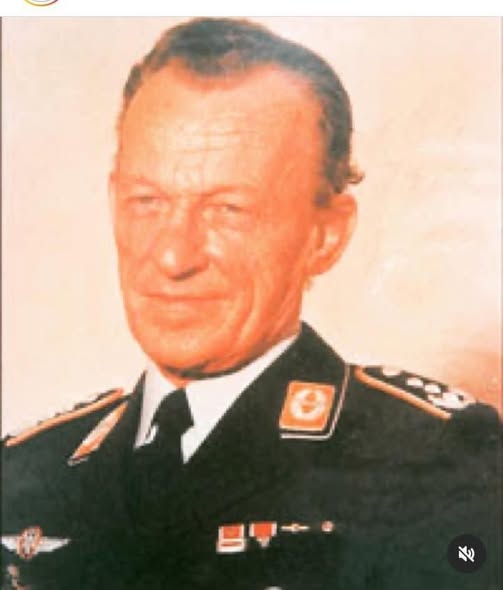
Meet Colonel Gerhard Kahtz, a German officer, was indeed appointed as the first Chief of the Air Staff for the Nigerian Air Force (NAF) in 1963. Following Nigeria’s independence, Kahtz was instrumental in establishing the foundation for the NAF by organizing its initial structure, training systems, and operational framework. His leadership marked a significant milestone in developing Nigeria’s aerial defense capabilities, as he helped lay down the NAF’s foundational strategies and trained its first officers. This period under Kahtz’s guidance played a crucial role in shaping the early years of the Nigerian Air Force.
Colonel Gerhard Kahtz’s legacy in Nigeria is defined by his pivotal role in establishing the Nigerian Air Force, transforming it from concept to an operational branch of the military with a clear structure, training protocols, and strategic framework. Tasked with building Nigeria’s aerial defense capability shortly after independence, Kahtz set the foundation for an air force that could protect the country’s sovereignty and support its military operations. His focus on training, discipline, and operational readiness created a legacy of professionalism that inspired generations of Nigerian air personnel.
Replicating this success in present times would involve re-emphasizing Kahtz’s principles of structured training, disciplined leadership, and strategic foresight. By investing in modernized training facilities, collaborating with experienced international advisors, and fostering a culture of innovation, Nigeria could ensure that its air force remains prepared to meet contemporary security challenges and contributes effectively to regional stability.
2. Colonel Wolfgang Thimmig (1965–1966) – German
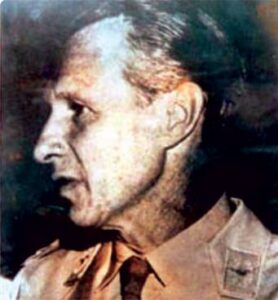
The second Commander of the Nigerian Air Force (NAF) was Colonel W Timming. He took over from Colonel Kahtz on 23 November, 1965. Born on 4 October, 1912, Colonel Timming, like his predecessor, was also a veteran of the Second World War. He came to Nigeria as part of the GAF Assistance Group (GAFAG) and helped to lay the foundation of the NAF under Colonel Kahtz. He continued where Kahtz stopped, until 18 January 1966 when the GAFAG withdrew from Nigeria. Although, he headed the NAF for barely 3 months, as part of the GAFAG, his role in the formation and nurturing of the NAF is indelible.
3. Brigadier George T. Kurubo (1966–1967)
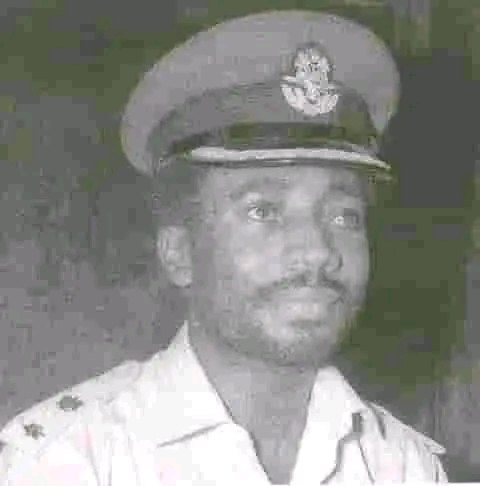
George Tamunoiyowuna Kurubo (27 July 1934 – 2000) was Nigerian Air Force’s Chief of the Air Staff from 1966 to 1967. Brigadier George T Kurubo was the third Commander of the Nigerian Air Force (NAF), the first indigenous to hold the post. He was married, had four children, visited the Government School in Bonny.
From 1948 to 1953, Kurubo attended Government College in Umuahia, then Regular Officers’ Training School in Accra in 1953, then Officer Cadets Training School, Eaton Hall, Cheshire in 1954. From 1954 to 1955, he attended Royal Military Academy Sandhurst, then the Young Air Infantry Officers’ School in 1956, then Senior Air Infantry Officers’ School in 1961, and finally Command and Staff College, Quetta, Pakistan in 1964.
Kurubo was promoted second lieutenant and then platoon commander in 1956. Between 1957 and 1965, her served in various command positions. In 1964, he moved from Lt-Col in the Army to the newly formed Nigerian Air Force in 1964. In January 1966, he became the first indigenous Air Force Chief.
An Easterner, he did not go with the Igbo-led secession because he was from Rivers State which was carved out of the Eastern Region at the outbreak of the Nigerian Civil War. Serving as the Eastern commander of logistics, Kurubo defected from Biafra to the Federal Government.
From January–July 1966, Kurubo served as a member of the Supreme Military Council, and as a member of the Federal Executive Council.
On 12 August 1967, he was appointed Nigeria’s Ambassador to the Soviet Union, where he stayed until 1973. In 1970, he was promoted to Brigadier General.
From December 28, 1974 until 1975, Kurubo served as Nigeria’s ambassador to Iran,[1] also accredited to Ankara.
On August 19, 1975, Kurubo retired from the military.
In 1977, he served as chairman of the Bonny Local Government Area’s Management Committee. Then, from 1977 to 1978, he was a member of the Constituent Assembly of the Second Nigerian Republic.
4. Colonel Shittu A. Alao (1967–1969)
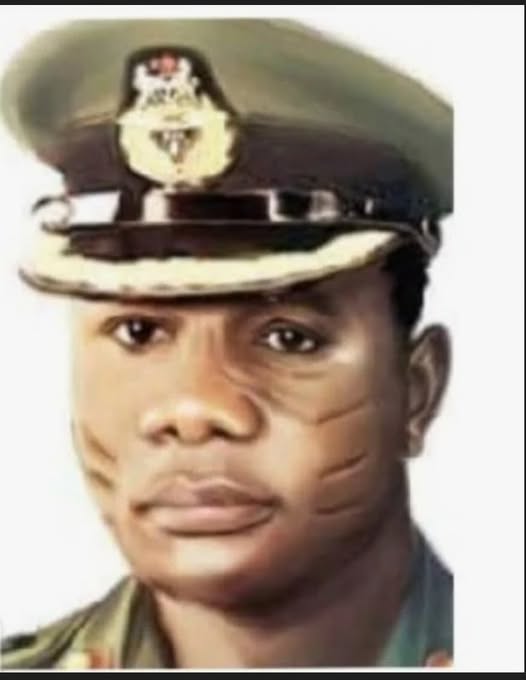
Shittu Alao (born 1937 – 15 October 1969) was Nigerian Air Force’s Chief of the Air Staff from 1967 to 1969. Colonel Shittu was the fourth Commander of the Nigerian Air Force (NAF), the second indigenous officer to hold the post.
Death
He died on October 15, 1969, in an air crash at Uzebba, about 50 miles northwest of Benin. He was aged 32 and he was alone in the plane. Two days later, in Lagos, he was buried with full military honours.
Emmanuel E Ikwue was announced as his replacement on December 18, 1969.
5. Brigadier Emmanuel E. Ikwue (1969–1975)
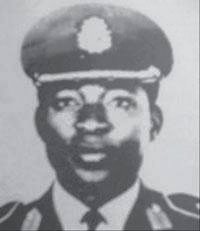
6. Air Vice Marshal John Nmadu Yisa-Doko (1975–1980)
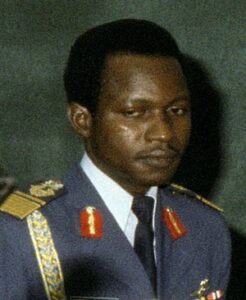
Air Vice Marshal John Nmadu Yisa-Doko played a significant role in evaluating the French-made Mirage fighter jet in 1970, after Nigeria’s attempts to acquire F-5 Tigers failed. As a pilot and the first Nigerian Air Force’s Chief of the Air Staff, serving from 1975 to 1980, Yisa-Doko was instrumental in assessing the Mirage’s capabilities and potential.
Born on February 13, 1942, in Doko, Niger State, Nigeria, Yisa-Doko joined the Nigerian Air Force as a cadet in 1962 and was among the first batch of pilots recruited to serve in the newly formed Air Force. He underwent pilot training in Ethiopia from 1962 to 1964 and was commissioned as a Second Lieutenant in 1964.
During his tenure as Chief of the Air Staff, Yisa-Doko initiated several significant developments, including the establishment of primary schools in all major NAF formations, training schools for NAF primary trade specialties, and operational bases at Makurdi and Kainji. He also founded the NAF Regiment, NAF Junior Command and Staff School, and the Air Faculty at the Command and Staff College, Jaji.
Yisa-Doko’s achievements and contributions to the Nigerian Air Force are a testament to his dedication and leadership. He was honored with several awards, including the Grand Commander of the Order of the Niger (GCON) and the Commander of the Federal Republic (CFR).
7. Air Vice Marshal Abdullahi Dominic Bello (1980–1983)
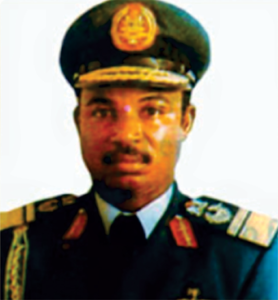
Air Vice-Marshal Abdullahi Dominic Bello took over the leadership of the NAF as the seventh Chief of the Air Staff (CAS) on 15 of April 1980. He was enlisted into the Nigerian Air Force (NAF) as an officer cadet in October 1963.
He was the first NAF Officer to attend the prestigious Air War College in the United States. He was born in Jimeta, Yola on 14 December, 1942. During his tenure as the CAS, he introduced the Benevolent Welfare Fund to alleviate the sufferings of bereaved families of deceased NAF personnel.
He also introduced the Aircrew Insurance Programme and established the NAF Military School, Jos and Air Force Secondary School, Ikeja, all in 1981.
8. Air Marshal Ibrahim Mahmud Alfa (1984–1990)
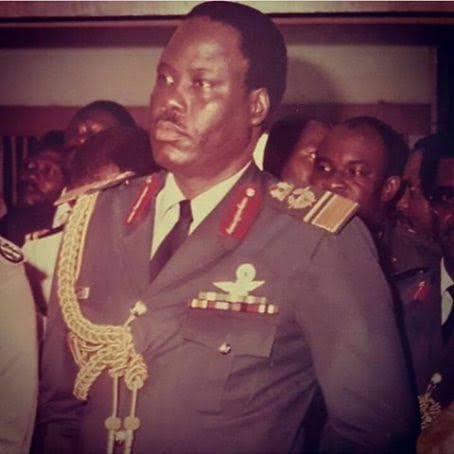
Ibrahim Mahmud Alfa (14 August 1946 – 16 March 2000) was an air marshal in the Nigerian Air Force. He previously served as Military administrator of Kaduna State and Chief of Air Staff for the Nigerian Air Force. He died on 16 March 2000.
Born in Garkida, Adamawa State, he started his educational career at the Central Primary School, Jimeta, Yola, in 1948 and went on to complete his primary and secondary school education in 1960 at Yola Middle School, later known as the Provincial Secondary School. Soon after his graduation, he enrolled for his Higher School Certificate (HSC) course in Barewa College, Zaria, which he completed in 1962.
Ibrahim Alfa was one of the pioneering sets of officer cadets who enlisted into the Nigeria Air force in June 1963. On 28 August 1963, he was flown, along with a team of 83 other Nigerians, to Uetersen, Germany, for Basic and Advance Military Training. He was in Germany until 21 June 1966, when he was recalled home with the team and commissioned into the Nigerian Air Force with the rank of second lieutenant. At the outbreak of the Civil War, he commanded the NAF Detachment in Benin City.
In 1967, Alfa attended the Conversion Course on MIG 15 and 17 in USSR. He was promoted to the rank of captain in 1969. In 1970 he was appointed the Commanding Officer, Nigerian Air force (NAF) Flying Training Wing, Kano.
In 1972 he was promoted to the rank of Major. From December 1972 to August 1973, Ibrahim Alfa enrolled for the T-38 Instructor Pilot course at Lockheed and Randolph Air Force Base, in the United States. In 1973 he was appointed officer Commanding 64 Fighter Squadron, Kano, Nigeria.
In November 1974 he attended a conversion course on MiG 21 followed by a back seat check in USSR. In 1975 he was promoted Wing Commander. He was appointed a member of the Supreme Military Council between 1976 and 1978 as one of its younger members with the rank of Wing Commander. During this period, he attended the Advanced Staff College, l, England. In 1978 Alfa was promoted to the rank of Group-Captain and he was also appointed as the Military Administrator of Kaduna State by the then Head of State, General Olusegun Obasanjo, where he also took charge as Commander, Ground Training Group in Kaduna.
In June 1980, he enrolled at the Air War College in Maxwell Air Force Base, Montgomery, USA. On his return from the Air War College in 1981, Ibrahim Alfa was appointed the Air Officer Operations (AOO), with the rank of Air Commodore. In 1982, he attended the International Defence Management Course, Lagos, Nigeria. In 1983 Alfa was promoted to the rank of Air Vice Marshal.
On 1 January 1984, he was appointed the eighth Chief of Air Staff by General Muhammadu Buhari’s regime. After General Ibrahim Babangida took power in August 1985, he retained Alfa as Chief of Air Staff. On 1 October 1987, Ibrahim Mahmud Alfa was promoted to the rank of Air Marshal, the first Nigerian Air force officer ever to attain the rank.
Alfa retired from the Nigerian air force as the Chief of Air Staff in 1990.
Ibrahim Mahmud Alfa also served as a member of the supreme military council from 1984 to 1985, the Armed Forces Ruling Council (AFRC) 1985-90 as well as the chairman of the National Transition Committee in 1990.
In July 1978, Alfa was appointed military Administrator (position now called Governor) of Kaduna State, a position he held until October 1979.
Alfa was appointed the eighth Chief of Air Staff, Nigerian Air Force, under General Muhammadu Buhari’s regime on 1 January 1984. He was retained as Chief of Air Staff during General Ibrahim Babangida’s administration until 1990.
Ibrahim Alfa was married to Laraba, they had three sons and one daughter together.
Air Marshal Alfa (Rtd.) received several awards and medals. In alphabetical order they include:
– Defence Service Medal (DSM) Defence Service Medal (Nigeria)
– Distinguished Flying Star (DFS)
– Distinguished Service Medals (DSM)
– General Service Medal (GSM) General Service Medal (Nigeria)
– Member of the Federal Republic (MFR)
– National Service Medal (NSM) National Service Medal (Nigeria)
9. Air Vice Marshal Nuraini Yussuff (1990–1992)
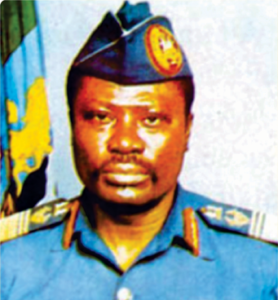
Air Marshal Nuraini Oladimeji Omotosho Yussuff was born in Lagos on 10 June, 1942. He began his military career in the Nigerian Air Force (NAF) on 7 August 1963 as an officer Cadet. Subsequently, he was sent to Germany where he undertook military training with the German Air Force (GAF). He was commissioned a Second Lieutenant on 7 November, 1966. Air Marshal Yussuff was appointed as the ninth Chief of the Air Staff (CAS) on 29 December, 1989. He retired from military service in January 1992.
10. Air Marshal Akin Dada (1992)
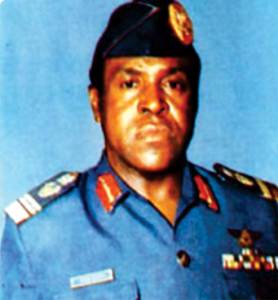
Air Marshal Akin Dada was born in Lagos on 7 June 1943. He hails from Ipoti-Ekiti in Ijero Local Government of Ekiti State. He was enlisted into the Nigerian Air Force (NAF) on 1 July, 1964. He then proceeded to India where he trained on various aircraft types. On his return, he was commissioned a Second Lieutenant on 29 October, 1966. Air Marshal Akin Dada held various senior and command positions in the NAF before his appointment as the CAS on 31 January, 1992. He retired from the military service in 1993.
11. Air Vice Marshal Femi John Femi (1992–1996)
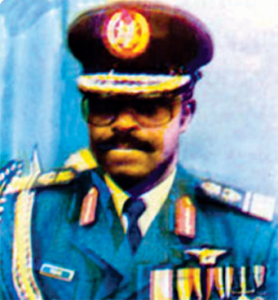
The Eleventh Chief of the Air Staff of the Nigerian Air Force (NAF), Air Vice Marshal Femi John Femi, was born on 30 December 1945 in Egbeda-Kabba, Kogi State. He enlisted into the NAF as an officer cadet on 1 July, 1965. He proceeded to Germany for his pilot training after his basic military training. He qualified as an helicopter pilot in March, 1967 and was commissioned Second Lieutenant on his return to Nigeria on 1 June 1967. He was appointed Chief of Air Staff (CAS) of the NAF on 17 September, 1993. He retired from military service in 1996.
12. Air Marshal Nsikak-Abasi Eduok (1996–1999)
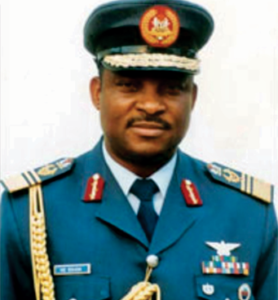
The twelfth Chief of the air Staff (CAS) of the Nigerian Air Force (NAF) was Air Marshal Nsikak-Abasi Essien Eduok. He was born on 11 July, 1947 at Mbak in Akwa Ibom State. He enlisted into the NAF as a potential pilot on 1 August 1968. Air Marshal Eduok had his initial military training at the Nigerian Defence Academy after which he went for primary flying training in 1970. He was appointed as the CAS on 27 August, 1993, but the appointment was reversed a week later by the then military government. He was redeployed as Air Officer Commanding Tactical Air Command (AOC TAC) and also appointed a member of the Provisional Ruling Council (PRC). On 20 March, 1995, he was appointed a member of the Federal Executive Council as Honourable Minister for Aviation. He was in this position till he was finally reappointment as the CAS on 30 March, 1996.
13. Air Marshal Isaac Mohammed Alfa (1999–2001)
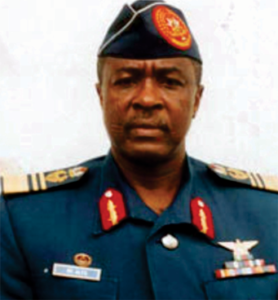
Air Marshal Isaac Mohammed Alfa popularly known as “Air Warrior” in the Nigerian Air Force (NAF) circles was born on 15 September, 1950 at Inye in Ankpa Local Government Area of Kogi State. He was enlisted into the Nigerian Defence Academy in 1969 as a member of Regular Combatant Course 6. He was commissioned Second Lieutenant in 1971 and rose through the officer ranks to the rank of Air Marshal in 1999. Air Marshal Alfa had a wealth of flying, staff and command experience, which thoroughly prepared him for his eventful tenure as CAS. He was appointed CAS in 1999 and he retired in 2001.
14. Air Marshal Jonah Domfa Wuyep (2001–2006)
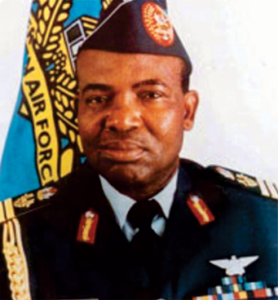
Air Marshal Jonah Domfa Wuyep became the fourteenth Chief of the Air Staff (CAS), Nigerian Air Force (NAF) on 24 April, 2001. He was born at Pil-Gani in Langtang North Local Government Area of Plateau State on 23 November, 1948. He was admitted into the Nigerian Defence Academy in 1970 and was commissioned into the NAF as a Second Lieutenant in April, 1973. He was appointed as the CAS in April, 2001 and was promoted to the rank of an Air Marshal on 1 October, 2001.
15. Air Marshal Paul Dike (2006–2008)
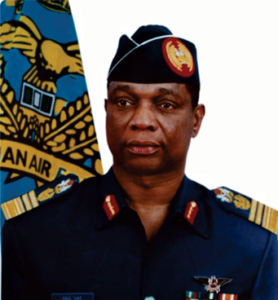
Air Chief Marshal Paul Dike hails from Issele-Uku in Aniocha North Local Government Area of Delta State. He joined the Nigerian Defence Academy on 22 January 1973 as an officer cadet. He was granted a Regular Combatant commission into the Nigerian Air Force (NAF) as Pilot Officer on 21 June, 1975. He was the Nigerian Air Force’s Chief of the Air Staff from 2006 to 2008. In August 2008, he was appointed the Chief of the Defence Staff. Prior to his appointment as Chief of the Air Staff, Air Chief Marshal Dike was Air Officer Commanding Tactical Air Command. He was appointed the Commander of the Presidential Air Fleet in 1997 and became the Chief of the Air Staff in 2006.
16. Air Marshal Oluseyi Petinrin (2008–2010)
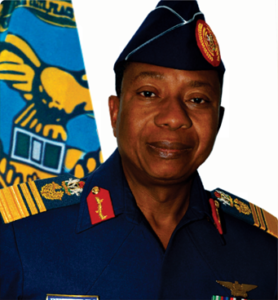
Air Chief Marshal Oluseyi Petinrin was born on 19 January, 1955 at Ipetu-Ijesa in Ori-Ade Local Government Area of Osun State. Air Marshal Petinrin enlisted into the Nigerian Defence Academy (NDA) in 1974 as a member of Regular Course 16 and was commissioned Pilot Officer on 3 January, 1977. He was the Nigerian Air Force’s Chief of the Air Staff from 2008 to 2010. He was appointed Chief of the Defence Staff and served from 2010 to 2012.
17. Air Marshal Mohammed Dikko Umar (2010–2012)
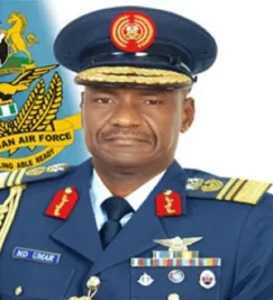
Air Marshal MD Umar was born on 20 June, 1955 in Kano Municipal Local Government Area of Kano State. He was enlisted into the Nigerian Air Force (NAF) in July, 1976 as a member of Short Service Course 12. Prior to his appointment on 19 September, 2010 as the Chief of the Air Staff (CAS), he was the Air Officer Commanding Training Command (AOC TC). He was the 17th Chief of the Air Staff who served from 19 September, 2010 to 3 October, 2012.
18. Air Marshal Alex Sabundu Badeh (2012–2014)
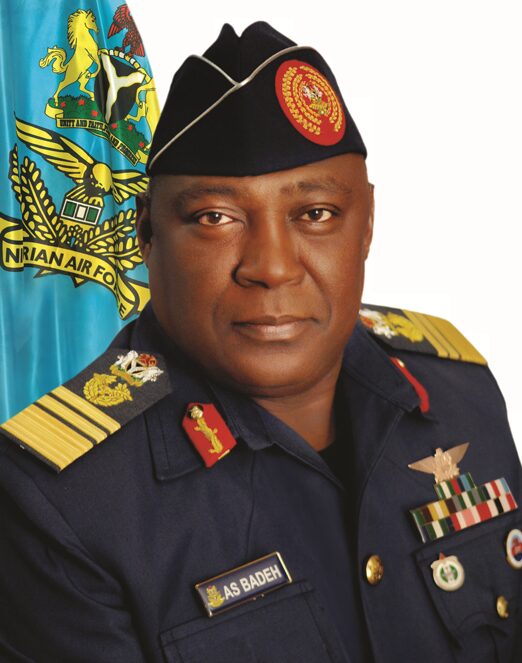
Air Chief Marshal Alex Sabundu Badeh was born on 7 November, 1957 in Vimtim, a little town in Mubi Local Government Area of Adamawa State. He was admitted into the Nigerian Defence Academy as a member of 21 Regular Course on 3 January, 1977 and was commissioned a Pilot Officer on 3 July, 1979. Air Chief Marshal Badeh was the 18th Chief of the Air Staff (CAS) and the 15th Chief of Defence Staff (CDS).
19. Air Marshal Adesola Nunayon Amosu (2014–2015)
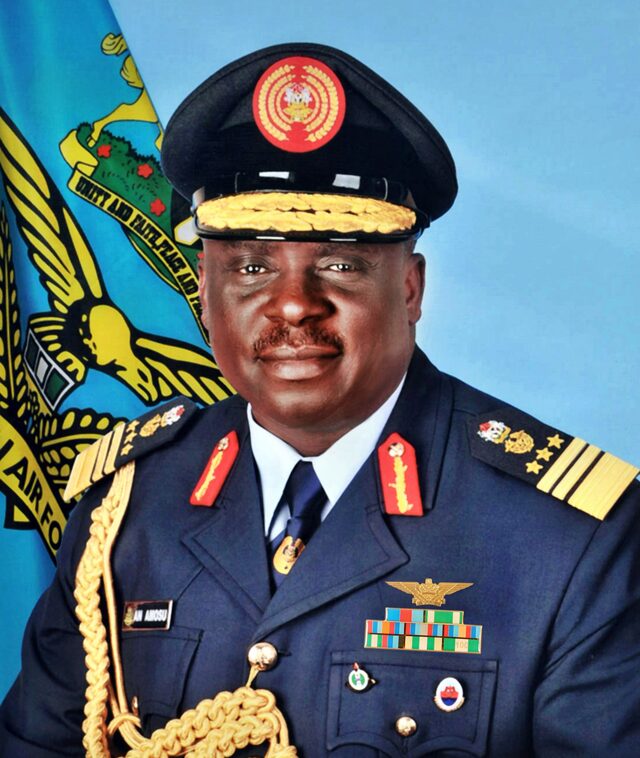
Air Marshal Adesola Nunayon Amosu was born on 1 August, 1958 in Badagry, Lagos State, Nigeria. He was enlisted into the Nigerian Air Force (NAF) through the Nigerian Defence Academy as a member of 25 Regular Course on 3 January, 1979. He was commissioned as a Pilot Officer on 3 July, 1981. Prior to his appointment on 16 January, 2014 as the Chief of Air Staff (CAS), he was the Director of Operations and Air Officer Commanding Tactical Air Command (AOC TAC). He was the 19th Chief of Air Staff who served from 2014 to 2015.
20. Air Marshal Sadique Baba Abubakar (2015–2021)
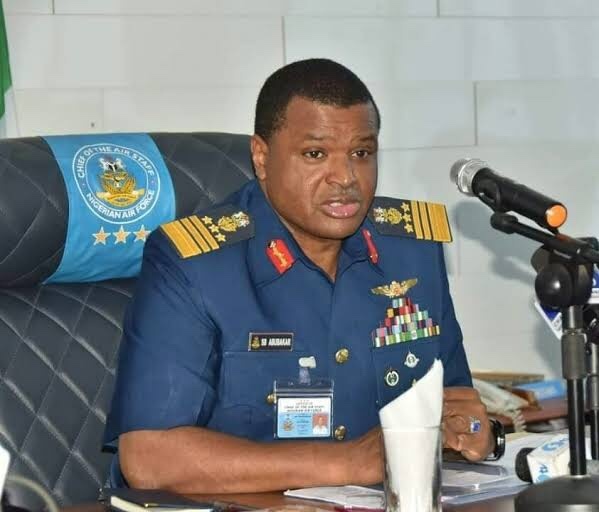
Air Marshal Sadique Baba Abubakar was born on 8 April 1960 at Azare in Bauchi State, Nigeria. He joined the Nigerian Air Force as a member of the Cadet Military Training Course (CMTC 5) in November 1979 and was commissioned pilot officer on 15 May 1982. He progressed steadily through the ranks and was promoted to the rank of Air Marshal on 13 August 15. He was the 20th Chief of Air Staff who served from 2015 to 26th January 2021.
21. Air Marshal Isiaka Oladayo Amao (2021–2023)
Air Marshal Oladayo Isiaka Amao born on on 14 September 1965 in Enugu and is an indigene of Oshogbo Local Government Area in the State of Osun, South West Nigeria. He joined the Armed Forces of Nigeria as a Cadet of the Nigerian Defence Academy Regular Course 35 in January 1984. He progressed steadily through the ranks. He was the 21th Chief of Air Staff who served from 26 January 2021 to 19th June 2023.
22. Air Marshal Hassan Bala Abubakar (2023–2025)
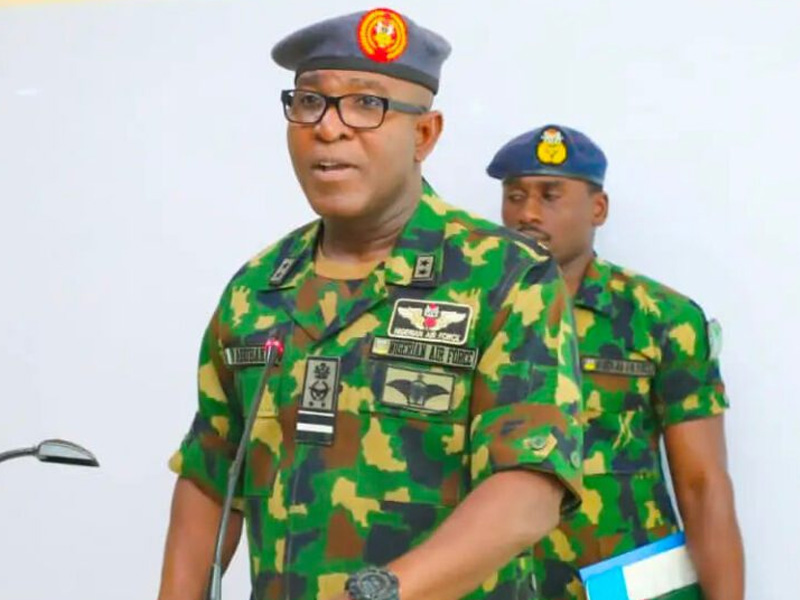
Abubakar replaced Air Vice Marshal Ishiaka Amao, who was appointed as the former President Muhammadu Buhari in 2021.
Here is the profile of Air Vice Marshal Abubakar below.
Air Vice Marshal Hassan Bala Abubakar was born on 11 September 1970. He hails from Shanono Local Government Area in Kano State. He enlisted into the NAF as a member of NDA RC 39 and commissioned Pilot Offr on September 19, 1992.
The Air Officer Commanding, Logistics Command has attended several courses and acquired notable qualifications, which include:
Bachelor of Science Degree from the Nigerian Defence Academy Kaduna.
Ab initio and Basic Flying Training Courses at the 301 Flying Training School Kaduna.
Basic and Advance Airborne Courses at Nigerian Army Infantry Center and School Jaji.
Company Amphibious Operations Course at Nigerian Army Infantry Center and School in Calabar.
Junior and Senior Command and Staff Courses at the Armed Forces Command and Staff College Jaji and
National Defence Course at the Nasser Higher Military Academy, Cairo – Egypt.
Master’s Degree in International Affairs and Diplomacy from ABU Zaria.
Previous appointments held by Air Vice Marshal Hassan Bala Abubakar include:
Admin Officer 16 Engineering Wing, 1 Engineering Group NAF Makurdi.
Officer Commanding Admin Services Flight/ Group Public Relations Officer, 97 Special Operations Group NAF Port Harcourt.
Officer Commanding Yellow Squadron – Air Force Military School Jos.
Admin Officer Primary Flying Training Wing – 301 FTS NAF Kaduna.
SO1 Admin 301 FTS NAF Kaduna.
Officer Commanding ‘B’ Squadron (Do 228) – 81 Air Maritime Group NAF Benin.
Team Leader MILOB Team Site 615 Mahagi (Ituri Brigade) MONUC.
Aviation Planning Officer, MONUC Air Operations Kinshasa, DRC.
Commanding Officer Base Services Wing 81 Air Maritime Group Nigerian Air force Benin.
Operations Officer Operational Conversion Unit 88 Military Airlift group Nigerian air Force Lagos.
Operations Officer 88 Military Airlift Group Ikeja Lagos. Commanding Officer 21 Wing 88 Military Airlift Group Lagos.
Group Safety Officer 88 Military Airlift Group Ikeja Lagos.
Fleet operation officer – 011Presidential Air Fleet.
Commander 011 Presidential Air Fleet.
Chief of Staff, Mobility Command.
Director of Policy, HQ NAF and lastly
Director of Operations, HQ NAF
Air Officer Commanding Logistics Command.
Currently the Chief of Standards and Operations, HQ NAF.
The most senior officer Abubakar has been honoured with several awards and decorations, which include:
Distinguished Service Star.
Passed Staff Course (psc)
Fellow Defence College
Masters in International Affairs.
Member National Institute of Management.
Member Chartered Institute of Public Management.
Member Nigerian Institute of Safety Professionals.
Air Vice Marshal HB Abubakar is happily married with children and in his leisure time, the senior officer enjoys flying airplanes, reading, reflecting and keeping fit.
23. Air Marshal Sunday Kelvin Aneke (2025-Present)
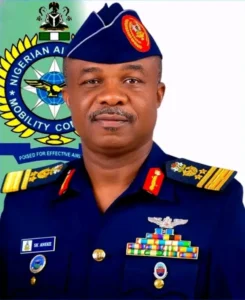
Nigeria’s President Bola Ahmed Tinubu appointed Air Vice Marshal Sunday Kelvin Aneke as the 23rd Chief of the Air Staff on October 24, 2025, following the retirement of Air Marshal Hassan Abubakar.
The appointment has been described as the beginning of a new era for the Nigerian Air Force (NAF) — one characterised by intellectual depth, operational precision, and renewed commitment to strengthening national security and airpower excellence.
According to a statement issued by the Nigerian Air Force, Air Vice Marshal Aneke was born on 20 February 1972 in Makurdi, Benue State, and hails from Udi Local Government Area of Enugu State, Southeast Nigeria.
The son of Air Warrant Officer (Rtd) Sylvester and Mrs. Ngozi Aneke, he began his early education at Army Children School, New Cantonment ‘A’, Kaduna (1976–1982) and later attended Government College, Kaduna (1982–1987), where he developed the discipline and leadership traits that have guided his distinguished career.
He was admitted into the Nigerian Defence Academy (NDA) as a member of the 40th Regular Combatant Course and was commissioned into the Nigerian Air Force as a Pilot Officer on 10 September 1993, marking the beginning of a brilliant and meritorious military journey.
Education and Academic Achievements
Air Vice Marshal Aneke is a highly accomplished scholar and strategic thinker. He holds a Bachelor of Science Degree in Physics, a Postgraduate Diploma in Management from the University of Calabar, and two Master’s Degrees — one in International Affairs and Diplomacy from Ahmadu Bello University, Zaria, and another in Political Economy and Development Studies from the University of Abuja.
He also holds a Professional Certificate in Aviation Safety Management from Embry-Riddle Aeronautical University, Florida, USA, and is currently pursuing a Doctor of Philosophy (PhD), reflecting his dedication to continuous learning and strategic leadership.
Military Training and Professional Courses
Air Vice Marshal Aneke has attended several prestigious military institutions both in Nigeria and abroad. He completed the Junior and Senior Staff Courses at the Armed Forces Command and Staff College, Jaji, and later earned a Master’s in Strategic Studies from the United States Air War College, Maxwell Air Force Base, Alabama.
His military training and exposure have equipped him with the expertise to manage complex air operations and formulate strategic defence policies essential for modern warfare.
Appointments and Command Experience
Over the course of his distinguished career, Air Vice Marshal Aneke has held several command, instructional, and staff appointments, which shaped his operational and leadership acumen.
These include;
Director of Policy, Nigerian Air Force Headquarters
Director of Safety, Nigerian Air Force Headquarters
Deputy Director of Operations, Nigerian Air Force Headquarters
Command Operations Officer, Tactical Air Command
Deputy Commandant, Nigerian Defence Academy
Until his appointment as Chief of the Air Staff, he served as Air Officer Commanding, Mobility Command, Yenagoa, where he enhanced air mobility, strengthened joint force integration, and improved NAF’s strategic response in multi-domain operations.
Operational Experience
An accomplished pilot with over 4,359 flying hours, Air Vice Marshal Aneke is type-rated on several aircraft including the Air Beetle 18, Dornier 228, Citation 500, Falcon 900, Gulfstream V, Gulfstream 550, and Hawker 4000.
His operational experience spans both domestic and international theatres — from Operation Restore Hope in the Niger Delta to United Nations peacekeeping operations in the Democratic Republic of Congo (MONUC), where he served as Chief of Air Operations, Kindu Region.
Air Vice Marshal Aneke has made significant contributions to intelligence, surveillance, and reconnaissance (ISR) operations, enhancing the Nigerian Air Force’s counter-insurgency and air support capabilities.
Awards and Honours
In recognition of his outstanding service and professionalism, Air Vice Marshal Aneke has received several medals and honours, including;
Grand Service Star (GSS)
Distinguished Service Star (DSS)
General Service Medal (GSM)
Forces Service Star (FSS)
Meritorious Service Star (MSS)
Passed Staff Course (psc)
Fellow of the Defence College (fdc)
Member, International Affairs and Diplomacy (MIAD)
He is also a member of the Nigerian Institute of Management (NIM) and the International Institute of Professional Security (IIPS).
Leadership and Vision
Air Vice Marshal Aneke is widely regarded as a refined officer, visionary leader, and accomplished aviator whose calm disposition, strategic foresight, and results-driven approach have earned him respect within and beyond the Armed Forces.
As he assumes office as the 23rd Chief of the Air Staff, Air Vice Marshal Sunday Kelvin Aneke brings a wealth of experience and strategic depth that are expected to reposition the Nigerian Air Force for greater operational efficiency in combating terrorism, insurgency, and other emerging security challenges.
Under his leadership, the Nigerian Air Force is set to strengthen airpower projection, deepen intelligence-led operations, and drive innovation in defence technology and human capacity development, in line with the renewed vision of the Commander-in-Chief, President Bola Ahmed Tinubu.
BY Nigerian Military Fact 2
Image credit : Hq Naf
FOLLOW US ON:


Lifestyle
AFRICAN FAMILIES: WHY DO WE KEEP REPEATING THE SAME MISTAKES FROM ONE GENERATION TO THE NEXT?




Belgian parliament to legislate to allow police to enter homes to facilitate undocumented migrant removals

STOP CONFUSING WEALTH WITH SUCCESS! NOT EVERYTHING THAT GLITTERS IS GOLD!

Nigerian states’ revenues rise 93%, but education spending drops — World Bank

‘Sleeping Prince’ of Saudi Arabia dies after 20 years in coma

2027: Atiku delays ADC membership card collection amid rumoured Jonathan comeback

How A Class Of 24 Students Produced 2 Presidents, 4 Governors, 2 Ministers, 4 Emirs, 3 Justices, 4 Ambassadors and Other Influential Leaders


-

 News7 hours ago
Air chief pleads for patience as investigation begins on Ondo crash
-
Lifestyle15 hours ago
AFRICAN FAMILIES: WHY DO WE KEEP REPEATING THE SAME MISTAKES FROM ONE GENERATION TO THE NEXT?
-
News6 hours ago
INEC displays voter register, begins PVC distribution ahead of 2027 elections
-
News6 hours ago
Dapo Abiodun reveals that Nigeria needs 554,353 personnel for state police, read details
-
News14 hours ago
PHOTOS: Troops rescue six kidnapped victims during operations in Plateau
-
Sports6 hours ago
Adeniyi lauds Nigeria’s Veterans World Wrestling Champs medal
-
Business7 hours ago
FG’s 30-day petrol discount sparks opposition backlash
-
News5 hours ago
Trump rules out new Iran attack before US midterm elections