Lifestyle
PHOTOS: List of Nigeria’s Naval Chiefs Since Independence to the Present Day

The Nigerian Navy has evolved from a coastal patrol force into a sophisticated maritime institution. Each Chief of Naval Staff has contributed to its transformation—whether through modernisation, regional diplomacy, or internal reforms.
With the recent appointment of Rear Admiral Idi Abbas as Nigeria’s Chief of Naval Staff (CNS) by President Bola Ahmed Tinubu, the Nigerian Navy enters a new era of leadership.
PRNigeria reports that this milestone offers a moment to reflect on the distinguished lineage of naval commanders who have steered the force from its colonial roots to its modern-day strategic role.
From Colonial Command to Indigenous Leadership
Capt. Francis William Skutil (1956–1958):
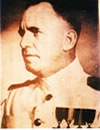
The Czech-born officer was the first to lead the Nigerian Navy, laying its structural foundation.
Captain Francis William Skutil was a man of action. ”The reformed Nigerian Marine Training Scheme of Seamen, cadets, apprentice craftsmen and engineers, is largely his brain child,” says historical records. He was disdainful of the Civilian-type maritime services when the Nigerian Marine was to be converted to the NPA. He had peppered the colonial government with plenty paperwork and personal contacts to ensure military-type naval service was established. His hard work and that of other ex-Royal Navy Officers was rewarded with the establishment of the Nigerian Naval Service in 1956
Commodore Alexander R. Kennedy (1958–1964):
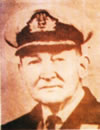
A British officer, Kennedy was the first to hold the CNS title after the Navy’s formal establishment in 1956. He oversaw the early structuring of Nigeria’s maritime defence.
What was singularly impressive about Commodore Kennedy was the very long-range planning associated with his headship of the Navy. Way back in June 1958, he had raised the Defence Council Paper on “The Shape and Size of the Nigerian Navy” up to 1990. Leaders are Planners
Vice Admiral Joseph Edet Akinwale Wey (1964–1973):
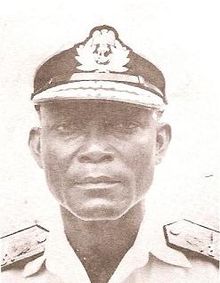
The first indigenous CNS, Wey played a pivotal role in professionalising the Navy during Nigeria’s formative post-independence years.
Joseph Edet Akinwale Wey (March 6, 1918 – December 12, 1991) was a Nigerian Navy Vice Admiral who held several key positions in Nigeria’s military government, including Chief of Naval Staff, Acting Foreign Minister, and Chief of Staff of the Supreme Headquarters. In effect, he served as the de facto vice president during General Yakubu Gowon’s regime.
Early Life
Born in Calabar, Cross River State, in March 1918, Joseph Wey was the son of a Yoruba father from Lagos and an Efik mother. He received his early education in Calabar and at Methodist School in Ikot Ekpene, now part of Akwa Ibom State, before continuing his studies in Lagos.
Naval Career
Wey began his career in the Marine Department around 1940 as a cadet and engineer in training. After completing his training in 1945, he served on various sea-going vessels in the department. When the Nigerian Navy was established in 1956, he was transferred to the Navy as a sub-lieutenant. By 1962, he had risen to the position of commanding officer of the naval base and officer in charge of Apapa, Lagos. In 1966, Wey was appointed Federal Commissioner of Establishment, a role that made him part of the federal Executive Council. Throughout his career, he was promoted to higher ranks, ultimately attaining the position of vice-admiral.
Retirement and Death
Wey retired in 1975 following the coup that brought General Murtala Mohammed to power, replacing the government of General Gowon. He passed away on December 12, 1991.
Vice Admiral Nelson Bossman Soroh (1973–1975): His tenure coincided with the military regime of General Yakubu Gowon and the post-civil war reconstruction era.
Navigating Military Rule and National Challenges
Vice Admiral Nelson Bossman Soroh (1973–1975):
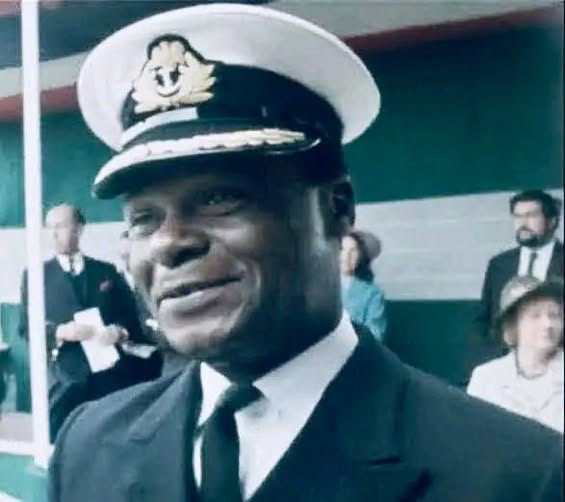
The Nigerian Navy’s NNS Soroh base in Bayelsa State is named in honour of late Admiral Nelson Bossman Soroh, a trailblazing naval officer from TUNGBO Kingdom in sagbama local government area of Bayelsa state in Nigeria. Tungbo is actually the first son of Otuokpoti in Ogbia Local Government Area of Bayelsa State.
His remarkable achievements include:
– First black African to sail a ship from Europe to Africa
– First black African to command warships
– First Nigerian to serve as an officer in the British Royal Navy
– Key figure in liberating the Ibani-Ijaw people of Bonny from Biafran soldiers during the Nigerian Civil War (1967)
Admiral Soroh’s bravery and leadership are celebrated through his legacy, and his service as Chief of Naval Staff (1973-1975) remains an inspiration to many.
The NNS Soroh base serves as a testament to his contributions to the Nigerian Navy and the country.
His tenure coincided with the military regime of General Yakubu Gowon and the post-civil war reconstruction era.
Vice Admiral Michael Ayinde Adelanwa (1975–1980):
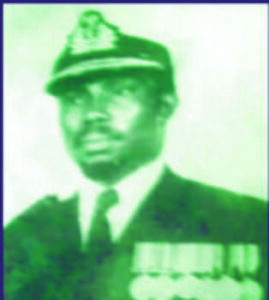
Adelanwa served under Generals Murtala Muhammed and Olusegun Obasanjo, helping modernise naval operations.
Vice Admiral Michael Ayinde Adelanwa, a highly respected naval officer, served as Chief of Naval Staff from July 1975 to April 1980. He credited his mentors, Admiral Wey and Admiral Soroh, for shaping his career in administration, diplomacy, and seamanship. Admiral Adelanwa’s own achievements include commanding several naval ships, including NNS OGOJA and NNS NIGERIA, and holding key positions such as FOC WEST and Chief of Staff Naval Headquarters. During his tenure as CNS, he oversaw significant acquisitions and welfare programs, including the development of Navy Town, Ojo. He emphasizes the importance of long-range planning, particularly for ship acquisition and infrastructure development, and advocates for the Navy to prioritize sea deployments. Known for his modest and low-profile lifestyle, Admiral Adelanwa’s legacy continues to inspire naval professionals.
Vice Admiral Akintunde Aduwo (1980–1983):
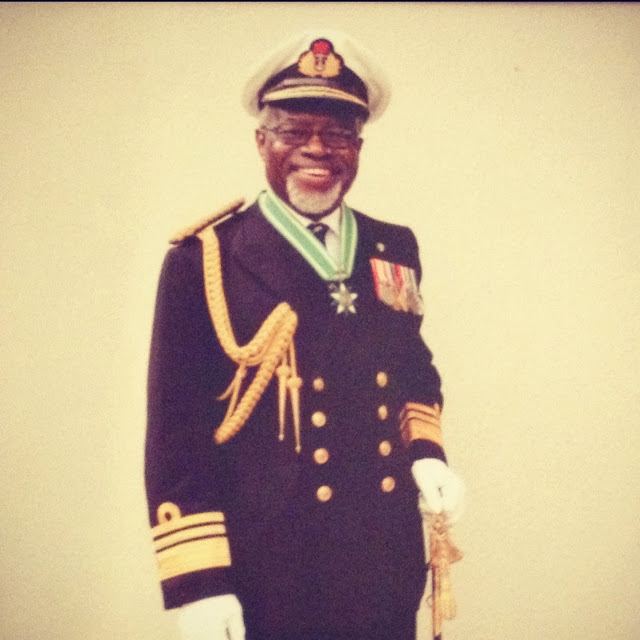
His leadership spanned the civilian administration of President Shehu Shagari, a rare democratic period before another military takeover.
is a retired Nigerian Navy Vice Admiral who served as Chief of Naval Staff from 1980 to 1983 and as Military Governor of the Nigerian Western State from July 1975 to February 1976 during the military regime of General Murtala Muhammed. Later he became Chief of Naval Staff.
Early years
Akin Aduwo was born on 12 June 1938 in Ode-Aye in Okitipupa, Ondo State. He attended Igbobi College, Yaba, Lagos (1952–1956). He worked as a clerk, then as a cadet in the Merchant Marines where he obtained British Merchant Navy Sea Training (1958–1960) and studied at the Liverpool College of Technology, Liverpool, England (1961–1962).
In November 1962 Aduwo transferred to Nigerian Navy as a Sub-Lieutenant. He was appointed Naval Officer-in-Charge of the Eastern Naval Patrol, then as a Lieutenant took command of NNS Aanasa in 1964. His other appointments include first Commanding Officer of NNS Dorina, first Nigerian Director of Armament Supply and Commanding Officer of NNS Nigeria. During the Nigerian Civil War, Lt. Commander Akin Aduwo commanded NNS Ogoja. During the sea battle that led to the fall of Bonny in July 1967 he pursued the NNS Ibadan, which had been hijacked to Biafra.
Senior positions
Muritala Muhammed announced Captain Akin Aduwo’s appointment as Governor in his maiden speech of 30 July 1975. Aduwo was Military Governor of Western State for just one month, and then was posted to the Nigerian High Commission in India. He was replaced by Colonel David Jemibewon. General Olusegun Obasanjo said he Aduwo had been relieved of his appointment as governor to rescue him from the problem of the West “which had overwhelmed him”.
Aduwo went for a course at the Indian National Defence College, and in 1977 was promoted Commodore and appointed Flag Officer Commanding the Nigerian Naval Flotilla. He held this position until being appointed Chief of the Naval Staff on 15 April 1980 during the Shehu Shagari regime. As Chief of Naval Staff, Aduwo renamed NNS Beecroft to NNS Olokun after the ocean goddess, as part of a trend to move from colonial-era names to local Nigerian names.
Later career
After retirement, Aduwo continued to be publicly active. He became a leader of the Yoruba Unity Forum and attended several Yoruba Council of Elders meetings. He had served for several years as an elder of the Yoruba people, holding the aristocratic titles of the Oloye Obateru of Aye and the Oloye Taarelase of Ile-Ife., Aduwo was a delegate from Ondo State at the 2005 National Political Reform Conference. He served on the logistics committee of the conference.
Rear Adm. Augustus Aikhomu (1984–1986):
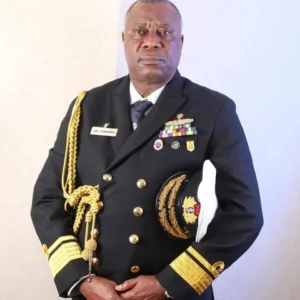
Served during turbulent transitions between civilian and military governments.
Augustus Akhabue Aikhomu (20 October 1939 – 17 August 2011) was an Admiral in the Nigerian Navy, who served as the de facto Vice President of Nigeria under military head of state General Ibrahim Babangida from 1986 to 1993.
Early life
He hailed from Idumebo-Irrua, Edo State, in southern Nigeria. As a student, Aikhomu spent various periods of his early life studying at Irrua Government School, Yaba College of Technology, Royal Britannia Naval College in Dartmouth, England, Long Gunnery Specialist Course, India and the National Institute of Policy and Strategic Studies, Kuru, Nigeria.
Naval career
Aikhomu joined the Nigerian Navy on 1 December 1958. He joined the Royal Navy as an Artificer Apprentice with Series 35 entry at HMS Fisgard near Torpoint, East Cornwall in January 1959. He was in Grenville Division at HMS Fisgard and would have completed his 16 months Part 1 training at the end of April 1960.
Aikhomu was the Commanding Officer, Shore Patrol Craft, commanding officer, NNS Dorina, chief of naval personnel, naval headquarters, chief of naval operations (1983–84), and chief of naval staff (1984–86).
Vice President and Chief of General Staff
Admiral Augustus served as the de facto Vice President of Nigeria under military president General Ibrahim Babangida from 1986 to 1993.
Later career
He was at a time the chairman of the Board of Trustees of All Nigeria Peoples Party, an opposition party in the country. Aikhomu contributed to the Irrua Specialist Hospital specializing in lassa fever management.[5] He died on 17 August 2011, aged 71. Aikhomu is survived by his wife, Rebecca, and five children, Mark, Ehime, Eheje, Vinitha, Suzanne, and Ebi.
Honours
In 1992, a national honour of the Grand Commander of the Order of the Niger was conferred upon him.
Vice Adm. Patrick Koshoni (1986–1990)
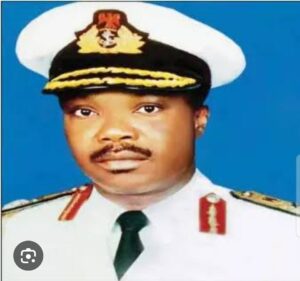
Vice Admiral Patrick Seubo Koshoni was a distinguished Nigerian naval officer and statesman, known for his profound contributions to the Nigerian Navy and public service. He was born in Lagos, Nigeria, in April 1943—though sources vary between April 11 and April 17 as his exact birthdate. His journey of service to the nation began when he joined the Nigerian Navy on June 11, 1962. He soon proceeded to the National Defence Academy in India, where he trained as a cadet and was commissioned as a Sub-Lieutenant on July 13, 1964.
Koshoni’s naval career was marked by steady progression through important command and administrative roles. He served as Commanding Officer of various naval ships and commands, including NNS Otobo, NNS Beecroft, and NNS Obuma. He also held prominent positions such as the Flag Officer Commanding both the Eastern and Western Naval Commands. His professional development was further enriched by advanced training in the United Kingdom, India, and the United States, including time at the prestigious National Institute for Policy and Strategic Studies in Kuru, Nigeria.
In addition to his naval service, Koshoni contributed significantly to national governance. Under military rule, he served as Nigeria’s Minister of Health from December 1983 to August 1985, and subsequently as the Minister of Employment, Labour and Productivity until 1986. His leadership in these ministries was noted for administrative clarity and policy direction.
In October 1986, Patrick Koshoni was appointed Chief of Naval Staff, a position he held until January 1990. During his tenure, he introduced the Nigerian Navy’s Trident Strategy, which provided a long-term operational and strategic roadmap for naval development. He initiated the Chief of Naval Staff Annual Conference (CONSAC), revitalized naval logistics, prioritized personnel welfare, and institutionalized the Presidential Fleet Review. These innovations transformed the Navy’s structure and professionalism and are still recognized today as foundational to its modern form.
Following his retirement from the Navy, Koshoni continued serving the nation in various capacities, including as chairman of the now-defunct National Internal Security Organization. He was decorated with several national honors, including the Commander of the Order of the Federal Republic (CFR), the Defence Service Star (DSS), the Meritorious Service Star (MSS), and the Forces Service Star (FSS).
Vice Admiral Koshoni passed away on January 25, 2020, after a brief illness, at the age of 76 or 77—depending on the actual date of his birth. His death marked the end of an era for the Nigerian military, but his legacy as a disciplined officer, visionary strategist, and gentleman of great humility lives on. He was laid to rest with full military honors, as colleagues and the nation paid tribute to a man who dedicated his life to service, integrity, and excellence.
Vice Adm. Murtala Nyako (1990–1992) oversaw modernisation efforts.
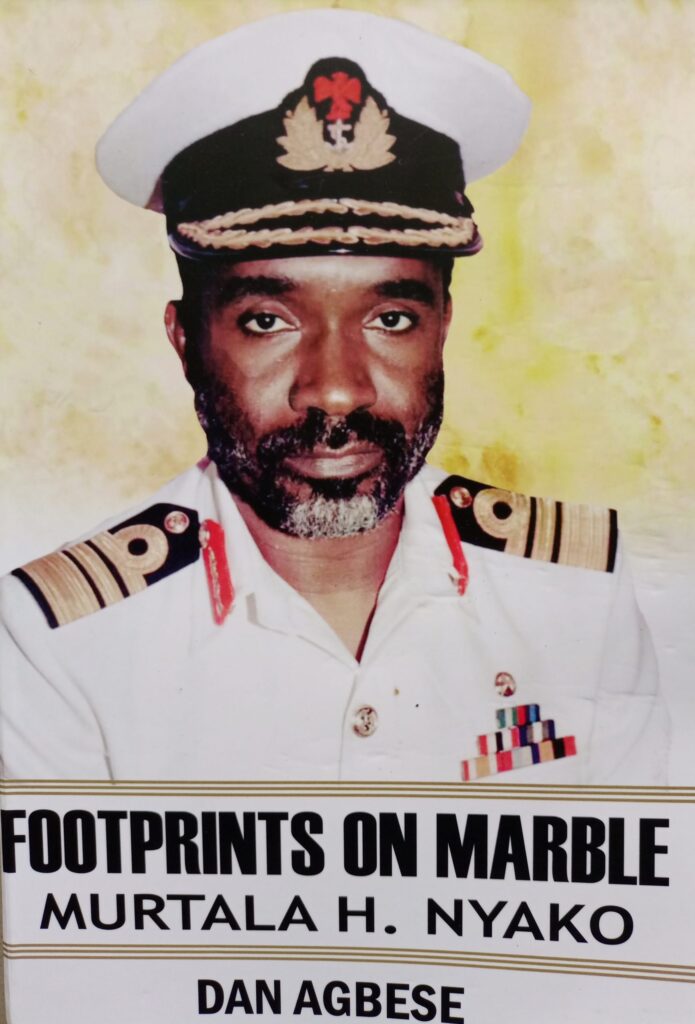
Murtala Hamman-Yero Nyako, GCON CFR rcds, D.Agric. (H.C.) (born 27 August 1942) is a Nigerian politician and retired military officer who served as governor of Adamawa State from 2007 to 2008, and from 2008 to 2014. He previously served as military governor of Niger State from its creation in 1976 to 1977, and as Nigeria’s Chief of the Naval Staff from 1990 to 1992.
Early life
Murtala Hamman-Yero Nyako was born at Mayo-Belwa, Adamawa State on 27 August 1943. His father, Alhaji Hamman-Yero, was a notable merchant and produce buying agent, whose mercantile activities was directly responsible for the establishment of John Holts and Sons Ltd centre at Mayo-Belwa. His mother, Hajiya Maryam Daso, was a housewife who was keen on Islamic studies and herbal medicine.
He started his western education at Mayo-Belwa Elementary School in January 1952, proceeded to Yola Middle School in January 1955 and commenced his secondary school education in the same school in January 1958. He was noted whilst there for his academic achievements and sporting prowess.
Naval Career Service
Nyako joined the Royal Nigerian Navy in June 1963 as an officer cadet, commenced his officer training at the Britannia Royal Naval College, Dartmouth, England in September 1963, was commissioned as a Sub-Lieutenant in September 1965 and completed his initial naval training in September 1965.
Nyako returned to Nigeria in October 1966 to serve in the Nigerian Navy until September 1993. During that period, he held a number of on-board and shore appointments. He was at one time a Commanding Officer of a Patrol craft, a Landing craft and the first missile carrying ship of the Nigerian Navy. In February 1976, General Murtala Muhammed appointed Nyako governor of the newly formed Niger State, which had been split out from Sokoto State. He served in this post until December 1977. Later he became the Chief of Naval Operations at the Naval Headquarters, the Flag Officer Commanding the Western Naval Command and the Flag Officer Commanding the Naval Training Command from where he was appointed the Chief of Naval Staff in January 1990. Two years later, he was appointed the Deputy Chief of Defence Staff and retired from the Service in September 1993 with the rank of Vice Admiral.
Vice Adm. Dan Omosola (1992–1993)
Vice Admiral Patrick Koshoni is a retired Nigerian naval officer,former Chief of Naval Staff and a former minister for Health during administration of General Buhari.During his tenure as health minister, he tried to kick start a national insurance scheme, the scheme involved medical treatment without down payment.
Born in Lagos on 17 April 1943, Vice Admiral Patrick Sebo Koshoni (Rtd), joined the Nigerian Navy on the 11 of June 1962 after a secondary school education at St Finbarr’s College, Akoka Lagos. That same year he started the naval cadetship training at the National Defence Training Academy in India and was commissioned Sub-Lieutenant on 16 July 1964.
Admiral Koshoni attended many naval, management and leadership courses and headed many naval and military appointments, committees and task forces.[citation needed] He was a three-time minister in various military regimes, heading the ministries of Health, Transport and Aviation, Employment, Labour and Productivity.
He was appointed the 6th Chief of the Naval Staff from October 1986 to January 1990, after several years of political appointments.
Vice Admiral Koshoni’s tenure as CNS led to the Nigerian Navy Trident Strategy which articulated the Nigeria’s maritime strategic imperatives while streamlining the acquisition of platforms for the appropriate size and shape of the NN. Other initiatives under his tenure included Manpower Rationalisation, Training Programmes, Logistic Reform and morale boosting Welfare Schemes.
Rear Adm. Suleiman Saidu (1993)
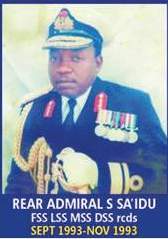
Suleiman Saidu is a retired Nigerian Navy rear admiral who served as Chief of Naval Staff from September to November 1993. Rear Admiral Suleiaman Saidu joined the Nigerian Navy in 1961 and had his basic training at the Britannia Royal Naval College, Dartmouth in the United Kingdom. He took active part in the Nigerian Civil War (1967 – 1970) during the landings and subsequent operations. He attended the Armament Supply and Inspection course at Bombay, India in 1971. He qualified as a Long Gunnery Officer at HMS Excellent in Britain in 1972. Saidu was appointed military governor of Rivers State, Nigeria from July 1978 to October 1979 during the military regime of General Olusegun Obasanjo, handing over power to the elected civilian governor Melford Obiene Okilo at the start of the Nigerian Second Republic.
Rear Admiral Suleiman Saidu served as the Captain of NNS Aradu. Prior to taking over the command of the Aradu, He was Staff Officer 1 Administration at the Nigerian Defence Academy Kaduna, from where he went to command the MK 9 corvette NNS ERIN-OMI before proceeding to the Defence Services Staff College, Wellington, India in 1982.
Rear Admiral Suleiman Saidu also served as the Flag Officer Commanding Eastern Naval Command (1992-1993)
Rear Admiral Suleiman Saidu was confirmed by General Sani Abacha as Chief of Naval Staff in September 1993. He was later replaced by Rear Admiral Allison Madueke for the sake of ethnic balancing.
Rear Adm. Allison Madueke (1993–1994)
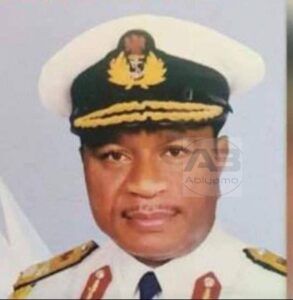
Rear Admiral Allison Amaechina Madueke (born in 1944) is a retired Nigerian naval officer. He was Chief of Naval Staff (head of the entire Nigerian Navy) from 1993 to 1994, military governor of Anambra State from January 1984 to August 1985 under the Buhari military regime, and Imo State military governor from 1985 to 1986 under the Babangida military regime.
He was sacked by General Abacha after a Provisional Ruling Council meeting in August 1994 where he supported the release of the elected civilian president Moshood Abiola, who had been imprisoned after the coup that brought Abacha to power. Abacha did not find that funny and decided to fire him without delay. His wife is the first female transport and petroleum minister in Nigeria, Diezani Allison-Madueke, both lovers got married in 1999. Did you know that Diezani’s husband worked in Buhari, Babangida and Abacha’s governments?
Rear Adm. Okhai Akhigbe (1994–1998)
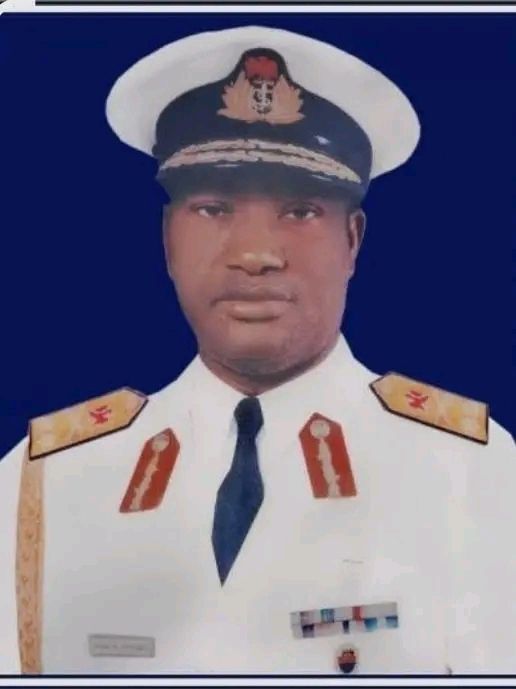
Vice Admiral Mike Akhigbe: The Naval Officer Who Helped Steer Nigeria Back to Democracy
A look into the life and legacy of Vice Admiral Okhai Michael Akhigbe, a disciplined naval officer and statesman who served as Nigeria’s de facto Vice President during a pivotal political transition.
Early Life and Education
Vice Admiral Okhai Michael Akhigbe was born on September 29, 1946, in Fugar, Etsako Central Local Government Area, Edo State, Nigeria. Coming from a modest background, he rose through discipline and dedication to become one of Nigeria’s most influential military figures.
He attended Agenebode Grammar School and later the Nigerian Defence Academy (NDA) in Kaduna, where he began his naval career. Akhigbe also undertook further military and professional training abroad, including in the United States, India, and the United Kingdom, focusing on leadership, command strategy, and maritime security.
A Distinguished Naval Career
Vice Admiral Akhigbe’s naval career was marked by a steady rise through the ranks. He held numerous key positions in the Nigerian Navy, where he earned a reputation for efficiency, discipline, and patriotism.
He served as Flag Officer Commanding (FOC) of both the Eastern and Western Naval Commands, demonstrating exceptional command capabilities. His strategic foresight and professionalism made him one of the most respected officers of his generation.
In recognition of his service and leadership, he rose to become Chief of Naval Staff (CNS) in the mid-1990s—a position that placed him among Nigeria’s top military elite during a time of political turbulence.
Role in Governance: From the Navy to National Politics
Akhigbe’s leadership extended beyond the naval arena into national politics. He served as Military Governor of two Nigerian states—Ondo State (1985–1986) and later Lagos State (1986–1988)—under General Ibrahim Babangida’s administration.
As governor of Lagos State, Akhigbe was widely regarded as a disciplined administrator who prioritized public order, infrastructure maintenance, and civil-military cooperation. His tenure was characterised by efficiency and a calm but firm leadership style.
Chief of General Staff: Nigeria’s De Facto Vice President
In June 1998, following the sudden death of General Sani Abacha, Nigeria entered a crucial phase of political transition. General Abdulsalami Abubakar assumed office as Head of State, and Vice Admiral Mike Akhigbe was appointed Chief of General Staff, effectively serving as the Vice President of the Federal Republic of Nigeria.
During this period—from June 1998 to May 1999—Akhigbe played a pivotal role in restoring Nigeria’s democratic governance. Working closely with General Abubakar, he helped oversee the transition to civilian rule, which culminated in the election of President Olusegun Obasanjo in 1999.
His diplomatic and administrative abilities were instrumental in stabilising the political climate after years of military rule. Akhigbe was noted for his humility and his belief in national unity, often emphasising the importance of a disciplined and patriotic military that served, rather than ruled, the people.
Honours and Recognition
Vice Admiral Akhigbe received numerous honours during and after his service, most notably being conferred the title of Grand Commander of the Order of the Niger (GCON)—one of Nigeria’s highest national honours.
His contributions to national security, maritime development, and the country’s democratic transition earned him deep respect both within the military and among civilians.
Beyond his official titles, Akhigbe was known for his integrity, humility, and quiet strength—a man who preferred results over rhetoric.
Later Life and Death
After retiring from active service, Vice Admiral Akhigbe remained involved in national discourse and maritime advocacy. He continued to promote the professionalisation of the Nigerian Navy and supported initiatives that strengthened Nigeria’s democratic institutions.
He passed away on October 28, 2013, in a hospital in the United States, at the age of 67. His death was widely mourned across Nigeria’s political and military circles, with tributes highlighting his pivotal role in guiding Nigeria toward democracy and his lifelong dedication to national service.
Legacy
Vice Admiral Mike Akhigbe’s legacy stands as one of discipline, patriotism, and quiet leadership. He represented the ideal of a soldier-statesman—firm yet humble, principled yet pragmatic.
His efforts in Nigeria’s democratic transition remain a cornerstone of the nation’s political evolution, and his years of service in the navy contributed to the strengthening of Nigeria’s maritime defence structure.
Today, he is remembered as a key figure who helped guide Nigeria from the turbulence of military dictatorship to the dawn of democratic governance.
References:
Vanguard Nigeria, “Vice Admiral Mike Akhigbe Dies at 67.”
The Guardian (Nigeria), “Remembering Admiral Mike Akhigbe: Nigeria’s Last Chief of General Staff.”
Punch Nigeria Archives, “Akhigbe and the 1999 Democratic Transition.”
Nigerian Navy Official Records.
Vice Adm. Jubril Ayinla (1998–1999)
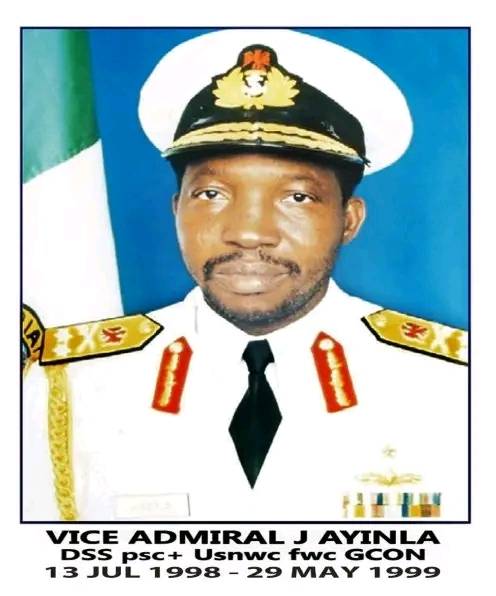
Jubril Ayinla was born on 10 December 1948 in Babura, which at the time was part of Kano State but is now in Jigawa State. He began his early education at Edward Blyden Memorial School in Lagos between 1953 and 1954, before moving to Holy Trinity School in Kano, where he studied from 1955 to 1960.He later attended Igbo Union Secondary School in Kano from 1961 to 1965.
In 1966, Ayinla enrolled at the Nigerian Defence Academy and, four years later, was commissioned as a substantive lieutenant. His career also included advanced training abroad, where he studied at the Indian Naval School, now the Indian Naval Academy, from 1968 to 1969, and later at the United States Naval War College between 1988 and 1989.
Served during Nigeria’s return to democracy.
Democratic Consolidation (1999–2015)
Vice Adm. Victor Ombu (1999–2001)
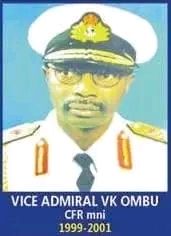
Vice Admiral Victor Karipiri Ombu is a distinguished naval officer from Nembe Bassambiri in Bayelsa State, Nigeria. Here’s a brief overview of his background and achievements:
*Early Life and Education*
– Born: August 10, 1947
– Hometown: Yenagoa, Bayelsa State
– Education: Nigerian Military School Zaria, Nigerian Defence Academy Kaduna
*Military Career*
– Served as Flag Officer Commanding (FOC) Eastern Naval Command in Calabar, Cross River State
– Secretary of the Provisional Ruling Council (PRC) during Gen. Sanni Abacha’s military regime
– 15th Chief of Naval Staff (CONS) in the Fourth Republic under President Olusegun Obasanjo’s administration (May 29, 1999 – April 24, 2001)
– Promoted to Vice Admiral before retiring from active service
*Recent Appointment*
– Appointed chairman of the steering committee to resolve the protracted crisis in Bassambiri community, Nembe Local Government Area, Bayelsa State
– Given a six-month tenure to restore peace and ensure unity in the community
– The committee comprises 11 members, with representatives from both factions of the conflict.
*Key Responsibilities*
– Lead the steering committee to proffer lasting solutions to the Nembe-Bassambiri crisis
– Ensure peace and unity in the community, transcending party politics and oil and gas issues
– Manage funds accruing to the community to provide essential services for the people
*Legacy*
– Instrumental in the creation of Nembe Local Government Area during the Abacha regime
– Played a key role in promoting peace and stability in Bayelsa State.
Vice Adm. Samuel Afolayan (2001–2005)
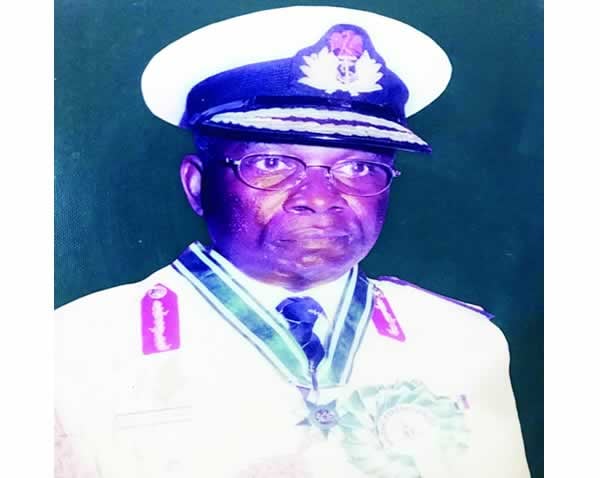
Vice Admiral Samuel Olajide Afolayan was born on the 15 of January 1948 in Osi, Ekiti Local Government area of Kwara state. After his primary school education, he attended Titcombe College, Egbe in Kogi state for both his O’Level and Higher School Certificate from 1962 – 1968. He taught briefly at Government Secondary Kechia from February – September 1969.
Admiral Afolayan enlisted in the Nigerian Defence Academy on the 4th of October 1969 as a member of the Regular Course 7. He successfully completed his cadet training in April 1971 and came out with flying colours as the best Science and Naval cadet respectively. He was commissioned as a Sub-lieutenant in July 1972 and since then has attended several courses both in Nigeria and abroad.
He did his Sub-technical course at the Britania Royal Naval College. Dartmouth, England in 1973, Long Course in Navigation and Direction at Cocin, India, And Principal Warfare Officers’ course from May – September 1978 at HMS Dry Yard in Portsmouth. He also attended the Command and Staff college, Jaji from 1981 – 1982 as a member of CSC Course 4. He was at the Naval Post Graduate School, Montery, California in the United States from October – December 1983. He was a pioneer participant at the National War College, Lagos, Course 1 from 1991 – 1992.
Admiral Afolayan has held a number of appointments both ashore and afloat. He served at various times as Navigating Officer of NNS OTOBO, NNS ENYIMIRI and NNS NIGERIA. He was commanding officer of NNS HADEJIA, NNS EKUN, and NNS OLOKUN. He served as Directing Staff at CSC Jaji from April 1984 – August 1985 and Chief Instructor, Joint Warfare Division, CSC Jaji 1993 – 1994. He was Director of Manpower and Planning and later Director of Manning at the Naval Headquarters.
He also served as Chief Staff Officer, Eastern Naval Command from 21 September 1994 to 5 May 1996, 15 January 1997. He was one time Director of Plans DHQ, Director of Administration at the Armed Forces and Police PTF and later headed it as its Commander. He assumed Command as the Flag Officer Commanding, Western Naval Command on 26 July 1999, an appointment he held till 24 April 2001 when he was named the Chief of the Naval Staff.
Vice Admiral Afolayan’s decorations include Forces Service Star (FSS), Meritorious Service Star (MSS) Distinguished Service Star (DSS) and Commander of the Federal Republic (CFR). He is married with children and he enjoys reading, sports and indoor games such as Chess and Scrabble.
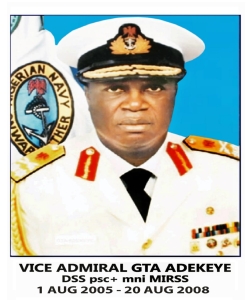
Vice Adm. Ganiyu Adekeye (2005–2008)
Vice Adm. Ishaya Ibrahim (2008–2010)
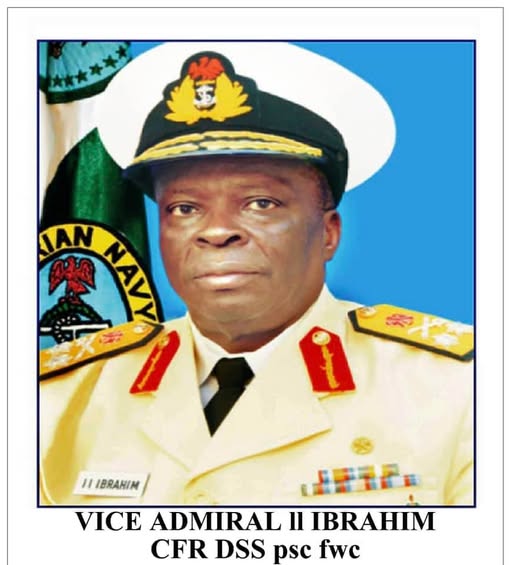
Ishaya Iko Ibrahim CFR DSS psc fwc (19 September 1952 – 4 January 2022) was the 18th Chief of the Nigerian Naval Staff. He was flag officer commanding Naval training command and Naval western command before his appointment as Chief of Naval Staff in August 2008.
Background and early life
Admiral Ibrahim was born in Jaba local government in Kaduna State. He spent and grew up in Kwoi where he had his primary education. He finished his secondary education in S.I.M Secondary School in Kagoro. He Joined the Navy as a member of the 14th regular combatant course.
Career
Rear Admiral I.I Ishaya Served as the Chairman Board of Directors, National Inland Waterways Authority (NIWA), Lokoja Admiral Ibrahim served on board several ships, He was the deputy defence attaché in Cotonou, Republic of Benin.
Vice Adm. Ola Sa’ad Ibrahim (2010–2012)
Ola Sa’ad Ibrahim DSS, psc, rcds, fwc (born 15 June 1955) is a retired Nigerian Navy admiral and former Chief of the Defence Staff of the Nigerian Armed Forces.
Educated at Ahmadu Bello University (LLB) and King’s College London (MA, War Studies), Ibrahim had his military training at the Nigerian Defence Academy and the Armed Forces Command and Staff College, Jaji.[2] He served as Chief of the Naval Staff from 2010 to 2012, and as Chief of the Defence Staff from 2012 to 2014.
Vice Adm. Dele Ezeoba (2012–2014)
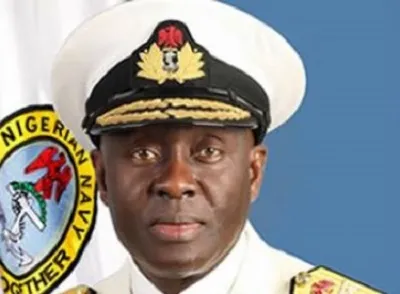
Dele Joseph Ezeoba GSS fwc MSc MRIN FCIS (born 25 July 1958) is a retired vice admiral in the Nigerian Navy who was the 20th Chief of the Naval Staff. Prior to that appointment, he served as Deputy Commandant at the Armed Forces Command and Staff College (AFCSC), Jaji, Nigeria.
Early life
Admiral Ezeoba was born on 25 July 1958 in Jos, Plateau State, Nigeria. He attended the Nigerian Defence Academy, Kaduna, before he proceeded to the Britannia Royal Naval College. He later attended the AFCSC as well as the Naval War College, Newport, Rhode Island. He also obtained a Master of science (M. sc) in Strategic Studies from the University of Ibadan.
Naval career
Prior to his appointment as the Nigerian Navy Chief of Naval Staff on 4 October 2012, he was the Deputy Commandant Officer of the AFCSC. He has also held several positions in the Nigerian Navy until he attained the peak of his naval career as the Chief of Naval Staff. He served as the Director of Operations Naval Headquarters (NHQ), Commanding Officer of the Nigerian Navy’s premier training institution, Command Operations Officer Eastern Naval Command and member of the Armed Forces Transformation Committee.
National assignments
He took part in the following national assignments:
Member of the Governing Board of Nigerian Maritime Administration and Safety Agency (NIMASA)
Chairman of the Nigerian Maritime Administration and Safety Agency (NIMASA) Committee on Combating Piracy and Environmental Pollution in Nigeria Waters
Chairman of the Presidential Inter-Agency Maritime Security Task Force (IAMSTF) on acts of illegalities in Nigerian waters.
Chairman of the Ministerial Committee on Problems of Cargo Allocation by National Maritime Authority (NMA).
Vice Adm. Usman Jibrin (2014–2015)
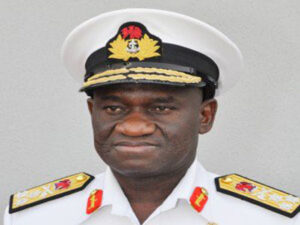
Usman Oyibe Jibrin, CFR GSS AM psc(+) mni LLB PGCPA (born 16 September 1959) is a Nigerian Navy vice admiral and the 21st Chief of the Naval Staff. Prior to his appointment as Chief of the Naval Staff, he was the Chief of Logistics and Director of Training, Defence Headquarters Abuja.
Early life
Admiral Jibril was born on 16 September 1959 in Okura Olafia, a town in Dekina Local Government Area of Kogi State, Nigeria.
He attended the Nigerian Defence Academy as a member of the 24th Regular Combatant Course where he graduated as the Best Naval Cadet officer and was commissioned as Sub-lieutenant of the Nigerian Navy on 1 January 1982.
Naval career
He began his naval career as a watch keeping officer on board NNS Damisa and NNS Aradu immediately after he was commissioned as sub lieutenant. He served in this capacity for two years, from January 1982 to January 1984. He later served as base intelligence officer, NNS Umalokun for approximately three years, from July 1984 to 1987.
He also served as a flag lieutenant to the Chief of Defence Intelligence Agency and to the commandant officer of the Nigerian Navy Intelligence School, Apapa, Lagos State, Nigeria, before he became an instructor at Navigation and Direction School, Nigerian Navy Ship Quorra. He served in that capacity for two years, from 1989 to 1991.
In 1994, he was appointed as a directing staff at the Armed Forces Command and Staff College Jaji, a tenure that elapsed in 1996 and after his tenure in 1996, he was appointed as the executive officer, NNS Enyimiri.
In 1997, he became the commanding officer of the Nigerian Navy Ship Ofiom, and in 1998 he commanded the ship NNS Ambe in operation Liberty (ECOMOG), where he obtained the Command at Sea Badge.
In 2001, he became the Deputy Director Attaché Management, Defence Intelligence Agency and the Naval Provost Marshal, Naval Headquarters. In 2002, he was appointed as the defence adviser to the Nigerian Embassy Cameroun. He served in this capacity for four years until the end of his tenure in 2006.
In December 2006, he was appointed as chief staff officer at the Sea Training Command, and later became the commandant officer of the Defence Intelligence School (DIS) Abuja in June 2007.
Thereafter, he was appointed as Nigerian Navy secretary and while serving in this capacity, he was promoted to rear admiral.
In 2010, he became the flag officer commanding, Eastern Naval Command, coordinating a joint operation involving the three services around the Gulf of Guinea, NEMO. He also, he coordinated a combined Exercise, called OBANGAME EXPRESS 2012, involving 11 countries including Germany and United Kingdom.
In January 2014, he took over from Vice Admiral Dele Joseph Ezeoba as the Chief of Naval Staff, and on 5 February 2014, he was promoted to the rank of vice admiral by Goodluck Ebele Jonathan, the President of the Federal Republic of Nigeria.
Awards and decorations
He is a recipient of several awards and decorations. Among them are:
Best Naval Cadet (1982), awarded by the Nigerian Navy
Passed Staff College Dagger (psc+), awarded by the Nigerian Navy
Forces Service Star (FSS), awarded by the Nigerian Navy
Distinguish Service Star (DSS), awarded by the Nigerian Navy
Meritorious Service Star (MSS), awarded by the Nigerian Navy
General Service Star (GSS) awarded by the Nigerian Navy
Command at Sea Badge awarded by the Nigerian Navy
Admiralty Medal, awarded by the Nigerian Navy
The Democratic Transition and Modernisation
Vice Admiral Ibok-Ete Ekwe Ibas (July 2015–January 2021):
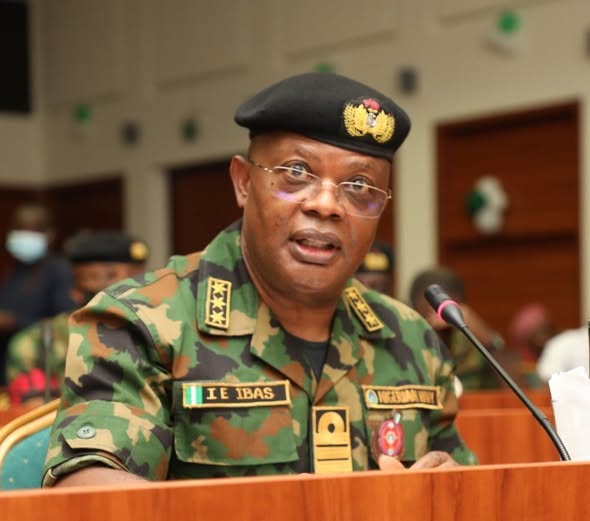
Ibok-Ete Ekwe Ibas CFR psc+ GSS AM ndc MSc (born 27 September 1960) is a retired Nigerian Navy vice admiral, who was the 22nd Chief of the Naval Staff (CNS) of the Nigerian Navy from 2015 to 2021.[
He served as the Sole Administrator of Rivers State from March to September 2025, following the suspension of Governor Siminalayi Fubara by President Bola Tinubu after declaring a state of emergency.
Appointed by President Muhammadu Buhari, Ibas led the Navy through a period of counter-piracy operations and regional maritime security initiatives.
Background and education
Ibas was born in Nko, Cross River State, South South Nigeria. He enlisted into the Nigerian Defence Academy as a member of 26 Regular Course on 20 June 1979 and was commissioned sub-lieutenant on 1 January 1983. He began his primary education at Nko Primary School, Nko, in 1966 and completed at Big Qua Primary School, Calabar in 1971. He then proceeded to the Hope Waddell Training Institute, Calabar from 1972 to 1976. Between 1977 and 1979, he attended the School of Basic Studies Ogoja before proceeding to the Nigerian Defence Academy in 1979.
Military courses attended and qualifications
Ibas has attended several military courses at home and abroad, including the Sub-Lieutenant Technical Course at INS Venduruthy in India from April 1983 to May 1984 and Primary Pilot Training at the 301 Primary Flying Training School at Nigerian Airforce Base in Kaduna from April 1986 to October 1987. He proceeded to the Armed Forces Command and Staff College, Jaji, Kaduna in January 1990 and completed the Junior Staff Course in June of the same year. In July 1992, he reported at the Amphibious Warfare School of the United States Marine Corps University in Quantico, Virginia, US, and graduated with a diploma in amphibious warfare in May 1993. In February 1994, Ibas commenced the Officers’ Long Course specializing in underwater warfare at the Underwater Warfare School, NNS Quorra and completed same in February 1995. From August 1996 to July 1997, he returned to the prestigious Armed Forces Command and Staff College Jaji, where he completed the Senior Staff Course with excellent grades. He is also an alumnus of the National Defence College, Islamabad, Pakistan, having attended the National Defence Course from August 2005 to June 2006. In addition he holds a master’s degree in defence and strategic studies from Quaid-i-Azam University in Islamabad, Pakistan
Career
Ibas has held several appointments in the Nigerian Navy. As a midshipman, he served on board NNS Ruwan Yaro, NNS Obuma and NNS Aradu. He later served on board NNS Ayam and NNS Ekpe as a watch keeping officer after he was commissioned sub-lieutenant. He was to later become the executive officer of NNS Siri, NNS Ekun and NNS Ambe between July 1993 and August 1996 as a lieutenant commander. He was the commanding officer of the Nigerian Navy Underwater Warfare School from August 1997 to September 1998 and thereafter, the commanding officer of the Forward Operating Base Ibaka from September 1998 to June 2000. Due to his outstanding performance on the Senior Staff Course, he was appointed as a directing staff at the Armed Forces Command and Staff College, Jaji from June 2000 to June 2002. He later returned to the college in January 2009 as the director of the Department of Maritime Warfare, a position he held until November 2010. His last sojourn in the college was as deputy commandant from January to February 2014.
Ibas was the naval provost marshal from April 2003 to June 2004 and was later the principal staff officer to the then CNS from June 2004 to July 2005. He was the command operations officer at the Headquarters Western Naval Command, Lagos, from June to December 2006, and from December 2006 to January 2009, he was the commander of the Naval Air Base, Ojo. The senior officer was later appointed chief staff officer at Headquarters, Naval Training Command, Lagos, from September 2010 to March 2011. In recognition of his versatility in staff duties and administration, the senior officer was appointed to the Naval Headquarters first, as the chief of administration from March 2011 to February 2012 and later as the Navy Secretary from February 2012 to January 2013. Thereafter, he became the flag officer commanding Western Naval Command from January 2013 to January 2014. He was appointed chief of logistics in February 2014 and then the GMD/CEO of Nigerian Navy Holdings Limited in December of the same year. This was the appointment he held until he was appointed the 22nd chief of the Naval Staff on 13 July 2015.
Diplomatic service
In July 2021, Ibas was appointed Nigeria’s High Commissioner to Ghana, succeeding Olufemi Michael Abikoye. During his tenure (2021–2023), he:
Facilitated the Nigeria-Ghana Business Council to strengthen economic ties
Coordinated anti-piracy operations in the Gulf of Guinea with Ghana’s navy
Established a Nigerian Citizens Assistance Desk in Accra to support diaspora welfare
Administrator of Rivers State
On 18 March 2025, President Bola Tinubu in an official broadcast declared a state of emergency in Rivers State, suspending the incumbent Governor Siminalayi Fubara, his deputy Ngozi Odu, and members of the state’s house of assembly.
By this declaration, the Governor of Rivers State, Mr Siminalayi Fubara, his deputy, Mrs Ngozi Odu and all elected members of the House of Assembly of Rivers State are hereby suspended for an initial period of six months.
Following the announcement, the President pronounced his nomination of the retired Vice Admiral as the Interim Administrator of the state’s affairs:
In the meantime, I hereby nominate Vice Admiral Ibokette Ibas (Rtd) as Administrator to take charge of the affairs of the state in the interest of the good people of Rivers State. For the avoidance of doubt, this declaration does not affect the judicial arm of Rivers State, which shall continue to function in accordance with their constitutional mandate.
The Administrator will not make any new laws. He will, however, be free to formulate regulations as may be found necessary to do his job, but such regulations will need to be considered and approved by the Federal Executive Council and promulgated by the President for the state.
Awards and decorations
In the course of a distinguished service in the Nigerian Navy, Ibas has earned several prestigious awards, including the Silver Jubilee Medal, ECOMOG Medal, Forces Service Star, Meritorious Service Star, Distinguished Service Star and the General Service Star. Others are the Passed Staff Course (DAGGER) and a Fellow of the NDC.
In October 2022, a Nigerian National Honour of Commander of the Order of the Federal Republic (CFR) was conferred on him by President Muhammadu Buhari.
Professional affiliations
Ibas holds the membership of several reputable professional organizations, such as the Nigerian Institute of International Affairs (NIIA) and the Nigerian Institute of Management. Ibas has also attended some seminars and exhibitions at home and abroad. He attended the 25th International Homeland Security Exhibition and the 3rd International Exhibition for Operational Units in Tel Aviv, Israel, in June 2011. In August 2012, he also attended the London International Leadership Course in London, England. He was in United States of America in January 2013 for a capacity development course at Harvard Kennedy School, thus making him an alumnus of the Harvard Kennedy School in the US. He was at Naval Dockyard, Lagos in February 2013 to attend a naval engineering and logistics seminar.
Personal lifeHe is married to Theresa Ibas[24] and they are blessed with 3 children.
Hobbies
Ibas enjoys reading, watching documentaries and playing golf.
Vice Admiral Awwal Zubairu Gambo (2021– 2023):
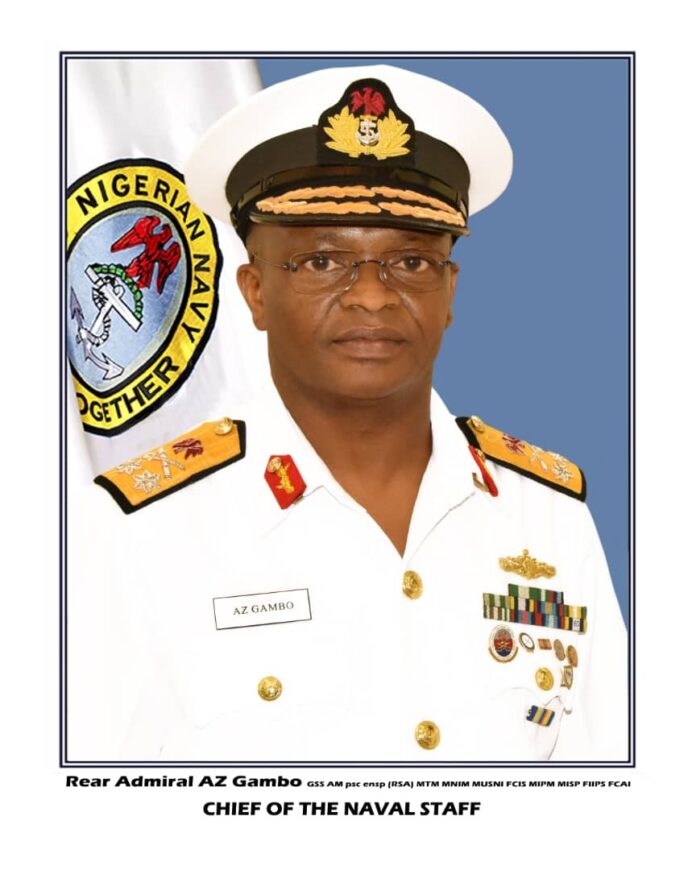
Awwal Zubairu Gambo CFR psc AM GSS ensp (RSA) MTM MNIM MUSNI FCIS FIIPS FCAI (born 22 April 1966) is a retired Nigerian Navy vice admiral and a former Chief of the Naval Staff of Nigeria, appointed by President Muhammadu Buhari on 26 January 2021.
Early life
He is from Nassarawa Local Government Area of Kano State, and was a member of Regular Course 36 of the Nigerian Defence Academy.
Military career
He enlisted into the Nigerian Navy on 24 September 1984 as a member of Regular Course 36 and was commissioned Sub-Lieutenant 24 September 1988. He is an Underwater Warfare specialist with a subspecialisation in Intelligence.
Prior his appointment as Chief of Naval Staff, he was Director of Procurement at the Defence Space Administration. He holds a PhD in Transport Management and a Masters Degree in Transport Management (Logistic Option), both from Ladoke Akintola University.
He is a member of the Nigerian Institute of Management, NIM; Fellow of the Certified Institute of Shipping; Fellow of the Institute of Corporate Administration of Nigeria, as well as a fellow of the National Defence College South Africa.
Awards
In October 2022, a Nigerian national honour of Commander of the Order of the Federal Republic (CFR) was conferred on him by President Muhammadu Buhari.
Gambo’s tenure under President Tinubu focused on restructuring naval logistics and coastal surveillance.
Vice Admiral Emmanuel Ikechukwu Ogalla ( 2023–October 2025):
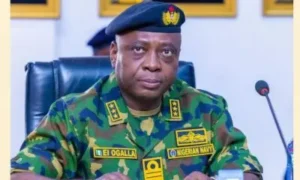
Ogalla’s leadership emphasised technological upgrades and regional cooperation, prioritising naval collaboration and innovation.
Emmanuel Ikechukwu Ogalla (20 December 1968 Enugu Ezike, East Central State, Nigeria now in Enugu State) is a Nigerian Navy vice admiral who was the Chief of the Naval Staff of Nigeria. He was appointed by President Bola Tinubu on 19 June 2023 and served till 30 October 2025.
Early life and education
Emmanuel Ikechukwu Ogalla was born on 20 December 1968 in Enugu State, Southeast Nigeria. He obtained the West African School Certificate from the Nigerian Military School, Zaria in 1987. He obtained BSc in mathematics and an MSc in strategic studies from the University of Ibadan.
A New Chapter: Rear Admiral Idi Abbas
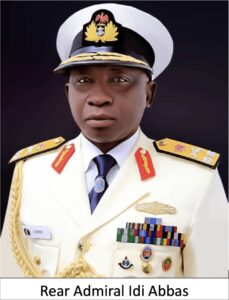
A New Chapter: Rear Admiral Idi Abbas
Rear Admiral Idi Abbas (October 2025–Present): Recently appointed by President Tinubu, Abbas brings a wealth of operational experience and strategic insight. His leadership is expected to focus on enhancing Nigeria’s blue economy, strengthening naval intelligence, and deepening international maritime partnerships. As he assumes command, the Navy stands poised to navigate the complex waters of 21st-century security and economic development.
Born on September 10, 1969, Rear Admiral Idi Abbas hails from Nassarawa Local Government Area of Kano State.
He enlisted in the Nigerian Defence Academy (NDA) on 12 September 1987 and was commissioned Sub-Lieutenant on 10 September 1993 as a member of NDA 40 Regular Course with a Bachelor’s Degree in Chemistry.
The newly appointed Chief of the Naval Staff began his early education at Gwagwarwa Primary School Kano, then proceeded to Airforce Military School Jos from 1981 – 1986 before his admission to NDA into 1987.
MILITARY COURSES ATTENDED AND QUALIFICATIONS
The newly appointed CNS is an Above Water Warfare (AWW) specialist officer who has attended several military courses at home and abroad, including the Sub-Lieutenant Technical Course at NNS QUORRA in 1994, the Junior and Senior Staff Courses at the Armed Forces Command and Staff College Jaji in 2001 and 2005 respectively.
From January to December 2003, he attended the Officers’ Long Course (OLC XII) at NNS QUORRA Apapa Lagos, specialising in Above Water Warfare. Rear Admiral Abbas also attended the United Nations Military Observer Course in Tanzania in 2009, and in 2014, he graduated from the prestigious National Defence College (NDC) Abuja as a member of NDC Course 23.
APPOINTMENTS HELD
The newly appointed CNS has held several appointments in the Nigerian Navy. After his commissioning in 1993, he served on board various NN ships as a Watch-Keeping Officer. Some of the ships include: NNS ARADU, NNS DAMISA and NNS AYAM. Rear Admiral Idi Abbas later served as Naval Assistant to the Deputy Commandant of the Armed Forces Command and Staff College, Jaji in 1998. Between 1999 and 2002, he underwent Mandatory Military courses and returned to NNS DAMISA intermittently as a Watch-Keeping Officer. In January 2004, he was appointed Staff Officer III, Marine Services, at Naval Headquarters (NHQ), and later served as Gunnery Officer on NNS OHUE in 2006. In 2007, he became an instructor at NNS QUORRA and in 2008, he was appointed Commanding Officer Burma Battalion of NDA.
Rear Admiral Abbas later served as Base Administrative Officer of NNS PATHFINDER and Naval contingent Commander of Joint Task Force Operation SAFE HAVEN in 2010 and 2012, respectively. He was the Maritime Guard Commander (MGC) of NIMASA in 2015 and Commander Task Group (CTG) of NN Operation Tsare-Teku in 2017. Between 2018 and 2022, Rear Admiral Idi Abbas steadily climbed the ladder of appointments in Central Naval Command first as the Command Admin Officer (CAO) then as the Chief Staff Officer (CSO) culminating in his appointment as Flag Officer Commanding (FOC CNC) of Central Naval Command and within this period, he also served as Commander NNS VICTORY, Calabar in 2020. In July 2023, he was appointed Chief of Naval Safety and Standard (CNASS) at NHQ. In February 2024, he became the Chief of Defence Civil Military Relations (CDCMR) and Defence Headquarters (DHQ). In January 2025, Rear Admiral Abbas was deployed to the Nigerian Army Heritage Centre as a Senior Research Fellow, the appointment he held before his elevation to the post of 25th Chief of Naval Staff, Nigerian Navy.
PROMOTIONS
The newly appointed CNS is a thoroughbred professional Seaman Executive Officer who rose through all the ranks in NN before his appointment. He became a Midshipman on 18 September 1996, 2001, and 2006, respectively, and was promoted to the ranks of Lieutenant, Lieutenant-Commander, and Commander. He became a Navy Captain in September 2011, a Commodore in 2016 and a Rear Admiral on 10 September 2020.
AWARDS AND DECORATIONS
In the course of his distinguished career, Rear Admiral Idi Abbas has earned many prestigious awards, including:
Passed Staff Course (psc)
Fellow Defence College (fdc)
Forces Service Star (fss)
Meritorious Service Star (MSS)
Distinguished Service Star (DSS)
Grand Service Star (GSS)
Defence General Staff Medal (DGSM)
He is a member of the Nigerian Institute of Management (NIM) and the International Institute of Professional Security (IIPS).
HOBBIES
Rear Admiral Idi Abbas enjoys playing hockey and driving.
MARITAL STATUS
Rear Admiral Idi Abbas is a practising Muslim who is happily married to Mrs Aisha Abbas, and the marriage is blessed with two boys.
FOLLOW US ON:



Lifestyle
AFRICAN FAMILIES: WHY DO WE KEEP REPEATING THE SAME MISTAKES FROM ONE GENERATION TO THE NEXT?



SOME PEOPLE WILL DO ANYTHING — EVEN EVIL — JUST TO MAKE MONEY!

Belgian parliament to legislate to allow police to enter homes to facilitate undocumented migrant removals

STOP CONFUSING WEALTH WITH SUCCESS! NOT EVERYTHING THAT GLITTERS IS GOLD!

‘Sleeping Prince’ of Saudi Arabia dies after 20 years in coma

2027: Atiku delays ADC membership card collection amid rumoured Jonathan comeback

How A Class Of 24 Students Produced 2 Presidents, 4 Governors, 2 Ministers, 4 Emirs, 3 Justices, 4 Ambassadors and Other Influential Leaders


-
![]()
![]() News17 hours ago
News17 hours agoAir chief pleads for patience as investigation begins on Ondo crash
-
![]()
![]() News17 hours ago
News17 hours agoDapo Abiodun reveals that Nigeria needs 554,353 personnel for state police, read details
-
![]()
![]() News16 hours ago
News16 hours agoINEC displays voter register, begins PVC distribution ahead of 2027 elections
-
![]()
![]() Business17 hours ago
Business17 hours agoFG’s 30-day petrol discount sparks opposition backlash
-
![]()
![]() Sports16 hours ago
Sports16 hours agoAdeniyi lauds Nigeria’s Veterans World Wrestling Champs medal
-
![]()
![]() News16 hours ago
News16 hours agoTrump rules out new Iran attack before US midterm elections
-
![]()
![]() Business16 hours ago
Business16 hours agoReport reveals Nigeria leaves N40tn manufacturing opportunities untapped
-
![]()
![]() News23 hours ago
News23 hours agoPHOTOS: NAF sets up high-level panel to probe Ondo aircraft crash