


Connect with us

News

Expert decries rising building collapses in Nigeria

Published

on

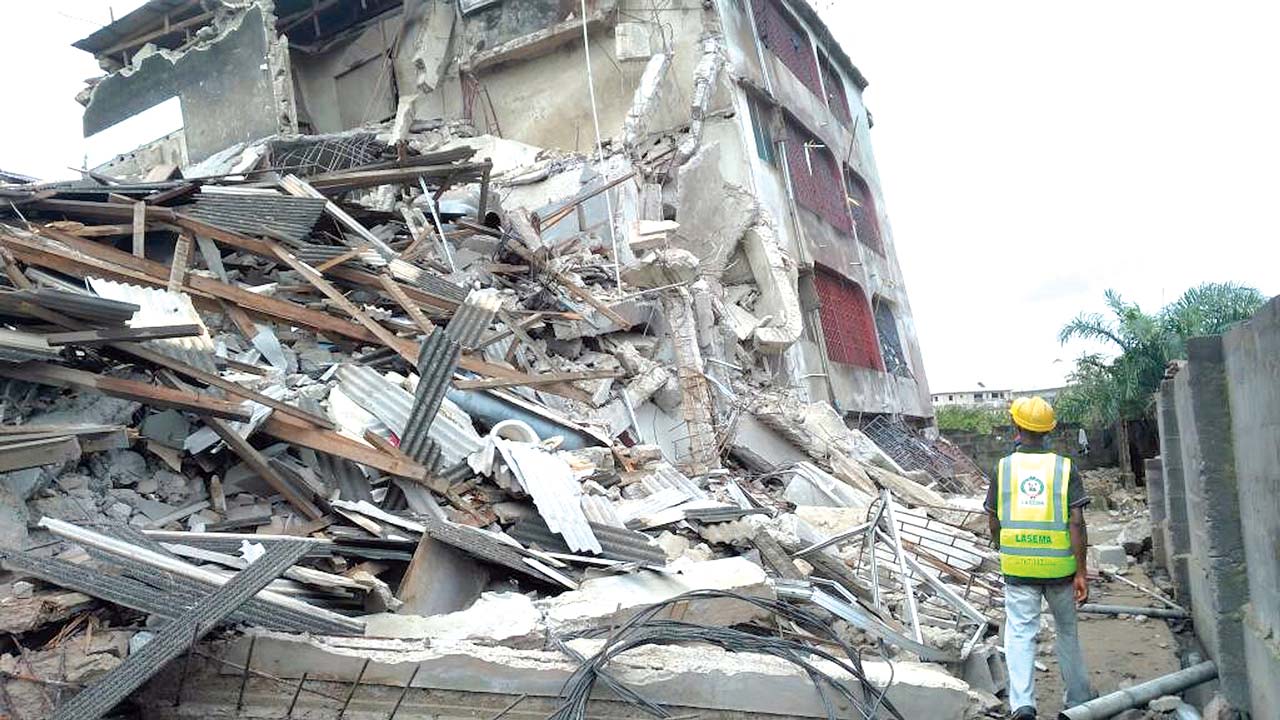
As Nigeria continues to witness frequent cases of building collapse, a University of Ibadan-trained structural engineer, Michael Odelola, has raised the alarm, warning that the crisis has gone beyond a technical problem.

According to a statement to The PUNCH, he said the spate of building collapses is now a national security issue.

“The truth is simple. If we get foundation design and connection detailing right, we will reduce failure. If we embrace advanced materials like ultra-high-performance concrete where appropriate, we will build structures that last longer and perform better under load, under weather, and under stress,” he said.

He advocated the use of UHPC to address the menace of building collapse, maintaining that UHPC is not normal block-and-cement concrete but a special type of concrete with very high strength, high durability, and better performance in tough conditions. “It helps engineers build bridges and foundations faster and safer. It is designed to solve the weaknesses we see in conventional concrete: durability, degradation, and long-term performance. UHPC can save a project,” he stated.

Odelola, who received a fully funded PhD offer from Florida International University, said UHPC may look costly at first, but he argued that the long-term savings of fewer failures, less maintenance, and faster delivery on site make it worth it, especially for public infrastructure.

“People like to say, ‘Nigeria is different. The same science we are using in Florida can be adapted to the Nigerian environment. My hope is to bring that knowledge back into our system through collaboration, training, or code development,” he said.

See also  No man’s land: Contest for Oba of Lagos – Wike’s aide rubbishes Charly Boy

His colleagues at FIU say his story should be studied by young Nigerian engineers who still believe serious research “is only for ‘oyinbo’.

“When you see a young Nigerian scholar doing work that is already influencing state-level standards, you start to understand: this is how nations develop. One engineer at a time,” they said.

At FIU, his main work is on pile splicing for deep foundations. Piles are long structural members driven deep into the ground to carry the load of bridges, piers and high-rise structures. Sometimes a single pile is not long enough, so contractors join two pile pieces together. That process is called splicing. If the splice is weak, the whole foundation can fail.

punch.ng

FOLLOW US ON:

FACEBOOK

TWITTER

PINTEREST

TIKTOK

YOUTUBE

LINKEDIN

TUMBLR

INSTAGRAM

Continue Reading
Click to comment

Leave a Reply

Your email address will not be published. Required fields are marked *

News

Sultan backs Sharia law in Oyo, Ekiti

Published

on

President-General, Nigeria Supreme Council of Islamic Affairs (NSCIA) and Sultan of Sokoto, Muhammad Sa’ad Abubakar III, has expressed support for the establishment of an Independent Shariah Arbitration Panel in Ekiti and Oyo states.

But the Aare Ona Kakanfo of Yorubaland, Gani Adams, condemned the attempt to introduce Sharia in the South West, saying it is alien to Yoruba culture and religious beliefs.

The 20th Sultan of Sokoto and the spiritual leader of Nigeria’s Muslims also expressed concern about the spate of intolerance and disregard for the rights of Muslims, especially in the southern part of the country. He noted that Muslims in the South West had been denied their constitutional rights to a Shariah Court of Appeal.

In a statement, yesterday, by the Deputy National Legal Adviser of NSCIA, Haroun Eze, the traditional ruler lamented the unwarranted resistance and objections from political and traditional quarters to the Muslim community’s efforts to establish an Independent Shariah Arbitration Panel in Ekiti.

He said this was coming barely a few weeks after the announcement on the inauguration of a Shariah panel in Oyo generated “unnecessary anxiety, thereby leading to its indefinite postponement.

“The Independent Arbitration Panel, which is a voluntary platform designed solely for the resolution of civil and marital disputes among consenting Muslims, was to fill the inexplicable vacuum created by the failure of the political elite in the South West to establish Sharia courts, as allowed by the Nigerian Constitution, in South West, despite the huge population of Muslims in the region,” Sultan said.

See also  JUST IN: Court discharges Ibom Air passenger

According to the monarch, such scenarios as the denial of the rights of female students to wear the Hijab despite a Supreme Court judgment, are nothing but calculated attempts to prevent Muslims in the region from practising their faith.

Speaking during the 2025 Oodua festival at Enuwa Square, Ile-Ife, Osun State, yesterday, Adams stressed that the introduction of Sharia was to destabilise the Yoruba land by religious fanatics and fundamentalists. He emphasised that while Saudi Arabia is an Islamic kingdom where Sharia aligns with religious teachings and is widely accepted, Nigeria remains a nation where the constitution guarantees freedom of religion.

According to him, Saudi Arabia is a good example of an Islamic kingdom that practises Sharia law according to the Holy Quran. He said: “The Saudis also adhere strictly to the law, and they are happy because Sharia law is in tandem with their religious beliefs and teachings. But Nigeria is a secular nation where the constitution allows every citizen to practise whatever religion they believe in freely without any intimidation.

“Sharia law is alien to our culture and religious beliefs in Yoruba land; therefore, those religious fanatics masquerading as Muslims should stay away from acts that could set Yorubaland on fire.”

Meanwhile, berating the recent influx of Islamic State’s West Africa Province (ISWAP) in the South West, Adams called on the federal and state government to intensify efforts to tackle insecurity in the region. Adams further expressed the readiness of the Oodua People’s Congress (OPC) to partner other security groups in curbing the scourge in Yoruba land.

See also  Insecurity: Cleric faults call for civilian firearms

FOLLOW US ON:

FACEBOOK

TWITTER

PINTEREST

TIKTOK

YOUTUBE

LINKEDIN

TUMBLR

INSTAGRAM

Continue Reading

News

Statement on the Rejection of Sharia Law in South-West Nigeria

Published

on

The Sultan of Sokoto and the leadership of the Nigerian Supreme Council for Islamic Affairs (NSCIA) must clearly understand this position: the Yoruba people of South-West Nigeria do not need, want, or accept Sharia law as a governing system in their land.

Yoruba society is uniquely pluralistic. In most families across the South-West, Christians, Muslims, and traditional worshippers coexist peacefully under the same roof. This interwoven family structure is one of our greatest strengths. Introducing Sharia law into such a setting would place families on a collision course, fracture long-standing relationships, and undermine the shared values that have sustained our people for generations.

It is important to ask a fundamental question: Is it compulsory or by force that Muslims must live under Sharia law? Many Muslims across the world practice their faith peacefully without imposing religious law on diverse societies. Faith should be a personal conviction, not a political weapon.

Any attempt—direct or indirect—to Islamise the South-West against the will of its people will be firmly resisted through lawful and collective means, because the Yoruba are not a monolithic religious bloc. Our philosophies, cultures, and worldviews are distinct. We cherish family unity, tolerance, and mutual respect above religious extremism.

Let it be clearly stated: the Yoruba are not religious bigots, nor are we extremists. We are a civilized people who value progress, coexistence, and peace. We reject anything that may plunge our land into chaos, division, or bloodshed. Therefore, those advocating Sharia governance should restrict such ambitions to regions where it is openly accepted. The people of the South-West are not interested.

See also  Insecurity: Cleric faults call for civilian firearms

Nigeria is constitutionally a secular state, and the implementation of Sharia law as a state system directly contradicts the principles of secularism, equal citizenship, and fundamental human rights. If Nigeria intends to remain united, no religious legal system should be imposed on unwilling populations.

Furthermore, the practical outcomes of Sharia implementation in parts of Northern Nigeria raise serious concerns. These include:

Persistent insecurity and terrorism

Banditry and mass kidnapping

Ethnic and religious tensions

Widespread poverty and hunger

High levels of illiteracy

Deep social inequality and segregation

These realities cannot be ignored, and they offer no justification for exporting such a system to the South-West.

To our Muslim brothers and sisters in the OduduwaYorubaterritory: peaceful coexistence is our collective responsibility. We must not allow the mistakes and crises of other regions to destabilize our homeland. The Yoruba way has always been dialogue, tolerance, and mutual respect—and we intend to preserve it.

Leave the Oduduwa Yoruba land as it is. Let us live in peace.

Ire oooo.

Signed
Comrade Oyegunle Oluwamayowa Omotoyole (Omayor)
Oduduwa Nation Home-Based Youth Leader.

FOLLOW US ON:

FACEBOOK

TWITTER

PINTEREST

TIKTOK

YOUTUBE

LINKEDIN

TUMBLR

INSTAGRAM

Continue Reading

News

Sultan-Led NSCIA Slams Southern Resistance To Sharia Panels Establishment

Published

on

The Nigerian Supreme Council for Islamic Affairs (NSCIA) under the leadership of its President-General and Sultan of Sokoto, His Eminence, Alh. Muhammad Sa’ad Abubakar, has expressed concern over alleged intolerance and disregard for the rights of Muslims, especially in the southern part of the country.

A statement signed by NSCIA deputy national legal adviser, Imam Haron Muhammed Eze, on Wednesday, said the most recent of this development emanated from Ekiti state where the efforts of the Muslim community to set up an Independent Sharia (Arbitration) panel was met with resistance and objections from both political and traditional quarters.

It added that this came a few weeks after the announcement of the inauguration of a Sharia panel in Oyo state generated anxiety and led to its indefinite postponement.

The Independent Sharia Panel is a voluntary platform designed solely for resolution of civil and marital disputes among consenting Muslims.

According to the statement, the Arbitration and the Sharia Court of Appeal, just like the Customary Court of Appeal are provided in section 275 of the 1999 constitution (as amended) of the Republic of Nigeria confirming the legality of both initiatives.

It added that the NSCIA strongly supported the establishment of the Independent Sharia Arbitration Panel in Ekiti and Oyo States for the intended purpose, especially where the Muslims in the states have been denied their constitutional right to a Sharia Court of Appeal in all the states of South-West Nigeria.

The group, while disapproving of the Supreme Court judgement, said their judgements are nothing but calculated attempts to prevent Muslim in the region from practicing their faith.

See also  JUST IN: Court discharges Ibom Air passenger

The NSCIA stressed that the council cannot find any legal justification for the resistance. It called on governors and traditional authorities in the southern part of the country, particularly the South-West, to ensure that the constitutional rights of Muslims in their respective domains are preserved and protected.

FOLLOW US ON:

FACEBOOK

TWITTER

PINTEREST

TIKTOK

YOUTUBE

LINKEDIN

TUMBLR

INSTAGRAM

Continue Reading

Trending