Connect with us

Business

Oil, gas operators urged to adopt ADR

Published

on

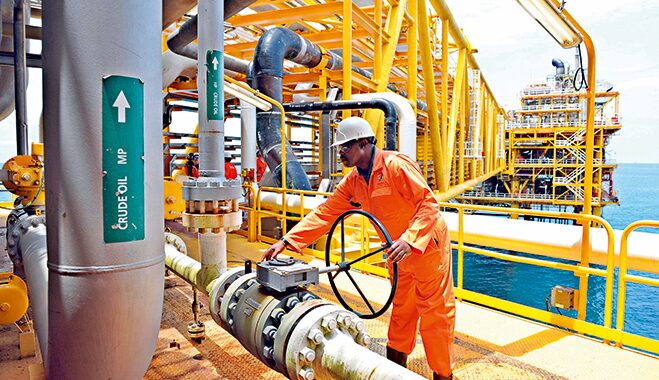
Stakeholders in Nigeria’s oil and gas sector have been urged to adopt Alternative Dispute Resolution, particularly mediation, as a faster, cheaper, and more business-friendly approach to resolving industry-related conflicts.

This call was made at the Roundtable Consultative and Sensitisation Forum organised by the Nigerian Upstream Petroleum Regulatory Commission on Wednesday in Lagos. The event, themed “Strengthening Stakeholders’ Knowledge of the ADRC’s Mandate and Promoting Efficient, Collaborative and Sustainable Dispute Resolution in Nigeria’s Upstream Petroleum Industry,” focused on deepening understanding of the Commission’s Alternative Dispute Resolution Centre.

Speaking at the event, NUPRC Chief Executive, Gbenga Komolafe, said the Commission established the ADRC to institutionalise fairness, dialogue, and inclusivity in addressing disputes within the oil and gas sector.

Komolafe, represented by the Commission’s Secretary and Legal Adviser, Mrs Olayemi Adeboyejo, said the initiative demonstrated a shared industry resolve to address disputes constructively, adding that it aimed to foster transparency, equity, and cooperation.

“This gathering is not just another industry event; it is a reaffirmation of our collective resolve to institutionalise dialogue, equity, and inclusivity in the resolution of industry-related disputes,” Komolafe said.

He noted that the ADRC was created as a specialised, neutral, and sector-specific platform for resolving disputes in Nigeria’s upstream oil and gas industry.

“By offering mediation, the Centre ensures timely, impartial, and cost-effective dispute resolution consistent with international best practices,” he stated.

Komolafe urged operators, host communities, and legal practitioners to embrace the ADRC as “a strategic ally in corporate governance and risk mitigation” rather than a regulatory mechanism.

“Our objective is to make ADR not the last resort but the first choice for dispute resolution in Nigeria’s upstream petroleum industry,” he added.

See also  Airlines face uneven fuel costs as currencies weaken — IATA

According to him, the Commission has achieved key milestones since the Centre’s creation, including inaugurating its Board of Neutrals in Lagos and Yenagoa in 2024, and hosting a capacity-building programme earlier in 2025 to align procedures with global standards.

He said the Board comprised eminent professionals such as retired judges, lawyers, and technical experts versed in ADR processes and committed to neutrality and confidentiality.

Earlier in her welcome address, Adeboyejo urged oil and gas stakeholders to embrace mediation as a commercially viable alternative to prolonged litigation.

“In Nigeria, when people say, ‘Let the court decide,’ sometimes what they really mean is, ‘See you in ten years,” she quipped.

“By that time, oil prices may have changed, the parties may have changed, and even the lawyers handling the matter may have changed chambers twice.”

She noted that under the Petroleum Industry Act 2021, the ADRC was established as a core pillar of the new regulatory framework to promote fairness, confidentiality, and efficiency in dispute management.

“Data from the Centre for Effective Dispute Resolution shows that 80 to 90 per cent of disputes referred to mediation are successfully resolved, often within days or weeks, not years,” she said.

She stressed that the ADRC guarantees neutrality through an independent body of neutrals, joint selection and payment of mediators by both parties, and strict confidentiality.

“No journalist will get a scoop from your mediation room,” she assured. “What happens in mediation stays in mediation.”

Adeboyejo added that the Centre’s mediators possess technical knowledge of the oil and gas industry, giving them a unique advantage in resolving disputes quickly and efficiently.

See also  When celebration becomes a luxury: Inside Nigerians’ costly Christmas struggle

“Our neutrals can distinguish between a wellhead and a headache — and that makes all the difference,” she said.

Also speaking, Vice Chairman of the Petroleum Technology Association of Nigeria and Managing Director of Global Process and Pipeline Services, Mr Obi Uzu, said the ADRC was a step in the right direction but called for a clear legal framework to support it.

“This is a very important platform for resolving complex contractual issues. Some of our members have completed projects for two to three years without payment,” he said.

“We want to see this platform work, but we also want to be sure it will be trusted by both clients and service providers.”

He noted that for mediation to gain traction, future contracts in the industry must expressly recognise ADR mechanisms.

On his part, Chief Executive Officer and Coordinating Mediator of the Dispute Solutions Hub, Mr Adeyemi Akinsanya, described mediation as “the future of dispute resolution in the oil and gas sector,” noting that prolonged court cases destroy value and relationships.

“Most courts are congested, and cases can take twenty to thirty years to resolve,” he said. “Mediation offers a quick, efficient, and practical way of finding a win-win solution that satisfies both sides and preserves business relationships.”

Similarly, Senior Advocate of Nigeria and energy law expert, Mr Tunde Fagbohunlu, emphasised that mediation should be seen as a process of facilitation, not adjudication.

“Mediation is not about who is right or wrong; it’s about getting the parties to agree,” he said. “The regulator’s role is not punitive but facilitative.”

Fagbohunlu called for a standing inter-stakeholder mechanism to strengthen confidence in ADR and ensure continuous engagement between regulators, operators, and mediators.

See also  Fuel distribution controversy: Dangote restores marketers amid mounting pressure

Legal practitioner Ms Oyoje Bello of Green Energy described confidentiality and neutrality as “the cornerstones of effective mediation.”

“When you enter that mediation room, you’re entering a safe space. What happens there stays there. The focus is on resolution, not regulation,” she said.

Also, dispute resolution expert, Mr Fola Alade, described mediation as “justice delivered differently,” saying it saves time, protects value, and promotes collaboration.

“Litigation delays projects and increases financial and reputational costs. Every day, a project is tied up in dispute, millions are lost,” he said.

Alade advised that disputes should first go through negotiation and mediation before resorting to arbitration or litigation.

“Mediation and litigation are not rivals; they can coexist. The key is using the right tool at the right time,” he said.

A member of the NUPRC Body of Neutrals, Dr Adenike Esan, also urged industry players to make mediation their first choice.

“Businesses are not set up to resolve disputes; they are set up to achieve objectives,” she said. “When disputes arise, we must resolve them efficiently and quickly.”

Esan noted that mediators at the ADRC possess the technical expertise to understand complex petroleum issues and bridge gaps that often delay arbitration or court processes.

“Mediation may not always end in a settlement,” she added, “but even when it doesn’t, it helps parties understand each other’s positions better and sometimes paves the way for future cooperation.”

punch.ng

FOLLOW US ON:

FACEBOOK

TWITTER

PINTEREST

TIKTOK

YOUTUBE

LINKEDIN

TUMBLR

INSTAGRAM

Continue Reading
Click to comment

Leave a Reply

Your email address will not be published. Required fields are marked *

Business

EFCC Begins Probe Of Ex-NMDPRA Boss After Dangote’s Petition

Published

on

The Economic and Financial Crimes Commission (EFCC) has commenced an investigation into a petition filed against the former Managing Director of the Nigerian Midstream and Downstream Petroleum Regulatory Authority (NMDPRA), Farouk Ahmed, by the President of Dangote Group, Aliko Dangote.

It was gathered that Dangote formally submitted the petition to the EFCC earlier this week through his legal representative, following the withdrawal of a similar petition from the Independent Corrupt Practices and Other Related Offences Commission (ICPC).

Dangote had initially approached the ICPC, asking it to investigate Ahmed over allegations that he spent about $5 million on his children’s secondary education in Switzerland, an expense allegedly inconsistent with his known earnings as a public officer.

Although the petition was later withdrawn, the ICPC had said it would continue with its investigation.

Confirming the new development, a senior EFCC officer at the commission’s headquarters in Abuja, who spoke on condition of anonymity because he was not authorised to speak publicly, said the petition had been received and investigations had commenced.

“They have brought the petition to us, and an investigation has commenced on it. Serious work is being done concerning it,” the source said.

In the petition signed by Dangote’s lead counsel, Dr O.J. Onoja (SAN), the businessman urged the EFCC to investigate allegations of abuse of office and corrupt enrichment against Ahmed and to prosecute him if found culpable.

The petition further stated that Dangote was ready to provide documentary and other evidence to support claims of financial misconduct and impunity against the former regulator.

See also  Petrol soars above N1,000/ltr as Tinubu okays 15% import tariff

“We make bold to state that the commission is strategically positioned, along with sister agencies, to prosecute financial crimes and corruption-related offences, and upon establishing a prima facie case, the courts do not hesitate to punish offenders,” the petition read, citing recent court decisions.

Onoja also called on the EFCC, under the leadership of its chairman, Olanipekun Olukoyede, to thoroughly investigate the allegations and take appropriate legal action where necessary.

When contacted, the EFCC spokesperson, Dele Oyewale, declined to comment on the matter but promised to respond later. No official reaction had been received as of the time of filing this report.

FOLLOW US ON:

FACEBOOK

TWITTER

PINTEREST

TIKTOK

YOUTUBE

LINKEDIN

TUMBLR

INSTAGRAM

Continue Reading

Business

IMPORTANT NOTICE REGARDING MONEY TRANSFERS IN NIGERIA (2026)

Published

on

Starting from *January 2026*, please ensure that *any money you send* to anyone — including me — comes with a *clear description* or *payment remark*. This is *very important* for tax purposes.

Use descriptions like:

– *Gift*
– *Loan*
– *Loan Repayment*
– *House Rent*
– *School Fees*
– *Feeding*
– *Medical*
– *Support*,
– School fee etc.

*Why this matters:*

In 2026, any money entering your account *without a description* may be treated as *income*, and *IRS (or relevant tax authority)* could tax it — or even worse, ask you to explain the source.

The *first ₦800,000* may be *tax-free*, but after that, any unexplained funds might attract up to *20% tax*, or in extreme cases, lead to legal issues.

So please:

– *Always include a payment remark.*
– *Avoid using USSD or apps that don’t allow descriptions.*
– *Ask the receiver for the correct description BEFORE sending.*

As for me, *do not send me any money* without discussing it with me first.
And no, I don’t want to hear “Sir/Ma, I used USSD” – if you can’t add a description, *hold your money*.

From now on, *I will tell you exactly what to write in the payment remark.*
Let’s all form the habit of *adding payment descriptions now* to avoid problems later.

FOLLOW US ON:

FACEBOOK

TWITTER

PINTEREST

TIKTOK

YOUTUBE

LINKEDIN

TUMBLR

INSTAGRAM

See also  FX reserves to hit $51bn by 2026 — CBN
Continue Reading

Business

FG earmarks N1.7tn in 2026 budget for unpaid contractors

Published

on

The Federal Government has budgeted the sum of N1.7tn in the 2026 Appropriation Bill to settle outstanding debts owed to contractors for capital projects executed in 2024.

A breakdown of the proposed 2026 national budget shows that the amount is captured under the line item titled “Provision for 2024 Outstanding Contractor’s Liabilities,” signalling official recognition of delayed payments to contractors amid recent protests over delayed settlements.

This budgetary provision follows mounting pressure from indigenous contractors and civil society groups who, in 2025, raised alarm over unpaid contractual obligations allegedly exceeding N2tn.

Some groups under the All Indigenous Contractors Association of Nigeria had also staged demonstrations in Abuja, lamenting the severe impact of delayed payments on their operations, with many contractors reportedly unable to service bank loans taken to execute government projects.

Earlier, Minister of Works David Umahi had promised to clear verified arrears owed to federal contractors before the end of 2025. However, only partial payments were made amid revenue constraints, prompting the inclusion of the N1.7tn line item in the 2026 budget as a catch-up mechanism.

In addition to the N1.7tn for 2024 liabilities, the government has also budgeted N100bn for a separate line item labelled “Payment of Local Contractors’ Debts/Other Liabilities”, which may cover legacy debts from previous years, smaller contract claims, or unsettled financial commitments that were not fully verified in the current audit cycle.

The total N1.8tn allocation is part of the broader N23.2tn capital expenditure in the 2026 fiscal plan, which seeks to ramp up infrastructure delivery while cleaning up past obligations.

See also  Fuel distribution controversy: Dangote restores marketers amid mounting pressure

Nigeria’s contractor debt backlog has been a recurring fiscal issue, worsened by delayed capital releases, partial cash-backing of budgeted projects, and underperformance in revenue targets.

Speaking with journalists at the entrance of the Federal Ministry of Finance in December 2025, the National Secretary of the All Indigenous Contractors Association of Nigeria, Babatunde Seun-Oyeniyi, said the government’s failure to release funds after multiple assurances had forced contractors to resume protests. He said members of the association were owed more than N500bn for projects already completed and commissioned.

He explained that despite recent assurances from the Minister of Finance, Wale Edun, no payment had been made. “After the National Assembly intervened, they told us that they will sit the minister down over this matter.  And we immediately stopped the protest,” he said.

According to him, repeated follow-up meetings with the minister had produced no tangible progress. “They have not responded to our request,” he said. “In fact, more than six times we have come here. Last week, we were here throughout the night before the Minister of Finance came.”

Oyeniyi said that although some payment warrants had been sighted, no funds had been released. “Specifically, when we collate, they are owing more than N500bn for all indigenous contractors. We only see warrants; there is no cash back.”

He accused officials of attempting to push the payments into the next fiscal year. “The problem is that they want to put us into a backlog. They want to shift us to 2026; that 2026, they are going to pay,” he alleged. “They will turn us into debt, and we don’t want that. We won’t leave here until we are paid.”

See also  When celebration becomes a luxury: Inside Nigerians’ costly Christmas struggle

However, The PUNCH observed that earlier in August 2025, the Federal Government claimed that it had cleared over N2tn in outstanding capital budget obligations from the 2024 fiscal year, with a pledge to prioritise the timely release of 2025 capital funds.

The Minister of Finance and Coordinating Minister of the Economy, Wale Edun, disclosed this at a ministerial press briefing in Abuja, where he also declared that Nigeria is “open for business” to global investors on the back of improved economic stability.

“In the last quarter, we did pay contractors over N2tn to settle outstanding capital budget obligations. That is from last year,” Edun said. “At the moment, we have no pending obligations that are not being processed and financed. And the focus will now shift to 2025 capital releases.”

By December 2025, The PUNCH reported that President Bola Tinubu expressed “grave displeasure” over the backlog of unpaid federal contractors and set up a high-level committee to resolve the bottlenecks and fund repayments.

Briefing State House correspondents after the Federal Executive Council meeting in Abuja, Special Adviser on Information and Strategy, Bayo Onanuga, said the President was “upset” after learning that about 2,000 contractors are owed. “He made it very, very clear he is not happy and wants a one-stop solution,” Onanuga told journalists.

Tinubu directed the setting up of a committee to verify all claims from federal contractors. The new budget’s provisions are expected to draw from the outcome of that verification exercise and may be disbursed in tranches based on confirmed and certified claims.

See also  Nigeria spends $10bn annually on food imports, minister laments

The total proposed 2026 national budget stands at N58.47tn, with N23.2tn earmarked for capital expenditure, N15.9tn for debt servicing, N15.25tn for recurrent spending, and N4.09tn for statutory transfers.

punch.ng

FOLLOW US ON:
FACEBOOK

TWITTER

PINTEREST

TIKTOK

YOUTUBE

LINKEDIN

TUMBLR

INSTAGRAM

Continue Reading

Trending