Connect with us

Education

FG, avert looming ASUU strike

Published

on

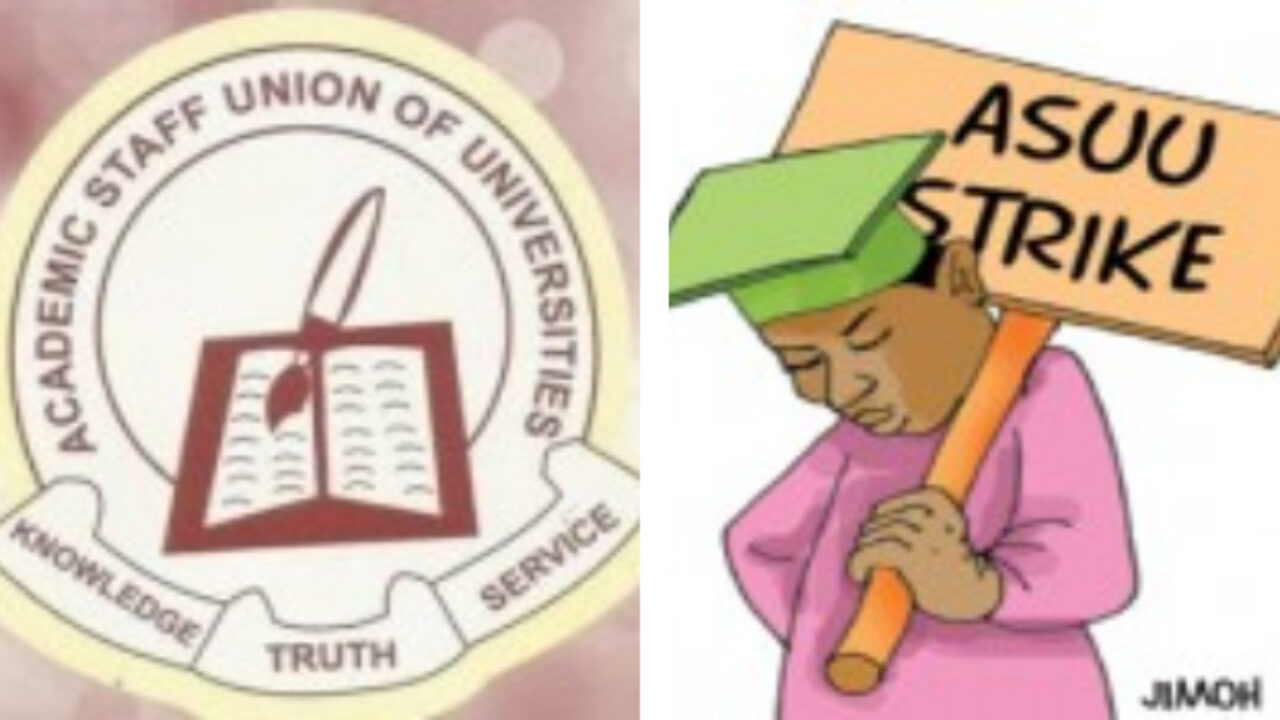
NIGERIA’S public university system stands at the cusp of yet another crippling strike by the Academic Staff Union of Universities. The grievances are neither new nor frivolous. For 15 years—since the 2009 FGN-ASUU Memorandum of Understanding—university lecturers have watched their salaries eroded by high inflation.

Successive administrations have either ignored the agreement entirely or implemented it in ways that mock the spirit of negotiation. The result is predictable: low morale, plummeting productivity, rampant brain drain, and a strike record that shames the country.

Sadly, past Presidents Goodluck Jonathan, Muhammadu Buhari and the incumbent recklessly established more institutions, even as inflation decimated the value of the N1.3 trillion 2009 agreement.

Between 2009 and 2022 alone, Nigerian students lost more than three academic sessions to lecturers’ strikes, some lasting eight to nine months.

President Bola Tinubu, during his election campaign, declared that ASUU would not embark on any strike under his watch. Lecturers, in an extraordinary show of goodwill, granted him an extended honeymoon although none of the core issues—earned academic allowances, university revitalisation and salary review—had been resolved. That patience seems now exhausted.

On Tuesday, ASUU threatened an indefinite strike from Friday, claiming that the government had failed to address the outstanding issues within a month-long window, granted after an earlier warning strike, which has now closed.

The message is clear: this administration, like its predecessors, sees no urgency in honouring commitments to the academic community.

The consequences of inaction are already devastating. Nigerian professors are among the poorest paid in Africa and the world. A full professor in Nigeria earns between N500,000 and N700,000 monthly, whereas his South African counterpart takes home $4,789 or N7.18 million monthly.

See also  FG threatens closure of Almajiri centres violating standards

While lecturers struggle to survive on salaries that cannot cover transportation and housing, the government trumpets the Nigerian Education Loan Fund as a flagship achievement. Of what use is a student loan scheme when campuses are shut?

Worse, while existing universities decay—lecture theatres without seats, laboratories without reagents, libraries without current books—the government announces new universities with fanfare.

This prompts questions: if existing universities cannot be adequately funded, why create new liabilities?

The global picture is even more damning. Nigeria allocates less than 7.0 per cent of its annual federal budget to education. By comparison, South Africa spends roughly 19 per cent of its budget (6.2 per cent of GDP) on education; Ghana allocates around 18–20 per cent.

In the First Republic, the Western Region under Obafemi Awolowo allocated between 28.9 per cent and 41.2 per cent to education, the largest share of the budget.

In the United Kingdom, public spending on education hovers around 5.5 per cent of GDP, while the United States averages 5–6 per cent, supplemented by massive state and private investment.

Nigeria ranks 191 out of 208 countries on the World Top 20 Global Education Index—behind DR Congo, Chad, Niger, and Ethiopia.

The country harbours the world’s second-largest population of out-of-school children, a staggering 20 million.

Every strike compounds this tragedy. Female students, stranded for months, fall into exploitation, while male students drift into crime or menial labour. Some never return.

The once-vibrant Nigerian university system that attracted students from across West Africa, and beyond, now repels them.

See also  National Assembly shifts WAEC’s CBT adoption to 2030

If nothing is done, the exodus of academic talent will accelerate. Lecturers already moonlight as Uber drivers, traders, farmers or consultants to feed their families.

This has grave consequences. Research output has collapsed. Nigerian universities barely feature in global rankings. Potential teaching talent looks elsewhere. Ghana, Rwanda, and even Botswana now poach Nigeria’s best minds.

Tinubu has demonstrated that resources can be found when political will exists. Billions are allocated for hajj subsidies, presidential jets, luxury SUVs for lawmakers, and dodgy constituency projects. These funds can be mobilised for education, the very engine of future prosperity.

A special intervention fund for university revitalisation and lecturer welfare is not charity; it is an investment in Nigeria’s survival.

The time for toying with university lecturers is over. The Federal Government should honour the 2009 agreement in full and pay the earned academic allowances without further delay. Tinubu must fulfil the promise he made to Nigerian students and their parents.

If another strike begins, history will record that a government that found money for expensive vehicles and pilgrimages could not find it for the classrooms that produce doctors, engineers, and the next generation of leaders.

Mr President, avert this strike.

punch.ng

FOLLOW US ON:

FACEBOOK

TWITTER

PINTEREST

TIKTOK

YOUTUBE

LINKEDIN

TUMBLR

INSTAGRAM

Continue Reading
Click to comment

Leave a Reply

Your email address will not be published. Required fields are marked *

Education

Tinubu appoints NECO, NBTE chairmen, names poly rector, renews library DG tenure

Published

on

President Bola Tinubu has approved new appointments across key education agencies, including the National Examinations Council and the National Board for Technical Education.

According to a statement on Wednesday by the President’s Special Adviser on Information and Strategy, Bayo Onanuga, the appointments are part of efforts to strengthen institutions under the Federal Ministry of Education.

The President appointed Prof. Modupe Adeola Adelabu as Chairman of the Governing Board of the National Examinations Council, while retaining the Registrar, Prof. Ibrahim Dantani Wushishi.

He also named Prof. Babatunde Salako as Chairman of the National Board for Technical Education, while earlier reappointing the Executive Secretary, Prof. Idris Bugaje, for a second and final term of five years.

In the polytechnic sector, Tinubu appointed Dr Bongfa Binfa as Rector of the Federal Polytechnic, N’yak-Shendam, Plateau State, for a single term of five years. Binfa succeeds the pioneer rector, Dr Mukaila Zakari Ya’u, whose tenure ended in March 2026.

Until his appointment, Binfa was the Deputy Rector (Academic) at the Federal Polytechnic of Oil and Gas, Bonny, and previously lectured at the Federal Polytechnic, Idah.

The President also renewed the tenure of Prof. Chinwe Veronica Anunobi as Director-General of the National Library of Nigeria for a final term of five years.

Anunobi, who was first appointed in September 2021, has led “several institutional reforms aimed at repositioning the National Library as a modern technology-driven knowledge institution” including the development of digital platforms such as the National Repository of Nigeria and the National Virtual Library.

The statement noted that Adelabu, a former Deputy Governor of Ekiti State and ex-chairman of the NBTE, brings extensive experience in educational administration, while Salako is a former Director-General of the Nigerian Institute of Medical Research.

See also  Tinubu deserves praise for education reforms, says Dogara

It added that the renewal of Anunobi’s tenure is expected to ensure continuity in ongoing reforms and the completion of the National Library headquarters project in Abuja.

punch.ng

FOLLOW US ON:

FACEBOOK

TWITTER

PINTEREST

TIKTOK

YOUTUBE

LINKEDIN

INSTAGRAM

Continue Reading

Education

JAMB releases Monday’s UTME results

Published

on

The Joint Admissions and Matriculation Board (JAMB) has released the results of candidates who sat the 2026 Unified Tertiary Matriculation Examination on Monday, April 20.

Its spokesperson, Fabian Benjamin, disclosed this in a statement released on Tuesday, directing affected candidates to the board’s standard result-checking channels.

“The results for Monday, 20th, have been released. Candidates can view their results using the usual process,” the statement read.

Candidates can access their scores by sending “UTMERESULT” to 55019 or 66019 via SMS, using the phone number with which they registered for the examination.

Monday’s release is the latest in a series of daily result announcements that JAMB has been making since the 2026 UTME commenced on Thursday, April 16.

The exercise, which involves over two million candidates sitting computer-based tests at centres across the country, has seen the board publish results in batches corresponding to each examination day.

The board started the process by releasing results for Thursday’s candidates, followed by a combined batch covering Friday, April 17, and Saturday, April 18.

The Friday-Saturday release, however, came later than candidates had expected. JAMB had initially indicated the results would be available on Saturday but failed to meet that timeline, drawing frustration from candidates who waited through the night.

The board subsequently apologised, attributing the delay to the absence of its chief executive, who was occupied with an official engagement.

The results were eventually published on Sunday, April 19, before the board moved on to process and release the Monday batch.

See also  PHOTOS: School collapse in Indonesia leaves three de@d, 38 missing

punch.ng

FOLLOW US ON:

FACEBOOK

TWITTER

PINTEREST

TIKTOK

YOUTUBE

LINKEDIN

INSTAGRAM

Continue Reading

Education

JAMB releases over 1.8 million UTME results nationwide

Published

on

The Joint Admissions and Matriculation Board (JAMB) has announced the release of results for candidates who sat the 2026 Unified Tertiary Matriculation Examination on Friday, April 17, and Saturday, April 18.

In a statement issued on Sunday by its spokesperson, Fabian Benjamin, the board said 1,264,940 results from the two days had been processed and made available for candidates.

“The results of candidates who sat the examination on Friday, 17 April and Saturday, 18 April 2026 have now been released.

“A total of 1,264,940 results from these two days are available for candidates to check/view,” the statement read.

The board noted that this latest batch follows an earlier release of results for candidates who wrote the examination on Thursday, April 16.

“The board had earlier released 632,752 results of candidates who sat the examination on Thursday, 16 April 2026. This brings the total number of results released so far to 1,897,692,” it said.

JAMB urged candidates to access their results through its designated SMS channels, maintaining its standard result-checking procedure.

“To view their results, candidates should send UTMERESULT to 55019 or 66019 using the phone (SIM) number they used to register for the 2026 UTME,” the statement added.

The examination body further explained that the results released so far represent outcomes from the first three days of the nationwide exercise.

The UTME, which commenced nationwide on Thursday, is expected to have over two million candidates participating across various computer-based test centres.

punch.ng

FOLLOW US ON:

FACEBOOK

TWITTER

PINTEREST

TIKTOK

YOUTUBE

LINKEDIN

INSTAGRAM

See also  FG unveils digital portal for teachers’ registration, licensing
Continue Reading

Trending