Connect with us

News

Jonathan revealed why Niger Delta suffered

Published

on

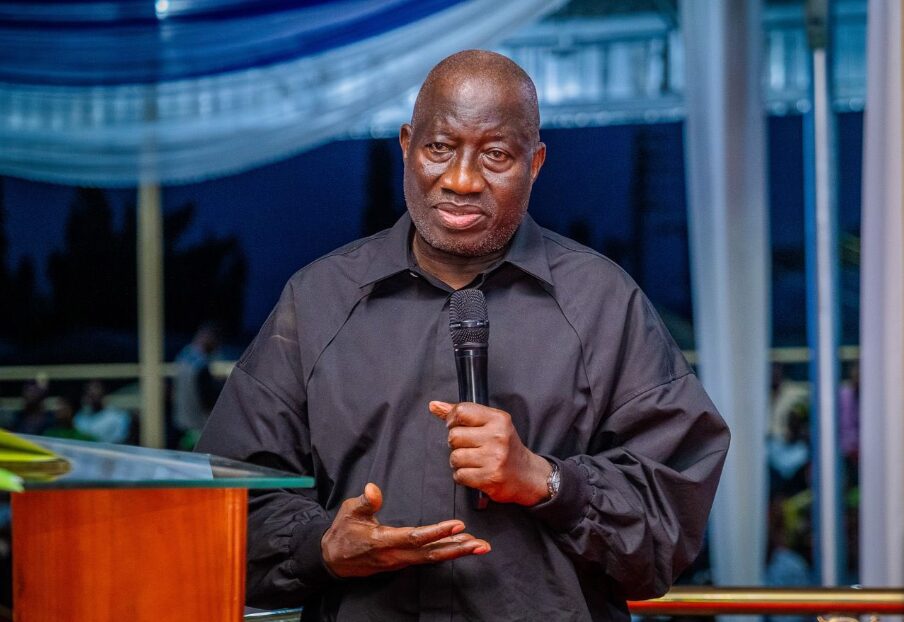
Former President Goodluck Jonathan has blamed the underdevelopment of the Niger Delta on weak political will and the personal ambition of some political office holders.

Jonathan, who spoke in Abuja on Friday at the launch of The Hidden Treasures, a 202-page book written by former Delta State governorship aspirant Chris Iyovwaye, stated that political rivalry and the scramble for power have repeatedly stalled progress in the region.

This was echoed by ex-presidential candidate of the Social Democratic Party, Adewole Adebayo, and former Minister of Information, Prof Jerry Gana, who also highlighted the failure to act on long-standing regional plans as a challenge to the region’s development.

Jonathan, who chaired the event, was represented by his Chief of Staff, Mike Oghiadomhe.

In his address, the former president recalled several abandoned regional economic initiatives that could have boosted the Niger Delta’s growth.

He also traced past attempts to coordinate South-South governors and federal lawmakers on regional development, noting that personal ambition often overshadowed collective interest.

The former president said, “A lot has been said in the past and even now. But when you don’t bring action to it, it will remain a potential. Deep inside here, we can have tonnes of gold, diamonds, and uranium. But it will remain zero until they are mined and brought out.

This book corroborates what we have heard.

“In the past, when I was a deputy governor between 1999 and 2007, we had this same great commission. We used to have meetings of South-South governors. At one point, it was enlarged to include members of the National Assembly, and initiatives were held from state to state.

See also  Ebola alert - FG tightens airport, border screening

“But action could not be taken because of competition for power and control of that commission. At one point, everybody in the Niger Delta wanted to be the vice president to an unknown president.

“That was because Obasanjo was president from the South, and the next president was going to come from the North. But nobody knew who he would be. So, everybody started scrambling to become the vice president to whoever was coming.”

Expressing hope in the new revival of the South-South governors’ commission, he warned that only “practical action” backed by political will can rescue the region’s growth prospects.

“Our advice on this occasion is to send a message to them that there is a need for action. And it has to be in practical terms, not just saying it without showing the right political will. They should move further to create the vehicle that will detail the investment opportunities, save up, and market them across the region.

“The Niger Delta is supposed to be the economic hub of this country, with the potential to build the biggest seaport in Nigeria. From the Niger Delta, you can reach every part of the country, particularly the Middle Belt and the North. There is a need to harness our resources at this point in time for proper and physical development.”

Adebayo, in his remarks, described the Niger Delta as a vast, mismanaged economic paradise. According to him, the region is too richly endowed for its citizens to remain poor.

“If there is no Niger Delta, there is no Nigeria. To some, every treasure is hidden because the person is blind. It is believed that some of the treasures in the region are hidden because we have had blind leadership over time.

“In truth, every part of the Niger Delta is brimming with human, material, liquid, and solid resources. So, if you are from the Niger Delta, it will be an oxymoron to say you are poor. It is impossible to be poor in that paradise.

See also  Dangote exports 1.66bn litres fuel amid US-Iran tensions

“I come from a family that has 100 years of experience in making fortunes out of the Niger Delta. Most of my uncles and aunties were born there and served in great capacities. That is why we are always grateful to the Niger Delta.

“I also personally went to the region and found my own fortune. That’s because I married my wife from the Niger Delta, and my life has turned for the better since then.”

He added that the region’s wealth “is 18 times more than all the productivity of the United States from 1776 to date,” urging a return to responsible and visionary leadership.

“The author and others like him are sent to us like prophets in our time to remind us that a leadership or generation consumed by appropriating surface wealth, farming out the country’s resources to foreign enterprises, and collecting rent to make big men out of themselves is not the shepherd God sent to this land. This generation will have to turn away from that,” he said.

Gana, who as Information Minister in 1999 conceptualized the Niger Delta Development Commission, said the commission had fallen far short of its founding vision.

“During Obasanjo’s administration in 1999, I was mandated to organize a seminar on the Niger Delta at the ECOWAS Secretariat. It was a very well-attended event that was chaired by the former president of Tanzania, Julius Nyerere.

“He came in person, and papers were brilliantly presented on how we need to proceed with developing the Niger Delta. And we proposed the creation of a Niger Delta Development Commission as a platform to provide important infrastructure.”

See also  Peter Obi is already planning to leave ADC  —  Kachikwu

But he lamented that the commission has not justified its mandate.

“I must confess that despite the tremendous hope that the meeting generated, I have not been personally impressed by the results of the commission, especially when I see them building primary schools and other minor projects.

“This vision was to transform the Niger Delta into one of the most beautiful places in Nigeria, with excellent infrastructure.”

He urged current managers of the commission to “arise and do something great for the people of the Niger Delta region.”

The Niger Delta, Nigeria’s main oil-producing region, has faced decades of environmental degradation, unemployment, poverty, and infrastructural neglect despite contributing the bulk of the nation’s revenue. Oil spills, gas flaring, and weak regulatory enforcement have devastated livelihoods, while recurring conflict over resource control has deepened instability.

The commission was established in 2000 to drive large-scale infrastructural transformation and address developmental gaps, but it has been plagued by allegations of mismanagement, abandoned projects, corruption, and political interference.

Multiple presidential audits have cited poor project delivery, weak accountability structures, and diversion of funds—leaving the region’s core problems largely unresolved.

punch.ng

FOLLOW US ON:

FACEBOOK

TWITTER

PINTEREST

TIKTOK

YOUTUBE

LINKEDIN

TUMBLR

INSTAGRAM

Continue Reading
Click to comment

Leave a Reply

Your email address will not be published. Required fields are marked *

News

Points On election campaigns and election manifestos

Published

on

Governance should focus on sustainable economic development, improving people’s living conditions day by day. If in doubt, ask President Donald Trump. The global rising cost of living or declining standard of living led, invariably, to demonstrations in countries like Germany and France, while United States citizens used the Mid-Term elections in November to demonstrate their displeasure with President Trump and the Republican Party, with the loss of a majority in both the Senate and House of Representatives. With 55 seats in the Senate, the Democrats gained eight more seats lost by the Republicans. In the House, Democrats won 256 seats to the Republicans’ 169.

According to available research records, the loss by the Republican Party has been attributed to five main causes, namely soaring cost of living, the unpopular Iran war, a disciplined message from the democrats, unpopularity of President Trump in connection to his policies generally and economic policies in particular, and shifts in the position of Hispanic and black voters as related to Trump’s immigration policy. What matters here is the soaring cost of living, a global phenomenon. The state of an economy, specifically citizens’ economic condition, has a way of helping or destroying candidates participating in elections. The rising cost of living phenomenon is the necklace being worn by every country’s leader today!

When we talk about the macroeconomic goals every country wants to achieve, price stability is central. It seems to be the central point around which achieving other macroeconomic goals revolves. The macro goals or objectives are full employment of resources, economic growth, price stability, balance of payments equilibrium, equitable income distribution and sustainable development. We need stable prices to achieve full employment, yet we need some moderate inflation to achieve economic growth. If the law of supply is to hold, upward adjustment of prices serves to encourage higher supply. That is, the higher the price, the higher the supply.

See also  Ebola alert - FG tightens airport, border screening

And higher supply means growth. Growth, encouraged by higher prices, makes external trade possible, improving the balance of payments and moving it toward equilibrium. Higher economic growth implies higher national income, for which equitable distribution is essential for peace to reign in the country. Sustainable economic growth moves the economy toward rising employment and incomes or the full-employment goal and eventually results in economic development. While moderate price rises necessarily achieve those stated macroeconomic objectives, the kind of rapid inflation being witnessed today creates a disastrous situation, particularly with respect to citizens’ welfare. The fact that this second wave of inflation came from external shocks provides a lesson in policymaking.

We witnessed the first wave of inflation when the subsidy on fuel was removed and petroleum prices were deregulated, in addition to the massive devaluation of the naira by about 300 per cent. That was a domestic shock and did require some reforms. External shocks require policy revolution to prevent, in the future, the magnitude of the effects that we are having presently. That is why the current political campaign should centre around economic revolution rather than economic reform.

Many African leaders are afraid of using revolution but prefer reforms, the language of the World Bank and IMF. Whereas the economic policies are necessary to take Africa out of the economic doldrum, it finds itself in a revolutionary adjustment. There is a need to overhaul the economic system of production whereby we produce to satisfy the industrial needs of advanced economies. We remain producers of raw materials in human and non-human resources. Our physical products feed industries in the Western world, and human resources are attracted by improved working environments and higher wages and salaries.

See also  End South-East killings, Amnesty urges FG

A revolution does not mean chaotic changes like the French Revolution, but drastic, radical, or fundamental changes like the First Industrial Revolution in 18th- and 19th-century Great Britain. The revolution transformed global production, labour, and trade through mechanised factories and steam power. What we require in Nigeria and the whole of Africa is revolutionary production in agriculture, factories or industries generally, whereby we export finished products like the rest of the world. The present campaign for election in Nigeria and the manifestos of principal actors should reflect a revolutionary departure from the present situation.

Such revolutionary changes will minimise the depth of external shocks that we are witnessing now. Politicians should tell us how many megawatts of electricity will be generated yearly and how they will do it. President Tinubu was promising a growth rate of six per cent per year for the next four years. That is not ambitious. He should be proposing a minimum growth of 10 per cent. China did take over 900 million Chinese out of poverty in three decades by growing at 10 per cent per year for more than a decade. According to the World Bank Poverty and Equity Report, an estimated 496 million Indians moved out of poverty between 2011 and 2023, driven by increased employment opportunities. This was linked to sustained growth of about 10 per cent over the decade. Specific government schemes were credited with the massive decline.

Every presidential candidate should be specific about what to do with agriculture, education, industry, science and technology and medicine. Manifestos must be clear, just like the campaign. Every specific promise must be backed by data and a timeline. We cannot continue to run Nigeria on handouts to consumers; we must run it on jobs and enhanced productivity. A conducive production environment must be promised and fulfilled. This will include reliable electricity or power infrastructure. Without electricity, neither China nor India would have achieved the feats reported. China has long achieved 100 per cent electricity, while India is almost there, with an achievement of over 90 per cent in the last five years. The Nigerian government, like other African governments, must declare revolutionary development rather than unending reforms and transformation.

See also  Is Trump correct on Nigeria?

Source: punchng.com

FOLLOW US ON:
FACEBOOK

WHATSAPP CHANNEL

TWITTER

PINTEREST

TIKTOK

YOUTUBE

LINKEDIN

INSTAGRAM

Continue Reading

News

SABC reveal that Fani-Kayode refuses interview invitation after livestream ‘exclusion’, read details

Published

on

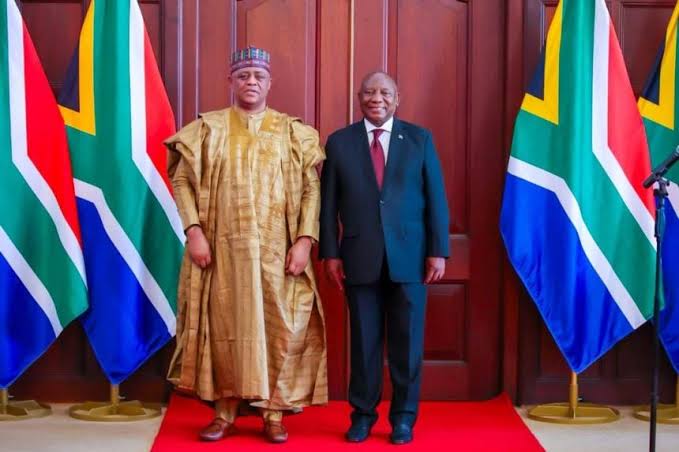
South Africa’s broadcaster, the South African Broadcasting Corporation, has said Nigeria’s High Commissioner to the country, Femi Fani-Kayode, declined an interview invitation following his protest over the exclusion of his speech from a livestream of a diplomatic ceremony hosted by President Cyril Ramaphosa.

The SABC, in a statement issued on Sunday, said it regretted the envoy’s decision but remained open to engaging with him and the Nigerian High Commission.

The response followed Fani-Kayode’s complaint that his introduction and speech were omitted from the broadcaster’s livestream of the presentation of letters of credence ceremony held at the Sefako Makgatho Presidential Guest House in Pretoria on Friday.

“We regret that the High Commissioner declined an interview with SABC News, reportedly because of his dissatisfaction with the livestream of the ceremony. We respect his decision and remain open to engaging with him and the Nigerian High Commission,” the statement said.

Notably, the SABC did not address the specific allegation that Fani-Kayode’s presentation was excluded from the livestream of the ceremony.

The broadcaster, however, rejected the description of it as a state broadcaster, insisting that it was a public service media organisation committed to independent, impartial and credible journalism.

“Two points need clarifying. First, the SABC is a public service media, not a state broadcaster. Our mandate is to serve the public interest through independent, impartial and credible journalism. The Presidency’s livestream arrangements and SABC News’ editorial coverage are separate matters.

“Secondly, SABC News did cover the ceremony. It was carried on the SABC News LIVE channel on SABC+, and the High Commissioner’s arrival was shown during a live crossing on the SABC News Channel (DStv Channel 404). We also published a clip on our official X account of the High Commissioner speaking to President Cyril Ramaphosa,” it said.

See also  Ebola alert - FG tightens airport, border screening

“The SABC remains committed to upholding the principles of fairness, impartiality and editorial independence in its coverage, as well as value our longstanding relationship with Nigeria,” the statement added.

PUNCH Online reports that Fani-Kayode had earlier accused the South African Presidency of deliberately excluding Nigeria’s delegation from the livestream of the ceremony, which involved 15 ambassadors presenting their letters of credence to Ramaphosa.

The envoy said the introductions and speeches of 14 other ambassadors were broadcast, while Nigeria’s segment was omitted, with the livestream resuming after he had concluded his address.

He also disclosed that he declined an interview offered by SABC News at the venue, saying he had been displeased with the treatment of the Nigerian delegation.

However, the South African Presidency later released the full video of the ceremony, including Fani-Kayode’s speech, on its YouTube channel.

The controversy subsequently sparked a public exchange between the Nigerian High Commission and Vincent Magwenya, spokesperson for Ramaphosa.

Magwenya disputed Fani-Kayode’s account of the President’s intervention, saying Ramaphosa had not interfered in the broadcaster’s operations or editorial decisions but had directed the Nigerian envoy to the appropriate SABC official to address his complaint.

The Nigerian High Commission, however, defended Fani-Kayode, insisting that the envoy and Nigeria had been treated with contempt and that Ramaphosa had intervened.

The disagreement comes amid renewed concerns over xenophobic attacks against Nigerians and other African migrants in South Africa.

Nigeria has repeatedly raised concerns over the safety of its citizens in the country, following reports of killings, harassment and attacks on foreign nationals.

See also  Tinubu sacks Chief of Defence Staff, Musa, others

In September, Nigeria’s National Assembly suspended official visits to South Africa over anti-migrant violence, while Nigerian authorities reported that 98 citizens had died in mob or hate-related incidents in the country since 2022.

Source: punchng.com

FOLLOW US ON:

FACEBOOK

WHATSAPP CHANNEL

TWITTER

PINTEREST

TIKTOK

YOUTUBE

LINKEDIN

INSTAGRAM

Continue Reading

News

State police update: Senate sets November 17 deadline for four states

Published

on

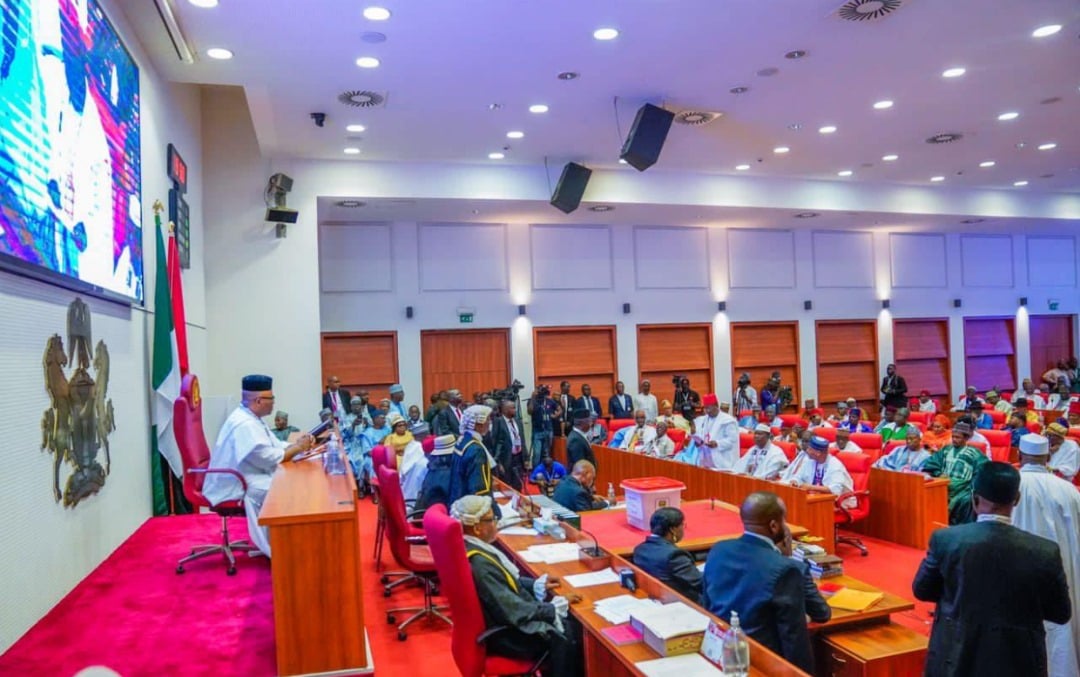
The Senate Leader, Senator Opeyemi Bamidele, on Sunday said four remaining state Houses of Assembly had until Tuesday, November 17, to submit their reports on the proposed creation of state police, ahead of the National Assembly’s resumption.

Bamidele said 32 state assemblies had approved the State Police (Constitution Alteration) Bill, 2026, adding that the National Assembly was expecting reports from the remaining four assemblies before proceeding with the next stage of the constitutional amendment process.

He disclosed this in a statement issued in Abuja after receiving The Sun Senator of the Year Award for his contributions to parliamentary leadership and lawmaking.

The Senate Leader, who was presented with the award by the founder of The Sun Publishing Limited and Chairman of the South-East Development Commission, Senator Orji Uzor Kalu, said the proposed establishment of state police had moved beyond years of political debate and was gradually becoming a reality.

According to him, the National Assembly had crossed the constitutional threshold required for the proposed amendment under Section 9(2) of the 1999 Constitution.

He said, “As shown in the records of the National Assembly, no fewer than 32 State Houses of Assembly have approved the State Police (Constitution Alteration) Bill, 2026. With this, we have successfully crossed the constitutional threshold under Section 9(2) of the Constitution of the Federal Republic of Nigeria, 1999 (as amended).

“We are now expecting four State Houses of Assembly to turn in their reports on or before the National Assembly reconvenes on November 17, 2026. This suggests that next week is going to be decisive and defining in the National Assembly. Whether the remaining states turn in their reports or not, we must move forward and fulfil the aspiration of our people.

See also  Peter Obi slams Tinubu over rising debt, says N200tn borrowed without accountability

“We are now under obligation to transmit the State Police (Constitution Alteration) Bill, 2026 to the President and Commander-in-Chief of the Armed Forces, His Excellency Bola Tinubu for assent. This is a responsibility we must consciously discharge on behalf of our constituents and in the interest of national peace, progress, and stability,” he explained further.

The proposed amendment seeks to establish a Federal Police Service and State Police Services, in a major restructuring of Nigeria’s centralised policing system.

The push for state police has gained momentum amid persistent security challenges, including banditry, kidnapping, terrorism and communal violence, which have continued to overwhelm security agencies in several parts of the country.

Successive attempts to decentralise policing have, however, faced resistance over concerns about possible political interference, abuse of power and the deployment of state security apparatus against political opponents.

Addressing such concerns, Bamidele said the proposed arrangement was not intended to create ethnic or state armies but to establish community-based policing structures operating within constitutional safeguards.

He said, “I believe in proactive lawmaking. I believe Nigeria must move from reactive governance to proactive governance. I believe our laws must be evidence-based, efficiently implemented, effectively monitored, periodically reviewed, and ultimately measured by their impact on citizens.

“I believe that separation of powers is not about hostility, but synergy; not grandstanding, but collaboration; not dissension, but interdependence among the arms of government. I have served most dutifully in the Senate with independence, but at the same time with constructive engagement with other arms because our collective responsibility is national development, peace, and security.”

See also  ADC primary Atiku’s set-up, Wike explains why Amaechi had no chance

Bamidele said the National Assembly’s legislative priorities were guided by the need to enact laws that directly improved the welfare of Nigerians rather than merely measuring its performance by the number of bills passed.

He cited the Student Loan (Access to Higher Education) Act, 2024, saying the Nigerian Education Loan Fund had disbursed more than N204bn to applicants across 89 colleges, 108 polytechnics and 126 universities.

He added that the National Assembly also passed the National Social Investment Programmes Act, 2023, to provide statutory backing and accountability for social protection programmes.

Other legislation he highlighted included the Minimum Wage (Amendment) Act, 2024; Tax Reform Acts, 2025; Investments and Securities Act, 2025; Electoral Act, 2026; Nigerian Insurance Industry Reform Act, 2024; and Regional Development Commissions Acts.

The Senate Leader also used the occasion to advocate responsible use of social media, warning against character assassination, misinformation and attacks on public institutions.

He said, “We have seen characters assassinated. We have seen public institutions blackmailed. We have watched people deliberately distort facts. We have seen people unjustifiably peddling lies. We cannot fold our hands and allow this illegality to continue.

“I have been a victim of these outlawed activities at different times. I know many Nigerians have been victims as well. But the urgent questions are: Should we leave unregulated the space that will define our lives unregulated in the decades to come? Or do we prefer a space where characters are assassinated daily, lies peddled, and public institutions unjustifiably discredited?

“These are questions that key media actors – Newspaper Proprietors’ Association of Nigeria, Broadcasting Organisations of Nigeria, Nigerian Guild of Editors, and Nigeria Union of Journalists – must honestly answer in this age of information technology. Otherwise, we must all brace up for the consequences of our inability to act at the time that matters most.”

See also  No going back on reforms, Tinubu tells World Bank team

He, however, reaffirmed his commitment to press freedom, an open parliament and sustained engagement with journalists, urging media organisations to promote responsible information dissemination.

Bamidele dedicated the award to President Bola Tinubu, his fellow senators, his constituents and God, describing it as recognition of collective responsibility rather than a personal achievement.

He was accompanied to receive the award by several serving and former political office holders, including former Ogun State Governor, Chief Olusegun Osoba; former Governor Gbenga Daniel; and Senators Adetokunbo Abiru, Patrick Ndubueze and Francis Onyewuchi.

Source: punchng.com

FOLLOW US ON:
FACEBOOK

WHATSAPP CHANNEL

TWITTER

PINTEREST

TIKTOK

YOUTUBE

LINKEDIN

INSTAGRAM

Continue Reading

Trending