Despite recurring attacks on schools across the country, 30 states have yet to implement the Federal Government’s Safe Schools Initiative.
The Safe Schools Initiative was launched in May 2014 after the Chibok abduction, with an initial $10m pledge and later a multi-donor trust fund coordinated with the United Nations to protect education from attacks.
Since then, Nigeria has signed the Safe Schools Declaration (2015), ratified it (2019) and hosted the 4th Global SSD Conference in Abuja, while also adopting a National Policy on Safety, Security and Violence-Free Schools in 2021.
The programme is backed by a N144.8bn financing plan (2023–2026) that relies on federal, state and donor contributions, but reports show that only a fraction of the funds has been released, and state co-funding remains inconsistent.
The failure of the authorities to implement the initiative has further exposed schools to attacks, discouraging many children from enrolling and increasing the number of out-of-school children, particularly in the North.
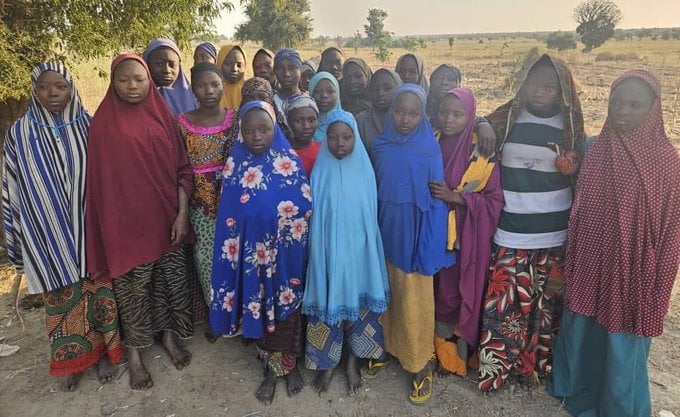
Early on November 17, 2025, armed men attacked the Government Girls Comprehensive Secondary School in Maga, Kebbi State, abducting 24 schoolgirls. The school’s vice-principal was killed during the attack. The students were freed on Tuesday.
Days later, on November 21, gunmen invaded St. Mary’s Catholic School in the Papiri community, Agwara Local Government Area of Niger State, abducting hundreds of pupils and staff.
Church and local officials later confirmed that 303 students and 12 teachers were taken in one of the worst mass kidnappings in recent memory.
The attack occurred despite prior intelligence warnings and government directives. Authorities had ordered the closure of boarding schools in the area because of security threats, but the school reportedly reopened.
Several northern state governments have also shut down schools as kidnappings persist.
Officials familiar with the initiative told our correspondent that several states have failed to fund the Safe Schools Initiative or equip offices for its take-off.
Speaking on condition of anonymity because he was not authorised to release confidential data on the initiative, an insider disclosed that the states include Abia, Adamawa, Akwa Ibom, Anambra, Bauchi, Bayelsa, Borno, Cross River, Delta, Ebonyi, Edo, Ekiti, Gombe, Imo, Kaduna, Kano, Kebbi, Kogi, Kwara, Lagos, Niger, Ogun, Ondo, Osun, Oyo, Plateau, Sokoto, Taraba, Yobe and Zamfara.
Findings also revealed that while the Federal Capital Territory, Benue, Nasarawa, Katsina, Rivers and Enugu have donated coordination centres for the programme, the facilities remain unfurnished.
Electronic gadgets and other essential equipment required to establish control and command centres for monitoring schools under their watch have not been provided, limiting effective surveillance and oversight.
Our correspondent also gathered that Jigawa State has donated and equipped a coordination centre, but it has yet to be activated.
The PUNCH reported last week that 11,550 schools have been registered on the National Safe Schools Response and Coordination Centre’s central monitoring platform.
The Commander of the centre, Assistant Commandant General Emmanuel Ocheja, confirmed the development and underscored the need for sustained funding to ensure the project’s success.
Ocheja said, “Ongoing technological upgrades, including surveillance drones and advanced command systems, are progressing but require additional financial support.”
He also emphasised the importance of establishing “a more sophisticated Command and Control Centre and additional regional monitoring hubs.”
The commander urged state governments to play a more active role in safeguarding schools, stressing the need for “stronger early-warning systems capable of detecting potential threats before they reach school environments.”
Last week, the Federal Government appealed to state governors to adopt and domesticate the Safe School Transition Plan.
The National Coordinator of Financing Safe Schools in Nigeria, Hajia Halima Iliya, reaffirmed the government’s commitment to the initiative, noting that the administration had shown “the political will to implement policies aimed at securing schools.” She also announced the approval of the 2026–2030 Transition Plan for Safer Schools.
NAPTAN, NANS, CSOs lament attacks
The National Parents Teachers Association of Nigeria, the National Association of Nigerian Students and Civil Society Organisations decried the non-implementation of the Safe Schools Initiative in 30 states amid widespread kidnappings of students.
Speaking with our correspondent, the National President of NAPTAN, Danjuma Haruna, who lamented the abductions, called on states to key into the initiative without delay.
“We saw what happened in the past weeks and we are not happy about it. We are, however, relieved to hear news of the release of the abducted students from the school in Kebbi, and we are assured that sooner or later the ones abducted in Niger State will be released.
“It is sad that we have that number of states that have not keyed into the Safe School Initiative. We are using this opportunity to call on state governments to please key into this opportunity to ensure that our schools remain safe.”
The Assistant General Secretary of NANS, Olatunji Adejuwon, said, “The rising wave of school abductions across the country has once again exposed the painful reality that the Safe School Initiative, one of Nigeria’s most crucial security frameworks for the protection of students, has been abandoned.
“This neglect has created dangerous gaps that continue to put the lives of our children, teachers and educational institutions at risk.
“The Safe School Initiative was developed to provide coordinated security strategies, early-warning systems, community-based surveillance and rapid-response mechanisms for school environments. Its non-implementation raises a serious concern: Why was a policy designed to safeguard the nation’s future allowed to fade away at a time when insecurity is escalating?
“Now more than ever, the reactivation and full enforcement of the Safe School Initiative is not just important but urgent.”
He noted that Nigeria needs strong, transparent and sustainable policies that prioritise student safety above all else, stressing the need for leaders to rise above bias, excuses and corruption.
“Protecting our children is not political; it is a moral responsibility. Students are the leaders of tomorrow, and their safety should never be compromised or negotiated.
“Reinstating the Safe School Initiative will not only restore confidence in our educational system but will reaffirm the government’s commitment to securing the future of this nation.”
The Programme Director of Reform Education Nigeria, Ayodamola Oluwatoyin, frowned on the failure of states to key into the programme almost 10 years after its conception.
“It is highly unfortunate that more than 10 years after the conception of the Safe School Initiative, 30 states are yet to key into the policy. Remember that we have 36 states in the country; this means that only six states have keyed into the policy. This is not good enough.
“These days we are seeing a resurgence in school abductions. It is time for state governors to take urgent action. It is time for state governors to awake and take responsibility for school safety.”
National Moderator of the Civil Society Action Coalition on Education For All, Peculiar Caleb, urged the government to deploy trained personnel to vulnerable schools and strengthen coordination among the military, police, NSCDC and local actors to safeguard children.
She expressed concern over Nigeria’s rising insecurity, especially the escalating attacks on schools, despite the country’s commitments under the SSI and SSD.
“Nigeria is becoming increasingly unsafe for children to learn. Despite signing the Safe Schools Initiative (2014) and endorsing the Safe Schools Declaration (2015), with accompanying operational guidelines, training manuals and policies, our schools remain vulnerable to violent attacks.
“From the abduction of the Chibok girls (2014) to Dapchi (2018), Kagara (2021), Jangebe (2021), Federal Government College Yauri (2021), Kuriga (2024), and now the 2025 mass abductions in Niger and Kebbi States, Nigeria continues to witness shocking violations of the right to education,” she said.
She also urged the government to reopen and secure the 589 closed schools across northern Nigeria and all 41 federal unity schools.
“We call on the government and stakeholders to act now. Nigeria cannot build a secure, prosperous and inclusive future when millions of children remain out of school and hundreds remain in captivity, when schools are unsafe and when funding for education remains insufficient.”
Kogi gov confirms bandits’ relocation
Governor Usman Ododo of Kogi State has raised the alarm that bandits’ commanders have relocated to Kogi State in a move to intensify attacks, but the government and security agencies will take the fight to their hideouts.
The governor said this during an interactive session with newsmen shortly after an emergency stakeholders’ meeting with security agencies and traditional rulers at the Government House, Lokoja, on Thursday.
However, he said the situation was not peculiar to Kogi, as other parts of the country were also passing through a trying period.
He noted that certain measures had been taken in the interest of residents, regardless of religious or political affiliation.
“Before now, you will hear of shooting in schools and residents across the world; we have to put heads together to save our people. We have come to brainstorm and see a way out and provide our people with the needed security.
“The major commanders of the bandits have relocated to Kogi State in the last three days, but we will not wait for them to fight us; we will take the fight to them.
“We are not going to bow to the criminals, we are not going to negotiate with them, we are not going to pay ransom. We are going to sensitise our people to be security-conscious of their activities.”
The governor added that the State Security Council had resolved that, from now on, all public activities—whether religious or social—should end by 4pm until further notice. He warned that any event centre that violates the directive would be demolished.
Deputy Commissioner of Police, Ayo Edun, called for calm, saying most of the circulating reports fuelling panic were social media rumours.
He urged residents to verify information before sharing it and to report suspicious activity through circulated security hotlines.
The Ohinoyi of Ebiraland, His Royal Highness, Tijani Anaje, speaking on behalf of traditional rulers, pledged full cooperation with the government and security agencies.
He expressed concern over wrong and misleading information spreading online, noting that some videos and messages circulating on social media were false.
He called for strategic collaboration among all community leaders to ensure peace across the state.
Meanwhile, the State Government has assured the public—especially students, parents and residents of Lokoja—that there is no bandit attack or kidnapping threat at the Kogi State Polytechnic, Lokoja, or at any other school within and around the Lokoja metropolis.
Rumours of a bandit attack in Lokoja spread widely around 11.30am on Thursday, leading to disruptions of socio-economic activities for hours, particularly in the Zango, Crusher and Felele areas of the capital city.
But in a statement, the Commissioner for Information and Communications, Kingsley Fanwo, said, “The satanic panic being circulated by mischief makers is baseless and should be completely dismissed. We urge our people to go about their lawful businesses without fear.
“The government is working round-the-clock with all security agencies to guarantee the safety and security of every Kogite, wherever they live or stay.”
FCT launches manhunt for abducted teens
In a related development, the FCT Police Command has launched a manhunt for a 16-year-old boy and six young girls abducted from their homes in Gidan Bajimi, a village in Kawu ward of the Bwari Area Council of the Federal Capital Territory.
Residents who spoke to our correspondent said police officers combed the nearby bushes and forests in search of the kidnapped victims.
“The police were here in the morning, and they went around the bushes and the forests, trying to see if they can still trace where the kidnappers went. They did not find anything, but they promised to keep looking,” a community member, who identified himself simply as Salisu, said.
On Wednesday, the FCT Police Commissioner, Miller Dantawaye, announced the re-launch of Operation Sweep—a joint operation of security agencies in the FCT—following an expanded Security Council meeting presided over by the FCT Minister, Nyesom Wike.
Briefing journalists, Dantawaye said the agencies would deploy personnel to schools and religious centres to ensure residents’ safety.
However, reports of the kidnap emerged on Thursday morning, with a member of the community, Suleiman Shuaibu, confirming the latest incident to Daily Trust.
“It was around 9:53pm when a call came from Gidan-Bijimi community that some bandits invaded the village and abducted six young girls. Unfortunately, my cousin happened to be among the victims,” he said.
He added that vigilantes put up a fight against the bandits but were forced to retreat due to the superior firepower of the attackers. The abducted girls were aged between 17 and 23 years.
Shuaibu further said that some residents fled their homes after the incident, noting that the abductors had yet to contact the community.
As of the time of filing this report, the FCT Police Command had not issued an official statement. Likewise, the Police Public Relations Officer for the FCT, Josephine Adeh, did not respond to calls and messages.
10 feared kidnapped in Niger
Gunmen have reportedly abducted 10 people from Angwan-Kawo and Kuchipa villages in Shiroro Local Government Area of Niger State.
The Niger State Police Command Public Relations Officer, Wasiu Abiodun, told Channels TV on Thursday that the incident occurred on Wednesday evening.
“On November 26, 2025, at about 8pm, a report was received indicating that suspected armed men abducted about ten persons from Angwan-Kawo and Kuchipa villages of Shiroro Local Government Area. Effort is being made to rescue the victims,” Abiodun said.
Earlier that same day, another attack was reported in Kakuru community, also in Erena Ward, where a blind man was reportedly brutalised and had his right hand severed by bandits after they seized a mobile phone from him.
The victim is currently receiving first aid at a patent medicine shop in the Kuduru community.
Residents of the Palaita community, Erena Ward, also reported that bandits attacked a rice farm in their area, allegedly abducting up to 24 people, including pregnant women. The PUNCH could not immediately confirm the incident.