The United States plans to spend N587 billion ($413.046m) on counter-insurgency operations in Nigeria and other African countries in 2026 amid worsening security conditions across West Africa.
The allocation is contained in the US National Defence Authorisation Act for Fiscal Year 2026, obtained by The PUNCH on Thursday. The funds were approved under Title XLIII – Operation and Maintenance.
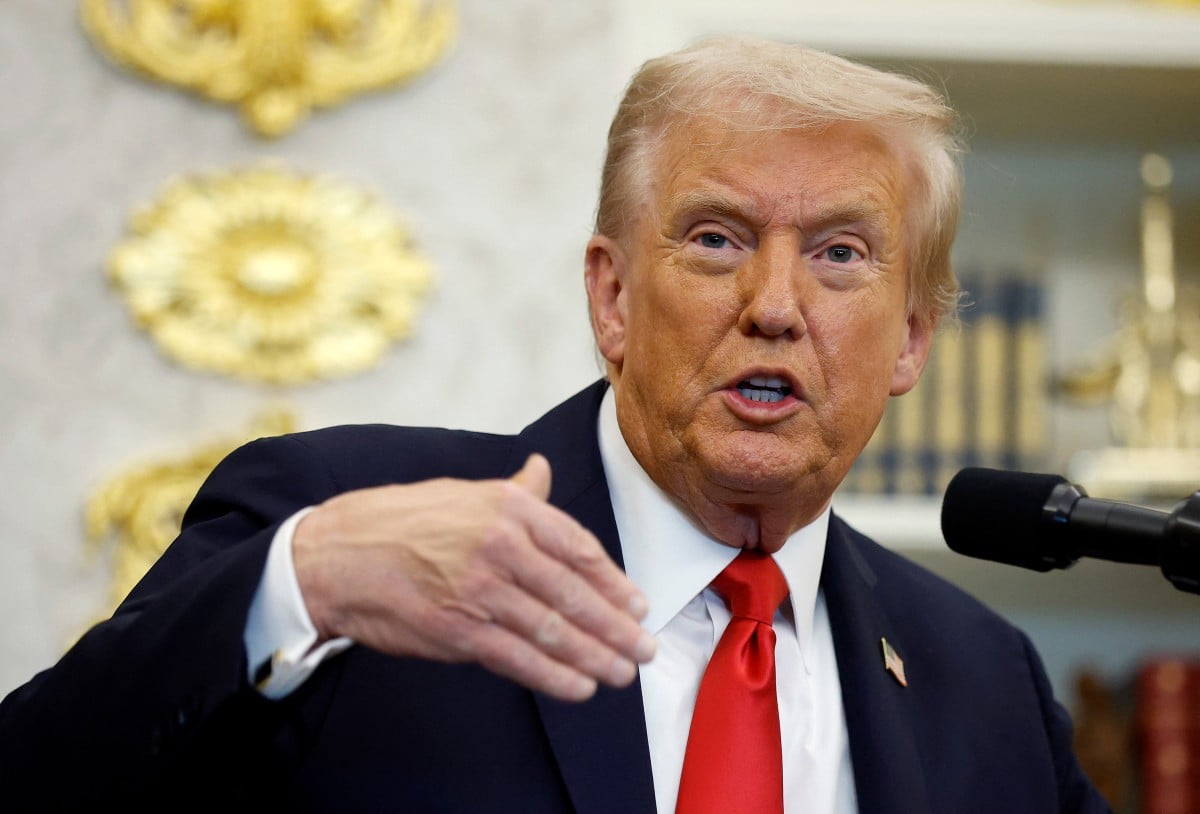
The security budget for the US Africa Command comes against the backdrop of the Christmas Day attacks on terrorists’ hideouts in Sokoto State by the Donald Trump administration.
On Tuesday, AFRICOM delivered a consignment of military equipment to Nigerian security agencies as part of ongoing efforts to strengthen security operations across the country.
The NDAA 2026 is a comprehensive bill that outlines defense policy priorities and authorises $901 billion in annual military spending, with a 4 per cent pay raise for troops. AFRICOM requested $413.046m and the same amount was authorised, but the Act did not provide a breakdown of how the funds would be spent.
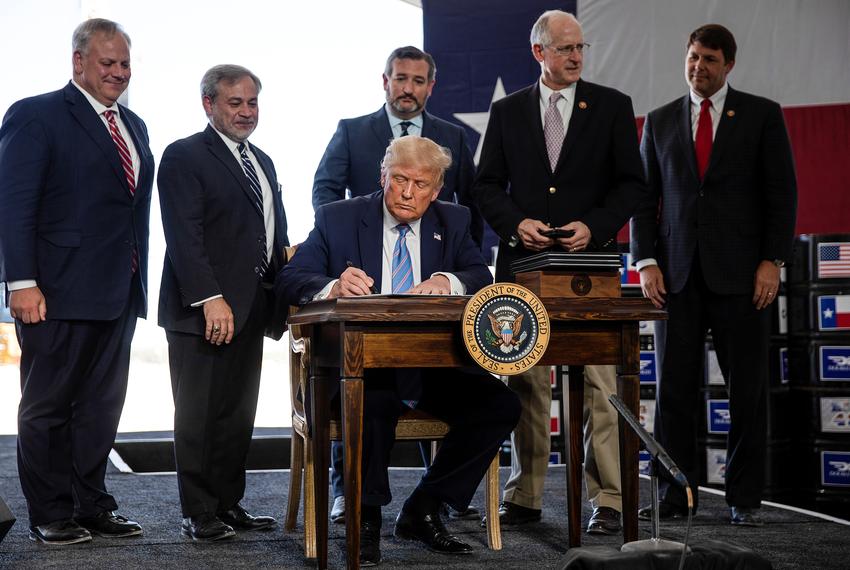
The Act was signed into law by President Trump on December 18, 2025, marking the 65th consecutive annual authorisation.
The $413m budget for security operations comes as West Africa continues to grapple with insurgency, banditry and violent extremism.
In Nigeria, insurgency in the North-East and banditry in the North-West persist, even as piracy and other maritime crimes remain concerns in the Gulf of Guinea.
Mali is under persistent attacks by jihadist groups, while northern Benin has witnessed a spillover of violence from the Sahel.
Other commands and activities listed under the operation and maintenance category of the NDAA include the United States European Command with a $385.744m budget, United States Southern Command with $224.971m, US Forces Korea with a $77.049m allocation, Cyberspace Activities (Cyberspace Operations), $331.467m and Cyberspace Activities (Cybersecurity), $550.089m.
The subtotal for operating forces under operation and maintenance in the Act stands at $39.999b.
The Act also provides for the establishment of an Assistant Secretary for African Affairs within the US Department of State.
The office, according to the Act, will oversee matters relating to sub-Saharan Africa and coordinate the implementation of US foreign policy in the region.
In addition, the Appropriation Act establishes a Bureau of African Affairs, to be headed by the Assistant Secretary, to manage US foreign policy implementation and assistance to sub-Saharan Africa.
“(5) BUREAU OF AFRICAN AFFAIRS. (A) ESTABLISHMENT: There shall be in the Department of State a Bureau of African Affairs, which shall perform such functions related to implementation of United States foreign policy and assistance to sub-Saharan Africa as the Under Secretary for Political Affairs may prescribe.”
‘’(B) HEAD: The Assistant Secretary for African Affairs shall be the head of the Bureau of African Affairs.
‘’(9) ASSISTANT SECRETARY FOR AFRICAN AFFAIRS: (A) ESTABLISHMENT. There shall be in the Department of State an Assistant Secretary for African Affairs who shall be responsible to the Secretary of State, acting through the Under Secretary for Political Affairs, for “(i) matters relating to sub-Saharan Africa; and “(ii) such other related duties as the Secretary may from time to time designate.
“(B) Responsibilities: In addition to the responsibilities described under subparagraph (A), the Assistant Secretary for African Affairs shall maintain continuous observation and coordination of all matters pertaining to implementation of United States foreign policy in sub-Saharan Africa,” the Act partly read.
The Act further mandates assessments of Russia’s military strategy, objectives and force posture affecting African countries.
This includes a review of Russia’s overseas military basing, logistics capabilities and infrastructure used to project power on the continent, as well as the implications for US contingency plans under AFRICOM, US Central Command and US European Command.
“An assessment of the military strategy objectives and force posture of Russia that affect countries in Africa; A description of Russia’s overseas military basing, military logistics capabilities, and infrastructure to project power.
“An analysis of the impact of such an action on the ability of the Armed Forces to execute contingency plans of the Department of Defence, including those in the area of responsibility of United States European Command or in support of operations and crisis response in the areas of responsibility of United States Central Command and United States Africa Command.’’
“The reduction of the risk of executing contingency plans of the Department of Defence, including contingency plans conducted by United States Central Command and United States Africa Command,” the Act stated.
Commenting on the development, a security analyst and Chief Executive Officer of Beacon Consulting, Kabir Adamu, said the funding and policy moves reflected growing geopolitical rivalry in Africa, driven largely by economic interests.
Adamu said Africa, particularly West Africa and the Sahel, had become a strategic arena due to insecurity, weak state control and the presence of critical resources.
According to him, Russia and China have expanded their influence across Africa through military cooperation and economic engagement, forcing the United States to reassess its posture on the continent.
‘’First, if you look at the Monroe Doctrine, the US area of influence is its immediate neighbourhood, particularly South America and related regions.
“That is why it moved against Venezuela and also issued threats to Cuba. The other aspect relevant to this discussion is the geopolitical rivalry between the US and Russia.
“In almost all locations where the US has economic interests, Russia and China are already ahead of it. The same applies to Africa. What the US is now trying to do is to catch up.’’
“Russia and China have, in practical terms, taken over much of Africa through their economic interests. In China’s case, it uses loans and other forms of financial assistance to keep Africa within its sphere of influence. The challenge for the US is how to come in and catch up, and it is unlikely that Russia and China will remain passive while the US attempts to do so.’’
The counter-intelligence and security risk consultant predicted intense rivalry among the US, China and Russia.
“We are, therefore, going to see an intense period of geopolitical rivalry among these three countries. We do not yet know where the United States intends to establish this bureau. If I were to hazard a guess, Nigeria is a likely option, given the renewed US interest in the country.
“Nigeria offers strategic advantages for the United States. Beyond its resources, Nigeria allows the US to monitor neighbouring countries, particularly Sahelian states such as Niger, especially because of uranium deposits there. Not long ago, the US had to leave Niger.
“If the US can establish a presence in Nigeria, it would still be able to keep an eye on developments in the Sahel. If not Nigeria, other possible locations are in East Africa. Congo is an example, especially given recent efforts to negotiate a peace agreement there.’’
He added, “Overall, until we know the exact location where the bureau will be established, it will be difficult to draw firm conclusions about the nature of the geopolitical rivalry that will emerge. However, wherever the US chooses to engage in Africa, China and Russia are already ahead in terms of economic interests.
“As stated in the budget, the US will also attempt to assess Russia’s current involvement. Part of that assessment will likely be to develop its own strategy to gain advantages.
“This can force countries to capitulate, but it may also trigger local pushback, and these are issues we should be watching closely. My view is that the primary interest is economic, not military.
“The rivalry is driven by economic interests, particularly access to rare earth minerals such as lithium. There may be other narratives, including claims about stopping Christian genocide in Nigeria, but the Nigerian government has been clear that such a narrative is false and that there is no Christian genocide.
“If you analyse what happened on December 25, the attacks occurred in locations without significant Christian populations. If the aim were to protect Christians, one would expect action in places like Plateau State or Benue State. In fact, officials in Benue have said that after the Sokoto attack, bandits began moving into the state as a result.
“So, the notion of intervention to end Christian genocide is flawed. The interest is economic. One key issue journalists and the National Assembly must raise when it resumes is the nature of any agreement entered into with the American government. Nigerians deserve to know the contents of such agreements.
“We need clarity. If the agreement is economic, it should be made public. If it is military, it should also be made public. “
Adamu, however, stressed that the rivalry was largely economic, noting that access to critical minerals and long-term influence, rather than direct military confrontation, remained the primary drivers of engagement by global powers in Africa.
He said, “Finally, Nigeria’s foreign policy is based on strategic autonomy. This means Nigeria keeps itself open to relations with any country that offers strategic advantages. Given the current global order and recent US policies, we should expect a rise in what I would describe as multilateral diplomacy.
“This will involve different approaches by the three global powers across different continents. The US will act as it does in its backyard and in Europe, but Russia and China will not remain silent. We are likely to see a complex geopolitical rivalry among these powers, including in Africa.”
Security analyst Chidi Omeje pointed out that the evolving relationship between Nigeria and the US should be viewed strictly through the lens of partnership and collaboration, rather than dominance or repression.
Omeje said the current engagements with the US, including through AFRICOM, reflect mutual respect and dignity, noting that this aligns with Nigeria’s long-standing demand to be treated as an equal partner in addressing security challenges.
According to him, many of Nigeria’s security threats are linked to global terrorist networks, stressing that groups operating in the Sahel and Lake Chad regions are not purely local, but part of wider international movements.
He argued that such transnational threats require international cooperation, making partnerships with global powers necessary.
“The key issue here now is that we are now on the level of partnership, not on invasion or any kind of dominance, so we are talking about partnership. The other day, AFRICOM sent some materials to the Nigerian armed forces. This is about partnership and no longer the issue of threats or repression or display of supremacy and the like, so whatever we are doing with them that is based on respect and dignity and partnership is always welcome.
“The issues we are dealing with are actually problems associated with the global terrorist network, and if it is a global terrorist network, partnership and collaboration are welcome.”
Omeje expressed reservations about Russia’s growing security engagements in Africa, saying Moscow lacks the reach and capacity to effectively address Nigeria’s security challenges, given its ongoing war in Ukraine.
Army-US cooperation
In a related development, the Chief of Army Staff, Lt. Gen. Waidi Shaibu, has called for deeper strategic cooperation between the Nigerian Army and the United States Army to effectively address Nigeria’s evolving and complex security challenges.
The COAS stated this on Wednesday when the US Defense Attaché to Nigeria, Lt. Col. Semira Moore, paid him a courtesy visit at the Army Headquarters in Abuja.
Shaibu commended the United States Government for its enduring partnership and sustained support to the Nigerian Army, noting that the NA has benefitted significantly from American military professionalism and institutional expertise.
The COAS stressed that the Nigerian Army remains eager to leverage the extensive experience of the US Army in both kinetic and non-kinetic operations.
He, therefore, advocated the expansion of cooperation in areas aimed at enhancing operational effectiveness, institutional capacity, doctrine development, and strategic capability.
According to him, international military partnerships remain critical in complementing Nigeria’s internal security architecture and advancing sustainable peace and stability across the country.
Moore expressed appreciation for the cordial and mutually beneficial relationship between the two armies. She reaffirmed her commitment to strengthening existing ties while exploring new areas of collaboration, particularly in capacity building, intelligence sharing, and joint operational planning.
The Defense Attaché also disclosed that the United States remains committed to supporting the Nigerian Army in key non-kinetic areas, including humanitarian assistance and troop welfare initiatives, which she noted are essential for sustaining morale and operational effectiveness in the field.
punch.ng
FOLLOW US ON: