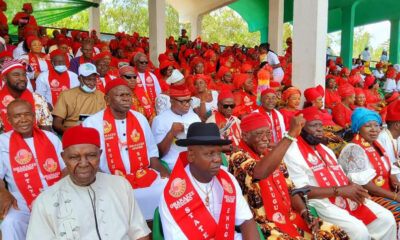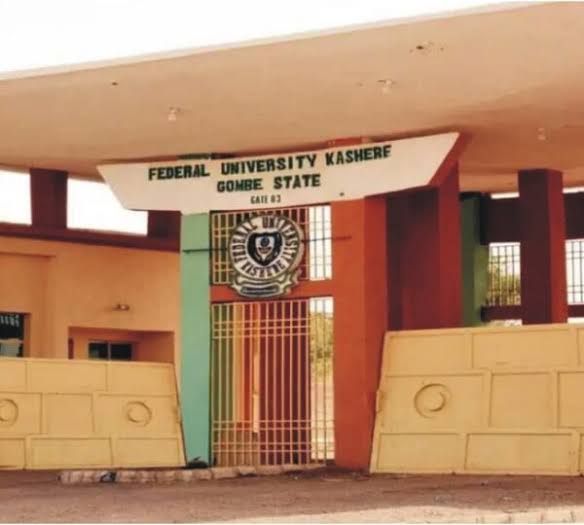
For 14 years, Christian students at the Federal University of Kashere, Gombe State, have worshipped in temporary and often disrupted spaces due to the absence of a chapel, even as multiple mosques operate across the campus. While the university insists it has provided land for the project, students and religious leaders argue that the lack of a functional worship centre reflects deeper concerns about fairness, planning, and inclusiveness in one of Nigeria’s federal institutions, writes CHIMA AZUBUIKE
When the Federal University of Kashere opened its doors in 2011 as one of Nigeria’s nine new federal universities, students, both Muslims and Christians, arrived with hopes of growing academically and spiritually in an environment designed to cater to all. However, for Christian students on campus, that hope has long been shadowed by a persistent challenge: access to a stable and suitable worship space.
Fourteen years after its establishment, the university still has no designated chapel for Christian worship, leading to intermittent disruptions, relocations, overcrowding, security concerns, and online agitation.
The Multipurpose Sports Complex, which Christian students had been using due to the limited capacity of their usual venue, was reportedly locked for alleged renovations. The incident triggered online outrage and drew renewed attention to a problem that students confirmed had persisted for more than a decade.
The Fellowship of Christian Students, which had been using the hall due to overcrowding at its former venue, FCLT 1, said the closure caused confusion and reignited longstanding concerns about marginalisation.
On Monday, photographs of the locked Multipurpose Hall, the venue Christian students had been using as a worship centre, circulated online, prompting a wave of reactions. Several users on X expressed concern over the development.
One user, @Zerubabel, wrote: “Christian students in Federal University Kashere in Gombe State have been suffering since the inception of the school. There’s no single chapel for Christian students and lecturers, but there are dozens of mosques on campus.”
Following the prompting, The PUNCH visited the campus. During the visit, our correspondent observed that the institution hosts no fewer than six mosques or designated prayer grounds distributed across strategic points on campus, with no Christian-designated worship centre in sight, raising questions about equity, planning, and the management of religious spaces in a federally funded institution.
When FUK was founded in 2011, the student community formed various religious associations, among them the Fellowship of Christian Students, whose leadership immediately began searching for a suitable place of worship. For several years, the fellowship relied on Lecture Theatre FCLT 1 for Sunday and weekday services.
However, as enrolment increased and Christian membership grew, the hall, originally designed for lectures, became unsafe. Students describe the space as “grossly inadequate,” with fears that an emergency could lead to injuries or a stampede. This prompted the fellowship to begin using the Multipurpose Sports Complex, a large, ventilated, open-style structure capable of accommodating their numbers.
For a while, the arrangement worked smoothly until this year, in the middle of preparations for Sunday service, the Multipurpose Hall was locked without prior notice to the fellowship.
In the morning, the hall was found locked, and FCS leaders sought clarification from campus authorities. They were informed that the venue was undergoing renovation and would not reopen until after a scheduled public lecture the following week. An operations officer reportedly explained that the closure was on instructions from the Director of Works.
According to the President of the Fellowship, Damter Isaac, the abrupt change caused confusion among worshippers. He said, “For those two days, we thought it would be resolved by Sunday, but when Sunday came, the Multipurpose Hall was still not open. We went to get access to the key, but they said it could not be opened until after the public lecture the following Thursday. That was when I met with Mr Imran, explained the situation, and he contacted the Director of Works. He assured us it was just a temporary movement and told us to call.”
Isaac further explained how the fellowship temporarily moved back to FCLT 1. “We were told we could use any venue of our choice. We chose FCLT 1, packed our equipment from the Multipurpose Hall, and moved back. The agreement was that we would show our setup at the renovated Multipurpose Hall to ensure proper management when we returned.”
Though the issue appeared to have been resolved administratively, the development reignited discussions among students and alumni about the absence of a chapel.
Multiple locations on campus were surveyed, confirming that the university hosts numerous prayer spaces for Muslim students and staff. These include a new mosque at the Chancellery, another at the former Vice Chancellor’s office, a mosque by Gate 3, a prayer location inside the library, another at the Postgraduate School, one near the medical centre, the Central Mosque near the Union Bank branch, and a worship area next to the boys’ hostel. There is also a prayer ground near the ICT centre.
By contrast, Christian students have none. This uneven distribution lies at the heart of the agitation.
To facilitate the building of a chapel on the campus, the students opened a crowdfunding account, confirmed by FCS members, underscoring the desperation among Christian students, many of whom are tired of waiting for a permanent solution.
A X user, @Kunta_Kinte, replied to a post on the photographs of the locked Multipurpose Hall: “It’s true. One student shared this in case anyone wants to donate, but this shouldn’t be the norm for students to crowdfund projects like this. Chapel Project Account Details 0218987248, Account Name: FCS Chapel Project, FUK. Bank: Union Bank.”
As the online conversation grew, a peaceful protest reportedly organised by an individual student circulated on social media with the caption: “No chapel, no stable space, Christian students deserve better.” The fellowship’s executive council, however, quickly released a statement dissociating itself from the action.
The statement, signed by Public Relations Officer, Iliya Ezekiel, read: “The attention of the Fellowship has been drawn to a recent peaceful protest and the circulating caption: ‘No Chapel, No Stable Space, Christian Students Deserve Better.’ While the concerns raised are valid, the member involved did not follow proper due process, and the Fellowship Executive Council was not informed or consulted before the action was taken.”
The fellowship urged that protest-related posts be removed: “We therefore dissociate the Fellowship from this protest and kindly request that all related posts, uploads, and shares across social media be taken down immediately.”
The leadership assured members of its commitment to addressing the issue through dialogue: “The Fellowship remains committed to addressing these concerns through the appropriate channels, and we assure all members that due process will be followed to ensure necessary actions are taken. Thank you for your understanding and cooperation.”
Responding to allegations of discriminatory treatment, FUK’s Public Relations Officer, Janet Ezekiel, dismissed the claims. She stated that the administration of Vice Chancellor, Prof Umaru Pate, had fulfilled its responsibility regarding the provision of land for a chapel.
She said, “The responsibility of the management is to provide land, and they have done so. It is now up to the different religious groups to develop it. It’s not as if the FCS is not doing anything.
The VC gave the land officially and even expanded it, because the problem initially was that the land was too small.”
Ezekiel added, “We now have a building committee for the Christian Staff Fellowship. So it’s not like nothing is being done.”
When contacted, the Dean of Student Affairs, Prof Shuaibu Umaru, dismissed claims of marginalisation, saying: “It’s not true. Is the university meant for Muslims alone?” He added, “The Multipurpose Hall is for everybody.”
Pastor Samuel Elebiyo of the Redeemed Christian Church of God, who previously served at Kashere, said the experiences of Christian students reflect a broader pattern across northern institutions. He said, “The community needs help. They have not enjoyed the goodwill that our Muslim colleagues have. When I inquired about building a chapel, I heard there was land near the gate by the main road, but it was revoked and moved near a mountain, far away, with no support to develop it.”
Elebiyo added, “This pattern is not unique to FUK. In the North, the Christian community needs assistance. Christian staff leaders have not done enough; they fold their arms as if it is not their concern, leaving students to suffer.”
Though the university says it has allocated an expanded land, Christian students argue that the problem goes beyond documents. For them, the real issue is access, fairness, and visibility.
For 14 years, the absence of a chapel has forced a cycle of temporary arrangements, lecture theatres, sports halls, borrowed spaces, none providing the stability expected in a federal university.
Meanwhile, the visible presence of multiple mosques across campus, many built with staff and community support, fuels perceptions of inequality.
The situation is worsened by communication gaps, sudden venue lockouts, and a lack of clarity about timelines for the chapel project.
Lecturers who requested anonymity said the controversy over Christian worship spaces is not simply a religious issue; it is a test of administrative fairness, campus inclusiveness, and institutional planning. While the university insists it has fulfilled its obligations by allocating land, Christian students’ lived experience tells a different story, one of years of waiting, makeshift arrangements, and repeated disruptions.
While sourcing funds through crowdfunding, the fellowship continues meeting in temporary venues, clinging to assurances that the long-awaited chapel project will eventually materialise.
punch.ng
FOLLOW US ON: