

Connect with us

Education

How A Classmate’s Question At Harvard Forced Me To Dump Banking For Politics – Abia Governor, Alex Otti

Published

on

He stated that this question, which Raina asked him at Harvard Business School in 2009, redirected his life from banking to politics.

Alex Otti, the Governor of Abia State, has recounted a story about a question a Harvard classmate asked him that ended up haunting him for a long time.

The governor stated that his classmate, Samvit Raina, an American of Indian descent, had asked him why many Nigerians he had met were successful, brilliant, and hardworking, yet the country from which they came was economically and development-wise backwards.

He stated that this question, which Raina asked him at Harvard Business School in 2009, redirected his life from banking to politics.

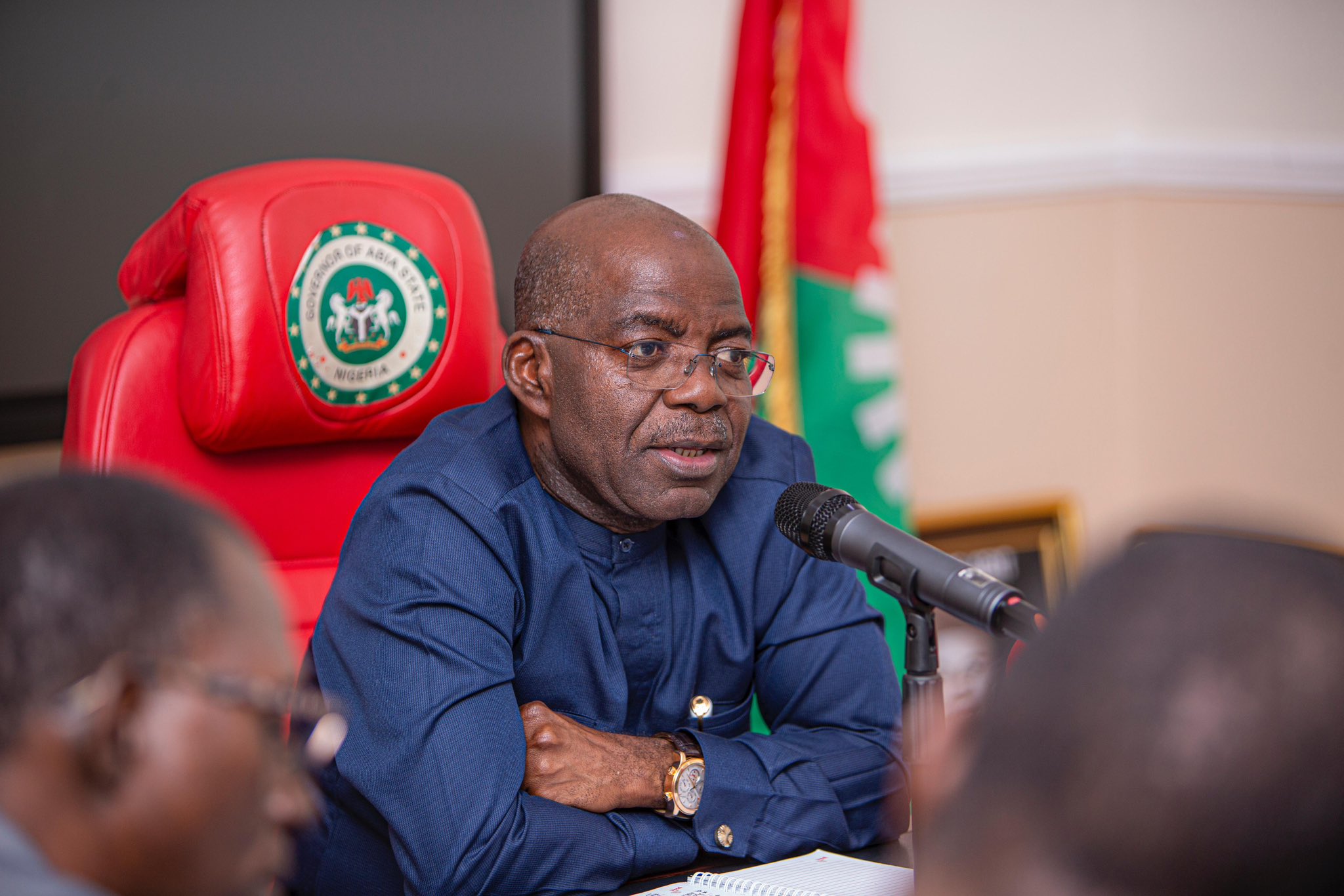
Speaking at the 2025 dinner and award presentation ceremony of the Harvard Business School Association of Nigeria in Onikan, Lagos, on Saturday, he said that his classmate’s question led him to abandon a lucrative banking career to pursue public service.

Otti, at the time, was participating in the Advanced Management Programme at Harvard.

He said, “I did not respond promptly in order not to be seen as endorsing an uncomplimentary remark against my country by a foreigner, but within me, I knew that he may not be the only one asking the question.”

The question, Otti explained, prompted him to engage in deep reflection during his time in Boston, where the school is situated.

“I spent the rest of my time at Boston reflecting on the poser raised by my course mate: how do you explain the paradox of very successful people operating from a country that is everything but successful?” he said.

See also  Lagos NANS demands ban on unregistered trucks after student deaths

The introspection, Otti said, led him to confront uncomfortable truths about Nigeria’s development challenges.

Otti said he thought about his home state of Abia and its development challenges at the time.

“The more deeply I thought, the more worried I became. Nigeria is a nation of multiple constituencies and wherever you go, there are no shortage of intelligent, hardworking and passionate individuals. The question then is: why are we failing at even the most basic matters of civilisation? Why are elementary concerns like waste disposal, access to potable water, electricity, roads, primary healthcare and basic education still a challenge here?” he asked.

After examining the foundational structures that propelled other nations to greatness, Otti said he arrived at a disturbing conclusion.

“I realised that our problem was never about the size of the treasury box nor the appetite for progress but in the fact that those who ought to have taken the lead were often absent in the decision-making room. Like myself, they were busy chasing after career success, looking to hit the next million dollar or to publish their paper in a reputable journal. To these incredibly-smart people, government is treated as a minor irritation.

“Ultimately, while we were at Harvard, Cambridge, MIT, Oxford and in other elite universities topping the result charts and winning all the laurels, barely-educated individuals were taking decisions that influence how the world sees Nigeria in our various local government headquarters, state capitals and in Abuja,” he noted.

Otti challenged the gathering to find out where the majority of result-driven leaders are most likely to be found to understand where the country’s challenges were coming from.

See also  First lady distributes 10,000 sanitary pad packs to Anambra schoolgirls

“Where are you most likely to find a superior number of ethical and result-driven leaders: at the board meeting of an NSE-listed company or at a gathering of political stakeholders in our states? You can probe further to ask: where would a First-Class graduate from an elite university be keener to start his professional life: at a regular government agency in Umuahia or in a blue-chip company?” he asked.

According to the governor, the disinterest in public affairs by the country’s best minds has had negative consequences on its economy and development.

“The summary of it is that our disinterest in public affairs offered an extended invitation to persons of questionable development orientation to step in and produce outcomes that are generally unsatisfactory,” he said.

FOLLOW US ON:

FACEBOOK

TWITTER

PINTEREST

TIKTOK

YOUTUBE

LINKEDIN

TUMBLR

INSTAGRAM

Continue Reading
Click to comment

Leave a Reply

Your email address will not be published. Required fields are marked *

Education

UUTH resident doctors join nationwide strike

Published

on

The Association of Resident Doctors, University of Uyo Teaching Hospital, has resolved to join the nationwide strike declared by the National Association of Resident Doctors on Monday, January 12, 2026.

The decision was contained in a communiqué issued after an emergency general meeting of the association held in Uyo, Akwa Ibom State, on Thursday.

The communiqué, endorsed by its President, Dr Ekomobong Udoh, and General Secretary, Dr Kenneth Ikott, and made available to our correspondent in Uyo on Friday, said the centre would undertake a peaceful protest by 9am on Monday within the UUTH premises, in total compliance with the directive of NARD.

It read in part, “Members of the congress gathered for an emergency general meeting to discuss the resolutions issued by the NARD Extra-Ordinary NEC virtual meeting held on Saturday, January 2, 2026. After thorough deliberation and discussion on the resolutions of NARD, the meeting, chaired by the President, resolved as follows.

“The centre fully supports the implementation of the NARD NEC meeting resolutions. The congress immediately agreed to participate in the NARD TIC 2.0 from 12 noon on Monday, in line with the NEC directive, and will undertake a peaceful protest by 9am on Monday within the UUTH premises.”

Udoh said the proposed industrial action followed the failure of the Federal Government to fully implement the Memorandum of Understanding signed with resident doctors in November 2025.

According to him, the strike, tagged TICS (Total, Indefinite and Comprehensive Strike) 2.0, with the slogan, “No Implementation, No Going Back”, would only be suspended after the full implementation of the minimum demands.

See also  FG, Germany chamber of commerce partner to train, export graduates

He listed the demands to include the reinstatement of the FTH Lokoja Five, payment of promotion and salary arrears, full implementation of the professional allowance table with arrears captured in the 2026 budget, and official clarification on skipping and entry-level issues by the Federal Ministry of Health and circulars to chief executives.

Other demands include the reintroduction and implementation of the Specialist Allowance, resolution of house officers’ salary delays and arrears, including the issuance of a pay advisory, recategorisation of membership certificates, and issuance of certificates after Part I by the NPMCN, commencement of locum and work-hours regulation committees, and resumption and timely conclusion of the Collective Bargaining Agreement process.

punch.ng

FOLLOW US ON:

FACEBOOK

TWITTER

PINTEREST

TIKTOK

YOUTUBE

LINKEDIN

TUMBLR

INSTAGRAM

Continue Reading

Education

Nigeria emerges fifth-best English-speaking country in Africa

Published

on

Nigeria has emerged as the fifth-best English-speaking country in Africa, according to the 2025 Education First English Proficiency Index cited by PUNCH Online on EF’s website on Monday.

The report, compiled by global education leader EF, assessed English skills across 123 countries and regions, using data from 2.2 million test takers. This year’s edition also included, for the first time, speaking and writing skills, measured using artificial intelligence technology developed by EF’s education technology arm.

English, Nigeria’s official language, remains central to education, governance, media, and business, helping the country maintain strong proficiency levels. On the African continent, Nigeria trails South Africa, Zimbabwe, Kenya, and Zambia, which lead in English proficiency. The rankings underscore the growing importance of English as a bridge for international communication, education, and commerce.

Top 10 English-Speaking Countries in Africa (EF EPI 2025):

South Africa – Widespread use in government, education, media, and business.

Zimbabwe – English is the primary language of instruction and administration.

Kenya – Official language alongside Swahili, widely used in urban and professional settings.

Nigeria – Official language, central to national communication and commerce.

Ghana – English is used from basic to tertiary education and in public administration.

Uganda – Official language; key role in trade, diplomacy, and professional environments.

Ethiopia – Widely used in education and international affairs, though not official.

Tunisia – Growing adoption among youth and professionals in education, tech, and tourism.

Morocco – Increasing popularity in schools and business for global trade and relations.

Continue Reading

Education

Bandit attacks: Kebbi, Kwara reopen schools

Published

on

Kebbi and Kwara state governments have announced the reopening of schools in selected areas, signaling a gradual return to normal academic activities after months of closures due to rising bandit attacks.

In Kebbi, the state government approved the immediate resumption of selected primary and secondary schools located in major cities and towns.

The state had ordered school closure following bandit attack on Government Girls’ Comprehensive Secondary School, Maga town, Danko/Wasagu Local Government Area in November, during which 25 schoolgirls were abducted and the school guard killed.

The reopening announcement was made on Sunday by the Commissioner for Basic and Secondary Education, Dr. Halimatu Bande, during a briefing in Birnin Kebbi.

According to Bande, the resumption takes effect from Monday, January 5, 2026, and applies only to schools within urban centres. Schools in rural areas will reopen later, following further improvements in security.

“Only schools located within major cities and towns are approved to resume at this stage,” Bande said. “Schools outside these areas will reopen at a later date, which will be communicated in due course.”

The commissioner explained that the phased reopening is aimed at ensuring the safety of students and teachers while gradually restoring full academic activities across the state.

She also directed Education Secretaries and Zonal Directors to enforce compliance and monitor implementation, appealing to parents and guardians to ensure that their children return to school promptly.

Bande commended Governor  Nasir Idris for his sustained support for education, describing his administration as committed to providing safe, inclusive, and quality learning for all children in Kebbi State.

Meanwhile, in Kwara State, the Ministry of Education and Human Capital Development has ordered the resumption of academic activities in all schools from today (Monday).

See also  First lady distributes 10,000 sanitary pad packs to Anambra schoolgirls

The directive, issued by the ministry’s Press Secretary, Peter Amogbonjaye, quoted the Commissioner for Education, Dr. Lawal Olohungbebe, as saying that learning will resume immediately, except in areas still under “special security measures.”

“Learning activities are to resume immediately in all but areas earlier identified to be under special security surveillance,” the statement said. “Normal school activities will resume in such places very soon.”

The move follows a November 2025 directive that temporarily closed schools in several local government areas, including Ifelodun, Ekiti, Irepodun, Isin, and Oke Ero, in response to escalating insecurity and bandit attacks.

The closures were aimed at safeguarding pupils and teachers and were part of broader emergency responses to violent incidents in the state.

To ensure continuity in learning, especially for pupils in areas still affected by insecurity, the ministry also announced a radio-based learning initiative in collaboration with UNICEF and the Nigeria Learning Passport.

The programme, airing on the state-owned 99.1 Midland FM, will begin on January 5, with scheduled broadcasts at 11 a.m. on Mondays and Tuesdays, 1 p.m. on Wednesdays, and 2:30 p.m. on Fridays. Additional radio stations will be added to expand reach.

“The initiative aims to ensure continuity in learning, especially for pupils in areas where school activities are still limited by security concerns,” the ministry said.

FOLLOW US ON:

FACEBOOK

TWITTER

PINTEREST

TIKTOK

YOUTUBE

LINKEDIN

TUMBLR

INSTAGRAM

Continue Reading

Trending