Connect with us

Business

Cars import rebound, hit N1tn in nine months

Published

on

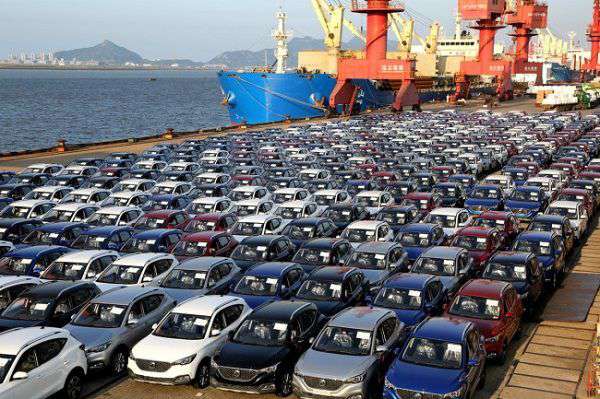
Nigeria’s importation of passenger motor cars rebounded strongly in 2025 as relative stability in the foreign exchange market eased pressure on dealers and buyers, according to foreign trade statistics from the National Bureau of Statistics.

Data from the NBS showed that the value of passenger motor car imports rose to N1.01tn in the first nine months of 2025, compared with N894.09bn recorded in the corresponding period of 2024.

This represents an increase of N113.15bn or 12.66 per cent year on year, signalling a clear turnaround after months of weak demand driven by currency volatility and rising landing costs. A closer examination of the quarterly figures shows that the recovery gathered momentum only in the second half of the year.

In the first quarter of 2025, passenger motor car imports were valued at N224.58bn, down from N238.73bn in the same period of 2024. This reflected a decline of N14.15bn or about 5.9 per cent, indicating that importers were still grappling with the impact of earlier exchange rate instability.

The second quarter followed a similar trajectory. Imports stood at N254.67bn between April and June 2025, compared with N291.93bn in the corresponding quarter of 2024. The difference of N37.26bn translated to a contraction of roughly 12.8 per cent, suggesting that caution persisted despite gradual improvements in FX liquidity.

The trend reversed sharply in the third quarter. Between July and September 2025, the value of passenger motor car imports jumped to N527.98bn, from N363.42bn in the same period of the previous year. This represented an increase of N164.56bn or about 45.3 per cent, more than offsetting the declines recorded in the first half of the year and driving the overall nine-month growth.

Country-level data shows the scale of the rebound. In the first quarter of 2025, imports of used vehicles with diesel or semi-diesel engines and a cylinder capacity above 2,500cc from the United States were valued at N93.51bn, making the United States Nigeria’s largest source of passenger vehicles in that period.

South Africa followed with N25.84bn worth of vehicles for goods transport, while imports from Angola and Liberia were marginal. In the second quarter, imports from the United States remained elevated at N99.18bn, while South Africa accounted for N21.43bn.

Liberia and Equatorial Guinea contributed smaller values, reflecting limited volumes in those categories. The surge became more pronounced in the third quarter. Used diesel vehicles above 2,500cc imported from the United States alone were valued at N184.21bn, nearly double the level recorded in the first quarter.

See also  Tanker drivers’ strike will not cause fuel shortage – Dangote Refinery

Additional imports included N38.15bn worth of used vehicles with engine capacity between 1,500cc and 2,500cc from the US market. The United Arab Emirates also emerged as a key source, with imports valued at N13.67bn, alongside N12.68bn worth of petrol engine vehicles imported in completely knocked down form.

The PUNCH further observed that vehicles traced to the US were valued at about N415.05bn in the first nine months of 2025, which means that the US accounted for 41.21 per cent of Nigeria’s total passenger motor car imports during the period under review.

South Africa followed at a distant level, with total imports valued at N47.27bn, representing 4.69 per cent of total imports for the period. The United Arab Emirates featured prominently in the third quarter, with imports totalling about N26.35bn, which was 2.62 per cent of the nine-month import value.

Overall, the data shows that while passenger motor car imports in the first half of 2025 were N51.41bn lower than the same period of 2024, the third quarter alone exceeded its 2024 equivalent by N164.56bn. This swing explains why the nine-month import value closed higher by more than N113bn.

Analysts speak

Analysts say the figures reflect renewed confidence among importers as exchange rate volatility eased and access to foreign exchange improved, even though vehicle prices remain high. The rebound in vehicle imports was consistent with developments in the foreign exchange market in the third quarter of 2025.

According to an economic and financial markets review by FCSL Research, the naira maintained a strong and stable performance in Q3 2025, appreciating by 3.2 per cent to N1,480.66 to the dollar as improved dollar inflows, sustained interventions by the Central Bank of Nigeria, and a $2.87bn increase in external reserves to $42.23bn helped anchor market confidence.

“Naira maintained a strong and stable performance in Q3 2025, appreciating by 3.2 per cent to N1,480.66/$ as improved dollar inflows, consistent CBN interventions, and a $2.87bn rise in external reserves to $42.23bn anchored market confidence,” the analysts at FCSL Research stated.

The report noted that FX trading remained within a narrow N1,480 to N1,540 per dollar band during the quarter, supported by robust oil receipts, the clearance of FX forwards, and renewed foreign portfolio inflows, creating what it described as one of the most orderly quarters for the naira since FX market reforms began.

See also  Trade minister reveals Nigeria is exploring alternative markets as US tariffs takes effect

Looking ahead, the analysts said the naira’s stability was expected to hold into the fourth quarter on the back of sustained portfolio inflows, steady oil earnings, and better coordination between monetary and fiscal policies, although they warned that mild volatility could still emerge around import cycles or swings in global oil prices.

“The naira’s stability is expected to hold into Q4, supported by sustained portfolio inflows, steady oil earnings, and coordinated monetary-fiscal policy execution. However, mild volatility may surface around import cycles or global oil price swings,” the report read.

Analysts have projected that the naira would close the year within the 1,400.00-1,450.00/$ band on the back of moderating inflation. In a macroeconomic update titled ‘Moderating inflation bodes well for Nigeria’s currency valuation’, the analysts at CardinalStone Research anticipate that the deceleration in inflation will strengthen the national currency.

CardinalStone said, “The ongoing disinflationary trends bode well for currency valuation. Combined with a sustained current account surplus and a steady build-up in FX reserves, this is expected to underpin further naira appreciation. We project FX to close the year within the range of N1,400.00/$ – N1,450.00/$.

In September 2025, The PUNCH reported that the naira appreciated and stayed below the 1,500/$ threshold for 10 consecutive trading sessions at the official market, according to data from the Central Bank of Nigeria.

The domestic currency had traded below the N1,500/$ threshold for the first time in over six months on September 15, when it closed trading at 1,497/$. Since then, the naira has strengthened and closed Friday’s trading at 1,480/$. At the parallel market, the currency had recorded some positive sentiments too, as it appreciated 0.13 per cent to an average of 1,510/$.

Reviewing the performance of the naira in the past week, AIICO Capital highlighted improved liquidity from local participants, oil inflows, and offshore portfolio investors as providing the base for the continued rally of the currency.

It maintained that the recent stability in the FX market will be sustained in the near term, as the CBN continues to fine-tune its policies alongside fiscal measures by the FGN aimed at supporting liquidity.

See also  Nigerian farmers say rise in fertiliser price threatens lower food cost

Cowry Asset Management Limited echoed similar sentiments, saying, “Looking ahead, the naira is expected to stay relatively stable across markets, supported by stronger FX inflows, reserve build-up, and sustained Central Bank of Nigeria interventions.”

Earlier, dealers and economists noted that the previous decline in car imports was not only a reflection of weak demand but a sign of deeper structural challenges in Nigeria’s economy, high inflation, rising taxes, and limited credit access.

However, as foreign exchange conditions become more predictable, there appears to be renewed demand for foreign cars. Speaking earlier with The PUNCH, an official at Ports & Terminal Multipurpose Limited, one of the country’s busiest car-importing terminals, attributed this surge in car imports to exchange rate stability, which has enabled importers to plan more effectively.

“Unlike before, the exchange rate is now more predictable. Importers can plan ahead, inflation is slowing, and businesses are finding room to expand. This has encouraged more vehicle importation compared to the uncertainty that plagued the market in 2023 and 2024,” the source said in confidence due to a lack of authorisation to speak on the matter.

The PTML Chapter Chairman of the National Association of Government Approved Freight Forwarders, Mr Thomas Alor, also confirmed the increase. “There is a clear rise in vehicle importation this year compared to last year. While I cannot give an exact percentage, the volume of vehicles arriving at the ports has significantly grown,” he said.

Similarly, the Apapa Chapter Chairman of the National Council of Managing Directors of Licensed Customs Agents, Mr Abayomi Duyile, earlier said that the surge is noticeable. He attributed part of the growth to changes in the assessment of customs duties on vehicles.

“Last year, car clearance was slowed because duties were extremely high. The imputed values in the Customs system inflated costs. But with the introduction of the 846 valuation method, duties were reviewed downward. This has provided some relief for importers,” Duyile explained.

He further noted that customs now factor in depreciation, mileage, and wear-and-tear in valuing used vehicles, which has brought duties more in line with market realities.

punch.ng

FOLLOW US ON:

FACEBOOK

TWITTER

PINTEREST

TIKTOK

YOUTUBE

LINKEDIN

TUMBLR

INSTAGRAM

Continue Reading
Click to comment

Leave a Reply

Your email address will not be published. Required fields are marked *

Business

Bread prices: No significant drop in flour price, variables — Bakers

Published

on

Premium Breadmakers Association of Nigeria, PBAN, has refuted a viral social media post claiming that the price of flour has plummeted to between N35,000 to N40,000 per 50kg bag. The post further accuses bread makers of “wickedly” refusing to reduce the prices of bread to reflect the drop.

A statement by Emmanuel Onyoh, General Secretary, PBAN, said that the claims are false, and a calculated attempt to incite the Nigerian public against “hardworking bakers who are struggling to stay afloat.”

According to the statement, “The Reality of Flour Pricing as of today, December 16, 2025, the price of a 50kg bag of wheat flour is between N55,000 and N62,000(depending on the brand and where you’re buying from) significantly higher than the fabricated figures circulating online. While some flour millers recently announced a marginal price reduction of approximately N2,000, this is a “drop in the ocean” compared to the overall production deficit”.

“Mathematically, a N2,000 reduction on a bag of flour translates to about N20 saving on the family sized loaf. This small margin is immediately swallowed by the skyrocketing costs of other essential inputs such as yeast, improver, margarine and preservative”.

The General Secretary also revealed what he called “The “Hidden” Costs of Your Daily Bread” . He said, “Needless to say, that besides flour, there are other various ingredients required for operational cost and processes in bread. PBAN members are currently battling a “perfect storm” of economic pressures that make a price reduction impossible at this time,”

He also emphasized the cost of electricity and the diesel required to power industrial ovens and generators, adding that 90% of baking machinery are imported. The replacement cost of equipment

See also  Trade minister reveals Nigeria is exploring alternative markets as US tariffs takes effect

and repairs had increased tremendously in the past few years.

“We are facing unprecedented expenses in fueling and maintaining distribution vehicles to get bread to your neighbourhoods amidst deteriorating road networks. In compliance with the new National Minimum Wage of N70,000, our wage bills have increased significantly. We choose to pay our staff fairly rather than shut down. Bakers are currently burdened by a “spectrum of taxes” from federal, state, and local government agencies, many of which are overlapping and punitive.

“The Premium Breadmakers Association of Nigeria,PBAN, as a responsible association that is mindful of the shrink on disposable income of consumers, we have advised our members to maintain same quality standard and consider introducing bread variants in sizes that falls/fits into various consumer strata.

“We assure the general public that our members shall not hesitate to reduce the prices of bread the moment the cost dynamics and the Nigerian economy reflect a genuine and sustainable downward trend.

“Our primary goal remains the provision of quality, safe, and affordable bread that meets the highest regulatory standards,” he assured.

FOLLOW US ON:

FACEBOOK

TWITTER

PINTEREST

TIKTOK

YOUTUBE

LINKEDIN

TUMBLR

INSTAGRAM

Continue Reading

Business

FG recorded N30tn revenue shortfall in 2025 – Edun

Published

on

The Minister of Finance and Coordinating Minister of the Economy, Wale Edun, opened up on Tuesday that the Federal Government recorded a significant revenue shortfall in the 2025 fiscal year.

He noted that while the Federal Government projected N40.8tn revenue for this year, it ended up making only N10.7tn.

Edun made the disclosure while appearing before the House of Representatives Committees on Finance and National Planning during an interactive session on the 2026–2028 Medium Term Expenditure Framework and Fiscal Strategy Paper.

He recalled that the Federal Government had projected a revenue target of N40.8tn in 2025 to fund the N54.9tn “budget of restoration,” designed to stabilise the economy, secure peace and lay the foundation for long-term prosperity.

However, the minister said current fiscal performance shows that total revenue for the year is likely to end at about N10.7tn.

According to him, the sharp shortfall is largely attributable to weak oil and gas earnings, particularly Petroleum Profit Tax and Company Income Tax from oil and gas companies, alongside persistent underperformance across several revenue subheads.

“The current trajectory indicates that federal revenues for the full year will likely end at around N10.7tn compared to the N40.8tn projection,” Edun told lawmakers.

The minister’s disclosure on Tuesday is in sharp contrast to the declaration by President Bola Tinubu in September that the Federal Government had already met its revenue target

“Today I can stand here before you to brag: Nigeria is not borrowing.

We have met our revenue target for the year and we met it in August,” Tinubu had told members of  The Buhari Organisation who visited him at the Presidential Villa in Abuja.

See also  FG pledges support for South-South youths in agriculture

However, speaking on Tuesday, the finance minister admitted that revenue shortfall harmpered the implementation of the N54.9tn 2025 budget.

He explained that although the Federal Government also raised about N14.1tn through borrowing, the combined inflows still fell far short of what was required to fully fund the 2025 budget.

Despite the revenue gap, Edun said the government had continued to meet critical obligations through what he described as prudent treasury management.

He noted that salaries, statutory transfers, as well as domestic and foreign debt service obligations, had been paid as and when due through “skillful, imaginative and creative handling” of available resources.

Providing further insight into expenditure performance, the minister said capital releases to ministries, departments and agencies in 2024 stood at N5.2tn out of a budgeted N7.1tn, representing 73 per cent performance.

He added that total capital expenditure, including multilateral and bilateral-funded projects, reached N11.1tn out of N13.7tn, or 84 per cent.

The minister cautioned that expenditure plans heavily tied to oil revenues must remain flexible, warning against committing the government to spending obligations based on projections that have consistently failed to materialise.

“We must be ambitious, but given the experience of the past two years, spending linked to these revenues must depend on the funds actually coming in,” he said.

Also speaking at the session, the Minister of Budget and National Planning, Atiku Bagudu, said the MTEF and FSP were developed through extensive consultations with key stakeholders, including government agencies, the private sector, civil society organisations and development partners

See also  Nigerian farmers say rise in fertiliser price threatens lower food cost

Bagudu acknowledged that revenue assumptions remained a subject of intense debate within the Economic Management Team, explaining that while some members favoured conservative projections informed by historical performance, others argued for ambitious targets to compel revenue-generating agencies to improve efficiency and collection.

He disclosed that although the government retained an oil production target of 2.06 million barrels per day for policy planning, a more cautious assumption of 1.84 million barrels per day was adopted for revenue calculations in the 2026 budget framework.

Earlier, the Chairman of the House Committee on Finance, James Faleke, called for a more critical and realistic approach to budget preparation, warning against bloated budgets that often face serious implementation challenges.

Nigeria’s revenue performance in 2025 has been undermined by a combination of structural and cyclical factors.

punch.ng

FOLLOW US ON:

FACEBOOK

TWITTER

PINTEREST

TIKTOK

YOUTUBE

LINKEDIN

TUMBLR

INSTAGRAM

Continue Reading

Business

Nigeria exports N707bn petrol in three months

Published

on

Nigeria’s export profile to African markets is beginning a notable shift from crude-only trade dominance, as new figures from the National Bureau of Statistics showed a sharp rise in the export of refined petroleum products, signalling the country’s transition into a continental fuel supplier.

According to an analysis of the latest third-quarter Foreign Trade Statistics Report of the bureau, sales of Premium Motor Spirit (petrol) emerged as Nigeria’s second-largest export commodity to other African countries.

Petrol export was valued at N707.05bn and accounted for 14.42 per cent of total shipments to the continent. Only crude oil, which generated N1.94tn or 39.57 per cent, earned more during the period.

The surge in refined product exports comes months after the Dangote Petroleum Refinery commenced operations. Further analysis by our correspondent revealed that there were no recorded sales in the first and second quarters of the year, with commercial activity only taking off between July and September 2025.

Beyond petrol, the report shows that gas oil (diesel), worth N692.08bn (14.12 per cent), and kerosene-type jet fuel, valued at N383.02bn (7.81 per cent), also featured prominently among the top exports to African markets.

Together, the top five export commodities, including crude oil and specialised marine vessels, accounted for 86.08 per cent of Nigeria’s shipments to the continent.

The report read, “Analysis by commodities showed that the main commodities exported to African countries in the quarter under review were ‘petroleum oils and oils obtained from bituminous minerals, crude’ valued at N1.94tn accounting for 39.57 per cent of total exports to Africa, ‘Motor Spirit, Ordinary’ with N707.05bn or 14.42 per cent, ‘Gas oil’ with N692.08bn or 14.12 per cent, ‘Lightvessels, fire-floats, floating cranes, and other vessels not specified in 8905’ N497.96bn or 10.16 per cent, and ‘Kerosine type jet fuel’ with N383.02bn or 7.81 per cent.

See also  NAFDAC bans sachet and small-bottle alcohol in Nigeria

The top five products accounted for 86.08 per cent of total exports to Africa.”

In total, fuel exports to African countries reached N4.9tn in Q3 2025, a figure significantly larger than the N595bn recorded as imports from African nations during the same period.

Ivory Coast remained Nigeria’s biggest African market, taking in goods valued at N1.44tn, followed by Ghana (N714bn), South Africa (N710bn), Togo (N531bn), and Senegal (N418bn). These five countries alone accounted for 77.8 per cent of the total export value.

Although the NBS did not reveal the source of export, the growing share of refined petroleum in Nigeria’s export basket mirrors early signs of the “Dangote effect”, the shift in regional trade expected from Africa’s largest refinery.

Until recently, Nigeria was almost entirely dependent on imported petrol despite being Africa’s biggest crude producer. But the entry of the 650,000-barrels-per-day Dangote Refinery into the market has increased domestic availability and opened a pathway for surplus production to be sold across African markets.

It is also predicted that the refinery’s full ramp-up could deepen Nigeria’s integration into the African Continental Free Trade Area by enabling competitive pricing and shorter supply routes for fuel-dependent economies.

On the import side, the NBS noted that Nigeria’s biggest purchases from African countries were crude petroleum valued at N96.27bn, fertiliser inputs (diammonium hydrogen orthophosphate) worth N48.96bn, and light commercial vehicles totalling N39.93bn.

In his Independence Day broadcast, President Bola Tinubu said Nigeria has become a net exporter after recording a trade surplus for five consecutive quarters. He said this in a broadcast to mark Nigeria’s Independence Anniversary.

See also  NNPC E&P hits 355,000bpd, records highest output in 36 years

“We are now selling more to the world than we are buying, a fundamental shift that strengthens our currency and creates jobs at home,” he said.

With petrol now one of its strongest export items to Africa, Nigeria is gradually becoming a petrol-exporting nation, a remarkable turnaround for a country long known for chronic fuel shortages and refinery failures. This trend could strengthen in subsequent quarters as more local refining capacity comes online, signalling the beginning of a new era in Nigeria’s energy trade.

punch.ng

FOLLOW US ON:

FACEBOOK

TWITTER

PINTEREST

TIKTOK

YOUTUBE

LINKEDIN

TUMBLR

INSTAGRAM

Continue Reading

Trending