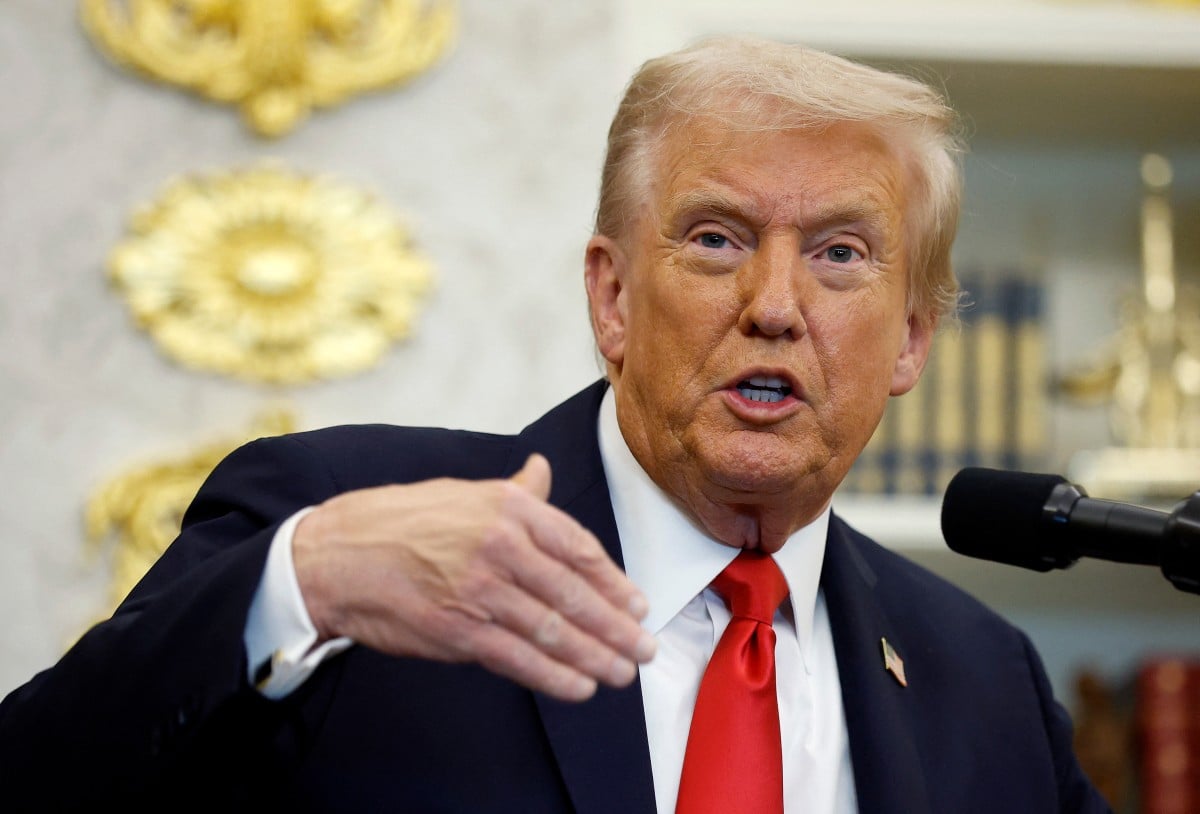
President Donald Trump on Tuesday signed a Proclamation further restricting entry to the United States for nationals from countries deemed high-risk due to “demonstrated, persistent, and severe deficiencies in screening, vetting, and information-sharing” that threaten U.S. national security and public safety.

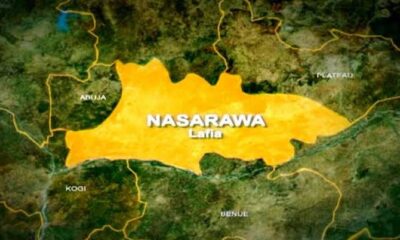
Among the 15 additional countries newly subject to partial restrictions is Nigeria.
The announcement comes directly from the White House website, in a fact sheet titled “President Donald J. Trump Further Restricts and Limits the Entry of Foreign Nationals to Protect the Security of the United States”, issued December 16, 2025.
Trump had earlier on October 31 declared Nigeria as a ‘country of particular concern’ in response to allegations of a Christian genocide in the country.
The African Union chief said there was no genocide in Nigeria’s volatile north. And so did ECOWAS addressing the recent surge in terrorist attacks across the region, including Nigeria, while firmly rejecting claims that these acts constitute genocide. Over and over, Tinubu, days ago, again dismissed claims that there is a Christian genocide in the country, insisting that neither Christians nor Muslims are being targeted for killing.
This had prompted series of back and forth and meeting among US Congress and individuals and the Nigerian delegation who have met both in Nigeria and US since. On December 13, a US congressman, Riley Moore, said the US and Nigeria were close to reaching a strategic security agreement aimed at addressing terrorism and sectarian violence in Nigeria.
Days earlier, he stated that the US had concluded its fact-finding mission to Nigeria over alleged genocide and is expected to brief Trump before the end of the month.
However, the latest in the series of ban on Tuesday had the White House described the action as “strengthening national security through common sense restrictions based on data.”
The Proclamation continues full restrictions and entry limitations on nationals from the original 12 high-risk countries under Proclamation 10949: Afghanistan, Burma, Chad, Republic of the Congo, Equatorial Guinea, Eritrea, Haiti, Iran, Libya, Somalia, Sudan, and Yemen.
It also adds full restrictions and entry limitations on five additional countries: Burkina Faso, Mali, Niger, South Sudan, and Syria, along with individuals holding Palestinian-Authority-issued travel documents. Laos and Sierra Leone, previously subject to partial restrictions, now face full restrictions.
Nationals from Burundi, Cuba, Togo, and Venezuela remain under partial restrictions.
The Proclamation adds partial restrictions and entry limitations on 15 additional countries, including Angola, Antigua and Barbuda, Benin, Cote d’Ivoire, Dominica, Gabon, The Gambia, Malawi, Mauritania, Nigeria, Senegal, Tanzania, Tonga, Zambia, and Zimbabwe.
The fact sheet notes that “exceptions for lawful permanent residents, existing visa holders, certain visa categories like athletes and diplomats, and individuals whose entry serves U.S. national interests” are included.
It also states that family-based immigrant visa carve-outs that carry “demonstrated fraud risks” have been narrowed, while case-by-case waivers remain possible.
In explaining the rationale, the White House fact sheet emphasizes that the Proclamation is necessary “to prevent the entry of foreign nationals about whom the United States lacks sufficient information to assess the risks they pose, garner cooperation from foreign governments, enforce our immigration laws, and advance other important foreign policy, national security, and counterterrorism objectives.”
The fact sheet quotes Trump directly: “It is the President’s duty to take action to ensure that those seeking to enter our country will not harm the American people.”
It adds that, after consultations with cabinet officials and assessments based on Executive Order 14161, Proclamation 10949, and country-specific information, “President Trump has determined that the entry of nationals from additional countries must be restricted or limited to protect U.S. national security and public safety interests.”
The restrictions are country-specific “in order to encourage cooperation with the subject countries in recognition of each country’s unique circumstances,” the fact sheet says, highlighting challenges such as “widespread corruption, fraudulent or unreliable civil documents and criminal records, and nonexistent birth-registration systems—systemically preventing accurate vetting.”
Some countries, it notes, “refuse to share passport exemplars or law-enforcement data,” while others allow Citizenship-by-Investment schemes that conceal identity and bypass vetting requirements.
The fact sheet also cites “high visa-overstay rates and refusal to repatriate removable nationals” and the presence of “terrorist, criminal, and extremist activity” in several restricted countries.
The White House fact sheet frames the move as part of President Trump’s ongoing national security agenda: “President Trump is keeping his promise to restore travel restrictions on dangerous countries and to secure our borders.”
It references the Supreme Court’s prior ruling on similar restrictions, noting that the Court found the policy “is squarely within the scope of Presidential authority” and that it is “expressly premised on legitimate purposes”—specifically “preventing entry of nationals who cannot be adequately vetted and inducing other nations to improve their practices.”
Finally, the fact sheet notes that Turkmenistan, which previously faced restrictions, has made progress in cooperation with the U.S., prompting the new Proclamation to lift the ban on its nonimmigrant visas while maintaining the suspension of entry for Turkmen nationals as immigrants.
From June 5 ban to national guard shooting
Two US National Guard soldiers were shot in November near the White House, officials said, and police said a suspect was detained in an extraordinary security drama likely to fuel controversy over President Donald Trump’s crime crackdown.
Reacting, Trump said that he would suspend migration from what the US leader called “third world countries”, a day after an Afghan national allegedly shot two National Guard soldiers in Washington, killing one.
His angry post, which also threatened to reverse “millions” of admissions granted under his predecessor, Joe Biden, marked a new escalation in the anti-migration stance of a second term that has been dominated by Trump’s mass deportation campaign.
Meanwhile, the Trump administration announced in the first week of December that it would review the immigration status of all permanent residents, or “Green Card” holders, from Afghanistan and 18 other countries following the attack.
U.S. officials identified the suspect in the shooting as a 29-year-old Afghan national who previously worked alongside American forces in Afghanistan.
The individual was granted asylum earlier this year, not permanent residency, according to AfghanEvac, an organisation that assists Afghans resettled in the United States after the Taliban takeover in 2021.
The review follows a June executive order from President Trump classifying 19 countries as “of Identified Concern.”
The order banned entry for nearly all nationals from 12 countries, including Afghanistan. The full list of these countries include: Afghanistan, Myanmar, Chad, Congo-Brazzaville, Equatorial Guinea, Eritrea, Haiti, Iran, Libya, Somalia, Sudan, and Yemen.
Barely two weeks after in June, Trump commenced plans to place a general visa ban on Nigerians.
According to a report by the Washington Post, an internal memo signed by Secretary of State Marco Rubio outlined a proposal that could impose visa restrictions or entry bans on up to 36 additional nations.
These countries were expected to comply with newly established requirements from the U.S. State Department within a 60-day timeframe or face potential travel restrictions.
However, PUNCH Online reports that the timeframe elapsed in August 2025, and it was not until four months later that the new proclamation was issued.
What “Full” and “Partial” Restrictions Mean
-
Full bans/suspensions generally bar citizens of specified countries from entering the U.S. and block the issuance of most new immigrant and non-immigrant visas. Exceptions may still exist for lawful permanent residents, diplomats, or specific exempt categories.
-
Partial restrictions limit or suspend certain classes of visas (e.g., tourist, student, exchange), impose stricter vetting and shorter visa validity, and often require more rigorous screening before entry is permitted.