Connect with us

News

US expands travel restrictions, adds Nigeria to list of countries

Published

on

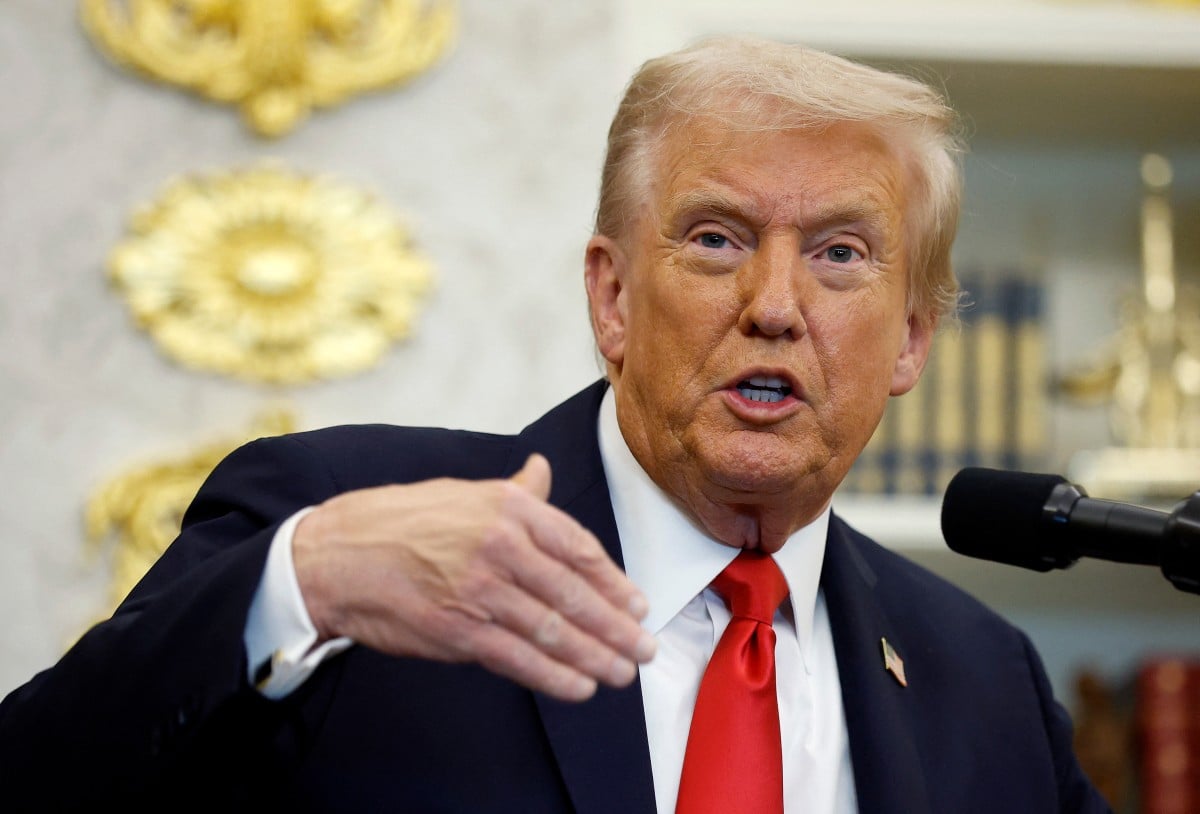
President Donald Trump on Tuesday signed a Proclamation further restricting entry to the United States for nationals from countries deemed high-risk due to “demonstrated, persistent, and severe deficiencies in screening, vetting, and information-sharing” that threaten U.S. national security and public safety.

Trump. US
File photo: USA flag

Among the 15 additional countries newly subject to partial restrictions is Nigeria.

The announcement comes directly from the White House website, in a fact sheet titled “President Donald J. Trump Further Restricts and Limits the Entry of Foreign Nationals to Protect the Security of the United States”, issued December 16, 2025.

Trump had earlier on October 31 declared Nigeria as a ‘country of particular concern’ in response to allegations of a Christian genocide in the country.

The African Union chief said there was no genocide in Nigeria’s volatile north. And so did ECOWAS addressing the recent surge in terrorist attacks across the region, including Nigeria, while firmly rejecting claims that these acts constitute genocide. Over and over, Tinubu, days ago, again dismissed claims that there is a Christian genocide in the country, insisting that neither Christians nor Muslims are being targeted for killing.

This had prompted series of back and forth and meeting among US Congress and individuals and the Nigerian delegation who have met both in Nigeria and US since. On December 13, a US congressman, Riley Moore, said the US and Nigeria were close to reaching a strategic security agreement aimed at addressing terrorism and sectarian violence in Nigeria.

Days earlier, he stated that the US had concluded its fact-finding mission to Nigeria over alleged genocide and is expected to brief Trump before the end of the month.

However, the latest in the series of ban on Tuesday had the White House described the action as “strengthening national security through common sense restrictions based on data.”

The Proclamation continues full restrictions and entry limitations on nationals from the original 12 high-risk countries under Proclamation 10949: Afghanistan, Burma, Chad, Republic of the Congo, Equatorial Guinea, Eritrea, Haiti, Iran, Libya, Somalia, Sudan, and Yemen.

See also  Tinubu’s Executive Order: FG, states, LGs allocation may increase by N15tn

It also adds full restrictions and entry limitations on five additional countries: Burkina Faso, Mali, Niger, South Sudan, and Syria, along with individuals holding Palestinian-Authority-issued travel documents. Laos and Sierra Leone, previously subject to partial restrictions, now face full restrictions.

Nationals from Burundi, Cuba, Togo, and Venezuela remain under partial restrictions.

The Proclamation adds partial restrictions and entry limitations on 15 additional countries, including Angola, Antigua and Barbuda, Benin, Cote d’Ivoire, Dominica, Gabon, The Gambia, Malawi, Mauritania, Nigeria, Senegal, Tanzania, Tonga, Zambia, and Zimbabwe.

The fact sheet notes that “exceptions for lawful permanent residents, existing visa holders, certain visa categories like athletes and diplomats, and individuals whose entry serves U.S. national interests” are included.

It also states that family-based immigrant visa carve-outs that carry “demonstrated fraud risks” have been narrowed, while case-by-case waivers remain possible.

In explaining the rationale, the White House fact sheet emphasizes that the Proclamation is necessary “to prevent the entry of foreign nationals about whom the United States lacks sufficient information to assess the risks they pose, garner cooperation from foreign governments, enforce our immigration laws, and advance other important foreign policy, national security, and counterterrorism objectives.”

The fact sheet quotes Trump directly: “It is the President’s duty to take action to ensure that those seeking to enter our country will not harm the American people.”

It adds that, after consultations with cabinet officials and assessments based on Executive Order 14161, Proclamation 10949, and country-specific information, “President Trump has determined that the entry of nationals from additional countries must be restricted or limited to protect U.S. national security and public safety interests.”

The restrictions are country-specific “in order to encourage cooperation with the subject countries in recognition of each country’s unique circumstances,” the fact sheet says, highlighting challenges such as “widespread corruption, fraudulent or unreliable civil documents and criminal records, and nonexistent birth-registration systems—systemically preventing accurate vetting.”

See also  Court acquits Abba Kyari of asset non-declaration charge

Some countries, it notes, “refuse to share passport exemplars or law-enforcement data,” while others allow Citizenship-by-Investment schemes that conceal identity and bypass vetting requirements.

The fact sheet also cites “high visa-overstay rates and refusal to repatriate removable nationals” and the presence of “terrorist, criminal, and extremist activity” in several restricted countries.

The White House fact sheet frames the move as part of President Trump’s ongoing national security agenda: “President Trump is keeping his promise to restore travel restrictions on dangerous countries and to secure our borders.”

It references the Supreme Court’s prior ruling on similar restrictions, noting that the Court found the policy “is squarely within the scope of Presidential authority” and that it is “expressly premised on legitimate purposes”—specifically “preventing entry of nationals who cannot be adequately vetted and inducing other nations to improve their practices.”

Finally, the fact sheet notes that Turkmenistan, which previously faced restrictions, has made progress in cooperation with the U.S., prompting the new Proclamation to lift the ban on its nonimmigrant visas while maintaining the suspension of entry for Turkmen nationals as immigrants.

From June 5 ban to national guard shooting

Two US National Guard soldiers were shot in November near the White House, officials said, and police said a suspect was detained in an extraordinary security drama likely to fuel controversy over President Donald Trump’s crime crackdown.

Reacting, Trump said that he would suspend migration from what the US leader called “third world countries”, a day after an Afghan national allegedly shot two National Guard soldiers in Washington, killing one.

His angry post, which also threatened to reverse “millions” of admissions granted under his predecessor, Joe Biden, marked a new escalation in the anti-migration stance of a second term that has been dominated by Trump’s mass deportation campaign.

Meanwhile, the Trump administration announced in the first week of December  that it would review the immigration status of all permanent residents, or “Green Card” holders, from Afghanistan and 18 other countries following the attack.

The review follows a June executive order from President Trump classifying 19 countries as “of Identified Concern.”

The order banned entry for nearly all nationals from 12 countries, including Afghanistan. The full list of these countries include: Afghanistan, Myanmar, Chad, Congo-Brazzaville, Equatorial Guinea, Eritrea, Haiti, Iran, Libya, Somalia, Sudan, and Yemen.

Barely two weeks after in June, Trump commenced plans to place a general visa ban on Nigerians.

According to a report by the Washington Post, an internal memo signed by Secretary of State Marco Rubio outlined a proposal that could impose visa restrictions or entry bans on up to 36 additional nations.

These countries were expected to comply with newly established requirements from the U.S. State Department within a 60-day timeframe or face potential travel restrictions.

However, PUNCH Online reports that the timeframe elapsed in August 2025, and it was not until four months later that the new proclamation was issued.

What “Full” and “Partial” Restrictions Mean

  • Full bans/suspensions generally bar citizens of specified countries from entering the U.S. and block the issuance of most new immigrant and non-immigrant visas. Exceptions may still exist for lawful permanent residents, diplomats, or specific exempt categories.

  • Partial restrictions limit or suspend certain classes of visas (e.g., tourist, student, exchange), impose stricter vetting and shorter visa validity, and often require more rigorous screening before entry is permitted.


punch.ng

FOLLOW US ON:

FACEBOOK

TWITTER

PINTEREST

TIKTOK

YOUTUBE

LINKEDIN

TUMBLR

INSTAGRAM

Continue Reading
Click to comment

Leave a Reply

Your email address will not be published. Required fields are marked *

News

EFCC moves to seize 57 Malami-linked properties

Published

on

The Economic and Financial Crimes Commission has urged the Federal High Court in Abuja to order the permanent forfeiture of 57 properties allegedly linked to a former Attorney General of the Federation and Minister of Justice, Abubakar Malami, to the Federal Government.

The anti-graft agency, in a motion on notice filed by its legal team led by Jibrin Okutepa (SAN) and Ekele Iheanacho (SAN), told Justice Joyce Abdulmalik that the respondents failed to place sufficient material before the court to justify setting aside the interim forfeiture order earlier granted.
The motion, marked FHC/ABJ/CS/20/2026, listed Malami, Hajia Bashir Asabe and Abiru’ Rahman Abubakar Malami among the respondents, alongside several companies allegedly linked to the assets.

The EFCC brought the application pursuant to Section 17 of the Advance Fee Fraud and Other Fraud-Related Offences Act, 2006, seeking “a final order of this honourable court forfeiting to the Federal Government of Nigeria, the properties described in the schedule below, which were found by the commission as properties reasonably suspected to be proceeds of unlawful activities.”

Arguing the motion, Okutepa stated that the proceeding was a non-conviction-based forfeiture and that the court has the statutory authority to grant the relief sought.

He added: “This honourable court made an interim order forfeiting the properties to the Federal Government of Nigeria.

“The order of the honourable court has been published in a national daily, namely THISDAY Newspaper of 9th January, 2026.

“No sufficient cause has been shown why the properties under the interim forfeiture order should not be finally forfeited to the Federal Government of Nigeria,” Okutepa argued.

See also  Strike: Court decides today as FCT workers demand Wike’s removal

In an affidavit deposed to by an EFCC investigator, Daniel Adebayo, the commission said it received multiple petitions alleging corruption, abuse of office and fraud against the former minister.

Adebayo stated that investigations involved obtaining financial records from banks and the Central Bank of Nigeria, as well as inquiries from agencies including the Corporate Affairs Commission, Federal Inland Revenue Service, Code of Conduct Bureau and the Abuja Geographical Information System.

He added that land registries in Kebbi, Sokoto and Kano states were also queried, while assets were physically verified and valued.

The officer said individuals linked to the transactions were invited and interviewed.

He further stated that Malami’s earnings while in office between 2015 and 2023, including salaries, allowances and estacodes, were not commensurate with the value of the assets under investigation.

“I know as a fact and verily believe the findings of the investigation, which are as follows:

“Mr Abubakar Malami (SAN) was the Hon. Minister of Justice and Attorney General of the Federation, hereinafter referred to as HAGF, from 2015 to 2023.

“He was paid a total of N89,664,000.00 as salary between 2015 and 2023, whilst in office, with an average payment of N962,663.68 per month.

“He also received a severance allowance of N12,158,400.00 at the end of his tenure in office.

“Mr Malami SAN was also paid estacodes allowances to cover his travel expenses whenever he travelled outside the country on official trips.

“He calculated and declared a total sum of N253,608,500.00 as the amount he received for the official trips between 2015 and 2023 in a letter written to the Chairman of the CCB as an addendum to his Assets Declaration Form in June 2023.

See also  ‘Lagos Govt Property Demolition Was Not Authorized By Any Court’ – Falana

“Attached and collectively marked as Exhibit EFCC 2 & 3 are copies of the asset declaration forms filled out by Mr Malami SAN from 2015 to 2023, together with a letter dated 16th of June, 2023, written by him to the Chairman of the CCB as an addendum to the asset declaration form as found at his house during EFCC’s execution of a search warrant.”

Adebayo further deposed: “Aside from the actual acquisition of the properties which are manifestly disproportionate to Mr Malami SAN‘s known and lawful sources of income, no building permits/approvals from appropriate authorities were obtained to erect most of the various structures in Kano and Kebbi states as part of a scheme to disguise the unlawful origin of the funds used to acquire the assets.”

He alleged that some of the properties were acquired through proxies and corporate entities linked to the former minister.

The EFCC listed 57 landed properties spread across Abuja, Kebbi, Kano and Kaduna states, including assets tied to Rayhaan University in Kebbi.

Justice Abdulmalik fixed April 21 for the hearing of the motion.

The case stems from an earlier order of the Federal High Court in Abuja, on January 8, 2026, presided over by Justice Emeka Nwite, which granted an interim forfeiture of the 57 properties following an ex parte application by the EFCC.

The properties, valued at about N213.2bn, were said to be linked to Malami and two of his sons and were suspected to be proceeds of unlawful activities.

The court directed that the assets be temporarily forfeited to the Federal Government, and ordered the EFCC to publish the order in a national newspaper to enable interested parties to show cause within 14 days why they should not be permanently forfeited.

See also  Tinubu sends 2026–2028 fiscal framework to Reps

Following the interim order, Malami and other respondents challenged the forfeiture proceedings, urging the court to set aside the order.

punch.ng

FOLLOW US ON:

FACEBOOK

TWITTER

PINTEREST

TIKTOK

YOUTUBE

LINKEDIN

Continue Reading

News

Presidency reveals why Tinubu consoled Plateau victims at Jos airport

Published

on

The Presidency has defended President Bola Tinubu’s decision to meet victims of the Plateau State killings at a hall adjoining the Yakubu Gowon Airport rather than driving into Jos township, citing flight restrictions and logistical constraints as the reasons for the arrangement.

In a statement by Special Adviser to the President on Information and Strategy, Bayo Onanuga on Friday, the Presidency said the runway at the airport does not support night flights due to the absence of navigational aids, making it impossible for Tinubu to visit Rukuba, drive back to the airport and depart before dusk.

“Upon arrival in Jos, the visit encountered some logistical challenges. While the road distance from the airport to Jos township is approximately 40 minutes, the runway does not support night flights due to the absence of navigational aids. The constraints made it unfeasible to drive into town, meet victims for on-the-spot assessment and return to the airport before dusk.

“Consequently, state and federal officials decided to bring representatives of the affected community to a hall adjoining the airport so the President could meet with them promptly while adhering to flight restrictions,” the statement read.

The visit came days after gunmen attacked the Angwan Rukuba district of Jos North Local Government Area on Palm Sunday, killing at least 28 people in one of the deadliest outbreaks of violence in the state in recent years.

The Presidency also explained the delay in Tinubu’s departure for Jos, saying his itinerary for Thursday had included receiving Chadian President Mahamat Idriss Déby Itno at the Presidential Villa for a bilateral meeting on security cooperation.

See also  Tinubu declares state of emergency on insecurity as NASS rejects bandit negotiations

The meeting, which centred on strengthening collaboration between Nigeria and Chad, ran longer than expected, pushing back his scheduled departure.

According to the statement, Tinubu had initially planned to travel to Iperu, Ogun State, on Thursday, but suspended the trip after Mutfwang briefed him on the security situation in Plateau.

“President Tinubu’s itinerary for Thursday included two main engagements: receiving the Chadian President, Mahamat Idriss Déby Itno, and proceeding to Iperu, Ogun State. After Governor Caleb Mutfwang’s briefing, President Tinubu suspended the trip to Ogun.

“Overnight, the Presidential Villa made arrangements for the visit to Jos, with presidential assets quickly deployed. However, the President could not postpone the scheduled visit by the Chadian leader.

“The President of Chad was at the Presidential Villa for a very important bilateral meeting focused on strengthening security collaboration between the two countries. The meeting ran longer than expected, affecting President Tinubu’s scheduled departure for Jos,” the statement read.

Despite the airport setting, the Presidency said the visit achieved its objectives, with Tinubu consoling victims, listening to community leaders and engaging key stakeholders on ending the decades-long cycle of violence in the state.

Among those present at the hall were the Minister of Defence, the Chief of Army Staff and the Inspector-General of Police, who had earlier visited Rukuba ahead of the President’s arrival.

“President Tinubu’s visit to Jos was not merely symbolic. It was a strategic, high-level engagement aimed at bringing all stakeholders together to address the root causes of conflict and insecurity in the state,” Onanuga said.

See also  ‘Lagos Govt Property Demolition Was Not Authorized By Any Court’ – Falana

At the meeting, Tinubu addressed a grieving mother, Mrs Rhoda, whose video clutching the bloodied corpse of her son had gone viral and become the defining image of the attack. He identified her son as Ayuba.

“I know the pain. I see in the video how you buried your loved ones and the pain and agony in your heart. But it’s only God who can give you joy and hope. No amount of money can pay all of you back,” he said.

He also announced the deployment of over 5,000 AI-enabled cameras across Plateau State, directed security chiefs to track down the killers, constituted a committee to assess losses and provide compensation, and invited community leaders to Abuja for further talks.

The Nigerian Army separately announced the deployment of over 850 additional troops to reinforce operations under Operation Enduring Peace.

The Presidency insisted the visit was deliberate and strategic, with Onanuga saying “President Tinubu achieved the purpose of his visit, despite the naysayers’ attempts to ridicule it. He dropped an unmistakable message: sustainable peace must be built with the people, not imposed on them.”

However, former Vice President Atiku Abubakar criticised the visit as insensitive.

“It is both shocking and deeply insensitive that several days after the gruesome killings of innocent citizens, the President’s so-called ‘on-the-spot assessment’ was reduced to a brief stop at the foot of his aircraft, never extending beyond the airport, never reaching the grieving communities, and never touching the pain of the victims,” Atiku said in a statement by his aide, Phrank Shaibu.

See also  PDP dead, buried, controlled by APC – Dino Melaye

He added that the visit had been hurriedly curtailed to allow Tinubu to proceed to Lagos for the Easter holidays, describing it as “a decision that reflects a deeply troubling prioritisation in the face of national grief.”

punch.ng

FOLLOW US ON:

FACEBOOK

TWITTER

PINTEREST

TIKTOK

YOUTUBE

LINKEDIN

Continue Reading

News

Lagos task force launches anti-crime patrol unit

Published

on

The Lagos State Task Force has launched an anti-crime patrol unit to combat criminal activities and environmental violation across the state.

The launch followed the ban by the Commissioner of Police, Tijani Fatai, on the agency’s enforcement of traffic violations in the state.

The agency stated that the round-the-clock anti-crime patrol unit represented a strategic initiative designed to proactively detect, deter and neutralise criminal intent before it becomes a threat to public safety.

Chairman of the Lagos State Task Force, CSP Adetayo Akerele, emphasised that the establishment of the unit was necessary to eliminate criminal elements posing serious security threats to residents and visitors within the state.

He said the new unit will function as a standby and sharp response team mandated to arrest and ensure the prosecution of offenders involved in activities such as drug peddling, street urchinism, activities of area boys commonly known as Omotaku, raids on criminal black spots, littering of the environment, attacks on government officials on lawful duty, quackery, one-chance robbery syndicates and other special offences.

Akerele reiterated the task force’s commitment to eradicating criminality in Lagos, promising to intensify surveillance, patrols and enforcement operations across all identified flashpoints.

He stated: “We will spare no effort to eliminate criminal activities in the state this year. We will compel criminals to desist from their acts or relocate from Lagos.”

The agency affirmed its commitment to safeguarding lives and property, urging residents to cooperate with law enforcement agencies by providing timely and credible information to aid ongoing security and environmental operations.

See also  ‘Lagos Govt Property Demolition Was Not Authorized By Any Court’ – Falana

FOLLOW US ON:

FACEBOOK

TWITTER

PINTEREST

TIKTOK

YOUTUBE

LINKEDIN

Continue Reading

Trending