Nigeria are one of Africa’s most iconic national sides with three AFCON titles to their name and a string of memorable performances at the World Cup.
The Super Eagles have produced countless high profile players at top clubs throughout world football, from mavericks like Jay-Jay Okocha to midfield enforcers such as John Obi-Mikel.
Victor Osimhen and Ademola Lookman hope to lead the current generation to glory, but who is the greatest Nigerian footballer of all time?
10) Victor Osimhen
Galatasaray’s Victor Osimhen celebrates scoring a goal that was later disallowed
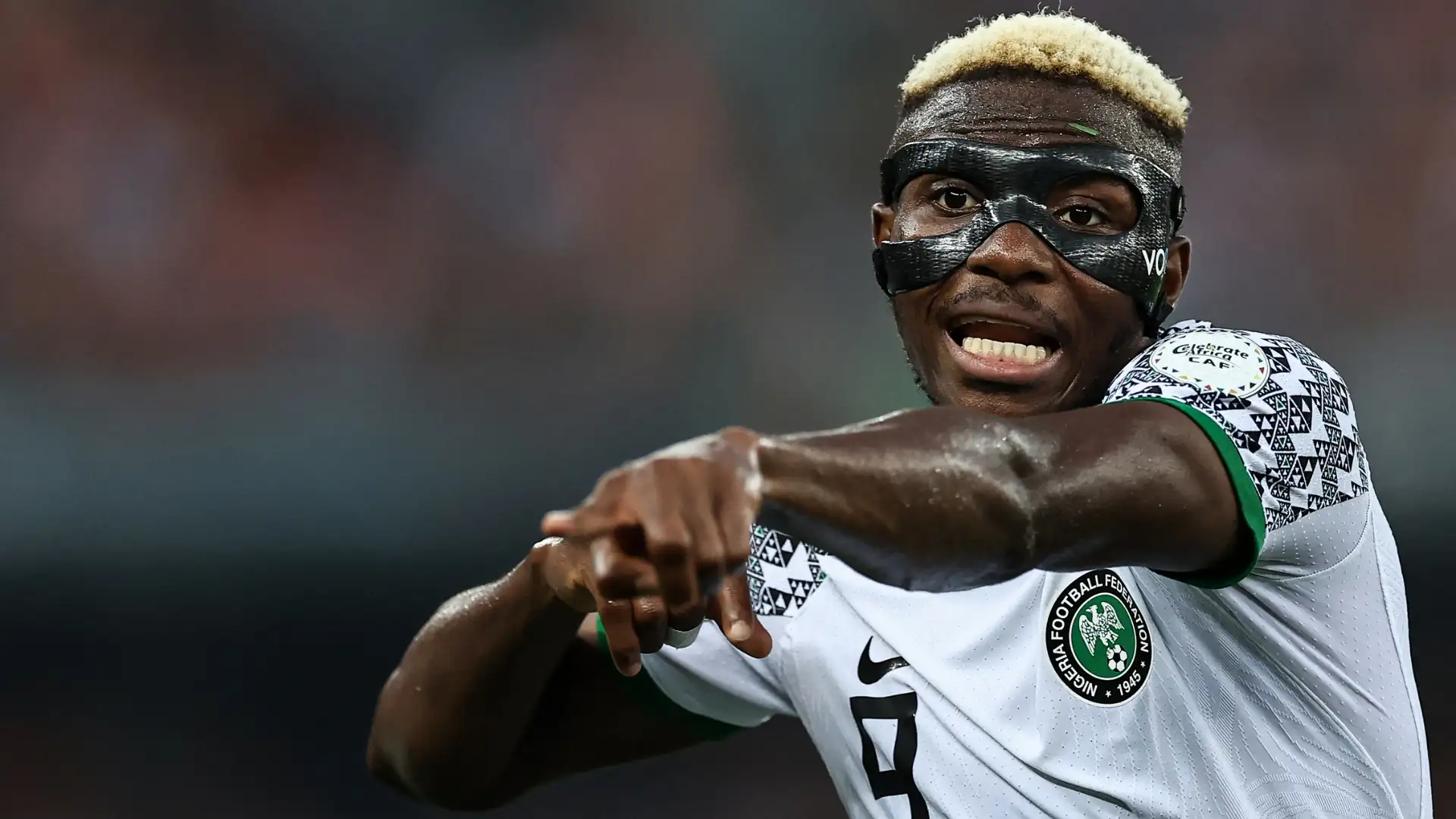
Osimhen is the only active player to crack the top ten, as it’s impossible to leave the striker out given his success at club and international level.
The towering front man is forever etched into Italian football history after helping end Napoli’s title drought in the 2022-23 season, racking up 26 league goals and being crowned both Serie A player of the year and African footballer of the year.
At international level, Osimhen only made his senior debut in 2017 but is already one of the country’s greatest ever goalscorers, with just a handful more goals needed to pass Rashidi Yekini in first place.
9) Vincent Enyeama
Vincent Enyeama is Nigeria’s greatest goalkeeper ever. With incredible reflexes, leadership, and consistency, he anchored the Super Eagles for over a decade, racking up 101 caps for his national side.
He captained Nigeria to the 2013 AFCON title and starred at multiple World Cups, particularly in 2014, where he produced memorable performances in clean sheets against Iran and Bosnia
At club level, the legendary shot-stopper won the Nigerian Premier League three times in the early 2000s before spending over half a decade in France starring for Lille.
8) Finidi George
Nigeria-2013-afcon-winners
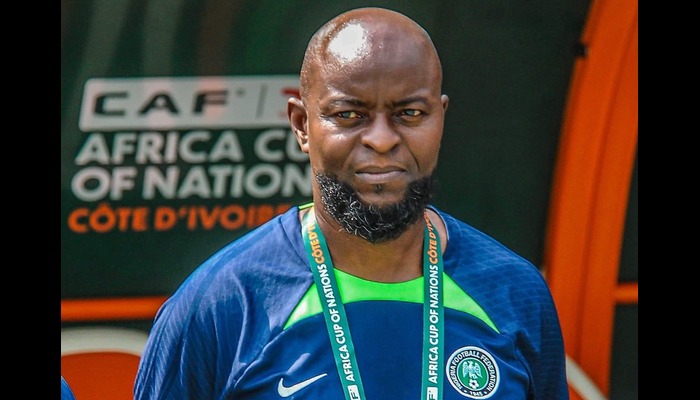
Finidi George was one of Africa’s finest wingers in the 1990s and a player who the likes of Lookman and Alex Iwobi will no doubt be looking up to.
With incredible pace and crossing that David Beckham would be proud of, he was a key part of Ajax’s golden generation that won the 1995 UEFA Champions League.
For the Super Eagles, Finidi was instrumental in the 1994 AFCON triumph and featured prominently in World Cups.
Consistency at elite club level and success internationally make Finidi one of Nigeria’s most accomplished players of all time, having also won the Eredivisie three times during his spell at Ajax.
7) John Obi Mikel
John Obi Mikel redefined the role of a Nigerian midfielder. Known for his intelligence, reading of the game and composure on the ball, he enjoyed most of his success at Chelsea, winning two Premier League titles, the Champions League and the Europa League.
Jose Mourinho once called him the “miracle man” due to his ability to play as a destroyer, marauding box to box midfielder or even as a number ten, with that versatility marking him out as one of the greatest midfielders in the Premier League in the late 2000s and early 2010s.
As captain, Mikel led Nigeria to AFCON victory in 2013 and an Olympic bronze medal in 2016. His leadership and discipline were crucial in stabilising teams filled with attacking talent.
6) Sunday Oliseh
On the topic of tough tackling midfielders, Sunday Oliseh was the engine of Nigeria’s midfield during its most successful era. A powerful and ruthless number six with tactical intelligence and leadership to boot, he played a crucial role in the 1994 AFCON win, 1996 Olympic gold, and multiple World Cup campaigns.
At club level, Oliseh featured for top European sides including Ajax, Juventus and Borussia Dortmund, making him one of the most decorated exports from Nigerian football.
His iconic long-range goal against Spain at the 1998 World Cup remains one of Nigerian sport’s greatest moments.
5) Segun Odegbami
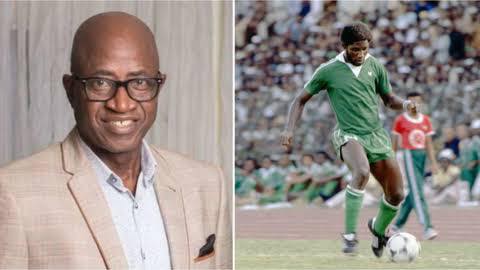
Segun “Mathematical” Odegbami was Nigeria’s first true football superstar. Playing primarily in the 1970s and early 1980s, he was a dynamic winger known for his pace, intelligence and ability to step up in the big moments.
He starred in Nigeria’s first AFCON victory in 1980, scoring crucial goals throughout the tournament. His understanding of the game and off-the-ball movement were ahead of his time, creating the pathway for the growth of some of the country’s greatest attacking talents.
Odegbami helped lay the foundation for modern African football, inspiring generations long before the continent gained the type of global footballing exposure it has today.
4) Stephen Keshi
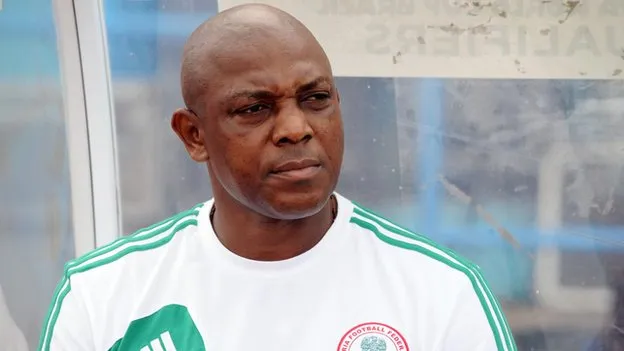
Stephen Keshi is one of a kind as a man who both captained and managed Nigeria to AFCON glory, starring in the 1994 team and later coaching them to another title in 2013.
As a defender, he was strong, commanding, and tactically astute.
Keshi enjoyed a successful club career in Europe, notably in Belgium, and also represented Nigeria in two World Cups and was a pillar of the golden generation.
As a coach, he rebuilt Nigerian football with locally based players, restoring national pride at a time when the national side was struggling. His legacy as both a player and coach cements his spot as one of the greatest of all time.
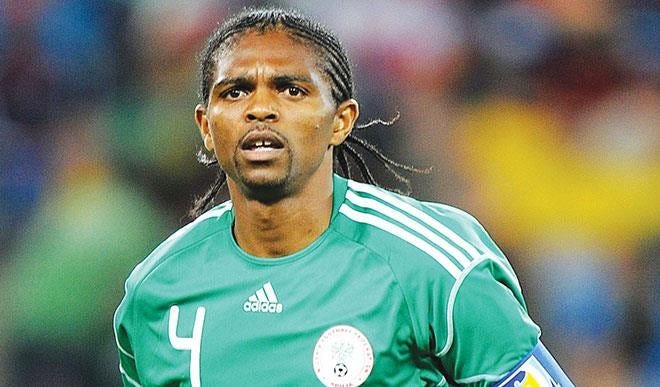
3) Nwankwo Kanu
A two-time African Footballer of the Year, Kanu won the UEFA Champions League with Ajax, multiple Premier League titles with Arsenal, and an Olympic gold medal in 1996 with Nigeria, making him one of the greatest African footballers of all time.
Overcoming a life-threatening heart condition early in his career, Kanu went on to enjoy remarkable longevity at the highest level, inspiring not only with his ability but with his resilience and fortitude.
His intelligent movement, ball control and lethal finishing made him a unique forward who thrived in tight spaces despite his huge 6 foot 5 frame.
Kanu’s post-playing career and humanitarian work further enhance his legacy, with the Kanu Heart Foundation tackling homelessness, building hospitals and paying for life-changing medical care.
2) Jay-Jay Okocha
Austin “Jay-Jay” Okocha is widely regarded as Nigeria’s most technically gifted footballer ever and one of the most “Barclays” players of all time.
Blessed with extraordinary dribbling ability, flair, and creativity, Okocha played the game with a smile on his face, and has even been compared to Brazil legend Ronaldinho.
He was the heartbeat of the Super Eagles for over a decade, starring in three World Cups and winning the 1994 AFCON. At club level, he shone for Eintracht Frankfurt, Fenerbahçe, PSG, and Bolton Wanderers, where he became a cult hero in the Premier League.
Okocha’s influence went beyond trophies – he changed how Nigerian footballers were perceived globally.
1) Rashidi Yekini
Rashidi Yekini stands as the most iconic striker in Nigerian football history. He remains Nigeria’s all-time leading goalscorer with 37 goals in 58 appearances, a record that has never seriously been threatened until Osimhen’s emergence.
His physical strength and clinical finishing made him a nightmare for defenders throughout the late 1980s and 1990s.
Yekini’s legacy is inseparable from Nigeria’s first World Cup goal in 1994, scored against Bulgaria. His emotional celebration – clutching the net and shouting in disbelief – became one of the most enduring images in World Cup history.
He also finished as the tournament’s top scorer in Nigeria’s 1994 AFCON triumph.
Yekini remains the benchmark against which all Nigerian players are measured.
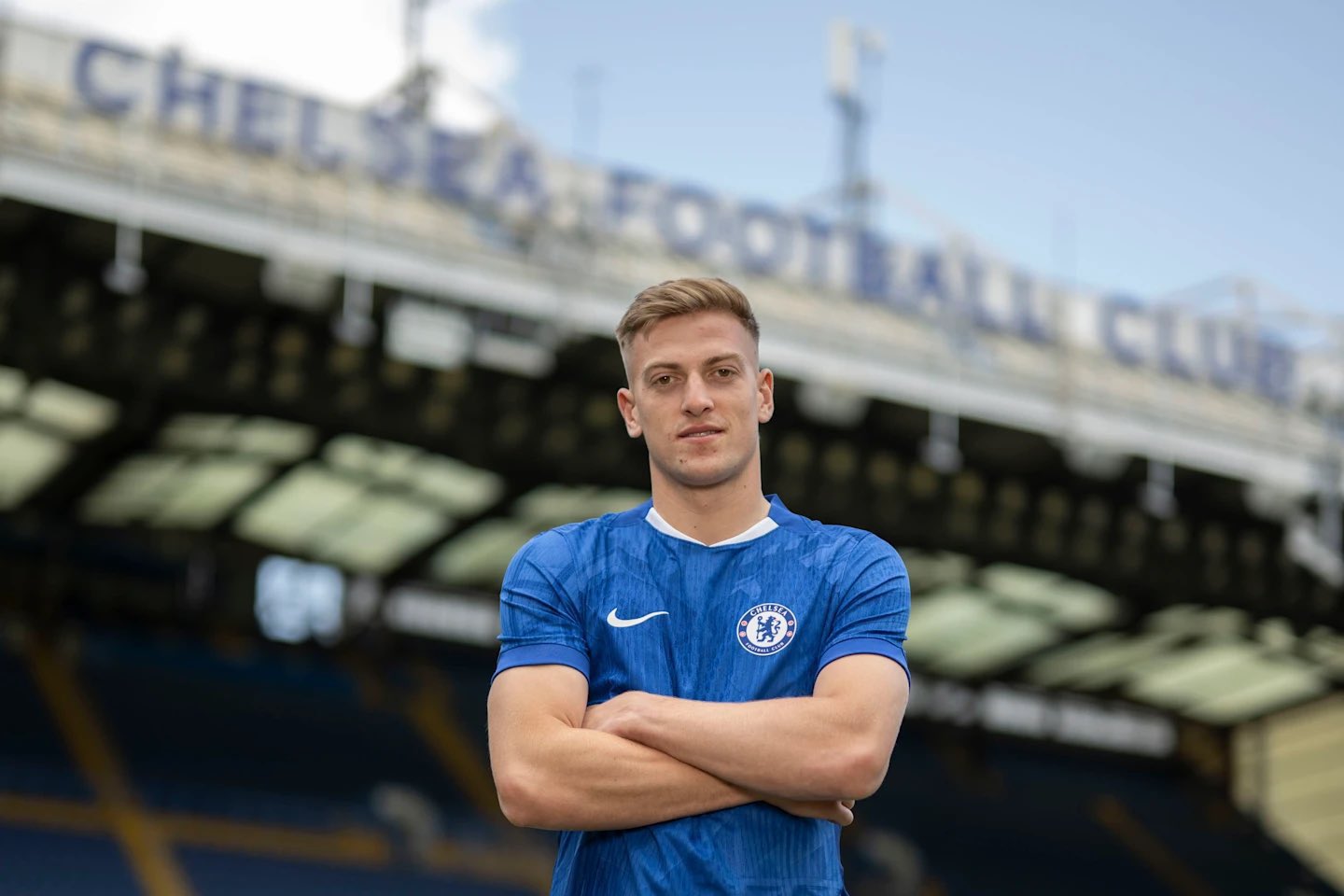
Liam Delap has completed a club-record £50m transfer from Chelsea to Nottingham Forest, signing a five-year contract at the City Ground.
The 23-year-old striker joins Forest after just one season at Stamford Bridge, where he scored only one Premier League goal.
Delap is hoping the move will revive his career and help him rediscover the form he showed during his breakthrough Premier League season with Ipswich in 2024-25.
He scored 12 league goals for Ipswich that campaign, despite playing for a side that won just four games and was relegated.
His performances attracted Chelsea, who signed him for around £30m. A year later, Chelsea have reportedly made a £20m profit by selling him to Forest for £50m.
Delap’s physical strength, pace and ability to carry the ball were among the qualities that made him so effective at Ipswich. He recorded 26 shot-ending carries that season — the most by any Premier League striker.
Now at Forest, Delap will work under manager Oliver Glasner, who he believes can help him take the next step in his development.
As reported by BBC Sport on Thursday, reacting to the transfer, Delap was quoted as saying, “This is a massive club with a big history.
“I spoke to the manager and I like his way. I think he can be the one to really help me develop and make that next step.”
Forest will hope Delap can reproduce the form that made him one of the Premier League’s most promising young strikers and justify the club-record investment.
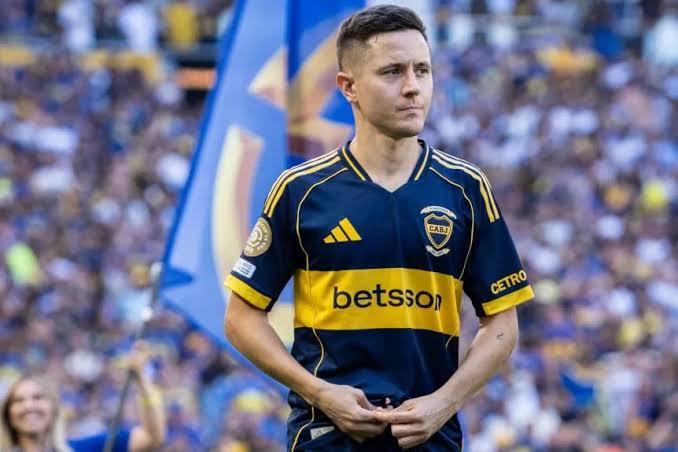
Ex-Man United midfielder Ander Herrera says returning to his boyhood club Real Zaragoza and playing for free is a dream come true as he looks to help the Spanish side rebuild their fortunes.
The 37-year-old midfielder has returned to Zaragoza after 15 years away, joining on a free transfer from Boca Juniors.
Herrera began his professional career at Zaragoza before going on to play for Athletic Club, Manchester United, Paris Saint-Germain and Boca Juniors.
Despite enjoying a successful career that included the Europa League, FA Cup and several league titles, Herrera says coming home is one of the most meaningful moves he has ever made.
“This is probably the last dream that I wanted to make come true,” Herrera told BBC Sport on Thursday.
“To come back home, to the place where I grew up, that allowed me to be professional – not only in football, also as a human being.”
Zaragoza are currently going through one of the most difficult periods in their history. The club were relegated from La Liga in 2013 and, after years of struggling in the second division, have now fallen into Spain’s third tier.
Herrera admits it has been painful to watch the club’s decline but says he wants to concentrate on helping them move forward.
“It has been so sad, of course, for all us Zaragozistas,” he said.
“Real Zaragoza belong to Europe, they belong to compete for trophies, to be fighting with the biggest clubs in Spain and in Europe.”
“I want to put my quality, my experience and my passion to try to help my team to come back where I think we belong.”
The midfielder has also decided to donate his salary to the Real Zaragoza Foundation rather than take a wage from the club.
“I don’t need a contract. I have a very successful career. I have taken care of my money,” Herrera said.
“I can give this present to myself. To put that shirt on… for free because I wanted to help my club, my team, my city.”
Herrera said the decision was motivated by his deep connection with Zaragoza and his desire to give something back to the club that helped shape him.
“It’s something that I wanted to do. It’s something that I can do and it’s something that makes me feel so proud to be able to be here just to help.”
“I’m not thinking about money or contracts. I feel privileged to be able to do that.”
Herrera was a passionate Zaragoza supporter before becoming a first-team player. His father, Pedro, also played for the club and later served as its general manager.
The midfielder’s earliest football memories include watching Zaragoza defeat Arsenal in the 1995 Cup Winners’ Cup final — a competition he later won himself during his career.
Now he hopes his experience can help Zaragoza return to the level he believes the club deserves.
Rather than looking back at the years of decline, Herrera wants the club to focus on rebuilding.
“Since the first day I came, I don’t want to talk too much about the past,” he said.
“We have been talking too much about what we have done wrong.”
“Let’s stop crying about what happened in the past. Let’s build on the future. Let’s come every day to training with a smile.”
For Herrera, returning to Zaragoza is about more than ending his playing career. It is an opportunity to repay the club that gave him his first chance and helps restore its place in Spanish football.
The Nigeria Football Federation Development Committee has described the recent death of a referee during a fitness test in Abuja as an unfortunate incident, saying the official underwent the required medical examinations before participating in the exercise.
Chairman of the committee, Faith Irabor, said there was no negligence in the medical process leading to the referee’s participation in the fitness test.
Irabor made this known in Abuja while addressing newsmen on Friday in Abuja at the ongoing pre-season fitness and technical training for referees ahead of the 2026/27 football season.
She said referees were required to undergo medical examinations, including an electrocardiogram in their respective states before being cleared to participate in the fitness exercise.
“Before we do any physical fitness test, there are conditions.
The referees will do the ECG from their state of origin. The doctors will certify them fit for the exercise.
“When they come here, they meet the medical team here that will also cross-check and certify them that they are fit to do the exercise,” Irabor said.
According to her, the deceased referee presented a medical report signed by a doctor certifying him fit for the exercise.
She said the medical team of the Nigerian Sports Commission also conducted further checks on the referees using a prescribed medical format before they were cleared.
“He brought his medical report. A doctor signed, certifying him fit for the exercise.
“The medical team also certified them fit because there is a pre-format that we gave them to use, and that was what they used. The papers are there,” she said.
Irabor said officials were also closely monitoring the referees during the physical exercise to respond immediately to any sign of distress.
“Even as they were training, we still followed them as they were training. Everybody stands at alert.
“So, when he was trying to stagger, we saw that and before he fell down, we took him and brought him for resuscitation and they took him to the hospital,” she said.
She also dismissed reports that the ambulance at the venue was not functional when the incident occurred.
“It is not true. The ambulance is working. It was there, and that was what we used to convey him to the hospital.
“We had a standby vehicle and we had an ambulance there. We don’t take people’s lives for granted,” Irabor said.
The chairman described the death as a very unfortunate event, insisting that all necessary precautions had been taken.
“He had all his records, he was certified by the doctors, and then what happened happened in the field. So, it wasn’t like there was negligence.
“No, there was no negligence at all,” she said.
Irabor, however, said the committee was considering further strengthening the medical screening process to provide additional safeguards for referees.
She said one of the measures being considered was to have referees undergo their medical examinations at the National Hospital rather than relying solely on examinations conducted in their respective states.
“Maybe what we will do, we will be taking more drastic action. Instead of allowing them to come from their home, we go to the National Hospital and ask them to do it, so that all of us will just be on the same page,” she said.
Also speaking, an FCT-based Premier League referee, Ayuba Peter, described the incident as unfortunate and said it should not be attributed to negligence.
“This incident that happened was quite an unfortunate one. I wouldn’t say it was negligence on the part of anyone.
“This is not the first time he was undergoing the test. He has been doing it and has been on the list for a long time,” Peter said.
Peter said referees were aware of the intensity of the fitness exercise and were expected to prepare adequately before participating.
Similarly, Akinwale, a referee from Oyo State, said the incident was unfortunate, noting that referees were required to undergo ECG and further medical checks before taking part in the exercise.
“It was just an unfortunate event. Before you come down to this place, you have to do your ECG.
“Once the ECG gives you assurance that you’re okay and can run this race, you bring the ECG down to this place, and the medical team will check it and do the proper check-up for you,” he said.
Akinwale said the incident should be regarded as an unfortunate occurrence despite the medical procedures in place.