Connect with us

Business

10 states plan N4.3tn borrowing to fund 2026 budgets

Published

on

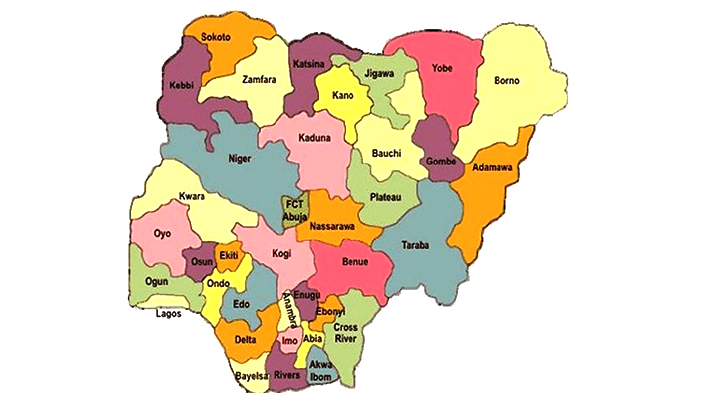
Ten states are planning to source about N4.287tn from loans, bonds, grants, capital receipts, and public-private partnerships to finance capital projects in their 2026 budgets. Collectively, the states, including Lagos, Abia, Ogun, Enugu, Osun, Delta, Sokoto, Edo, Bayelsa, and Gombe, presented budgets totalling N14.174tn to lawmakers.

An analysis of these budgets by The PUNCH shows that these states are increasingly turning to non-recurring financing beyond statutory federal transfers, including allocations from the Federation Accounts Allocation Committee, value-added tax receipts, and internally generated revenue, to support ambitious infrastructure and development projects.

Economists say Nigeria’s growing reliance on borrowing is not mainly because the country lacks revenue but because public funds are poorly managed. They argue that budgets, which should strictly guide government spending, are often ignored, while weak oversight and revenue leakages force governments to rely on loans. Although borrowing can help fund development when used carefully, frequent and unchecked borrowing risks creating long-term debt problems and passing today’s failures onto future generations.

In Lagos State, the commercial hub with the nation’s largest subnational budget, Governor Babajide Sanwo-Olu proposed a N4.237tn budget for 2026. Of this, N3.12tn will come from IGR and federal transfers, leaving N1.117tn (26.4 per cent) to be raised through loans and bonds to finance capital projects. Even for a state with IGR comparable to some smaller African countries, borrowing remains a key mechanism to fund ambitious infrastructure and development initiatives.

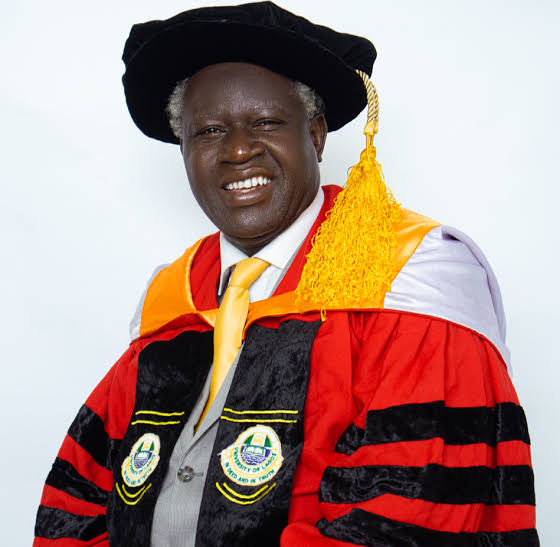
Former Vice-Chancellor of Crescent University, Prof Sheriffdeen Tella, told The PUNCH that states should live within their means and focus on improving internally generated revenue.

“States were not originally meant to borrow because they are largely dependent on allocations from the federal government,” he said, adding that weak fiscal discipline at the centre has encouraged similar behaviour at the subnational level.

According to him, the Federal Government’s own heavy borrowing has weakened its ability to restrain states, resulting in a system where all tiers of government accumulate debt, creating long-term problems for future generations.

Abia State’s N1.016tn budget illustrates the challenges facing smaller, less commercially driven states. Under Governor Alex Otti, who is spearheading a revival of years of neglected infrastructure, the state expects to generate N607.2bn from FAAC allocations, value-added tax, grants, and other federal revenue channels. This leaves a funding gap of N409bn, or 40.3 per cent, which the government plans to cover through borrowing and other non-recurring sources.

See also  NUPENG suspends strike as Dangote accepts union’s demands

Abia made verifiable progress in 2025, emerging as one of the leading states for domestic debt reduction. As of March 31, 2025, Abia’s domestic debt stood at N48.67bn, marking a 57.2 per cent decline from the previous year. By Q2 2025, the figure was reported at N48.6bn, the Debt Management Office recorded.

Governor Dapo Abiodun’s Ogun State N1.669tn “Budget of Sustainable Legacy” anticipates N509.88bn from internally generated revenue and N554.81bn from federal transfers, but loans and grants of N518.9bn (31.1 per cent) will be required to fund its capital projects.

In the first half of 2025, total state external debt in Nigeria rose slightly to $4.812bn, with Ogun State accounting for $21.8m of the increase.

Prof Tella warned that the persistent turn to borrowing reflects poor revenue management rather than a lack of income, insisting that Nigeria’s core fiscal challenge is revenue leakage and misappropriation.

“As far as I am concerned, revenue is not Nigeria’s problem. The problem is the stealing of the revenue,” he said, noting that public funds that should strengthen government finances are often lost, making borrowing appear inevitable.

Enugu State plans a N1.62tn budget for 2026, a 66.5 per cent increase over 2025. While N870bn from IGR and N387bn from federal allocations will cover recurrent expenditure and some developmental spending, N329bn (20.3 per cent) will come from loans and capital receipts.

The DMO reported that in Q2 2025, Enugu State had the highest domestic debt in the South-East, with a stock of N180.5bn, more than 10 times that of Ebonyi, the region’s least indebted state, which stood at N15.8bn.

“Budgeting in Nigeria does not make any sense to some of us. It no longer makes sense at all,” Assistant General Secretary of the Nigeria Labour Congress, Chris Onyeka, told our correspondent. “When budget performance is at 30 per cent, what is the point? When budgets are violated and not implemented, extra-budgetary expenses become the order of the day.”

See also  Oil output slumps as Nigeria, Libya, Venezuela drag OPEC+ targets

He questioned the effectiveness of Nigeria’s budgeting process, arguing that budgets have lost their force as binding legal instruments due to weak enforcement.

Onyeka said a budget is meant to serve as a guide that outlines government revenue expectations and spending plans for the coming year, noting that once approved by the legislature, it becomes law and should be strictly followed by the executive. “If you go outside the law, it means you have broken the law, and when laws are broken, there should be consequences,” he said.

Further, Osun State’s N723.45bn budget relies on N421.25bn in recurrent revenue, with N286.01bn (39.5 per cent) from capital receipts to fund its projects. The state significantly reduced its debt profile in 2025 under Governor Ademola Adeleke. External debt fell from $91.78m to $75.14m, a decline of 18.13 per cent, while domestic debt dropped from N148.37bn in 2022 to N83.32bn in 2025, a reduction of N65bn, or 43.84 per cent.

In Delta State, expected growth in internally generated revenue, projected at N250bn, combined with N720bn in federal transfers, still leaves N694bn (41.7 per cent) from loans and grants to fund capital expenditure in its N1.664tn budget. Sokoto State’s N758.7bn “Budget of Socio-Economic Expansion” will see N233.8bn (30.8 per cent) sourced from grants, aid, and capital development funds, while Edo State will cover N299bn (31.8 per cent) of its N939.85bn budget through loans, grants, and public-private partnerships.

The NLC executive said breaches of budgetary provisions often go unpunished, creating a system where accountability is selective. He said laws are typically enforced only when they affect ordinary citizens and workers, while government officials face little or no consequences for violations.

According to him, this lack of accountability undermines public confidence in the budget process and weakens fiscal discipline. On the issue of borrowing, Onyeka said debt itself was not a crime, stressing that borrowing could be justified if it is properly utilised to stimulate economic activity and support growth.

See also  PHOTOS - PDP’s 102nd NEC meeting holds in Abuja

Bayelsa State, another oil-dependent economy, plans N74.9bn (7.4 per cent) of its N1.01tn budget from loans and grants, while Gombe State’s N535.7bn “Budget of Consolidation” is the most dependent, with N325.5bn (60.8 per cent) expected from loans and capital receipts.

Under Governor Sheriff Oborevwori, Delta State reduced its domestic debt in 2025 through repayments rather than new borrowings. Domestic debt stood at N204.67bn as of June 30, 2025, down slightly from N204.72bn in March, with a Q2 reduction of N93.92bn noted in analyses. Although the state remains among the more heavily indebted, the decline reflects a measure of fiscal caution amid national trends.

Bayelsa State maintained one of the lowest domestic debt profiles among Nigerian states as of mid-2025 under Governor Douye Diri. Domestic debt fell to N65.99bn by June 30, 2025, down from N73.53bn in March, reflecting a N7.54bn reduction in Q2. The state remains the least indebted in the South-South region.

Tella also criticised the handling of savings from reforms such as fuel subsidy removal and naira devaluation, alleging that the gains are shared among different tiers of government without clear evidence of impact at the state level.

He said the absence of public accountability and sustained pressure on government officials has allowed the situation to persist, undermining fiscal sustainability and public trust.

Last week, fiscal expert Aliyu Ilias told our correspondent that states with low IGR are particularly vulnerable. He warned that over one-third of budgets in several states depend on non-recurring funds, which could undermine fiscal sustainability if borrowing and external funding do not materialise on time.

Managing Director of Optimus by Afrinvest, Dr Ayodeji Ebo, said, “Relying heavily on loans and grants for capital projects exposes states to funding delays and increases debt servicing obligations. For long-term sustainability, states must focus on building durable local revenue sources rather than depending excessively on external inflows.”

punch.ng

Continue Reading
Click to comment

Leave a Reply

Your email address will not be published. Required fields are marked *

Business

EFCC Begins Probe Of Ex-NMDPRA Boss After Dangote’s Petition

Published

on

The Economic and Financial Crimes Commission (EFCC) has commenced an investigation into a petition filed against the former Managing Director of the Nigerian Midstream and Downstream Petroleum Regulatory Authority (NMDPRA), Farouk Ahmed, by the President of Dangote Group, Aliko Dangote.

It was gathered that Dangote formally submitted the petition to the EFCC earlier this week through his legal representative, following the withdrawal of a similar petition from the Independent Corrupt Practices and Other Related Offences Commission (ICPC).

Dangote had initially approached the ICPC, asking it to investigate Ahmed over allegations that he spent about $5 million on his children’s secondary education in Switzerland, an expense allegedly inconsistent with his known earnings as a public officer.

Although the petition was later withdrawn, the ICPC had said it would continue with its investigation.

Confirming the new development, a senior EFCC officer at the commission’s headquarters in Abuja, who spoke on condition of anonymity because he was not authorised to speak publicly, said the petition had been received and investigations had commenced.

“They have brought the petition to us, and an investigation has commenced on it. Serious work is being done concerning it,” the source said.

In the petition signed by Dangote’s lead counsel, Dr O.J. Onoja (SAN), the businessman urged the EFCC to investigate allegations of abuse of office and corrupt enrichment against Ahmed and to prosecute him if found culpable.

The petition further stated that Dangote was ready to provide documentary and other evidence to support claims of financial misconduct and impunity against the former regulator.

See also  Lagos govt cracks down on illegal trading under bridges

“We make bold to state that the commission is strategically positioned, along with sister agencies, to prosecute financial crimes and corruption-related offences, and upon establishing a prima facie case, the courts do not hesitate to punish offenders,” the petition read, citing recent court decisions.

Onoja also called on the EFCC, under the leadership of its chairman, Olanipekun Olukoyede, to thoroughly investigate the allegations and take appropriate legal action where necessary.

When contacted, the EFCC spokesperson, Dele Oyewale, declined to comment on the matter but promised to respond later. No official reaction had been received as of the time of filing this report.

FOLLOW US ON:

FACEBOOK

TWITTER

PINTEREST

TIKTOK

YOUTUBE

LINKEDIN

TUMBLR

INSTAGRAM

Continue Reading

Business

IMPORTANT NOTICE REGARDING MONEY TRANSFERS IN NIGERIA (2026)

Published

on

Starting from *January 2026*, please ensure that *any money you send* to anyone — including me — comes with a *clear description* or *payment remark*. This is *very important* for tax purposes.

Use descriptions like:

– *Gift*
– *Loan*
– *Loan Repayment*
– *House Rent*
– *School Fees*
– *Feeding*
– *Medical*
– *Support*,
– School fee etc.

*Why this matters:*

In 2026, any money entering your account *without a description* may be treated as *income*, and *IRS (or relevant tax authority)* could tax it — or even worse, ask you to explain the source.

The *first ₦800,000* may be *tax-free*, but after that, any unexplained funds might attract up to *20% tax*, or in extreme cases, lead to legal issues.

So please:

– *Always include a payment remark.*
– *Avoid using USSD or apps that don’t allow descriptions.*
– *Ask the receiver for the correct description BEFORE sending.*

As for me, *do not send me any money* without discussing it with me first.
And no, I don’t want to hear “Sir/Ma, I used USSD” – if you can’t add a description, *hold your money*.

From now on, *I will tell you exactly what to write in the payment remark.*
Let’s all form the habit of *adding payment descriptions now* to avoid problems later.

FOLLOW US ON:

FACEBOOK

TWITTER

PINTEREST

TIKTOK

YOUTUBE

LINKEDIN

TUMBLR

INSTAGRAM

See also  PHOTOS - PDP’s 102nd NEC meeting holds in Abuja
Continue Reading

Business

FG earmarks N1.7tn in 2026 budget for unpaid contractors

Published

on

The Federal Government has budgeted the sum of N1.7tn in the 2026 Appropriation Bill to settle outstanding debts owed to contractors for capital projects executed in 2024.

A breakdown of the proposed 2026 national budget shows that the amount is captured under the line item titled “Provision for 2024 Outstanding Contractor’s Liabilities,” signalling official recognition of delayed payments to contractors amid recent protests over delayed settlements.

This budgetary provision follows mounting pressure from indigenous contractors and civil society groups who, in 2025, raised alarm over unpaid contractual obligations allegedly exceeding N2tn.

Some groups under the All Indigenous Contractors Association of Nigeria had also staged demonstrations in Abuja, lamenting the severe impact of delayed payments on their operations, with many contractors reportedly unable to service bank loans taken to execute government projects.

Earlier, Minister of Works David Umahi had promised to clear verified arrears owed to federal contractors before the end of 2025. However, only partial payments were made amid revenue constraints, prompting the inclusion of the N1.7tn line item in the 2026 budget as a catch-up mechanism.

In addition to the N1.7tn for 2024 liabilities, the government has also budgeted N100bn for a separate line item labelled “Payment of Local Contractors’ Debts/Other Liabilities”, which may cover legacy debts from previous years, smaller contract claims, or unsettled financial commitments that were not fully verified in the current audit cycle.

The total N1.8tn allocation is part of the broader N23.2tn capital expenditure in the 2026 fiscal plan, which seeks to ramp up infrastructure delivery while cleaning up past obligations.

See also  2027 Presidency: Makinde, others to fight for PDP ticket

Nigeria’s contractor debt backlog has been a recurring fiscal issue, worsened by delayed capital releases, partial cash-backing of budgeted projects, and underperformance in revenue targets.

Speaking with journalists at the entrance of the Federal Ministry of Finance in December 2025, the National Secretary of the All Indigenous Contractors Association of Nigeria, Babatunde Seun-Oyeniyi, said the government’s failure to release funds after multiple assurances had forced contractors to resume protests. He said members of the association were owed more than N500bn for projects already completed and commissioned.

He explained that despite recent assurances from the Minister of Finance, Wale Edun, no payment had been made. “After the National Assembly intervened, they told us that they will sit the minister down over this matter.  And we immediately stopped the protest,” he said.

According to him, repeated follow-up meetings with the minister had produced no tangible progress. “They have not responded to our request,” he said. “In fact, more than six times we have come here. Last week, we were here throughout the night before the Minister of Finance came.”

Oyeniyi said that although some payment warrants had been sighted, no funds had been released. “Specifically, when we collate, they are owing more than N500bn for all indigenous contractors. We only see warrants; there is no cash back.”

He accused officials of attempting to push the payments into the next fiscal year. “The problem is that they want to put us into a backlog. They want to shift us to 2026; that 2026, they are going to pay,” he alleged. “They will turn us into debt, and we don’t want that. We won’t leave here until we are paid.”

See also  VIDEO: Chaos as last-minute shoppers overwhelm Lagos Balogun market

However, The PUNCH observed that earlier in August 2025, the Federal Government claimed that it had cleared over N2tn in outstanding capital budget obligations from the 2024 fiscal year, with a pledge to prioritise the timely release of 2025 capital funds.

The Minister of Finance and Coordinating Minister of the Economy, Wale Edun, disclosed this at a ministerial press briefing in Abuja, where he also declared that Nigeria is “open for business” to global investors on the back of improved economic stability.

“In the last quarter, we did pay contractors over N2tn to settle outstanding capital budget obligations. That is from last year,” Edun said. “At the moment, we have no pending obligations that are not being processed and financed. And the focus will now shift to 2025 capital releases.”

By December 2025, The PUNCH reported that President Bola Tinubu expressed “grave displeasure” over the backlog of unpaid federal contractors and set up a high-level committee to resolve the bottlenecks and fund repayments.

Briefing State House correspondents after the Federal Executive Council meeting in Abuja, Special Adviser on Information and Strategy, Bayo Onanuga, said the President was “upset” after learning that about 2,000 contractors are owed. “He made it very, very clear he is not happy and wants a one-stop solution,” Onanuga told journalists.

Tinubu directed the setting up of a committee to verify all claims from federal contractors. The new budget’s provisions are expected to draw from the outcome of that verification exercise and may be disbursed in tranches based on confirmed and certified claims.

See also  Obasanjo, Fayose reignite old enmity, trade insults

The total proposed 2026 national budget stands at N58.47tn, with N23.2tn earmarked for capital expenditure, N15.9tn for debt servicing, N15.25tn for recurrent spending, and N4.09tn for statutory transfers.

punch.ng

FOLLOW US ON:

FACEBOOK

TWITTER

PINTEREST

TIKTOK

YOUTUBE

LINKEDIN

TUMBLR

INSTAGRAM

Continue Reading

Trending