The Nigerian military has identified one Shariff Umar as the suspected principal coordinator of a suicide bombing network linked to recent deadly attacks, including the December 24 bombing at the Gamboru Market Mosque in Maiduguri, and attempted strikes across the North-East.
This follows intelligence-led operations by troops of the Joint Task Force North East, Operation Hadin Kai (OPHK)
The breakthrough came after a series of cordon-and-search operations conducted in the Kalmari area of Maiduguri on December 31, 2025, during which 14 suspects believed to be connected to suicide bombing activities were arrested.
The development was disclosed in a statement on Saturday in Maiduguri by the Media Information Officer of the Joint Task Force North East, Operation Hadin Kai, Lt. Col. Sani Uba, who said investigations had uncovered the structure and operational linkages of the terror cell, according to Vanguard.
On the identification of Umar, the statement said, “This development followed intelligence-led cordon-and-search operations conducted at the Kalmari area of Maiduguri on 31st December 2025, during which 14 suspects linked to suicide bombing activities were arrested. Subsequent detailed identification and investigative processes established the structure, roles, and operational linkages of the terror cell.”
According to the military, a detained suspected suicide bomber, Ibrahim Muhammad, provided crucial information during interrogation, directly implicating Shariff Umar, also known as Yusuf, as the ringleader of the network.
“During the investigation, a suspected suicide bomber currently in custody, Ibrahim Muhammad, unequivocally identified Shariff Umar (also known as ‘Yusuf’) as the ringleader and coordinator of the terror network,” the statement said.
Lt. Col. Uba explained that Umar was responsible for recruiting, preparing and deploying suicide bombers, as well as coordinating logistics and the delivery of improvised explosive device components.
“According to consistent and corroborated statements, Shariff Umar was responsible for recruiting, preparing, directing, and dispatching suicide bombers to assigned targets, as well as coordinating logistics and delivery of Improvised Explosive Device (IED) components.
“Investigations further revealed that Shariff Umar directly coordinated the suicide bombing attack at the Gamboru Market Mosque on 24 December 2025, during which his accomplice, Adamu (now deceased), detonated a suicide vest,” the statement said.
He was also accused of organising a foiled suicide bombing attempt in Damaturu, Yobe State.
“He was also identified as the coordinator of the foiled suicide bombing attempt in Damaturu, personally handing over IED components to the suicide bomber in Maiduguri,” the statement said.
The military said further links within the network were uncovered, including the alleged involvement of Umar’s wife, Yagana Modu, and corroboration from his stepdaughter, Amina.
The statement added, “Additional links within the network were established, including the involvement of Shariff Umar’s wife, Yagana Modu, and the confirmation by his stepdaughter, Amina, who admitted to previously seeing the suspect bomber within their residence.”
All suspects remain in custody and are undergoing intensive investigations aimed at dismantling the network and recovering any remaining explosives.
“All suspects remain firmly in custody and are undergoing intensive, multi-layered investigations aimed at fully dismantling the network, identifying additional collaborators, and recovering any remaining explosives or logistical assets,” the statement also said.
The military also called on residents to support security efforts by providing timely information.
Uba said, “OPHK underscores that this success once again highlights the critical importance of effective collaboration between security forces and the civil populace. Terrorist networks often survive by hiding within communities, exploiting silence, fear, or misplaced loyalty.
“Timely information from law-abiding citizens remains one of the most powerful tools in preventing attacks and saving innocent lives.”
Suspected Suicide bomber Ibrahim Muhammad. Photo credit: Isah Ojo
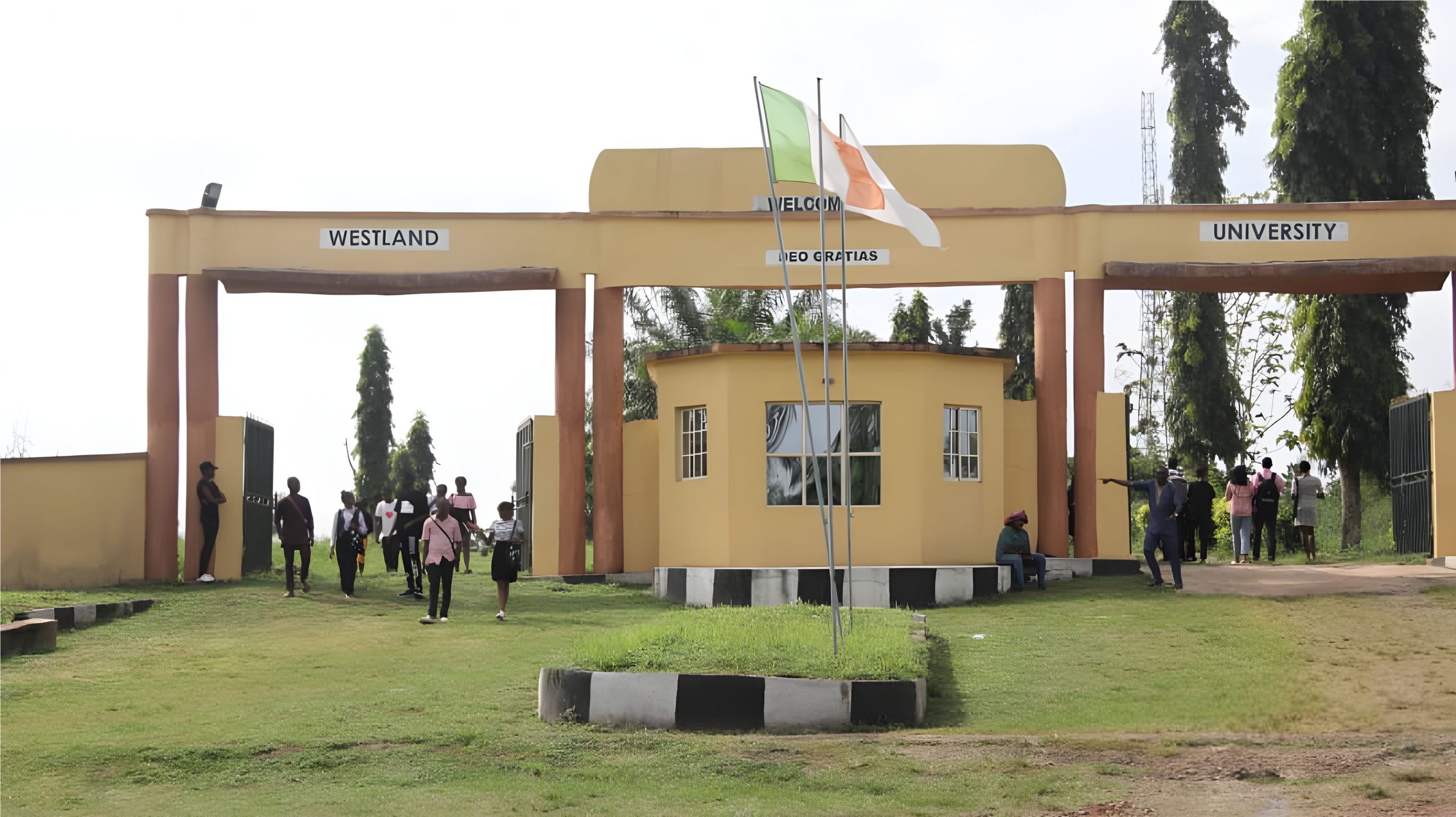
Some unknown assailants have reportedly stabbed Monica Mary, a 21-year-old 300-level student of Westland University, Iwo, Osun State, to death, causing panic among students and other residents of the town.
Sources in the Agbowo area of Iwo, where Mary had taken up accommodation, who preferred anonymity for security reasons, told PUNCH Metro during a telephone interview on Wednesday that the incident occurred around 11:30 pm on Tuesday.
It was also gathered that Mary had been residing on the university campus until recently, when she took up accommodation in the Agbowo area, where she eventually met her untimely death.
A resident of Agbowo, who spoke with our correspondent on the matter, further said, “She was murdered around her hostel at about 11:32 pm in Agbowo, Iwo.
“Someone said she heard her noise when the incident happened, but no one could come out. She had gone out to charge her mobile phone. She was a calm girl and did not get into trouble.
“It was pathetic that such a thing happened to her. Her parents had been informed. The matter was reported to the police at Iwo Division, but the entire student community in the town is in a state of panic over the incident.”
When contacted, the spokesperson for the Osun State Police Command, Abiodun Ojelabi, confirmed the incident.
Ojelabi said operatives had visited the scene of the crime and assured that the perpetrators would be apprehended soon.
He said, “We received the report of the murder of Monica Mary, a student of Westland University, Iwo, this morning. On arrival, we examined the area and the corpse, and a cut was discovered on her neck. It was suspected to be a knife wound.
“We got information that she went to charge her phone and was returning when the incident happened. She had been living on campus since she gained admission to the university.
She just moved off campus this semester.
“We recovered a knife, a phone pouch and other items. The Commissioner of Police has directed that the Criminal Investigation Department take over the case. Investigation is ongoing, and the parents are ready to support the police.”
The Philadelphia Police Department in the United States has declared Olukayode J. Taiwo, son of Nigerian journalist Kemi Olunloyo, wanted over the alleged abduction of a woman at gunpoint and a subsequent shooting incident.
Taiwo, also known as Rick KJT, was identified by detectives as the suspect in the two incidents involving the same victim.
According to police, the first incident occurred around 10 p.m. on November 2, 2026, along the 1500 block of West Seybert Street in North Philadelphia, where Taiwo allegedly abducted the woman at gunpoint.
Investigators said he later fired two shots in the direction of the woman and her home on November 15, along the 7600 block of Rugby Street in Philadelphia’s Cedarbrook neighbourhood.
Authorities have not released details about the victim’s condition or what may have led to the incidents.
Police believe Taiwo may be driving a silver or grey Honda Accord, reportedly a 2026 model, with Pennsylvania registration number H900330.
Taiwo was reportedly born in the United States but moved to Nigeria with his mother following her deportation. He later returned to the US after completing his secondary school education.
The Philadelphia Police Department is appealing to members of the public with information about his whereabouts to contact the police at 215-686-TIPS (8477) or provide information that could lead to his arrest.
Eight Nigerians have been charged alongside four other people in Canada over an alleged organised vehicle theft network linked to the recovery of 96 stolen vehicles valued at more than $4.5m and reportedly destined for West Africa.
Peel Regional Police in Ontario disclosed this in a statement published on its website on Monday, saying the 12 suspects were facing a total of 231 charges following an investigation into the theft and exportation of luxury sport utility vehicles, pickup trucks and other high-value vehicles.
The investigation, code-named Project Cadetta, began in March 2026 in partnership with the Canada Border Services Agency and initially focused on a warehouse in Brampton, Ontario, allegedly used to store stolen vehicles before they were shipped to West Africa through Canadian ports.
Police said the investigation later uncovered a wider criminal network operating across the Greater Toronto Area and neighbouring jurisdictions.
According to the police, five key suspects allegedly coordinated the theft, movement and exportation of the vehicles, while others supported the operation through loading sites, container movements and transportation of vehicles with altered identification numbers.
The 96 recovered vehicles were discovered concealed in shipping containers, the police said.
Those listed as Nigerian include Stanley Udeh, 46, of Brampton; Odewale Abraham, 57; Oluyemi Sodade, 51; Tosin Damilola Oyebade, 45; Oluwaseyi Olawale Bameke, 39; and Olushola Oke, 42, all of Toronto.
Others are Gbolahan Qudus Babatunde, 29, of Vaughan, and Kenneth Okafor, 58, listed as having no fixed address.
The other accused are Karamveer Singh, 26, of Brampton; Henrik Gancz, 57; Jaspreet Singh, 25, both listed as having no fixed address; and Darryl Davance, 25, of Saint-Jerome, Quebec.
The accused face various charges, including possession of property obtained by crime, trafficking in stolen goods valued at more than $5,000, forgery and uttering forged documents. One of them also faces a charge of dangerous operation of a motor vehicle.
Peel Regional Police said nine of the accused were charged and released with future court dates, while three were held for bail hearings and subsequently released.
The police added that some of the accused could face immigration enforcement action, including possible removal from Canada, after the conclusion of their criminal proceedings.
Commenting on the investigation, the Deputy Chief of Peel Regional Police, Nick Milinovich, said organised vehicle theft was connected to wider criminal activities.
“Organised auto theft is a predatory business model run by transnational syndicates that terrorise families and fund broader criminal enterprises. Through Project Cadetta, our Commercial Auto Crime Bureau and partners dismantled this supply chain from street-level thieves to international export brokers,” he said.
Ontario’s Solicitor General, Michael Kerzner, said the operation demonstrated the government’s commitment to tackling organised criminal networks.
He said, “Organised auto theft is a serious crime that threatens the safety and security of our communities, and our government will never back down from taking on the criminal networks responsible.”
The Canada Border Services Agency’s Acting Regional Director General for the Greater Toronto Area, Trishann Pascal, said the agency helped prevent stolen vehicles from reaching international markets through targeted container examinations and intelligence-sharing with law enforcement partners.
Peel Regional Police said the investigation remained ongoing, adding that further charges were anticipated and arrest warrants had been issued for additional individuals.
The police also reported that auto thefts across Peel Region had declined by more than 50 per cent since reaching a peak in 2023, with a further 10 per cent reduction recorded year-to-date in 2026.