Connect with us

Business

Aviation professionals outline paths to sector recovery

Published

on

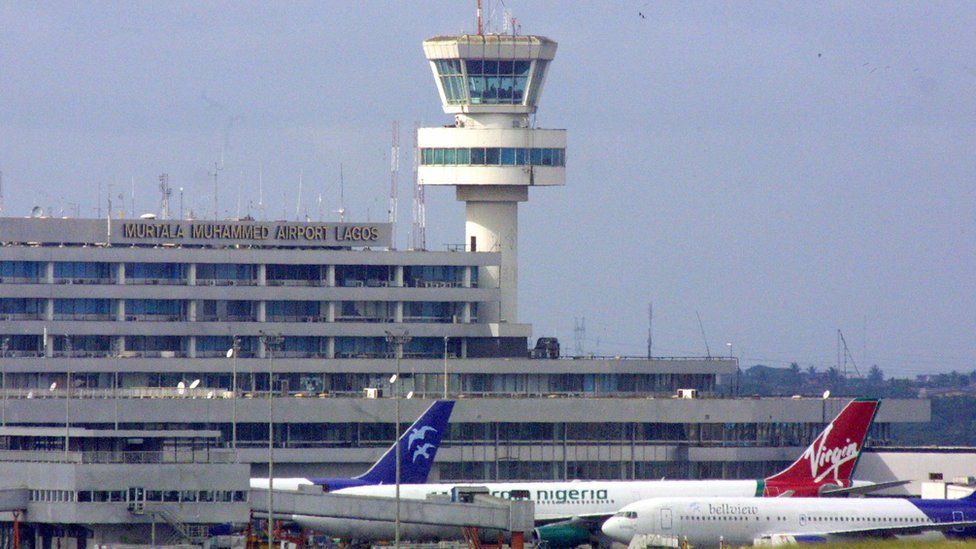
Professionals from different disciplines in the aviation industry have suggested various ways to ease the pains and ensure progress in the sector over the next 12 months.

They spoke during different interviews with our correspondents. A retired airline captain, Muhammed Badamosi, raised concerns over the state of Nigeria’s aviation sector, warning that years of neglect, weak regulation, and poor infrastructure could push the industry to the brink of collapse if urgent reforms are not undertaken.

Badamosi likened the sector’s development to “a journey where you take one step forward and two steps backwards,” arguing that little has changed over the past decade.

“In terms of infrastructure, financing, and regulatory oversight, the aviation sector today is no better than it was 10 years ago. Which of these areas has truly improved? We need to ask ourselves honest questions if we want progress.”

According to the retired pilot, Nigeria’s major airports are still operating with obsolete navigation systems that the rest of the world has long abandoned.

Badamosi explained, “Since the 1980s, most of our major airports have relied on Category 2 Instrument Landing Systems and VOR for navigation. Globally, aviation has moved on to Category 3-1, 3-2, and even 3-3 systems. What are we still doing here, more than 20 years after joining the world on Category 2 ILS?”

He noted that while Nigeria is spared the extreme winter conditions of the northern hemisphere, the limitations of Category 2 ILS still pose risks. He said, “In severe weather, Category 2 ILS is practically useless. We are only lucky that what we deal with here is mostly harmattan haze and short-lived fog.”

Badamosi also pointed to deteriorating airport infrastructure, including runways and taxiways that require urgent rehabilitation or outright reconstruction.

See also  Dangote resigns as chairman of cement company

“Have we achieved total radar coverage under TRACON? I don’t think so. These are the things that make airports safe. Without them, safety is compromised.”

Another major concern raised was the prevalence of ageing aircraft in the country’s fleet, many of which are second-hand. He cited recent incidents involving nose-wheel collapses during landing or taxiing as troubling signs.

“Some of these incidents should never have happened,” Badamosi said. “In some cases, the Nigerian Civil Aviation Authority is complicit because of corruption in the system.”

Badamosi criticised the current structure of aircraft inspection within the NCAA, noting that inspectors often stay far longer than regulations allow. “Inspectors are meant to be engaged on three-year contracts, renewable for just one year. Today, some have been in the system for over eight years.”

He explained that the original policy was designed to reduce the risk of inspectors becoming compromised by operators. “If you ask the Director-General, he may say it’s cost-effective,” Badamosi said. “But it’s time we weigh the cost of training against the cost of flight safety.”

He also described federal funding for aviation as inadequate, noting that about N714bn has reportedly been budgeted for aviation services. “That amount is highly inadequate for a sector as capital-intensive as aviation,” he said.

As a solution, Badamosi suggested concessioning some airports to reduce the financial burden on the government and improve efficiency. “The government can help itself by concessioning airports if Nigeria wants to be highly rated in global aviation,” he said.

Looking ahead, he stressed the need for sustainable financing and strategic partnerships. “Aviation is capital-intensive. Both airlines and service providers need sustainable financing to meet the challenges ahead. Members of the Airline Operators of Nigeria should seek partnerships with foreign airlines willing to operate here.

See also  New Tax Law: S£x Workers, Hookup Girls to Pay Tax from 2026 – Presidency (VIDEO)

“One of the reasons foreign airlines are reluctant to lease aircraft for operations in Nigeria is the state of our infrastructure. If these issues are not addressed urgently, the sector risks collapse and possible blacklisting.”

Also speaking, the President of the National Association of Nigerian Travel Agencies, Dr Yinka Folami, insisted that the controversial claim about 18 taxes on airline operators was unfamiliar to industry professionals with decades of experience in airfare construction and ticketing.

He called for a government probe of the claim for the benefit of all. He explained that in over 50 years of NANTA’s existence, the assertion of 18 government taxes on a single ticket was new to the association, which has over 4,000 registered members.

He, however, said the claim of 18 taxes on each ticket may not be impossible but insisted it required proper enquiry and deconstruction. “Unfortunately, everyone has become an expert on aviation taxes. But leadership demands focus. Let us stop speculation and interrogate the construction of these alleged 18 taxes.”

“In June, a Lagos–Abuja one-way ticket sold for about N100,000 or less. By December, it jumped to between N200,000 and N250,000. Government taxes did not change within that period. So, the increase cannot be attributed to taxes.”

He insisted that such fare increases were a result of airline business decisions influenced by seasonal demand, not government policy.

Also commenting, travel analyst Lucky George attributed the persistent fare challenge to capacity constraints by Nigerian airlines, rather than taxation. George said the Nigerian aviation market serves over 200 million people, yet capacity is limited, stressing that high fares are largely a result of supply failing to meet demand.

See also  Tinubu orders FIRS, Customs to review revenue deductions

He argued that high prices have made air travel inaccessible to a large segment of the population, despite strong demand. George also canvassed the re-establishment of a new national carrier, declaring that the current indigenous airlines lack capacity.

Industry expert Olumide Ohunayo emphasised the need for stronger collaboration among airport authorities and for unruly passenger cases to be taken beyond media attention to actual prosecution.

He also argued that rising airfares should not be dismissed as a seasonal issue. According to him, government support in helping airlines acquire more aircraft and establish local maintenance, repair, and overhaul facilities would ease capacity constraints and ultimately reduce ticket prices.

“First, I really want to see real synergy among airports and take unruly cases beyond the airport and media to the prosecution stage. We have seen in other climes where offenders are punished by the law because of rules that automatically take effect when airport laws are violated.

“The system follows through to ensure that airport offenders are punished, but here, what we see is that after media reports, everybody goes to sleep. That is why we continue to have a recurrence of bad behaviour at our airports. Nobody should be above the law.

“Rather, the government should continue to help airlines get more aircraft and also establish MROs within our domain. These measures will help drive airfares downward. What we have noticed is that there is a capacity constraint, and this aspect needs serious attention at this time.”

Continue Reading
Click to comment

Leave a Reply

Your email address will not be published. Required fields are marked *

Business

Customs hand over seized N40.7m petrol to NMDPRA

Published

on

The Comptroller-General of Customs, Adewale Adeniyi, on Friday handed over 1,650 jerrycans of Premium Motor Spirit, worth N40.7 million, to the Nigerian Midstream and Downstream Petroleum Regulatory Authority for further investigation.

Addressing journalists at the handover ceremony held at the Customs Training College in Ikeja, Adeniyi said the seized fuel was intercepted at various locations, including Badagry, Owode, Seme, and other axes within Lagos State.

Represented by the National Coordinator of Operation Whirlwind, Deputy Comptroller-General Abubakar Aliyu, Adeniyi said the contraband was intercepted over the past nine weeks.

“In the space of nine weeks, our operatives intensified surveillance and enforcement across critical border communities. A total of 1,650 jerrycans of 25 litres each were seized along notorious smuggling routes, including Adodo, Seme, Owode Apa, Ajilete, Idjaun, Ilaro, Badagry, Idiroko, and Imeko. The total duty-paid value of the PMS is N40.7 million,” Adeniyi said.

He added that three tankers used to transport the fuel were carrying 60,000, 45,000, and 49,000 litres respectively, totalling 154,000 litres of PMS.

According to Adeniyi, the interception was the result of intelligence-driven operations and the vigilance of Operation Whirlwind in safeguarding Nigeria’s economy and energy security.

He explained that the transportation and movement of petroleum products are governed by regulatory frameworks and standard operating procedures designed to prevent diversion, smuggling, hoarding, and economic sabotage.

“These items contravened the established Standard Operating Procedures of Operation Whirlwind,” Adeniyi said, emphasising that such violations undermine government policy, distort market stability, and deprive the nation of critical revenue.

See also  Dangote resigns as chairman of cement company

He warned that border corridors such as Owode, Seme, and Badagry remain sensitive economic arteries. “These routes have historically been exploited for illegal cross-border petroleum movement. Under our watch, there will be no safe haven for economic sabotage,” he said.

Adeniyi said the handover to NMDPRA reflects inter-agency collaboration. “While Customs enforces border control and anti-smuggling mandates, NMDPRA regulates distribution and ensures compliance with downstream laws. This collaboration ensures due process, transparency, and regulatory integrity,” he said.

Representing NMDPRA, Mrs. Grace Dauda said the agency ensures that petroleum products produced in Nigeria are consumed domestically. “It is unfortunate that some businessmen attempt to smuggle the product out of the country. The public must work together to stop economic sabotage,” she said.

Operation Whirlwind is a special tactical enforcement operation launched by the Nigeria Customs Service in 2024 to combat cross-border smuggling of petroleum products, particularly PMS, and other contraband that threaten Nigeria’s economic security. It was established in response to a surge in illegal fuel diversion across the country.

punch.ng

FOLLOW US ON:

FACEBOOK

TWITTER

PINTEREST

TIKTOK

YOUTUBE

LINKEDIN

TUMBLR

INSTAGRAM

Continue Reading

Business

Stocks drop, oil rises after Trump Iran threat

Published

on

Most Asia equities fell and oil prices rose on Friday after Donald Trump ratcheted up Middle East tensions by hinting at possible military strikes on Iran if it did not make a “meaningful deal” in nuclear talks.

The remarks fanned geopolitical concerns and cast a pall over a tentative rebound in markets following an AI-fuelled sell-off this month.

Traders are also looking ahead to the release of US data later in the day that will provide a fresh snapshot of the world’s top economy.

A slew of forecast-beating figures over the past few days have lifted optimism about the outlook but tempered expectations for more interest rate cuts.

The US president told the inaugural meeting of the “Board of Peace”, his initiative to secure stability in Gaza, that Tehran should make a deal.

“It’s proven to be over the years not easy to make a meaningful deal with Iran. We have to make a meaningful deal otherwise bad things happen,” he said, as he deployed warships, fighter jets and other military hardware to the region.

He warned that Washington “may have to take it a step further” without any agreement, adding: “You’re going to be finding out over the next probably 10 days.”

Israeli Prime Minister Benjamin Netanyahu earlier warned: “If the ayatollahs make a mistake and attack us, they will receive a response they cannot even imagine.”

The threats come days after the United States and Iran held a second round of Omani-mediated talks in Geneva as Washington looks to prevent the country from getting a nuclear bomb, which Tehran says it is not pursuing.

See also  Inside Abuja, ‘business centres’ disguised as schools

The prospect of a conflict in the crude-rich Middle East has sent oil prices surging this week, and they extended the gains Friday to sit at their highest levels since June.

Equity traders were also spooked.

Hong Kong fell as it reopened from a three-day break, while Tokyo, Sydney, Wellington and Bangkok were also down. However, Seoul continued to rally to a fresh record thanks to more tech buying, with Singapore, Manila and Mumbai also up.

City Index market analyst Matt Simpson said a strike was not certain.

“At its core, this looks like pressure and leverage rather than a prelude to invasion,” he wrote.

“The US is pairing military readiness with stalled nuclear negotiations, signalling it has credible strike options if talks fail. That doesn’t automatically translate into boots on the ground or a regime-change campaign.

“While military assets dominate headlines, diplomacy is still in motion. The fact talks are continuing at all suggests both sides are still probing for a diplomatic off-ramp before tensions harden further.”

Shares in Jakarta slipped even after Trump and Indonesian President Prabowo Subianto reached a trade deal after months of wrangling.

The accord sets a 19 percent tariff on Indonesian goods entering the United States. The Southeast Asian country had been threatened with a potential 32 percent levy before the pact.

Jakarta also agreed to $33 billion in purchases of US energy commodities, agricultural products and aviation-related goods, including Boeing aircraft.

– Key figures at around 0700 GMT –

Tokyo – Nikkei 225: DOWN 1.1 percent at 56,825.70 (close)

Hong Kong – Hang Seng Index: DOWN 0.7 percent at 26,508.98

See also  Dangote resigns as chairman of cement company

Shanghai – Composite: Closed for holiday

West Texas Intermediate: UP 0.9 percent at $67.05 per barrel

Brent North Sea Crude: UP 0.9 percent at $72.27 per barrel

Euro/dollar: DOWN at $1.1756 from $1.1767 on Thursday

Pound/dollar: DOWN at $1.3448 from $1.3458

Euro/pound: DOWN at 87.42 pence from 87.43 pence

Dollar/yen: UP at 155.17 yen from 155.07 yen

New York – Dow: DOWN 0.5 percent at 49,395.16 (close)

London – FTSE 100: DOWN 0.6 percent at 10,627.04 (close)

AFP

punch.ng

FOLLOW US ON:

FACEBOOK

TWITTER

PINTEREST

TIKTOK

YOUTUBE

LINKEDIN

TUMBLR

INSTAGRAM

Continue Reading

Business

FG defers 70% of 2025 capital budget to 2026

Published

on

The Federal Government has said it will implement 30 per cent of the 2025 capital budget before the end of November, as part of measures to fast-track project execution and clear outstanding obligations.

It also stated that the remaining 70 per cent has been rolled over into the 2026 capital budget to ensure seamless implementation. The move follows a directive to Ministries, Departments, and Agencies to comply strictly with procurement rules in the execution and payment of capital projects under the extended 2025 budget cycle.

In a statement on Thursday by the Director of Press and Public Relations at the Office of the Accountant-General of the Federation, Bawa Mokwa, the government said MDAs had been instructed to align fully with the Public Procurement Act in implementing the 2025 and 2026 capital budgets.

The Minister of State for Finance, Mrs Doris Uzoka-Anite, gave the directive during a stakeholders’ meeting on the implementation of the extended 2025 Capital Budget held at the Federal Ministry of Finance in Abuja.

She stressed that capital disbursements must follow due process.

The statement read, “Mrs Uzoka-Anite emphasised that all capital payments must comply with the principles of the Procurement Act and that capital projects must be backed by cash before execution. She warned that no capital payment should be processed outside approved procurement procedures.”

She added that the country has sufficient funds to settle outstanding obligations and urged MDAs to update their documentation to enable quicker processing of payments.

The statement noted, “The Minister further stated that the nation has adequate funds to settle pending payments and urged MDAs to review and update their documentation to facilitate the timely processing of payments.”

See also  Nigeria secures $18.2bn oil investments, 28 field plans

Providing further details, the Accountant-General of the Federation, Dr Shamseldeen Ogunjimi, disclosed that the Government Integrated Financial Management Information System had been fully restored.

Ogunjimi reiterated that warrants had already been issued to MDAs and announced that Treasury House would begin implementation of the 30 per cent component of the 2025 budget by the end of next week.

The statement read, “Dr Ogunjimi explained that 30 per cent of the 2025 Capital Budget will be implemented between now and 30 November 2026, while the remaining 70 per cent has been rolled over into the 2026 Capital Budget to ensure seamless implementation, in line with the directive of President Bola Tinubu.

“He reiterated that warrants have already been issued to MDAs and announced that Treasury House will commence implementation of the 30 per cent component of the 2025 Budget by the end of next week.”

The decision effectively means that a significant portion of last year’s capital allocations will now be executed within the current fiscal window, while the bulk has been carried forward into the 2026 capital framework to avoid disruption of ongoing projects.

Earlier in his welcome address, the Director of Funds, Mr Steve Ehikhamenor, cautioned MDAs against exceeding approved allocations. He urged them to avoid budget overruns and to adhere strictly to approved project items and their corresponding values.

He also advised agencies not to exceed the amounts specified in their warrants, to return any unutilised or excess funds to the Treasury, and to work closely with GIFMIS officials for technical support.

See also  FG defers 70% of 2025 capital budget to 2026

The PUNCH earlier in December 2025 exclusively reported that the Federal Government ordered ministries, departments, and agencies to carry over 70 per cent of their 2025 capital budget into the 2026 fiscal year as the administration moved to prioritise the completion of existing projects and contain spending pressures in the face of weak revenues.

The directive was contained in the 2026 Abridged Budget Call Circular issued by the Federal Ministry of Budget and Economic Planning and circulated to ministers, service chiefs, heads of agencies, and other senior government officials in Abuja.

The circular stated that only 30 per cent of the 2025 capital budget would be released within the year, while the remaining 70 per cent would form the basis of the 2026 capital budget, replacing the traditional rollover approach.

However, the Federal Government did not release the 30 per cent earmarked for 2025, resulting in its deferral into 2026, as ministers raised concerns over the non-release of funds for capital projects.

The PUNCH earlier reported that ministers in charge of key infrastructure and service-delivery agencies are grappling with a severe funding squeeze, as figures showed that MDAs received less than N1tn for capital projects in the first seven months of 2025.

The data used for this report was the most up-to-date available from the Budget Office of the Federation, as the agency had yet to release comprehensive full-year implementation figures, despite the fiscal year being well advanced.

An analysis of data from the Budget Office of the Federation’s Medium-Term Expenditure Framework and Fiscal Strategy Paper (2026–2028) showed that while N18.53tn was appropriated for capital expenditure for “MDAs and others” in 2025, the January–July pro rata benchmark stood at N10.81tn.

See also  CNG price hits N450/SCM as FG withdraws subsidies

However, actual capital releases to MDAs and related entities during the period amounted to just N834.80bn. That left a pro rata shortfall of about N9.98tn and a performance rate of only 7.72 per cent within the seven-month window.

punch.ng

FOLLOW US ON:

FACEBOOK

TWITTER

PINTEREST

TIKTOK

YOUTUBE

LINKEDIN

TUMBLR

INSTAGRAM

Continue Reading

Trending