Connect with us

Education

Nigerian professors should earn N2.5m monthly, says ex-NAL president

Published

on

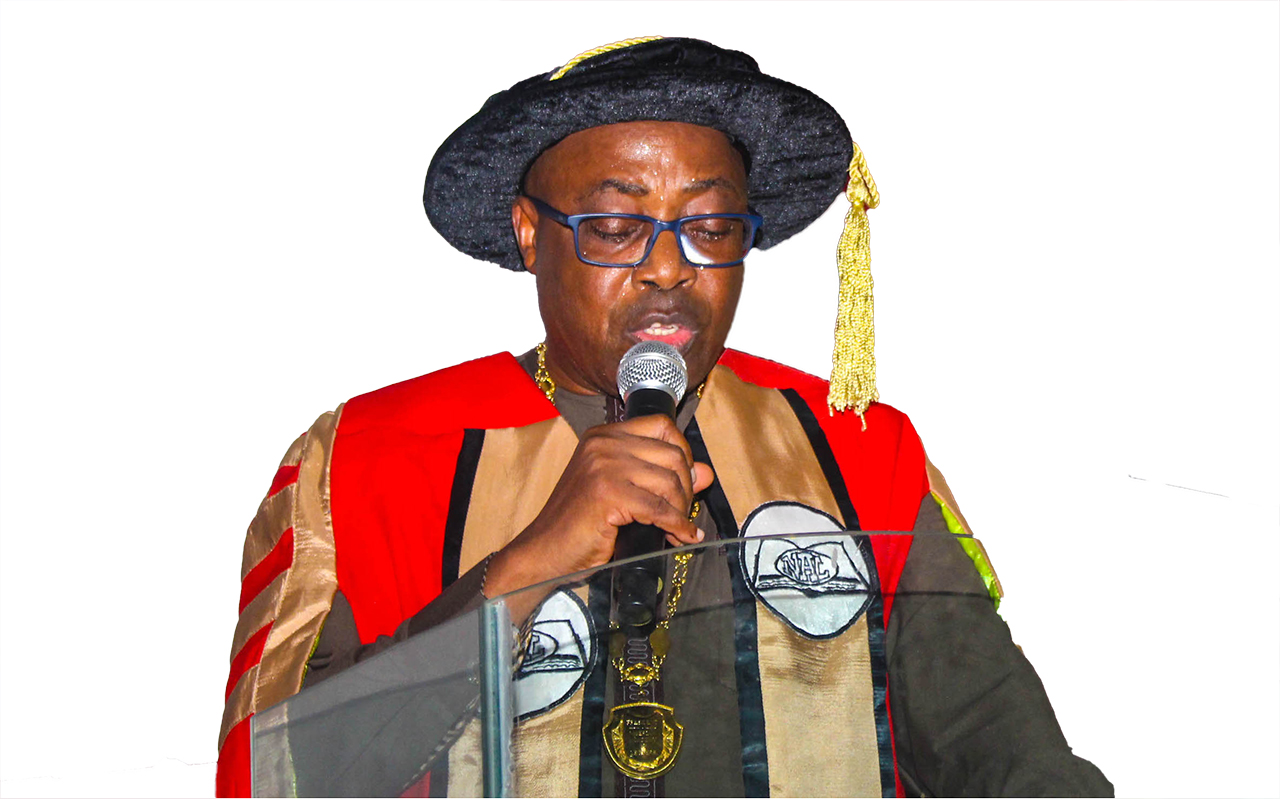
The immediate past president of the Nigerian Academy of Letters, Prof. Sola Akinrinade, has demanded that no university professor in Nigeria should earn less than N2.5 million monthly.

Speaking with The PUNCH on Monday, Akinrinade said lecturers were currently receiving “slave wages, noting that salaries of Nigerian lecturers, particularly professors, were far below their contemporaries on the African continent and among the worst in the world.

He said, “I became a full professor on October 1, 1999. What we earn is a net salary of N584,000, with gross pay around N700,000. “It is one of the lowest-paid in the world. Professors are being paid slave wages,” he said.

“For me, no professor should earn less than N1.5 million a month, and that was before the current devaluation. If someone in 2017 said no professor should earn less than N1 million, you can now calculate what it should be by now, given currency devaluation and economic realities.

“For me, a professor should not earn less than N2.5 million monthly,” he said.

Akinrinade recalled that in 2017, a director at the Federal Ministry of Finance had said no professor should earn less than N1 million monthly.

According to Nigeria’s Consolidated University Academic Salary Structure, graduate assistants earn between N125,000 and N138,020 monthly, assistant lecturers between N150,000 and N171,487, Lecturer II between N186,543 and N209,693, Lecturer I between N239,292 and N281,956, Senior Lecturers between N386,101 and N480,780, Readers between N436,392 and N522,212, and professors between N525,010 and N633,333 before deductions.

Recall that findings by The PUNCH last year affirmed that Nigerian university lecturers are among the worst paid in Africa, as professors earn an average of $366 (about N500,000) monthly, far behind their counterparts in other African countries.

See also  Varsity students to face drug tests, says education minister

While Nigerian professors earn about $4,400 annually, their counterparts in South Africa earn over $57,471 per year; Kenyan $48,000, Eswatini $41,389, Lesotho $32,455, Gabon $29,907, Sierra Leone $18,000, Zambia $14,949, and Comoros $12,960.

He lamented that poor pay discourages academic productivity and weakens the capacity of Nigerian lecturers to negotiate internationally.

“The Executive Secretary of TETFund once said he was ashamed to admit how much lecturers are paid in Nigeria. The dollar equivalent of the salary of graduate assistants and younger lecturers is about $100. How do you explain that?” he asked.

Akinrinade described the current remuneration of lecturers in Nigeria as “slave wages,” adding that most citizens fail to understand the importance of the agitation for better salaries.

“People are always up in arms against lecturers because they fail to appreciate what academics do or fail to understand what the agitation is about,” he said.

“Within Nigeria itself, in Rivers State, no professor earns less than N1 million a month. If Rivers State can pay, why not the Federal Government or other states? Some would say they don’t have oil money. A current Vice-Chancellor was on sabbatical at one of the universities in Rivers State and went to contest for VC in her own university. She asked that her position be kept in Rivers State in case she didn’t get the VC job. That is how bad things are,” he said.

Akinrinade stressed that poor pay hinders lecturers’ negotiating power abroad.

“You apply for a job even in Botswana, and they ask for your current pay slip. If your salary comes to $300–$400 a month, they think they are doing you a favour. The least paid in their system is about $5,000. We undermine ourselves,” he said.

See also  Kano sends 588 students to 15 northern states for exchange programme

Recall that a former Vice-Chancellor of the University of Lagos, Prof. Oluwatoyin Ogundipe, also warned that low remuneration erodes lecturers’ commitment, just as Prof. Tunde Adeoye, Senior Lecturer, Department of Economics, University of Lagos, urged the Federal Government to urgently review salaries to avert industrial action.

The call for higher pay comes as the Federal Government prepares to implement a proposed 40 per cent salary increase for academic staff.

A formal agreement with the Academic Staff Union of Universities is scheduled for Wednesday at the Tertiary Education Trust Fund, Conference Hall, Abuja.

The agreement, effective from January 1, 2026, will include a pension for professors equivalent to their annual salary at retirement age of 70, and funding for research through a National Research Council with at least 1 per cent of Nigeria’s Gross Domestic Product. Other provisions include a better university funding model, dedicated allocations for research, libraries, labs, equipment and staff development, stronger university autonomy, elected academic leadership (limited to professors), and protection against victimisation for staff involved in the struggle.

punch.ng

FOLLOW US ON:

FACEBOOK

TWITTER

PINTEREST

TIKTOK

YOUTUBE

LINKEDIN

TUMBLR

INSTAGRAM

Continue Reading
Click to comment

Leave a Reply

Your email address will not be published. Required fields are marked *

Education

Extend loans to private varsities, VC urges NELFUND

Published

on

The Vice-Chancellor of Anchor University, Lagos, Prof. Samuel Bandele, has renewed calls on the Federal Government to extend the Nigerian Education Loan Fund to students of private universities.

Bandele, in a statement issued on Monday, said the exclusion of students in private universities undermines the broader objective of ensuring equitable access to higher education.

“There is no doubt that the education loan fund has brought succour to many students whose parents could not afford to send their children to higher institutions,” he said.

“This government initiative has restored hope to many Nigerian students who crave higher education. I hope successive governments will sustain it.”

Recall that the Managing Director of NELFUND, Akintunde Sawyerr, had earlier explained that students of private universities were excluded from the scheme for now because the fund was prioritising support for students in public institutions, where tuition fees are generally lower and financial need is more widespread.

However, Bandele expressed concern that the current NELFUND framework restricts access to students in public tertiary institutions, leaving out their counterparts in private universities.

According to him, students and staff of private universities are Nigerians who contribute to national development and should not be excluded from government intervention programmes aimed at supporting education.

Bandele said, “The fact remains that parents whose children are in private institutions pay taxes and contribute to the development of the country. This also includes lecturers who are working assiduously to build human capital in our ivory towers.

“So, I can confidently say that these categories of people are qualified to benefit from all government programmes without exception.”

See also  FG gets $25.35m Kuwait loan to tackle Kaduna out-of-school crisis

He argued that while private university proprietors should remain responsible for infrastructure development, government support could be extended through student loans, research funding and scholarship schemes.

“I am not talking about government building structures in private institutions, as that is the responsibility of the owners, but the government can sponsor research for lecturers and award scholarships to students in private institutions. Continuous exclusion of students in private schools amounts to a disservice to the nation,” he added.

Under the current NELFUND policy, loans are available to eligible students in public universities, polytechnics and colleges of education, with students of private institutions excluded from the scheme.

Bandele said a review of the policy would promote inclusiveness and strengthen human capital development in the country.

punch.ng

FOLLOW US ON:

FACEBOOK

TWITTER

PINTEREST

TIKTOK

YOUTUBE

LINKEDIN

TUMBLR

INSTAGRAM

Continue Reading

Education

UUTH resident doctors join nationwide strike

Published

on

The Association of Resident Doctors, University of Uyo Teaching Hospital, has resolved to join the nationwide strike declared by the National Association of Resident Doctors on Monday, January 12, 2026.

The decision was contained in a communiqué issued after an emergency general meeting of the association held in Uyo, Akwa Ibom State, on Thursday.

The communiqué, endorsed by its President, Dr Ekomobong Udoh, and General Secretary, Dr Kenneth Ikott, and made available to our correspondent in Uyo on Friday, said the centre would undertake a peaceful protest by 9am on Monday within the UUTH premises, in total compliance with the directive of NARD.

It read in part, “Members of the congress gathered for an emergency general meeting to discuss the resolutions issued by the NARD Extra-Ordinary NEC virtual meeting held on Saturday, January 2, 2026. After thorough deliberation and discussion on the resolutions of NARD, the meeting, chaired by the President, resolved as follows.

“The centre fully supports the implementation of the NARD NEC meeting resolutions. The congress immediately agreed to participate in the NARD TIC 2.0 from 12 noon on Monday, in line with the NEC directive, and will undertake a peaceful protest by 9am on Monday within the UUTH premises.”

Udoh said the proposed industrial action followed the failure of the Federal Government to fully implement the Memorandum of Understanding signed with resident doctors in November 2025.

According to him, the strike, tagged TICS (Total, Indefinite and Comprehensive Strike) 2.0, with the slogan, “No Implementation, No Going Back”, would only be suspended after the full implementation of the minimum demands.

See also  Stakeholders back establishment of African aviation varsity in Abuja

He listed the demands to include the reinstatement of the FTH Lokoja Five, payment of promotion and salary arrears, full implementation of the professional allowance table with arrears captured in the 2026 budget, and official clarification on skipping and entry-level issues by the Federal Ministry of Health and circulars to chief executives.

Other demands include the reintroduction and implementation of the Specialist Allowance, resolution of house officers’ salary delays and arrears, including the issuance of a pay advisory, recategorisation of membership certificates, and issuance of certificates after Part I by the NPMCN, commencement of locum and work-hours regulation committees, and resumption and timely conclusion of the Collective Bargaining Agreement process.

punch.ng

FOLLOW US ON:
FACEBOOK

TWITTER

PINTEREST

TIKTOK

YOUTUBE

LINKEDIN

TUMBLR

INSTAGRAM

Continue Reading

Education

Nigeria emerges fifth-best English-speaking country in Africa

Published

on

Nigeria has emerged as the fifth-best English-speaking country in Africa, according to the 2025 Education First English Proficiency Index cited by PUNCH Online on EF’s website on Monday.

The report, compiled by global education leader EF, assessed English skills across 123 countries and regions, using data from 2.2 million test takers. This year’s edition also included, for the first time, speaking and writing skills, measured using artificial intelligence technology developed by EF’s education technology arm.

English, Nigeria’s official language, remains central to education, governance, media, and business, helping the country maintain strong proficiency levels. On the African continent, Nigeria trails South Africa, Zimbabwe, Kenya, and Zambia, which lead in English proficiency. The rankings underscore the growing importance of English as a bridge for international communication, education, and commerce.

Top 10 English-Speaking Countries in Africa (EF EPI 2025):

South Africa – Widespread use in government, education, media, and business.

Zimbabwe – English is the primary language of instruction and administration.

Kenya – Official language alongside Swahili, widely used in urban and professional settings.

Nigeria – Official language, central to national communication and commerce.

Ghana – English is used from basic to tertiary education and in public administration.

Uganda – Official language; key role in trade, diplomacy, and professional environments.

Ethiopia – Widely used in education and international affairs, though not official.

Tunisia – Growing adoption among youth and professionals in education, tech, and tourism.

Morocco – Increasing popularity in schools and business for global trade and relations.

Continue Reading

Trending