The Federal Government and the Academic Staff Union of Universities on Wednesday unveiled a renegotiated agreement aimed at resolving long-standing disputes in Nigeria’s tertiary education sector, resulting in incessant strikes and closure of universities.
The 2025 agreement is the conclusion of a renegotiation process that began in 2017 to review the 2009 FG–ASUU pact, which was due for revision in 2012.
Several committees set up under past administrations chaired by Wale Babalakin, Munzali Jibrin and Nimi Briggs failed to deliver a final agreement.
The breakthrough came under the current administration, which inaugurated the Yayale Ahmed-led renegotiation committee in October 2024.
An agreement was reached about 14 months later, focusing on improved conditions of service, funding, university autonomy, academic freedom and broader reforms to reverse sectoral decay, curb brain drain and reposition universities for national development.
A major provision of the agreement is the upward review of the remuneration of academic staff in federal universities by 40 per cent, with effect from January 1, 2026.
Under the new structure, salaries will comprise the Consolidated University Academic Staff Salary and a Consolidated Academic Tools Allowance, which accounts for the 40 per cent increment.
The tools allowance is designed to support core academic activities such as research, journal publications, conference participation, internet access, learned society membership and book procurement, with the broader objective of boosting productivity and curbing brain drain.
The agreement also restructures nine earned academic allowances to promote transparency and fairness by tying payments strictly to duties performed.
These include postgraduate supervision, fieldwork, clinical responsibilities, examination duties and leadership roles within the university system.
In addition, the Federal Government approved a new Professorial Cadre Allowance for senior academics for the first time.
Under this provision, full-time professors will receive N1.74m annually, while readers will earn N840,000 per annum, an intervention described by the government as a structural and transformative measure to recognise experience, enhance dignity and strengthen the academic profession.
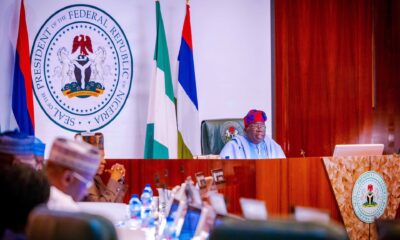
Speaking at the unveiling of the agreement in Abuja, the Minister of Education, Dr Tunji Alausa, said the deal marked a renewed commitment by the administration of President Bola Tinubu to uninterrupted academic calendars and improved welfare for university lecturers.
According to him, the agreement goes beyond a formal document and represents “renewed trust, restored confidence, and a decisive turning point in the history of Nigeria’s tertiary education system.”
Alausa credited President Tinubu with personally driving the process, noting that, “for the first time in the history of our country, a sitting President took full ownership of this long-standing challenge confronting our tertiary education system and accorded it the leadership attention it truly deserved.”
He said decades of unresolved remuneration issues and welfare gaps had led to recurring industrial actions that disrupted academic calendars and threatened students’ futures, but stressed that the current administration chose “dialogue over discord, reform over delay, and resolution over rhetoric.”
He described the Professional Cadre Allowance intervention as “not cosmetic” but “structural, practical, and transformative.”
“With the total support, direction, and guidance of Mr President, we confronted what many had described as an intractable problem—and we have resolved it decisively, now and into the future,” the minister added.
He added that the agreement ushered in “a new era of stability, dignity, and excellence” for Nigerian universities, restoring confidence to lecturers and predictability to academic calendars.
The minister reaffirmed the government’s commitment to faithful implementation of the agreement under the Renewed Hope Agenda and thanked members of both the government and ASUU renegotiating teams for resolving what he described as “a two-decade-old quagmire.”
“History will remember today not merely as an unveiling ceremony, but as the day Nigeria chose dialogue, transparency, fiscal realism, and strong presidential commitment as the pathway to resolving long-standing governance challenges and achieving sustained progress,” he said.
Meanwhile, ASUU cautioned that despite the signing of the renegotiated 2025 agreement, entrenched structural, governance, and socio-economic problems still pose a serious threat to the sustainability of the nation’s university system.
Speaking on the matter during the unveiling, ASUU President, Prof. Chris Piwuna, acknowledged the government’s efforts but expressed concern that the prolonged delay was due to what he described as a lack of genuine commitment by the authorities.
“The 2009 agreement was due for renegotiation after three years, but it dragged on for this long due to the poverty of sincerity in the government on the renegotiation,” he said.
Piwuna noted that the deal, though significant, does not resolve persistent problems such as government interference in university autonomy, weak accountability in university management, poor research funding implementation, declining academic standards, and the broader national economic crisis.
The union said government encroachment into university autonomy remains one of the most critical unresolved issues. While autonomy is recognised in principle and partially entrenched in law, ASUU noted that its implementation is weak.
“As we are here with joy for a successful collective bargaining between ASUU and the FG, we need to note that there are still pending issues, which are more of internal, that is dragging the progress and survival of the university system: government persistent encroachment into the autonomy of the universities.
“University autonomy is universally recognised as a cornerstone of a functional higher education system. In Nigeria, although university autonomy is recognised in principle and partially entrenched in law, its practical implementation remains weak,” the chairman said.
Piwuna noted that governing councils, legally the highest decision-making bodies in universities, are often subjected to arbitrary dissolution or suspension by federal and state authorities.
ASUU said council’s recommendations are frequently rejected by the government, while preferred candidates are imposed in vice-chancellor appointments, even when they do not emerge as the best-ranked candidates.
He said, “There have been instances where: Governing Councils’ recommendations were rejected by the visitor or ministry. Preferred candidates were imposed despite not emerging as the best-ranked by selection panels. Appointment processes are often skewed to favour political interests.
“Such interventions erode meritocracy and create legitimacy crises for appointed vice-chancellors, often leading to prolonged internal conflicts, litigation, and staff polarisation. This does not speak well of what the university stands for. We have also observed a culture of acting vice chancellors slowly creeping into the system.”
On funding, ASUU stressed that while the agreement includes provisions for research and development, long-standing problems remain.
The union reiterated that research funding in Nigerian universities has been inadequate for decades and warned that without sustained investment, universities risk becoming teaching-only institutions disconnected from innovation and national development.
Although the agreement provides for the forwarding of the National Research Council Bill to the National Assembly, ASUU said implementation remains uncertain.
The proposed bill would allocate at least one per cent of GDP to research, innovation, and development. The union called on lawmakers to act swiftly, stating that “the entire nation, awaits your intervention.”
ASUU also challenged public narratives, suggesting that the government release funds directly to the union. It said such reports are misleading and obscure deeper accountability failures within university administration. The union noted that while it fights for funding, it has limited mechanisms to enforce accountability beyond strikes, petitions, and public statements.
The union cited repeated allegations against some vice chancellors, including claims of corruption, contract irregularities, and financial recklessness. It described these cases as evidence of systemic governance failures where autonomy exists without accountability.
ASUU also criticised what it described as the growing “Consultancy Syndrome,” saying universities are increasingly run by consultants as “a clean way of ‘cleansing’ funds fought for by our Union,” adding that “The federal ministry is not innocent of the ‘Consultancy Syndrome’ in government cycles.”
Another challenge highlighted was the erosion of academic standards in newly created Federal Universities of Education converted from colleges of education. ASUU accused some vice chancellors of converting chief lecturers to professors without due process, even in institutions without senates or approved promotion guidelines.
The union warned that “Chief lecturers and professors are never equivalent,” stressing that promotion to professorship requires established standards, including research output, postgraduate supervision, and external assessment.
Beyond the university system, ASUU linked the sustainability of the agreement to Nigeria’s worsening economic and social conditions.
It cited the impact of fuel subsidy removal, naira devaluation, rising transportation costs, insecurity, unemployment, and the increasing cost of university education. According to the union, these factors have reduced access to higher education for working-class and middle-class families, despite the creation of student loan schemes.
ASUU also highlighted the decline in real wages, noting that while the minimum wage has increased nominally, its value has fallen sharply due to currency devaluation. The union said this “simply means our lives have been devalued.”
The union warned that insecurity, over-taxation, and confusion over tax laws continue to worsen living conditions, while the health sector has collapsed. “I come from the health sector and a simple word for it is, collapse,” the speaker said.
ASUU cautioned that without addressing these broader national challenges, the gains of the renegotiated agreement could be undermined.
“The country is in dire straits and propaganda is not the option,” the union said, adding that “The country must be rescued and rebuilt in the interest of the people.”
While expressing willingness to work with the government, ASUU said its optimism about the agreement’s implementation remains guarded, citing past experiences.
The union said it hoped that, despite lingering doubts, “the union would not need to issue a strike threat for the full implementation of the 2025 ASUU-FGN Renegotiated agreement.”
While expressing willingness to work with the government, ASUU said its optimism about the full implementation of the agreement remains guarded, given past experiences. The union, however, expressed hope that it would not need to resort to strike action to ensure compliance with the terms of the 2025 agreement.
punch.ng
FOLLOW US ON: