

Connect with us

News

Nigeria among worst as W’Africa hunger deepens – UN

Published

on

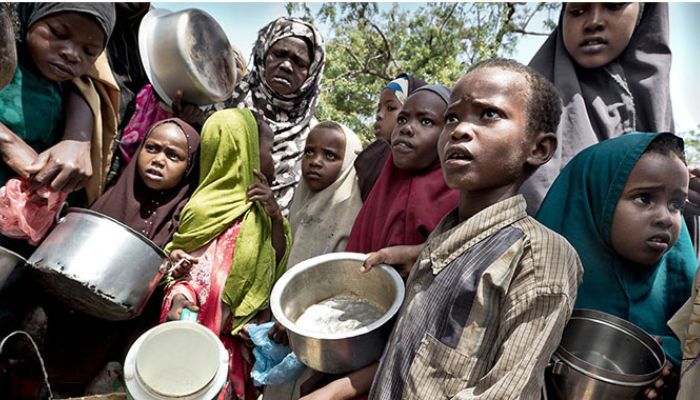
The United Nations World Food Programme has warned that no fewer than 55 million people across West and Central Africa are expected to face crisis levels of hunger or worse during the June–August 2026 lean season, unless urgent funding and humanitarian action are mobilised.

The UN agency said the worsening food insecurity, driven by conflict, displacement, and deepening aid cuts, has placed Nigeria among the four most affected countries, alongside Chad, Cameroon, and Niger, which together account for 77 per cent of the region’s food-insecure population.

In Nigeria, the WFP raised alarm over about 15,000 people in Borno State who are now at risk of catastrophic hunger, known as IPC Phase 5, for the first time in nearly a decade, amid prolonged insurgency and shrinking humanitarian support.

The warning was contained in a statement published on its website and released on Friday, as the agency projected that more than 13 million children across the region would suffer acute malnutrition in 2026.

According to the latest Cadre Harmonisé analysis, the West and Central African equivalent of the Integrated Food Security Phase Classification, over three million people are expected to face emergency levels of food insecurity (IPC Phase 4) this year, more than double the 1.5 million recorded in 2020.

The statement read, “The United Nations World Food Programme warns that without urgent resources and action, the most vulnerable people in West and Central Africa are headed for yet another dire year. A staggering 55 million people in the region are expected to endure crisis levels of hunger, or worse, during the June–August 2026 lean season. Over 13 million children are also expected to suffer from malnutrition in 2026.

See also  Again, fire razes Yobe Fika main market, shops, others destroyed

“Four countries – Nigeria, Chad, Cameroon, and Niger – account for 77 percent of the food insecurity figures, including 15,000 people in Nigeria’s Borno State at risk of catastrophic hunger (IPC-5) for the first time in nearly a decade.”

“The reduced funding we saw in 2025 has deepened hunger and malnutrition across the region,” said Sarah Longford, WFP’s Deputy Regional Director for West and Central Africa.

“As needs outpace funding, so too does the risk of young people falling into desperation. It’s critical that we support communities in crisis, so that rampant hunger doesn’t drive further unrest, displacement, and conflict across the region,” she added.

The WFP said thousands of people in Nigeria’s conflict-ravaged northeast are now facing the risk of catastrophic food shortages, as cuts to humanitarian assistance have forced the agency to drastically scale back its operations.

It disclosed that funding shortfalls in 2025 compelled the organisation to reduce nutrition programmes in Nigeria, affecting more than 300,000 children, while malnutrition levels in several northern states have since deteriorated from “serious” to “critical.”

The agency warned that the situation could worsen sharply in the coming months, revealing that only 72,000 people in Nigeria can be reached in February, compared with 1.3 million people assisted during the 2025 lean season. “This is a drastic reduction at a time when needs are rising rapidly,” the statement noted.

While conflict and economic pressures have fuelled hunger in the region for years, the WFP said reductions in humanitarian funding are now pushing vulnerable communities beyond their ability to cope.

See also  VIDEO: Tinubu engages UK, seeks Ekweremadu’s transfer to Nigeria

Although the UN agency did not single out specific donors, humanitarian organisations have repeatedly raised concerns since the United States and several European countries cut foreign aid budgets, partly to redirect spending towards defence.

In Mali, the WFP said reduced food rations led to a 64 per cent surge in acute hunger in some areas since 2023, while communities that received full rations recorded a 34 per cent decline.

The agency added that continued insecurity in Mali has disrupted major food supply routes, leaving 1.5 million people facing crisis levels of hunger. In Cameroon, more than 500,000 vulnerable people risk being cut off from life-saving assistance in the coming weeks without urgent funding.

Despite the grim outlook, the WFP said its interventions continue to deliver measurable results where resources are available. It noted that land restoration programmes in the Sahel generate up to $30 for every $1 invested, while 300,000 hectares of farmland have been rehabilitated since 2018 across five countries, supporting over four million people.

However, the agency stressed that sustaining these efforts requires urgent financial support, revealing that it needs more than $453m over the next six months to continue delivering humanitarian assistance across West and Central Africa.

“To break the cycle of hunger for future generations, we need a paradigm shift in 2026,” Longford said. “National governments and their partners must increase investment in preparedness, anticipatory action and resilience-building to empower communities and reduce long-term dependence on aid.”

FOLLOW US ON:

FACEBOOK

TWITTER

PINTEREST

TIKTOK

YOUTUBE

LINKEDIN

TUMBLR

INSTAGRAM

Continue Reading
Click to comment

Leave a Reply

Your email address will not be published. Required fields are marked *

News

Nigeria, US forces killled over 20 ISWAP fighters in fresh operation – DHQ

Published

on

The Defence Headquarters on Monday said Nigerian troops, in collaboration with the United States Africa Command, killed more than 20 Islamic State West Africa Province fighters during fresh coordinated air strikes in the North-East.

The DHQ said the operation was carried out in the general area of Metele following intelligence reports on the convergence and movement of terrorist elements within the region.

In a statement by the Director of Defence Information, Maj. Gen. Samaila Uba, the military said the strikes formed part of sustained operations aimed at dismantling terrorist networks and denying insurgents safe haven in the country.

“The Defence Headquarters, in close coordination with United States Africa Command, wish to update the general public on the continuation of coordinated operations against ISIS militants across the North East Nigeria, with additional air strike operations successfully executed in the general area of Metele.

“Following observed convergence and migration of terrorist elements, multiple air strikes were conducted resulting in the elimination of more than 20 ISIS/ISWAP fighters,” the statement partly read.

The military said the ongoing operations were designed to disrupt terrorist activities, remove fighters from the battlefield and prevent insurgents from regrouping.

“The Armed Forces of Nigeria will continue to aggressively defend the sovereignty, security and territorial integrity of the nation,” the statement added.

Uba stressed that terrorists threatening citizens and national stability would be located and defeated, saying that there would be no safe haven for all terrorists anywhere in Nigeria.

“Terrorists who threaten our citizens, communities and national stability will be located and defeated. There will be no safe haven for all terrorists anywhere in Nigeria,” he said.

See also  Federal High Court debunks report of ass@ssination attempt on Justice Omotosho after Nnamdi Kanu's life sentence

This is coming after the announcements by United States President Donald Trump and President Bola Tinubu confirming the killing of ISIS kingpin, Al-Minuki during a joint counterterrorism operation conducted by Nigerian and US forces.

Trump described the slain militant as the most active terrorist in the world and claimed he was the second in command of ISIS globally,” adding that the terrorist leader believed he could evade capture in Africa.

punch.ng

FOLLOW US ON:

FACEBOOK

TWITTER

PINTEREST

TIKTOK

YOUTUBE

LINKEDIN

INSTAGRAM

Continue Reading

News

Bus knocks pedestrian dead in Ogun

Published

on

A pedestrian has lost his life after being knocked down by a Toyota Coaster bus at Imowo, along the Imowo-Ibadan Road inward Ijebu Ode in Ogun State.

PUNCH Metro gathered on Monday from the spokesperson for the Ogun State Traffic Compliance and Enforcement Agency, Babatunde Akinbiyi, that the fatal accident occurred at about 4:45 pm on Sunday and caused serious traffic congestion along the route due to the obstruction caused by the bus.

He noted that TRACE operatives and police officers from the Obalende Division were immediately deployed to the scene to manage traffic and rescue operations.

According to him, the accident happened when the pedestrian allegedly failed to check the other side of the road before attempting to cross.

The agency noted that there was a diversion to a single lane outward Ijebu Ode due to ongoing road rehabilitation works along the axis.

The statement read, “According to eyewitness account, the pedestrian forgot to check the other side of the road before crossing the road. There is diversion to one lane due to ongoing road rehabilitation on the axis.”

Akinbiyi added that no other injuries were recorded in the incident aside from the death of the male pedestrian.

He further disclosed that its operatives controlled vehicular movement around the scene to ease traffic congestion and prevent secondary accidents.

“TRACE operatives assisted in carrying the presumed dead into the OGSAS ambulance, while the body was subsequently conveyed to the General Hospital mortuary, Ijebu Ode,” the statement added.

The TRACE Head of Media stressed further that the accidented Toyota Coaster bus was later evacuated from the road and moved to the Police Area Command, Igbeba, for further investigation.

See also  VIDEO: Tinubu engages UK, seeks Ekweremadu’s transfer to Nigeria

The agency confirmed that normal vehicular movement had been restored after the evacuation exercise.

PUNCH Metro reported earlier that an auto crash along the Third Mainland Bridge left a policeman riding on a motorcycle, dead after being hit by a Lexus car.

The driver of the car was said to have surrendered himself to the police following the incident.

Continue Reading

News

FG cracks down on unapproved contract variations in MDAs

Published

on

The Federal Government, through its Bureau of Public Procurement, on Sunday barred government Ministries, Departments, and Agencies from processing upward revisions of contract sums without first obtaining a Bureau certificate.

This was as it issued other sweeping guidelines that centralised the review of all contract variations and scope modifications under its authority. According to a statement signed by its Head of Press and Public Relations, Zira Nagga, the Bureau said the reform is designed to close one of the most persistent channels for cost inflation and corruption in Nigeria’s public procurement system.

The guidelines, issued pursuant to Sections 5(a) and (o) of the Public Procurement Act 2007, give effect to a Federal Executive Council-approved policy conveyed by the Secretary to the Government of the Federation in December 2025.

The statement is titled ‘Contract Variations: BPP Releases Guidelines.’

The new guidelines replace an earlier 2013 framework that required Presidential approval only for variations above 15 per cent of the initial contract sum or N1bn.

Under the new framework, every request for a variation order, fluctuation claim, or scope modification, regardless of size, must first be submitted to the BPP for review and certification before proceeding to the relevant approving authority.

Nagga noted that a BPP Certificate of No Objection, valid for six months, is now a mandatory precondition for any further action. Variations processed without it will attract sanctions under the Public Procurement Act 2007, including suspension of responsible officers and debarment of contractors, the statement said.

It also quoted the Bureau’s Director-General, Adebowale Adedokun, as saying, “Variations must not become a backdoor for cost inflation and scope creep.

See also  VIDEO: Tinubu engages UK, seeks Ekweremadu’s transfer to Nigeria

“These guidelines ensure that every adjustment to a public contract is necessary, justified, and delivers value to Nigerians. The BPP will apply these rules rigorously and fairly across all MDAs.”

Accordingly, the guidelines draw a firm line between permissible and impermissible grounds for variation. Acceptable grounds include unforeseen site conditions, material errors in design or bills of quantities, statutory changes after contract execution, significant price escalation due to macroeconomic shocks or force majeure, and value engineering improvements that reduce cost without altering scope.

Variations arising from inadequate planning, avoidable design flaws, or the addition of new components not contemplated in the original contract scope will be rejected outright, Nagga noted.

Such additions, the guidelines stated, must be procured as entirely separate contracts, a provision aimed at blocking the practice of using variations to effectively award new projects under the cover of an existing contract.

On fluctuation claims, adjustments for changes in the cost of labour, materials, and exchange rates, the guidelines introduced new deterrents against deliberate project delays.

It stated that, going forward, contractors found to have intentionally slowed down execution in order to generate larger fluctuation claims will be denied those claims and may be debarred if the claims are found to be bogus or overstated.

The revised approving authority thresholds are now tied to the augmentation sum, the amount of the increase, rather than the total revised contract cost. Works variations of N10bn and above will require Federal Executive Council approval.

It stated, “Those between N5bn and N10bn go to the Ministerial Tenders Board; those between N75m and N5bn to the Parastatal Tenders Board; and anything below N75m for works, or N50m for goods and services, can be approved at the Accounting Officer level.”

See also  Failed peace talks: You can’t dictate terms to Iran – Javad Zarif to US

Similar thresholds apply to goods and services procurement. To address the upstream cause of many avoidable variations, the guidelines mandated the use of approved final designs for all procurements from the outset.

It also stated that the use of preliminary or flawed designs that subsequently generate unnecessary variations will attract regulatory sanctions, a provision targeting the entrenched practice of commencing projects with incomplete engineering designs.

On transparency, the BPP said all MDAs are required to publish details of every approved variation, including the contractor’s name, original contract sum, augmentation amount, revised contract sum, and grounds for the increase, on their websites and the BPP portal within 30 days of Tenders Board approval.

The BPP said it will also periodically submit council notes to the Federal Executive Council on reviewed and approved variations across government. The guidelines take immediate effect and apply to all ongoing projects regardless of when the original contract was awarded.

punch.ng

FOLLOW US ON:

FACEBOOK

TWITTER

PINTEREST

TIKTOK

YOUTUBE

LINKEDIN

INSTAGRAM

Continue Reading

Trending