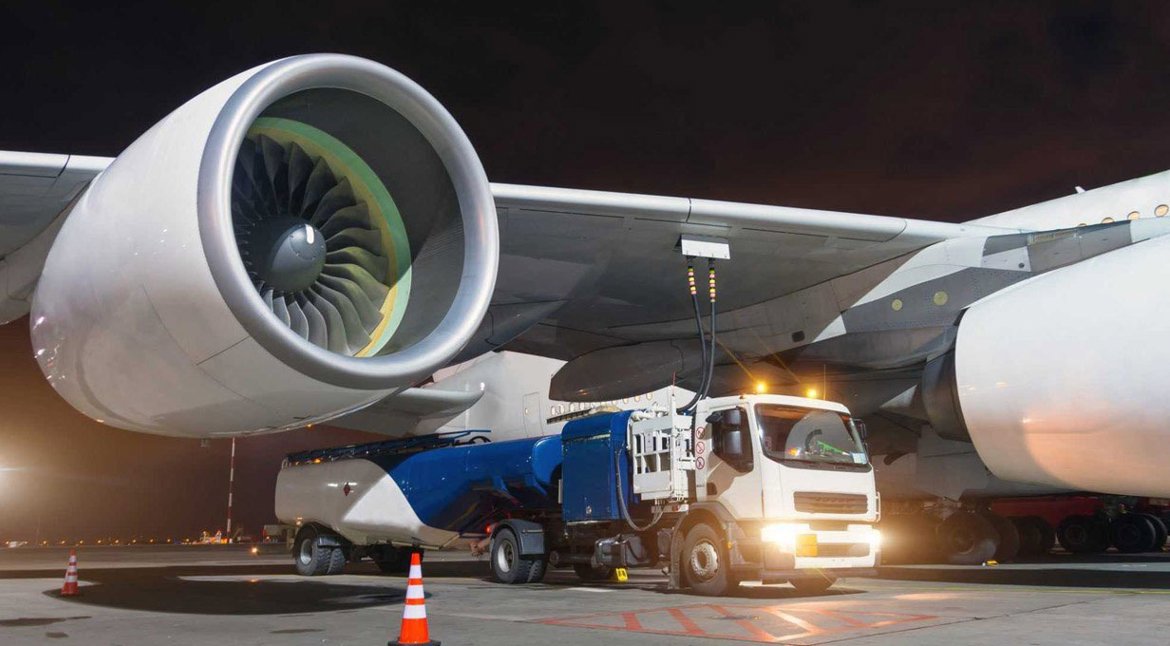
Airfares have remained stagnant in Nigeria despite the rising cost of aviation fuel by 184 per cent in the last two months, occasioned by the ongoing crisis in the Middle East.
However, sources in different airlines who did not want their names in print, considering the sensitivity of the matter, told The PUNCH on Tuesday that the “pressure of competition” among local carriers kept the airfares low.
Aviation fuel, which was sold at N900 per litre in January, increased to N1,121 per litre as of 26 February 2026 and now sells for N2,557 per litre.
Aviation fuel is the highest consuming commodity of airlines’ finances, taking about 40 per cent of airlines’ resources. This is closely followed by aircraft maintenance.
Despite the spike in fuel prices and the financial burden on airlines, competition has been keeping the airlines in check against upping their ticket prices. Between January and March 30, the product has increased by 184 per cent; yet, airfares still sell for between N106,286 and N147,000 across major routes in the domestic market.
A search on the booking portal of Ibom Air, for instance, shows the Lagos-Abuja flight for April 4 goes for N114,600, while Uyo to Abuja on the same airline and date also sells for the same N114,500.
For United Nigeria Airlines’ portal, the Kano-Lagos flight from April 1 to April 7 sells for N142,500 for a one-way ticket, while the Lagos-Port Harcourt flight for the same date goes for the same N142,500 on the airline’s portal.
Besides, the Lagos-Abuja flight for April 4 on Aero Contractors goes for N106,286, while the Asaba-Abuja flight on the same airline sells for N102,179.
However, Air Peace is the most expensive on the local scene, with Lagos to Abuja air tickets for April 3 bookings selling for N147,000, while the return ticket – Abuja to Lagos – also goes for the same rate.
The airline source said that instead of the fares going up, the operators had kept them at the same price as two months ago, yet they were struggling to remain in business.
The source also attributed the situation to the number of scheduled indigenous operators, in spite of low passenger traffic.
As of the time of filing this report, there are about 15 scheduled operators, while another two airlines in February and March, Enugu Air and Binani Airlines, respectively, secured Air Operators’ Certificates from the Nigeria Civil Aviation Authority, which would enable them to operate.
Nigeria’s passenger traffic has been on a steady decline in recent years. The industry recorded 15.6 million passenger movements on domestic and international routes in 2024, 15.8 million in 2023 and 16.2 million in 2022.
One of the sources said, “It’s the pressure of competition. Instead of going up, the pressure on pricing is downwards because of the number of players and the pricing they have entered the market with. It’s simply competitive pressure that keeps airfares stagnant.”
He, however, said that his airline was reviewing the current situation and would come up with a position in the coming weeks.
Data obtained from major fuel marketers in Nigeria indicated that aviation fuel currently goes for N2,557 per litre at Sokoto Airport, making it the airport with the most expensive sales of the product in Nigeria.
This is followed by Kano, which sells the product at N2,554 per litre, while both Port Harcourt and Asaba report rates of N2,543 per litre.
Besides, the product goes for N2,538 per litre at the Nnamdi Azikiwe International Airport, Abuja; Enugu airport, N2,535 per litre; and Warri airport, N2,530 per litre.
For Anambra airport, the product goes for N2,529 per litre; for Asaba airport, N2,528 per litre, with Lagos recording the cheapest rate of aviation fuel at N2,500 per litre.
While operators refused to comment on the development despite calls and text messages, industry experts expressed their views. Aviation analyst Olumide Ohunayo warned that even if airlines make fare adjustments, they may not be sufficient to offset the mounting losses triggered by the sharp rise in aviation fuel prices, describing the situation as unsustainable for operators.
Ohunayo, who spoke amid growing concerns over escalating ticket costs, said airlines are caught in a difficult position where even significant fare increases may still fall short of covering operational expenses.
He said, “No matter the increase that they can make now, they may not be able to recoup their losses as a result of the fuel increase. When you compare the prices with other nations, you will discover that the fuel price in Nigeria is on the high side.”
He highlighted the rapid spike in fuel prices within a short period, noting that the trend has placed enormous pressure on airline operations.
The industry expert expressed concern that, unlike other countries, Nigeria has yet to implement measures to ease the burden on both operators and consumers.
He said, “It was about N1,000 in January, N1,500 in February, and it has now moved to over N2,500 in March. And this is the same country where Dangote is exporting this same fuel to Europe, and you will then begin to imagine what incentives are given to cushion this development.
“Other countries are bringing in their reserves to reduce the effects on the citizenry, and they have also reduced their taxes, in some cases up to 50 per cent. An example of that is Australia.”
Ohunayo questioned the response of the Nigerian government, urging authorities to act swiftly to prevent further strain on the aviation sector.
He called for targeted interventions, including temporary tax reliefs for airlines, to help cushion the impact of rising costs, saying, “What is the Nigerian government doing to reduce the effect of this on Nigerians? So, I feel that no matter the eventual increase from airline operators, it still cannot be enough.
“There must be a way to support operators during this period, maybe by reducing their taxes for three months. There must be a way for the government to come in. Why are the operators the ones bearing the highest cost?”
A retired pilot, Muhammad Badamosi, has said airlines may be reluctant to further increase airfares despite rising operational costs, citing fears of losing passengers to road transport amid the current economic realities.
He said, “Yes, I think it’s the fear of losing passengers because Nigerians currently do not have money, and many may have to resort to road travel. Yes, we understand that that is taking a toll on the operators, but it is what it is. That is the condition Nigeria currently finds itself in.”
Badamosi explained that while airlines are under pressure to adjust fares in response to rising aviation fuel costs, they are also constrained by the risk of pricing themselves out of the market.
According to him, the situation has created a difficult balance for operators, who must navigate between sustaining their businesses and retaining customer patronage.
“For instance, I used to visit Kaduna once every two months, but now I have cut it down to three times a year. My frequency used to be six times a year; now I go there three times a year.”