Connect with us

Business

DisCos reject FG’s free meter plan

Published

on

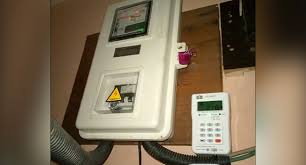
Power distribution companies have expressed doubt over the directive by the Minister of Power, Adebayo Adelabu, that prepaid meters must be free for all categories of customers.

Operators, who spoke with our correspondent anonymously due to the sensitivity of the matter, said the minister made only a political statement without considering the input of other stakeholders, especially the installers and meter providers.

On Thursday, the Federal Government banned electricity distribution companies and installers from collecting any form of payment for meters, warning that DisCo officials and installers found extorting customers would be prosecuted. Adelabu issued the warning during an on-site inspection of newly imported smart meters at APM Terminals, Apapa, Lagos.

Adelabu said the meters were procured under the World Bank–funded Distribution Sector Recovery Programme and must be installed for consumers free of charge, stressing that any demand for money would be treated as an offence.

He said the meters would be given to all electricity customers, regardless of their band.

“I want to mention that it is unprecedented that these meters are to be installed and distributed to consumers free of charge—free of charge! Nobody should collect money from any consumer. It is an illegality. It is an offence for the officials of distribution companies across Nigeria to request a dime before installation; even the indirect installers cannot ask consumers for a dime. It has to be installed free of charge so that billings and collections will improve for the sector,” Adelabu said.

However, the DisCo operators who spoke with The PUNCH said the meters tagged as free by the Federal Government would still be paid for by the DisCos within a period of 10 years. The operators told our correspondent that the DisCos cannot be the ones paying for installation, wondering why the government wants them to bear the cost of installation.

See also  Trump’s threats: FG engages diplomats, rallies military commanders

According to them, meter installers are not DisCo workers, and someone has to bear the cost of installation.

“Those meters you see, someone has to pay for them, and the government expects the DisCos to bear the cost of the so-called free meters. They said the DisCos can pay it over 10 years.

When you ask the DisCos to pay for any capital expenditure, we call it allowable capex. You have to allow it when computing their tariffs; otherwise, it makes their balance sheets toxic,” an official with a distribution company stated.

Another operator said, “We need to know that meter installers are not staff of the DisCos. They are already asking who will pay them if the consumers do not pay. Did the minister consider all those? You said the people should not pay the installers; who should pay them? We, the DisCos, are not the ones installing meters. That role was taken away from the DisCos when Babatunde Fashola was the power minister.

“They said the DisCos have no business with metering. This is the result we are seeing today. Assuming the DisCos are the ones installing meters, you can force them to pay. We will all see the outcome of that pronouncement in the coming days. If the government can pay installers, no problem, but I’m not sure any DisCo will volunteer to pay the installers.”

The officials described Adelabu’s comment as a populist statement from a politician.

“The statement was just a populist statement from a politician. We are not sure if the President sent him that message. He said everything should be free; where is the position of cost recovery? Anything you do in the power sector, you have to first consider who bears the cost. Somebody has to bear the cost to avoid debt piling up.

See also  Alleged terror financing: Malami faces long detention as DSS intensifies investigation

“The government ought to sit with the Discos and the meter manufacturers to seek advice if the plan is to make sure the people don’t bear any cost, and we will come up with our various contributions. But instead of doing that, the government would go and make unrealistic promises to the public. For instance, the meters are coming in batches, but you have made the masses believe that there are enough meters for everyone. That’s not the reality,” one of the sources stated.

The operators added that the free meter declaration would jeopardise the Meter Asset Providers scheme, which allows the sale of meters to individuals who desire them.

“People are now rejecting the Meter Asset Providers scheme because they have heard that meters are free. The minister came up with a very wrong narrative. Has he sat down with stakeholders before going out to say meters are free? How can you say you have enough meters for over five million people? We still have the MAP scheme ongoing, whereby the meter provider sells directly to the customer. MAP is still there because the free meters they are bringing cannot fill the metering gap.

“So, MAP has been going on simultaneously over the years. But this latest statement is now affecting MAP because people don’t know the difference. The government should clarify and let the people know that the free meters can’t go round everyone; they should state the areas that can get the free meters and the category of customers, so that others not captured will know they will have to go for MAP by getting the meters with their money and get a refund through energy credits over time.

“But with the minister’s statement that the free meters are for all customers, nobody will go for MAP again, and I don’t know how badly this will affect local meter suppliers in the MAP scheme,” one of the DisCo operator stated.

See also  Petrol to hover around N905/litre this year – CBN

The stakeholders urged the government and the regulator to always consider cost recovery in their plans.

“If he says meter installers should not be paid, who’s going to pay them? The DisCos or the Ministry of Power? Those are the questions the government should answer. The regulator should always talk about cost recovery. From the look of things, the minister does not seem to care much about cost recovery, and he’s happy making political statements.

“He has to tell us who’s going to pay. We agree, people should not pay, no problem, but who will pay? Is it going to be subsidised again? Is the government going to pay for it? If the government says the operators should pay, where will they recover the money from? Every penny has to be accounted for and recovered. The purpose of doing business is cost recovery; if you cannot recover your cost, you will be cutting corners,” another operator stressed.

The DisCos asked the government to always tell the masses the truth, worrying that the customers are already getting agitated over the minister’s comment that meters must be free.

“We must always tell the people the truth. I don’t know how the minister intends to do it, but his comments are not helping matters; he’s not even protecting the MAP scheme. He is putting the MAP scheme in jeopardy. Already, customers are fighting their DisCos because the minister made a statement that meters are free for all. How’s that possible? It is a challenge, but we see how it goes,” an official with one of the DisCos said.

punch.ng

FOLLOW US ON:

FACEBOOK

TWITTER

PINTEREST

TIKTOK

YOUTUBE

LINKEDIN

TUMBLR

INSTAGRAM

Continue Reading
Click to comment

Leave a Reply

Your email address will not be published. Required fields are marked *

Business

Counterfeit empire: Lagos electronics market where fake products sustain luxury

Published

on

Beneath the bustling chaos of Alaba International Market lies a hidden economy built on counterfeit goods. Refurbished televisions masquerade as brand-new, logos deceive the eye, and receipts vanish without a trace. For traders, it is a lifeline, a way to support families and even sustain luxury lifestyles; for unsuspecting buyers, it often means disappointment and significant financial loss. In this investigation, CHIJIOKE IREMEKA not only exposes the underdogs behind this imitation business but also draws parallels with similar trade hubs worldwide, offering potential solutions to curb this thriving culture

“I  didn’t know a television could be refurbished and painted the way a vehicle could be panel-beaten and sprayed,” said 31-year-old Dumebi Asika, recalling how he was shortchanged at Alaba International Market, Lagos, while trying to buy a 65-inch smart TV for his home.

The newlywed had recently rented a two-bedroom flat in Okota, Amuwo-Odofin, in the heart of Ojo Local Government Area, Lagos State, for N1.8m. After furnishing his living room with sofas, he set out to buy a fashionable smart television as a gift for his wife.

However, with the prices of new televisions rising across brands, the 65-inch TV he wanted was beyond his budget.

A new model was going for N620,000, while a tokunbo (used) television sold for N242,000. Reluctantly, he opted for a used set, but that decision would later lead to disappointment.

“Everything went wrong when I settled for tokunbo instead of my original choice. I went for a fairly used TV, but I was given a refurbished one instead,” he said.

How it began

What the smooth-talking seller, known only as Joe, actually handed Asika was an old TV set cleverly passed off as tokunbo.

“The TV worked perfectly for a couple of weeks, but after a month, it started overheating and randomly shutting down. Within a week, lines appeared across the screen. I was shocked,” he recalled.

Attempts to reach Joe through the contact on the receipt proved futile. Frustrated, Asika took the television to a local electrician, who delivered the unwelcome news: the set was not a genuine Samsung.

While the casing bore Samsung branding, the internal components: panel, motherboard, and power unit, were cheap, mismatched parts from unknown manufacturers.

Essentially, it was an assembled TV masquerading as a branded product.

“It was a screen problem, but repairing it would cost almost as much as the TV itself, with no guarantee it would last. I was advised to return it to the seller,” Asika explained.

Finding the seller, Joe, was complicated by ongoing demolition and rebuilding projects in the market, which had displaced many traders. When they finally met, Joe argued the television had been in perfect condition when it was sold, claiming Asika damaged it and should bear the responsibility.

“It was a heated argument. People gathered to intervene, but Joe insisted he had done nothing wrong, saying he sold the product two months earlier and couldn’t accommodate returns beyond that period.

“Eventually, I had to drop the faulty set, pay an additional N49,500, and accept a 55-inch LG TV instead of the 65-inch I wanted. I wish I had gone for my initial choice, a brand-new TV. But it was an experience that changed my perception of tokunbo items,” Asika lamented.

‘I paid for a 55-inch TV but 45-inch was given’

In a similar case, 48-year-old civil servant, Sunday Chinwike, fell victim to brand counterfeiters at Alaba Market. After saving for months to upgrade his living room TV, he was led to believe he could get a high-quality 55-inch LG smart television at a lower price.

Guided by local hustlers known as Osoafia boys, who posed as market insiders, Chinwike was led into a shop lined with neatly stacked LG-branded television cartons.

The shop assistants, later discovered to be impostors, showcased the television’s features, displayed an LG-branded remote control, and produced a seemingly convincing warranty card.

See also  FG allays fears over tax reforms

“The price was N320,000, lower than elsewhere, but not suspiciously cheap. I trusted them. I didn’t understand the meaning of being careful until I was shortchanged,” Chinwike recalled.

Trader packing a counterfeited LG television into a carton after manually stamping LG logo on it

He said he was drawn in by claims of a promotional price and LG’s excess stock.

“After a brief test in the shop, the television came on, showed bright colours and looked genuine. Unfortunately, I did not pay attention to the software or the size,” the man said.

It was only after returning home that his son, Marcel, began navigating the settings and noticed anomalies.

“Some of the apps and software in the menu weren’t customised. After a series of checks, we discovered it wasn’t an LG product at all; it was a clone. We also realised it wasn’t as large as my neighbour’s television. Yet, surprisingly, most features worked, including Bluetooth and Wi-Fi,” Chinwike explained.

Shocked by the discovery, father and son returned to the shop seeking a replacement, only to encounter the real shop owner, who delivered an unexpected revelation.

“By the time we arrived, the seller had disappeared. The shop owner examined the television and said it was not his product. He said he did not even stock 55-inch LG televisions. The receipt I had did not come from his store. Apparently, Osoafia hustlers had sourced the set from another vendor and sold it as genuine,” Chinwike said.

The owner advised him to exercise more caution, clarifying that the product itself was not faulty, just that it was simply not authentic.

“The original model sells for about N750,000 and is roughly 10 inches larger than the one I bought. I had to return home with the fake television, wasting my transport fare. Still, it wasn’t entirely useless, and I learnt my lesson,” he added.

Chinwike’s experience, like that of many others, highlights a fractured system in which counterfeit global brands sustain livelihoods while ordinary Nigerians bear the brunt.

The menace of counterfeiting

Across Alaba International Market, counterfeit products, including telephones, cables, electronics, and televisions, are sold daily.

LG, Samsung, and Hisense are among the global brands most commonly imitated. Investigations by Sunday PUNCH revealed that traders import generic or substandard TV panels, assemble them locally, and brand them with popular logos. To the untrained eye, the products appear authentic, with carefully fabricated cartons, substandard remote controls, start-up screens, and serial numbers.

Experts warn that until regulatory agencies, brand owners, and policymakers enforce stricter measures, Alaba’s counterfeit economy will continue to thrive, ensnaring unsuspecting buyers behind familiar logos.

Regulatory agencies, including the Standards Organisation of Nigeria, have occasionally carried out raids in the market, seizing counterfeit goods and shutting down shops engaged in illegal activities.

However, enforcement has remained inconsistent. The market’s vast size, dense population, and political sensitivity mean that business often resumes almost immediately after raids. Brand owners have also faced criticism for weak local oversight and limited consumer education.

Millions lost to counterfeiting

The World Bank estimates that Nigeria loses around 15 per cent of potential GDP growth annually due to counterfeit products and related illegal trade.

Experts note that the Information and Communications Technology and electronics sectors are particularly vulnerable, with counterfeit devices contributing to poor service quality and financial losses for both consumers and original manufacturers.

Even international watchdogs have taken notice. In 2014, the Trademark Working Group, an informal collaboration of US companies facing challenges protecting their trademarks abroad, listed Alaba as one of Nigeria’s most notorious markets for counterfeit goods.

In 2018, SON revealed that Nigeria lost N15bn annually to counterfeiters.

A former SON director, John Achukwu, made this known at a stakeholders’ workshop on “Reduction of Substandard Products in Nigeria” for the South-East zone.

See also  16 escape death in Lagos-Abeokuta Expressway crash

Today, counterfeit goods are noted to make up 40 per cent of products in the Nigerian market, causing annual economic losses exceeding $20bn.

Many of these products, particularly electronics, are imported, and according to SON, the body had previously destroyed counterfeit items worth up to N500m in single operations.

Recent accounts from buyers highlight the persistence and severity of these scams.

A banker, Wilson Ebo, for instance, said he went to Alaba to buy a second-hand Samsung home theatre, only to realise it was counterfeit.

“After testing the sets and negotiating a price of N25,000, I paid and signed the receipt without scrutiny. Later, a shop assistant told me the DVD engine worked only on a generator and suggested a swap. When I asked for a refund, the seller refused. An elderly man posing as a mediator later revealed that the receipt excluded the subwoofer and speakers. It became clear that the mediator was part of the scam. I had no choice but to pay an extra N6,000, and even then, the so-called Samsung was fake, as the logo was simply glued on it,” he said.

Fake products, cheap alternatives

Sunday PUNCH’s investigation revealed a system sustained by economic hardship and weak regulation, even as some traders defended the sale of low-quality goods as affordable alternatives for the masses.

“The goods you call fake are actually cheap alternatives for the masses. If we sold only originals, what would the poor do? How many people can afford them? Customers want affordable products because of the country’s economic situation. Everyone is just trying to survive, and you cannot blame anyone for that. Those who cannot afford the original will go for an alternative and still enjoy their lives,” argued a trader, Joshua Chidozie.

He acknowledged that alternatives are not necessarily bad but warned that some hustlers do not provide buyers with true, full details.

Osoafia boys at Alaba

“If you are not careful, they will sell that same alternative to you as the original. In the market, there are always two products: original and copy. You can get the one you want, but if you don’t know and seek a cheaper product, they will sell you a copy in place of the original,” he added.

In contrast, an electronics engineer, Kenneth Ikwo, warned that the normalisation of counterfeiting has created a dangerous marketplace where deception has become routine. He noted that while consumers are often blamed for being ‘careless,’ the sophistication of counterfeit products makes it nearly impossible for the average buyer to identify a fake.

“You can’t be more careful than the criminals. Some counterfeit TVs pass basic on-the-spot tests but fail weeks or months later, long after the seller has disappeared. Beyond financial loss, the risks are serious. Substandard electronics can cause electrical faults, fires, and health hazards. Many fake TVs lack proper insulation and voltage regulation, which can burn sockets and damage entire apartments,” Ikwo warned.

He alleged that traders often source low-quality television sets from foreign manufacturers, particularly in China, without brand logos. Once in Nigeria, he noted, local printing shops produce counterfeit brand cartons to package the products as originals—a practice recently highlighted in a viral video circulating online.

Fake LG logo syndicate exposed

Recently, a suspected syndicate was exposed inside Alaba International Market for printing LG logos on cartons for 45-inch and 55-inch televisions. A viral video obtained by Sunday PUNCH showed the suspects stamping LG logos on cartons as they prepared the televisions for sale to unsuspecting customers.

Stack_of fake television inside of fake LG cartorns at Alaba Internationa Market, Ojo. Lagos

A voiceover in the video said, “Yesterday, I was in Alaba… and I came across this guy printing the LG logo on these new TVs.”

According to the narrator, over 3,000 cartons of counterfeit televisions were discovered inside the shop, raising fresh concerns about the scale of fake electronics flooding Lagos.

See also  Senate confirms Fani-Kayode, Omokri, 60 others as ambassadors

Prospective buyers were urged to exercise caution, as branded packaging alone does not guarantee authenticity.

Why the menace persists

An electronics dealer in Festac town, Osita Udegbunam,  attributed the persistence of counterfeiting to poverty and the struggle for survival.

“As a first-time visitor to the market, you’ll encounter Osofia hustlers who direct you to shops or claim they have exactly what you are looking for. These are mostly unemployed young men with no capital to start trading, but with extensive knowledge of the market.

“They guide buyers to sellers, earning small tokens from both parties to survive. Even married men rely on these crumbs to support their families. This system exists in major markets – electronics, foodstuffs, and more,” he said.

Udegbunam noted that similar practices are common in Alaba Rago, the livestock market, where local boys guide buyers, as well as in cattle markets.

“However, due to hunger and desperation, some have turned to crime as a faster way to survive. No authority can solve this without addressing the root causes. Create jobs, reduce hunger, and make life meaningful for the masses, and these problems will diminish. Even graduates are involved. The hungrier the population, the more people drift into scams and crime,” Udegbunam added.

Supporting this, a trader in Oshodi, Jonathan Isibor, explained that while some hustlers are genuinely trying to make a living, others deliberately prey on unsuspecting buyers.

“The bad ones usually exploit greed. They may offer an LG 42-inch LED TV for N100,000 or quote other unrealistic prices. If you fall for it, you return the next day claiming you were scammed at Alaba. These scammers operate in organised rings, and once you fall into one, escaping their trap is difficult. The best protection is to remain alert and wary of their tricks,” he advised.

Isibor added that these hustlers cut across ethnic lines, Yoruba, Igbo, and Hausa, but are united by a single motive: defrauding unsuspecting buyers.

“Hunger knows no tribe, and crime has no colour. A Yoruba hustler may discourage you from buying from an Igbo trader, and vice versa, but they often belong to the same ring. Their sole aim is to defraud you,” he explained.

The trader also noted that task forces oversee different sections of the market. “Once you identify where you made a transaction, report it immediately to the task force, and it will be addressed. Alaba has many genuine, hardworking traders, but in a market of this size, bad actors will always exist. Buyers must stay observant, avoid shady deals, and carefully read receipts before signing or making payment,” he added.

 ‘We are hustlers, not criminals’

One of the Osoafia hustlers, Peter Balogun, rejected the criminal label often attached to them, insisting that most are simply trying to survive.

“We are not criminals,” he insisted. “We hustle to feed our homes. What we do is guide customers to traders who sell the products they are looking for. When a customer buys, we get a small commission from the trader or a token from the customer.”

Balogun acknowledged that some individuals exploit the system to commit scams, but emphasised that they do not represent the majority. “Bad people are spoiling the work for us, but many of us are genuine. Unemployment and hardship have pushed many young men into Osoafia hustling. There are no jobs. This market is how we survive,” he added.

punch.ng

FOLLOW US ON:

FACEBOOK

TWITTER

PINTEREST

TIKTOK

YOUTUBE

LINKEDIN

TUMBLR

INSTAGRAM

Continue Reading

Business

PHOTOS: FAAN Launches Nigeria’s First Fully Electric Airport Shuttle

Published

on

The Federal Airports Authority of Nigeria FAAN has launched electric shuttle buses at the Nnamdi Azikiwe International Airport Abuja in a major step toward modernising airport operations improving service delivery and advancing environmental sustainability.

The project was executed in collaboration with Possible EVS and NEV Electric.

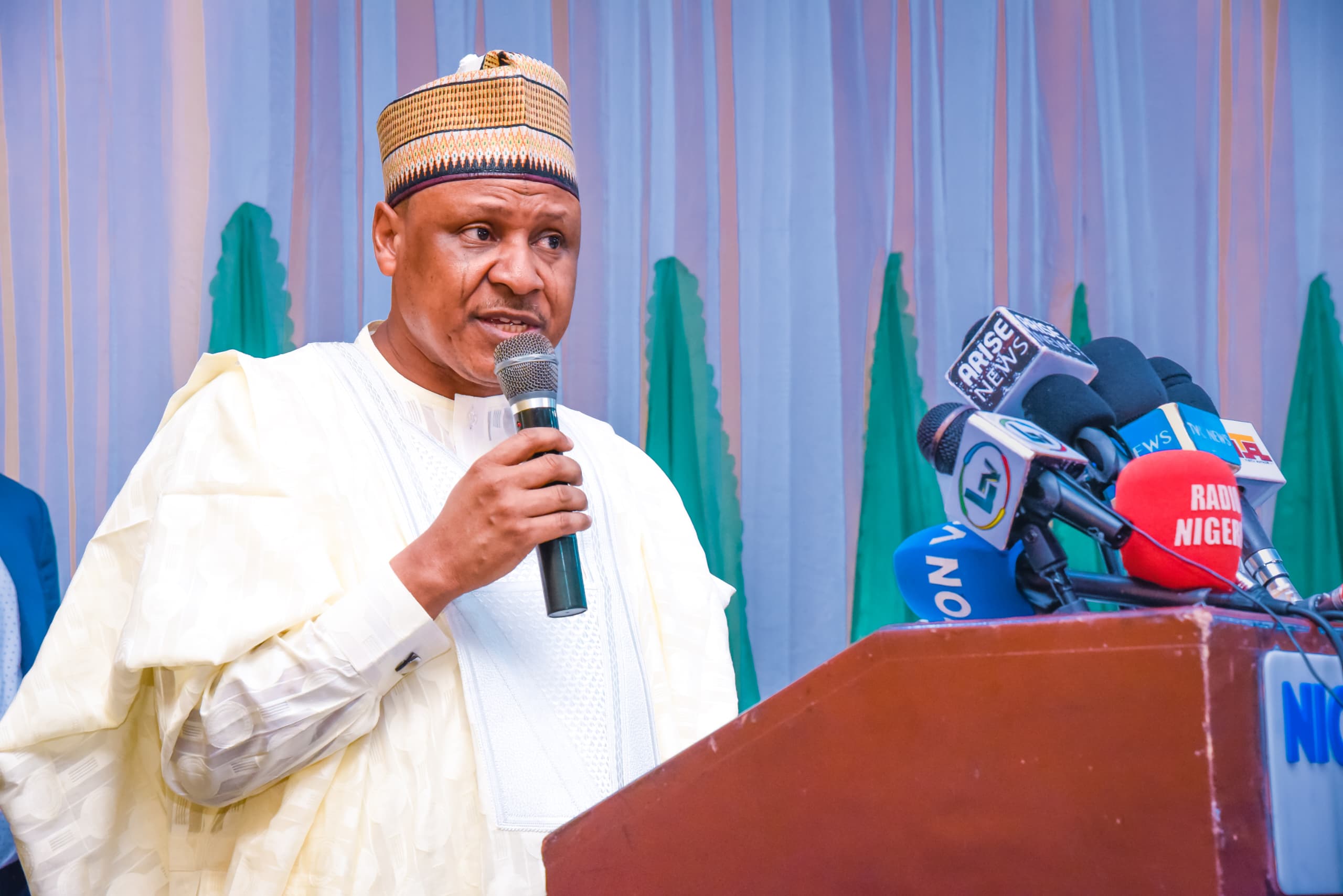
Speaking at the launch, the chairman of the FAAN Board, Dr. Abdullahi Umar Ganduje described the initiative as a milestone in FAAN’s drive to modernise airport operations and align Nigeria’s aviation sector with global best practices.

“These vehicles will support airside and landside logistics staff movement and services strengthening passenger coordination and efficiency across the airport,” he said.

Ganduje noted that electric vehicles offer strong environmental and operational advantages as they are cleaner quieter and more energy efficient significantly reducing carbon emissions and FAAN’s ecological footprint.

He added that the initiative supports global sustainability targets including the International Civil Aviation Organisation’s goal of achieving net zero carbon emissions by 2050.

“By embracing electric mobility FAAN is positioning Nigerian airports to remain competitive responsible and future ready,” he stated.

The former Kano state governor further explained that the predictable performance and lower maintenance requirements of electric vehicles will enhance monitoring coordination compliance accountability and overall service reliability.

According to him this will translate into more transparent efficient and passenger friendly airport services.

For her part, FAAN Managing Director, Olubunmi Kuku said the initiative demonstrates the authority’s commitment to a sustainable climate future by reducing carbon footprint and addressing the effects of climate change.

See also  US lawmakers, Nigerian Reps hold fresh sessions over rising insecurity

She noted that the electric vehicles will reduce dependence on fossil fuels lower operating and maintenance costs cut harmful emissions and enhance passenger travel experience.

“They represent more than just transport; they symbolise cleaner air quieter terminals and a commitment to pioneering sustainable infrastructure in Nigerian aviation.”

She described the collaboration with private sector partners as a model for innovation and progress.

“This partnership is a testament to what is possible when the public and private sectors align with a shared vision,”she said.

“FAAN has always prioritised passenger comfort safety and a seamless airport experience and today’s official launch of our electric shuttle buses and cabs is a further powerful demonstration of that commitment to service towards a sustainable future,” she added.

Kuku disclosed that FAAN has secured the approval to deploy 100 Electric Vehicles (EVs) to operate as airport shuttles at both the Murtala Mohammed International Airport, Lagos, and Nnamdi Azikiwe International Airport, Abuja.

Abimbola Gyer, the Head of Fleet Operations at Possible Energy disclosed that the electric shuttle service will operate daily from 7 a.m. to 7 p.m. with a fare of ₦10,000 per passenger from the airport to the city centre.

FOLLOW US ON:

FACEBOOK

TWITTER

PINTEREST

TIKTOK

YOUTUBE

LINKEDIN

TUMBLR

INSTAGRAM

Continue Reading

Business

Asian stocks hit by fresh tech fears as gold retreats from peak

Published

on

Asian stocks took a hit on Friday amid fresh worries over vast investments in artificial intelligence, gold and silver tumbled after hitting multiple record highs, and oil retreated on hopes for an easing of US-Iran tensions.

Markets have endured a rollercoaster ride this week as traders weathered a weaker dollar, Donald Trump’s threats against Tehran, a resumption of tariff warnings and a possible US government shutdown.

Fresh optimism in the tech sector about the future of AI has provided support, however, with healthy earnings from companies including Meta, Samsung and SK hynix providing much cheer.

However, the positivity took a hit on Thursday after Microsoft announced a surge in spending on AI infrastructure and revived concerns that companies could take some time before seeing a return on their investments.

There are also fears that firms’ valuations may be a little too stretched and markets could be in a bubble, having soared in recent years to record highs on the back of a tech-fuelled rally.

“Microsoft suffered its worst session since the COVID‑era crash, falling 12 percent and accounting for over two‑thirds of the S&P 500’s decline,” wrote National Australia Bank’s Rodrigo Catril.

“Concerns centred on rising investment spending, slower Azure (cloud service) growth, and a longer runway to monetising AI.”

– Trump Fed pick –

Wall Street ended mostly in the red, with Dow the only advancer.

Asia also struggled amid speculation Trump will pick Kevin Warsh, a former Fed governor and a man considered more hawkish on interest rates, as the next boss of the central bank. The president has said he will name a successor to Jerome Powell on Friday morning US time.

See also  N804bn arms imports spark calls for local production

Hong Kong, Shanghai, Tokyo, Sydney, Singapore, Taipei and Bangkok were all down. Seoul, Manila and Wellington rose.

Paris was flat as data showed France’s economy grew slower last year than 2024. London opened lower but Frankfurt rose.

Jakarta rose after a two-day rout sparked by index compiler MSCI calling on regulators to look into ownership concerns.

The compiler said: “If insufficient progress is made towards achieving necessary transparency enhancements by May 2026, MSCI will reassess Indonesia’s market accessibility status.”

It warned this could result in “a weighting reduction in MSCI Emerging Markets Indexes for all Indonesian securities and a potential reclassification of Indonesia from Emerging Market to Frontier Market status”.

Gold was also in retreat, sitting around $5,150 an ounce, a day after topping out above $5,595. Silver was at $106 from a peak of more than $121.

The precious metals were also weighed by a slight uptick in the dollar, having tumbled on Trump appearing to be happy to see the world’s reserve currency weaken despite the potential risk of pushing up US inflation.

Investors are keeping tabs on developments in the Middle East after the US president sent an “armada” to the region and warned Iran of possible strikes if it did not reach a fresh nuclear deal.

Both main contracts were down more than one percent, having spiked as much as five percent Thursday.

Still, concerns remain about a conflict in the crude-rich region, which would send prices soaring, also putting upward pressure on inflation.

In Washington, the US Senate edged closer to a vote on a funding deal to avert a government shutdown following a bitter standoff over Trump’s sweeping immigration crackdown.

See also  US lawmakers, Nigerian Reps hold fresh sessions over rising insecurity

Current government funding lapses at midnight on Friday.

– Key figures –

Tokyo – Nikkei 225: DOWN 0.1 percent at 53,322.85 (close)

Hong Kong – Hang Seng Index: DOWN 2.1 percent at 27,387.11 (close)

Shanghai – Composite: DOWN 1.0 percent at 4,117.95 (close)

London – FTSE 100: DOWN 0.2 percent at 10,150.97

West Texas Intermediate: DOWN 1.7 percent at $64.32 per barrel

Brent North Sea Crude: DOWN 1.6 percent at $68.50 per barrel

Euro/dollar: DOWN at $1.1940 from $1.1962 on Thursday

Pound/dollar: DOWN at $1.3781 from $1.3800

Dollar/yen: UP at 153.74 yen from 153.04 yen

Euro/pound: DOWN at 86.63 pence from 86.67 pence

New York – Dow: UP 0.1 percent at 49,071.56 (close)

AFP

punch.ng

FOLLOW US ON:
FACEBOOK

TWITTER

PINTEREST

TIKTOK

YOUTUBE

LINKEDIN

TUMBLR

INSTAGRAM

Continue Reading

Trending