Connect with us

News

Tinubu proposes 110 Court of Appeal justices

Published

on

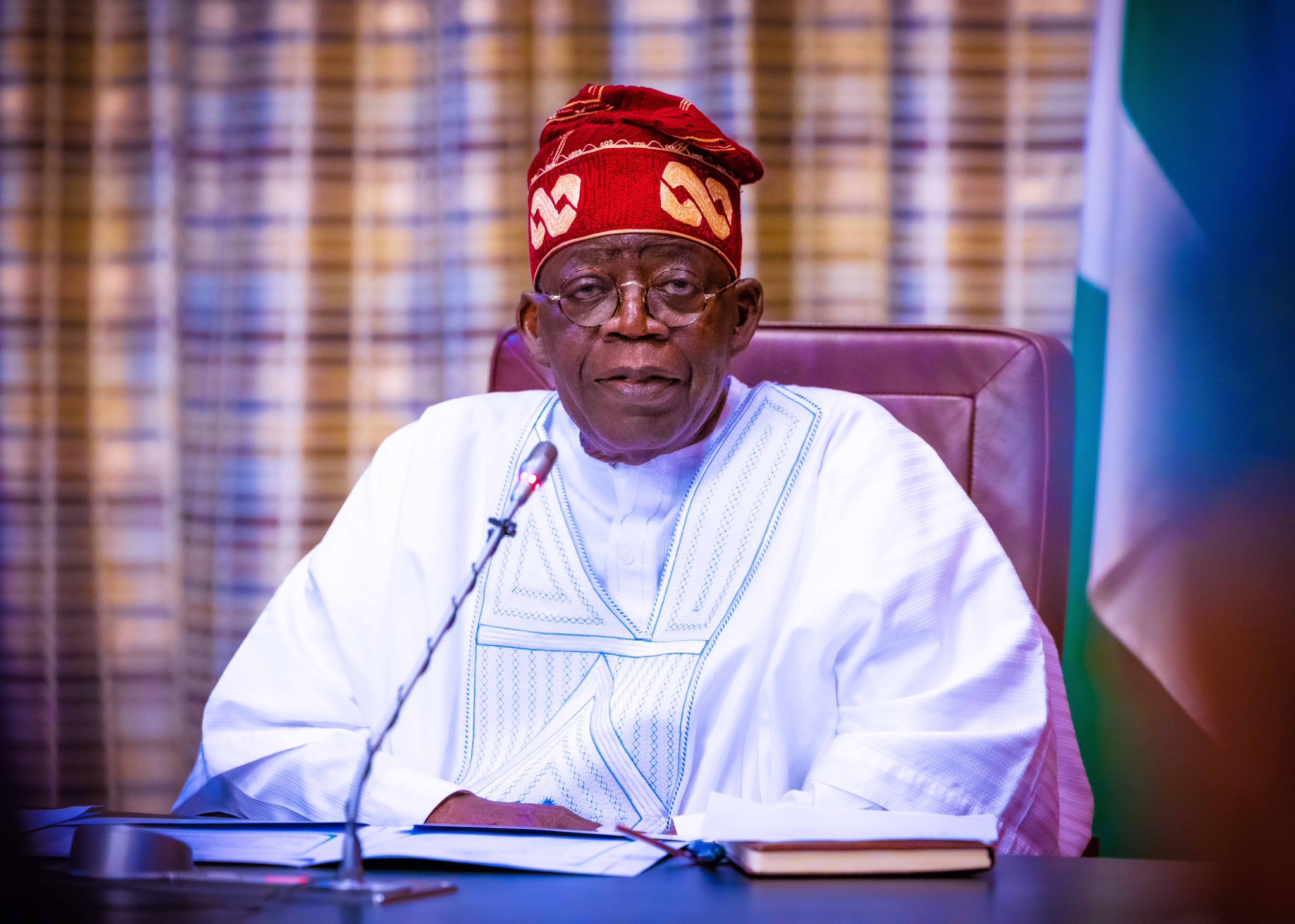
President Bola Tinubu has asked the Senate to approve a bill seeking to amend the Court of Appeal Act to increase the number of justices from 70 to 110, as part of reforms aimed at strengthening Nigeria’s appellate justice system.

The request was conveyed in a letter addressed to the President of the Senate, Senator Godswill Akpabio, and read at plenary on Tuesday.

According to the President, the proposed amendments are intended to enhance the institutional capacity, efficiency and effectiveness of the Court of Appeal in line with constitutional provisions and emerging realities within the justice sector.

He said the central feature of the bill is the expansion of the court’s bench to cope with rising caseloads and operational pressures.

“The bill seeks to increase the number of justices of the Court of Appeal from 70 to 110 and provide clarification of judicial structure and seniority,” Tinubu stated.

The President explained that the legislation also seeks to restructure provisions relating to the ranking of justices of the Court of Appeal, including the position of the President of the Court and the determination of seniority among serving justices.

In addition, Tinubu disclosed that the bill introduces measures to modernise appellate proceedings through the use of technology.

“The bill provides for the conduct of proceedings of the Court of Appeal through electronic and audio means, and the establishment of an Alternative Dispute Resolution Centre,” he said.

According to him, the proposed ADR Centre would operate within the Court of Appeal, allowing certain appellate matters to be referred for settlement.

See also  British singer, Rick Davies dead at 81

“The bill seeks to establish an Alternative Dispute Resolution Centre within the Court of Appeal, where appellate matters may be referred for settlement,” the President added.

He further noted that the amendment would improve professional efficiency and legal certainty in appellate practice.

“The bill also seeks to update terminology and definitions within the principal Act, including the recognition of virtual hearings and modern correctional nomenclature.

“It seeks to consolidate interpretative provisions to ensure clarity, consistency, and alignment with the current legal and institutional framework,” Tinubu said.

The President said the reforms were timely, given the increasing pressure on the appellate justice system nationwide, adding that the proposed changes would help reduce delays, strengthen access to justice and reinforce public confidence in the judiciary.

Following the reading of the letter, Senate President Akpabio referred the bill to the Senate Committee on Rules and Business for further legislative action.

The move comes against the backdrop of sustained concerns over workload pressures within Nigeria’s superior courts. Barely a year ago, the Senate considered a separate legislative proposal to expand the number of Supreme Court justices to 30 to address the mounting backlog of cases at the apex court.

That bill, sponsored by Senator Osita Izunaso (Imo West), was anchored on concerns that the existing number of justices was inadequate despite the appointment of 11 justices in 2023, which filled the constitutional quota for the first time.

“Even with the full complement of 21 justices, the Supreme Court is overwhelmed. The volume of cases reaching the court daily is alarming. Some litigants are being given hearing dates as far ahead as 2027 and 2028,” Izunaso had said.

See also  Labour tasks states, LGAs on insecurity

Meanwhile, President Tinubu has also written to the Senate seeking confirmation of the appointment of Justice Oyewole Kayode as a Justice of the Supreme Court of Nigeria.

The request, read at plenary by Akpabio, was referred to the Senate Committee on Judiciary, Human Rights and Legal Matters for consideration and report.

The confirmation request further underscores ongoing efforts by the Federal Government to ease capacity constraints and strengthen judicial delivery across Nigeria’s courts.

Continue Reading
Click to comment

Leave a Reply

Your email address will not be published. Required fields are marked *

News

Electoral Act could cause chaos, don’t sign it, ex-INEC commissioner urges Tinubu

Published

on

A former Independent National Electoral Commission’s Resident Electoral Commissioner, Mike Igini, has called on President Bola Tinubu to withhold assent on the recently passed Electoral Act (Repeal and Re-Enactment) Bill 2026, describing it as “a recipe for chaos” that could undermine Nigeria’s democracy.

Igini made the call on Wednesday during an interview on Arise Television following the Senate’s passage of the bill, which included contentious provisions under Clause 60 on electronic transmission of results.

“It is indeed my humble recommendation to Mr President that you are a man of history. You were a senior man to very many of us in the struggle at the time when the journey of Nigeria and the prospect of democracy was less certain,” he said.

He further reminded the president of the 2015 struggle to ensure elections reflect the people’s will.

“And also remember that, at a time when the PDP was in office and when we were in office, and they were saying that there was going to be a federal might, some of us stood out to say no.

“In 2015, it’s going to be the might of people, not federal might, but the might of the people through the ballot that should determine what will happen.

“You should be a man of history, what is put before you take it back, don’t sign it,” Igini said.

The Senate had on Tuesday passed the Electoral Act 2022 (Repeal and Re-Enactment) Bill 2026 after tense deliberations.

The session saw opposition from Senator Enyinnaya Abaribe, who demanded a division on Clause 60(3), proposing that manual forms should not serve as a fallback if electronic transmission fails. After a vote, 55 senators supported the proviso while 15 opposed it.

See also  Hundreds feared dead in devastating Sudan landslide

Turning to the judiciary, Igini warned that courts have historically failed to protect voters and uphold democracy.

“The greatest option that we have is the judiciary that must stand tall and mighty in defence of democracy and the rule of law. Were it not for the judiciary, we would not be where we are today,” he said.

He also stressed past failures, saying, “I have all the records of failures. When it comes to elections, the judiciary has not done well. In fact, the Nigerian people now see my constituency as a veritable conspiracy against them because they have never given effect to it.”

Igini also criticised the Senate’s handling of the bill, citing the reversal of Clause 60 provisions that originally mandated real-time electronic transmission of polling unit results.

“Look at what has happened…Today, no primary in Nigeria because Supreme Court struck down the party direction that was issued in line with Section 29 of the Act,” he said.

Igini had earlier warned in a Sunday statement that many National Assembly members risk losing their seats if mandatory real-time electronic transmission is not guaranteed.

He stressed that for democracy to thrive, the judiciary must enforce due process and protect voters’ rights: “The way forward is for the judiciary to stand tall and mighty in defence of due process because what we are seeing now is not what is expected.”

punch.ng

FOLLOW US ON:

FACEBOOK

TWITTER

PINTEREST

TIKTOK

YOUTUBE

LINKEDIN

TUMBLR

INSTAGRAM

Continue Reading

News

Data privacy issues threaten Nigeria’s financial inclusion

Published

on

Growing concerns over data privacy and security are emerging as a significant barrier to Nigeria’s financial inclusion drive, despite years of investment in connectivity and digital infrastructure.

While policymakers and industry stakeholders have long focused on expanding broadband access, mobile penetration, and fintech innovation, experts now argue that trust — particularly around how personal data is collected, stored, and used — may determine whether millions of Nigerians join the formal financial system.

In 2012, the Central Bank of Nigeria set a target to reduce the country’s adult financial exclusion rate to 20 per cent by 2020 under its National Financial Inclusion Strategy. However, the exclusion rate stood at 36 per cent in 2020, according to the regulator’s 2022 report, underscoring persistent gaps in access and adoption.

Industry leaders say the challenge is no longer primarily about infrastructure.

“Increasing connectivity is essential, but it is only a prerequisite,” the Chief Commercial Officer at Optasia, Uchenna Agbo, said. “True inclusion requires meaningful participation, and that depends on trust.”

Across major commercial hubs such as Balogun Market, traders who rely heavily on cash transactions often remain hesitant to adopt digital financial services. Although many own mobile phones and are aware of mobile money platforms, concerns about fraud, account hacking, and misuse of personal information continue to discourage uptake.

Stories of compromised accounts and data leaks have circulated widely, reinforcing fears among small business owners that using digital systems could expose sensitive personal and financial information.

For many low-income earners, privacy risks are seen not as abstract regulatory issues but as threats to livelihoods.

See also  PHOTOS: US arrests nine illegal immigrants from Africa during raid of NYC’s Chinatown

The issue has gained renewed prominence following the enactment of the Nigeria Data Protection Act and the establishment of the Nigeria Data Protection Commission, which is tasked with enforcing data protection standards and promoting responsible data practices across sectors.

Analysts say regulatory frameworks are necessary but insufficient on their own. They argue that financial service providers must move beyond compliance and embed privacy protections into the design of products and services, a model often referred to as “privacy-by-design”.

“Data privacy should not be treated as a compliance obligation or a technical feature added at the end of development,” Agbo said. “It must be seen as core infrastructure, as fundamental as the networks and platforms that deliver the services.”

Optasia, which operates in 38 countries and serves more than 120 million monthly active users globally, says lessons from other markets show that trust directly influences digital adoption rates, particularly among underbanked populations.

Consumer advocates note that for low-income users, the consequences of privacy breaches can be severe. Misuse of biometric data, unauthorised sharing of financial histories, or predatory lending practices enabled by data analytics can undermine confidence and deter participation in formal systems.

Continue Reading

News

Gombe gov unveils major projects, new LCDA secretariats

Published

on

Gombe State Governor, Muhammadu Yahaya, on Tuesday, hosted his Yobe State counterpart, Mai Mala Buni, and the Senior Special Assistant to the President on Political and Other Matters, Ibrahim Masari, for the inauguration of major projects and the groundbreaking of new Local Council Development Areas secretariats.

Among the projects inaugurated were the new Nafada Local Government Secretariat, the Nafada four-span bridge, and a mega non-formal learning centre (Tsangaya School), all described as strategic interventions aimed at boosting governance and socio-economic development in Nafada and adjoining communities.

The new secretariat replaces a dilapidated structure that had long hindered effective service delivery, while the four-span bridge resolves years of seasonal inaccessibility that cut off communities during the rainy season.

The Tsangaya School is designed to integrate Almajiri children into a structured and supportive learning system.

Masari, on his part, inaugurated the 7.5-kilometre Kwanan Rugaji–Almakashi Road, with a spur to Gargaldu, linking Funakaye Local Government Area of Gombe State to neighbouring communities in Yobe State. The road is expected to ease transportation challenges and stimulate economic activities in the area.

He also inaugurated a 66-shop ultra-modern commercial complex in Bajoga, named after the late Emir Muhammadu Kwairanga, to enhance commerce and provide a conducive business environment for traders.

At the foundation-laying ceremonies for the Funakaye South LCDA in Tongo and the Nafada South LCDA in Birin Fulani, Yahaya said the creation of 13 LCDAs was a deliberate move to deepen grassroots governance.

“Today marks another significant milestone in our journey to deepen democracy and accelerate development at the grassroots.

See also  Hundreds feared dead in devastating Sudan landslide

“The foundation laying for Funakaye South LCDA and Nafada South LCDA is a direct outcome of our administration’s decision to create 13 Local Council Development Areas.

“These LCDAs are designed to institutionalise meaningful development and bring governance closer to our people. Our vision is clear: in due course, they will metamorphose into full-fledged local government areas as we strengthen their structures and capacities,” the governor stated.

He disclosed that subsequent local council elections would be conducted simultaneously with the LCDAs to enhance their democratic legitimacy.

Yahaya said the state drew inspiration from the success of development areas in Lagos State, commending President Bola Tinubu for pioneering the model during his tenure as governor.

“That visionary step has continued to yield dividends, and we are confident Gombe State will record even greater success with this initiative,” he stated.

In his remarks, Buni commended Yahaya for what he described as bold and strategic initiatives to strengthen local governance.

He urged residents to continue supporting the administration and called for sustained prayers for peace and development across Gombe, Northern Nigeria and the country at large.

Speaking during the road inauguration, Masari applauded the state government for aligning its development blueprint with the Federal Government’s Renewed Hope Agenda, describing the projects as evidence of prudent resource management and responsible leadership.

Earlier, the Director-General of the Gombe State Joint Project Development Agency, Mahmood Yusuf, gave an overview of the projects being jointly executed by the state and local governments, assuring quality delivery and timely completion.

During the visit, the governor and his guests paid homage to the Emir of Funakaye and the Emir of Nafada, both of whom commended the administration’s developmental strides and pledged continued support.

See also  Labour tasks states, LGAs on insecurity

At the Funakaye Emirate, Buni was conferred with the traditional title of “Dikuman Funakaye,” while Masari received the title “Dan Saran Funakaye.”

Similarly, the Emir of Nafada honoured Buni and Masari with the titles of “Muqaddas” and “Dan Sarari of Nafada,” respectively.

Continue Reading

Trending