Connect with us

News

NAFDAC resumes enforcement of sachet alcohol ban, dismisses shutdown claims

Published

on

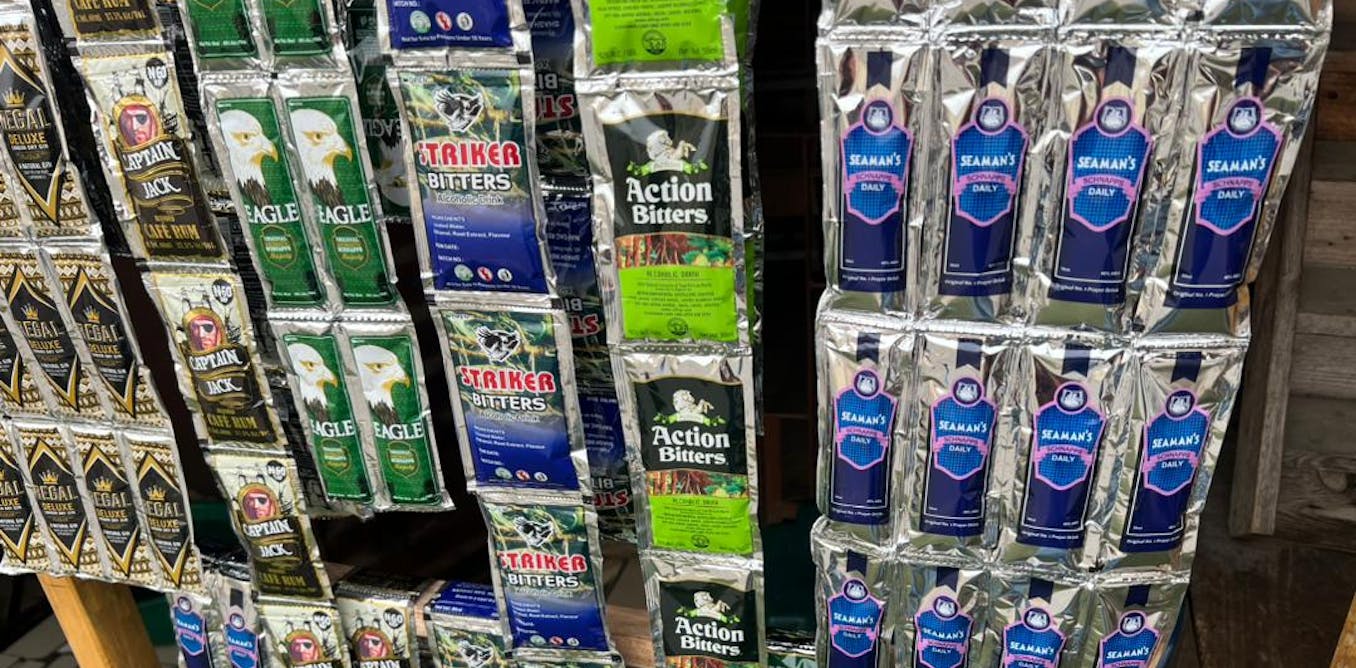
The National Agency for Food and Drug Administration and Control has resumed enforcement of the ban on the production and sale of alcoholic beverages packaged in sachets and small plastic or glass bottles below 200 millilitres.

The agency clarified that it did not shut down any alcohol-producing company but only prohibited the sale of alcohol in sachets and small containers, citing public health concerns.

In a statement on Thursday, the Director-General of NAFDAC, Prof. Mojisola Christianah Adeyeye, said the move was aimed at protecting children, adolescents and young adults from the harmful use of alcohol.

“The National Agency for Food and Drug Administration and Control has resumed enforcement of the ban on the production and sale of alcoholic beverages packaged in sachets and small-volume PET or glass bottles below 200ml, in line with a resolution of the Senate of the Federal Republic of Nigeria and the Agency’s public health mandate,” the statement read.

According to the agency, the widespread availability of high-alcohol-content beverages in sachets and small containers has made alcohol cheap, easily accessible and easily concealable, contributing to rising cases of underage drinking, addiction, domestic violence, road accidents, school dropouts and other social vices.

Adeyeye noted that placing warning labels such as “Not for children” on sachets and small containers had proven ineffective due to societal realities.

“Many parents do not even know their children consume sachet alcohol because the pack size is small, cheap and easily concealed,” she said.

She revealed that reports from schools had shown disturbing trends, including a recent case in which a teacher disclosed that a student claimed he could not sit for an examination without first taking sachet alcohol.

See also  Profile Of Ambassadors Nominated For US, UK, France By President Tinubu

NAFDAC recalled that in December 2018, it, alongside the Federal Ministry of Health and Social Welfare and the Federal Competition and Consumer Protection Commission, signed a five-year Memorandum of Understanding with manufacturers to phase out sachet and small-volume alcohol packaging by January 31, 2024.

The moratorium was later extended to December 2025 to allow manufacturers to exhaust existing stock and reconfigure their production lines.

“The current Senate resolution aligns with the spirit and letter of that agreement and with Nigeria’s commitment to the World Health Assembly Global Strategy to Reduce the Harmful Use of Alcohol,” she said.

Adeyeye stressed that the ban was not punitive but protective.

“This ban is not punitive; it is protective. It is aimed at safeguarding the health and future of our children and youth by not allowing alcohol in small pack sizes.

“The decision is rooted in scientific evidence and public health considerations. We cannot continue to sacrifice the well-being of Nigerians for economic gain. The health of a nation is its true wealth.”

She reiterated that only spirit drinks packaged in sachets and small PET or glass bottles below 200ml were affected, adding that NAFDAC still approved alcoholic beverages in larger pack sizes.

The renewed enforcement has sparked immediate reactions across industry, labour, and public spheres.

The Manufacturers Association of Nigeria and other stakeholders, including the Food and Beverage Tobacco Outgrowers and Bottlers (FOBTOB), have criticised the move as inconsistent and potentially damaging.

On January 23, members of the Distillers and Blenders Association of Nigeria, Nigerian Labour Congress and the Trade Union Congress gathered at the Lagos office of NAFDAC to protest the ban.

See also  Veteran Nollywood Actor, Victor Eriabie, Is De@d

They warned that the enforcement would displace no fewer than 5.5 million Nigerians from their jobs.

Some protesters described the policy as a serious regulatory misstep that fails to balance public health goals with economic realities—particularly in a country where low-cost sachet spirits remain popular among low-income consumers.

But NAFDAC called on manufacturers, distributors and retailers to comply fully with the directive, stressing that no further extension would be granted beyond December 2025.

The agency said it would continue to collaborate with the Federal Ministry of Health and Social Welfare, the FCCPC and the National Orientation Agency to intensify nationwide sensitisation on the dangers of alcohol misuse.

NAFDAC reaffirmed its commitment to ensuring that only safe, wholesome and properly regulated products are available to Nigerians.

punch.ng

FOLLOW US ON:

FACEBOOK

TWITTER

PINTEREST

TIKTOK

YOUTUBE

LINKEDIN

TUMBLR

INSTAGRAM

Continue Reading
Click to comment

Leave a Reply

Your email address will not be published. Required fields are marked *

News

Ex-military chief gives reasons bandits kidnap people

Published

on

Former Field Commander of Operation Safe Haven, OPSH, Maj. Gen. Anthony Atolagbe, rtd, says bandits kidnap people to use them as human shields from the military.

General Atolagbe made this revelation on Tuesday when he featured in an interview on Arise Television’s ‘Prime Time’.

He was speaking about the rising insecurity confronting the country.

“The bandits have a pattern of taking people into their enclave, just to use them as sex slaves, but also as shields for negotiation.

“What I can say also is that I will not be able to dwell on specifics. But in Sambisa, some abducted people were freed. In fact, the first thing that happened was that over 100 of them escaped, based on the heat that was brought on the adversary.

“Now, what is playing out is that these guys are being dislodged, and when they are dislodged, and they lose contact with all these women and these men that are running, who are sex slaves and liberals for them within the theater or wherever they are in their enclaves, what happens is that they try to move to other locations where they think they will be safe.

“And the next thing is to start looking for who they can also grab and bring into their new locations.

“The other side is that it is also another strategy by those that are expecting the arrival of the military that are coming into their enclaves to come and chase them out by using some of these people as human shields when the military approach their location.

See also  Senate receives Tinubu’s request for N1.15trn loan

“So you see that the analysis has brought it out that they have a pattern that they always want to take people into their enclave, not just to use them as slaves or whatever, but they will also want to use them to negotiate,” the retired military officer said.

FOLLOW US ON:

FACEBOOK

TWITTER

PINTEREST

TIKTOK

YOUTUBE

LINKEDIN

TUMBLR

INSTAGRAM

Continue Reading

News

War: Federal govt begins evacuation of Nigerians from Iran

Published

on

The Federal Government has commenced the evacuation of Nigerians who wish to leave Iran, escorting them across the Armenian border to ensure their safety as tension continues to escalate in the Middle East.

The development was disclosed on Tuesday by the Chairman and Chief Executive Officer of the Nigerians in Diaspora Commission (NiDCOM), Abike Dabiri-Erewa, in a post shared on her X handle.

According to her, officials of the Nigerian Embassy in Tehran are coordinating the evacuation process and assisting Nigerians willing to depart the country.

The evacuees are being escorted to the Armenian border where arrangements have been made to facilitate their safe passage.

The evacuation comes amid growing concerns over the security situation in the region following a series of coordinated military strikes on Iran by the United States and Israel on February 28.

The strikes reportedly triggered retaliatory missile and drone attacks across parts of the Middle East, raising fears of a broader regional conflict.

Despite the rising tension, Dabiri-Erewa reassured that no Nigerian in Iran has been affected by the ongoing hostilities.

She also noted that embassy officials remain stationed at the border to receive and assist Nigerians who decide to leave the country.

“Willing Nigerians being escorted across the Armenian border by officials of the Nigerian embassy in Iran for safe passage. No Nigerian in Iran has been affected by the war as officials remain at the border to receive all who want to leave,” she wrote.

This comes due to the ongoing military strikes between U.S, Israel and Iran.

See also  Nigerian Airforce promotes 57 senior officers

FOLLOW US ON:

FACEBOOK

TWITTER

PINTEREST

TIKTOK

YOUTUBE

LINKEDIN

TUMBLR

INSTAGRAM

Continue Reading

News

Insurgency: FG knows every terrorist by name, says Gumi

Published

on

Kaduna-based Islamic scholar Sheikh Abubakar Gumi has stirred debate by claiming that the Nigerian government already knows the identities and hideouts of terrorists across the country. Speaking in a recent DRTV interview, he said his interactions with armed groups are coordinated closely with security agencies.

Gumi addressed rumours that he negotiates with bandits on his own, stressing the involvement of police, military, and other officials. “The government knows every terrorist by name and by location. I don’t go alone to negotiate I go with the police, military, and other security agencies,” he said.

The cleric revealed that some of his efforts take him deep into forests and remote communities, sometimes even accompanied by local women. “I would go to the Emirs. In fact, when we went to one forest, I even went with women into the bush,” he added.

Gumi has long advocated dialogue as a tool to reduce violence, often sparking controversy for interacting with groups considered enemies of the state. He argued that these efforts complement security operations rather than replace them, highlighting the importance of negotiation alongside law enforcement.

Observers note that Gumi’s approach underscores the complexity of addressing Nigeria’s insecurity, where military action alone may not suffice. His collaboration with traditional leaders and security agencies demonstrates a hybrid strategy aimed at curbing violence and encouraging disarmament.

Despite these efforts, insecurity remains high in several northern states, prompting debate on whether dialogue initiatives have tangible results. Critics argue that without accountability and transparency, negotiations could inadvertently legitimise armed groups.

See also  Senate receives Tinubu’s request for N1.15trn loan

Gumi’s statements have reignited national conversations on counterterrorism strategies, with many Nigerians discussing the balance between dialogue, intelligence gathering, and military action. His insights suggest that tackling terrorism in Nigeria may require innovative approaches that merge community engagement with formal security measures.

thesun.ng

FOLLOW US ON:

FACEBOOK

TWITTER

PINTEREST

TIKTOK

YOUTUBE

LINKEDIN

TUMBLR

INSTAGRAM

Continue Reading

Trending