Connect with us

Business

Nigeria to partner global allies on clean energy – Tinubu

Published

on

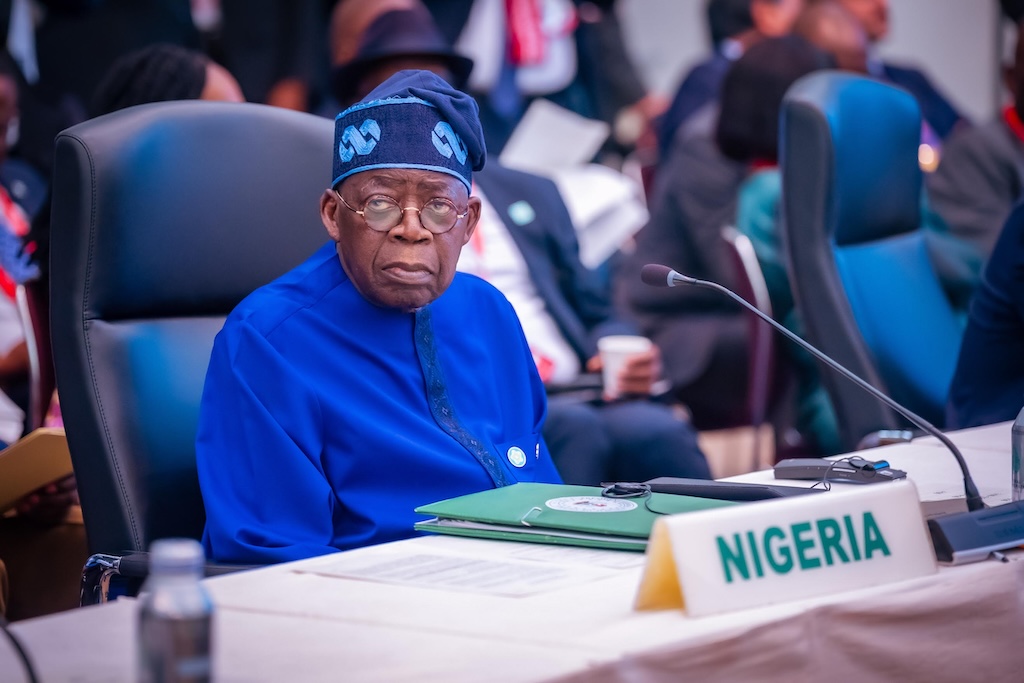
President Bola Tinubu on Tuesday said Nigeria is ready to collaborate with African nations, global partners, and the private sector to deliver cleaner, affordable, inclusive, and more secure energy.

He said energy plays a critical role as the invisible force holding the modern world together, as well as the quiet architecture of balance among nations, and as the unseen hand that steadies economies and sustains societies.

The President stated this when he declared open the 9th Nigeria International Energy Summit held at the State House Banquet Hall, Abuja. The summit was attended by heads of delegation and senior government officials from across the globe, as well as leaders of international energy organisations, chief executives of global and indigenous energy companies, development finance institutions, and representatives of host communities.

Tinubu, who was represented at the summit by his deputy, Vice President Kashim Shettima, observed that while energy remains central to peace, prosperity, and global stability, Nigeria is focusing heavily on utilising its vast gas reserves as a transition fuel and expanding renewable energy capacity.

“Energy must unite communities, stabilise economies, and secure futures. It must power factories, illuminate homes, fuel innovation, and build trust between government, investors, and citizens. Nigeria stands ready to collaborate with Africa, global partners, and the private sector to deliver energy that is secure, affordable, cleaner, and inclusive,” he declared.

The President recalled that even though his administration inherited an energy sector that was rich in potential in 2023, the sector was “constrained by inefficiencies, uncertainty, and prolonged underinvestment.”

See also  Price war: Retailers drop petrol below Dangote’s N739/litre

“We set to work without fanfare, guided by the clear understanding that energy cannot be treated simply as an economic commodity if stability is our goal.

“Energy is a catalyst for national security, industrial growth, social inclusion, and regional cooperation,” he noted.

Tinubu assured that his government was fully committed to “building an energy system that delivers reliability, transparency, sustainability, and shared prosperity.”

Outlining efforts by his administration to boost the energy sector, the President said his administration sustained and deepened the full implementation of the Petroleum Industry Act, consolidating its role as the linchpin of sector reform and strengthening regulatory institutions to ensure clarity of roles, transparency, and investor confidence.

He continued: “Under our watch, Nigeria’s upstream activity recorded a historic rebound. Rig counts rose from eight rigs in 2021 to 69 rigs by late 2025, reflecting renewed exploration and drilling momentum.

“The sector secured Final Investment Decisions exceeding $8bn, including major offshore gas developments involving global energy companies. Foreign direct investment into the oil and gas subsector rebounded strongly, driven by regulatory certainty, fiscal reforms, and improved operating conditions.”

Under his watch, Tinubu said crude oil theft, which had been a major constraint on production and revenue, declined significantly due to enhanced security coordination, surveillance, and regulatory enforcement, adding that the efforts paid off, restoring operational stability and improving Nigeria’s production reliability in international markets.

Earlier, Gambian President Adama Barrow observed that Nigeria’s policies have implications far beyond its borders, noting that working together through strategic partnerships is key to regional solutions and energy security.

See also  Tinubu approves 15% import duty on petrol, diesel

President of the Republic of Equatorial Guinea, Teodoro Obiang Nguema Mbasogo, maintained that Africa must cease to be merely an exporter of raw materials and focus on processing them for the betterment of future generations.

The Senate President, Godswill Akpabio, in a speech that was read on his behalf, averred that in Africa, energy is not just about resources but about inclusive and sustainable prosperity.

He assured that the National Assembly is ready to work with relevant stakeholders through legislative backing, agreeing that when the energy system works, the economy grows more resilient.

punch.ng

FOLLOW US ON:

FACEBOOK

TWITTER

PINTEREST

TIKTOK

YOUTUBE

LINKEDIN

TUMBLR

INSTAGRAM

Continue Reading
Click to comment

Leave a Reply

Your email address will not be published. Required fields are marked *

Business

FG uncovered 45,000 ghost workers via BVN integration – Former Minister of Finance, Kemi Adeosun

Published

on

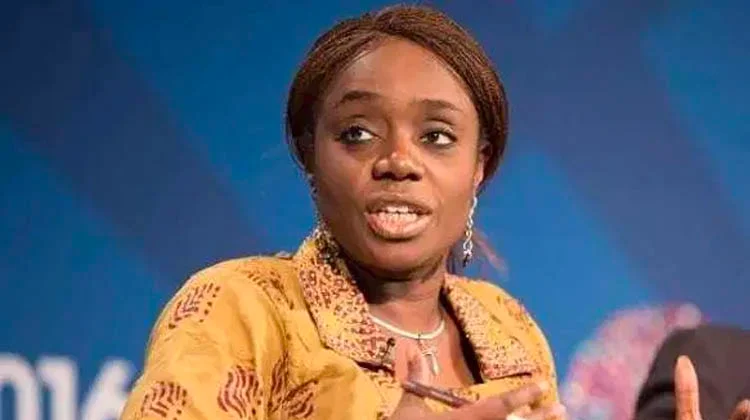
Former Minister of Finance, Kemi Adeosun, has revealed how the Federal Government used technology to eliminate large-scale payroll fraud, uncovering 45,000 “ghost workers” through the integration of the Bank Verification Number (BVN).

Speaking at the Citadel School of Government Dialogue series in Lagos, Adeosun explained that prior to the reform, the federal payroll was the government’s largest expenditure and was plagued by inefficiencies that earlier biometric efforts failed to resolve.

She noted that previous attempts to sanitise the payroll using biometric systems often stalled due to resistance from paramilitary institutions such as the Police and Army, which were reluctant to adopt centralised processes.

To overcome this, her team leveraged the existing BVN database instead of introducing a new biometric system.

“The payroll was our biggest cost,” Adeosun said. “Previous biometric efforts had stalled because paramilitary groups refused to cooperate. We bypassed this by using BVN data. We ran the federal payroll against the BVN database, and the result was staggering: we found 45,000 ‘ghost workers.’”

Clarifying the nature of the fraud, she explained that the term “ghost worker” often concealed simpler issues tied to weak systems and individual exploitation rather than highly organised networks.

“In many cases, it wasn’t a ‘ghost,’ but one person’s BVN linked to multiple salaries,” she said. “It wasn’t always a cartel. Sometimes it was inefficiency—people who had died or transferred but were still receiving salaries.”

FOLLOW US ON:

FACEBOOK

TWITTER

PINTEREST

TIKTOK

YOUTUBE

LINKEDIN

See also  Tax law: N5tn VAT windfall for states as new formula begins
Continue Reading

Business

Oil Price Hits $120 As OPEC+ Raises Output By 206,000 Bpd

Published

on

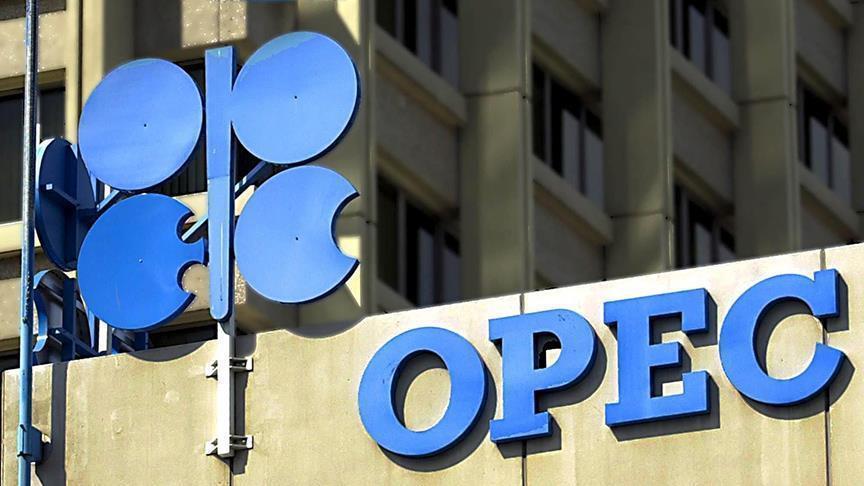
Eight members of OPEC+ have agreed to increase oil output quotas for May by 206,000 barrels per day, even as ongoing geopolitical tensions continue to disrupt global supply.

It was reports that the decision was reached during a virtual meeting held on Sunday, according to a statement released by the oil alliance.

However, despite the announced increase, industry observers say the additional supply may remain largely theoretical due to production constraints affecting key member countries.

Findings indicate that the modest quota increase may not translate into actual output, as major oil producers are grappling with disruptions linked to the ongoing U.S.-Israeli war with Iran.

Several top producers have seen their capacity hampered, with infrastructure damage and security concerns preventing meaningful increases in supply.

Meanwhile, a separate panel of the alliance, the Joint Ministerial Monitoring Committee, also met on Sunday and raised alarm over persistent attacks on oil infrastructure.

The committee noted that such attacks are “expensive and time-consuming to repair,” warning that they continue to weigh heavily on global supply.

The situation is further complicated by disruptions in the Strait of Hormuz, widely regarded as the world’s most critical oil transit route.

The waterway has effectively remained shut since late February due to the conflict, significantly cutting exports from key producers including Saudi Arabia, United Arab Emirates, Kuwait, and Iraq.

Although Iran stated on Saturday that Iraq could freely transit the strait, and shipping data showed a tanker carrying Iraqi crude passing through on Sunday, uncertainty persists.

“It remains to be seen if more vessels will take the risk involved,” a source familiar with the development said.

See also  Tax law: VAT hits record N1tn as new sharing era begins

Global crude oil prices have surged to nearly $120 per barrel, marking a four-year high, as supply disruptions continue to tighten the market.

The spike has triggered a ripple effect, with transport fuel prices rising sharply and putting pressure on consumers and businesses worldwide. Governments are also beginning to take steps aimed at conserving dwindling supplies.

Analysts warn that prices could climb even higher if the situation persists. Investment bank JPMorgan Chase projected that oil prices may exceed $150 per barrel if disruptions in the Strait of Hormuz extend into mid-May.

Despite the quota adjustment, the additional 206,000 barrels per day accounts for less than two per cent of the estimated supply lost due to the Hormuz closure.

Sources within the alliance told Reuters that the move primarily signals readiness to ramp up production once conditions stabilise and the key shipping route reopens.

Sanctions, Infrastructure Damage Hinder Output

Beyond the Gulf region, other producers are also facing challenges.

Russia, for instance, has been unable to increase production due to Western sanctions and damage to oil infrastructure linked to its ongoing conflict with Ukraine.

The scale of the current disruption is unprecedented, with estimates suggesting that between 12 million and 15 million barrels per day, up to 15 per cent of global supply, have been cut off from the market.

This marks one of the largest oil supply shocks on record.

It was reports that the May increase mirrors the 206,000 bpd adjustment agreed for April during the alliance’s previous meeting on March 1, just as the conflict began to impact oil flows.

See also  FG to disburse ₦6.3bn interest-free loans to 21,000 flood victims

OPEC+, which comprises 22 member countries, has in recent years relied on a core group of eight nations to make monthly production decisions.

These countries had collectively increased output by about 2.9 million barrels per day between April and December 2025 before pausing adjustments from January to March 2026.

With the next meeting scheduled for May 3, attention will be on whether the alliance can respond effectively to the evolving crisis.

FOLLOW US ON:

FACEBOOK

TWITTER

PINTEREST

TIKTOK

YOUTUBE

LINKEDIN

Continue Reading

Business

Bank recapitalisation: Local investors provide 72% of N4.6tn

Published

on

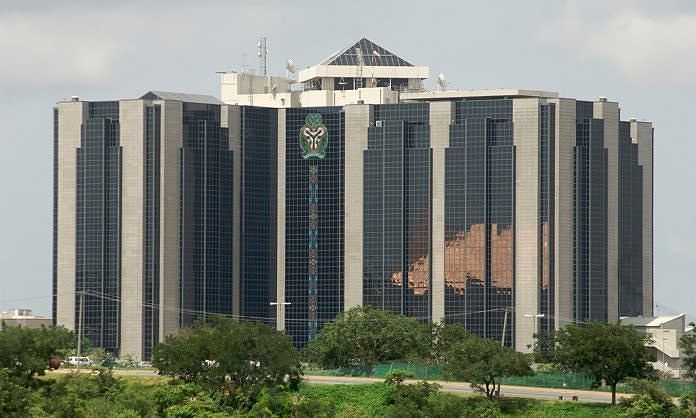
The Central Bank of Nigeria (CBN) on Wednesday said domestic investors accounted for the bulk of funds raised under its banking sector recapitalisation programme, contributing 72.55 per cent of the N4.65tn total capital secured by lenders.

The apex bank disclosed this in a statement marking the conclusion of the exercise, which began in March 2024 and saw 33 banks meet the new minimum capital requirements.

The statement was jointly signed by the Director of Banking Supervision, Olubukola Akinwunmi, and the Acting Director of Corporate Communications, Hakama Sidi-Ali.

According to the CBN, Nigerian investors provided about N3.37tn of the total capital raised, underscoring strong domestic confidence in the banking sector, while foreign investors accounted for the remaining 27.45 per cent.

“Over the 24-month period, Nigerian banks raised a total of N4.65tn in new capital, strengthening the resilience of the financial system and enhancing its capacity to support the economy,” the statement said.

Commenting on the outcome, the CBN Governor, Olayemi Cardoso, said, “The recapitalisation programme has strengthened the capital base of Nigerian banks, reinforcing the resilience of the financial system and ensuring it is well-positioned to support economic growth and withstand domestic and external shocks.”

The bank confirmed that 33 lenders had met the revised capital thresholds, while a few others were still undergoing regulatory and judicial processes.

“The CBN confirms that 33 banks have met the revised minimum capital requirements established under the programme,” it stated.

“A limited number of institutions remain subject to ongoing regulatory and judicial processes, which are being addressed through established supervisory and legal frameworks.

“All banks remain fully operational, ensuring continued access to banking services for customers.”

See also  The Rise and Fall of Volkswagen in Nigeria’s Auto Industry

The regulator stressed that the recapitalisation exercise was completed without disrupting banking operations nationwide, noting that key prudential indicators, particularly capital adequacy ratios, had improved and remained above global Basel benchmarks.

Minimum capital adequacy ratios were pegged at 10 per cent for regional and national banks and 15 per cent for banks with international licences.

The CBN added that the exercise coincided with a gradual exit from regulatory forbearance, a move it said improved asset quality, strengthened balance sheet transparency, and enhanced overall system stability.

To sustain the gains, the apex bank said it had strengthened its risk-based supervision framework, including periodic stress tests and requirements for adequate capital buffers.

It added that supervisory and prudential guidelines would be reviewed regularly to improve governance, risk management, and resilience across the sector.

“The successful completion of the programme establishes a stronger and more resilient banking system, better positioned to support lending, mobilise savings, and withstand domestic and global shocks,” the statement added.

Meanwhile, data from the National Bureau of Statistics showed that foreign capital inflows into the banking sector rose by 93.25 per cent year-on-year to $13.53bn in 2025 from $7.00bn in 2024, reflecting strong investor interest during the recapitalisation drive.

However, the Centre for the Promotion of Private Enterprise has cautioned that despite the strengthened banking system, credit to small businesses remains weak, warning that the benefits of the reforms are yet to fully impact the real economy.

punch.ng

FOLLOW US ON:

FACEBOOK

TWITTER

PINTEREST

TIKTOK

YOUTUBE

LINKEDIN

Continue Reading

Trending