Connect with us

Business

OPay named The Sun’s first-ever Fintech/Digital Bank of the Year 2025

Published

on

Leading financial institution, OPay, has been named Fintech/Digital Bank of the Year 2025 at The Sun Awards organised by The Sun Publishing Limited, one of Nigeria’s respected media institutions, on the 31st January 2026 at Eko Hotels and Suites, Victoria Island, Lagos, marking a historic milestone as this is the first time the category has been introduced since the awards began.

According to the statement from OPay on Tuesday, the recognition celebrates OPay’s role in building a reliable, inclusive, and easy-to-use digital financial platform that supports millions of Nigerians every day.

The award recognises OPay’s integrated platform, which brings together mobile banking, digital wallets, fast payments, merchant services, and lifestyle solutions in one place. Through this approach, OPay continues to bridge the gap between traditional banking and the digital economy, making financial services more convenient and accessible for individuals and businesses across Nigeria.

For many users, OPay is more than an app; it is a trusted partner for daily life. From sending money instantly to supporting small merchants with seamless payment solutions, OPay’s technology is designed to solve real problems and support economic activity at every level.

The COO/CTO of OPay, Adekunle Adedotun, said, “This recognition is a welcome development. The Sun has stood out as one of the shining beacons of journalism, and we are pleased to receive the award. This is an incentive to do more. We’re committed to being user-friendly and innovative. Our desire is to see banking services get to every nook and cranny; whether you use Android or Apple, we want to make sure you’re financially included.”

Speaking also on the recognition, Chief Commercial Officer of OPay, Elizabeth Wang, said, “This award is a strong validation of our long-term commitment to Nigeria. Being recognised in the first-ever Fintech/Digital Bank category by The Sun is not just an honour for OPay, but a recognition of the trust millions of Nigerians place in us every day. We remain focused on building secure, reliable, and inclusive financial solutions that make life easier for individuals and help businesses grow.”

See also  Nigerian Kobo and Naira Coins (1991–1993 Series): A Glimpse into Monetary Heritage (PHOTOS)

The company reiterated that the award reflects years of consistent investment in secure infrastructure, customer experience, and local partnerships. OPay emphasised that trust, reliability, and scale remain central to its mission to support Nigeria’s growing digital economy.

As the first recipient of The Sun’s Fintech/Digital Bank of the Year award, OPay sees this recognition not just as a corporate achievement, but as a shared win with its users, merchants, and partners across the country. The company reaffirmed its commitment to continue driving financial inclusion and supporting Nigeria’s long-term digital and economic growth.

OPay, established in 2018, has the mission to make financial services more inclusive through technology. The company offers a wide range of payment services, including money transfer, bill payment, card service, airtime and data purchase, and merchant payments, among others.

Renowned for its fast and reliable network and strong security features that protect customers’ funds, OPay is licensed by the Central Bank of Nigeria and insured by the Nigerian Deposit Insurance Corporation with the same insurance coverage as commercial banks.

punch.ng

FOLLOW US ON:

FACEBOOK

TWITTER

PINTEREST

TIKTOK

YOUTUBE

LINKEDIN

TUMBLR

INSTAGRAM

Continue Reading
Click to comment

Leave a Reply

Your email address will not be published. Required fields are marked *

Business

Tax reforms will modernise, boost economy – G24 chief

Published

on

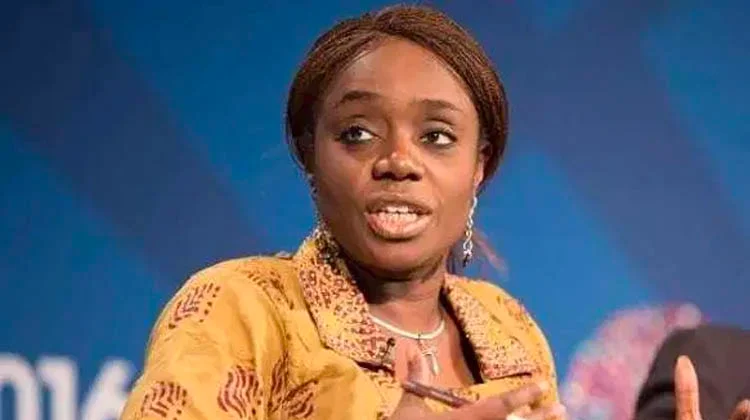
Director of the Intergovernmental Group of Twenty-Four on International Monetary Affairs and Development, Iyabo Masha, has said the new tax laws will support Nigeria’s transition into a modern and more efficient economy.

Masha, who is the first African to occupy the position since the establishment of the G- 24 over five decades ago, spoke at a press conference in Abuja ahead of the meeting of the group.

She explained that tax and domestic resource mobilisation remained central to development, stressing that Nigeria’s reform drive could deepen formalisation and strengthen public finances over time.

“Tax and domestic resource mobilisation are fundamental to economic development,” she said, noting that taxation enables governments to provide infrastructure, education, healthcare, and maintain law and order.

According to her, governments generally finance development through taxation, borrowing, or asset sales, but “out of all of these, taxation is the most efficient one that leads to the least macroeconomic destabilisation”.

Masha observed that developing countries often recorded weak tax mobilisation, “in some cases as low as seven per cent of GDP”, compared to others that generate “25, 30 per cent of GDP”.

Speaking on Nigeria’s reforms, the group director added that in her previous role, she had examined the country’s tax framework and found it “very fragmented”, with inadequate implementation contributing to low revenue mobilisation.

See also  Ex-UK PM Johnson in Nigeria, reassures foreign investors
Continue Reading

Business

Recapitalisation: Banks raise N4tn ahead of March deadline

Published

on

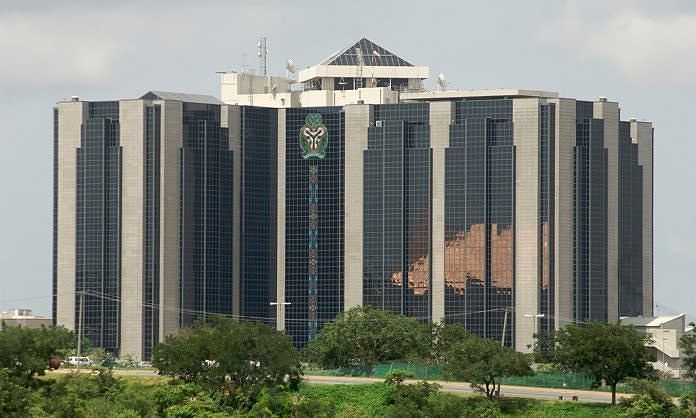
Banks have raised N4.05tn in verified and approved capital ahead of the March 31, 2026, recapitalisation deadline set by the Central Bank of Nigeria.

The CBN Governor, Olayemi Cardoso, disclosed this on Tuesday during the Monetary Policy Committee briefing in Abuja, saying, “As of February 19, 2026, total verified and approved capital raise stands at N4.05tn.”

The PUNCH observed that this figure was nearly double the N2.4tn reportedly raised as of April 2025. Cardoso said N2.90tn of the amount, representing 71.6 per cent, was mobilised domestically, while N1.15tn, equivalent to 28.33 per cent, came from foreign participation.

“In summary, 71.67 per cent is domestic mobilisation and 28.33 per cent is foreign participation. This balance, in my view, represents a mix of domestic and foreign, which signals broad investor engagement and confidence in the sector,” Cardoso said.

He recalled that he had earlier hinted at strong foreign investor appetite for Nigerian banks. “Several MPCs ago, I did mention that when I went abroad, and I met with some of the investor community, they had a very, very strong interest in investing in banks. So, I’m glad that that has come out in a very positive way,” he added.

On compliance status, the governor said, “To date, 20 banks have fully met the new minimum capital requirements, and a further 13 are at the advanced stage of their capital raising processes.”

He expressed optimism that the banks still raising capital would conclude within the stipulated timeframe. Cardoso noted that some institutions under regulatory intervention were operating under specific legal and structural considerations that influenced the sequence of their recapitalisation actions.

“We remain, as a Central Bank of Nigeria, actively engaged with all relevant stakeholders to ensure that they have an orderly and credible outcome while maintaining financial stability,” he said.

He assured depositors that “Depositor funds in these institutions remain secure, and operations continue under close supervisory and regulatory oversight of the central bank.”

In March 2024, the CBN directed banks with international licences to raise their minimum paid-up capital to N500bn, while those with national authorisation are required to meet a N200bn threshold before the March 31, 2026, deadline.

Regional commercial banks and merchant banks are expected to have a minimum capital base of N50bn, while non-interest banks must hold N20bn for national licences and N10bn for regional licences.

See also  14 Ships Laden With Petrol, Diesel, Fresh Fish Arrive Lagos Ports

The recapitalisation policy is aimed at strengthening the resilience of the banking sector and positioning lenders to better support economic growth and absorb potential shocks.

Beyond recapitalisation, Cardoso highlighted developments in the external sector, stating that Nigeria’s gross external reserves rose to about $50.4bn as of mid-February 2026. “Just a point of correction. These aren’t net reserves, it’s gross reserves. And the gross reserves, as of the middle of February, is about $50.4bn, which is the highest figure that we’ve had in 13 years,” he said.

According to him, the reserve build-up was supported by favourable trade developments, a healthy current account surplus, rising non-oil exports, and increased diaspora remittances.

“There’ll be favourable trade developments. The current account is in a healthy surplus, and of course, the non-oil exports have also gone up. It’s something I talk about all the time, which is the issue of diaspora remittances, which again is going up very strongly indeed,” he said.

He attributed the gains to improved market confidence. “Underpinning all this, quite frankly, is market confidence. Without market confidence, no matter what you do, you’ll find you will significantly sub-optimise,” Cardoso stated.

He added that the CBN had engaged widely with international investors, made commitments, and ensured policy consistency to engender positive market sentiment.

On sustainability, the governor cautioned that risks remained. “There will always be risks to any outlook. We cannot underestimate the potential global shocks that could come our way,” he said, citing uncertainties around oil prices and global tensions.

He also warned that pre-election spending and fiscal deficits could pose risks if not properly managed. “Importantly, pre-election spending, if not properly contained, can destabilise the stability we’ve accomplished,” he said. Nevertheless, Cardoso expressed confidence in the current direction of policy.

On inflation, he dismissed suggestions that the CBN could relax its guard following the Monetary Policy Committee’s decision to cut the Monetary Policy Rate by 50 basis points to 26.5 per cent. “That hasn’t changed, to be frank. Caution is our watchword in the central bank,” he said, stressing that the apex bank remained conservative in order to protect the economy.

He noted that headline inflation, which was about 34 per cent when the current management assumed office, had declined to slightly above 15 per cent. “Inflation at that time, 34 per cent, we’ve brought it down to where it is slightly over 15 per cent. We’re encouraged by that,” Cardoso said, adding that tight monetary policy had been necessary.

See also  Nigerian farmers say rise in fertiliser price threatens lower food cost

He emphasised that sustaining the gains would require collaboration across fiscal and monetary authorities. “It will take a lot of discipline from all the stakeholders. This is not something that will be central bank alone,” he said.

On digital finance, the governor said the CBN recognised the importance of innovation but would ensure that risks to financial stability were properly managed. “We are advancing work already on a very comprehensive framework for digital assets,” he said, noting that the process would involve consultation and scrutiny to ensure transparency and long-term resilience.

He disclosed that there are over 430 licensed fintech operators in Nigeria and described the segment as systemically important, adding that the CBN was strengthening supervisory oversight to address cyber threats and other emerging risks.

The Group Chief Economist and Managing Director of Research and Trade Intelligence at Afreximbank, Dr Yemi Kale, earlier said that the ongoing bank recapitalisation exercise is a critical engine required to bridge Africa’s staggering $80 to $120bn annual trade finance gap.

Speaking at the Ecobank Customer Forum, Kale, who was Nigeria’s former Statistician General, highlighted that Nigeria’s journey toward a $1tn economy hinges on its ability to transform from a raw material exporter into a competitive industrial hub. However, this transition requires “muscle” in the financial sector that currently does not meet the scale of the continent’s ambitions.

He said, “Recapitalisation of the banks is important.” You cannot lend to businesses to grow, expand or import machinery if you do not have enough capital to do so. How do Nigerian banks support deepening intra-African trade if they do not have enough capital?

“By increasing recapitalisation, you increase the ability of banks to lend more to domestic businesses and exporters. There are significant benefits for the Nigerian economy, especially in improving intra-African trade.”

The PUNCH in April 2025 reported that the Securities and Exchange Commission said that the ongoing banking sector recapitalisation exercise is a testament to the strength and resilience of Nigeria’s capital market.

SEC Director-General Dr Emomotimi Agama disclosed this in Abuja while highlighting key provisions of the Investments and Securities Act 2025, describing it as a transformative law that will further deepen market activities and drive economic growth.

See also  Reps seek energy reform as Abbas declares petroleum week open

He said, “The capital market is strong enough to provide the much-needed funding for various sectors of the economy. It is one of the strongest you can think about; our ROI was one of the best in the world for last year. When you look at what the capital market has already done with the bank recapitalisation, which is still ongoing, you can agree with me that our market is strong.”

Also, the Deputy Governor, Economic Policy, CBN, Dr Muhammad Abdullahi, while speaking on a panel at the launch of the 2026 Macroeconomic Outlook of the Nigerian Economic Summit Group in Lagos, said that the recapitalisation programme was designed to build stronger banks capable of supporting Nigeria’s ambition of becoming a trillion-dollar economy.

“I think that even at the inception of the capitalisation programme, the major focus is on how to ensure that we have stronger banks that can support our drive towards a trillion-dollar economy? And the only way to get there is through the credit-review sector, to SMEs, to businesses that require funding at good rates. So as we close up towards March, I mean, the efforts have been quite impressive. We have about 20 banks that have already met it. A number of banks are meeting it every day.

They’re huge. It’s very busy within CBN today, tomorrow, and through to March, as you can imagine.”

However, he stressed that recapitalisation alone was not sufficient, warning that the focus must now shift from bigger balance sheets to productive and sustainable lending.

“The focus that we really are turning our attention to, especially from the financial system stability side, is that we ensure that a strengthened capital base translates into credit that is productive, that is well-targeted, and that is sustainable,” he said.

He said the CBN has spent the past year strengthening its regulatory capacity through technology to ensure that the benefits of recapitalisation are transmitted to priority sectors of the economy.

punch.ng

FOLLOW US ON:

FACEBOOK

TWITTER

PINTEREST

TIKTOK

YOUTUBE

LINKEDIN

TUMBLR

INSTAGRAM

Continue Reading

Business

Dangote signs deal to distribute 65m litres petrol

Published

on

The Dangote Petroleum Refinery has concluded an offtake agreement with 12 major petroleum marketing companies to distribute between 60 million and 65 million litres of Premium Motor Spirit (petrol) daily across the country, in a move expected to stabilise supply and deepen Nigeria’s fuel self-sufficiency.

President of the Dangote Group, Aliko Dangote, disclosed this in Lagos, noting that the structured framework would guarantee nationwide availability of petrol while exporting surplus volumes.

According to a statement issued, Dangote said, “We have agreed an offtake framework to supply up to 65 million litres daily for the domestic market. Any surplus, estimated at between 15 and 20 million litres, will be exported.”

Dangote stated that the initiative marks a major shift in the country’s downstream petroleum sector, as Nigeria’s daily consumption currently ranges between 50 million and 60 million litres.

This means the refinery is expected to supply about 1.8 billion to over 2 billion litres of petrol monthly, depending on daily output and the number of days in the month.

The latest offtake and distribution arrangement follows an earlier agreement reached in October 2025 between the Dangote Petroleum Refinery and downstream operators aimed at stabilising fuel supply and curbing volatility in pump prices.

At the time, independent petroleum marketers disclosed that the refinery had set a target to release up to 600 million litres of Premium Motor Spirit monthly to the domestic market as part of efforts to address supply disruptions and rising costs across the country.

Under the arrangement endorsed by the Nigerian Midstream and Downstream Petroleum Regulatory Authority, selected marketers will handle nationwide distribution to prevent supply disruptions and eliminate speculative practices.

See also  Ex-UK PM Johnson in Nigeria, reassures foreign investors

The marketers include MRS Oil Nigeria Plc, Nigerian National Petroleum Company Limited Retail, 11 Plc, TotalEnergies Marketing Nigeria, Rainoil Limited, Northwest Petroleum & Gas Company Limited, Ardova Plc, Bovas & Company Limited, AA Rano Nigeria Limited, AYM Shafa Limited, Conoil Plc, and Masters Energy.

The statement noted that the structured offtake model is designed to ensure efficient logistics, reduce hoarding, and support price stability. It added that the refinery would export between 15 million and 20 million litres daily once domestic supply obligations were met.

“This would conserve foreign exchange, improve the country’s trade balance and strengthen external reserves, as Nigeria will no longer rely heavily on imported fuel,” the statement explained.

For decades, Africa’s largest oil producer depended on imported refined products, exposing the economy to exchange rate volatility, global supply disruptions and recurring shortages.

The Group Chief Executive Officer of the Nigerian National Petroleum Company Limited, Bayo Bashir Ojulari, recently described the refinery as a transformative national asset capable of redefining the country’s energy security architecture.

He said, “This plant was designed for 650,000 barrels per day. None of us thought it would even touch 550,000. What we saw live today was 661,000. These are live parameters, not reports or photographs.”

Ojulari added that the refinery represents a new era of industrial capability and technological advancement for Nigeria.

Nigeria has intensified reforms in the oil and gas sector following the deregulation of the downstream market and removal of fuel subsidy under President Bola Tinubu.

The Dangote refinery, Africa’s largest, is expected to play a central role in ending decades of petrol importation, stabilising prices, and positioning Nigeria as a net exporter of refined petroleum products across West and Central Africa.

See also  Nigeria’s inflation drops for fifth consecutive time – NBS

The success of the structured offtake model could usher in a more stable fuel supply chain and reduce the risk of shortages that have plagued the country for years.

punch.ng

FOLLOW US ON:

FACEBOOK

TWITTER

PINTEREST

TIKTOK

YOUTUBE

LINKEDIN

TUMBLR

INSTAGRAM

Continue Reading

Trending