Connect with us

Crime

FG faces heat as 100 feared dead in Kwara massacre

Published

on

Over 100 people were feared dead on Tuesday night following a deadly attack on Woro and Nuku communities in the Kaiama Local Government Area of Kwara State by Islamic militants, while several people were also killed after bandits pounced on Abande community in Mbaikyor Ward, Turan, Kwande LG of Benue State.

Governor AbdulRahman AbdulRazaq, however, confirmed the death of 75 persons.

The governor disclosed the figure on Wednesday night while addressing residents at the palace of the Emir of Kaiama, explaining that the victims were “local Muslims massacred for refusing to surrender to extremists preaching a strange doctrine.”

He added that President Bola Ahmed Tinubu had approved the immediate deployment of an Army battalion to the area to prosecute counter-offensives code-named Operation Savannah Shield.

Lakurawa, an armed group linked to the Islamic State Sahel Province, is believed to have carried out the attack. The latest development has further put the Federal Government’s security campaign under public scrutiny.

The lawmaker representing the area in the House of Representatives, Mohammed Bio, also confirmed the attack to The PUNCH on Wednesday night.

However, Bio said he was not sure of the fatality figures, citing the conflicting reports from the affected communities.

“There are conflicting reports about the killings. Some of the reports say about 100 people were killed, others say 100 plus, and others say about 160. We don’t have the correct report.

“These are reports coming from the communities, but we don’t have the exact figures. There are killings, but no one can ascertain the correct number. We are calling on the Federal Government to step in and assist us in protecting lives and property. The situation is quite devastating.”

Sources within the communities told The PUNCH that the death toll might be higher than officially acknowledged, with about 70 persons reportedly buried in a mass grave at Woro community on Wednesday afternoon.

Residents said the attackers had earlier moved around border villages in neighbouring Niger State, preaching that locals should abandon Nigeria’s constitution and embrace Islamic law.

One source said, “When they brought the same message to Woro and Nuku, some people challenged them. That angered the bandits, and they opened fire on the gathering, shooting indiscriminately.”

Another resident revealed that the group had earlier attempted to preach in the Baburasa community in Borgu area, but were rejected by the village head.

Some reports suggested the attackers operated from forests around the Borgu axis, with security analysts linking them to extremist elements suspected to be expanding sleeper operations in border communities.

Meanwhile, survivors narrated their heartbreaking experiences. The head of Woro village, Alhaji Umar Tanko, told the Kaiama council chairman, Alhaji Abubakar  Danladi, that he lost his daughter and two sons, while his junior wife and two others were abducted.

“I was in my shop when they arrived. They shot my children and took my second wife away,” he said.

Another resident, Razaq Abdulazeez, said he narrowly escaped with his family after seeing people running towards the outskirts of town.

“Those who couldn’t run climbed trees to avoid the attackers,” he added.

Reacting to the incident, the Speaker of the Kwara State House of Assembly, Yakubu Danladi-Salihu, called for intensified military action along the Niger border axis.

“I am calling for an escalation of operations to flush out these criminals. Communities must also cooperate fully with security agencies,” he said, while condoling the Emir of Kaiama and the families of the victims.

Also, the Senator representing Kwara Central, Saliu Mustapha, urged the deployment of more troops in the affected areas, describing the attack as a tragic reminder of the need for stronger vigilance and community cooperation.

The Kwara State chapter of the Peoples Democratic Party also condemned the attack, calling it “despicable and inhuman,” and warned that insecurity in the state required more than sympathy messages.

“This incident shows that Kwara is far from overcoming banditry. What is needed is decisive and people-oriented leadership,” the party said in a statement.

The latest assault comes amid growing concerns over the spread of banditry and extremist violence across parts of north-central Nigeria, with rural communities increasingly becoming targets despite ongoing security operations.

Meanwhile, findings indicate that about 271 people have been killed, while 253 others were abducted in a series of terrorist attacks in the past four weeks across several states.

The attacks occurred in communities in Niger, Kaduna, Kwara, Katsina, Sokoto, and Zamfara states.

No fewer than 177 church worshippers were abducted in Kajuru Local Government Area of Kaduna State earlier in the month.

Other affected areas include Kasuwan Daji Market in Niger State, where at least 60 people were killed; Damala village, where four residents were killed; and Doma community in Katsina State, where 20 people lost their lives.

In addition to the 177 worshippers in Kajuru, four people were abducted in Tudun Bussa, Kaduna State, including a pastor and his three children, while six residents were kidnapped in Unguwar Barkonu in Maraban Kajuru.

Other abductions have occurred in Maraban Rido, Kikwari Village, and along highways in Kwara and Sokoto states.

Commenting on the massacre in Kwara, a former governor of the state, Bukola Saraki, condemned the incident, describing it as a national disaster.

The ex-Senate President, in a Facebook post, noted that the killings were beyond the capacity of the state government and now require decisive, direct federal intervention.

See also  PHOTOS: Troops neutralize bandits, arrest logistics supplier in Kogi

He wrote, ‘’Yesterday’s killing of over 100 people in Woro community, Kaiama Local Government Area, is a national disaster. What we are witnessing in parts of Kwara State—particularly in the northern and southern senatorial districts—has gone beyond the capacity of the state government and now requires decisive, direct federal intervention.

“What we require now to stop this mass destruction of lives and properties in our state and to restore harmony is the decisive and direct intervention from President Tinubu. We call on the Commander-in-Chief to direct the General Officer Commanding of the Second Mechanised Infantry Division, Ibadan, to second his men to deploy into the troubled districts of Kwara State and to establish a base in the affected areas.

“There is also the need for other security agencies to work together and have a strong presence across our state. That is the only way we can deter these assailants.

“The insurgents who are running away from the firepower of the security agencies in other states in the North-Central zone should not be allowed to find a comfort zone in Kwara State.

“Kwara State is too strategic to this country that we should not allow insurgency to gain ground there. It is a state located in the middle of the country and serves as a bridge between the North and the Southwest. It also has an international border with the Republic of Benin and shares borders with many other states.”

He consoled the Woro community, particularly the families that lost their loved ones.

“May Almighty Allah comfort them and grant them the strength and fortitude to bear the loss. Also, may He heal all the wounded.

“However, we should not limit our reaction to this sad development to mere press comments. We should ensure that this violence against our people does not happen again anywhere in Kwara State,” he noted.

Saraki admonished the federal and state governments, as well as the councils, to play their parts in protecting lives and property.

“Kwara State has not always been this unsafe. The state has always been a peaceful place, and that is why it earned the sobriquet ‘State of Harmony’. Unfortunately, things have gone this badly.

“The level of killings, arson, and displacement of people that we are witnessing now is unprecedented.

There must be decisive measures to stop this orchestrated violence against the people. It is an unfortunate situation. This attack in Woro is a national emergency.

“What these criminals did in Woro was to wage war against Nigeria. It is a war the country must win, without delay. May Almighty Allah (SWT) give our country victory over these non-state actors.”

Opposition react

The New Nigeria People’s Party condemned the renewed killings in parts of Kwara and Katsina States, describing the attacks as unfortunate and avoidable, while urging the Federal Government to urgently overhaul the nation’s security architecture.

Reacting to the incidents, the National Publicity Secretary of the NNPP, Ladipo Johnson, expressed sympathy with the families of those affected and called for national unity in tackling banditry and insurgency.

He said, “It is very unfortunate. First, NNPP commiserate with the families of those who passed away, were murdered or wounded. We pray that within a short time, those who are currently unaccounted for will be found and returned to their families at home.

“These killings and continued insecurity should not be used as a political tool. We must all come together as one to fight this banditry and insurgency.

“However, we must state that we are very disappointed in the gross incompetence of this government in ensuring the safety of the lives and property of Nigerians as enshrined in the constitution.

“We urge the government to go back to the drawing board and look at the security architecture and adjust the budgets where necessary for the defence and security agencies to ensure we concentrate on the areas that will help us. If we need drone technology to safeguard this country, let us do that. These bandits are just coming and rushing out. They need to bring Niger and Chad to the table too.”

The Peoples Democratic Party in Kwara State has criticised the response of Governor Abdulrahman AbdulRazaq to the recent bandit attack on Woro and Nuku towns in Kaiama Local Government Area of the state.

In a statement issued in Ilorin on Wednesday by the party’s State Publicity Secretary, Olusegun Adewara, the opposition described the governor’s comment on the incident as merely cosmetic and lacking hope or concrete reassurance for wounded victims and affected communities.

Reacting, the PDP condemned the attack, describing it as “gruesome, despicable, inhuman and callous.”

“A former students’ union president of a tertiary institution in Kwara State was among those brutally killed. This is a wicked act that no human should ever inflict on fellow human beings,” the party said.

According to the opposition party, Kwara State required far more than “propaganda, photo-ops and hollow sympathy messages” to defeat insurgency and banditry.

“This incident is yet another reminder that what Kwara urgently needs is decisive, practical and people-oriented leadership,” the statement read.

“Our party views the official communication issued by Governor Abdulrahman AbdulRazaq as merely cosmetic and completely lacking hope or concrete reassurance for the wounded victims and the devastated communities,” Adewara said.

See also  Night of terror in Zamfara

“A responsive government would have ordered the immediate deployment of humanitarian relief and medical emergency services to assist the victims and help the communities cope with this painful tragedy,” the statement added.

The PDP also accused the governor of painting a distorted picture of the security situation in the state.

“Unfortunately, the governor’s statement is riddled with self-adulation and a misleading portrayal of security in Kwara State,” the party said, insisting that insecurity remained widespread.

“As of press time, citizens are still being kidnapped and villages continue to suffer attacks, despite repeated claims that insurgents are being decimated,” the party added.

The PDP called on the state government to immediately deploy humanitarian aid, relief materials and medical support to the Woro and Nuku communities and other affected victims.

Soldiers, forest guards

Meanwhile, military personnel and Forest Guards have taken over both villages, credible sources in the LG confirmed to The PUNCH on Wednesday morning.

“Soldiers and forest guards have taken over the two communities. It is a very sad development, especially at a time we thought we were enjoying peace from past bandit attacks,” she said.

It was further gathered that the bandits had been going around neighbouring villages in Niger State, preaching the same message, before infiltrating the affected communities in Kaiama Local Government Area.

Meanwhile, the state government, through a statement by the Chief Press Secretary to the governor, Rafiu Ajakaye, confirmed the bandit attack.

Ajakaye said Governor AbdulRahman AbdulRazaq mourned the victims of the attack, noting that security forces had continued to improve on counterterrorism operations.

“Kwara State Governor AbdulRahman AbdulRazaq is saddened by the cowardly attack on civilians in the Woro and Nuku communities of Kaiama Local Government Area.

“The Governor condemns the attack, describing it as a cowardly expression of frustration by terrorist cells following ongoing counterterrorism campaigns in parts of the state and the successes so far recorded.

“Governor AbdulRazaq says the attack was apparently intended to distract security forces who have successfully hunted down several terrorist and kidnapping gangs across many parts of the state.

“The Governor expresses heartfelt condolences to the Woro and Nuku communities over the sad incident, especially the families affected by Tuesday’s attack,” he said.

The Nigerian Army had earlier deployed troops, including units from Operation Fansan Yamma and Operation Whirl Stroke, to intensify security in Kwara State.

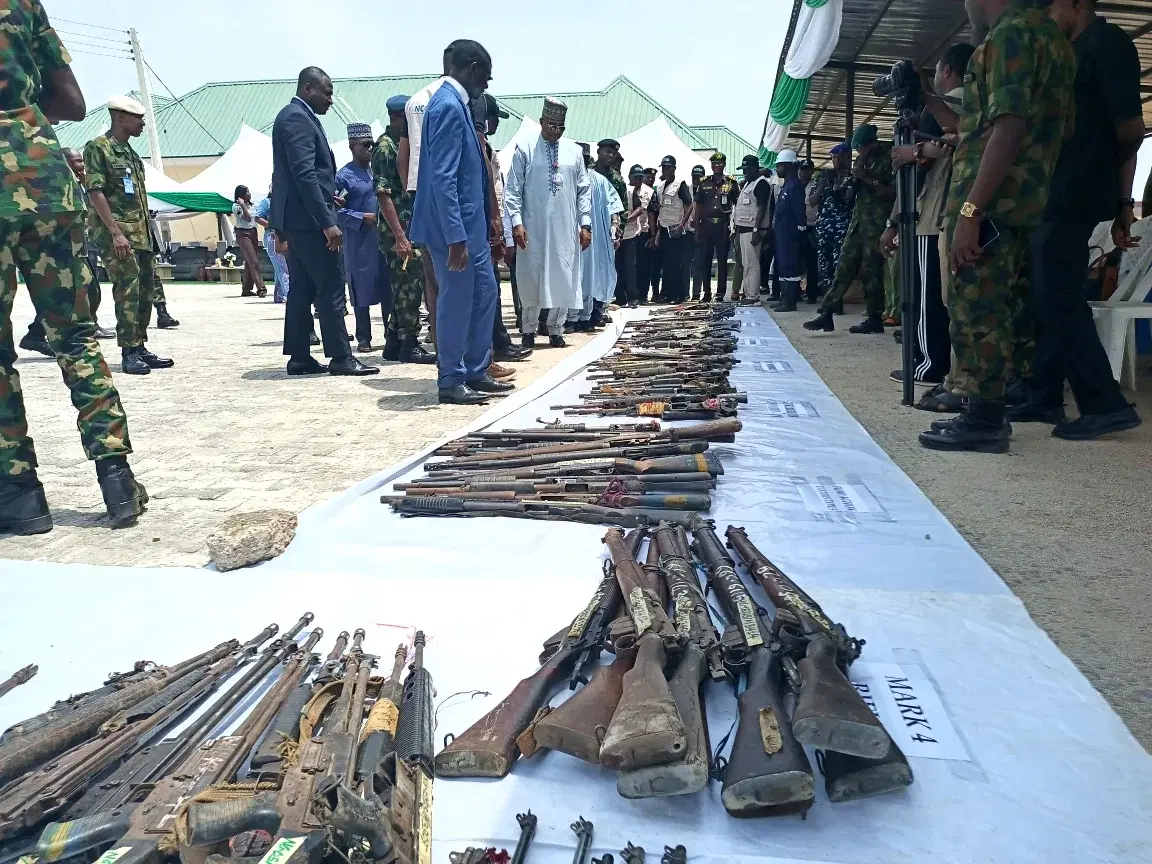
The deployments focused on forest and rural areas prone to bandit and extremist infiltration, with objectives to arrest suspects, rescue kidnapped victims, recover weapons, and dismantle criminal nexus networks before they establish new bases.

Benue attack

Also in Benue, several people, including a mobile police officer, were killed on Tuesday when suspected bandits attacked Abande community in Mbaikyor Ward, Turan, Kwande Local Government Area of Benue State.

The attack occurred on a market day in the border community near Cameroon, triggering panic as residents fled after assailants opened fire, looted stalls and set parts of the market ablaze.

Casualty figures remained contested. A former councillor, Akerigbe Lawrence, claimed about 17 people, including a police officer, were killed. However, the Ter Kwande, His Royal Majesty Timothy Ayile, said six community members and one policeman died. The Benue State Police Command confirmed five fatalities, including a police officer.

Speaking on Wednesday, the traditional ruler said armed Fulani bandits attacked the community, where a police post manned by four officers was stationed.

“Six of my people and a policeman were killed, and their bodies were recovered Tuesday night. The other three policemen fled, leaving the area exposed,” Ayile said, while appealing to the Federal Government to establish a permanent military presence in Abande due to its difficult terrain and lack of communication network.

Confirming the incident, the Police Public Relations Officer, DSP Udeme Edet, said the Divisional Police Officer in Jato-Aka received a distress call around 5:30pm on Tuesday about a large-scale attack on the police post and residents.

During the response, an Assistant Superintendent of Police attached to the 13 Police Mobile Force, Makurdi, who was on special duty in the community, was fatally injured.

“Regrettably, four members of the community also lost their lives,” Edet said, adding that joint security teams had been deployed to secure the area, recover bodies and forestall further attacks.

The Commissioner of Police, Ifeanyi Emenari, has ordered the deployment of additional mobile police personnel and armoured personnel carriers to intensify operations and track the perpetrators.

Meanwhile, Governor Hyacinth Alia condemned the attack, describing it as “an assault on our shared humanity.”

In a statement by his Chief Press Secretary, Kula Terso, the governor said the killing of civilians and a police officer was a cowardly act and vowed that the perpetrators would be brought to justice.

“My heart goes out to the peaceful people of Abande. This government will not relent in its duty to protect lives and property,” Alia said, directing security agencies to intensify operations and restore safety to affected communities.

He extended condolences to the families of the victims and urged residents to remain united and resilient.

Kwande Local Government Area has witnessed repeated attacks in recent years. Abande is close to Anwase, where over 28 people were killed on Christmas Day in 2024. In January this year, a farmer and his son were killed in the area, while two security operatives were previously ambushed and killed during peacekeeping operations.

See also  NDLEA cracks down on Jigawa drug peddlers

Katsina military base

In a related move, the Senate on Wednesday expressed deep concern over the worsening security situation in Katsina State, particularly in the Funtua Zone, following fresh bandit attacks that reportedly claimed no fewer than 35 lives within 24 hours across three local government areas.

The development came as lawmakers urged President Bola Tinubu to urgently fulfil his pledge to establish a military barracks in the area, while cautioning against any form of negotiation with armed groups terrorising rural communities.

The matter was raised through a motion of urgent public importance under Order 42, sponsored by Senator Dandutse Mohammed, who represents Katsina South, calling for immediate and comprehensive federal intervention to halt the escalating violence.

Ruling on the motion, the President of the Senate, Godswill Akpabio, admitted it for debate after it received overwhelming support from senators.

Moving the motion, Dandutse said Katsina had been thrown into mourning by a renewed wave of coordinated attacks, including an ambush on personnel of the Mobile Police Force in Guga, Bako Local Government Area of Katsina metropolis, where three policemen were killed and two others critically injured.

He further disclosed that as of Tuesday, at least 35 persons had been killed in attacks across the Funtua Zone within a span of less than 24 hours.

According to him, 24 persons were killed in Faskari Local Government Area, eight in Bakori, two in Funtua Local Government Area and one in Kankara Local Government Area.

The lawmaker warned that the persistent violence had forced more than 50,000 farmlands to remain uncultivated, posing a serious threat to food security, agricultural productivity and the livelihoods of residents in the largely agrarian zone.

He said, “The continuous bandit attacks on communities will significantly affect food production and agricultural activities, as more than 50,000 farmlands are presently inaccessible, thereby jeopardising food security and the livelihoods of the people.

“The Governor of Katsina State led a delegation of elders from Funtua Zone where issues of insecurity were raised, and Mr President pledged to site a military barracks in the area.

“I urge President Bola Tinubu and the security agencies to ensure rapid and sustained intervention until all criminal elements are eliminated. I also urge him to fulfil his pledge to establish a new military barracks in the Funtua Zone.”

Following the debate, the Senate resolved to urge President Tinubu to fulfil his pledge to establish a military barracks in the Funtua Zone; direct the Inspector-General of Police to equip the newly established police squadron in the area with at least three Armoured Personnel Carriers; and call on the Federal Ministry of Humanitarian Affairs and the National Emergency Management Agency to provide immediate relief to affected families and communities.

Seconding the motion, the Deputy Senate President, Senator Jibrin Barau, said the Federal Government had already directed the military to intensify operations in Katsina, particularly in the Funtua axis.

Ebonyi clash

The Nigerian Army has dismissed reports circulating on social media that two soldiers were killed and a military patrol vehicle burnt in Oso Edda community, Edda Local Government Area of Ebonyi State.

The clarification followed allegations linked to a recent attack by assailants from the Amasiri clan on Okporojo village in Oso Edda community, where more than four residents were reportedly killed and beheaded.

Addressing journalists on Wednesday in Abakaliki, the Cantonment Commander of Nkwagu Military Barracks, Lt. Col. Emmanuel Chielo, described the reports as false and misleading.

“None of my men have been killed,” Chielo said, explaining that the ongoing operation in Amasiri was a joint security effort involving the police, the Department of State Services and the Nigeria Security and Civil Defence Corps.

He said troops came under attack on the first day of deployment but responded professionally, exercising restraint due to the residential nature of the area.

“If we had acted out of anger that night, it would have been bloody. We acted professionally, and no soldier was killed,” he said.

The army commander assured residents that security agencies would work to recover the severed heads of the victims beheaded during the attack on Okporojo village, describing the act as inhuman and deeply troubling.

“It is painful that people of the same ancestry could treat one another this way. Issues like ancestral land disputes and chieftaincy struggles often underlie such violence,” he noted.

Chielo said sustained security efforts had helped keep Ebonyi relatively peaceful, describing the state as currently the most peaceful in the South-East.

He also defended the decision of the State Security Council, approved by the Ebonyi State Government, saying it was necessary to prevent reprisals and restore calm.

“If people decide to retaliate, no one would blame them. That is what we are trying to prevent,” he said.

The officer further warned about the growing movement of small arms across states, calling it a major security threat.

“People may look like they are going to the farm, but they are transporting weapons. Security should not be left to government alone,” he added.

punch.ng

FOLLOW US ON:

FACEBOOK

TWITTER

PINTEREST

TIKTOK

YOUTUBE

LINKEDIN

TUMBLR

INSTAGRAM

Continue Reading
Click to comment

Leave a Reply

Your email address will not be published. Required fields are marked *

Crime

Deadly rise of fraudulent surgeries in hospitals

Published

on

In this report, IBRAHIM ADAM examines how gaps in medical testing and neglected laboratory tests put patients at serious risk, with unnecessary surgeries and mismanaged treatments claiming lives

The death of 62-year-old Mrs Justina Awokumaka sparked much grief among her family members, one that is further deepened by alleged medical misconduct in an Abuja hospital.

Late Awokumaka, a resident of Bwari, reportedly died after what her family believes was an unnecessary appendectomy and subsequent complications during cancer treatment at a teaching hospital in Gwagwalada.

Her story was shared on February 25, 2026, by an X user, Tamunokuro Obietonbara (@sankofa360).

According to him, Awokumaka first experienced severe abdominal pain last year and went to the General Hospital in Bwari.

With no doctors available, she sought care at a private hospital the same day.

There, a doctor diagnosed appendicitis after a manual abdominal exam, without conducting a blood test or scan and scheduled her for surgery.

The appendectomy was reportedly performed a few days later. She initially appeared to recover, but within a week, her condition worsened as her pain intensified and her abdomen became rigid.

She was then transferred to the University of Abuja Teaching Hospital, where tests revealed she had cervical cancer, not appendicitis.

Doctors advised rest before cancer surgery, but four weeks later, preparations were halted due to dangerously low blood levels.

During her final hours, she underwent a blood transfusion after prolonged difficulty finding veins.

A doctor administered blood through a vein in her neck. About an hour later, her son noticed severe swelling, realising blood was leaking into the surrounding tissue.

Nurses were said to have delayed in responding, and when a doctor eventually assessed her, he allegedly downplayed the situation. She died later that night.

Obietonbara claimed that the first surgery was driven by greed, and proper laboratory examinations could have saved her life.

“The doctor who carried out the appendicitis surgery lied. She did not have appendicitis. He took advantage of the poor woman’s naivety. If the first surgery was not conducted and a proper examination had been carried out, she would have been alive today. First, she died from a doctor’s greed and second, from a doctor’s negligence,” he wrote.

Tests before surgery

But the chairman of the Nigerian Medical Association, Lagos State branch, Dr Babajide Saheed, said no qualified doctor would perform surgery without conducting the necessary medical laboratory investigations, except in life-threatening emergencies.

Saheed explained that surgeries are broadly classified as minor, intermediate or major and that the patient’s condition at the time determines the appropriate course of action.

“In cases where a patient is in severe pain or has a brain tumour causing life-threatening complications, surgery may need to be performed urgently to relieve pressure or remove the tumour. In such cases, there may not be time to wait for every routine test before proceeding.

“In the case of a gunshot wound, doctors may need to operate immediately to save the patient’s life. While emergency tests may be conducted simultaneously, the medical team does not delay life-saving intervention. The priority is to stabilise and treat the patient,” he said.

Saheed also addressed what he described as a widespread misunderstanding of the term surgery, noting that some procedures are highly specialised and carefully planned.

He cited procedures such as the Latissimus Dorsi Flap, which require detailed preoperative assessment and thorough evaluation of the patient’s overall health.

“Patients may expect a quick solution, but as professionals, doctors must thoroughly evaluate the patient’s overall health and determine whether they are fit for surgery after a laboratory test. This assessment is also carried out by the surgeon and must also be reviewed by the anesthesiologist before the operation can proceed,” he said.

The NMA chairman warned that doctors who ignore proper medical procedures risk endangering lives and facing serious consequences.

Women share experiences

A student of Tai Solarin University of Education, Ogun State Damilola Onaniyi, said a heart condition diagnosis in 2023 almost altered the course of her life.

After experiencing episodes of shortness of breath, she underwent an electrocardiogram and echocardiogram.

She said a sonographer informed her that the results indicated cardiomyopathy.

See also  Lagos task force arrests 32 for causing nuisance on highways

Onaniyi said, “For a moment, that single word almost became my whole reality. I was dead scared.”

She was unsatisfied, which made her seek another cardiologist’s opinion, where an evaluation revealed that her symptoms were linked not to her heart but to an ulcer caused by helicobacter pylori infection.

“If I had stopped at the first diagnosis, I would have lived in fear for nothing. Sometimes you really do have to listen deeper and keep asking questions,” she said.

A chef, Gina Ehikodi-Ojo shared a similar experience, saying that a doctor had diagnosed her with appendicitis following an examination.

Reluctant to undergo surgery, she opted for a further scan, which turned out to be premenstrual condition.

“I decided to do a computed tomography scan at Mecure or anything that will help a doctor see whatever might be happening in my body. That is the respect I have for Dr Chiemeka Sidney Iroegbu forever. He was very young and was able to read those images and said there was nothing wrong. It was just pre-menstrual syndrome at the end of the day. That first doctor would have cut me for nothing,” she said.

An entrepreneur, Nwadinuba Francisca recalled being told as a junior secondary school pupil that she had an ovarian cyst requiring urgent surgery after presenting with abdominal swelling. But her mother insisted on a second opinion.

“After looking at the scan and properly examining me, it turned out to be stool that formed whatever. I just had to take a laxative and I was okay after a day or two,” she said.

According to an online hospital, the Cleveland Clinic, ovarian cysts are common growths that develop on or inside your ovaries.

A radio presenter at Kapital FM 92.9, Nnamonu Obianuju described a two-year ordeal at the Federal Medical Centre, Abuja, where her elder sister was treated for leukaemia.

She said her sister underwent chemotherapy with little improvement, even as her abdomen became increasingly swollen.

“Two weeks before her death, it was found out that she had an ovarian cyst and that it had become malignant. My sister would have been alive today if only the ovarian cyst was removed on time,” she said.

A consultant in the Division of Paediatric Surgery at Usman Danfodiyo University Teaching Hospital, Sokoto State, Dr Yazeed Muhammad, warned that performing surgery without laboratory evaluation could lead to serious complications or even death.

“No surgeon will perform surgery without adequate evaluation of the patient. You need a lab test to know what is wrong with the patient. However, any doctor who tries that is a quack, and it will have severe consequences for both the patient and the doctor. Sometimes, the patients are left with serious complications that they battle for their entire life, or it leads to death,” he told Saturday PUNCH.

A nurse at the Abubakar Tafawa Balewa University Teaching Hospital in Bauchi State, Amina Ahmed, explained that preoperative tests, including complete blood count, blood grouping, infectious disease screening and anaesthesia assessment, are mandatory before any surgery.

“No surgeon will operate in our hospital without first ensuring that the patient has undergone the necessary laboratory tests. Anyone who attempts to operate without these tests will face disciplinary action, including the possible revocation of their medical license,” she told Saturday PUNCH.

Children at risk

A parent, Oluwakemi Adefolurin, said her ten-year-old daughter was diagnosed with appendicitis at a private hospital after scans were conducted.

But because the patient was a child, she was referred to a general hospital, where it was discovered that her daughter was free of an appendix after another scan.

“General hospital did their own scan after two days of admission and nothing like an appendix was found. Thank God the private hospital does not operate on children. They would have carried out an unnecessary surgery on a ten-year-old,” she said.

A business woman, Adediran Atinuke also recounted how her newborn niece developed jaundice shortly after being delivered by caesarean section at a private hospital.

She said the family’s concerns were initially dismissed until a referral was made to a paediatrician.

“They took a blood sample from her toe and she was confirmed dangerously jaundiced. They advised immediate phototherapy. Thankfully, my niece was fine after four days under the bluish light,” she said.

See also  Confusion hits trial of suspected coup plotters

Another business woman Adebola Adeola recalls being rushed to a hospital in Lekki after a doctor pressed her abdomen and declared she had appendicitis.

She said the doctor advised immediate surgery to prevent a rupture and save her life, but her mother insisted on another evaluation at a government hospital.

“We went to a government hospital where a scan was done and there was nothing like appendicitis. This is eight years now and I never had any surgery of such,” she said.

Patients also lie

A medical laboratory scientist in training at the Irrua Specialist Teaching Hospital, Ifuhemi Olotu, warned that patients’ dishonesty could complicate diagnosis and treatment.

Olotu explained that there is a standard procedure for patients undergoing surgery, and upon arrival, patients are instructed to perform tests before seeing a doctor.

“Sometimes, patients meet the doctors first. When they complain about symptoms, the doctors do not immediately diagnose or prescribe medication. Instead, they send the patient to the laboratory. Based on the complaints, the doctors can document the case, consider possible causes and order appropriate tests such as blood, urine or stool analysis. Only when the results are returned will treatment begin,” she told Saturday PUNCH.

Olotu raised questions about the accuracy of some patient claims, citing appendicitis as a common example.

“Are we certain the patient’s complaint was truly related to appendicitis, or did the patient suggest that she was having an appendix problem? To be honest, some patients can be misleading,” she said.

Fraudulent surgeries for profit

A Canada-based Nigerian doctor, Dr Arinze Onwumelu, alleged that some medical practitioners in Nigeria falsely diagnose patients with appendicitis and perform deceptive surgeries to make quick money.

Onwumelu made the claim in a two-minute, 29-second video posted on his Instagram account, Dr Zo (@official_doctor_zo), stating that he had personally witnessed the practice while working in the country.

According to him, the alleged misconduct involves taking patients to the operating theatre, making a superficial skin incision and closing it without them having appendicitis.

He said the presence of a surgical scar could mislead doctors into assuming that the appendix had already been removed.

“There are a couple of doctors back home, in Africa generally, in the process of trying to hustle, as they call it, they tell patients they have appendicitis and take them to the theatre, and just slice the skin, close it and ask the patient to go.

“In a real sense, they don’t have appendicitis; it’s just a way of trying to make quick money. I am 100 per cent sure about this, because I’ve seen it,” Onwumelu said.

The doctor warned that such actions could put patients’ lives at risk, as doctors may initially rule out appendicitis when a scar is present, delaying life-saving treatment.

“There are things you should not do as a medical doctor, no matter where you are, no matter the situation, no matter the circumstances,” he said.

Onwumelu stressed that honesty with patients is essential, even when a conclusive diagnosis cannot be made.

“In medicine, the sin of commission is worse than the sin of omission. You should tell the patient you don’t know what’s wrong with them and let them go home, than to tell them that they have appendicitis, take them to the theatre, just do a skin incision, close them, collect money and let the patient go. If it’s not appendicitis, tell the patient it’s not appendicitis. If you don’t know, say you don’t know. You cannot put somebody to sleep, cut off the skin and still leave the appendix intact,” he added.

Neglect of lab tests

The National President of the Association of Medical Laboratory Scientists of Nigeria, Dr Casmir Ifeanyi, warned that the continued neglect and suppression of medical laboratory services in the country was costing lives and worsening the already fragile health system.

Ifeanyi said evidence-based medical practice remained the global standard and required that all treatments and patient management be guided by empirical data generated by medical laboratories.

See also  Insecurity: Tinubu pledges state police to US, European allies

“The challenge in Nigeria is that within the health system, the managers continue to undermine medical laboratory diagnosis. Across the globe, the standard practice today is evidence-based medical practice. That means before initiating any form of treatment or patient management, it must be based on empirical data provided by medical laboratories,” he told Saturday PUNCH.

The laboratory scientist noted that globally, 70–80 per cent of clinical decisions rely on labo ratory data, but described Nigeria’s continued dependence on exploratory surgery as outdated and dangerous.

According to him, exploratory surgery involves operating on a patient without a confirmed diagnosis to determine the cause of illness.

“In one case in South East Nigeria, a woman was operated on because she was told she had cancer. When they operated, there was no cancer. They could not even suture her properly. As I speak, she is wasting away and may soon pass on. What we see is experimentation with human life in Nigeria,” he said.

He maintained that the scale of dysfunction within the country’s healthcare system surpasses the damage caused by insurgency and violent crime.

“Ask those who go abroad for care. Do they operate without first knowing exactly what laboratory investigations show? Do they even give a painkiller without data generated through medical diagnostic investigations? It does not happen. The problem in the Nigerian health sector is worse than Boko Haram, banditry, kidnapping or other forms of extremism. An individual walks into a Nigerian hospital alive and may come out as a dead body,” he said.

A public health expert, Damilola Fajinmi, said the primary mandate of a hospital is to save lives, warning that bypassing laboratory tests before surgery breaches best practices.

Fajinmi explained that surgical interventions are complex processes that require strict adherence to established safety protocols to minimise risk and ensure favourable outcomes.

“The truth is, the primary mandate of hospitals is the protection of patient life. Surgical interventions are a complex process where safety is predicated on a comprehensive diagnostic workup,” she told our correspondent.

She noted that every surgical candidate must complete a risk assessment before any operation to detect conditions that could cause complications.

Fajinmi acknowledged that the country’s healthcare system faces systemic challenges, including limited resources and diagnostic delays, which create pressure points within service delivery.

She, however, stressed that such constraints must not result in compromised standards of care.

“No doubt there are systemic challenges in Nigeria, as well as resource limitations and even diagnostic delays. This causes pressure points within healthcare delivery. However, skipping essential diagnostics is a breach of surgical best practices,” she added.

Grave criminal offence

A Senior Advocate of Nigeria, Dr Monday Ubani, told Saturday PUNCH that failure to carry out necessary medical tests before surgery is a criminal offence.

He emphasised that certain prerequisite tests are essential to assess a patient’s health before any operation.

“I’m a lawyer, but I understand that there are procedures for laboratory tests and conducting surgeries. Within the medical process, if someone fails to conduct a medical examination or investigation, even if they are not a medical doctor, it can indicate a level of medical negligence,” Ubani said.

He noted that performing an operation without laboratory tests, operating on the wrong diagnosis, and causing death constitutes absolute negligence and could attract both civil and criminal consequences.

“Before an operation, steps must be taken to determine the problem. If these steps are skipped, it raises questions about whether the person performing the surgery is a medical doctor and whether they have committed medical negligence, because this can have both civil and criminal consequences.

“Before an operation is performed, certain prerequisite tests must be carried out to assess the health of the person to be operated on. If these tests are not conducted, we must question whether the person performing the surgery is a qualified medical doctor. If the person is not qualified, then negligence becomes a serious issue, though it also depends on the type of operation and the procedures involved,” he said.

punch.ng

FOLLOW US ON:

FACEBOOK

TWITTER

PINTEREST

TIKTOK

YOUTUBE

LINKEDIN

TUMBLR

INSTAGRAM

Continue Reading

Crime

US court jails Nigerian six years for $5m COVID-19 fraud

Published

on

A United States District Court has sentenced a 34-year-old Nigerian, Adepoju Babatunde Salako, to six and a half years’ imprisonment for his role in a $5m COVID-19 pandemic relief fraud.

PUNCH Metro learnt on Thursday from a statement published on the website of the United States Department of Justice that Salako, who resides in Philadelphia, Pennsylvania, was handed a 78-month federal prison term after pleading guilty to wire fraud conspiracy and money laundering conspiracy.

The statement added that as part of his plea agreement, Salako also agreed to plead guilty to seven additional counts of wire fraud in the District of Alaska.

It noted that the court further ordered him to pay $2,581,002.50 in restitution to victims of the fraud.

“The United States Attorney’s Office for the District of Colorado announces that Adepoju Babatunde Salako, 34, of Philadelphia, Pennsylvania, was sentenced to 78 months in federal prison after pleading guilty to one count of wire fraud conspiracy and one count of money laundering conspiracy.

“As part of the plea agreement, Salako also agreed to plead guilty to seven counts of wire fraud in the District of Alaska. The defendant was ordered to pay $2,581,002.50 in restitution to the victims of his crimes,” the statement read.

According to court documents, Salako participated in the scheme for most of 2021, exploiting economic relief measures introduced during the COVID-19 pandemic.

“Throughout most of the year 2021, Salako was part of a conspiracy that stole more than $5m from the Paycheck Protection Program, the Economic Injury Disaster Loan programme, and 30 state unemployment programmes through several complex schemes,” the statement added.

Providing further details, the statement said Salako and two accomplices used stolen identities to obtain fraudulent loans and unemployment benefits.

See also  PHOTOS: Angry mob sets three motor park touts ablaze in Abuja for allegedly causing d3aths of couple and their son

“In one scheme, Salako and two co-conspirators used information belonging to identity theft victims to fraudulently obtain PPP loans and unemployment benefits, and submitted fraudulent applications for EIDL loans.

“Salako’s role was to receive money from romance scam victims and government agencies and launder the proceeds, primarily to China and Nigeria, for a fee of approximately 25 per cent,” it stated.

Reacting to the sentence, the United States Attorney for the District of Colorado, Peter McNeilly, condemned the fraud and reiterated the government’s resolve to prosecute offenders.

“Mr Salako and his criminal associates exploited innocent people and stole millions of dollars from American taxpayers. We are committed to finding and prosecuting fraudsters and, as this sentence demonstrates, these criminals will pay a high price for their actions,” he said.

Also commenting, the Special Agent in Charge of the United States Postal Service Office of Inspector General, Northeast Area Field Office, Matthew Modafferi, warned that severe penalties await those who abuse public trust.

“The sentence imposed on the defendant stands as a clear warning that serious consequences await anyone who exploits government resources to commit criminal acts,” the statement added.

punch.ng

FOLLOW US ON:
FACEBOOK

TWITTER

PINTEREST

TIKTOK

YOUTUBE

LINKEDIN

TUMBLR

INSTAGRAM

Continue Reading

Crime

Group claims responsibility for Borno massacre, abduction of 300 residents

Published

on

A yet-to-be-identified group has claimed responsibility for the attack on Ngoshe, a community in Gwoza Local Government Area of Borno State, where scores of soldiers and civilians were killed and over 300 abducted on Wednesday night.

PUNCH had reported that on Wednesday night, the terrorists stormed and burned down a military base in the community, shot sporadically and burned down homes and shops.

In a video obtained by our correspondent on Friday morning, the group, comprising five men, said they were determined to claim the territory and would celebrate the coming Eid-el-Fitr in the central mosque located in the community.

Speaking in Hausa on behalf of the group, one of them acknowledged that they beheaded men and women during the attack.

He said, “In the name of Allah, the most merciful and most beneficial.

“We thank God Almighty for helping us to succeed in our mission in Ngoshe. Today we are inside the central mosque in Ngoshe.

“People in this town are saying that we cannot conquer Ngoshe. With the help of God, we have already conquered the town.

“By the grace of God, we are going to stay in Ngoshe and make it part of our province and we are going to do the Eid-el-Fitr Salah after the end of Ramadan in Ngoshe.”

He also disclosed that many residents were abducted, with the intention of converting them into slaves.

“We have slaughtered males and females in Ngoshe and we have enslaved the others. It was Almighty Allah that said that we should enslave them and go with them,” he stated.

See also  Night of terror in Zamfara

The group further vowed to extend its terror activities to Maiduguri and Abuja.

The men also released videos from the scene of the attack, showing them beheading young men and killing children and women.

Following the attack, PUNCH reported that residents of the Ngoshe community expressed strong concern over the condition of elderly people and dead bodies left in the village after the terrorists dispersed residents.

The survivors, who are currently scattered across communities in the local government, said they left behind all their belongings during the escape.

The attack, according to eyewitnesses, lasted for hours before the air component of Operation Hadin Kai mobilised to disperse the terrorists into the forest.

The spokesperson of the Borno State Police Command, ASP Nahum Daso, confirmed the attack to PUNCH, saying many residents were still missing.

“Although some unknown number of civilians yet to be ascertained were also affected or killed. Some are still missing and probably some were abducted and taken towards the Mandara Mountains,” he stated.

Meanwhile, the state Commissioner of Information and Internal Security, Usman Tar, exclusively told PUNCH that efforts were ongoing to determine the actual number of victims.

“On missing persons, we are in the process of verification; the actual figure is yet to be ascertained,” he said in a telephone interview.

According to him, the state government had rolled out palliatives to support the survivors currently taking refuge in Pulka, another town in Gwoza LGA.

He said, “There is a standing protocol by the state government for providing support to people who are affected by conflicts. In the case of Ngoshe, the people were assembled at Pulka, a nearby town, and immediate support came from the local government.

See also  Confusion hits trial of suspected coup plotters

“In addition, the state government, through the State Emergency Management Agency, has dispatched palliatives to all the victims and each household. The items include rice, sugar, millet and blankets. They will arrive tomorrow.”

“Currently, the people are comfortable and the military is on top of the situation, ensuring a security corridor for the transportation of items to the victims,” Usman assured, adding that healthcare and sanitation officials had also been dispatched to the location to prevent a disease outbreak.

punch.ng

FOLLOW US ON:
FACEBOOK

TWITTER

PINTEREST

TIKTOK

YOUTUBE

LINKEDIN

TUMBLR

INSTAGRAM

Continue Reading

Trending