Connect with us

News

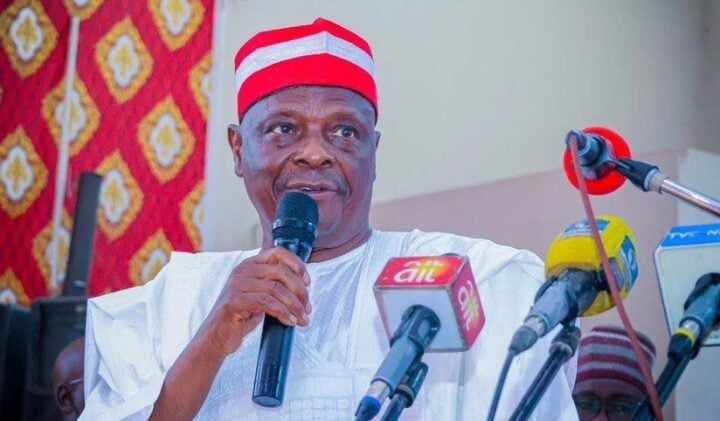
Kwankwaso, others may face US visa ban over religious freedom violations

Published

on

The United States has proposed targeted measures, including visa bans and asset freezes, against individuals and groups accused of involvement in religious freedom violations in Nigeria, according to the Nigeria Religious Freedom and Accountability Act of 2026.

On Tuesday, US Congressman, Rep. Riley Moore (R‑West Virginia) announced via X the introduction of the Nigeria Religious Freedom and Accountability Act of 2026, co-sponsored by Rep. Chris Smith (R‑New Jersey).

The bill specifically names the former Governor of Kano State, Rabiu Musa Kwankwaso, as well as Fulani-ethnic nomad militias and associations such as the Miyetti Allah Cattle Breeders Association of Nigeria and Miyetti Allah Kautal Hore.

The bill partly read, “The United States should deliver humanitarian assistance, co-funded by the Government of Nigeria, through trusted faith-based and nongovernmental organisations in Nigeria’s middle belt states; the Department of State and the Department of the Treasury should impose targeted sanctions, including visa bans and asset freezes under the Global Magnitsky Human Rights Accountability Act, on individuals or entities responsible for religious freedom violations, including (A) Fulani-ethnic nomad militias in Nigeria, (B) Rabiu Musa Kwankwaso, former Kano State Governor (C) Miyetti Allah Cattle Breeders Association of Nigeria (MACBAN); and (D) Miyetti Allah Kautal Hore.”

The legislation directs the US Secretary of State to determine whether certain Fulani militias qualify as foreign terrorist organisations under US law, while also calling for humanitarian aid delivery in Nigeria’s Middle Belt through trusted faith-based and non-governmental organisations.

Moore wrote on X, “Today, I am proud to introduce the Nigeria Religious Freedom and Accountability Act of 2026 with Rep. Chris Smith.

See also  Tinubu revokes pardon for Sanda, 140 high-profile inmates

“The US is a Christian nation. As such, we must stand with persecuted Christians around the world.

“Our legislation will build upon the momentum of President Trump designating Nigeria as a Country of Particular Concern and the recent US-Nigeria security framework agreement.”

According to Moore, the legislation builds on previous US measures, including Nigeria’s designation as a “Country of Particular Concern” and the recent US–Nigeria security framework agreement, reinforcing America’s stance on protecting persecuted Christians and other vulnerable communities in the country.

Tensions over religious freedom in Nigeria have escalated amid persistent violence by armed groups in the country’s Middle Belt and northern regions.

In late 2025, US President Donald Trump re‑designated Nigeria as a “Country of Particular Concern” for severe violations of religious freedom, a status reflecting allegations of systematic attacks on communities, particularly Christians.

The characterisation rejected by the Nigerian government, which says the security crisis is multifaceted and not a religious war.

The security situation has also drawn direct US military involvement.

In December 2025, the United States carried out airstrikes against Islamic State‑linked militants in northwest Nigeria in coordination with Abuja, part of broader counter‑terrorism cooperation and intelligence sharing.

Meanwhile, the US has expanded training support and military supplies for Nigerian forces.

punch.ng

FOLLOW US ON:

FACEBOOK

TWITTER

PINTEREST

TIKTOK

YOUTUBE

LINKEDIN

TUMBLR

INSTAGRAM

Continue Reading
Click to comment

Leave a Reply

Your email address will not be published. Required fields are marked *

News

Reps slam poor funding of Auditor-General’s office

Published

on

The House of Representatives on Wednesday raised concerns over what it described as chronic underfunding of the Office of the Auditor-General for the Federation, warning that the trend could undermine Nigeria’s anti-corruption architecture and weaken public accountability.

The concern was raised during the 2026 budget defence session of the Office at the National Assembly Complex, Abuja, before the House Public Accounts Committee, chaired by Mr Bamidele Salam.

While reviewing the proposed N15.88bn allocation to the OAuGF for the 2026 fiscal year, the committee noted that the figure represents approximately 0.027 per cent of the N58.47tn Federal Government budget.

Members described the allocation as grossly inadequate when weighed against the constitutional responsibilities of the Office, which is mandated to audit over 1,000 Ministries, Departments and Agencies, as well as government-funded institutions across the country.

Salam said it is unrealistic to expect the Auditor-General’s Office to effectively scrutinise a proposed expenditure of N58.47tn with such minimal funding.

He disclosed that due to budgetary constraints in previous years, the Office was only able to audit five foreign missions out of about 100 Nigerian missions abroad.

The Osun lawmaker further lamented that in the 2025 fiscal year, only four per cent of the capital allocation to the Office was released, a development he said significantly impaired its operational capacity.

A breakdown of the 2026 budget estimate shows that N5.3bn is earmarked for personnel costs, N5.6bn for overheads, and N4.8bn for capital expenditure.

The lawmakers referenced international best practices as guided by the International Organisation of Supreme Audit Institutions, which emphasise that supreme audit institutions must enjoy sufficient, independent, and secure funding to carry out their mandates without interference.

See also  Diezani lavished over N4bn in London luxury store – UK prosecutor

They also underscored the importance of budgetary autonomy, noting that audit institutions are ideally expected to submit their budget proposals directly to the legislature or a designated parliamentary committee to safeguard their independence.

“This is associated with weak institutions, which have contributed to the corruption ravaging our country,” Salam stated.

The House Committee therefore urged the Federal Government and relevant stakeholders to “prioritise adequate appropriation and full release of funds to the Office of the Auditor-General for the Federation to enhance its capacity to perform its constitutional mandate effectively and proactively prevent corruption, waste, and mismanagement of public resources.”

The Office of the Auditor-General for the Federation is constitutionally empowered under Section 85 of the 1999 Constitution (as amended) to audit and report on the public accounts of the Federation and all offices and courts of the Federal Government.

Over the years, however, concerns have persisted over the Office’s limited financial and operational independence. Despite its central role in safeguarding public funds, the OAuGF has repeatedly faced budget cuts, delayed releases, and inadequate capital funding, constraining its ability to conduct timely audits, deploy modern audit technology, and build professional capacity.

Stakeholders in the accountability sector have long argued that weak funding for the nation’s supreme audit institution undermines oversight of government spending, particularly at a time when public expenditure continues to rise sharply.

The proposed N58.47tn 2026 Federal Government budget represents one of the largest in Nigeria’s history, further amplifying concerns about the capacity of the Auditor-General’s Office to effectively track and audit public spending without commensurate financial support.

See also  Presidency rejects World Bank’s poverty report

Analysts say that unless funding and institutional autonomy for the Office are strengthened, efforts to combat corruption and ensure fiscal discipline may remain constrained.

punch.ng

FOLLOW US ON:

FACEBOOK

TWITTER

PINTEREST

TIKTOK

YOUTUBE

LINKEDIN

TUMBLR

INSTAGRAM

Continue Reading

News

Bomb explosion rocks Bayelsa secretariat

Published

on

A suspected Improvised Explosive Device was detonated early Wednesday at the Bayelsa State Secretariat Complex in Yenagoa.

The explosion, however, prompted an emergency response from security agencies and a temporary disruption of official activities.

The explosion occurred at about 6:00 am, triggering swift intervention by the Bayelsa State Police Command.

Confirming the incident, the Commissioner of Police, Bayelsa State Command, CP Iyamah, in a statement on Wednesday, assured residents that no casualties were recorded and no property was damaged.

He said, “The Bayelsa State Police Command wish to inform the general public of a suspected IED explosion which occurred today, 11th February 2026, at about 0600hrs within the State Secretariat Complex. I immediately led the Explosive Ordinance Disposal (EOD) Unit, Special Drone Unit and other Tactical Teams to the scene.

“On arrival at the scene, the operatives of the Explosive Ordinance Unit swiftly contained the explosion.

“The area was immediately cordoned off and upon detailed search, one unexploded IED was identified by EOD operatives and was rendered safe. No life lost, no property destroyed. One Pentecost Elijah, a 60-year-old man from Otuan Community in Southern Ijaw LGA, Bayelsa State, was arrested at the scene in connection with the incident.

“He is currently undergoing interrogation at the State Criminal Investigation Department and upon conclusion, the suspect will be charged in court. Let me inform you that the situation is under control and normalcy has been restored. Members of the public are advised to remain calm and continue with their lawful business activities.”

Following the incident, the Bayelsa State Government ordered a temporary closure of work for four hours, affecting over 6,000 state employees as a precautionary measure.

See also  FEC approves biometric flight boarding, PH airport concession

The directive was issued by the Head of Service, Dr Wisdom Ebiye Sawyer.

Security operatives, including the anti-bomb squad, cordoned off access roads leading to the State Secretariat and the Bayelsa State Government House while investigations and safety procedures were ongoing.

Authorities said the situation has been fully contained.

In 2024, a bomb explosion killed one child and injured four children in Niger state.

The incident occurred in the Bassa community in Shiroro Local Government Area when the children found the bomb on the ground and went on to play with it.

The bomb exploded, killing the child on the spot and injuring the others.

punch.ng

FOLLOW US ON:

FACEBOOK

TWITTER

PINTEREST

TIKTOK

YOUTUBE

LINKEDIN

TUMBLR

INSTAGRAM

Continue Reading

News

Ogun Amotekun unveils CCTV control room to fight crime

Published

on

The Ogun State Government on Wednesday reiterated its commitment to empowering security agencies to combat crime and maintain law and order in the state.

The government has equally emphasised the deployment of technology to improve real-time crime-fighting and detection, to ensure that everyone in the state sleeps with their two eyes closed, while flushing out criminal-minded residents from the state.

The Secretary to the state government, Mr Tokunbo Talabi, disclosed this on Wednesday while unveiling the CCTV control room of the Ogun State Security Network, otherwise known as Amotekun Corps, at their state command headquarters in Abeokuta.

Mr Talabi, who hailed the ingenuity of the Amotekun Corps Commander, Brig Gen Alade Adedigba (retd.), for setting up the CCTV Control Room, said the government is pleased that the security agency is embracing growth and professionalism and will be supported more to secure the state.

He stated that the importance of deploying intelligence and technology to keep any society safe cannot be overemphasised, saying that he was glad that the leadership of Amotekun not only had foresight but was also thinking progressively to raise the bar in ensuring a safe Ogun state for all.

The SSG said, “When we look at the fact that Amotekun is like a pioneer force that was deliberately set up to help with certain aspects of our security, and if you look at the time they have just been in existence, an initiative like this CCTV control room gives the state government a lot of confidence.

See also  Makinde warns Wike camp against stopping PDP convention

”It goes to show that at least the professionalism that we are expecting, somebody is strategically thinking about it.

“The fact that when the corps grows bigger, right now they have about 2,000 operatives, to administer 2,000 operatives needs some form of technology.

“To also be able to cover our very vast land, we need operatives, we need technology in very critical areas.

“This is a very good concept and I believe that with this in place, then we can start to begin to build on it and expand it. It’s a very good initiative. It’s something that we do. It’s something that will take us to the next level.

“It’s something that will significantly improve security in our dear state. I am definitely impressed with what I have seen so far with the demonstration. The template is good, and we can take it up from here.”

The SSG said that, although there are currently only three centres where the closed-circuit cameras are in operation, the state government is committed to scaling up the pilot phase and ensuring that every part of the state is covered.

Talabi emphasised the need for stronger collaboration among all security agencies, noting that security is a complex process that cannot be entrusted to any single saviour. Therefore, there is always a need for synergy to keep the state safe.

He said, “It is also good for us to emphasise the need for collaboration because we don’t want to take for granted what we have. I believe we have a good collaboration because we meet regularly.

See also  I will stop rigging, vote-buying, Amupitan vows ahead of 2027 elections

“Everybody exchanges their own views, but we cannot overemphasise it because that is the strength that a state can have.

That is the place of capacity building. That is the place of efficiency.

“So if we then have a situation like somewhere and it happens that the operatives in that area cannot manage it, of course, we are going to call on other agencies. If we need the military, they will also join you in that capacity.

“So we will then agree on how to hold forth until enforcement comes from their own network, from other networks, and whoever is in need. I think that we are getting the right”.

Speaking at the event, the Amotekun Corps Commander, Brig Gen Adedigba, (retd.), said that the establishment of the CCTV control room would help the corps achieve optimal performance and enhance watertight security for the state’s residents.

He explained, “To start with, the interface between security and technology cannot be overemphasised. Security measures implemented without technology will only be reactive. It will be manual.

“But when you interface technology with whatever measures you put in place, it means you are proactive.

“And you can even run on autopilot.

“Therefore, setting up a CCTV control centre is a way to ensure that we enhance our performance in terms of response time, reducing the line of communication.

“For example, I am right now at our headquarters in Abeokuta, and I have a team somewhere in Ogere, which takes about 45 minutes, but when you have a system of this nature, real-time, as something is happening, you are relating to the man on the ground, and he’s responding.

See also  FEC approves biometric flight boarding, PH airport concession

“So you save time, you save life, and you achieve so much. So that is the reason behind the establishment of a system of this nature.”

punch.ng

FOLLOW US ON:

FACEBOOK

TWITTER

PINTEREST

TIKTOK

YOUTUBE

LINKEDIN

TUMBLR

INSTAGRAM

Continue Reading

Trending