Connect with us

Business

Tinubu’s Executive Order: FG, states, LGs allocation may increase by N15tn

Published

on

The federal, state, and local governments may receive additional revenue allocation of about N14.57tn following the recent Executive Order signed by President Bola Tinubu, directing that royalty oil, tax oil, profit oil, profit gas, and other revenues due to the Federation under production sharing, profit sharing, and risk service contracts be paid directly into the Federation Account

This is based on an analysis of revenue inflows in 2025, drawing on monthly earnings submitted to the Federation Account Allocation Committee and obtained by our correspondent in Abuja on Thursday.

Based on estimates from 2025 remittances to the Federation Allocation Accounts Committee, the Nigerian National Petroleum Company is projected remit about N906.91bn in management fees and frontier exploration funds, while oil and gas royalties totalling N7.55tn and gas flaring penalties of N611.42bn collected by the Nigerian Upstream Petroleum Regulatory Commission will now be remitted directly to the Federation Account.

The Nigeria Revenue Service will also lose the authority to collect Petroleum Profits Tax and Hydrocarbon Tax, which generated N4.905tn in 2025, while the Midstream and Downstream Gas Infrastructure Fund recorded N596.61bn in the same period, bringing the total affected revenue streams to about N14.57tn.

It was reported on Wednesday that the President signed the executive order directing that royalty oil, tax oil, profit oil, profit gas, and other revenues due to the Federation under production sharing, profit sharing, and risk service contracts be paid directly into the Federation Account.

The order also scrapped the 30 per cent Frontier Exploration Fund under the PIA and stopped the 30 per cent management fee on profit oil and profit gas retained by the Nigerian National Petroleum Company Limited. The order, which took effect from February 13, 2026, is aimed at safeguarding oil and gas revenues due to the Federation and improving remittances into the Federation Account.

According to details of the directive, the President invoked Section 5 of the Constitution of the Federal Republic of Nigeria (as amended), while the policy was anchored on Section 44(3), which vests ownership and control of all minerals, mineral oils, and natural gas in the Government of the Federation.

The PUNCH also gathered exclusively that the implementation of the directive commenced in January, and its impact is expected to reflect in the revenue allocations at the FAAC meeting scheduled for next week.

Since the implementation of the PIA in 2021, the Federation Account, shared by the federal, state, and local governments, received only 40 per cent of proceeds from Production Sharing Contracts. The remaining 60 per cent was retained by the NNPC, split between a 30 per cent Frontier Exploration Fund and a 30 per cent management fee.

Under the new directive, NNPC will no longer collect and manage the statutory 30 per cent Frontier Exploration Fund, a development expected to significantly alter the revenue landscape of the oil and gas sector.

The frontier exploration fund is designed to finance hydrocarbon exploration activities in Nigeria’s frontier basins, areas outside the traditional Niger Delta producing belt, where commercial discoveries have yet to be fully established. These include: the Chad Basin in the North-East, the Sokoto Basin in the North-West, the Bida Basin in North-Central Nigeria, the Benue Trough, and parts of the Dahomey basin.

Exploration in these locations is aimed at expanding Nigeria’s reserve base, reducing regional concentration of oil production, and enhancing long-term energy security. Activities typically involve seismic data acquisition, exploratory drilling, geological studies, and appraisal campaigns.

The fund was floated under the Petroleum Industry Act because frontier basins are generally high-risk and capital-intensive, and therefore would require sustained funding considered critical to maintaining exploration momentum.

In addition, the national oil company will no longer be entitled to the 30 per cent management fee on profit oil and profit gas revenues. The order further directed that all operators and contractors of oil and gas assets under Production Sharing Contracts must now pay Royalty Oil, Tax Oil, Profit Oil, Profit Gas, and any other government interest directly into the Federation Account.

See also  Terrorists’ warning letters spark mass exodus

The directive also suspended payments of gas flare penalties into the Midstream and Downstream Gas Infrastructure Fund, instructing the Nigerian Upstream Petroleum Regulatory Commission to remit all proceeds from penalties imposed on operators directly into the Federation Account.

It further directed that all expenditure from the Midstream and Downstream Gas Infrastructure Fund must now comply with extant public procurement laws and regulations. Tinubu said excessive deductions, overlapping funds, and structural distortions in the oil and gas sector have weakened remittances to the Federation Account, warning that the practice must end to protect national revenue.

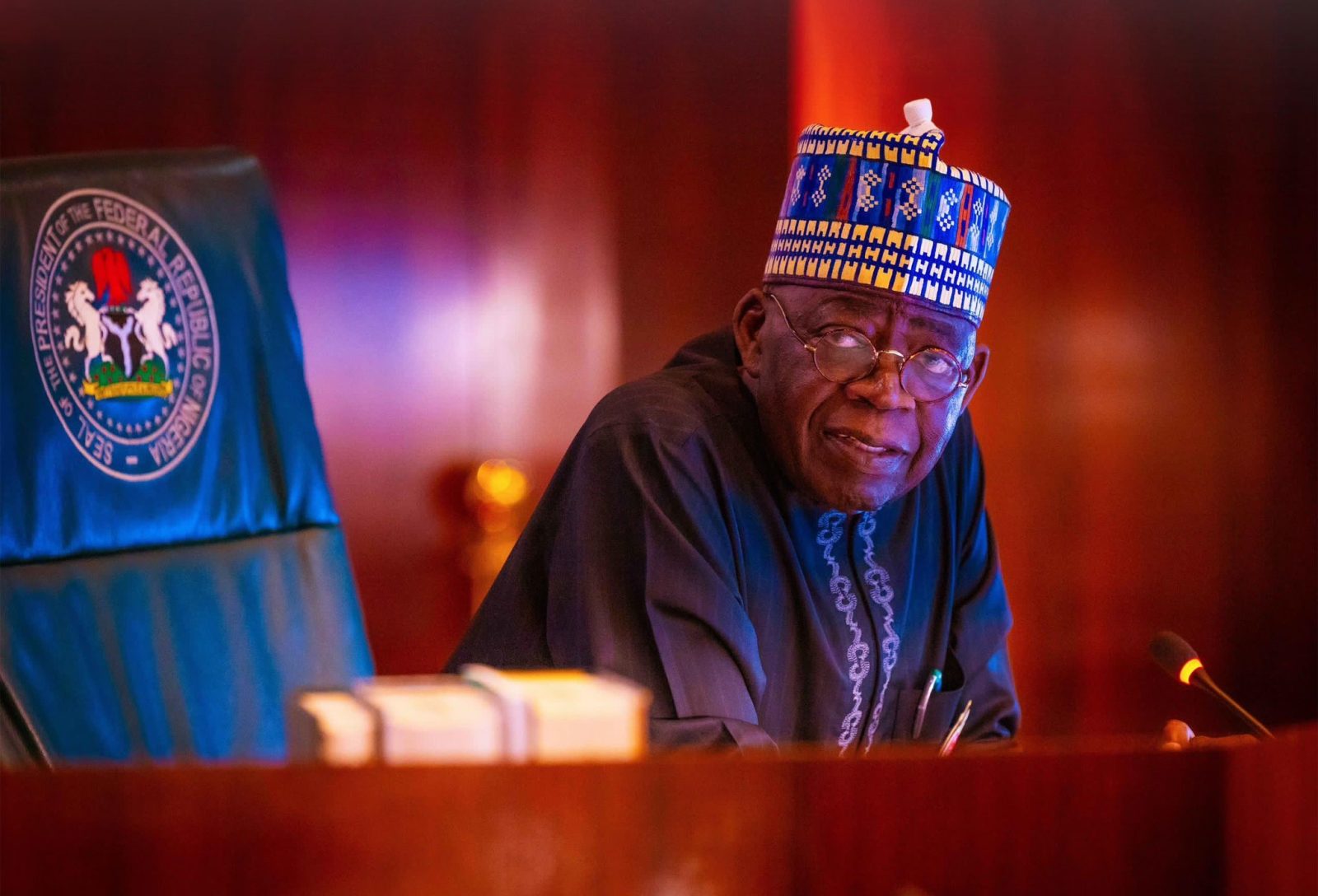
In a post on his verified X handle, the President stated that for too long, revenues meant for federal, state, and local governments had been trapped in layers of charges and retention mechanisms, thereby slowing development across the country.

He said, “For too long, excessive deductions, overlapping funds, and structural distortions in the oil and gas sector have weakened remittances to the Federation Account. When revenues meant for federal, state, and local governments are trapped in layers of charges and retention mechanisms, development suffers. That must end.”

Tinubu emphasised that oil and gas revenues must serve Nigerians first, noting that the ongoing reforms in the sector are aimed at promoting fairness and fiscal responsibility. He added, “Oil and gas revenues must serve the Nigerian people first, and this reform is about fairness and fiscal responsibility.”

The President explained that as the government strengthens national security, invests in education, expands healthcare, stabilises the economy, and advances the country’s energy transition, every legitimate revenue due to the Federation must be protected.

According to him, NNPC will now operate strictly as a commercial enterprise in line with the law, stressing that the era of duplicative deductions and fragmented oversight in the sector is over. Tinubu also disclosed that his administration would undertake a comprehensive review of the Petroleum Industry Act to address structural and fiscal anomalies weakening national revenue.

He further announced the approval of an implementation committee to oversee and ensure effective and coordinated execution of the executive order on the matter.

The President said, “Nigeria can no longer afford leakage where there should be leadership. We are safeguarding the Federation Account. We are strengthening our budget. We are acting in the national interest.”

He reiterated that the reforms are part of his administration’s commitment to Nigerians, adding that the policy direction aligns with his “Nigeria First” promise.

Based on the latest Federation Allocation Accounts Committee revenue data for 2025, the reallocation could have far-reaching implications for government earnings and sector institutions.

While many Nigerians and energy experts have expressed concerns over the potential impact of the policy on the oil and gas industry, a review of potential revenue reallocation suggests that the NNPC may be the least affected among the key players.

Other relevant government agencies operating within the sector could bear a heavier burden, particularly in terms of revenue losses, operational adjustments, and institutional restructuring.

Findings indicated that NNPC may lose about N906.91bn in management fees and Frontier Exploration Fund deductions. Each of the funds accounted for N453.455bn in 2025. A breakdown showed that the N453.455bn realised for frontier exploration fell short of the N710.520bn budgeted for the year, leaving a deficit of N257.066bn.

The monthly trend reveals the volatility of the fund. In January, N31.77bn was deducted from the frontier line, when PSC profits came in at N105.91bn. The February deduction rose to N38.30bn from a profit of N127.67bn, representing a 20.6 per cent increase on the January inflow.

March provided the first big surge, with N61.49bn allocated to frontier exploration from profits of N204.96bn, a jump of 60.5 per cent on February’s figure. April, however, saw deductions ease back to N36.58bn as profits slid to N121.93bn, a 40.5 per cent drop compared with March.

In May, the fund received N38.8bn, only slightly higher than April’s contribution, reflecting profit of N129.33bn. June delivered the lowest allocation so far this year, just N6.83bn, after profits collapsed to N22.77bn. That represented an 82.4 per cent fall from May.

See also  Tinubu’s executive order blocks N2tn NNPC fees

The flow recovered somewhat in July, with N25.34bn transferred into the fund from profits of N84.48bn. In August, the trend rose sharply to its highest level so far this year, as Profit Sharing Contract earnings surged to N263.13bn. This translated to N78.94bn remitted to the Frontier Exploration Fund, more than three times the July contribution and about twelve times the amount recorded in June.

The momentum was sustained in subsequent months. In September, PSC profit stood at N275.38bn, with N82.61bn deducted for frontier exploration. October recorded a sharp decline, as profit dropped to N36.82bn, while deductions amounted to N11.05bn.

In November, profit rebounded to N112.32bn, with N33.70bn transferred to the fund. However, by December, PSC earnings moderated again to N26.82bn, resulting in frontier exploration deductions of N8.05bn.

The same 30 per cent rule also applied to NNPC’s management fees, which mirrored the frontier deductions exactly. In January, NNPC booked N31.77bn; in February, N38.30bn; in March, N61.49bn; in April, N36.58bn; in May, N38.8bn; in June, N6.83bn; in July, N25.34bn; in August, N78.94bn; N82.614bn in September; N11.046bn in October; N33.695bn in November and N8.046bn in December.

The NUPRC is also expected to lose oversight of oil and gas royalty collections, a development that could significantly reduce its revenue from cost-of-collection fees, which are intended to fund its operational activities. Based on 2025 figures, the commission is projected to forgo approximately N7.55tn, while gas flaring penalties during the same period totaled N611.42bn.

Under the Petroleum Profits Tax, Hydrocarbon Tax, and other levies administered by the NRS, a total of N4.905tn was collected in 2025. This revenue will now be channelled directly to the Federation Account. The earnings, however, exclude company income tax on upstream activities and other revenue streams.

Similarly, the MDGIF, which was established to finance strategic gas infrastructure projects and improve domestic gas utilisation, recorded total collections of N596.61bn in 2025. With the recent directive, these funds will now be subject to the same public finance rules governing statutory allocations, signalling a shift in oversight.

Monthly inflows into the MDGIF in 2025 were highly variable: N35.07bn in January, N31.82bn in February, N52.99bn in March, N29.19bn in April, N41.27bn in May, N66.18bn in June, N50.98bn in July, N57.04bn in August, N66.32bn in September, N66.32bn in October, N59.42bn in November, and N46.90bn in December. The highest single-month collection of N66.32bn in both September and October accounted for about 11.1 per cent of the annual total each, while the lowest in April (N29.19bn) represented just under 4.9 per cent of the year’s total.

Cumulatively, these revenue streams would amount to a total of N14.72tn, although the actual inflows could rise or fall depending on fluctuations in crude oil production and exploration activities, which directly determine the amount of revenue generated.

The anticipated upsurge in oil and gas revenue remittances is expected to deliver a significant boost to sub-national earnings, providing state and local governments with much-needed fiscal resources. This inflow could sharply reduce budget deficits, easing financial pressures across the federation and enabling more consistent funding for critical infrastructure and social services.

Over the years, concerns have been raised by the Nigeria Extractive Industries Transparency Initiative and the National Assembly of Nigeria over revenue leakages, delayed remittances, and opaque deductions in the oil and gas sector.

With the new directive, Nigeria may be entering a new phase of fiscal discipline and transparency in its most critical revenue-generating industry.

Experts react

Commenting, the Chair of the Oil, Gas, and Energy Policy Forum, Professor Wumi Iledare, urged careful consideration of the recent Executive Order by President Bola Tinubu directing the direct remittance of oil and gas revenues to the Federation Account.

The order, described by Iledare as a “significant fiscal intervention,” aims to strengthen revenue transparency, curb discretionary retention, and ensure statutory remittances flow efficiently to the three tiers of government.

In a statement obtained by The PUNCH on Thursday, titled “PEWI Responds to Presidential Executive Order on Direct Remittance of Oil and Gas Revenues”, Iledare acknowledged the government’s stated objectives.

See also  Inflation will soon hit single digit, Presidency assures Nigerians

“Safeguarding public revenues, curbing inefficiencies, and enhancing fiscal discipline are legitimate public finance priorities, particularly in a period of budgetary strain and debt sustainability concerns,” he said.

However, Iledare warned that parts of the Executive Order may intersect with statutory provisions under the PIA 2021, including the Frontier Exploration Fund, the Midstream and Downstream Gas Infrastructure Fund, and existing Production Sharing Contract fiscal arrangements.

“While Section 5 of the Constitution empowers the President to implement and enforce laws, substantive changes to statutory fiscal frameworks may require legislative amendments to ensure constitutional alignment and institutional certainty,” he noted.

The energy expert highlighted the importance of distinguishing between contractual entitlements, corporate retained earnings, and statutory earmarked funds under the PIA.

“Clarity in these distinctions is critical to avoid conflating contractual entitlements with discretionary fiscal practices,” Iledare explained.

On the issue of direct remittance of royalty oil, tax oil, and profit oil to the Federation Account, PEWI recognised potential benefits in enhancing transparency and reducing intermediation. Yet, the statement stressed that reforms must be carefully sequenced to maintain contractual stability and safeguard investor confidence.

“NNPC Limited’s dual role as both commercial operator and concessionaire under certain arrangements has long presented institutional tensions within the post-PIA framework.” Iledare said. “Any reform aimed at reinforcing NNPC’s commercial identity must be anchored in legal clarity and predictable governance mechanisms.”

The policy forum therefore recommended a three-pronged approach: prompt legislative consultation to ensure statutory coherence, transparent engagement with operators and investors, and a sequenced reform rollout that balances fiscal urgency with institutional stability.

“Reforms that improve transparency and fiscal integrity are welcome,” the statement concluded, “but sustainable reform must align with constitutional processes, statutory frameworks, and investor predictability. PEWI will continue to monitor developments and provide objective, technically grounded analysis in the public interest.”

Meanwhile, the Capital Market Academics of Nigeria has thrown its weight behind President Bola Tinubu following his recent signing of Executive Order 9 of 2026, which mandates the direct remittance of 60 per cent of oil and gas profits back to the Federation Account.

In a statement released on Thursday, the President of CMAN, Prof Uche Uwaleke, described the move as a “bold and historic” decision that corrects a long-standing fiscal imbalance created by the Petroleum Industry Act of 2021.

“This marks one of the most courageous reforms of his administration and a decisive step toward strengthening fiscal transparency and equity in revenue distribution,” Uwaleke stated.

Uwaleke noted that this structure undermined the principle of collective ownership of national resources. “By correcting this anomaly, the President has ensured that all tiers of government benefit equitably from the nation’s oil and gas wealth. NNPCL, as a limited liability company, must operate independently on its own revenues rather than relying on public funds,” he added.

While praising the reform, CMAN emphasised the need for institutional safeguards to ensure the new policy achieves its intended goals. Specifically, the institute called for the Chairman of the Revenue Mobilisation, Allocation and Fiscal Commission to be included in the committee overseeing the implementation of the Executive Order.

“CMAN underscores the importance of including the RMAFC Chairman to ensure transparency and accountability. This development is a victory for the Federation Accounts Allocation Committee and for fiscal justice in Nigeria.”

The group also urged the administration to extend these reforms to Joint Venture assets, arguing they should also be returned to the Federation Account to maximise national revenue. According to the statement, the anticipated surge in revenue will enhance the capacity of all government tiers to deliver essential services and stimulate the capital markets.

“We remain committed to advocating for policies that strengthen transparency and fairness. We call on all stakeholders to support the President’s reform agenda for the benefit of all Nigerians,” Uwaleke concluded.

punch.ng

FOLLOW US ON:

FACEBOOK

TWITTER

PINTEREST

TIKTOK

YOUTUBE

LINKEDIN

TUMBLR

INSTAGRAM

Continue Reading
Click to comment

Leave a Reply

Your email address will not be published. Required fields are marked *

Business

Domestic gas sales rise 30% on reforms – Report

Published

on

Nigeria’s domestic gas market recorded a significant increase in sales, rising by about 30 per cent between January 2022 and January 2025, driven by reforms under the Petroleum Industry Act 2021 and recent executive orders by President Bola Tinubu, according to a legal analysis by Tope Adebayo LP.

The Lagos-based full-service law firm said in a statement made available to our correspondent that the reforms have improved regulatory clarity, fiscal attractiveness and investor confidence across the gas value chain, even as infrastructure gaps and implementation challenges continue to slow the pace of growth.

It stated that Nigeria, which holds more than 206 trillion cubic feet of proven gas reserves, has long struggled to convert its resource base into domestic energy supply due to underinvestment, weak infrastructure and gas flaring.

According to data cited in the report, domestic gas sales rose from 49.3bscf in January 2022 to 64.2bscf in January 2025, reflecting the gains attributed to ongoing reforms under the PIA.

The report noted that the legislation marked a turning point for the sector.

“The PIA represents the most comprehensive reform of Nigeria’s petroleum sector in decades and has established a stronger foundation for domestic gas development through regulatory clarity, pricing liberalisation mechanisms, infrastructure support and enhanced investment incentives,” the firm stated in a report titled ‘From Policy to Practice: Legal and Regulatory Drivers of Nigeria’s Domestic Gas Market Under the PIA and Recent Executive Orders’.

It explained that structural reforms under the Act, including the creation of separate regulatory authorities for upstream and midstream/downstream operations, have helped to improve oversight and reduce regulatory bottlenecks.

See also  FG gets $25.35m Kuwait loan to tackle Kaduna out-of-school crisis

The analysis also highlighted the Domestic Gas Delivery Obligation framework as a key intervention aimed at boosting supply to strategic sectors such as power generation and industry. The framework includes enforceable penalties for non-compliance.

It further noted improvements in gas utilisation and supply performance, alongside modest reductions in gas flaring and the expansion of the Nigerian Gas Flare Commercialisation Programme, which it said has seen multiple flare sites auctioned for monetisation projects.

Beyond production measures, the PIA, it stated, introduced open-access provisions for infrastructure, partial liberalisation of gas pricing and the establishment of the Midstream and Downstream Gas Infrastructure Fund to support investments in processing, transportation and distribution.

The law firm maintained that recent executive orders and presidential directives have also strengthened the investment climate through tax incentives, faster contracting timelines and more flexible local content implementation.

“These interventions signal a deliberate effort by the government to improve project economics and enhance Nigeria’s competitiveness as a destination for gas investments,” Tope Adebayo LP noted.

However, the firm warned that policy gains alone are insufficient to deliver the market’s full potential.

“Large-scale outcomes remain constrained by persistent infrastructure gaps, payment risks within the power sector, legacy debts, and implementation inefficiencies. The transition from policy to practice is clearly underway, but it remains incomplete,” it stated.

According to the analysis, achieving a fully functional and scalable domestic gas market will require sustained investment in pipelines, processing facilities, transportation networks and distribution systems, alongside stronger institutional coordination and consistent regulatory execution.

The report stated that the foundations had been laid, but long-term success would depend on effective implementation and continued market reforms. It added that, to unlock the full promise of the Decade of Gas initiative, Nigeria must bridge the gap between legal design and operational reality.

See also  N5.6tn debt: Energy crisis looms as gas firms cut supply

punch.ng

FOLLOW US ON:

FACEBOOK

TWITTER

PINTEREST

TIKTOK

YOUTUBE

LINKEDIN

INSTAGRAM

Continue Reading

Business

Nigerians, others buy $3.1bn airtime on credit

Published

on

Mobile phone subscribers in Nigeria and other emerging markets borrowed airtime worth $3.18bn on credit in 2025, with Africa accounting for more than 94 per cent of the total, according to the latest financial statements of fintech firm Optasia.

The company’s 2025 consolidated financial statements showed that airtime advances granted through telecom operators rose to $3.18bn last year from $2.83bn in 2024, reflecting a 12.3 per cent increase.

Optasia stated, “Airtime credit services represent service fees charged on airtime credit amounting to $3,176.34m (2024: $2,829.2m) granted to subscribers of the telecom operators during the year.”

Using the exchange rates disclosed in the financial statements, the airtime advances amounted to about N4.61tn in 2025 in naira terms, up from approximately N4.38tn in 2024.

Despite the growth in dollar terms, the naira value rose by a slower pace as the exchange rate strengthened to N1,450.58/$ at the end of 2025 from N1,547.30/$ a year earlier.

The report showed that Africa remained the dominant market for the service, accounting for $2.99bn, or 94.2 per cent, of all airtime credit disbursed in 2025. This was up from $2.53bn recorded in 2024. Europe and Asia accounted for $96.1m, while the Middle East contributed $87.7m.

The figures highlight the growing dependence of millions of mobile users across Africa on small-value digital credit products, particularly in economies where access to formal financial services remains limited, and household purchasing power is under pressure.

Optasia, which provides airtime advances and nano-loan services through partnerships with mobile network operators and financial institutions, said its technology platform assesses subscribers’ behaviour and determines their eligibility for credit.

According to the company, the platform handles “scoring, financial decisioning and disbursements” by analysing subscribers’ credit history and other relevant data before determining the amount of advance that can be granted.

The report explained that the company also assumes part of the credit risk associated with the service. “As part of the airtime credit service, the Group also commits to indemnify the MNO for the amount of advance so granted, in case the subscriber fails to pay the same within a specified period of time from the date of grant of advance,” it stated.

Beyond airtime lending, the company recorded a sharp increase in nano-loan transactions during the year. Its Mobile Financial Services segment facilitated nano-loans worth $2.30bn in 2025, more than double the $967.9m recorded in the previous year.

Africa accounted for $1.41bn, representing 61.4 per cent of the total, while Europe and Asia contributed $888.9m. The company said the loans were provided through arrangements involving telecom operators and financial institutions, with its proprietary platform supporting credit scoring, approvals, disbursements and collections.

The growth in airtime lending and nano-loan transactions boosted the firm’s earnings during the year. Revenue rose by 75.5 per cent to $265.36m in 2025 from $151.19m in 2024. Mobile Financial Services contributed $167.53m to revenue, while airtime credit services generated $96.86m.

See also  See how Dangote refinery and marketers fuel deal crashed

Africa remained the company’s biggest revenue source, contributing $234.81m, or 88.5 per cent of total revenue, compared with $121.31m in the previous year. Europe and Asia generated $25.43m, while the Middle East accounted for $5.12m.

Profit after tax increased to $43.13m from $36.23m in 2024, while total assets more than doubled to $302.17m from $141.79m.

The company described itself as “an analytics technology services provider in the fintech sector offering its services to large mobile telecom operators to provide airtime/data credit, micro- and nano-cash loans to underbanked populations in the emerging markets.”

According to the financial statements, Optasia operates across more than 25 countries, including Nigeria, South Africa, Ghana, Tunisia, Algeria, Zambia, Uganda, Rwanda, Ethiopia, Egypt, Benin, Côte d’Ivoire, Liberia, Lesotho, Mozambique, Pakistan, Bangladesh, Myanmar, Indonesia, Malaysia, Qatar, Brazil, Greece, Cyprus and the United Arab Emirates.

However, the report showed that Africa remained the dominant market for the firm, with operations in 16 African countries, including Nigeria, South Africa, Ghana, Egypt, Ethiopia, Algeria and Zambia.

The financial statements also showed that Optasia has a direct operating presence in Nigeria through two wholly owned subsidiaries, Nairtime Nigeria Limited and Xtra MFS Nigeria Limited.

Both entities are listed as Nigerian subsidiaries, with Optasia holding a 100 per cent beneficial ownership stake in each company. Nairtime Nigeria Limited was incorporated in 2012, while Xtra MFS Nigeria Limited was incorporated in 2019.

Although the company did not disclose separate revenue or profit for its Nigerian operations, the report suggests that Nigeria remains one of its more significant African markets. The report showed that Nigeria was material to Optasia’s foreign exchange exposure, with the Nigerian naira listed among the currencies that expose the group to currency risk.

Under its financial risk management note, the company stated that it was exposed to currency risk on revenues, expenses and intercompany transactions denominated in currencies outside its functional currency.

It listed the Nigerian naira alongside the euro, Congolese franc, Tanzanian shilling, South African rand, Zambian kwacha and Ghanaian cedi. As of December 31, 2025, Optasia reported total naira-denominated assets of N19.72bn and naira-denominated liabilities of N357.09m, leaving a net naira exposure of N19.37bn.

This was lower than the N25.03bn net naira exposure recorded in 2024, when naira-denominated assets stood at N25.11bn and liabilities at N81.01m. The decline means the group’s net naira exposure fell by N5.66bn, or 22.6 per cent, year-on-year.

However, the remaining N19.37bn exposure still makes Nigeria one of the company’s major currency-risk markets, meaning movements in the naira can affect the value of its earnings, assets and liabilities when translated into dollars.

Optasia also disclosed that a five per cent movement in the dollar against the naira would have affected equity by $668,000 in 2025, compared with $809,000 in 2024. This means the company’s sensitivity to naira movement reduced during the year, in line with the fall in its net naira exposure.

At the end of 2025, Nigeria accounted for $7.73m in gross trade receivables, more than double the $3.80m recorded a year earlier. The increase of 103.6 per cent was one of the strongest among the group’s disclosed markets, indicating a substantial rise in transaction activity and outstanding balances linked to Nigerian operations.

See also  SEE FULL LIST: Ambassadors-designate nominated by Tinubu

The report also highlighted the company’s exposure to Nigeria’s financial system through naira-denominated credit facilities obtained from local banks. According to the financial statements, Optasia maintained an invoice discounting facility and a cash-backed term loan facility in Nigeria, both denominated in naira and carrying interest rates of 30 per cent per annum.

While the facilities were not utilised as of December 31, 2025, they demonstrate the company’s access to local currency funding to support its operations in the country. Nigeria also featured prominently in the company’s discussion of its investment in Quickcheck Holding Limited, a digital lending business in which Optasia holds a 10.05 per cent stake.

The report noted that Quickcheck is “primarily exposed to operations in Nigeria”, making developments in the Nigerian economy important to the investment’s performance.

In its assessment of the investment, the company pointed to policy measures introduced by the Central Bank of Nigeria and broader economic reforms as factors supporting a more stable operating environment.

The report stated that recent policy actions by the CBN, alongside improved oil revenues and narrowing foreign exchange risk spreads, were early indicators of macroeconomic stabilisation.

It added that these developments could help strengthen local-currency earnings and reduce the impact of foreign exchange volatility on businesses operating in Nigeria.

The report further shows that telecom-linked lending is becoming an increasingly important source of short-term financing for underbanked consumers, particularly in Africa, where mobile phone penetration significantly exceeds access to formal banking services.

However, the rapid growth of digital lending also carries rising credit risks. The company’s provision for expected credit losses on financial guarantee contracts climbed to $65.21m in 2025 from $33.42m a year earlier, reflecting the growing exposure associated with airtime advances and nano-loan products.

Despite the higher risk provisions, the strong growth in transactions, revenue and profitability indicates that demand for small-ticket digital credit remains robust across the markets in which the company operates.

However, in Nigeria, Optasia faces a push by the Federal Government to open the country’s airtime credit and data advance market to indigenous fintech firms.

Reports claimed that the Presidency backed regulatory efforts championed by the Federal Competition and Consumer Protection Commission to dismantle what it described as Optasia’s 12-year dominance of the sector, arguing that broader participation would promote competition, support local content development and reduce capital flight.

According to recent reports, the FCCPC convinced the Presidency that the current market structure had limited opportunities for Nigerian firms while enabling significant profit repatriation abroad.

See also  Dangote official revealed that Nigeria’s petrol, diesel are subsidised

However, the FCCPC has distanced itself from reports that it recommended the opening of the airtime credit market to nine new operators or submitted the names of local fintech firms to the Presidency for approval.

In a statement issued recently, FCCPC Director of Corporate Affairs, Ondaje Ijagwu, said the commission was neither aware of nor involved in the claims attributed to it, describing reports linking it to the alleged approvals as inaccurate.

“The commission wishes to state clearly that it is not aware of, and was not involved in, the claims attributed to it in the report absolutely,” Ijagwu said.

The reports had alleged that President Bola Tinubu approved plans to restructure the airtime credit market and endorsed the participation of nine Nigerian fintech firms.

However, the FCCPC maintained that it had no involvement in any such approvals and noted that the regulatory framework under which the firms were reportedly approved remains suspended.

According to the commission, implementation and enforcement of the DEON Consumer Lending Regulations 2025 were halted following an interim injunction granted by the Federal High Court in Lagos on April 15, 2026, in a suit filed by the Wireless Application Service Providers Association of Nigeria.

The commission said it remained bound by the court order pending the determination of the substantive case, which is scheduled for further hearing on July 20, 2026.

The FCCPC’s position leaves unresolved the basis of the earlier reports that detailed alleged policy proposals, market reforms and a list of companies said to have been approved to participate in the airtime credit market.

The Presidency has yet to publicly comment on whether any directive relating to the DEON framework or the sector was issued, further depending the controversy around airtime lending.

The controversy began in April when MTN, Airtel, Glo and T2mobile suspended airtime credit offerings following an FCCPC directive requiring compliance with the DEON framework.

The commission had classified airtime credit as a form of consumer lending, bringing it under regulations originally designed to address abuses by digital lending platforms. The move sparked a regulatory dispute with the NCC, which oversees telecommunications services under the Nigerian Communications Act 2003.

However, airtime and data credit services gradually have been restored across Nigeria’s telecommunications networks after weeks of disruption that affected millions of subscribers.

The Association of Licensed Telecommunications Operators of Nigeria earlier applauded the FCCPC for suspending the enforcement of the Digital, Electronic, Online, or Non-traditional Consumer Lending regulations against telecommunications operators, describing the move as a major boost for regulatory certainty and investor confidence in the sector.

punch.ng

FOLLOW US ON:

FACEBOOK

TWITTER

PINTEREST

TIKTOK

YOUTUBE

LINKEDIN

INSTAGRAM

Continue Reading

Business

Banks earn N225bn from ATM, e-banking charges

Published

on

Nigerian banks generated N224.69bn from electronic banking services and ATM/card-related charges in the first quarter of 2026, representing a 12.56 per cent increase from N199.61bn recorded in the corresponding period of 2025, an analysis of the unaudited financial statements of 11 listed lenders has shown.

The increase came as banks continued to deepen digital banking adoption and electronic payment services, with income from e-banking channels accounting for a significant share of non-interest revenue during the period under review.

Findings by The PUNCH showed that electronic banking and ATM/card management fee income rose by N25.06bn year-on-year, from N199.61bn in Q1 2025 to N224.67bn in Q1 2026. A breakdown showed that income from electronic banking and e-business activities increased by 11.57 per cent to N177.97bn from N159.52bn recorded a year earlier.

Similarly, earnings from ATM and card management fees climbed by 16.48 per cent to N46.70bn from N40.09bn in Q1 2025.

The growth in digital banking revenue coincided with a broader increase in banking sector fee income. The PUNCH earlier reported that the total fee and commission earnings of the 11 lenders rose by 13.64 per cent to N984.47bn from N866.30bn. Also, account maintenance fee income increased by 14.07 per cent to N209.18bn from N183.37bn.

Among the lenders reviewed, Access Holdings recorded the highest earnings from e-banking services, generating N55.71bn in Q1 2026. UBA followed with N46.93bn, while Ecobank earned N35.53bn from card management fees. GTCO posted N21.90bn in e-business income, and Zenith Bank generated N21.54bn from electronic product fees.

Other notable contributors included First Holdco with N20.75bn, Wema Bank with N6.10bn, Fidelity Bank with a combined N8.81bn from ATM charges and e-banking commissions, Stanbic IBTC with N4.33bn from card-based commissions and electronic banking fees, Sterling Financial Holdings with N2.89bn, and Jaiz Bank with N187.05m.

See also  SEE FULL LIST: Ambassadors-designate nominated by Tinubu

An analysis of growth rates showed that Fidelity Bank recorded the strongest expansion in digital banking-related income. The lender’s combined ATM charges and e-banking commissions rose by 164.9 per cent to N8.81bn from N3.08bn in the corresponding period of 2025, driven largely by a 240.8 per cent jump in ATM charges.

GTCO followed with a 68.64 per cent increase in e-business income to N21.90bn from N12.99bn. Stanbic IBTC’s combined card-based commission and electronic banking income rose 52.8 per cent to N4.33bn, while Zenith Bank’s fees on electronic products increased by 58.91 per cent to N21.54bn.

Sterling Financial Holdings recorded a 22.15 per cent increase in e-business commissions and fees, while Access Holdings posted a 15.2 per cent rise in channels and e-business income to N55.71bn.

However, some lenders recorded declines in digital banking-related income. Wema Bank posted the sharpest decline, with fees on electronic products dropping by 50.68 per cent to N6.10bn from N12.37bn.

Stanbic IBTC’s electronic banking fees declined by 20.57 per cent to N865m, while UBA’s electronic banking income slipped marginally by 1.91 per cent to N46.93bn. Ecobank’s card management fees also declined slightly by 1.52 per cent to N35.53bn.

Further analysis showed that digital banking channels accounted for a significant portion of banks’ fee income. At Access Holdings, e-banking income contributed 27.2 per cent of total fee and commission earnings of N205.03bn. GTCO derived 27.27 per cent of its fee income from e-business services, generating N21.90bn out of N80.31bn total fee income.

UBA’s electronic banking income represented 37.82 per cent of its N124.07bn fee and commission revenue, making it the bank’s largest fee-generating line item. First Holdco generated 21.59 per cent of its fee income from electronic banking services, while Zenith Bank earned 25.4 per cent of its fee and commission income from electronic product fees.

See also  Petrol may hit N1,000/litre as Dangote hikes price

Ecobank’s card management fees accounted for 14.94 per cent of total fee income, while Wema Bank’s electronic product fees contributed 35.08 per cent despite the sharp decline recorded during the quarter.

Stanbic IBTC’s combined card-based commission and electronic banking income represented 5.21 per cent of total fee income, while Sterling Financial Holdings generated 17.13 per cent of fee income from e-business commissions and fees.

The strong performance of digital banking income comes amid signs of improving economic activity, according to analysts.  Nigeria’s private sector expanded to a nine-month high in May 2026, with the Stanbic IBTC Purchasing Managers’ Index rising to 54.1 points on the back of stronger demand, increased output and improved logistics.

The growth also aligns with ongoing reforms in the banking sector. Earlier this year, the Central Bank of Nigeria said financial-sector reforms, including the recapitalisation programme and efforts to stabilise the foreign exchange market, were strengthening the foundations of the economy and positioning banks to support long-term growth.

Payment digitalisation drive

Digitalisation of financial services has also become a major policy conversation across Africa, with development institutions increasingly linking digital payments and electronic banking adoption to economic formalisation, financial inclusion and government revenue mobilisation.

In its Africa Economic Outlook 2026 report, the African Development Bank said digitalisation was helping countries lower the cost of business registration, reporting and payments, making it easier for firms and individuals operating outside the formal economy to participate in regulated financial systems.

The report noted that countries with higher usage of digital public administration services tend to record stronger domestic revenue mobilisation and lower levels of informality.

See also  Dangote official revealed that Nigeria’s petrol, diesel are subsidised

According to the AfDB, digital platforms improve taxpayer registration, enhance transaction traceability and strengthen compliance monitoring, enabling governments to capture previously unregistered economic activities without increasing tax rates.

The bank stated that digitalisation also improves administrative efficiency, reduces leakages and broadens the tax base, creating a sustainable pathway for strengthening domestic resource mobilisation and fiscal capacity.

Beyond revenue generation, the AfDB said digitalisation promotes economic and financial inclusion by providing informal businesses with access to digital payment platforms and financial services.

The report stated that digital financial tools enable small businesses to build transaction histories, reduce information gaps with lenders and gain access to savings, credit and risk-management products.

The AfDB explained that these developments help improve the resilience and productivity of micro, small and medium-sized enterprises while encouraging gradual migration from the informal to the formal economy.

The growing contribution of e-banking, card services and other digital channels to banks’ fee income reflects the broader shift toward digital finance across Africa, as consumers and businesses increasingly rely on electronic payment systems for everyday transactions.

Continue Reading

Trending