Connect with us

Business

Dangote signs deal to distribute 65m litres petrol

Published

on

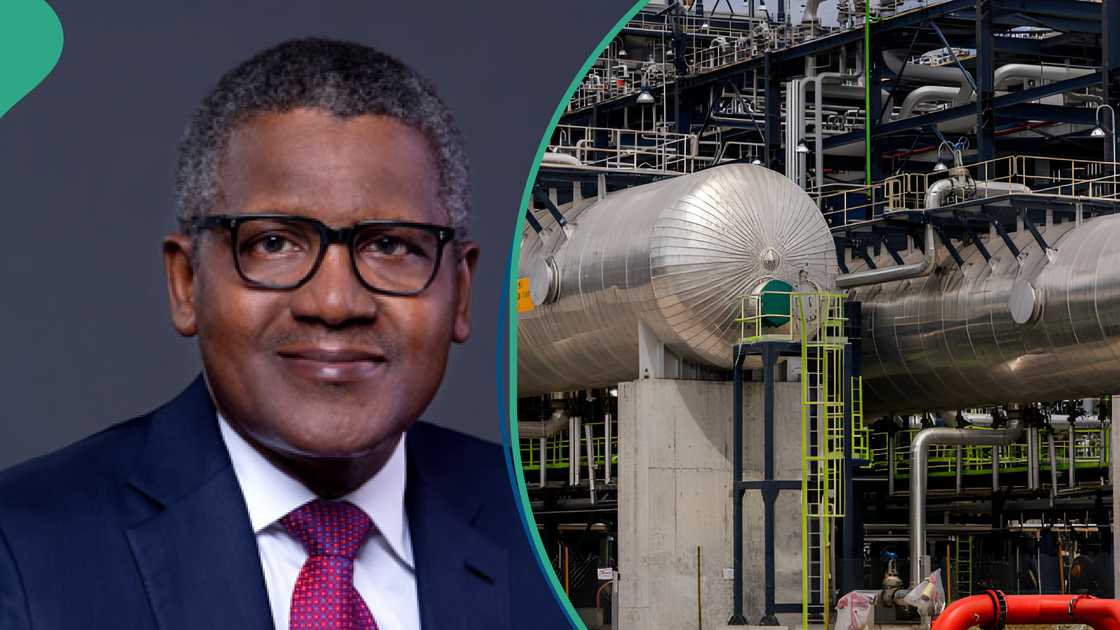
The Dangote Petroleum Refinery has concluded an offtake agreement with 12 major petroleum marketing companies to distribute between 60 million and 65 million litres of Premium Motor Spirit (petrol) daily across the country, in a move expected to stabilise supply and deepen Nigeria’s fuel self-sufficiency.

President of the Dangote Group, Aliko Dangote, disclosed this in Lagos, noting that the structured framework would guarantee nationwide availability of petrol while exporting surplus volumes.

According to a statement issued, Dangote said, “We have agreed an offtake framework to supply up to 65 million litres daily for the domestic market. Any surplus, estimated at between 15 and 20 million litres, will be exported.”

Dangote stated that the initiative marks a major shift in the country’s downstream petroleum sector, as Nigeria’s daily consumption currently ranges between 50 million and 60 million litres.

This means the refinery is expected to supply about 1.8 billion to over 2 billion litres of petrol monthly, depending on daily output and the number of days in the month.

The latest offtake and distribution arrangement follows an earlier agreement reached in October 2025 between the Dangote Petroleum Refinery and downstream operators aimed at stabilising fuel supply and curbing volatility in pump prices.

At the time, independent petroleum marketers disclosed that the refinery had set a target to release up to 600 million litres of Premium Motor Spirit monthly to the domestic market as part of efforts to address supply disruptions and rising costs across the country.

Under the arrangement endorsed by the Nigerian Midstream and Downstream Petroleum Regulatory Authority, selected marketers will handle nationwide distribution to prevent supply disruptions and eliminate speculative practices.

See also  Dangote CNG trucks - Tanker drivers to stop fuel loading Monday

The marketers include MRS Oil Nigeria Plc, Nigerian National Petroleum Company Limited Retail, 11 Plc, TotalEnergies Marketing Nigeria, Rainoil Limited, Northwest Petroleum & Gas Company Limited, Ardova Plc, Bovas & Company Limited, AA Rano Nigeria Limited, AYM Shafa Limited, Conoil Plc, and Masters Energy.

The statement noted that the structured offtake model is designed to ensure efficient logistics, reduce hoarding, and support price stability. It added that the refinery would export between 15 million and 20 million litres daily once domestic supply obligations were met.

“This would conserve foreign exchange, improve the country’s trade balance and strengthen external reserves, as Nigeria will no longer rely heavily on imported fuel,” the statement explained.

For decades, Africa’s largest oil producer depended on imported refined products, exposing the economy to exchange rate volatility, global supply disruptions and recurring shortages.

The Group Chief Executive Officer of the Nigerian National Petroleum Company Limited, Bayo Bashir Ojulari, recently described the refinery as a transformative national asset capable of redefining the country’s energy security architecture.

He said, “This plant was designed for 650,000 barrels per day. None of us thought it would even touch 550,000. What we saw live today was 661,000. These are live parameters, not reports or photographs.”

Ojulari added that the refinery represents a new era of industrial capability and technological advancement for Nigeria.

Nigeria has intensified reforms in the oil and gas sector following the deregulation of the downstream market and removal of fuel subsidy under President Bola Tinubu.

The Dangote refinery, Africa’s largest, is expected to play a central role in ending decades of petrol importation, stabilising prices, and positioning Nigeria as a net exporter of refined petroleum products across West and Central Africa.

See also  Hardship: Nigerian-used car market booms as more owners sell off private vehicles

The success of the structured offtake model could usher in a more stable fuel supply chain and reduce the risk of shortages that have plagued the country for years.

punch.ng

FOLLOW US ON:

FACEBOOK

TWITTER

PINTEREST

TIKTOK

YOUTUBE

LINKEDIN

TUMBLR

INSTAGRAM

Continue Reading
Click to comment

Leave a Reply

Your email address will not be published. Required fields are marked *

Business

Petrol, diesel vessels arrive Nigeria amid price surge

Published

on

As Nigerians contend with rising petrol prices, vessels carrying 129,000 metric tonnes of Premium Motor Spirit (petrol) and Automotive Gas Oil (diesel) are expected to dock at Lagos Ports between March 14 and 17, 2026, The PUNCH reports.

This came as officials of the Nigerian Midstream and Downstream Petroleum Regulatory Authority explained why some importers were still importing PMS despite the agency’s position that no petrol import licence had been issued this year.

According to the Nigerian Ports Authority’s Shipping Position Daily obtained on Monday, a vessel, Mosunmola, carrying 20,000MT of PMS, arrived at Lagos Ports via the Bulk Oil Plant on Sunday, March 14, 2026. Another vessel, Kobe, with 22,000MT of AGO, docked at Kirikiri Lighter Terminal Phase 2, Tin Can Island Port, on the same day.

On Tuesday, March 17, Bora is scheduled to arrive at Kirikiri Lighter Terminal 3B with 27,000MT of PMS, while Ashabi will bring 30,000MT of AGO to the same terminal.

Additionally, Oluwajuwonlo offloaded 15,000MT of PMS at Calabar Ports through Ecomarine Nigeria Limited on Sunday, March 15. Mosunmola will also deliver 15,000MT of PMS to Calabar Ports via a North West Petroleum Gas Co Limited terminal on March 17.

The vessel arrivals coincide with ongoing fuel price hikes nationwide. Nigerians currently face surging petrol costs after Dangote Petroleum Refinery raised its gantry price for PMS to N1,175 per litre, pushing retail prices above N1,200 per litre. The increase has affected transport fares and driven up the cost of goods and services nationwide.

See also  Customer sues bank over alleged unlawful account freeze

Economic analysts, labour unions, and private sector leaders have called on the Federal Government to provide relief measures, citing rising crude oil prices driven by escalating tensions between the United States and Iran. Some stakeholders suggested subsidising petrol to mitigate the impact on citizens and businesses, warning that continued price increases could exacerbate inflation.

Petrol prices have reached between N1,200 and N1,300 per litre in several areas, with projections suggesting costs could exceed N1,500 or approach N2,000 per litre if the Middle East crisis persists.

Marketers speak

The Independent Petroleum Marketers Association of Nigeria confirmed that independent marketers are prepared to lift imported products to ensure availability and competition.

IPMAN spokesperson Chinedu Ukadike said, “We, the independent marketers, are always on the receiving side. Wherever the product is coming from, and it is in the tanks of depot owners or NNPC, we will buy it. The most important thing is availability.

“If NMDPRA made a statement categorically that there is no import licence, I don’t know where this one is coming from. But we are ready to receive the products and sell. Maybe that will also breed competition, and this price volatility may have sustainability. So, I think it is also a welcome development.”

Ukadike added that the vessels might be operating under licences issued long ago and that delays at sea—particularly around the Strait of Hormuz—may explain their late arrival.

“It might also be an old importation licence issued since last year. It is acceptable. The imported products would not have any impact on prices unless the price of crude oil declines. The price depends on the volume and cost of the product because there is nothing like a reduction in prices when Brent is still selling for over $100,” he said.

See also  Konga targets singles in Valentine campaign

NMDPRA explains imports

The Nigerian Midstream and Downstream Petroleum Regulatory Authority has clarified that no import licences were issued in the first quarter of 2026, asserting that shortfalls in February were covered by leftover stocks from January and existing refinery output.

While IPMAN and other stakeholders supported the halt on fuel import licences, major dealers and importers argued that imports were still necessary to meet national demand. February figures show Dangote refinery produced an average of 36 million litres per day, while national consumption was about 56 million litres per day, leaving an apparent gap.

A source within NMDPRA, speaking on condition of anonymity due to the lack of authorisation to speak on the matter, explained that the refinery’s unsold stocks were rolled over due to weather-related export delays in Europe at the end of 2025, closing the supply gap in February.

“The shortfall rolled over from previous stocks. These things are simple. Our fact sheets are published monthly. There were rollover stocks. Dangote didn’t export for a long time towards the end of last year. So, it was those rolled-over stocks that it supplied. Both marketers and Dangote are only jostling for market shares. Has there been a shortage? No!” the source said.

The regulator also refuted online claims that new licences had been issued, noting that licences are granted quarterly. “Those that were issued towards the end of last year were still being used. A licence for importation is not like taking money to the supermarket. It takes time for vessels to arrive. We have not issued any import licence this year,” the official said.

See also  Shell abandons huge biofuel project in Netherlands

Nigeria has historically relied on imported refined petroleum products due to limited domestic refining capacity. However, the operational Dangote refinery, producing 650,000 barrels per day, has shifted the downstream dynamics. NMDPRA confirmed that domestic refineries supplied 36.5 million litres per day in February 2026, with imports contributing just three million litres, representing roughly 92 per cent of the national daily supply.

Chief Executive of NMDPRA, Saidu Mohammed, warned against returning to heavy import dependence. “We have not issued a single licence for petrol importation this year. Some interests still push for large-scale importation despite our progress in domestic refining,” he said during a meeting with a PUNCH delegation at the agency’s Abuja headquarters.

The recent vessel arrivals, while ensuring availability, largely reflect past import licences and logistical delays, rather than new authorisations from NMDPRA.

Continue Reading

Business

US-Iran war: Petrol price surge sparks relief calls

Published

on

There is pressure on the Federal Government to introduce economic relief measures as the escalating conflict between the United States and Iran drives up global crude oil prices and pushes petrol costs to record levels across Nigeria.

Industry operators, economists, labour unions and private sector leaders have urged the government to deploy the expected windfall from higher oil prices to cushion the impact on citizens and businesses, warning that soaring fuel prices are already deepening economic hardship.

The stakeholders sought some palliative measures to cushion the effect of the rising petrol, diesel, and aviation fuel prices, especially as this may heighten the volatility of the country’s inflation figures. Some even called on the government to subsidise the pump prices of petrol.

The calls come amid reports that petrol prices have climbed to between N1,200 and N1,300 per litre in different parts of the country, while projections from industry players indicated that prices could exceed N1,500 per litre and potentially approach N2,000 per litre if the Middle East crisis persists.

As the war involving the United States, Israel, and Iran entered the third week with no reconciliation in sight, there are concerns that crude oil prices would continue to rise, and this would drag petrol prices above the affordability level.

The Dangote Petroleum Refinery has been blaming the war for its recent increase in gantry prices, which rose from less than N800 per litre before the war to N1,175 as of the time of filing this report. Recall that crude oil was around $68 per barrel during the crisis, but it stood at $103 as of Sunday evening.

Cut down taxes, charges

In an interview with The PUNCH, the Independent Petroleum Marketers Association of Nigeria asked the Federal Government to cut off some taxes and charges on petroleum products to reduce the pump prices of fuel.

IPMAN spokesman, Chinedu Ukadike, said this became necessary to stop the price of petrol from further skyrocketing. According to him, there are charges from the Nigerian Maritime Administration and Safety Agency, the Nigerian Ports Authority, the Nigerian Midstream and Downstream Petroleum Regulatory Authority, and others.

The Managing Director of the Dangote refinery said last week that the company paid over 40 charges and taxes to different government agencies.

“The government should cut down some of these taxes, especially the NIMASA taxes and the rest of them. It will help in bringing down the price of petroleum products. Some of these depot charges, NPA charges, NMDPRA charges, and others – some of these things are supposed to go away now that we are facing a very serious challenge for us to get better. But if they continue to stay, it means petroleum products will continue to go high,” he said.

Aside from this, Ukadike said it is imperative to fix the pipelines to reduce the cost of distribution. “The government should give marching orders to ensure that these pipelines are repaired. Once these pipelines are repaired, it will also ease transportation and haulage, making fuels a bit cheaper. It is cheaper to transport fuel through the pipelines.

Ukadike noted that even if the government cannot subsidise petrol, it can try petroleum equalisation to make sure petrol sells at the same rate in all parts of the country.

“With the petroleum equalisation fund, the government will pay transportation costs of petroleum products to enable everybody to buy petroleum products at lower prices in faraway places. Because now, petroleum products are even higher in the North than in the Southwest, where the refinery is located,” Ukadike noted, praying that the Middle East tension is de-escalated as soon as possible.

He urged the government to deploy more CNG vehicles and kits to reduce transportation costs.

Invest in CNG

Members of the Organised Private Sector urged the Federal Government to channel the additional revenue from rising crude oil prices into strategic investments such as Compressed Natural Gas transportation, support for domestic refineries, and settling outstanding debts to gas suppliers to boost electricity generation, rather than returning to any form of fuel subsidy.

In separate interviews with The PUNCH, the stakeholders stated that while the surge in global oil prices due to the Middle East conflict has increased Nigeria’s earnings from crude oil exports, the government should deploy targeted support to the economy and avoid using the extra revenue to cushion petrol prices through subsidy schemes.

The President of the Lagos Chamber of Commerce and Industry, Leye Kupoluyi, said Nigeria must use the opportunity to deepen investments in domestic refining and alternative fuel options.

He urged the government to channel part of the oil windfall into supporting local refining capacity, including modular refineries. “Can we do a naira exchange so that a portion of this crude goes to refineries that are refining locally? People are saying that Dangote is not the only refinery in Nigeria. We have modular refineries that we can encourage to scale up. The government should not go back to fuel subsidies,” he said.

See also  FIRS - 411% revenue rise won’t stop FG borrowing

The LCCI president noted that selling crude to domestic refineries in naira could help strengthen the local petroleum value chain and stabilise the supply of refined products in the country. Kupoluyi also urged the government to intensify efforts to promote the use of compressed natural gas in the transportation sector.

“Why can’t we have duty-free incentives in converting many of our vehicles, even private vehicles, from petrol to CNG? If we can take most of our public transport out of this petroleum situation and move them to CNG, you will see that the effect on petrol demand will come down,” Kupoluyi stated.

He added that encouraging solar power adoption would reduce pressure on the national grid and allow the electricity supply to focus more on industrial production.

Similarly, the Director of the Centre for the Promotion of Private Enterprise, Dr Muda Yusuf, urged the government to deploy fiscal incentives to reduce the cost of production for operators in the petroleum value chain.

“The best the government can do is to take advantage of this additional revenue to deploy fiscal incentives to those who are producing the refined petroleum products. If there can be some compassion for players in the value chain to reduce their costs, they can, in turn, reduce their prices,” Yusuf said.

He added that the government could also use the additional oil revenue to expand mass transportation systems across the country. “Government should invest more in mass transit at all levels of government. More investment in public transportation will help reduce the pressure on people who rely on petrol for mobility,” Yusuf urged.

The economist also stressed that improving the electricity supply would significantly reduce the country’s dependence on petrol and diesel. “Government should also do more in providing electricity because if you have electricity, you rely less on diesel,” Yusuf said.

He noted that part of the additional oil earnings could be used to offset debts owed to gas suppliers, which have contributed to the persistent power supply challenges in the country. “If the government can address the debts to gas suppliers and improve electricity generation, people will rely less on buying petrol and diesel,” Yusuf stated.

NLC demands govt intervention

In a statement on Sunday, the Nigeria Labour Congress called for urgent government intervention, warning that workers are already struggling to cope with soaring fuel costs.

In the statement signed by its President, Joe Ajaero, the union said petrol prices have climbed to between N1,170 and N1,300 per litre, worsening hardship for Nigerian workers. “The Nigeria Labour Congress voices the collective anguish of millions of Nigerian workers bearing the brutal cost of a global crisis they did not create,” the statement said.

The labour union argued that the crisis has exposed weaknesses in Nigeria’s downstream petroleum sector and questioned claims that local refining would shield the country from global price volatility. It noted that the Dangote refinery had adjusted prices in line with global oil market movements, passing the higher cost on to consumers.

The NLC renewed calls for the government to restore operations at Nigeria’s public refineries in Port Harcourt, Warri, and Kaduna, arguing that stronger domestic refining capacity could help reduce exposure to international price shocks.

It also demanded measures to ease the economic burden on workers, including a wage award, cost-of-living allowance, expanded social transfers, and tax relief for low-income earners.

Citing projections by the Nigeria Economic Summit Group, the union said Nigeria could earn up to N30tn in additional revenue from rising oil prices linked to the Middle East crisis.

The labour body urged the government to channel any windfall into programmes that would ease the burden on citizens rather than allowing the funds to be lost through inefficiencies. “The expected oil windfall must be used to cushion the negative effects of the crisis on Nigerians,” the NLC said.

Meanwhile, the Managing Director of Afrinvest Securities Limited, Ayodeji Ebo, said Nigeria is benefiting from higher crude oil prices, but the same development is worsening fuel costs for consumers.

According to him, crude oil prices are currently trading between $95 and $105 per barrel, far above Nigeria’s budget benchmark of about $65 per barrel, which translates to stronger oil earnings and improved foreign exchange inflows for the government.

However, he warned that the surge is simultaneously increasing the landing cost of refined petroleum products. “Petrol prices could move from around N700–N900 per litre to above N1,500, with industry projections, including those by the Petroleum Products Retail Outlets Owners Association of Nigeria, suggesting prices could even approach N2,000 per litre if the Middle East crisis persists,” the economist told The PUNCH.

See also  Price Of Rice Reduces In Market

He added that diesel prices have also surged by more than 50 per cent, approaching N1,700–N1,800 per litre, a development he said could significantly raise transportation, logistics, and production costs across the economy.

“These increases will likely push inflation up by another three to five per cent, meaning that while government revenue rises, household purchasing power declines,” he noted.

He added that the government can consider tax relief, transportation support, or limited subsidies delivered through a digital verification system so that intervention reaches the right beneficiaries and can be properly monitored,” he stated.

An analyst, Ilias Aliyu, said the current situation presents a paradox for Nigeria, where rising oil prices increase government revenue while simultaneously pushing up the cost of petrol for citizens.

“I definitely think we have an issue because the more the price of oil goes up, the more Nigeria gets more money, but the more citizens pay more money for the pump price,” he told one of our correspondents.

Aliyu argued that while the government may need to cushion the impact on citizens, any intervention should be carefully structured to avoid the abuse that plagued past subsidy regimes. According to him, a direct pump-price subsidy tied to the supply chain could help limit leakages.

“The best option is for the government to pay a subsidy at source, maybe from the pump price directly. If they give it to people, it may actually be syphoned. But if it is paid through each tank that has been loaded, for instance, from the Dangote refinery, it will reduce the chances of diversion,” he stated.

Aliyu noted that other oil-producing countries have used strategic reserves or regulatory buffers to stabilise domestic fuel prices during global crises, a capacity Nigeria may not currently possess.

“In some countries, their regulators have enough reserves that they can deploy to push the effect of rising prices for the next three months. But I don’t think we have such a buffer in Nigeria,” he doubted.

Given the uncertainty surrounding the geopolitical crisis and how long it may last, he said it would be reasonable for the government to consider temporary relief measures. “It is ideal that they support citizens at this point, especially since we do not know how long this situation will last,” Aliyu added.

Businesses squeezed

The Chief Executive Officer of the CPPE, Yusuf, further said that the surge in global energy prices is worsening an already difficult operating environment for firms that rely heavily on petrol and diesel generators amid an unreliable electricity supply.

In an advisory note titled ‘Mitigating the Impact of Energy Cost Escalation: What Businesses and Government Should Do’, released on Sunday, Yusuf warned that escalating fuel costs are squeezing business margins and threatening enterprise sustainability.

“The current surge in global energy prices, driven by escalating geopolitical tensions in the Middle East, has intensified cost pressures for businesses across many economies. In Nigeria, the impact is especially severe because enterprises depend heavily on petrol and diesel to power their operations amid persistent electricity supply challenges,” he stated.

According to him, the rising cost of fuel is also pushing up transportation and distribution expenses, further increasing the overall cost of doing business.

“The combined effect is a significant escalation in operating expenses, mounting pressure on profit margins, and heightened risks to business sustainability, particularly for small and medium enterprises,” Yusuf said.

He noted that many businesses are already grappling with high inflation, elevated interest rates, and weak consumer purchasing power, warning that rising energy costs could further weaken economic activity if not addressed.

“Businesses are already contending with multiple macroeconomic pressures, including high inflation, elevated interest rates, and weak consumer purchasing power. The latest escalation in energy costs, therefore, compounds an already challenging operating environment,” he said.

Yusuf cautioned that without deliberate adjustments by businesses and supportive policy interventions by the government, the energy price shock could erode corporate profitability and slow economic growth.

To cushion the impact, the CPPE advised businesses to improve energy efficiency by reviewing their energy consumption patterns and reducing waste. “Businesses should intensify efforts to improve energy efficiency within their operations as a key strategy for managing rising fuel costs,” Yusuf said.

The organisation called for expanded fiscal and regulatory incentives to encourage the adoption of renewable energy solutions by businesses. These incentives, Yusuf said, could include tax relief for solar installations, import duty waivers on renewable energy equipment, and fiscal support for investments in energy-efficient technologies.

He also stressed the need for affordable financing to help businesses transition to alternative energy sources. He urged the government to expand electricity generation capacity, strengthen transmission infrastructure, and improve the efficiency and financial viability of electricity distribution networks across the country.

See also  Tinubu to meet Council of State, police on insecurity

NESG opposes subsidy

However, the Nigerian Economic Summit Group cautioned against the reintroduction of petrol subsidies despite rising transport and food costs. The policy advisory body stated this in a report titled ‘Boom Not Gloom: Nigeria’s Optimal Policy Response to the US/Israel–Iran War’.

According to the NESG, the geopolitical crisis in the Middle East could create a temporary fiscal windfall for Nigeria through higher crude oil prices, but policymakers must resist pressure to increase spending or reverse major reforms, particularly the removal of fuel subsidies.

The group warned that the approaching election cycle and rising cost-of-living pressures may prompt demands from political actors and interest groups for quick relief measures that could undermine fiscal discipline.

The report stated, “The perceived fiscal windfall, combined with the approaching election cycle, may generate pressure from subnational governments, legislators, and organised groups for higher spending and short-term palliative measures.

“Managing these pressures without reversing recent reforms will be a key test of fiscal discipline and policy credibility. In particular, calls to reintroduce fuel subsidies as a response to rising transport and food costs should be resisted, as this would risk reinstating the fiscal distortions that recent reforms sought to eliminate.”

The NESG explained that Nigeria historically suffered from what it described as the “oil-exporter–refined-product-importer paradox”, where rising global oil prices simultaneously boosted export revenues while increasing the cost of imported refined petroleum products.

According to the report, higher fuel prices raise logistics and transportation costs, which eventually filter into broader consumer price inflation across the economy.

The NESG stated, “Following the removal of the subsidy and the shift towards market-based fuel pricing, global oil price increases now transmit more directly to domestic pump prices. Higher fuel prices raise transportation and logistics costs, feeding into broader consumer price inflation.”

Nevertheless, the group said Nigeria now has an important buffer against global fuel supply disruptions due to the emergence of domestic refining capacity, particularly the Dangote refinery.

It noted that local refining has significantly reduced Nigeria’s dependence on imported petrol and improved the resilience of the domestic fuel market during geopolitical crises.

“Even with these buffers, the inflation pass-through remains significant. Model simulations suggest that the oil price shock could add between 1.3 and 5.2 percentage points to headline inflation over the next two to three quarters, depending on the crisis scenario,” it said.

The group also warned that the global oil shock could temporarily slow Nigeria’s ongoing decline in inflation, even though the long-term disinflation trajectory may remain intact.

If prices climb to around $110 per barrel, inflation could increase by roughly 2.9 percentage points, while a severe crisis scenario with oil prices at $130 per barrel could push inflation up by about 5.2 percentage points.

The NESG added that without domestic refining capacity, the inflation impact would have been significantly worse. The report further explained that higher oil prices could strengthen Nigeria’s external position by boosting foreign exchange inflows from crude exports.

It is projected that the country could receive additional foreign exchange inflows of up to $7.3bn under a moderate crisis scenario, potentially supporting the naira and strengthening the Central Bank of Nigeria’s external reserves.

“The naira could initially appreciate before facing renewed depreciation pressures as capital flows reverse. Even in this scenario, net FX inflows could still reach about $18.6bn, enabling the CBN to increase reserves by up to $7.4bn, potentially lifting gross reserves above $57bn.

“Overall, the exchange-rate channel is supportive of naira appreciation and reserve accumulation under contained crisis scenarios, but becomes more uncertain under a prolonged global shock. The appropriate policy response is to allow the exchange rate to adjust to fundamentals, intervene only to smooth excessive volatility, and opportunistically build reserves during periods of strong oil inflows,” it stated.

However, the NESG cautioned that the benefits could be undermined if the conflict escalates into a prolonged global crisis that triggers capital flight from emerging markets.

The group stressed that the optimal policy response for Nigeria would be to save oil windfalls, strengthen external reserves, maintain subsidy reforms, and expand targeted social protection programmes for vulnerable households instead of blanket fuel subsidies.

It added, “Historically, oil windfalls have weakened fiscal discipline in Nigeria, particularly during politically sensitive periods. The NESG also recommended using part of the windfall to reduce Nigeria’s rising debt burden, noting that interest payments are projected to reach N15.52tn in 2026, consuming nearly half of federal revenues.

punch.ng

FOLLOW US ON:

FACEBOOK

TWITTER

PINTEREST

TIKTOK

YOUTUBE

LINKEDIN

Continue Reading

Business

X offers changes to blue checkmarks after $138m EU fine

Published

on

Elon Musk’s X has offered to make changes to its blue checkmark for “verified” accounts, a European Commission spokesman said Friday, after the platform received a 120-million-euro ($138 million) fine.

The European Union slapped the fine in December on X for breaking its digital rules, including through the “deceptive design” of its blue checkmark.

“X has submitted remedies in relation to its blue checkmark. The commission will now carefully assess the proposed remedies,” EU spokesman for digital affairs Thomas Regnier said.

He did not provide details about what X had submitted.

X risked periodic financial penalties had it not submitted any remedy.

“We have to value the fact that after a constructive exchange with the company, the company has taken its obligation seriously and has submitted us remedies,” Regnier told reporters in Brussels.

When contacted by AFP, X did not provide comment immediately.

Blue checkmarks, long free of charge at what was previously known as Twitter, were intended to signal the identity of certain users — such as celebrities, journalists and politicians — had been verified in an effort to build trust in the platform.

But after Musk bought the platform, he allowed users to pay to get one.

X in February announced it had filed an appeal with the EU’s top court against the fine, which was the first ever under the bloc’s Digital Services Act (DSA).

But Regnier said the commission still expected X to pay it by Monday, and to provide further remedies on other breaches by April 28.

The fine came under a probe started in December 2023.

See also  Lagos govt cracks down on illegal trading under bridges

That investigation continues as EU regulators study how X tackles the spread of illegal content and information manipulation.

X has often been in the EU’s sights.

The 27-nation bloc in January began another DSA probe into the company’s AI chatbot Grok’s generation of sexualised deepfake images of women and minors after a global outcry.

AFP

Continue Reading

Trending