
Connect with us

News

808 Million People Trapped In Extreme Poverty – UN Raises Alarm

Published

on

The United Nations (UN) has raised fresh concerns over rising global poverty and hunger, warning that the world is off track to eradicate extreme poverty by 2030, a central target of the Sustainable Development Goals.

In a statement shared on its social media platforms on Monday, the global body disclosed that no fewer than 808 million people, representing one in every 10 persons worldwide, were living in extreme poverty in 2025.

The figure, according to the UN, reflects an upward revision from earlier projections following an update to the international poverty benchmark.

The organisation explained that the international poverty line is now defined as surviving on less than $3.00 per person per day at 2021 purchasing power parity.

“Eradicating extreme poverty for all people everywhere by 2030 is a pivotal aim of the Sustainable Development Goals,” the agency stated.

While acknowledging that extreme poverty has declined remarkably over the past decades, the UN lamented that progress has slowed significantly in recent years.

“If current trends continue, 8.9 per cent of the world’s population will still live in extreme poverty by 2030,” the statement added, underscoring the scale of the challenge.

Beyond poverty statistics, the UN described as “shocking” the resurgence of global hunger levels to figures last recorded in 2005.

It also noted a persistent increase in food prices across more countries compared to the 2015–2019 period, describing the combined crisis of poverty and food insecurity as a critical global concern.

The body warned that without decisive action, millions more could slide into deeper hardship as economic pressures and food inflation continue to bite.

See also  PHOTOS: Shettima, Alia, others attend Akume’s son wedding in Benue

Explaining the root causes of the crisis, the UN said poverty is multidimensional and driven by factors such as unemployment, social exclusion, and the high vulnerability of certain populations to disasters, diseases and other shocks that limit productivity.

It stressed that poverty and inequality extend beyond those directly affected, impacting broader society.

“As human beings, our well-being is linked to each other,” the statement read.

The organisation warned that widening inequality is detrimental to economic growth, weakens social cohesion, heightens political and social tensions, and in some cases fuels instability and conflict.

3.8 Billion People Lack Social Protection

On social protection, the UN emphasised that robust systems are essential to cushion shocks and prevent people from slipping into poverty.

Although many countries expanded safety nets during the COVID-19 pandemic, the global body revealed that 47.6 per cent of the world’s population, approximately 3.8 billion people, remained completely unprotected as of 2023.

This figure includes about 1.4 billion children.

Addressing the global cost-of-living crisis, the UN said 105 countries and territories introduced nearly 350 social protection measures between February 2022 and February 2023.

However, the organisation observed that about 80 per cent of these measures were short-term interventions.

“To achieve the Goals, countries will need to implement nationally appropriate universal and sustainable social protection systems for all,” the agency said.

The UN called for stronger collaboration among governments, the private sector and citizens to reverse current trends.

It urged individuals to actively participate in policymaking processes to ensure their rights are protected and their voices heard.

See also  Jimoh Ibrahim urges Nigerians to support Tinubu’s economic, security reforms

Governments, the body noted, must create enabling environments that generate productive employment and job opportunities for the poor and marginalised.

The private sector, it added, “has a major role to play in determining whether the growth it creates is inclusive and contributes to poverty reduction.”

The organisation further highlighted the role of science and innovation in tackling poverty, citing improvements in access to safe drinking water, reductions in deaths from water-borne diseases and enhanced hygiene standards as notable gains.

Maintaining that coordinated and sustained efforts across sectors remain critical, the UN insisted that urgent action is required to lift millions out of poverty and ensure that no one is left behind by 2030.

FOLLOW US ON:

FACEBOOK

TWITTER

PINTEREST

TIKTOK

YOUTUBE

LINKEDIN

TUMBLR

INSTAGRAM

Continue Reading
Click to comment

Leave a Reply

Your email address will not be published. Required fields are marked *

News

Police IG redeploys AIGs, CPs, See details

Published

on

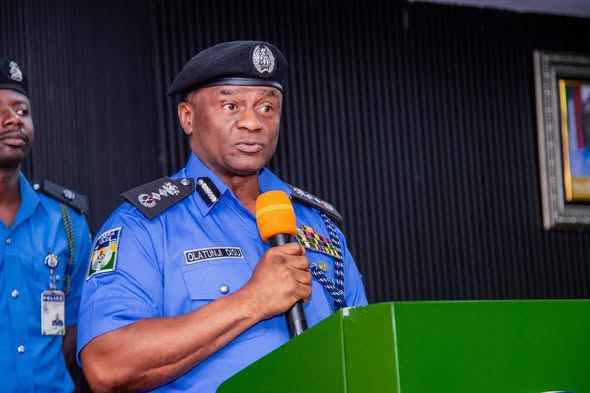
The Inspector General of Police, Olatunji Disu, has ordered the posting of senior officers to various strategic positions across the Nigeria Police Force as part of efforts to strengthen operational efficiency, enhance leadership capacity and improve service delivery nationwide.

The postings, according to a statement on Tuesday by the  Force spokesman, DCP Anthony Placid, are in line with the police commitment to an effective command structure and strategic deployment of personnel across commands, formations and departments.

Under the new arrangement, he said AIG Ado Emmanuel was posted to Research and Planning, Force Headquarters, Abuja; AIG Joseph Eribo to the Department of Armament; AIG Miller Dantawaye to the Department of Operations; AIG Henry Ifeanyi Uche to the Department of Training and Development; AIG Olanrewaju Peter Ogunlowo to Police Accounts and Budget; while AIG Dahiru Mohammed was deployed to Zone 15, Maiduguri.

“Similarly, AIG Dankombo F. Morris was posted to Zone 4, Makurdi; AIG Bello Shehu to Zone 14, Katsina; AIG Ibrahim Balarabe Maikaba to the Department of Legal Services; AIG Ahmed Musa to Community Policing; AIG Olohundare Moshood Jimoh to Zone 2, Lagos; AIG Simeon U. Akpanudom to FCID Annex, Lagos; and AIG Haruna Olufemi to the Special Protection Unit, Force Headquarters, Abuja,” the statement added.

The IG also redeployed several Commissioners of Police to state commands and other formations.

CP Haruna Yahaya was posted to Jigawa State Command; CP Betty  Otimenyin to Welfare, Force Headquarters; CP Olugbenga Abimbola to Oyo State Command; CP Yemi John Oyeniyi to Delta State Command; CP Olubode Ojajuni to Ogun State Command; CP Michael  Falade to Ekiti State Command; and CP Yakubu Dankaro to Adamawa State Command.

Others include CP Muhammed Ahmed to the Federal Capital Territory Command; CP Olatunji  Fatai to Lagos State Command; CP Morkwap  Dongshal to Taraba State Command; CP Ahmed  Bello to Zamfara State Command; CP Umar Fagge to Katsina State Command; and CP Hayatu Shaffa Hassan to Sokoto State Command.

See also  Tinubu to swear in Disu as IG Wednesday

In further postings, CP Akan Ezima was named Director, NPF-NCCC, Abuja; CP Abbas Sule to the Special Protection Unit; CP Ajo Geoffrey Ordue to INTERPOL, Abuja; CP Mnwadiogbu Cletus as Deputy Commandant, POLAC; CP Danjuma I. Yahaya to General Investigation, FCID Annex, Kaduna; CP Sheikh M. Danko to FCID Annex, Lagos; and CP Moses Ashu Otta to SWAT, Abuja.

Additional redeployments include CP Abdulrahim A. Shuaibu to Eastern Ports Authority; CP Sarah Ehindero to Administration, FCID Abuja; CP Edwin Ogbegbghagha to Provost, Force Headquarters; CP Preye R. Egbe to INEC, Abuja; CP Adebisi Bola Lateef to Master Printing, Lagos; CP Bolou O. Etete to Community Policing, Research and Planning; and CP Ojugbele E. Adebola to General Investigation, FCID Alagbon, Lagos.

Also affected are CP Fidelis N. Ogarabe, posted to INTERPOL Annex, Lagos; CP Theodore C. Obasi as Deputy Commandant, Police College, Ikeja; CP Eloho E. Okpoziakpo to Special Fraud Unit, Ikoyi; CP Kayode Uthman Magaji to K9, Dei-Dei; CP Markus Ishaku Basiran to Courses, POLAC; CP Mohammed Babakura to Administration, Department of Operations; CP Silas Bamidele Aremu to Safer Highway, Department of Operations; CP Magaji Ismaila to Community Safety and Crime Prevention; and CP Rebecca Uchenna Okereke as Director of Music, Force Headquarters, Abuja.

“Tunji Disu charges the officers to bring their wealth of experience to bear in their respective assignments and to uphold the highest standards of professionalism, discipline, and service in the discharge of their duties,” he said

punch.ng

FOLLOW US ON:

FACEBOOK

TWITTER

PINTEREST

TIKTOK

YOUTUBE

LINKEDIN

Continue Reading

News

Afenifere Diaspora faults APC over security, election concerns

Published

on

The Afenifere Diaspora USA has criticised the All Progressives Congress over what it described as worsening insecurity in the country and alleged attempts to weaken Nigeria’s electoral framework ahead of the 2027 general election.

The group, in a statement made available to The PUNCH, dated March 20, 2026, warned that the continued escalation of violent attacks across parts of the country could lead to deeper national crises if urgent measures were not taken.

The statement, jointly signed by the Chairman, Prof Sikiru Fadairo, and the Secretary, David Adenekan, stressed that national security remained a constitutional obligation of the government, noting that failure to adequately address the situation could threaten the unity of the country.

The group said, “The current escalation of insecurity across the country is a dangerous trend that may plunge the nation into a sectarian war if not properly managed and nipped in the bud.”

It emphasised that the protection of lives and property remained a core responsibility of the government, as clearly stated in Section 14(2)(b) of the 1999 Constitution of the Federal Republic of Nigeria.

The section provides that “The security and welfare of the people shall be the primary purpose of government.”

It further referenced provisions contained in Chapter IV, Sections 33 to 46 of the Constitution, which guarantee fundamental human rights, including the rights to life, dignity, personal liberty, and privacy.

Afenifere Diaspora USA also condemned the activities of armed groups operating in parts of the country, alleging that recent attacks in the North-East had resulted in significant casualties and displacement of residents.

See also  US warns urges citizens to reconsider planned trip to Nigeria over kidnapping, poor healthcare

The group said, “The recent violent attacks by terrorist groups degrade the status of Nigeria as a sovereign nation. It was widely reported that in March 2026, militants linked to the Islamic State West African Province launched coordinated attacks in the North-East, overrunning several military formations in Borno State, including communities such as Delwa, Goniri, Kukawa and Mainok.”

It added, “An intolerably high figure of 65 military officers were reportedly killed in the attacks, while about 300 persons were said to have been kidnapped. Are acts of killing people in thousands and sacking those fleeing from their villages not tantamount to genocide or ethnic cleansing?”

The group also questioned what it described as attempts to influence international narratives regarding the security situation in Nigeria, alleging that public funds were used to engage foreign lobbyists.

It stated, “Is the current administration not always quick to change the narrative that the killings in Nigeria are merely ‘normal’ incidents that occur in any society, including the unjustifiable expenditure of a whopping sum of nine million dollars from taxpayers’ funds to hire lobbyists in Washington DC to promote the position that there is no genocide or ethnic cleansing in Nigeria?”

On electoral matters, the group criticised the reported removal of the requirement for a candidate to possess a secondary school certificate as part of the eligibility criteria in the Electoral Act, describing the move as detrimental to democratic development.

The statement read, “The decision by members of the National Assembly to expunge from our electoral law the requirement to possess a secondary school certificate is seen as a political charade capable of undermining democratic values and lowering leadership standards in the country.”

See also  Edo final-year student dies in sign-out motorcade crash

Citing Section 131 of the 1999 Constitution, the group noted that one of the requirements to contest for the office of the President is that a candidate must be educated to at least secondary school certificate level or its equivalent.

“In a digital age driven by information technology, Nigeria must not slide backwards into the abyss of ignorance where leadership competence is compromised. Leadership capacity and skilled knowledge are critical in managing the affairs of a modern state,” the statement added.

The group also called for mandatory electronic transmission of election results, insisting that credible elections remained vital to strengthening democracy and ensuring good governance.

It said, “Every lover of democracy, including the international community, must support a system that guarantees mandatory electronic transmission of election results in real time without optional conditions.

“A free and fair general election in 2027 is sacrosanct and must not be negotiated if Nigeria is to deepen its hard-won democracy and ensure accountable leadership.”

punch.ng

FOLLOW US ON:

FACEBOOK

TWITTER

PINTEREST

TIKTOK

YOUTUBE

LINKEDIN

Continue Reading

News

Share terror intelligence with security agencies, Presidency replies Ndume

Published

on

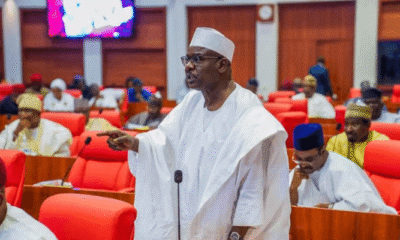
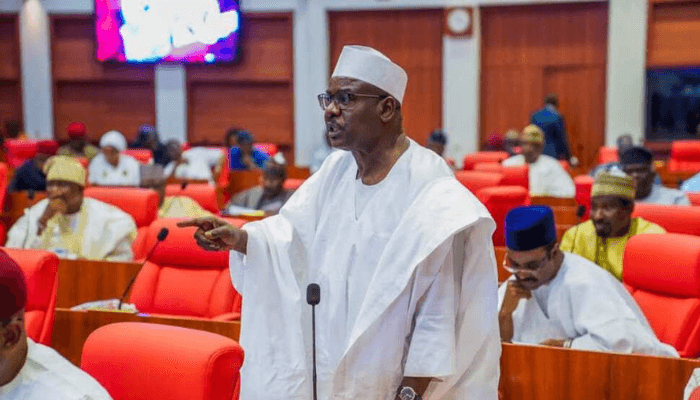
The Presidency has advised Senator Ali Ndume to channel actionable intelligence on terrorism to security agencies rather than making sweeping allegations on television.

Special Adviser to the President on Information and Strategy, Bayo Onanuga, gave the advice on Tuesday while responding to Ndume’s recent television appearance, where he claimed terrorists have informants within the Nigerian society.

In an interview with Vanguard, which was confirmed to PUNCH Online late Tuesday, Onanuga stated that if the Borno South senator possesses specific intelligence about terrorist operations, informants, or planned attacks, such information should be shared with the military and security agencies for operational action.

“If Senator Ndume has credible intelligence about terrorist informants or their mode of operation beyond what is already known to security agencies, the appropriate step is to share this with the Chief of Defence Staff, the National Security Adviser, or relevant intelligence bodies, not to discuss it on television,” Onanuga stated.

The presidential aide emphasised that actionable intelligence requires confidential handling through proper security channels to enable effective response.

PUNCH Online reports that Ndume had appeared on Channels Television, revealing that terrorists use commercial tricycles (Keke NAPEP) to deliver bombs and rely on informants within communities to plan attacks.

“What they do is hit and run. They gather, share information among themselves, and most dangerously, they get information from some citizens, too. They have informants within society,” the senator had stated.

He also criticised government efforts, saying, “The government, I must say, are not walking the talk. Security agencies and soldiers still do not have the training, equipment, ammunition, and motivation they need.”

See also  Tinubu to swear in Disu as IG Wednesday

Onanuga, however, defended the Tinubu administration’s security investments, noting that President Bola Tinubu approved additional equipment and operational support during a security meeting held just before the Maiduguri bombings.

“The President has demonstrated commitment by approving the highest budgetary allocation to defence in the 2026 Appropriation Bill, securing military equipment from France and the United Kingdom, and directing security chiefs to relocate to Maiduguri,” Onanuga stated.

He added that public statements about security gaps, while legitimate as political commentary, become counterproductive when they contain specific operational intelligence that should be classified.

The Presidency’s response comes amid ongoing operations by troops of Operation Hadin Kai in Borno State following the March 16 suicide bombings that killed 23 people and injured 108 others in Maiduguri.

President Tinubu had directed security chiefs to relocate to Maiduguri to oversee operations and approved additional equipment to enhance counter-terrorism capabilities.

Vice President Kashim Shettima visited victims at the University of Maiduguri Teaching Hospital on March 18, assuring enhanced support for security forces.

Ndume, who represents Borno South, where much of the insurgency is concentrated, has been vocal about security challenges in the North-East, often calling for more aggressive military action and better equipment for troops.

The senator had also questioned intelligence failures, asking why terrorists who record their atrocities on TikTok cannot be tracked when ordinary citizens’ phones are easily monitored.

punch.ng

FOLLOW US ON:

FACEBOOK

TWITTER

PINTEREST

TIKTOK

YOUTUBE

LINKEDIN

Continue Reading

Trending