Connect with us

Education

Nigeria’s out-of-school crisis demands $345m yearly – Alausa

Published

on

The Federal Government on Tuesday revealed that Nigeria requires an annual investment of $345m to effectively re-integrate and provide essential skills to the approximately 15 million out-of-school children across the country.

The Minister of Education, Dr Tunji Alausa, made this disclosure during the inaugural Federal Ministry of Education Private Sector Breakfast Convening held in Lagos.

According to the minister, the $345m figure is based on current per capita spending required to address the needs of the 15 million children currently outside the formal school system.

He disclosed that 25 per cent of children aged 5-14 were out of school in the country, with the figure rising to 41 per cent in the North-East and North-West regions.

Alausa emphasised that while the government had made significant strides through the Nigeria Education Sector Renewal Initiative, substantial additional investment is needed to complement public efforts.

“The challenges in the Nigerian education sector present a marked opportunity to increase access, improve quality, and enhance systems,” the minister stated.

He noted that education remains a central pillar of the “Renewed Hope” development plan, which targets a $1tn economy by 2030.

Alausa said to address the challenge of skilled labour, the government had so far disbursed N10.6bn to Technical and Vocational Education and Training centres across the country, and paid N3.4bn to trainees.

He explained that the government received 1.3 million applications for the TVET programme, 160,000 students matched to training centres nationwide and 72,000 students currently enrolled using verifiable biometrics.

The Federal Government has invested over N156bn to rehabilitate 18 medical schools and some engineering schools across the country, according to the minister.

See also  FG unveils entrepreneurship certification in 14 varsities

“N70bn has been spent on laboratory and technology workshop rehabilitation, and N100bn on new hostels across 50 institutions,” he said.

Alausa also revealed that the government had set up the Student Venture Capital Grant, which is aimed at supporting innovation by Science, Technology, Engineering, Mathematics, and Medicine/Medical Science students.

He added that the Federal Government had set aside N50m equity-free grant, and 65 STEMM students had been shortlisted.

Alausa disclosed that the Federal Government was partnering with the Italian government to organise an educational conference, where $15bn will be raised to fund foundational learning in 90 countries across the world.

“And this conference is going to raise $5bn with another catalytic funding of about N10bn, with a total of $15bn to support foundational learning in 90 countries across the world,” he asserted.

The minister urged private sector leaders to align their resources with national education priorities through the upcoming Education Sector Wide Approach, which promises transparent reporting and strong governance.

The Minister of State for Education, Prof Suwaiba Ahmad, described the convening as a strategic platform to deepen engagement with the private sector.

“Government alone cannot achieve the scale of transformation required. The private sector remains a critical partner in driving innovation, expanding infrastructure, and supporting skills development,” she said.

The ministry highlighted several achievements under the NESRI framework, including: the integration of 1 million children into formal education systems and the training of 1,400 Tsangaya teachers for Almajiri education, the mapping of 32 million students and 221,000 schools across 21 states to improve data and digitisation and the disbursement of N128bn in institutional fees through the Nigeria Education Loan Fund, benefiting over 1.1 million students.

See also  Inside illegal Lagos nursing college run by poultry farmer

To bridge the funding gap, the government is promoting the Global Partnership for Education Multiplier, an innovative tool that matches private contributions 1-to-1 with GPE and partner funds.

Evidence presented at the roundtable suggested that every additional year of schooling in Nigeria leads to a 5.7 per cent increase in earnings and a 6 per cent increase in productivity, underscoring the economic imperative of the proposed investments.


punch.ng

FOLLOW US ON:

FACEBOOK

TWITTER

PINTEREST

TIKTOK

YOUTUBE

LINKEDIN

Continue Reading
Click to comment

Leave a Reply

Your email address will not be published. Required fields are marked *

Education

Abia varsity chancellor tasks new veterinary doctors on food safety, public health

Published

on

The Vice-Chancellor of Michael Okpara University of Agriculture, Umudike, Prof. Ursula Ngozi Akanwa, has charged new veterinary doctors of the University to uphold the ethics and values of their profession while ensuring food safety and safeguarding public health.

Prof. Akanwa gave the charge while addressing graduands of Doctor of Veterinary Medicine (DVM) during the 12th Induction and Oath-taking Ceremony organised by the University in collaboration with the Veterinary Council of Nigeria (VCN) on Wednesday.

The VC, represented by the Deputy Vice-Chancellor Academic, Prof. Nneoma Elechi Obasi, said the induction confers legal rights on the graduands to practice Veterinary Medicine and places on them the responsibility of safeguarding animal health, food systems and public health.

“Today is not merely ceremonial; it marks the transition of our graduands into professionals entrusted with the health of animals, the safety of our food systems and the protection of public health,” she said.

She stressed that the ceremony reflects the University’s mandate to produce professionals with competence, character and conscience, describing the new veterinarians as critical to agricultural growth and national food security.

The VC also commended the Veterinary Council of Nigeria for granting full accreditation to the University’s Veterinary programme and acknowledged the partnerships with industry operators that support practical training of MOUAU Vet. students.

On its part, the Veterinary Council of Nigeria, led by its President, Prof. Mathew Adamu and Ag. Registrar, Dr. Oladotun Fadipe, while issuing practising licenses to the graduands, congratulated the University for regularly churning out quality DVM Graduands, who are found worthy in learning and character.

See also  Glitched grades: WAEC in crisis over result errors

A total of 48 DVM Graduands were inducted into the profession, with Dr Chimezie Amarachi Blessing emerging as the overall best graduating student, and Dr Aniorji Sandra Chinonso won the Farm Alert Award.

punch.ng

FOLLOW US ON:

FACEBOOK

TWITTER

PINTEREST

TIKTOK

YOUTUBE

LINKEDIN

INSTAGRAM

Continue Reading

Education

School closures threaten national stability, FG warns

Published

on

The Secretary to the Government of the Federation, Dr George Akume, on Wednesday warned against the continued closure of schools due to insecurity, saying it poses a serious threat to Nigeria’s education system and long-term national stability.

Akume said shutting down schools in unsafe areas not only disrupts learning but also deepens the country’s education crisis.

A statement by Akume’s media aide, Yomi Odunuga, said the SGF spoke in Abuja at the first triannual meeting of the Nigerian Inter-Religious Council, held under the theme, “Religious Literacy for National Cohesion.”

The SGF called for the strengthening of government policies on safe schools and violence-free learning environments.

“The SGF also raised concerns over insecurity in the education sector, warning that attacks on schools and prolonged closures in unsafe areas continue to worsen Nigeria’s education crisis.

“He said government policies on safe schools and violence-free learning environments must be strengthened to protect children and ensure uninterrupted learning,” the statement partly read.

According to him, it was impossible to encourage children to learn when schools were not secure.

“A child cannot learn fraternity in fear; a nation cannot preach literacy while schools are under threat,” he said.

Akume emphasised that while religious studies are already part of the school curriculum, priority must now be placed on improving teaching quality through better-trained educators, enhanced learning materials and value-based education that promotes tolerance and responsible citizenship.

Beyond education, the SGF urged religious and traditional leaders to play a more active role in preventing violence and fostering unity as the country prepares for the 2027 general elections.

See also  FG unveils entrepreneurship certification in 14 varsities

He said faith-based and traditional institutions must lead efforts in grassroots mobilisation, youth education and peace-building to counter misinformation, stereotypes and identity-based divisions that often trigger conflict.

“The 2027 general elections are fast approaching, and religious and traditional leaders have a moral responsibility to strengthen collaboration, promote tolerance and ensure peaceful coexistence in their communities,” Akume said.

He warned against the manipulation of religion and identity for political or economic gains, noting that such actions often fuel violence and social unrest.

Akume also stressed the importance of combining religious literacy with media and information literacy to combat the spread of falsehoods and hate speech, referencing Nigeria’s collaboration with the United Nations Educational, Scientific and Cultural Organisation on promoting responsible information sharing.

He added that the Federal Government had put measures in place to support religious and traditional institutions in sustaining peace and security ahead of the elections.

The SGF expressed optimism that deliberations at the NIREC meeting would yield practical solutions to strengthen national cohesion, while urging stakeholders to prioritise education and literacy as key tools for peace-building and development.

punch.ng

FOLLOW US ON:

FACEBOOK

TWITTER

PINTEREST

TIKTOK

YOUTUBE

LINKEDIN

INSTAGRAM

Continue Reading

Education

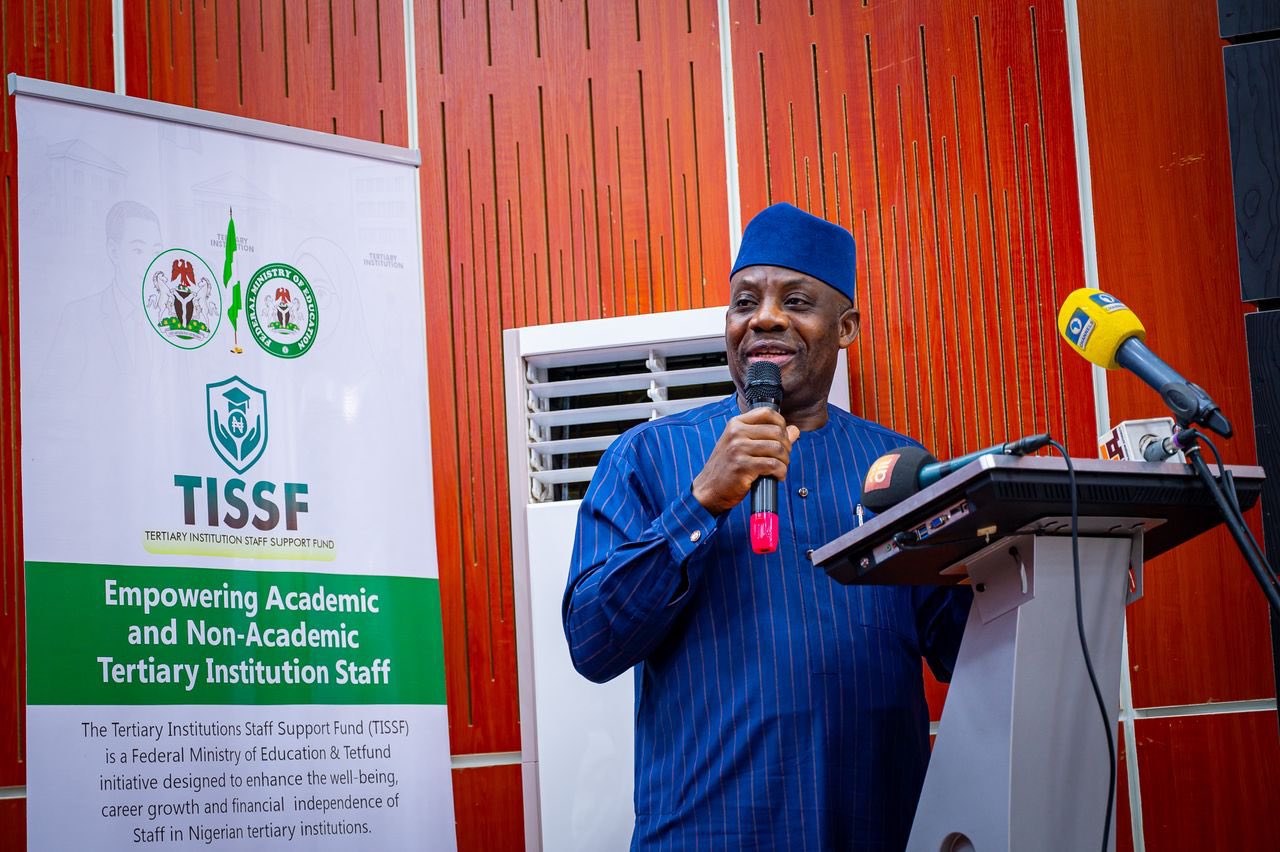
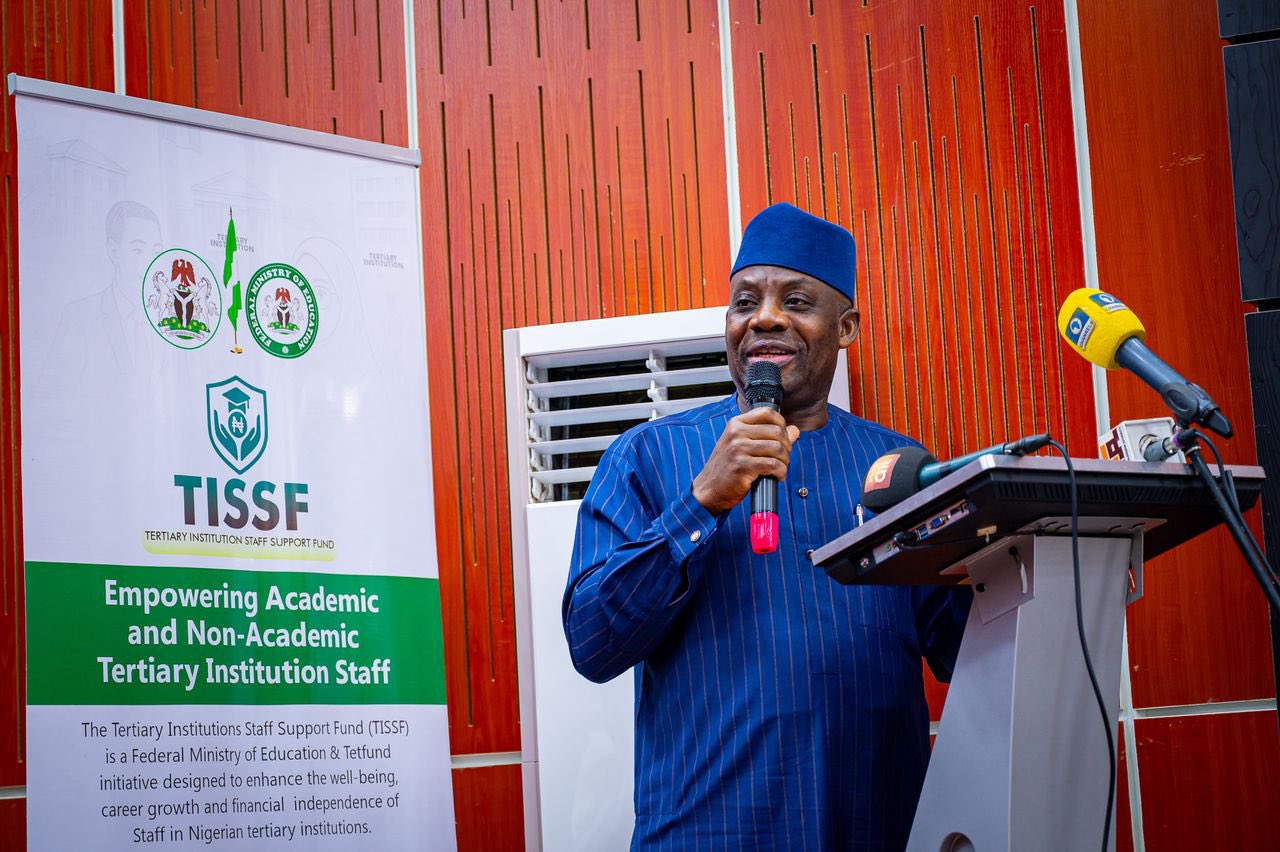
FG loans N11.8bn to 6,842 tertiary institution workers

Published

on

The Federal Government has disbursed N11.8bn to 6,842 academic and non-academic staff across Nigerian tertiary institutions under the Tertiary Institutions Staff Support Fund.

The beneficiaries span 141 institutions, including federal universities, polytechnics, and colleges of education.

The TISSF, launched in August 2025, is a Federal Ministry of Education and TETFund-funded programme dedicated to enhancing the well-being, career development and financial stability of tertiary institution staff across Nigeria.

The joint initiative of the FME and TETFund aims to deliver zero per cent interest loans to enhance the welfare, career development and financial stability of tertiary institution staff.

The fund provides interest-free loans of up to N10m to eligible academic and non-academic staff.

Data published on the website of the Federal Ministry of Education, obtained by our correspondent, showed that there have been 34,000 verified applicants from 219 institutions so far.

Staff members of federal universities constitute the highest number of applicants (59 per cent), followed by those of polytechnics (23 per cent) and colleges of education (18 per cent).

Also under the Nigeria Education Sector Renewal Initiative, 240 e-tricycles are reported to have been distributed across 12 institutions.

Key facts published on the website include: “Loans up to N10m per staff (0% interest); N11.8bn disbursed to 6,842 beneficiaries from 141 institutions.

“34,000 verified applicants from 219 institutions; Federal universities (59%), polytechnics (23%), COEs (18%); minimum five years to retirement required for eligibility.”

Other ongoing programmes under the initiative include the EduRevamp Teacher Platform, a digital training system introduced earlier this year to strengthen educators’ skills, and the School Safety Portal, developed in partnership with the Nigeria Security and Civil Defence Corps to improve security management in schools.

See also  Inside illegal Lagos nursing college run by poultry farmer

The ministry said the EduRevamp platform, launched at the first National Teacher Summit in January 2026, has recorded “37,000 registered users, with 18,000 teachers fully enrolled in its training modules.”

The platform provides audio and video lessons, case studies and certification opportunities for continuous professional development.

The School Safety Portal, created under the School Safety Act of 2025, currently contains data on more than 156,000 geolocated schools.

punch.ng

FOLLOW US ON:

FACEBOOK

TWITTER

PINTEREST

TIKTOK

YOUTUBE

LINKEDIN

INSTAGRAM

Continue Reading

Trending