Connect with us

Business

Revised Executive Order: FG quietly adjusts oil revenue remittance framework, see details

Published

on

The Federal Government has quietly revised the implementation framework of Executive Order 9 of 2026 on oil revenue remittances, with royalties and taxes to remain under the collection of the Nigerian National Petroleum Company Limited and paid into a newly created account domiciled at the Central Bank of Nigeria, The PUNCH exclusively gathered on Monday.

The adjustment follows high-level deliberations at an implementation committee meeting held last Wednesday, where stakeholders examined practical challenges linked to the order mandating direct remittance of all oil-related revenues into the Federation Account.

Two senior officials involved in the talks, who spoke on condition of anonymity because they were not authorised to comment publicly, said the government was unlikely to rescind the directive but had begun modifying its execution to reflect industry realities.

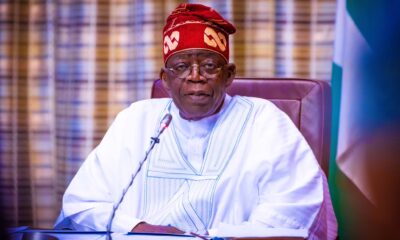
Last month, President Bola Tinubu issued an executive order directing that royalty oil, tax oil, profit oil, profit gas, and other revenues due to the Federation under production sharing, profit sharing, and risk service contracts be paid directly into the Federation Account.

The order also scrapped the 30 per cent Frontier Exploration Fund under the PIA and discontinued the 30 per cent management fee on profit oil and profit gas retained by the NNPC. Effective February 13, 2026, the directive is intended to safeguard oil and gas revenues and strengthen remittances to the Federation Account.

According to the directive, the President invoked Section 5 of the Constitution of the Federal Republic of Nigeria (as amended), anchored on Section 44(3), which vests ownership and control of all minerals, mineral oils, and natural gas in the Government of the Federation.

Tinubu said excessive deductions, overlapping funds, and structural distortions in the oil and gas sector had weakened remittances to the Federation Account and warned that the practice must end to protect national revenue.

“For too long, excessive deductions, overlapping funds, and structural distortions in the oil and gas sector have weakened remittances to the Federation Account. When revenues meant for federal, state, and local governments are trapped in layers of charges and retention mechanisms, development suffers. That must end,” he said on his verified X handle.

He also approved the constitution of a joint project team to execute integrated petroleum operations, with the commission serving as the interface with licensees and lessees where upstream and midstream operations are fully combined.

Members of the committee include the Minister of Finance and Coordinating Minister of the Economy; the Attorney-General of the Federation and Minister of Justice; the Minister of Budget and National Planning; and the Minister of State, Petroleum Resources (Oil). Other members are the Chairman, Nigeria Revenue Service; a representative of the Ministry of Justice; the Special Adviser to the President on Energy; and the Director-General, Budget Office of the Federation, who serves as secretary.

See also  CCB quizzes OSOPADEC leadership over alleged N463m misappropriation

Following last week’s meeting, the government allowed the NNPC to continue commercialising crude barrels before remitting proceeds to the Federation Account, instead of the Nigerian Upstream Petroleum Regulatory Commission handling the process.

One source said the modification became necessary because royalties and taxes are typically settled in barrels of crude oil rather than cash, making direct remittance impractical.

“The government is not looking likely to reverse the order on oil revenue remittance, but they are likely to change the mode of implementation. That is what the situation is currently looking like.

“So the implementation now is that they may not come to read any executive order on the issue. But the implementation is that the order said taxes and royalties should be paid to the federation account directly. But now they have realised that this has already been done and royalties and taxes are not paid in dollars or naira but with barrels of crude oil, which must first be lifted and commercialised before revenue can be realised,” the official said.

He added, “So the implementation now is that the NNPC will continue to lift and sell the crude on behalf of the government and then remit proceeds accordingly. That is the likely operational framework going forward.”

Under the evolving structure, royalties and taxes would pass through the new CBN account, supervised by the Office of the Accountant-General of the Federation, rather than existing regulatory channels.

The official said discussions on profit oil remittances were still ongoing, but cautioned that the framework could undermine reforms introduced under the Petroleum Industry Act, which granted the national oil company commercial autonomy.

“That is the new mode of implementation. But the 30 per cent that comes from profit oil. Instead of the NNPC collecting it and then remitting to the government, the government will collect everything, and then the government will pay back the amount spent on the cost of operations. So those are the level of discussions and the kind of discussions that are ongoing.

“This new funding style will still affect operations at the NNPC and take us back to what was happening before the Petroleum Industry Act. And that was what the PIA tried to cure. During that period, it led to a backlog of issues, and the NNPC couldn’t fulfill its responsibilities. It was subjected to the government budget and the likes, and it is difficult to take back refunds from the government,” he said.

See also  Fuel scarcity looms as NUPENG begins nationwide strike Monday

He recalled that the previous arrangement created severe financial strain. “The industry ran into a problem that period, and the system owed national traders and companies over $6bn in cash call arrears.

“Government was also taking everything during that period, and the company would be waiting for cash calls and our own operations. Then the PIA solved all the issues. But the new order is now bringing back the issues. Now that the PSC has been attacked, the government will still come to joint ventures. Discussions are ongoing now on what the company is spending per month. So an amount would be released every month to run operations,” he added.

Another official confirmed the revised implementation but warned that tighter government control could weaken regulatory independence and efficiency.

“Regulatory agencies are supposed to operate independently and should not depend on government funding. But what we are seeing is increasing interference. This could condition the NNPC to rely on government releases to meet its obligations,” he said.

Drawing parallels with past refinery policies under former President Olusegun Obasanjo, he noted that dedicated turnaround maintenance funds were once diverted with reimbursement promises that never materialised, contributing to refinery decline.

He also warned that removing frontier exploration funding could undermine long-term energy security.

“Frontier exploration is a government responsibility because private companies do not take those risks. If the funds are removed, exploration activities will decline. That means we will only produce from existing discoveries, and once those reserves are depleted, Nigeria’s future as an oil-producing country could be threatened,” he said.

On operational sustainability, he cautioned that uncertainty over funding could have labour implications.

“The current expectation is that the government will begin to fund operational costs, including salaries and emoluments, as promised. But if this does not happen, it is only a matter of time before companies begin to consider difficult decisions. Job losses could occur if the funding structure is not sustainable,” he warned.

He added that another high-level meeting had been scheduled later in the week, involving the Nigerian Upstream Petroleum Regulatory Commission, the Federal Ministry of Finance, and industry operators.

See also  2027: How coalition can stop Tinubu – Osuntokun

Confirming the phased approach in a statement on Monday, the Minister of Finance and Coordinating Minister of the Economy, Wale Edun, said a structured transition would ensure that direct payments by contractors into the Federation Account do not disrupt existing agreements.

“With respect to Section 2, Sub-section 3 of Executive Order 9 on direct payments by contractors into the Federation Account, the committee agreed that this transition must be implemented in a manner that respects existing contractual and financing arrangements, and maintains investor confidence,” the statement said.

Edun added that “until the committee issues detailed guidelines, contractors will continue to remit under the current process. During the transition period, the committee will issue clear, standardised guidance to ensure an orderly changeover.”

He said a Technical Subcommittee would develop detailed guidelines within three weeks and commence a review of the Petroleum Industry Act to address fiscal anomalies.

“The committee will continue to provide coordinated guidance and timely updates as implementation progresses. We commend the cooperation of all stakeholders in advancing the President’s efforts to ensure that Nigeria’s petroleum resources deliver tangible, measurable benefits to citizens across the Federation,” the statement concluded.

Meanwhile, an NNPC official warned that the directive could disrupt production sharing contract operations and affect between 400 and 500 personnel dedicated to such activities.

“It will affect us to a great extent because we have staff who are dedicated to these lines of activity. We have no fewer than 400 to 500 staff whose daily work is focused on production sharing contracts. These are professionals working on rigs, platforms, seismic operations, and cost monitoring. We are talking about personnel across 39 PSC sites, out of which 14 are producing, and about five major sites contribute nearly 80 per cent of output under these arrangements.”

Commenting earlier, a Professor of Economics at Babcock University, Sheriffdeen Tella, said the directive could increase funds available to governments but warned about utilisation.

“It means there would be more money to share for development, although they have not been using it to develop the states. They have been sharing for some states, but we haven’t seen improvement. Some states have done well, but many others haven’t done much.

But the new order simply means that more money will be available to the federation account and more allocation for what the government wants to use it for.”

punch.ng

FOLLOW US ON:

FACEBOOK

TWITTER

PINTEREST

TIKTOK

YOUTUBE

LINKEDIN

TUMBLR

INSTAGRAM

Continue Reading
Click to comment

Leave a Reply

Your email address will not be published. Required fields are marked *

Business

CBN bets on easing inflation, FX stability for rate cut

Published

on

The Central Bank of Nigeria reduced the Monetary Policy Rate by 50 basis points to 26.5 per cent on 24 February 2026, after the Monetary Policy Committee’s 304th meeting. SAMI TUNJI examines the disinflation trends, foreign exchange stability and banking sector reforms supporting the decision, alongside the fiscal risks that could challenge the outlook

When the Monetary Policy Committee met for its 304th session in Abuja, it delivered what several analysts had expected by cutting the Monetary Policy Rate by 50 basis points to 26.5 per cent. However, the committee kept other key settings unchanged, retaining the standing facilities corridor around the MPR at +50 and -450 basis points and leaving the Cash Reserve Requirement for deposit money banks at 45 per cent.

The CBN’s policy shift rests on one claim and one constraint. The claim is that disinflation is holding and is being supported by the delayed effect of earlier tightening, exchange rate stability and improving food supply. The constraint is that the same environment still carries risks, including fiscal releases and election-related spending that could push inflation up again.

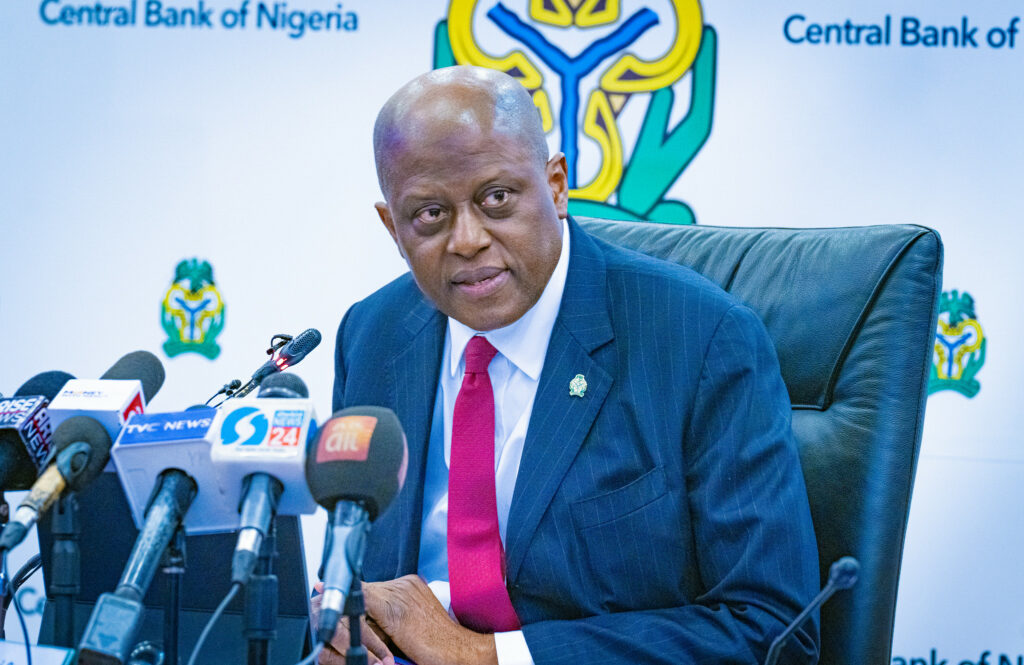
CBN Governor Olayemi Cardoso, speaking during a press briefing after the meeting, signalled that the rate cut was not a declaration that inflation risk had ended. When asked if Nigeria could now “go to sleep on inflation”, he said, “Caution is our watchword in the Central Bank.”

Disinflation as key trigger

Analysts at Afrinvest earlier noted that Nigeria’s “disinflation trend, alongside sustained accretion to external buffers (foreign exchange reserves up 2.4 per cent since November to $47.8 bn), continued naira appreciation (up approximately 6.7 per cent to N1,355.00/$1.00 in the official market), and stable energy goods prices (notably, PMS), provides the CBN with latitude for policy flexibility.”

Nigeria’s headline inflation rate declined marginally to 15.10 per cent in January 2026, down from 15.15 per cent recorded in December 2025, according to the Consumer Price Index report released by the National Bureau of Statistics. This decline came despite earlier projections by analysts that Nigeria’s inflation could climb to 19 per cent in January. The NBS report showed that the Consumer Price Index fell to 127.4 in January from 131.2 in December, representing a 3.8-point decrease. The NBS said the January headline inflation rate was 0.05 percentage points lower than the rate recorded in December. The inflation figure was the lowest in five years and two months, since November 2020, when inflation stood at 14.89 per cent. The MPC described January 2026 as the eleventh consecutive month of decline in year-on-year headline inflation.

The disinflation story is clearer when broken down. Food inflation declined 8.89 per cent in January 2026 from 10.84 per cent in December 2025, which the MPC linked to improved domestic food supply, sustained exchange rate stability and base effects. The food inflation figure marked the first single-digit reading in 128 months and the lowest since August 2011, when food inflation stood at 8.66 per cent.

See also  Dangote refinery - No plan to shut petrol unit

Core inflation eased 17.72 per cent from 18.63 per cent, driven largely by a moderation in Information and Communication services. The MPC also pointed to a short-run indicator. Month-on-month headline inflation fell to negative 2.88 per cent in January 2026 from 0.54 per cent in December 2025. A negative monthly reading suggests that the direction of prices in that month was not just slower growth but an outright decline, even if the durability of that pattern still needs to be tested across subsequent prints.

Speaking at the press briefing after the 304th MPC meeting, Cardoso said the continued deceleration in inflation was driven mainly by the “continued effects of the contractionary monetary policy”, foreign exchange market stability, robust capital inflows and improvement in the balance of payments. He added that these conditions suggested that prior tightening had helped anchor expectations. While the disinflation was central to why the committee saw room to reduce the benchmark rate, it did not loosen system liquidity aggressively as other parameters were retained.

The MPC flagged fiscal risk as releases from the federation account increase, which could pose upside risks to inflation. If fiscal expansion accelerates, it can increase liquidity and weaken the disinflation trend, particularly in an economy where supply constraints are common. In that scenario, the CBN would face a choice between defending disinflation with tighter policy or tolerating higher inflation to protect growth and credit conditions. This is why the cut looks like an incremental test rather than a clear start of a long easing cycle.

FX stability, reserves and recapitalisation

The MPC also linked its disinflation outlook to sustained stability in the foreign exchange market and stronger external buffers. Cardoso disclosed that gross external reserves rose to $50.45bn, providing import cover of 9.68 months for goods and services. The CBN tied reserve accretion to both real-economy flows and confidence. He pointed to higher export earnings and increased remittance inflows as drivers that contributed to foreign exchange stability and investor confidence. Cardoso also referenced favourable trade developments, a current account surplus, rising non-oil exports and increasing diaspora remittances.

The CBN further welcomed the newly issued Presidential Executive Order 09, which redirects oil and gas revenues into the Federation Account, and said the committee acknowledged its potential impact in improving fiscal revenue and reserve accretion. For monetary policy, the relevance is not the politics of the order but the mechanics. If more oil and gas revenue predictably flows through the federation account, fiscal planning can improve, and external buffers can strengthen, particularly if inflows support reserves and reduce pressure for deficit monetisation. However, the same story carries a risk. Higher inflows can also encourage higher spending if fiscal discipline is weak, and the MPC already warned that fiscal releases, including election-related spending, could push inflation up.

See also  FG moves to share electricity subsidy costs with states

Cardoso also laid out a list of risks that can disrupt the external stability underpinning the rate cut. He cited the possibility of global shocks, uncertainties around oil prices, and the effect of pre-election spending if not contained.

The CBN governor further noted that banking sector indicators remained within regulatory thresholds and described the sector as resilient. He noted progress in recapitalisation, stating that 20 banks had fully met the new minimum capital requirements and that a further 13 were at advanced stages of their capital raising processes, which he said were expected to conclude within the stipulated time. He also noted that banks raised N4.05tn in verified and approved capital ahead of the 31 March 2026, recapitalisation deadline set by the CBN. The PUNCH observed that this figure was nearly double the N2.4 tn reportedly raised as of April 2025. Cardoso said N2.90tn of the amount, representing 71.6 per cent, was mobilised domestically, while N1.15tn, equivalent to 28.33 per cent, came from foreign participation.

“In summary, 71.67 per cent is domestic mobilisation and 28.33 per cent is foreign participation. This balance, in my view, represents a mix of domestic and foreign, which signals broad investor engagement and confidence in the sector,” Cardoso said.

The CBN governor also had to address stability risks tied to institutions under intervention. Cardoso said depositor funds in those institutions remain secure and that operations continue under close supervisory and regulatory oversight. He said this to prevent recapitalisation anxieties from turning into deposit flight or market rumours, both of which can disrupt the transmission of monetary policy.

A further stability issue is the payments and fintech ecosystem. The governor said the CBN recognised the importance of innovation but would ensure that risks to financial stability were properly managed. “We are advancing work already on a very comprehensive framework for digital assets,” Cardoso said, noting that the process would involve consultation and scrutiny to ensure transparency and long-term resilience. He disclosed that there are over 430 licensed fintech operators in Nigeria and described the segment as systemically important, adding that the CBN was strengthening supervisory oversight to address cyber threats and other emerging risks.

Likely impact of rate cut on Nigeria’s economy

In a statement, the Minister of Finance and Coordinating Minister of the Economy, Mr Wale Edun, welcomed the CBN’s decision to cut the MPR by 50 basis points to 26.5 per cent, describing it as a signal of growing confidence in the nation’s economic stabilisation. He noted that the decision reflects “strong coordination between fiscal and monetary authorities as the country transitions from stabilisation to economic consolidation”.

See also  Ending over-the-counter antibiotics sales to tackle antimicrobial resistance

Edun explained that the rate cut provides the government with “fiscal space to accelerate investment in infrastructure, energy, agriculture and social services”. He added, “For businesses, it improves access to credit, supports private sector investment, and strengthens job creation in the real economy.”

The Director-General of the Nigeria Employers’ Consultative Association, Adewale Oyerinde, earlier told The PUNCH that the marginal cut indicated that monetary authorities were responding to sustained pressures facing businesses.

“The marginal reduction in the benchmark interest rate represents a cautious but noteworthy signal that monetary authorities are beginning to respond to the sustained pressures facing businesses and the productive sector,” Oyerinde said. He added, “While the 50 basis point reduction may not immediately translate into significantly lower lending rates, it reflects a gradual shift toward supporting economic growth without undermining price stability.”

Oyerinde stressed that the overall policy stance remained tight due to the retention of the Cash Reserve Ratio at 45 per cent for commercial banks and other liquidity controls. “With a substantial portion of bank deposits still sterilised, the capacity of financial institutions to expand credit to the real sector may remain constrained in the near term,” he said.

In a policy brief shared with The PUNCH, the Director of the Centre for the Promotion of Private Enterprise, Dr Muda Yusuf, described the rate cut as growth-supportive but warned that weak policy transmission and fiscal vulnerabilities could blunt its impact. “This policy direction is appropriate and growth-supportive. It reflects improving macroeconomic fundamentals and reinforces confidence in the economy’s stabilisation trajectory,” Yusuf said. He cautioned that lending rates might remain elevated due to structural constraints, stressing, “Unless these structural rigidities are addressed, the benefits of monetary easing may not fully translate into lower borrowing costs for manufacturers, SMEs, agriculture, and other productive sectors.”

Yusuf added that fiscal consolidation remained the missing anchor. “Without fiscal consolidation, monetary easing could be undermined by continued fiscal pressures and crowding-out effects in the financial system,” he said.

Looking ahead, Cardoso said the outlook suggests that “the current momentum of domestic disinflation will continue in the near term”, supported by exchange rate stability and improved food supply. However, he warned that “increased fiscal releases, including election-related spending, could pose upside risk to the outlook.” He reaffirmed the MPC’s commitment to “an evidence-based policy framework, firmly anchored on the Bank’s core mandate of ensuring price stability, while safeguarding the soundness and resilience of the financial system.”

punch.ng

FOLLOW US ON:
FACEBOOK

TWITTER

PINTEREST

TIKTOK

YOUTUBE

LINKEDIN

TUMBLR

INSTAGRAM

Continue Reading

Business

Net reserves jump 772% to $34.8bn in two years

Published

on

The Governor of the Central Bank of Nigeria, Olayemi Cardoso, has said Nigeria’s net foreign exchange reserves rose sharply to $34.80bn at the end of 2025, representing a 772 per cent increase from $3.99bn recorded at the end of 2023, and signalling what he described as a significant strengthening in the country’s external buffers.

In a press statement issued by the CBN on Monday, the apex bank said the improvement in both gross and net reserves reflected “stronger external sector fundamentals and sustained policy reforms.”

Gross reserves refer to the total stock of foreign assets held by the Central Bank of Nigeria, including foreign currencies, gold, and other external assets. Net reserves, however, strip out short-term liabilities and obligations, providing a clearer picture of the portion of reserves that is readily available to defend the naira and meet external commitments.

Cardoso had earlier disclosed at the post-Monetary Policy Committee briefing on February 24, 2026, that Nigeria’s gross external reserves stood at $50.45bn as of February 16, 2026. Providing further clarity over the weekend, he said the net foreign exchange reserves as of the end of December 2025 rose to $34.80bn.

The press statement read, “The Governor of the Central Bank of Nigeria, Mr Olayemi Cardoso, has stated that Nigeria’s gross and net foreign reserves showed significant improvement at the end of 2025, reflecting stronger external sector fundamentals and sustained policy reforms.

“Following his disclosure at the post-Monetary Policy Committee press briefing on Tuesday, February 24, 2026, where he said the country’s gross external reserves stood at $50.45bn as of February 16, 2026, Mr Cardoso, at the weekend, said the net foreign exchange reserves, as of the end of December 2025, rose to $34.80bn.”

See also  Counter-terrorism campaign: FG moves to fast-track trial of 5,000 insurgents

According to the CBN governor, the figures “emphasised the benefits of increased transparency and credibility in foreign exchange management, boosting investor confidence, attracting stronger FX inflows, and improving reserve management practices aimed at preserving capital, ensuring liquidity, and supporting long-term sustainability.”

He noted in the statement that the improvement represents “a substantial strengthening in both the level and quality of Nigeria’s external buffers over the past three years.”

The statement disclosed that net reserves increased sharply from $3.99bn at the end of 2023 to $34.80bn at the close of 2025, which the governor described as a fundamental improvement in reserve quality. He added that the 2025 net reserve position alone exceeded the total gross reserves recorded at the end of 2023, which stood at $33.22bn.

Cardoso further stated that net reserves rose from $23.11bn at the end of 2024 to $34.80bn at the end of 2025. Over the same period, gross external reserves increased to $45.71bn from $40.19bn, representing a rise of $5.52bn.

He said the expansion highlighted Nigeria’s enhanced capacity “to meet external obligations, support exchange rate stability and reinforce overall macroeconomic resilience.”

Describing the end-2025 reserve position as a strong validation of the bank’s ongoing reforms and external sector adjustments, Cardoso reaffirmed the commitment of the Central Bank of Nigeria to maintaining adequate reserve buffers.

He stated that the apex bank would continue “supporting orderly foreign exchange market operations, enhancing confidence in Nigeria’s external position and sustaining macroeconomic stability in line with its statutory mandate.”

The PUNCH earlier reported that the CBN governor disclosed that Nigeria’s gross external reserves hit the highest level in 13 years by mid-February 2026.

See also  NNPCL reiterates 2m bpd oil output target by 2027

Speaking during the Monetary Policy Committee briefing in Abuja last week, Cardoso said the reserve build-up was supported by favourable trade developments, a healthy current account surplus, rising non-oil exports, and increased diaspora remittances.

He attributed the gains to improved market confidence. “Underpinning all this, quite frankly, is market confidence. Without market confidence, no matter what you do, you’ll find you will significantly sub-optimise,” Cardoso said.

He added that the CBN had engaged widely with international investors, made commitments, and ensured policy consistency to engender positive market sentiment.

punch.ng

FOLLOW US ON:

FACEBOOK

TWITTER

PINTEREST

TIKTOK

YOUTUBE

LINKEDIN

TUMBLR

INSTAGRAM

Continue Reading

Business

Petrol may hit N1,000/litre as Dangote hikes price

Published

on

The price of Premium Motor Spirit (petrol) at retail pump stations may soon rise to between N980 and over N1,000 per litre, depending on location nationwide, following a fresh increase in the gantry price by the Dangote Petroleum Refinery, The PUNCH has learnt.

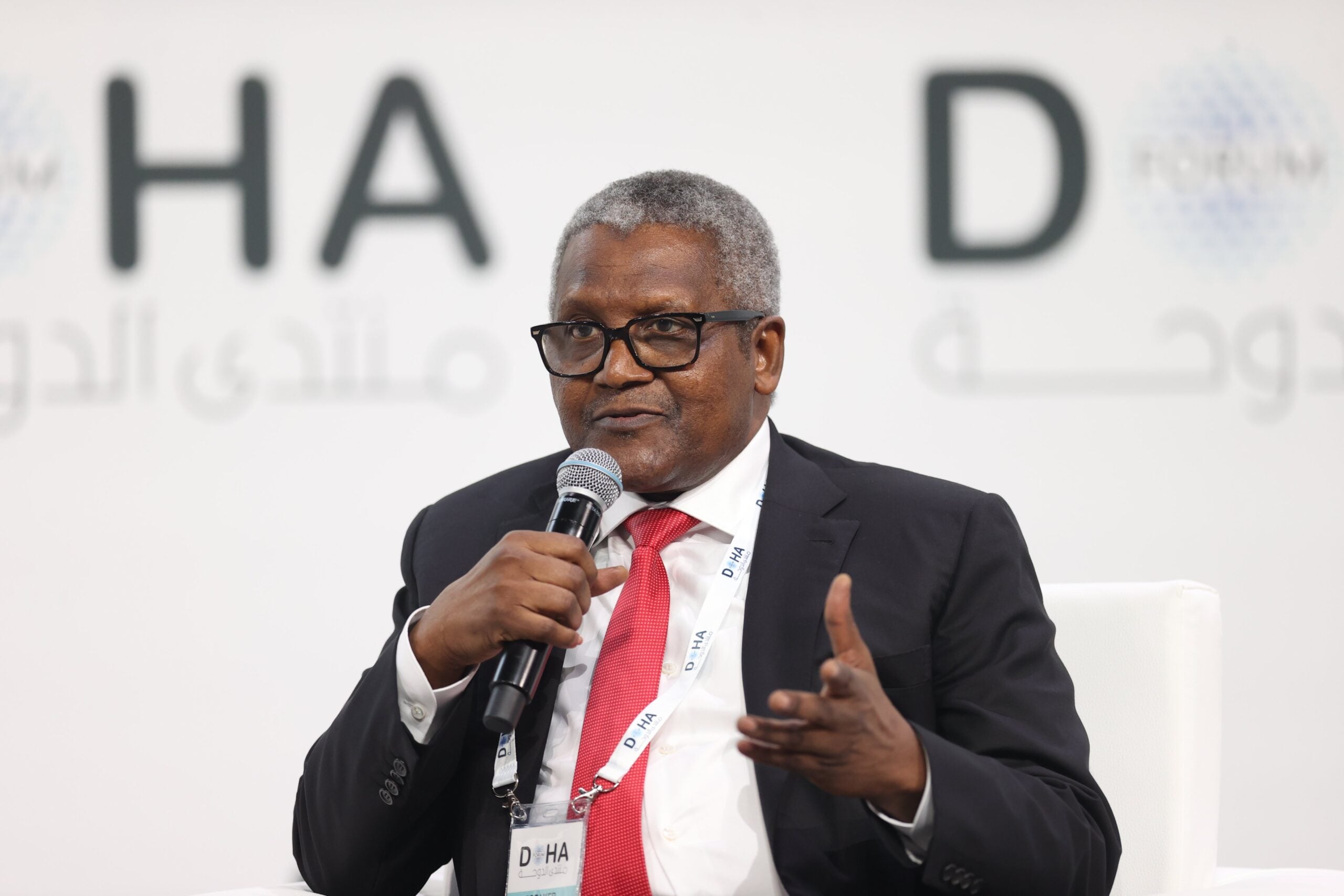
The development comes as the President of the Dangote Group, Aliko Dangote, unveiled plans to invest in electricity generation, alongside expansions into steel production and port infrastructure, as part of a broader ambition to industrialise Africa and strengthen domestic energy security.

The National Publicity Secretary of the Independent Petroleum Marketers Association of Nigeria, Chinedu Ukadike, confirmed the likely retail price in a telephone interview on Monday.

“Following the increase by Dangote, the pump price will likely range between N980 and over N1,000 per litre, depending on location and logistics. This is largely the effect of the recent hike in global crude oil prices,” Ukadike said.

A senior official at the refinery first confirmed the price adjustment, noting that it was driven by volatility in the international crude oil market. “Yes, the price has been reviewed. The new gantry price is now N874 per litre from N774. The review became necessary due to changes in global crude fundamentals and replacement costs,” the official said.

Checks by petroleumprice.ng also showed that the revised rate had been reflected across the downstream value chain, indicating a shift in pricing benchmarks. In a notice to marketers, the refinery stated:

“Dear Valued Customer, we are pleased to inform you that PMS is currently available for purchase. Please be informed that the current price is N874 per litre. Thank you for choosing Dangote.”

The increase followed a temporary suspension of petrol loading operations at the refinery effective midnight on March 2, 2026, after global crude oil prices surged above $80 per barrel. While petrol loading paused, Automotive Gas Oil (diesel) continued to be supplied.

See also  NNPCL reiterates 2m bpd oil output target by 2027

Several depot owners also suspended petrol sales to reassess replacement costs. “Several depot owners halted PMS sales because of the crude rally. The market is already factoring in risk premiums. Nobody wants to sell below replacement cost,” a downstream operator said.

The development comes amid heightened global oil market volatility linked to escalating tensions between the United States and Iran, raising fears of possible supply disruptions around the strategic Strait of Hormuz. Five energy experts warned that Nigeria could see further increases in petrol and diesel prices if crude oil surpasses $90 per barrel.

According to analysts, sustained hostilities in the Middle East could disrupt supply chains, raise shipping and insurance costs, and ultimately push up the cost of refined petroleum products despite Nigeria’s growing domestic refining capacity.

JPMorgan Chase has projected that Brent crude could climb to $120 per barrel if a prolonged Middle East conflict continues to disrupt oil flows through the strait. The bank noted that Gulf producers could maintain normal output for only about 25 days before storage facilities reach capacity, forcing a broader production shutdown.

Oil prices surged sharply on Monday following a significant escalation involving the United States, Israel, and Iran. Brent crude for April delivery rose 8.7 percent to $79.28 per barrel, while West Texas Intermediate gained 7.8 percent to trade at $72.16. The rise followed a coordinated U.S.-Israeli operation targeting Iranian missile facilities and command centers, reportedly resulting in the deaths of Iran’s Supreme Leader, Ayatollah Ali Khamenei, and nearly 50 senior Iranian officials.

Iran responded with missile and drone strikes targeting Israel and U.S. military installations across the Persian Gulf, including locations in Bahrain and the United Arab Emirates. Reports indicate at least 11 fatalities in Israel and three U.S. service members killed, with five others wounded.

See also  My account of Mohbad’s story, Naira Marley speaks out on Mohbad's Death

Although the Strait of Hormuz has not been formally closed, shipping activity has declined by approximately 70 percent amid escalating security risks. Safety concerns, rising insurance costs, and operational suspensions by major shipping lines have effectively curtailed crude transit through the corridor. An estimated 200 tankers carrying crude oil and liquefied natural gas have either anchored nearby or rerouted, while major shipping companies like Hapag-Lloyd and CMA CGM have temporarily halted transits.

War risk insurance premiums have risen by up to 50 percent, significantly increasing passage costs. The strait remains a vital energy chokepoint, facilitating the daily movement of 20–21 million barrels of crude, condensate, and petroleum products—roughly 20 percent of global daily oil consumption and nearly 30 percent of total seaborne crude trade.

While Dangote Petroleum Refinery navigates these challenges, Dangote’s broader industrial vision aims to address energy deficits and stimulate growth. He said refining is only one phase of a larger strategy that includes steel, electricity, and port development.

“We have to industrialise Africa,” Dangote said in a recent interview with The New York Times, noting the importance of expanding electricity access alongside industrial and manufacturing growth.

The Dangote Group currently operates over 1.5 megawatts of electricity, while Nigeria’s national generation struggles below 5,000 MW. Dangote emphasised that a reliable power supply is essential for economic growth.

According to a statement from the group, the Dangote Petroleum Refinery & Petrochemicals is now operational, producing about 650,000 barrels of refined products daily. Output is expected to double within three years as expansion plans progress.

“The refinery alone currently employs about 30,000 workers, approximately 80 percent of them Nigerians. Expansion across new sectors is expected to raise total employment within the group to about 65,000,” the statement added.

Dangote also announced plans to list shares in the refinery on the Nigerian stock market to broaden local participation. Despite progress, he acknowledged challenges, including logistics bottlenecks and inefficiencies in crude supply to the refinery.

See also  Dangote refinery - No plan to shut petrol unit

“Nobody dared to do it, so we did it,” Dangote said, stressing that large-scale private investment is key to transforming Nigeria’s industrial landscape. His vision aims to reduce import dependence, retain economic value within Africa, and address the country’s urgent need for jobs, as Nigeria will require 40–50 million new positions by 2030.

Industry observers note that Dangote’s foray into power generation, steel, and port infrastructure complements his downstream investments, including the recent petrol price adjustments, signalling a holistic approach to industrialisation and energy security.

Energy analysts warn that the current increase in petrol prices, while influenced by global crude market volatility, also reflects Dangote’s long-term strategy to strengthen Nigeria’s domestic energy sector. The refinery’s N874-per-litre gantry price sets the stage for retail rates that could reach or exceed N1,000, particularly if international tensions continue to push crude oil prices higher.

The development underscores the continued sensitivity of Nigeria’s fuel pricing structure to global market movements, even as the country seeks to expand domestic refining capacity. JPMorgan’s projections highlight potential volatility in global energy markets, especially if disruptions in the Strait of Hormuz persist.

Dangote’s broader industrial ambitions, from electricity generation to steel and port development, indicate that the private sector will play a pivotal role in mitigating such vulnerabilities while enhancing domestic energy production and economic resilience.

With refining, electricity, steel, and logistics expansion on the horizon, Dangote aims not only to stabilise the domestic fuel supply but also to drive Nigeria’s industrialisation, create employment, and strengthen Africa’s manufacturing base.

punch.ng

FOLLOW US ON:

FACEBOOK

TWITTER

PINTEREST

TIKTOK

YOUTUBE

LINKEDIN

TUMBLR

INSTAGRAM

Continue Reading

Trending