Connect with us

Business

Revised Executive Order: FG quietly adjusts oil revenue remittance framework, see details

Published

on

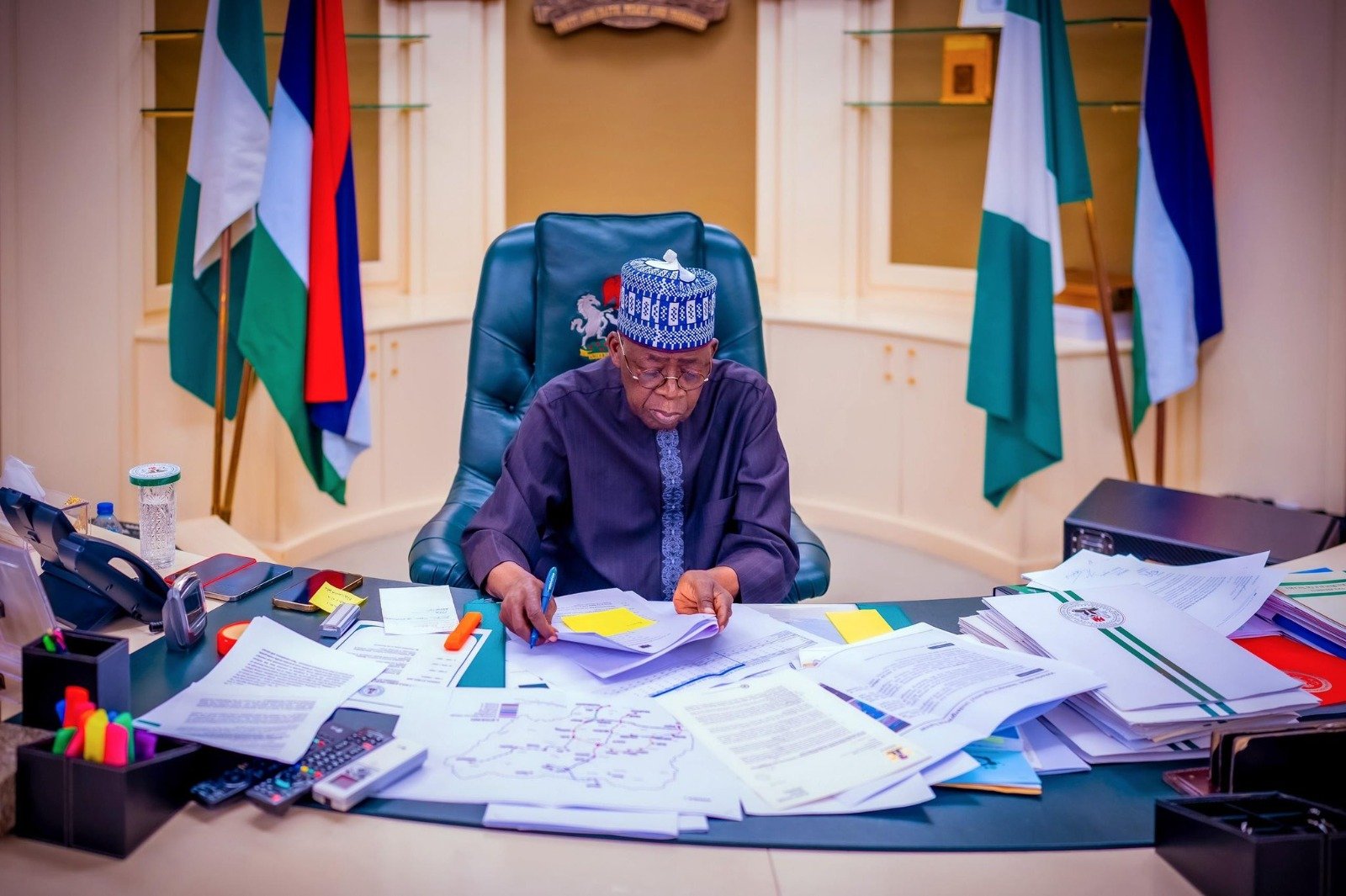
The Federal Government has quietly revised the implementation framework of Executive Order 9 of 2026 on oil revenue remittances, with royalties and taxes to remain under the collection of the Nigerian National Petroleum Company Limited and paid into a newly created account domiciled at the Central Bank of Nigeria, The PUNCH exclusively gathered on Monday.

The adjustment follows high-level deliberations at an implementation committee meeting held last Wednesday, where stakeholders examined practical challenges linked to the order mandating direct remittance of all oil-related revenues into the Federation Account.

Two senior officials involved in the talks, who spoke on condition of anonymity because they were not authorised to comment publicly, said the government was unlikely to rescind the directive but had begun modifying its execution to reflect industry realities.

Last month, President Bola Tinubu issued an executive order directing that royalty oil, tax oil, profit oil, profit gas, and other revenues due to the Federation under production sharing, profit sharing, and risk service contracts be paid directly into the Federation Account.

The order also scrapped the 30 per cent Frontier Exploration Fund under the PIA and discontinued the 30 per cent management fee on profit oil and profit gas retained by the NNPC. Effective February 13, 2026, the directive is intended to safeguard oil and gas revenues and strengthen remittances to the Federation Account.

According to the directive, the President invoked Section 5 of the Constitution of the Federal Republic of Nigeria (as amended), anchored on Section 44(3), which vests ownership and control of all minerals, mineral oils, and natural gas in the Government of the Federation.

Tinubu said excessive deductions, overlapping funds, and structural distortions in the oil and gas sector had weakened remittances to the Federation Account and warned that the practice must end to protect national revenue.

โ€œFor too long, excessive deductions, overlapping funds, and structural distortions in the oil and gas sector have weakened remittances to the Federation Account. When revenues meant for federal, state, and local governments are trapped in layers of charges and retention mechanisms, development suffers. That must end,โ€ he said on his verified X handle.

He also approved the constitution of a joint project team to execute integrated petroleum operations, with the commission serving as the interface with licensees and lessees where upstream and midstream operations are fully combined.

Members of the committee include the Minister of Finance and Coordinating Minister of the Economy; the Attorney-General of the Federation and Minister of Justice; the Minister of Budget and National Planning; and the Minister of State, Petroleum Resources (Oil). Other members are the Chairman, Nigeria Revenue Service; a representative of the Ministry of Justice; the Special Adviser to the President on Energy; and the Director-General, Budget Office of the Federation, who serves as secretary.

See also  NISO cuts transmission losses to 7% from 10% in one year

Following last weekโ€™s meeting, the government allowed the NNPC to continue commercialising crude barrels before remitting proceeds to the Federation Account, instead of the Nigerian Upstream Petroleum Regulatory Commission handling the process.

One source said the modification became necessary because royalties and taxes are typically settled in barrels of crude oil rather than cash, making direct remittance impractical.

โ€œThe government is not looking likely to reverse the order on oil revenue remittance, but they are likely to change the mode of implementation. That is what the situation is currently looking like.

โ€œSo the implementation now is that they may not come to read any executive order on the issue. But the implementation is that the order said taxes and royalties should be paid to the federation account directly. But now they have realised that this has already been done and royalties and taxes are not paid in dollars or naira but with barrels of crude oil, which must first be lifted and commercialised before revenue can be realised,โ€ the official said.

He added, โ€œSo the implementation now is that the NNPC will continue to lift and sell the crude on behalf of the government and then remit proceeds accordingly. That is the likely operational framework going forward.โ€

Under the evolving structure, royalties and taxes would pass through the new CBN account, supervised by the Office of the Accountant-General of the Federation, rather than existing regulatory channels.

The official said discussions on profit oil remittances were still ongoing, but cautioned that the framework could undermine reforms introduced under the Petroleum Industry Act, which granted the national oil company commercial autonomy.

โ€œThat is the new mode of implementation. But the 30 per cent that comes from profit oil. Instead of the NNPC collecting it and then remitting to the government, the government will collect everything, and then the government will pay back the amount spent on the cost of operations. So those are the level of discussions and the kind of discussions that are ongoing.

โ€œThis new funding style will still affect operations at the NNPC and take us back to what was happening before the Petroleum Industry Act. And that was what the PIA tried to cure. During that period, it led to a backlog of issues, and the NNPC couldnโ€™t fulfill its responsibilities. It was subjected to the government budget and the likes, and it is difficult to take back refunds from the government,โ€ he said.

See also  Recapitalisation: Banks raise N4tn ahead of March deadline

He recalled that the previous arrangement created severe financial strain. โ€œThe industry ran into a problem that period, and the system owed national traders and companies over $6bn in cash call arrears.

โ€œGovernment was also taking everything during that period, and the company would be waiting for cash calls and our own operations. Then the PIA solved all the issues. But the new order is now bringing back the issues. Now that the PSC has been attacked, the government will still come to joint ventures. Discussions are ongoing now on what the company is spending per month. So an amount would be released every month to run operations,โ€ he added.

Another official confirmed the revised implementation but warned that tighter government control could weaken regulatory independence and efficiency.

โ€œRegulatory agencies are supposed to operate independently and should not depend on government funding. But what we are seeing is increasing interference. This could condition the NNPC to rely on government releases to meet its obligations,โ€ he said.

Drawing parallels with past refinery policies under former President Olusegun Obasanjo, he noted that dedicated turnaround maintenance funds were once diverted with reimbursement promises that never materialised, contributing to refinery decline.

He also warned that removing frontier exploration funding could undermine long-term energy security.

โ€œFrontier exploration is a government responsibility because private companies do not take those risks. If the funds are removed, exploration activities will decline. That means we will only produce from existing discoveries, and once those reserves are depleted, Nigeriaโ€™s future as an oil-producing country could be threatened,โ€ he said.

On operational sustainability, he cautioned that uncertainty over funding could have labour implications.

โ€œThe current expectation is that the government will begin to fund operational costs, including salaries and emoluments, as promised. But if this does not happen, it is only a matter of time before companies begin to consider difficult decisions. Job losses could occur if the funding structure is not sustainable,โ€ he warned.

He added that another high-level meeting had been scheduled later in the week, involving the Nigerian Upstream Petroleum Regulatory Commission, the Federal Ministry of Finance, and industry operators.

See also  PDP consensus deal shatters as Lamido rejects Turaki as chairman

Confirming the phased approach in a statement on Monday, the Minister of Finance and Coordinating Minister of the Economy, Wale Edun, said a structured transition would ensure that direct payments by contractors into the Federation Account do not disrupt existing agreements.

โ€œWith respect to Section 2, Sub-section 3 of Executive Order 9 on direct payments by contractors into the Federation Account, the committee agreed that this transition must be implemented in a manner that respects existing contractual and financing arrangements, and maintains investor confidence,โ€ the statement said.

Edun added that โ€œuntil the committee issues detailed guidelines, contractors will continue to remit under the current process. During the transition period, the committee will issue clear, standardised guidance to ensure an orderly changeover.โ€

He said a Technical Subcommittee would develop detailed guidelines within three weeks and commence a review of the Petroleum Industry Act to address fiscal anomalies.

โ€œThe committee will continue to provide coordinated guidance and timely updates as implementation progresses. We commend the cooperation of all stakeholders in advancing the Presidentโ€™s efforts to ensure that Nigeriaโ€™s petroleum resources deliver tangible, measurable benefits to citizens across the Federation,โ€ the statement concluded.

Meanwhile, an NNPC official warned that the directive could disrupt production sharing contract operations and affect between 400 and 500 personnel dedicated to such activities.

โ€œIt will affect us to a great extent because we have staff who are dedicated to these lines of activity. We have no fewer than 400 to 500 staff whose daily work is focused on production sharing contracts. These are professionals working on rigs, platforms, seismic operations, and cost monitoring. We are talking about personnel across 39 PSC sites, out of which 14 are producing, and about five major sites contribute nearly 80 per cent of output under these arrangements.โ€

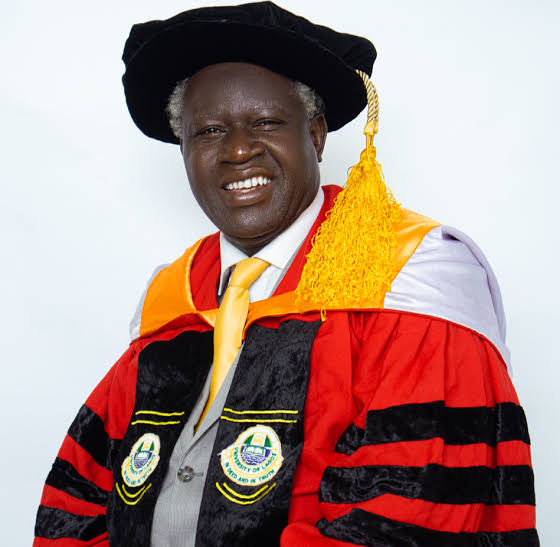
Commenting earlier, a Professor of Economics at Babcock University, Sheriffdeen Tella, said the directive could increase funds available to governments but warned about utilisation.

โ€œIt means there would be more money to share for development, although they have not been using it to develop the states. They have been sharing for some states, but we havenโ€™t seen improvement. Some states have done well, but many others havenโ€™t done much.

But the new order simply means that more money will be available to the federation account and more allocation for what the government wants to use it for.โ€

punch.ng

FOLLOW US ON:

FACEBOOK

TWITTER

PINTEREST

TIKTOK

YOUTUBE

LINKEDIN

TUMBLR

INSTAGRAM

Business

CBN introduces overnight rate to deepen money market, read details

Published

on

The Central Bank of Nigeria (CBN) on Friday announced the introduction of the Nigerian Overnight Financing Rate as a new benchmark for the countryโ€™s money market, aimed at improving transparency and strengthening monetary policy transmission.

The disclosure was contained in a press statement issued by the CBNโ€™s Acting Director of Corporate Communications, Hakama Sidi-Ali.

According to the statement, the initiative was developed in collaboration with the Financial Markets Dealers Association to deepen the financial system.

โ€œThe Central Bank of Nigeria, in collaboration with the Financial Markets Dealers Association, today announced the introduction of the Nigerian Overnight Financing Rate, a standardised benchmark aimed at enhancing transparency, strengthening monetary policy transmission, and deepening Nigeriaโ€™s money market,โ€ the statement partly read.

The bank explained that the new rate aligns Nigeria with global standards for short-term interest rate benchmarks and is expected to improve pricing efficiency in the money market.

โ€œNOFR was developed to align Nigeria with global best practices in short-term interest rate benchmarks. It is expected to improve price discovery and transparency while promoting consistent pricing of money market instruments,โ€ it added.

The CBN noted that the benchmark would enhance the effectiveness of monetary policy, support financial innovation, boost investor confidence, and strengthen risk management across the financial system.

It further stated that the introduction of NOFR positions Nigeria alongside global benchmarks such as SOFR in the United States, SONIA in the United Kingdom, โ‚ฌSTR in the Eurozone, and TONA in Japan, while also complementing Africaโ€™s JIBAR benchmark in South Africa.

See also  NISO cuts transmission losses to 7% from 10% in one year

The apex bank disclosed that the benchmark was set following a stakeholder engagement held on February 27, 2026, during which market participants adopted the rate, along with regulatory approval.

It added that the rate is now operational, with the CBN serving as the benchmark administrator responsible for governance, transparency, and regular publication.

โ€œFollowing a stakeholder engagement session held on February 27, 2026, where market participants formally adopted the benchmark and subsequent regulatory approval, NOFR is now in use, with the CBN serving as the benchmark administrator. The Bank will ensure governance, transparency, and regular publication of the rate,โ€ the statement noted.

Additional details contained in a set of Frequently Asked Questions released alongside the press statement showed that the Nigerian Overnight Financing Rate is designed as a risk-free benchmark that reflects the cost of overnight secured funding in the interbank market, based strictly on actual transactions rather than estimates.

The framework clarifies that the rate is not a monetary policy tool and is distinct from key policy indicators such as the Monetary Policy Rate, but instead serves as a reference point for pricing financial instruments and contracts across the system.

The document further indicates that the benchmark is published daily at 10:00 a.m. on the next business day after transactions are recorded, reinforcing transparency and consistency in market pricing.

For financial institutions, only naira-denominated overnight secured transactions in the interbank market that meet defined thresholds are eligible for inclusion, with the rate computed using a volume-weighted trimmed mean methodology to remove extreme values and ensure accuracy.

See also  Dangote signs deal to distribute 65m litres petrol

It also states that in cases where there is insufficient transaction data, the previous dayโ€™s rate is retained and clearly disclosed, a safeguard aimed at maintaining continuity in the benchmark.

The FAQs noted that while the new rate may serve as a reference for certain corporate and structured loans, it does not directly determine borrowing costs, which remain influenced by credit risk, tenor, and contractual terms agreed between lenders and borrowers.

For investors, the rate is expected to play a key role in pricing, valuation, discounting, and risk management of naira-denominated financial instruments, further deepening activity in the domestic money market.

Retail customers, however, will not see direct changes to savings or loan rates, as these continue to be determined by banks based on broader cost and risk considerations, although the improved transparency is expected to strengthen overall confidence in the financial system.

On governance, the document states that any correction to the benchmark would only occur in cases of material error and must be fully disclosed, while the methodology underpinning the rate will be reviewed at least annually by the CBN to ensure it remains robust and aligned with market realities.

punch.ng

FOLLOW US ON:

FACEBOOK

TWITTER

PINTEREST

TIKTOK

YOUTUBE

LINKEDIN

Continue Reading

Business

Olumo Rock revenue jumps from N3m yearly to N40m monthly โ€“ Ogun gov

Published

on

Ogun State Governor, Dapo Abiodun, says the Olumo Rock Tourist Centre in Abeokuta was shut down and refurbished to reposition it for improved tourism value and revenue generation.

Abiodun said the iconic site, which he described as one of Nigeriaโ€™s top tourist destinations, has since recorded a major increase in earnings following its rehabilitation.

The governor spoke on Thursday, at the commissioning of the 5.5-kilometre Elegaโ€“Milikiโ€“Sajeโ€“Bode-Oludeโ€“Alhaji Sugar Road in Abeokuta, which spans Abeokuta North and Abeokuta South Local Government Areas.

He explained that the siteโ€™s revenue performance before the intervention was low, but improved significantly after the refurbishment.

Abiodun said that the site was underperforming before the upgrade, adding that the revenue figures at the time reflected its poor condition before rehabilitation.

โ€œWhen I shut it down and I did the refurbishment of Olumo, Olumo began to generate about 10 million a week as about 40 million a month compared to 3 million a year.โ€

He also said the tourist centre has grown in prominence and now ranks among the countryโ€™s most visited attractions.

โ€œI restored Olumo Rock that has become probably number one or number two tourist site in Nigeria.

โ€œIf you Google tourist sites in Nigeria, Olumo Rock will be the first to appear.

โ€œWhen I assumed office, Olumo Rock was generating probably about 3โ€“4 million naira annually.

โ€œThat 3โ€“4 million naira annually was the revenue generated by Olumo Rock when I became governor.

โ€œWhen I shut it down and carried out the refurbishment of Olumo Rock, it began to generate about 10 million a week, about 40 million a month, compared to 3 million a year,โ€ he said.

See also  US deploys 200 troops to Nigeria

The development comes months after the state government first reopened the facility following renovation and introduced a temporary free-entry policy to encourage visitation and promote cultural tourism.

According to earlier government statements, the initiative was also aimed at allowing the public to rediscover the historical significance of the site and boost local commerce around the tourist centre before normal access procedures resumed.

The government later announced the end of the free-entry window due to overcrowding and safety concerns, saying the surge of visitors had created risks that required stricter access management.

Subsequently, the state moved to concession the tourist centre to a private operator to ensure improved management and sustained revenue generation.

Olumo Rock, one of Nigeriaโ€™s most visited cultural landmarks, has since remained a key focus of the stateโ€™s tourism drive.

punch.ng

FOLLOW US ON:

FACEBOOK

TWITTER

PINTEREST

TIKTOK

YOUTUBE

LINKEDIN

Continue Reading

Business

No plan to borrow from IMFโ€™s $50bn fund โ€“ FG

Published

on

The Federal Government on Thursday declared that it has no plan to approach the International Monetary Fund to borrow from the estimated $50bn, which the IMF had earlier announced on Wednesday that it plans to use and support struggling economies in Africa.

The Minister of Finance and Coordinating Minister for the Economy, Wale Edun, disclosed this at a press briefing during the ongoing Spring Meetings of the World Bank/IMF in Washington DC, United States.

The PUNCHย earlier reported that the Managing Director, IMF, Kristalina Georgieva, had advised countries facing economic pressures to act swiftly in seeking financial support when necessary, warning that delays could worsen economic conditions.

โ€œMy advice is that when you need help financially, donโ€™t hesitate to move fast, because the sooner we act, the more we protect the economy,โ€ she said.

Georgieva also revealed that the institution was committed to financially supporting member countries through the current challenges, adding that about $20bn to $50bn was being planned by the IMF for this exercise.

โ€œWe anticipate financial demand for IMF support to range between $20bn and $50bn, which represents augmentation of some existing problems and prospective demands from new problems from at least a dozen countries, a number of them in Sub-Saharan Africa,โ€ she said.

But while responding to a question on Thursday, whether the Federal Government would approach the IMF to borrow from the fund, Nigeriaโ€™s finance minister, Edun, responded negatively.

โ€œNigeria has no plan at the moment to approach the IMF for any other such burden,โ€ Edun declared.

See also  Fuel Supply Rises 25% As Dangote Delivers 40m Litres Of Petrol Per Day โ€“ NMDPRA

The minister also told the meeting on Thursday that African nations need โ€œextra helpโ€ at this moment.

He noted that the Middle East crisis is one that affects African countries and economies disproportionately, stressing that while nations in this region โ€œare not creators in any way of this situation, they stand to command greater pressure than perhaps any other region.โ€

The minister added, โ€œThis is in terms of the threat to macroeconomic stability, growth trajectories, and their ability to create jobs and reduce poverty in their countries.

And I think that is a clear statement, particularly to those identified as the most vulnerable oil-importing countries. They need and deserve extra help at this time.โ€

Recall that Georgieva earlier observed that many of the countries most affected by the Middle East crisis are located in Sub-Saharan Africa, adding that the IMF was working to identify those in urgent need of assistance. โ€œWe are very determined to use this week to identify which of the countries must get our support,โ€ she stated.

She emphasised the importance of strong fiscal and economic policies, urging governments to build buffers during periods of economic stability to better withstand future shocks. According to her, prudent economic management in good times remains critical for resilience during downturns.

The IMF chief also disclosed that during a meeting with central bank governors and finance ministers from Africa held the previous day, officials did not request immediate financial assistance but instead sought policy guidance.

โ€œBut, of course, there could be a need for financial support. And my advice is that when you need help financially, donโ€™t hesitate to move fast, because the sooner we act, the more we protect the economy,โ€ she said.

See also  Dangote Cement begins Ivory Coast operations

Georgieva highlighted the broader global implications of the Middle East conflict, noting that it has already inflicted significant economic damage. โ€œWe have been watching developments in the Middle East. A war that causes significant pain to people and economies in the region and around the world. The impact on the global economy is already large,โ€ she said.

She explained that supply chain disruptions and damage to infrastructure are driving up prices and slowing global economic growth. According to her, global growth is projected to decline from 3.4 per cent last year to 2.1 per cent in 2026. She warned that if the conflict persists and oil prices remain elevated for a prolonged period, global economic conditions could deteriorate further.

โ€œBut if the conflict persists, and oil prices stay high for an extended period, we must brace for tough times ahead,โ€ she added.

On the IMFโ€™s global outlook, Georgieva cautioned that in a worst-case scenario, global growth could fall to two per cent, stressing that the impact would be widespread. She noted that countries that depend on energy imports are particularly vulnerable, many of which are low-income or fragile economies.

โ€œIn the most adverse case, growth could fall to two per cent, and the shock is global,โ€ she said, adding that the highest negative impact is being felt by energy-importing nations.

punch.ng

FOLLOW US ON:

FACEBOOK

TWITTER

PINTEREST

TIKTOK

YOUTUBE

LINKEDIN

Continue Reading

Trending