Connect with us

Business

Nigerians lose millions in dashed Umrah dreams due to US-Iran war

Published

on

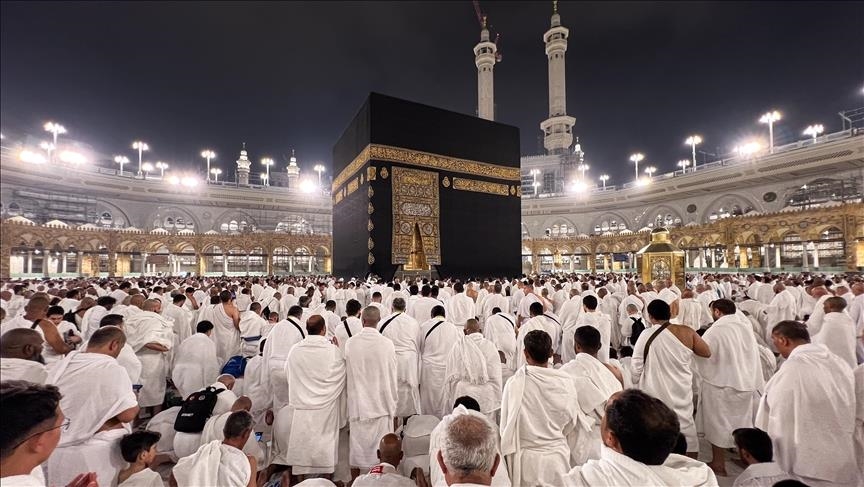
Hundreds of Nigerian Muslims preparing for this year’s Umrah pilgrimage have been stranded after the escalating United States/Israel-Iran war disrupted flight operations across the Middle East, forcing airlines to cancel services and leaving intending pilgrims and travel agents counting millions of naira in losses.

Saturday PUNCH gathered that many of the affected pilgrims had already obtained visas and paid for flights and accommodation in Mecca and Medina before airlines began suspending services across parts of the Middle East due to the conflict.

Some of the intending pilgrims, who spoke to our correspondent, said they were scheduled to depart Nigeria between March 4 and 6 for the holy pilgrimage but were unable to travel after several airlines cancelled or suspended operations in the region.

Umrah is a lesser Hajj performed by Muslims all year round in Saudi Arabia, but it usually draws large numbers of Islamic faithful during Ramadan.

Millions of Muslims usually perform Umrah during the last 10 days of Ramadan.

Available records show that over 122 million Muslims performed Umrah during the 2025 Ramadan period.

However, the scale of strikes by Iran on US military bases and other target areas in the Middle East has forced many airlines to suspend flights in Gulf states.

On February 28, US President Donald Trump and Israel declared war on Iran, killing the country’s Supreme Leader, Ayatollah Ali Khamenei, after missiles struck his office in Tehran.

Dubbed ‘Operation Epic Fury,’ both the US and Israeli militaries launched strikes against targets in Iranian cities, triggering explosions and columns of smoke.

This followed months of simmering tensions and a total collapse of diplomacy and negotiations between the US and Iran over the development of nuclear weapons by the Islamic Republic.

Speaking from the Mar-a-Lago Situation Room on Friday, Trump framed the offensive as a pre-emptive necessity to neutralise Iran’s nuclear ambitions.

Tehran also launched retaliatory missile and drone attacks across several countries in the Middle East and nearby regions, targeting US bases, allied facilities and strategic infrastructure.

Iran’s retaliation, codenamed, ‘Truthful Promise 4,’ also saw dozens of missiles launched toward Israel.

Tehran has attacked military bases and assets in about 10 countries in the region, including Saudi Arabia, Qatar, Kuwait, Bahrain, the United Arab Emirates, Jordan, Iraq and Oman.

The war resulted in the closure of critical airspace routes such as Doha and Dubai, while Iran, Iraq, Israel, Syria, Kuwait, Qatar and the UAE all announced at least partial closures of their skies after the US and Israeli attacks on Iran.

See also  CBN delists non-compliant BDCs

Similarly, many airlines, including Emirates, Etihad, Qatar Airways, Air France, Turkish Airlines, EgyptAir and Ethiopian Airlines, cancelled services in the region due to the tensions.

Umrah plans disrupted

The cancellation of services by the airlines disrupted the Umrah plans of many Nigerian Muslims who had made the necessary arrangements for the trip.

Saturday PUNCH gathered that a local government chairman in Ilorin, Kwara State, and two other government officials were affected by the cancellation of airline services.

The intending pilgrims, according to one of them who spoke with Saturday PUNCH on condition of anonymity, were to leave Nigeria on March 4 with Emirates Airline.

The government official disclosed that they had secured accommodation at Poinciana Hotel in Mecca and another facility in Medina.

According to him, a sum of 12,500 Riyal was paid by each of them for a hotel in Mecca for their entire stay, while those who intended to lodge in Medina had paid 7,000 Riyal per night.

“It is a painful experience that we couldn’t proceed with the Umrah trip because of the war. We had paid for everything – visa fee, accommodation, flight and other expenses. We are four in a group that wanted to go for the Umrah. A local government chairman is among us, alongside two other government officials.

“My hotel accommodation in Mecca cost 12,500 Riyal, equivalent to about N5m. Some other people that I know have also paid 7,500 Riyal per night for a room in a Medina hotel, and they booked for four nights.

“We have invested millions of naira in the trip, and our visa will expire on April 8,” he said.

The official added that the travel agent who packaged the trip for them had sought a refund from Emirates Airline, but was told they could only reschedule their trip, with the airline declining the refund request.

“Our agent has spoken with the hotel management in Mecca and Medina, but nothing concrete has come out. We were told that even if we are refunded, it would not be the full amount we paid,” he added.

Similarly, a popular butcher in Osogbo, Osun State, Rasaq (surname withheld as requested), lamented that he had spent over N13m on the Umrah trip for himself and his wife.

According to Rasaq, he and his wife were to leave for Saudi Arabia on Qatar Airways from the Murtala Muhammed Airport in Lagos on March 3 before the airline cancelled services in the Middle East.

“We were to lodge at a hotel in Medina and everything had been paid for. We were set for the trip; it cost us about N13m, including visa fees, hotel accommodation and flight tickets.

See also  Rivers assembly halts impeachment proceedings against Fubara

“Apart from me and my wife, two other people were going with us. We were supposed to travel in a group, but everything has been messed up for us. It is painful. Our agent is talking to Qatar Airways for a refund,” he said.

However, the agent told Saturday PUNCH that the airline could only reschedule the intending pilgrims’ flight based on his discussion with the company.

The agent, who spoke on condition of anonymity, said, “It is true that we are seeking a refund from the airline, but I am not sure it will work out. The cancellation of services in the Middle East by the airline is as a result of the war, not because of any issue from the airline.

“When things like this happen, what airlines generally do is ask the clients to reschedule their trip, and a new air ticket will be issued for them. I am also in touch with the hotel management in Medina, but I cannot disclose everything.”

This is as an Islamic cleric in Ibadan, Oyo State, Alhaji Jamiu Babatunde, told Saturday PUNCH that his planned trip was disrupted after his flight booking was cancelled.

“I was supposed to travel when Ramadan reaches the 20th day using Qatar Airways, but I received a message that my ticket had been cancelled and reopened.

“I planned to travel with my family. It was a promise I made two years ago and we had worked towards it. Now we are stranded and not sure it will be possible again this year,” he lamented.

Similarly, Ibadan-based businessman Abdullahi Abubakar said the uncertainty had also affected his business preparations ahead of the Sallah celebration.

“Beyond the spiritual aspect, I usually use the Umrah trip to buy goods to stock my shop for Sallah.

“Before now, my problem was raising the money to complete payment, but now with the situation in the region, I don’t know what to do.”

Another intending pilgrim in the Agege area of Lagos, Mrs Ramat Abdullahi, said she had decided to postpone her trip due to safety concerns linked to the regional crisis.

“This would have been my first time performing Umrah, but with the situation in the region, I decided to postpone the journey until next year,” she said.

Speaking with Saturday PUNCH, an Islamic cleric and founder of Almuhsinoon Islamic Centre, Manchester, UK, Munir Hussein, who has been facilitating Umrah trips for Muslims, said four of his team members in Nigeria could not make it to this year’s Umrah as a result of the war.

See also  Naira strengthens to 1,514/$, nears five-month high

“I was meant to leave here (UK) on Monday, but we couldn’t go because the UK government issued a travel alert. Four members of my team are also in Nigeria; they were to leave on March 6, but that is no longer possible. Everything was set for our trip, but here we are.

“The airlines we were to use are asking us to reschedule, so there will not be any refund from their end. Hotels are offering zero refunds. Our losses are in many dimensions, including visa, flight, accommodation and food that had been fully paid,” he added.

Oyo businessman trapped in Mecca

Speaking with Saturday PUNCH via telephone from Makkah, an Oyo State-based businessman, Alhaji Ishola Abdulmalik, said the tensions in the Middle East had disrupted his usual Ramadan travel schedule.

“I come to Saudi Arabia every year when Ramadan is five days old and usually return to Nigeria around the 15th day to participate in my town’s annual Ramadan programme as the chairman of the organising committee. I then return to Saudi Arabia on the 25th day of Ramadan and come back home on Sallah day.

“This year, I cannot follow that routine because of the situation. Although I am stranded here because travelling has become difficult, there is no tension in Saudi Arabia. There are no restrictions and we are observing our worship normally,” he said.

Abdulmalik explained that Saudi Arabia had not shut its airspace and commercial flights were still arriving in the kingdom, but disruptions at major international transit hubs had made it difficult for many pilgrims to travel.

“I can’t leave not because Saudi Arabia has closed its airspace, but because disruptions at major connection hubs have affected travel arrangements,” Abdulmalik added.

He also revealed that some Nigerian pilgrims whose flights were cancelled were struggling to cover accommodation costs.

“There are people here, including a couple from Niger State, whose Qatar Airways flight was cancelled and they couldn’t afford to continue paying for their hotel. I had to help them settle it.

“There are others that some of us who are a little buoyant have had to support by contributing among ourselves to pay their hotel bills,” he said.

Both Emirates Airline and Qatar Airways have yet to respond to messages sent to their emails as of the time of filing this report.


Continue Reading
Click to comment

Leave a Reply

Your email address will not be published. Required fields are marked *

Business

Nigeria needs 25m tonnes of maize annually – FG

Published

on

The Federal Government says Nigeria requires no fewer than 25 million tonnes of maize annually to meet national demand and strengthen food security.

The Minister of State for Agriculture and Food Security, Sen. Aliyu Abdullahi, disclosed this on Friday in Abuja during a Quarterly Citizens and Stakeholders’ Engagement meeting.

Abdullahi said the government had intensified efforts to meet the demand by boosting local production and reducing dependence on food imports.

“Our focus is on expanding local production so affordable and nutritious food becomes accessible to every Nigerian,” he said.

He added that ongoing interventions were already influencing market trends, noting that prices of essential food commodities had declined nationwide.

“Our efforts are paying off. Prices of major food commodities have dropped by about 50 per cent across the country.

“These efforts reflect our commitment to improving food security and citizens’ well-being. We are addressing high input costs to sustain an affordable food supply,” Abdullahi said.

He said strategic investment in agricultural value chains was positioning Nigeria to become a major force in the global agricultural market.

“We have prioritised rice, maize and wheat value chains, creating opportunities for millions of smallholder farmers and other stakeholders,” he said.

Abdullahi said the ministry was aligning policies with President Bola Tinubu’s Renewed Hope Agenda to achieve food sovereignty.

“The goal is clear: Nigeria must produce what it consumes and consume what it produces,” he said.

According to him, the ministry is implementing reforms aimed at transforming the nation’s agricultural landscape and expanding production across priority crops.

See also  Rivers assembly halts impeachment proceedings against Fubara

He urged stakeholders to collaborate closely with state agriculture ministries to accelerate productivity nationwide.

“Together we can transform Nigeria’s food system and ensure sustainable agricultural growth for the benefit of all Nigerians,” Abdullahi said.

He described the engagement meeting as part of the ministry’s commitment to transparency, open governance and inclusive collaboration.

“This platform underscores the importance of stakeholder engagement in shaping sound policies and ensuring effective implementation,” he said.

Abdullahi added that the initiative would strengthen collaboration aimed at ensuring food remains available, accessible and affordable across the country.

The meeting featured representatives of the media, civil society organisations, farmers’ groups, agro-allied businesses, development partners, donor agencies and government institutions.

NAN

Continue Reading

Business

World’s Top 100 Biggest Economies in 2026

Published

on

1. 🇨🇳 China – $43.49 Trillion
2. 🇺🇸 United States – $31.82 Trillion
3. 🇮🇳 India – $19.14 Trillion
4. 🇷🇺 Russia – $7.34 Trillion
5. 🇯🇵 Japan – $6.92 Trillion
6. 🇩🇪 Germany – $6.32 Trillion
7. 🇮🇩 Indonesia – $5.36 Trillion
8. 🇧🇷 Brazil – $5.16 Trillion
9. 🇫🇷 France – $4.66 Trillion
10. 🇬🇧 United Kingdom – $4.59 Trillion
11. 🇹🇷 Turkey – $3.98 Trillion
12. 🇮🇹 Italy – $3.82 Trillion
13. 🇲🇽 Mexico – $3.55 Trillion
14. 🇰🇷 South Korea – $3.49 Trillion
15. 🇪🇸 Spain – $2.94 Trillion
16. 🇸🇦 Saudi Arabia – $2.85 Trillion
17. 🇨🇦 Canada – $2.81 Trillion
18. 🇪🇬 Egypt – $2.53 Trillion
19. 🇳🇬 Nigeria – $2.39 Trillion
20. 🇵🇱 Poland – $2.12 Trillion
21. 🇹🇼 Taiwan – $2.07 Trillion
22. 🇦🇺 Australia – $2.06 Trillion
23. 🇻🇳 Vietnam – $1.94 Trillion
24. 🇮🇷 Iran – $1.93 Trillion
25. 🇹🇭 Thailand – $1.92 Trillion
26. 🇧🇩 Bangladesh – $1.90 Trillion
27. 🇵🇰 Pakistan – $1.76 Trillion
28. 🇵🇭 Philippines – $1.59 Trillion
29. 🇦🇷 Argentina – $1.58 Trillion
30. 🇲🇾 Malaysia – $1.56 Trillion
31. 🇳🇱 Netherlands – $1.56 Trillion
32. 🇨🇴 Colombia – $1.24 Trillion
33. 🇿🇦 South Africa – $1.06 Trillion
34. 🇦🇪 United Arab Emirates – $1.00 Trillion
35. 🇸🇬 Singapore – $988.8 Billion
36. 🇰🇿 Kazakhstan – $973.4 Billion
37. 🇷🇴 Romania – $949.3 Billion
38. 🇧🇪 Belgium – $925.7 Billion
39. 🇩🇿 Algeria – $915.8 Billion
40. 🇨🇭 Switzerland – $909.1 Billion
41. 🇮🇪 Ireland – $836.7 Billion
42. 🇸🇪 Sweden – $809.5 Billion
43. 🇨🇱 Chile – $740.4 Billion
44. 🇮🇶 Iraq – $739.1 Billion
45. 🇺🇦 Ukraine – $730.8 Billion
46. 🇦🇹 Austria – $705.0 Billion
47. 🇵🇪 Peru – $682.8 Billion
48. 🇨🇿 Czech Republic – $677.7 Billion
49. 🇳🇴 Norway – $621.1 Billion
50. 🇭🇰 Hong Kong – $618.1 Billion
51. 🇮🇱 Israel – $600.5 Billion
52. 🇵🇹 Portugal – $556.4 Billion
53. 🇪🇹 Ethiopia – $530.8 Billion
54. 🇩🇰 Denmark – $529.3 Billion
55. 🇺🇿 Uzbekistan – $511.0 Billion
56. 🇬🇷 Greece – $485.1 Billion
57. 🇭🇺 Hungary – $478.5 Billion
58. 🇲🇦 Morocco – $457.5 Billion
59. 🇰🇪 Kenya – $430.3 Billion
60. 🇦🇴 Angola – $417.2 Billion
61. 🇶🇦 Qatar – $410.6 Billion
62. 🇫🇮 Finland – $384.9 Billion
63. 🇩🇴 Dominican Republic – $353.7 Billion
64. 🇧🇾 Belarus – $319.5 Billion
65. 🇹🇿 Tanzania – $317.9 Billion
66. 🇪🇨 Ecuador – $315.9 Billion
67. 🇬🇭 Ghana – $314.6 Billion
68. 🇳🇿 New Zealand – $309.1 Billion
69. 🇬🇹 Guatemala – $297.1 Billion
70. 🇨🇮 Côte d’Ivoire – $289.1 Billion
71. 🇲🇲 Myanmar – $286.4 Billion
72. 🇰🇼 Kuwait – $285.9 Billion
73. 🇦🇿 Azerbaijan – $282.2 Billion
74. 🇧🇬 Bulgaria – $279.2 Billion
75. 🇸🇰 Slovak Republic – $266.9 Billion
76. 🇴🇲 Oman – $245.9 Billion
77. 🇻🇪 Venezuela – $231.4 Billion
78. 🇷🇸 Serbia – $225.6 Billion
79. 🇨🇩 Dem. Rep. of the Congo – $225.5 Billion
80. 🇵🇦 Panama – $211.0 Billion
81. 🇭🇷 Croatia – $207.4 Billion
82. 🇺🇬 Uganda – $205.3 Billion
83. 🇳🇵 Nepal – $194.9 Billion
84. 🇹🇳 Tunisia – $193.6 Billion
85. 🇨🇲 Cameroon – $183.3 Billion
86. 🇨🇷 Costa Rica – $178.0 Billion
87. 🇱🇹 Lithuania – $173.1 Billion
88. 🇵🇷 Puerto Rico – $166.3 Billion
89. 🇰🇭 Cambodia – $160.0 Billion
90. 🇹🇲 Turkmenistan – $159.0 Billion
91. 🇵🇾 Paraguay – $145.1 Billion
92. 🇿🇼 Zimbabwe – $144.9 Billion
93. 🇯🇴 Jordan – $138.0 Billion
94. 🇸🇩 Sudan – $135.9 Billion
95. 🇺🇾 Uruguay – $135.1 Billion
96. 🇱🇾 Libya – $132.8 Billion
97. 🇸🇮 Slovenia – $128.1 Billion
98. 🇬🇪 Georgia – $123.0 Billion
99. 🇧🇭 Bahrain – $118.1 Billion
100. 🇱🇺 Luxembourg – $108.6 Billion

See also  Customs seize N4.3bn drugs in Tin Can

Nigeria 🇳🇬 ranks 19 biggest economies in the world, based on PPP (Purchasing Power Parity)

Source: IMF via Voronoi by Visual Capitalist

FOLLOW US ON:

FACEBOOK

TWITTER

PINTEREST

TIKTOK

YOUTUBE

LINKEDIN

TUMBLR

INSTAGRAM

Continue Reading

Business

US-Iran war: Marketers, Dangote trade words over petrol price

Published

on

Amid the escalating tensions in the Middle East, data from the Major Energies Marketers Association of Nigeria has shown that a litre of imported petrol is about N64 cheaper than the one produced by the Dangote Petroleum Refinery.

However, the refinery debunked the report, challenging importers to defy the ongoing airstrikes in the Middle East and bring in petroleum products.

The PUNCH reported on Monday that the Dangote refinery increased its gantry price from N774 to N874. The adjustment followed a jump in oil prices to $84 per barrel, up from below $70, days before the airstrikes involving the United States, Iran, Israel, and other countries.

Following the increment, filling stations on Tuesday raised their pump prices to as high as N937, depending on the location. Before the Middle East crisis deepened over the weekend, some filling stations had already been selling petrol at prices ranging between N812 and N839, but the crisis disrupted the global fuel market, affecting Nigeria and other countries.

However, data by MEMAN indicated that Dangote’s petrol gantry price was N874 per litre as of Monday, while the landing cost of imported petrol was N809.37 per litre, showing a difference of about N64 between the two sources.

MEMAN also reported that Dangote’s diesel price was N1,169.42, while imported diesel was N1,125.70 per litre.

However, officials of the Dangote refinery, who did not want to be mentioned because of the sensitivity of the matter, said some importers were projecting a false narrative to ensure the Federal Government continues to issue import licences.

“Anybody can go to Apapa to get the landing cost, and anybody who likes should go to Iran and import. Some people just want us to depend on imports. Isn’t it time we ended that dependence on foreign products?

“Some people want importation to continue, and that’s not normal. You keep importing what can be produced locally. Is that a good thing? How do you expect our children to survive? Nigerians will import and destroy what we have locally,” an official said.

Aside from pricing, another official said Nigeria should be thankful to the Dangote refinery for shielding the country from the fuel crisis that could have paralysed commercial activities.

“Let’s think about what could have happened to Nigeria if we didn’t have a refinery in Nigeria at this time. Assuming there is no Dangote refinery in Nigeria, economic activities would have been paralysed by now.

“Many countries are not so lucky, and they are now facing long queues at filling stations. Dangote has saved Nigeria from that fuel crisis. This has taught us that there’s nothing like one’s country, and we must always be prepared,” he said.

In its report, MEMAN explained that the downstream sector saw a major upward price adjustment on Monday, driven by the Dangote refinery raising its gantry price by N100, bringing it to N874 per litre.

The shift, triggered by rising global crude costs, pushed retail pump prices above N900 per litre. Many private depots reportedly paused sales briefly to recalibrate their pricing in response.

“The market is currently in a state of high uncertainty. With Brent crude climbing above $80/bbl due to escalating geopolitical tensions (specifically the US-Israel-Iran conflict), analysts warn that the cost of petrol remains under significant pressure. If crude prices continue toward the $90/bbl mark, domestic pump prices could potentially reach N1,100 by next month,” MEMAN said.

See also  FG sets Dec 20 deadline to pay contractors

On Wednesday, motorists flocked to petrol stations across Britain in a scramble for fuel as fears of a new oil crisis caused by the Iran war grew, according to a report by The Mirror UK.

Frustrated drivers complained on Wednesday about UK petrol stations running out of fuel and long queues at forecourts after hostilities erupted in the Middle East. Prices have risen by as much as 11 pence per litre in some locations.

In contrast, Nigeria relies on the Dangote refinery for an adequate fuel supply amid the geopolitical tensions. Petrol prices in Nigeria surged on Tuesday, but no queues were reported at filling stations. Analysts attribute this to the Dangote refinery reducing Nigeria’s dependence on imported fuel.

Commentators highlight the Dangote refinery’s role in shielding Nigeria from such disruptions. “Imagine a Nigeria without a refinery; we would be experiencing endless queues, black market prices, businesses slowing down, and an economy held hostage by fuel scarcity.

“Today, we stand at a turning point. The Dangote Petroleum Refinery & Petrochemicals is more than steel and pipes — it is energy security, economic power, job creation, and national pride,” an industry player who spoke in confidence stated.

During a recent meeting with refiners and stakeholders, the Dangote refinery assured them of sufficient fuel supply, though it noted challenges from insufficient crude, requiring some reliance on foreign feedstock.

The PUNCH reports that Dangote outpaced importers to supply approximately 62 per cent of the nation’s petrol in January 2026.

This development, revealed in the fact sheet from the Nigerian Midstream and Downstream Petroleum Regulatory Authority, signals a growing reliance on domestic refining capabilities and a potential reduction in the country’s longstanding dependence on fuel imports.

According to the NMDPRA’s State of the Downstream Sector report for January 2026, the total average daily supply of petrol reached 64.9 million litres per day in January.

Of this volume, receipts from domestic refineries — primarily driven by Dangote, the only petrol-producing refinery at the moment — accounted for 40.1 million litres per day, while imports by oil marketing companies and the Nigerian National Petroleum Company Limited stood at 24.8 million litres per day.

This marked the first time in the 13-month period covered by the report (from January 2025 to January 2026) that domestic production had exceeded imports, reversing a trend where foreign supplies often dominated the market.

The NMDPRA attributed the surge in domestic output directly to “improvement in supply from DPRP” — the Dangote Petroleum Refinery and Petrochemicals — which increased its PMS contributions from 32 million litres per day in December 2025 to 40.1 million litres per day in January 2026.

Crude supply denial

Meanwhile, the Dangote refinery has said that local crude producers are refusing to supply feedstock to its facility, forcing it to rely more on imported crude. In a statement on Thursday, the refinery defended its recent N100 increase in the gantry price of petrol.

While reassuring Nigerians of its unwavering commitment to serving as a stabilising force amid recent shocks in the international oil market, the refinery said the conflict in the Middle East has led to the shutdown of some refineries and cutbacks in refinery production across the world.

See also  Infractions - FG threatens to disconnect Gencos from power grid

This, it said, is leading to a global scarcity of petroleum products, as China has banned the export of gasoline and diesel. “The Dangote refinery will ensure that Nigeria is insulated from these supply shocks by prioritising supply to the domestic market. This is one of the many benefits of domestic refining,” it said.

According to the statement, the conflict in the Middle East has driven global crude and freight prices sharply higher, with benchmark Brent prices rising by about 26 per cent within a short period to above $84 per barrel.

In response, the refinery implemented a measured adjustment of N100 per litre in its ex-depot price of petrol, representing an increase of about 12 per cent.

The refinery said it has absorbed 20 per cent of the cost escalation for now to cushion the domestic market, despite continuing to source crude at prevailing international market prices, whether purchased locally or from foreign suppliers.

“It is worth noting that Nigerian crude oil is more expensive than the Brent benchmark price by $3 to $6 per barrel. After adding freight of $3.50 per barrel, crude oil will be landing in our tanks between $88 and $91 per barrel. For context, crude oil was landing in our tanks at about $68 per barrel when our ex-depot price was N774/litre,” the refinery stated.

According to the company, the refinery receives five cargoes every month from the Nigerian National Petroleum Company Limited instead of 13 cargoes, adding that the cargoes are paid for at international market prices.

“Furthermore, while we receive about five cargoes a month from NNPC, which we pay for in naira, these cargoes are priced at international market prices plus premium and fall short of the 13 cargoes which we require to support sales into Nigeria. We, therefore, end up procuring foreign exchange at open market rates to pay for crude cargoes purchased from local and international traders.

“The high crude cost is compounded by the fact that Nigeria’s upstream producers have failed to supply crude oil to the refinery as required under the Petroleum Industry Act, forcing us to source a substantial portion through international traders who charge an additional premium,” it stated.

As a private enterprise operating in a deregulated environment, the Dangote refinery added that it has remained responsive and has made significant sacrifices by aligning pricing with market realities to ensure sustainability, particularly as it sources all its crude at prevailing international market prices, whether locally or from foreign suppliers.

“Selling below cost would undermine its ability to procure crude, sustain production, and guarantee uninterrupted supply to Nigerians. Despite these pressures, local refining at this scale continues to reduce exposure to international supply disruptions, moderate foreign exchange demand, and protect the country from severe shortages during periods of global instability,” the refinery added.

The refinery said it is also accelerating the deployment of compressed natural gas-powered trucks to cushion the impact of global shocks, enhance nationwide distribution efficiency, reduce logistics costs, and improve delivery timelines across the downstream sector.

See also  Customs seize N4.3bn drugs in Tin Can

“The rollout is scheduled to commence this month,” it announced, saying, “We remain committed to transparency, operational excellence, and the long-term objective of securing sustainable energy security and stability for Nigeria at an affordable cost.”

Efforts to get the reactions of the Nigerian Upstream Petroleum Regulatory Commission, the agency in charge of the domestic crude supply obligation, were unsuccessful. The NUPRC spokesman, Eniola Akinkuotu, did not reply to messages sent to him.

Similarly, the spokesman of NNPC, Andy Odeh, declined to comment when contacted by our correspondent on Thursday.

Experts speak

Meanwhile, as Dangote and modular refineries demand sufficient crude supply in the face of low crude production, experts have called on the government and operators to ramp up production.

An energy expert, Professor Emeritus Wumi Iledare, said meeting oil production targets would depend far less on ambitious projections of the government and far more on practical and on-the-ground actions.

Iledare told The PUNCH that the government must prioritise improved security around oil assets, reduce operational disruptions, fast-track regulatory approvals, and create a stable operating environment that allows existing fields to produce at full capacity.

According to Iledare, Nigeria earned about N55tn from crude oil in 2025, up from roughly N50tn in 2024. “While this is an improvement, it still fell short of what the Federal Government expected for the year,” he said. The don noted that the main issue was not oil prices but production.

He explained that the government planned to produce 766.5 million barrels in 2025 but managed to get only about 599.6 million barrels, saying that means close to 167 million barrels were not produced, and the revenue that could have come with them was lost.

“Looking ahead to 2026, meeting oil production targets will depend far less on ambitious projections and far more on practical, on-the-ground actions. The government must prioritise improved security around oil assets, reduce operational disruptions, fast-track regulatory approvals, and create a stable operating environment that allows existing fields to produce at full capacity,” he stated.

He added that supporting investment in maintenance and infill drilling—while ensuring policy consistency—will be critical to converting planned barrels into actual barrels. The expert called on the Independent Petroleum Producers Group to lead the charge by reopening shut-in wells.

“In this regard, the IPPG holds a key role in near-term production expansion. With appropriate economic and policy incentives, re-entry into shut-in wells in the onshore and shallow-water basins could deliver meaningful production gains within the year,” Iledare explained.

A professor of economics, Segun Ajibola, said the crude production volume is dependent on several factors, many of which are beyond the immediate control of the government itself.

According to him, the government can deploy resources towards oil exploration, but the overall impact depends on technical cooperation by partners, the joint ventures, happenings in the global oil market, and the environmental conditions, among others.

Ajibola maintained that the Nigerian situation is somehow complex, as the key agency in charge, the NNPC, has been enmeshed in controversies over the period.

punch.ng

FOLLOW US ON:

FACEBOOK

TWITTER

PINTEREST

TIKTOK

YOUTUBE

LINKEDIN

TUMBLR

INSTAGRAM

Continue Reading

Trending