Connect with us

Business

Rising fuel prices: NNPC may supply foreign crude to Dangote refinery

Published

on

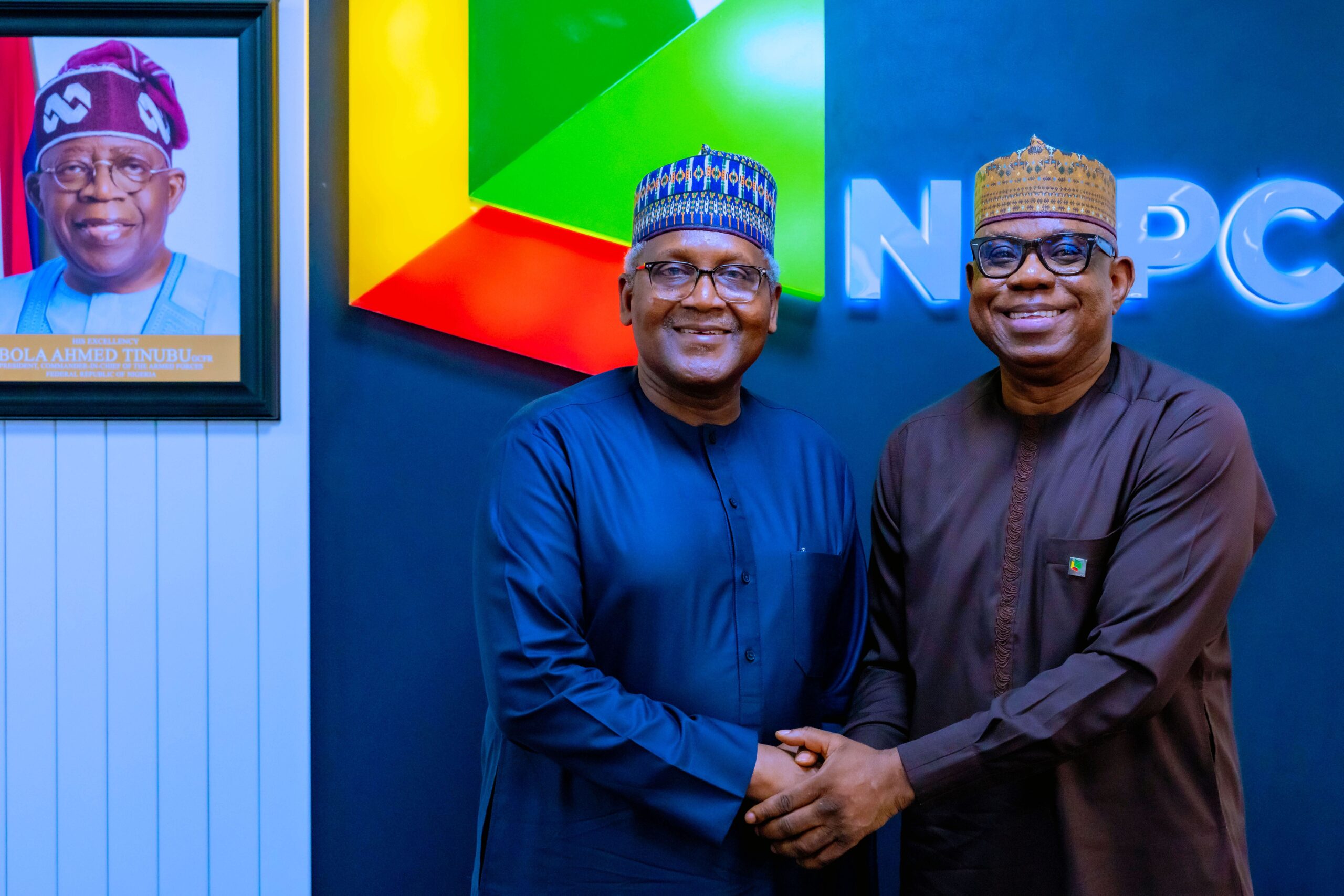
The Federal Government, through the Nigerian National Petroleum Company Limited, has begun moves to secure crude oil supply for the Dangote Petroleum Refinery through third-party international traders, in a bid to sustain domestic refining operations, The PUNCH has learnt.

Officials, however, warned that the intervention may not immediately translate into lower petrol prices for consumers. Nigerians currently grapple with high fuel prices, following the recent hikes in the cost of the commodities by the $20bn Lekki-based refinery.

Oil dealers and industry players confirmed to one of our correspondents that the refinery temporarily suspended the loading of Premium Motor Spirit (petrol), a development that heightened speculation that another fuel price increase could be imminent.

This would mean the third surge in petrol prices within a week, following adjustments that pushed gantry prices from N774 to N995 per litre. As a result, retail pump prices in several states now exceed N1,000 per litre, as some stations now dispense petrol at about N1,200/litre, intensifying economic pressures on Nigerians.

This comes as recent market data illustrates the shift in crude sourcing patterns. Kpler analytics show that crude imports by Nigeria from the United States surged to 41.13 million barrels in 2025, up 161 per cent from 15.79 million barrels in 2024.

Amid the fuel price hike in Nigeria, motorists and industry observers are bracing for the impact on transport fares and the cost of goods. The refinery’s temporary halt in PMS loading, the second within a week, reflects logistical challenges in sustaining domestic supply, particularly given global crude market volatility. Analysts note that stabilising prices depends heavily on reliable crude allocation to domestic refineries.

One critical factor is the geopolitical crisis in the Middle East, especially the Iran-US conflict, which has disrupted oil supply chains and pushed Brent crude prices above $92 per barrel. Tensions around the Strait of Hormuz, a vital energy transit corridor, have compounded the global price surge. The disruption has made it costly and difficult for refiners relying solely on local crude.

Multiple industry sources and officials from both NNPC and Dangote refinery confirmed that the national oil company is leveraging its global crude trading network to source third-party supply for the Dangote refinery at competitive international market rates.

See also  CAF postpones WAFCON 2026 to July

“Leveraging our global crude trading network, we are sourcing third-party crude for the refinery at prices that are competitive with prevailing international market rates,” a senior official at NNPC, who spoke in confidence due to the lack of authorisation to speak on the matter, told The PUNCH on Sunday.

The official further explained, “As the national oil company entrusted with safeguarding Nigeria’s energy security, NNPC Limited remains fully committed to supporting domestic refining, including the Dangote Petroleum Refinery. Within the framework of our existing agreements, we continue to facilitate crude supply to DRP, in the face of temporary availability constraints.”

The Dangote refinery has, however, cautioned that sourcing crude internationally may not immediately reduce pump prices. A refinery source explained: “The current Middle East crisis is affecting overall global energy prices, crude oil, LNG and other fuels, and that has implications for refined product pricing globally.”

The refinery also highlighted constraints in domestic supply. It receives just five cargoes a month from NNPC, instead of the 13 cargoes required under the naira-for-crude policy, forcing reliance on imported crude purchased at international market rates.

“Furthermore, while we receive about five cargoes a month from NNPC, which we pay for in naira, these cargoes are priced at international market prices plus premium and fall short of the 13 cargoes which we require to support sales into Nigeria,” the refinery stated.

Industry players speak

Industry stakeholders note that increased domestic refining output could help moderate petrol prices. Eche Idoko, National Publicity Secretary of the Crude Oil Refinery Owners Association of Nigeria, said the naira-for-crude policy could influence pricing if fully implemented, but warned that imported crude costs and global tensions remain a limiting factor.

“Dangote needs 14 cargoes of crude from the government under the naira-for-crude policy, for the refinery to meet its demands. If this is done, it will impact price locally, but as long as the refinery sources the majority of its feedstock from the United States and must bypass the Strait of Hormuz, they will transfer the cost to Nigerian customers,” he said.

Idoko urged expansion of the policy to other domestic refineries to promote competition and further stabilise prices. He added that operational costs linked to Dangote’s location in a free trade zone also affect pricing:

See also  FG eyes N796bn annually from 5% petrol surcharge

“This type of supply is treated as if it were coming from an external company because the refinery is located in a free trade zone, meaning many of the charges that apply to imports are still applicable. The additional cost of about $5 to $7 per barrel is substantial and should ideally be removed to help reduce the overall price consumers pay.”

Energy analysts also highlight the impact of limited import licences on market competition. Jeremiah Olatide, CEO of Petroleumprice.ng, said nearly 90 per cent of marketers seeking petrol import permits this year have been denied, giving the Dangote refinery dominant market influence.

“Importers haven’t really been given import licences. About 90 per cent of those who applied for PMS import permits were not issued approvals, largely to promote and encourage local refineries, particularly the Dangote refinery,” he noted.

Olatide stressed that a balance between local refining and controlled imports would strengthen energy security and stabilise prices. “Imports should not exceed about 20 to 25 per cent of total supply, while the rest is refined locally. That balance would strengthen the economy and improve energy security.”

Despite supply pressures, the presence of the Dangote refinery has cushioned Nigeria from more severe price spikes. “There are crises everywhere in the global energy market, and thankfully, we now have the Dangote refinery. If the refinery was not operating, petrol prices in Nigeria could easily have reached N1,500 per litre,” Olatide added.

Imports from US

Recent market data illustrates the shift in crude sourcing patterns. Kpler analytics show that US crude exports to Nigeria surged to 41.13 million barrels in 2025, up 161 per cent from 15.79 million barrels in 2024. This reflects Nigeria’s growing dependence on imported crude to meet refinery feedstock needs.

The surge in crude imports from the US coincides with Dangote’s increasing reliance on foreign crude. In July 2025, the refinery imported 590,000 barrels per day, with 60 per cent coming from US light sweet crude and 40 per cent from Nigerian grades, marking the first time US supply overtook domestic crude for Dangote.

See also  Dangote, PENGASSAN face-off: NECA warns of risks to jobs, investments

Analysts note that while this enhances compatibility with complex refining processes, it underscores the paradox of Africa’s largest oil producer relying on foreign crude despite rising local output.

Domestic crude allocations also remain insufficient. The Nigerian Upstream Petroleum Regulatory Commission confirmed that between January and August 2025, local refiners received 67.66 million barrels, falling far short of the 123.48 million barrels requested. The shortfall reflects ongoing challenges in bridging the gap between rising production levels and refinery demand.

Meanwhile, the Dangote refinery has continued to manage operational realities in a deregulated environment. It absorbs part of the cost escalation to cushion consumers while ensuring an uninterrupted supply. “Selling below cost would undermine our ability to procure crude, sustain production, and guarantee supply,” a refinery official said.

The combined pressures of geopolitical tensions, local supply gaps, and market regulation have created a perfect storm for rising fuel prices. With petrol now retailing between N1,030 and N1,100 per litre in major cities, commercial drivers have already adjusted fares, and consumers are bracing for higher costs across the economy.

The rising fuel prices come as three key developments compound market pressure: the looming third petrol price hike, Dangote’s temporary suspension of fuel sales, and Nigeria’s tripling of US crude imports in one year. These factors illustrate the interplay between domestic refining capacity, international supply constraints, and government policies, shaping the country’s energy market in real time.

Meanwhile, it was gathered that the Dangote refinery has approved a new list of petroleum marketers and distribution partners to ensure continued lifting of PMS, expanding the pool from 13 to over 30 companies nationwide.

This includes NIPCO Plc, MRS Oil Nigeria Plc, TotalEnergies Marketing Nigeria Plc, Conoil Plc, and others, highlighting efforts to broaden access while navigating challenging supply and pricing conditions.

punch.ng

FOLLOW US ON:

FACEBOOK

TWITTER

PINTEREST

TIKTOK

YOUTUBE

LINKEDIN

TUMBLR

INSTAGRAM

Continue Reading
Click to comment

Leave a Reply

Your email address will not be published. Required fields are marked *

Business

Nigeria needs 25m tonnes of maize annually – FG

Published

on

The Federal Government says Nigeria requires no fewer than 25 million tonnes of maize annually to meet national demand and strengthen food security.

The Minister of State for Agriculture and Food Security, Sen. Aliyu Abdullahi, disclosed this on Friday in Abuja during a Quarterly Citizens and Stakeholders’ Engagement meeting.

Abdullahi said the government had intensified efforts to meet the demand by boosting local production and reducing dependence on food imports.

“Our focus is on expanding local production so affordable and nutritious food becomes accessible to every Nigerian,” he said.

He added that ongoing interventions were already influencing market trends, noting that prices of essential food commodities had declined nationwide.

“Our efforts are paying off. Prices of major food commodities have dropped by about 50 per cent across the country.

“These efforts reflect our commitment to improving food security and citizens’ well-being. We are addressing high input costs to sustain an affordable food supply,” Abdullahi said.

He said strategic investment in agricultural value chains was positioning Nigeria to become a major force in the global agricultural market.

“We have prioritised rice, maize and wheat value chains, creating opportunities for millions of smallholder farmers and other stakeholders,” he said.

Abdullahi said the ministry was aligning policies with President Bola Tinubu’s Renewed Hope Agenda to achieve food sovereignty.

“The goal is clear: Nigeria must produce what it consumes and consume what it produces,” he said.

According to him, the ministry is implementing reforms aimed at transforming the nation’s agricultural landscape and expanding production across priority crops.

See also  FG eyes N796bn annually from 5% petrol surcharge

He urged stakeholders to collaborate closely with state agriculture ministries to accelerate productivity nationwide.

“Together we can transform Nigeria’s food system and ensure sustainable agricultural growth for the benefit of all Nigerians,” Abdullahi said.

He described the engagement meeting as part of the ministry’s commitment to transparency, open governance and inclusive collaboration.

“This platform underscores the importance of stakeholder engagement in shaping sound policies and ensuring effective implementation,” he said.

Abdullahi added that the initiative would strengthen collaboration aimed at ensuring food remains available, accessible and affordable across the country.

The meeting featured representatives of the media, civil society organisations, farmers’ groups, agro-allied businesses, development partners, donor agencies and government institutions.

NAN

Continue Reading

Business

Nigerians lose millions in dashed Umrah dreams due to US-Iran war

Published

on

Hundreds of Nigerian Muslims preparing for this year’s Umrah pilgrimage have been stranded after the escalating United States/Israel-Iran war disrupted flight operations across the Middle East, forcing airlines to cancel services and leaving intending pilgrims and travel agents counting millions of naira in losses.

Saturday PUNCH gathered that many of the affected pilgrims had already obtained visas and paid for flights and accommodation in Mecca and Medina before airlines began suspending services across parts of the Middle East due to the conflict.

Some of the intending pilgrims, who spoke to our correspondent, said they were scheduled to depart Nigeria between March 4 and 6 for the holy pilgrimage but were unable to travel after several airlines cancelled or suspended operations in the region.

Umrah is a lesser Hajj performed by Muslims all year round in Saudi Arabia, but it usually draws large numbers of Islamic faithful during Ramadan.

Millions of Muslims usually perform Umrah during the last 10 days of Ramadan.

Available records show that over 122 million Muslims performed Umrah during the 2025 Ramadan period.

However, the scale of strikes by Iran on US military bases and other target areas in the Middle East has forced many airlines to suspend flights in Gulf states.

On February 28, US President Donald Trump and Israel declared war on Iran, killing the country’s Supreme Leader, Ayatollah Ali Khamenei, after missiles struck his office in Tehran.

Dubbed ‘Operation Epic Fury,’ both the US and Israeli militaries launched strikes against targets in Iranian cities, triggering explosions and columns of smoke.

This followed months of simmering tensions and a total collapse of diplomacy and negotiations between the US and Iran over the development of nuclear weapons by the Islamic Republic.

Speaking from the Mar-a-Lago Situation Room on Friday, Trump framed the offensive as a pre-emptive necessity to neutralise Iran’s nuclear ambitions.

Tehran also launched retaliatory missile and drone attacks across several countries in the Middle East and nearby regions, targeting US bases, allied facilities and strategic infrastructure.

Iran’s retaliation, codenamed, ‘Truthful Promise 4,’ also saw dozens of missiles launched toward Israel.

Tehran has attacked military bases and assets in about 10 countries in the region, including Saudi Arabia, Qatar, Kuwait, Bahrain, the United Arab Emirates, Jordan, Iraq and Oman.

The war resulted in the closure of critical airspace routes such as Doha and Dubai, while Iran, Iraq, Israel, Syria, Kuwait, Qatar and the UAE all announced at least partial closures of their skies after the US and Israeli attacks on Iran.

See also  FG revokes 5% telecom tax on voice, data services

Similarly, many airlines, including Emirates, Etihad, Qatar Airways, Air France, Turkish Airlines, EgyptAir and Ethiopian Airlines, cancelled services in the region due to the tensions.

Umrah plans disrupted

The cancellation of services by the airlines disrupted the Umrah plans of many Nigerian Muslims who had made the necessary arrangements for the trip.

Saturday PUNCH gathered that a local government chairman in Ilorin, Kwara State, and two other government officials were affected by the cancellation of airline services.

The intending pilgrims, according to one of them who spoke with Saturday PUNCH on condition of anonymity, were to leave Nigeria on March 4 with Emirates Airline.

The government official disclosed that they had secured accommodation at Poinciana Hotel in Mecca and another facility in Medina.

According to him, a sum of 12,500 Riyal was paid by each of them for a hotel in Mecca for their entire stay, while those who intended to lodge in Medina had paid 7,000 Riyal per night.

“It is a painful experience that we couldn’t proceed with the Umrah trip because of the war. We had paid for everything – visa fee, accommodation, flight and other expenses. We are four in a group that wanted to go for the Umrah. A local government chairman is among us, alongside two other government officials.

“My hotel accommodation in Mecca cost 12,500 Riyal, equivalent to about N5m. Some other people that I know have also paid 7,500 Riyal per night for a room in a Medina hotel, and they booked for four nights.

“We have invested millions of naira in the trip, and our visa will expire on April 8,” he said.

The official added that the travel agent who packaged the trip for them had sought a refund from Emirates Airline, but was told they could only reschedule their trip, with the airline declining the refund request.

“Our agent has spoken with the hotel management in Mecca and Medina, but nothing concrete has come out. We were told that even if we are refunded, it would not be the full amount we paid,” he added.

Similarly, a popular butcher in Osogbo, Osun State, Rasaq (surname withheld as requested), lamented that he had spent over N13m on the Umrah trip for himself and his wife.

According to Rasaq, he and his wife were to leave for Saudi Arabia on Qatar Airways from the Murtala Muhammed Airport in Lagos on March 3 before the airline cancelled services in the Middle East.

“We were to lodge at a hotel in Medina and everything had been paid for. We were set for the trip; it cost us about N13m, including visa fees, hotel accommodation and flight tickets.

See also  Life jail for Nnamdi Kanu: S’East leaders rally for political solution

“Apart from me and my wife, two other people were going with us. We were supposed to travel in a group, but everything has been messed up for us. It is painful. Our agent is talking to Qatar Airways for a refund,” he said.

However, the agent told Saturday PUNCH that the airline could only reschedule the intending pilgrims’ flight based on his discussion with the company.

The agent, who spoke on condition of anonymity, said, “It is true that we are seeking a refund from the airline, but I am not sure it will work out. The cancellation of services in the Middle East by the airline is as a result of the war, not because of any issue from the airline.

“When things like this happen, what airlines generally do is ask the clients to reschedule their trip, and a new air ticket will be issued for them. I am also in touch with the hotel management in Medina, but I cannot disclose everything.”

This is as an Islamic cleric in Ibadan, Oyo State, Alhaji Jamiu Babatunde, told Saturday PUNCH that his planned trip was disrupted after his flight booking was cancelled.

“I was supposed to travel when Ramadan reaches the 20th day using Qatar Airways, but I received a message that my ticket had been cancelled and reopened.

“I planned to travel with my family. It was a promise I made two years ago and we had worked towards it. Now we are stranded and not sure it will be possible again this year,” he lamented.

Similarly, Ibadan-based businessman Abdullahi Abubakar said the uncertainty had also affected his business preparations ahead of the Sallah celebration.

“Beyond the spiritual aspect, I usually use the Umrah trip to buy goods to stock my shop for Sallah.

“Before now, my problem was raising the money to complete payment, but now with the situation in the region, I don’t know what to do.”

Another intending pilgrim in the Agege area of Lagos, Mrs Ramat Abdullahi, said she had decided to postpone her trip due to safety concerns linked to the regional crisis.

“This would have been my first time performing Umrah, but with the situation in the region, I decided to postpone the journey until next year,” she said.

Speaking with Saturday PUNCH, an Islamic cleric and founder of Almuhsinoon Islamic Centre, Manchester, UK, Munir Hussein, who has been facilitating Umrah trips for Muslims, said four of his team members in Nigeria could not make it to this year’s Umrah as a result of the war.

See also  Dangote, PENGASSAN face-off: NECA warns of risks to jobs, investments

“I was meant to leave here (UK) on Monday, but we couldn’t go because the UK government issued a travel alert. Four members of my team are also in Nigeria; they were to leave on March 6, but that is no longer possible. Everything was set for our trip, but here we are.

“The airlines we were to use are asking us to reschedule, so there will not be any refund from their end. Hotels are offering zero refunds. Our losses are in many dimensions, including visa, flight, accommodation and food that had been fully paid,” he added.

Oyo businessman trapped in Mecca

Speaking with Saturday PUNCH via telephone from Makkah, an Oyo State-based businessman, Alhaji Ishola Abdulmalik, said the tensions in the Middle East had disrupted his usual Ramadan travel schedule.

“I come to Saudi Arabia every year when Ramadan is five days old and usually return to Nigeria around the 15th day to participate in my town’s annual Ramadan programme as the chairman of the organising committee. I then return to Saudi Arabia on the 25th day of Ramadan and come back home on Sallah day.

“This year, I cannot follow that routine because of the situation. Although I am stranded here because travelling has become difficult, there is no tension in Saudi Arabia. There are no restrictions and we are observing our worship normally,” he said.

Abdulmalik explained that Saudi Arabia had not shut its airspace and commercial flights were still arriving in the kingdom, but disruptions at major international transit hubs had made it difficult for many pilgrims to travel.

“I can’t leave not because Saudi Arabia has closed its airspace, but because disruptions at major connection hubs have affected travel arrangements,” Abdulmalik added.

He also revealed that some Nigerian pilgrims whose flights were cancelled were struggling to cover accommodation costs.

“There are people here, including a couple from Niger State, whose Qatar Airways flight was cancelled and they couldn’t afford to continue paying for their hotel. I had to help them settle it.

“There are others that some of us who are a little buoyant have had to support by contributing among ourselves to pay their hotel bills,” he said.

Both Emirates Airline and Qatar Airways have yet to respond to messages sent to their emails as of the time of filing this report.

Continue Reading

Business

World’s Top 100 Biggest Economies in 2026

Published

on

1. 🇨🇳 China – $43.49 Trillion
2. 🇺🇸 United States – $31.82 Trillion
3. 🇮🇳 India – $19.14 Trillion
4. 🇷🇺 Russia – $7.34 Trillion
5. 🇯🇵 Japan – $6.92 Trillion
6. 🇩🇪 Germany – $6.32 Trillion
7. 🇮🇩 Indonesia – $5.36 Trillion
8. 🇧🇷 Brazil – $5.16 Trillion
9. 🇫🇷 France – $4.66 Trillion
10. 🇬🇧 United Kingdom – $4.59 Trillion
11. 🇹🇷 Turkey – $3.98 Trillion
12. 🇮🇹 Italy – $3.82 Trillion
13. 🇲🇽 Mexico – $3.55 Trillion
14. 🇰🇷 South Korea – $3.49 Trillion
15. 🇪🇸 Spain – $2.94 Trillion
16. 🇸🇦 Saudi Arabia – $2.85 Trillion
17. 🇨🇦 Canada – $2.81 Trillion
18. 🇪🇬 Egypt – $2.53 Trillion
19. 🇳🇬 Nigeria – $2.39 Trillion
20. 🇵🇱 Poland – $2.12 Trillion
21. 🇹🇼 Taiwan – $2.07 Trillion
22. 🇦🇺 Australia – $2.06 Trillion
23. 🇻🇳 Vietnam – $1.94 Trillion
24. 🇮🇷 Iran – $1.93 Trillion
25. 🇹🇭 Thailand – $1.92 Trillion
26. 🇧🇩 Bangladesh – $1.90 Trillion
27. 🇵🇰 Pakistan – $1.76 Trillion
28. 🇵🇭 Philippines – $1.59 Trillion
29. 🇦🇷 Argentina – $1.58 Trillion
30. 🇲🇾 Malaysia – $1.56 Trillion
31. 🇳🇱 Netherlands – $1.56 Trillion
32. 🇨🇴 Colombia – $1.24 Trillion
33. 🇿🇦 South Africa – $1.06 Trillion
34. 🇦🇪 United Arab Emirates – $1.00 Trillion
35. 🇸🇬 Singapore – $988.8 Billion
36. 🇰🇿 Kazakhstan – $973.4 Billion
37. 🇷🇴 Romania – $949.3 Billion
38. 🇧🇪 Belgium – $925.7 Billion
39. 🇩🇿 Algeria – $915.8 Billion
40. 🇨🇭 Switzerland – $909.1 Billion
41. 🇮🇪 Ireland – $836.7 Billion
42. 🇸🇪 Sweden – $809.5 Billion
43. 🇨🇱 Chile – $740.4 Billion
44. 🇮🇶 Iraq – $739.1 Billion
45. 🇺🇦 Ukraine – $730.8 Billion
46. 🇦🇹 Austria – $705.0 Billion
47. 🇵🇪 Peru – $682.8 Billion
48. 🇨🇿 Czech Republic – $677.7 Billion
49. 🇳🇴 Norway – $621.1 Billion
50. 🇭🇰 Hong Kong – $618.1 Billion
51. 🇮🇱 Israel – $600.5 Billion
52. 🇵🇹 Portugal – $556.4 Billion
53. 🇪🇹 Ethiopia – $530.8 Billion
54. 🇩🇰 Denmark – $529.3 Billion
55. 🇺🇿 Uzbekistan – $511.0 Billion
56. 🇬🇷 Greece – $485.1 Billion
57. 🇭🇺 Hungary – $478.5 Billion
58. 🇲🇦 Morocco – $457.5 Billion
59. 🇰🇪 Kenya – $430.3 Billion
60. 🇦🇴 Angola – $417.2 Billion
61. 🇶🇦 Qatar – $410.6 Billion
62. 🇫🇮 Finland – $384.9 Billion
63. 🇩🇴 Dominican Republic – $353.7 Billion
64. 🇧🇾 Belarus – $319.5 Billion
65. 🇹🇿 Tanzania – $317.9 Billion
66. 🇪🇨 Ecuador – $315.9 Billion
67. 🇬🇭 Ghana – $314.6 Billion
68. 🇳🇿 New Zealand – $309.1 Billion
69. 🇬🇹 Guatemala – $297.1 Billion
70. 🇨🇮 Côte d’Ivoire – $289.1 Billion
71. 🇲🇲 Myanmar – $286.4 Billion
72. 🇰🇼 Kuwait – $285.9 Billion
73. 🇦🇿 Azerbaijan – $282.2 Billion
74. 🇧🇬 Bulgaria – $279.2 Billion
75. 🇸🇰 Slovak Republic – $266.9 Billion
76. 🇴🇲 Oman – $245.9 Billion
77. 🇻🇪 Venezuela – $231.4 Billion
78. 🇷🇸 Serbia – $225.6 Billion
79. 🇨🇩 Dem. Rep. of the Congo – $225.5 Billion
80. 🇵🇦 Panama – $211.0 Billion
81. 🇭🇷 Croatia – $207.4 Billion
82. 🇺🇬 Uganda – $205.3 Billion
83. 🇳🇵 Nepal – $194.9 Billion
84. 🇹🇳 Tunisia – $193.6 Billion
85. 🇨🇲 Cameroon – $183.3 Billion
86. 🇨🇷 Costa Rica – $178.0 Billion
87. 🇱🇹 Lithuania – $173.1 Billion
88. 🇵🇷 Puerto Rico – $166.3 Billion
89. 🇰🇭 Cambodia – $160.0 Billion
90. 🇹🇲 Turkmenistan – $159.0 Billion
91. 🇵🇾 Paraguay – $145.1 Billion
92. 🇿🇼 Zimbabwe – $144.9 Billion
93. 🇯🇴 Jordan – $138.0 Billion
94. 🇸🇩 Sudan – $135.9 Billion
95. 🇺🇾 Uruguay – $135.1 Billion
96. 🇱🇾 Libya – $132.8 Billion
97. 🇸🇮 Slovenia – $128.1 Billion
98. 🇬🇪 Georgia – $123.0 Billion
99. 🇧🇭 Bahrain – $118.1 Billion
100. 🇱🇺 Luxembourg – $108.6 Billion

See also  Dangote, PENGASSAN face-off: NECA warns of risks to jobs, investments

Nigeria 🇳🇬 ranks 19 biggest economies in the world, based on PPP (Purchasing Power Parity)

Source: IMF via Voronoi by Visual Capitalist

FOLLOW US ON:

FACEBOOK

TWITTER

PINTEREST

TIKTOK

YOUTUBE

LINKEDIN

TUMBLR

INSTAGRAM

Continue Reading

Trending